VAT in GCC
https://vatregistrationuae.com/vat-in-gcc/
INT.
 Oman has become the 4th GCC or Gulf Cooperation Council member
state that introduced VAT or Value Added Tax regulations. The date of VAT
implementation in Oman is the 16th of April, 2021. This is a significant move
in relation to VAT in the GCC member states since Saudi Arabia significantly
increased the rate for VAT in the country to fifteen percent from five
percent back in May 2020.
 The move of Saudi Arabia, as reported by the BBC, shores up state finances
at the start of the COVID-19 pandemic. Saudi Arabia’s move was also to
diversify the economy in order to reduce the country’s reliance on income
from oil and gas.
How does Value Added Tax affect
GCC member states?
 There are those that instantly assume tax, such as VAT in GCC, is a
cumbersome and bad thing as the governments only want their citizens to
be deprived of hard-earned money. From human rights, justice, and
economic perspective, VAT is actually crucial. Reasons why tax is important
and their impact on GCC countries are as follows:
Funding the delivery of services people
need
 Tax is the source of revenue for governments, allowing them to have sufficient
funds for services and infrastructure that will be used by citizens and businesses.
Of course, the revenues won’t be used automatically for social goods. When
governments get revenue from the collected tax, the citizens are put in a strong
position in exerting pressure for the tax to be spent on services that they’re
entitled to.
 Among the many services that are provided from collected tax is education.
Small farmers also rely on collected tax in providing credit, research, and
training, and developing markets for input and output. With VAT
implementation in the GCC member states, high infant and maternal mortality
rates are addressed, along with successful tackling of HIV/AIDS, and reduction
of the blight of contagious diseases. All these require reliable funding from
governments.
Addressed poverty and inequality
 Tax policy plays a crucial role in the redistribution of wealth in an economy.
Poverty and inequality are addressed through taxation as it’s the poor that
tend to depend a lot more on several key services, including publicly
funded education and health.
Limit products that are health-
damaging
 Taxes can be utilized in ensuring all social benefits and costs of production
and consumption of particular goods are reflected with the market price.
Tax in the GCC, including excise tax, contributes to the attainment of other
benefits socially with making it very expensive in engaging in actions that
are considered undesirable socially. The tax also incentivizes behavior that
is considered to be beneficial to society.
 On the side of consumption among the general public, this includes taxing
tobacco in order to limit health damage and petrol in limiting
environmental costs.
Which member states of the GCC
implemented VAT?
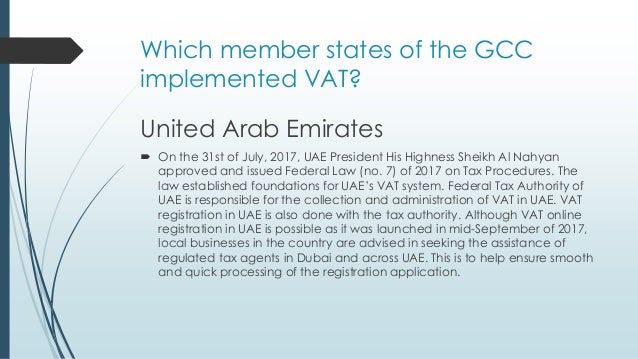
United Arab Emirates
 On the 31st of July, 2017, UAE President His Highness Sheikh Al Nahyan
approved and issued Federal Law (no. 7) of 2017 on Tax Procedures. The
law established foundations for UAE’s VAT system. Federal Tax Authority of
UAE is responsible for the collection and administration of VAT in UAE. VAT
registration in UAE is also done with the tax authority. Although VAT online
registration in UAE is possible as it was launched in mid-September of 2017,
local businesses in the country are advised in seeking the assistance of
regulated tax agents in Dubai and across UAE. This is to help ensure smooth
and quick processing of the registration application.
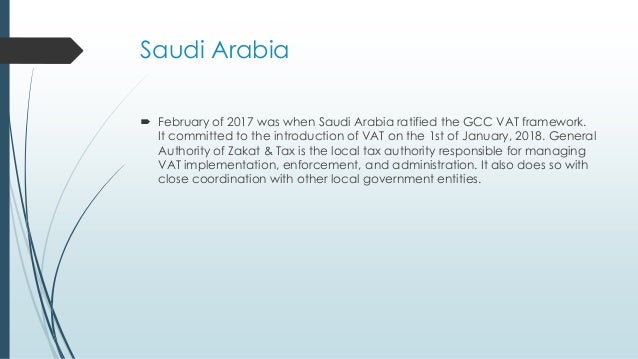
Saudi Arabia
 February of 2017 was when Saudi Arabia ratified the GCC VAT framework.
It committed to the introduction of VAT on the 1st of January, 2018. General
Authority of Zakat & Tax is the local tax authority responsible for managing
VAT implementation, enforcement, and administration. It also does so with
close coordination with other local government entities.
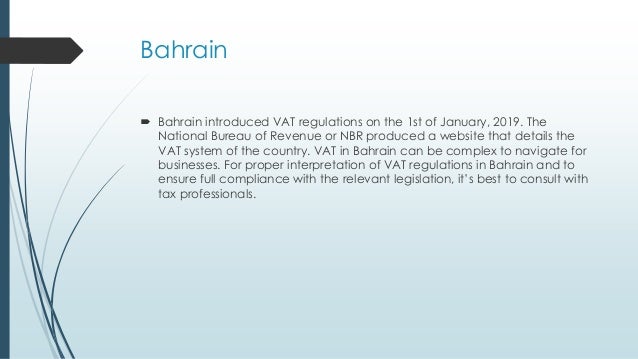
Bahrain
 Bahrain introduced VAT regulations on the 1st of January, 2019. The
National Bureau of Revenue or NBR produced a website that details the
VAT system of the country. VAT in Bahrain can be complex to navigate for
businesses. For proper interpretation of VAT regulations in Bahrain and to
ensure full compliance with the relevant legislation, it’s best to consult with
tax professionals.
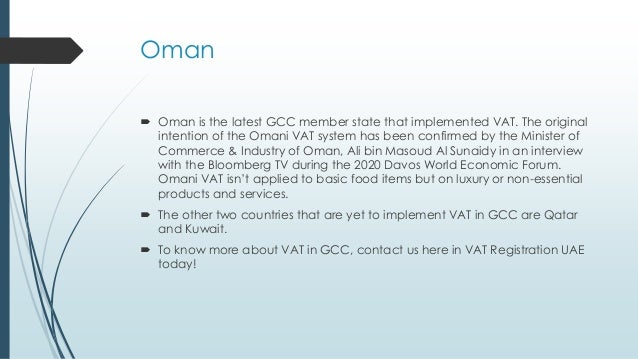
Oman
 Oman is the latest GCC member state that implemented VAT. The original
intention of the Omani VAT system has been confirmed by the Minister of
Commerce & Industry of Oman, Ali bin Masoud Al Sunaidy in an interview
with the Bloomberg TV during the 2020 Davos World Economic Forum.
Omani VAT isn’t applied to basic food items but on luxury or non-essential
products and services.
 The other two countries that are yet to implement VAT in GCC are Qatar
and Kuwait.
 To know more about VAT in GCC, contact us here in VAT Registration UAE
today!
Contact Us
 WhatsApp (Messaging Only): +971 52 6922588
 WhatsApp & Phone: +971 55 4828368
 Landline: +971 4 2500251 (9AM - 7PM GMT+4 - Monday to Friday)
 For Consultation: consultant@farahatco.com
 For Sales Enquiries: sales@vatregistrationuae.com

VAT in GCC (UAE - KSA - OMAN)

  • 1.
  • 2.
    INT.  Oman hasbecome the 4th GCC or Gulf Cooperation Council member state that introduced VAT or Value Added Tax regulations. The date of VAT implementation in Oman is the 16th of April, 2021. This is a significant move in relation to VAT in the GCC member states since Saudi Arabia significantly increased the rate for VAT in the country to fifteen percent from five percent back in May 2020.  The move of Saudi Arabia, as reported by the BBC, shores up state finances at the start of the COVID-19 pandemic. Saudi Arabia’s move was also to diversify the economy in order to reduce the country’s reliance on income from oil and gas.
  • 3.
    How does ValueAdded Tax affect GCC member states?  There are those that instantly assume tax, such as VAT in GCC, is a cumbersome and bad thing as the governments only want their citizens to be deprived of hard-earned money. From human rights, justice, and economic perspective, VAT is actually crucial. Reasons why tax is important and their impact on GCC countries are as follows:
  • 4.
    Funding the deliveryof services people need  Tax is the source of revenue for governments, allowing them to have sufficient funds for services and infrastructure that will be used by citizens and businesses. Of course, the revenues won’t be used automatically for social goods. When governments get revenue from the collected tax, the citizens are put in a strong position in exerting pressure for the tax to be spent on services that they’re entitled to.  Among the many services that are provided from collected tax is education. Small farmers also rely on collected tax in providing credit, research, and training, and developing markets for input and output. With VAT implementation in the GCC member states, high infant and maternal mortality rates are addressed, along with successful tackling of HIV/AIDS, and reduction of the blight of contagious diseases. All these require reliable funding from governments.
  • 5.
    Addressed poverty andinequality  Tax policy plays a crucial role in the redistribution of wealth in an economy. Poverty and inequality are addressed through taxation as it’s the poor that tend to depend a lot more on several key services, including publicly funded education and health.
  • 6.
    Limit products thatare health- damaging  Taxes can be utilized in ensuring all social benefits and costs of production and consumption of particular goods are reflected with the market price. Tax in the GCC, including excise tax, contributes to the attainment of other benefits socially with making it very expensive in engaging in actions that are considered undesirable socially. The tax also incentivizes behavior that is considered to be beneficial to society.  On the side of consumption among the general public, this includes taxing tobacco in order to limit health damage and petrol in limiting environmental costs.
  • 7.
    Which member statesof the GCC implemented VAT? United Arab Emirates  On the 31st of July, 2017, UAE President His Highness Sheikh Al Nahyan approved and issued Federal Law (no. 7) of 2017 on Tax Procedures. The law established foundations for UAE’s VAT system. Federal Tax Authority of UAE is responsible for the collection and administration of VAT in UAE. VAT registration in UAE is also done with the tax authority. Although VAT online registration in UAE is possible as it was launched in mid-September of 2017, local businesses in the country are advised in seeking the assistance of regulated tax agents in Dubai and across UAE. This is to help ensure smooth and quick processing of the registration application.
  • 8.
    Saudi Arabia  Februaryof 2017 was when Saudi Arabia ratified the GCC VAT framework. It committed to the introduction of VAT on the 1st of January, 2018. General Authority of Zakat & Tax is the local tax authority responsible for managing VAT implementation, enforcement, and administration. It also does so with close coordination with other local government entities.
  • 9.
    Bahrain  Bahrain introducedVAT regulations on the 1st of January, 2019. The National Bureau of Revenue or NBR produced a website that details the VAT system of the country. VAT in Bahrain can be complex to navigate for businesses. For proper interpretation of VAT regulations in Bahrain and to ensure full compliance with the relevant legislation, it’s best to consult with tax professionals.
  • 10.
    Oman  Oman isthe latest GCC member state that implemented VAT. The original intention of the Omani VAT system has been confirmed by the Minister of Commerce & Industry of Oman, Ali bin Masoud Al Sunaidy in an interview with the Bloomberg TV during the 2020 Davos World Economic Forum. Omani VAT isn’t applied to basic food items but on luxury or non-essential products and services.  The other two countries that are yet to implement VAT in GCC are Qatar and Kuwait.  To know more about VAT in GCC, contact us here in VAT Registration UAE today!
  • 11.
    Contact Us  WhatsApp(Messaging Only): +971 52 6922588  WhatsApp & Phone: +971 55 4828368  Landline: +971 4 2500251 (9AM - 7PM GMT+4 - Monday to Friday)  For Consultation: consultant@farahatco.com  For Sales Enquiries: sales@vatregistrationuae.com