VARIABLE FREQUENCY
DRIVES
1. What is VFD?
2. Purpose Of VFD
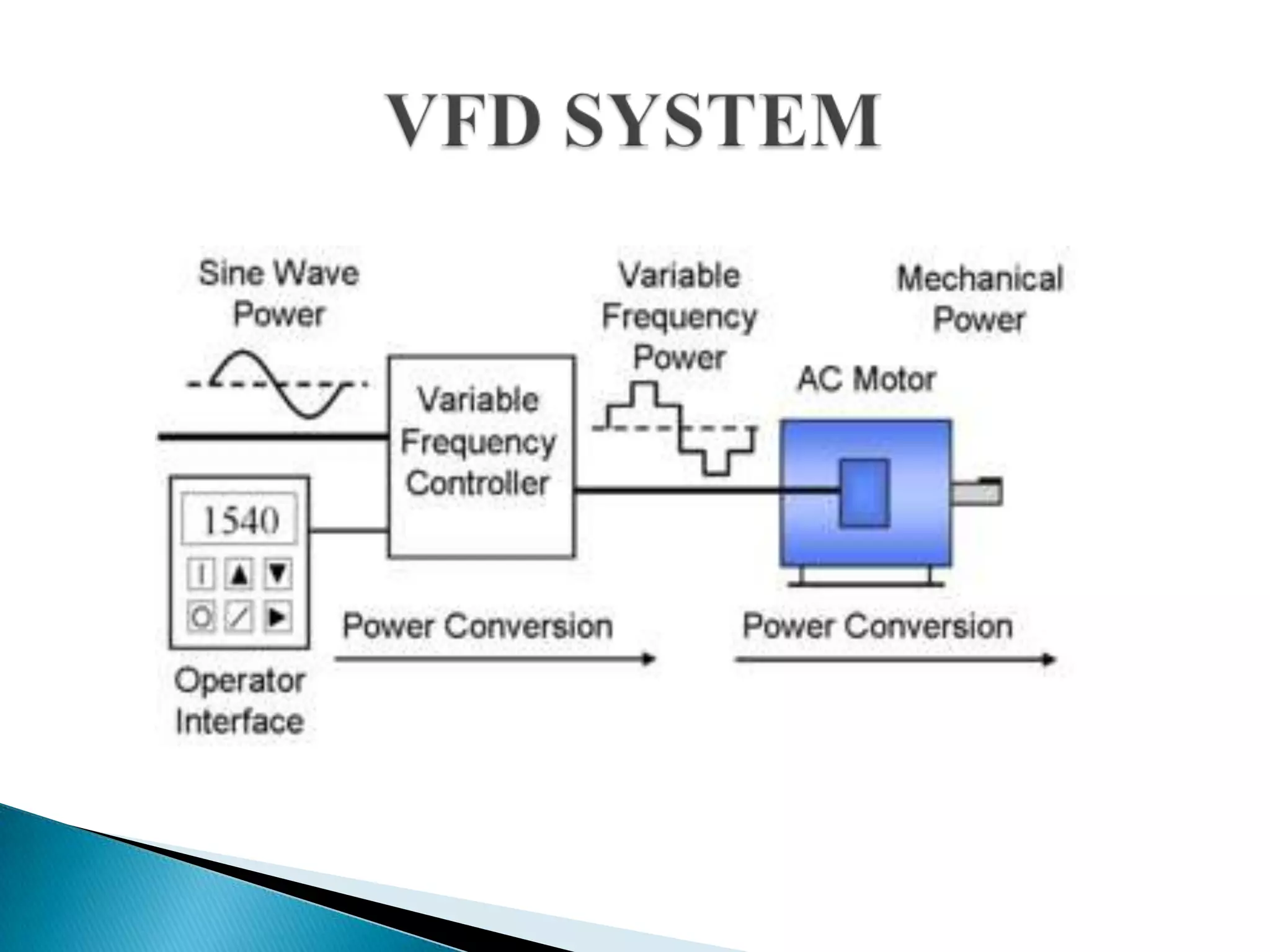
3. VFD System
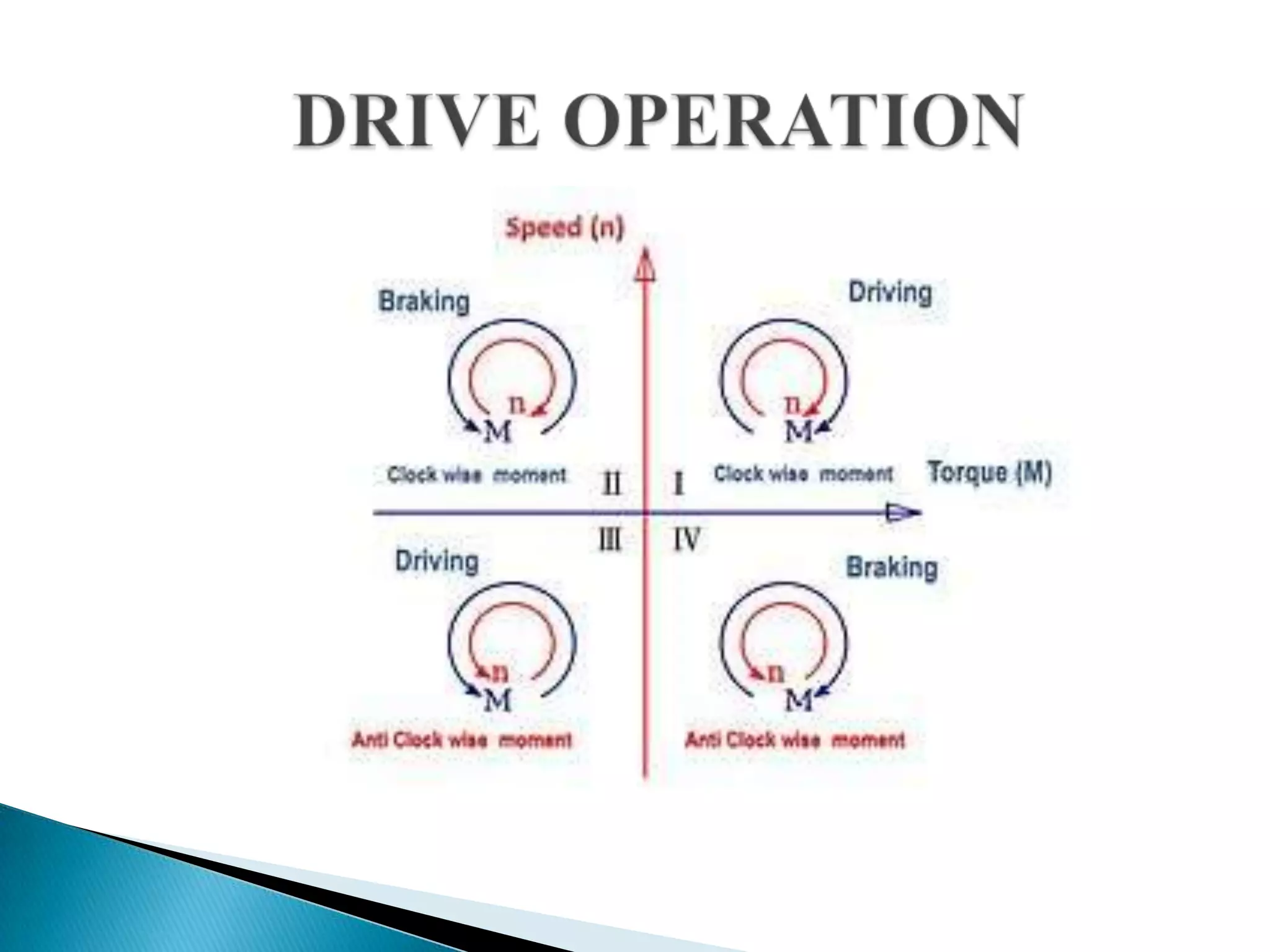
4. Drive Operation
5. Operating Modes
6. AC Induction motor
7. components
8. Advantages
9. Function & Features
10. Applications.
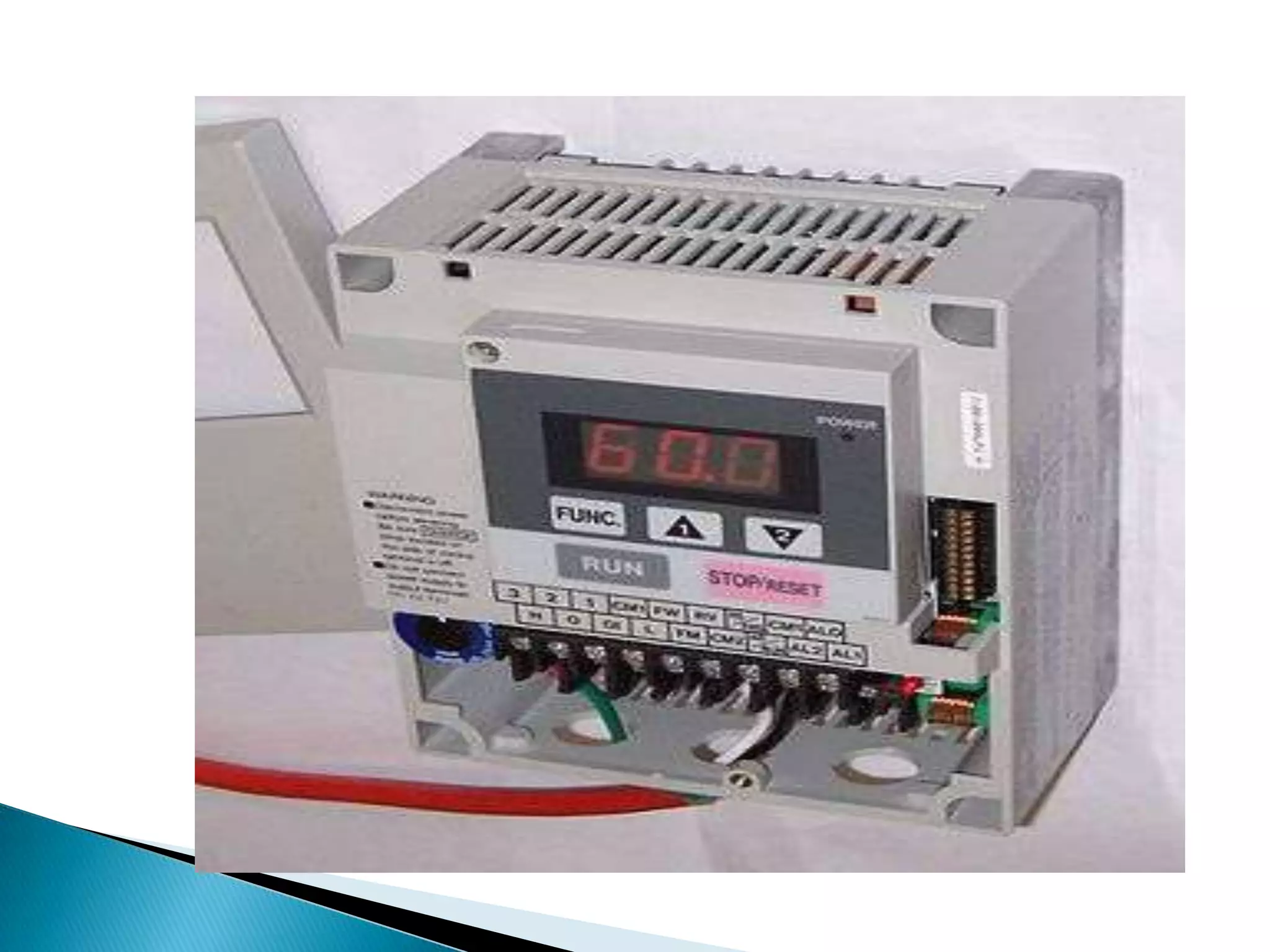
Variable Frequency Drives
This technology has several different names such
as :
• Variable speed drives.
• Adjustable speed drives.
• Adjustable frequency drives.
• Frequency converter.
• pump and fan applications.
• control and regulation.
• Speeding up or slowing down a machine or
process.
• Protection from overload currents
• Safe Acceleration
A variable frequency drives used in a drive
system consisting of the following three main
sub-systems:
• AC Motor.
• Controller.
• Operator Interface.
• In variable-speed applications, a dc motor may
be operating in one or more modes:
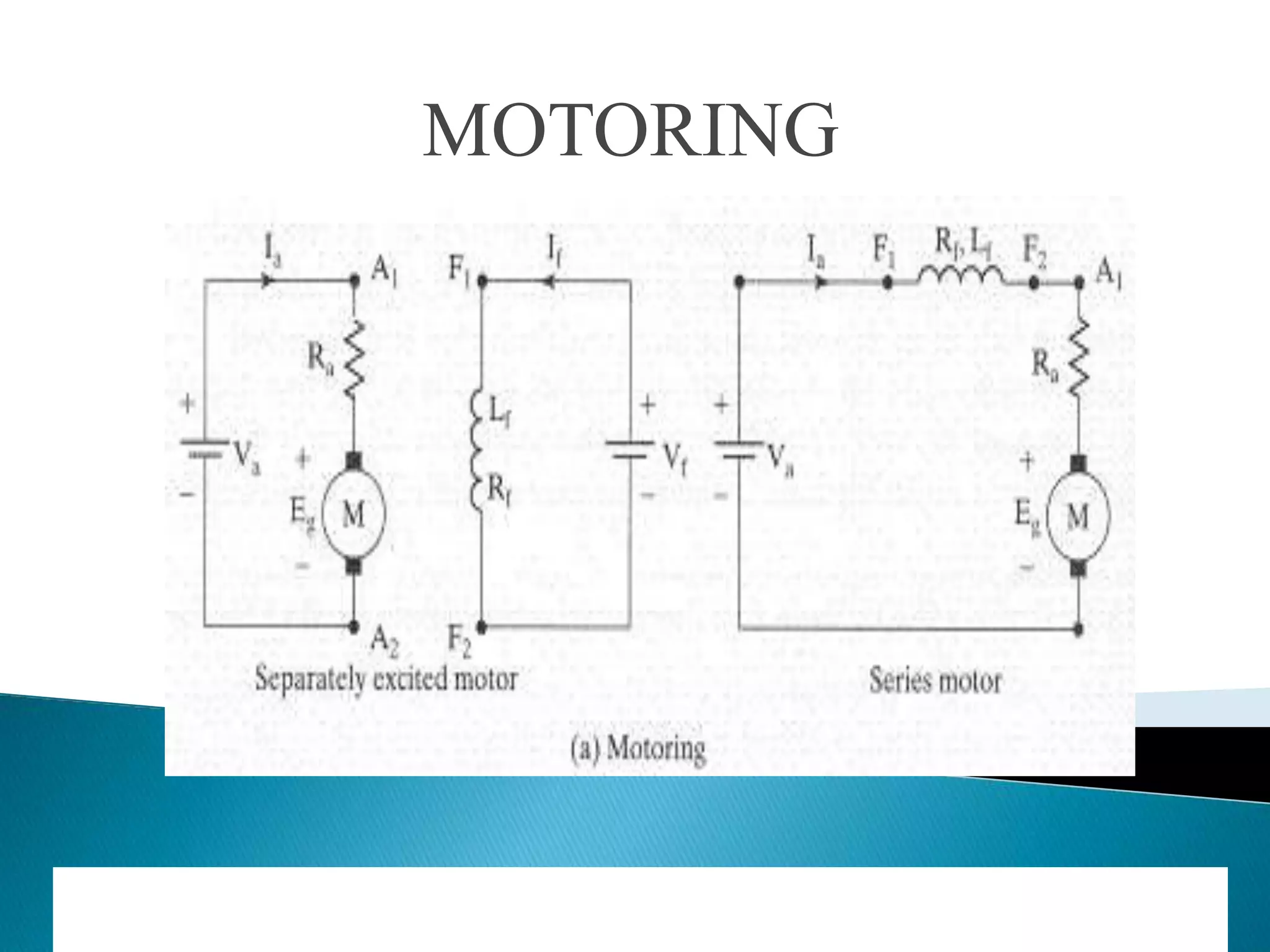
– Motoring.
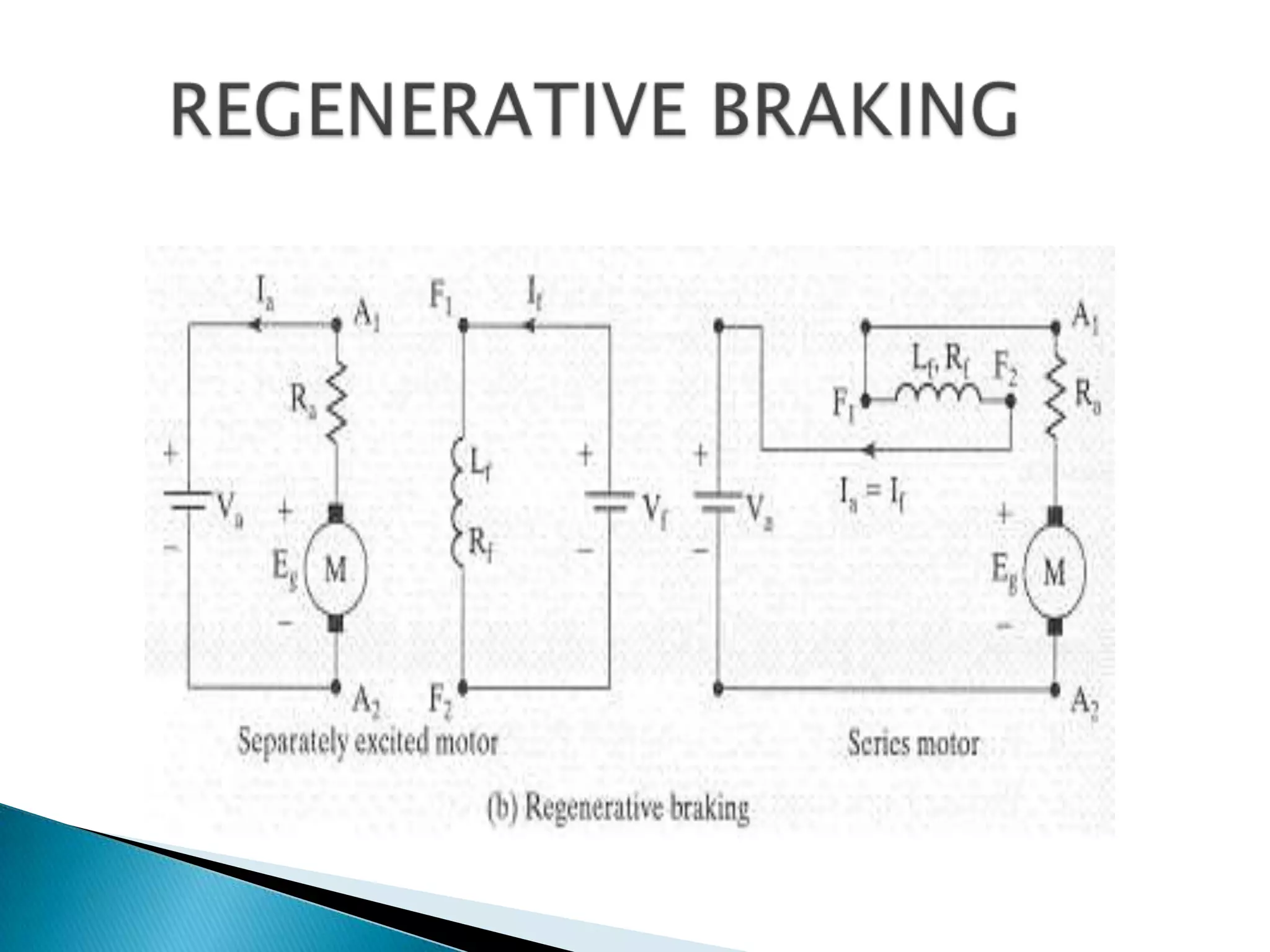
– regenerative braking.
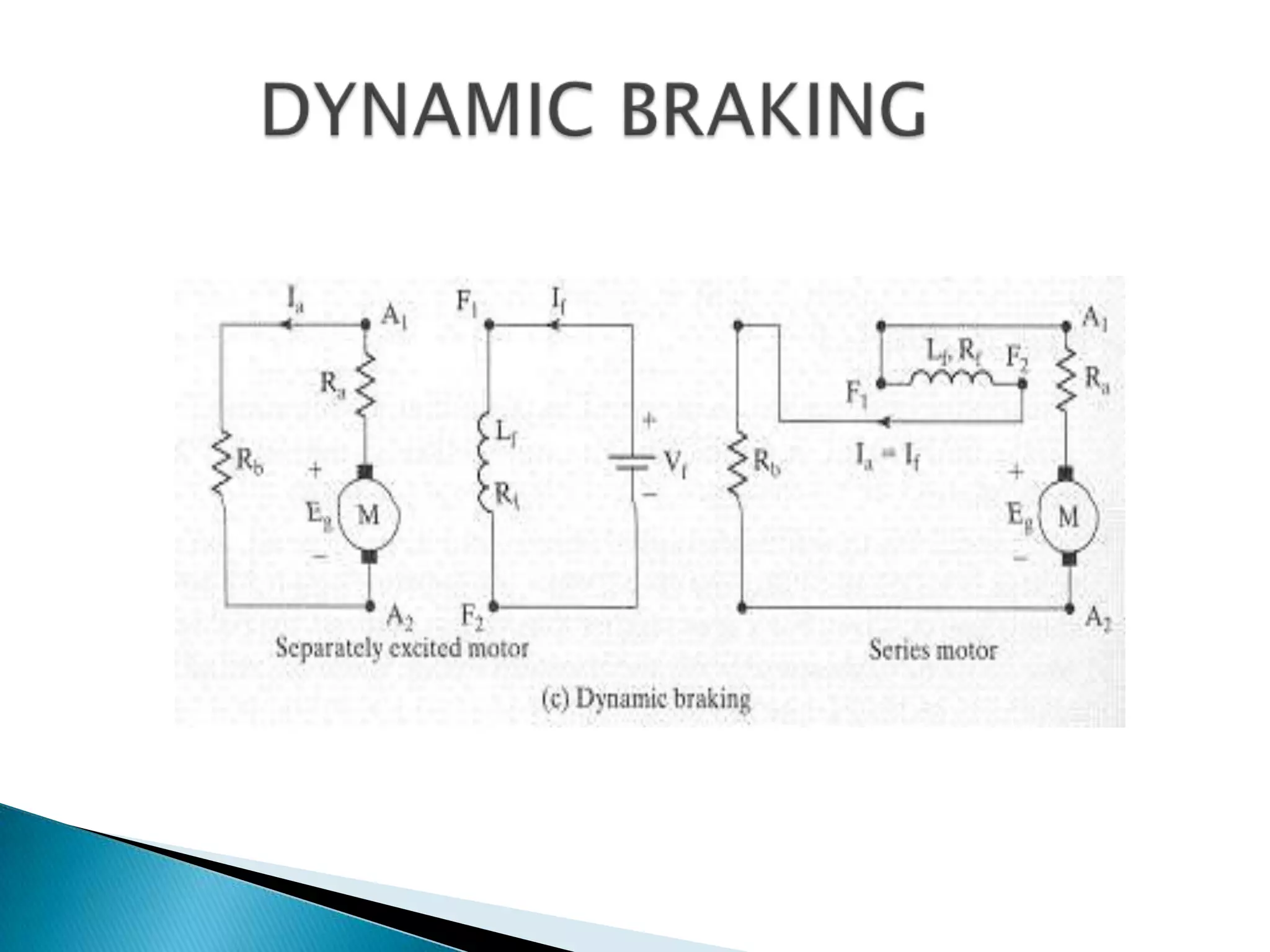
– dynamic braking.
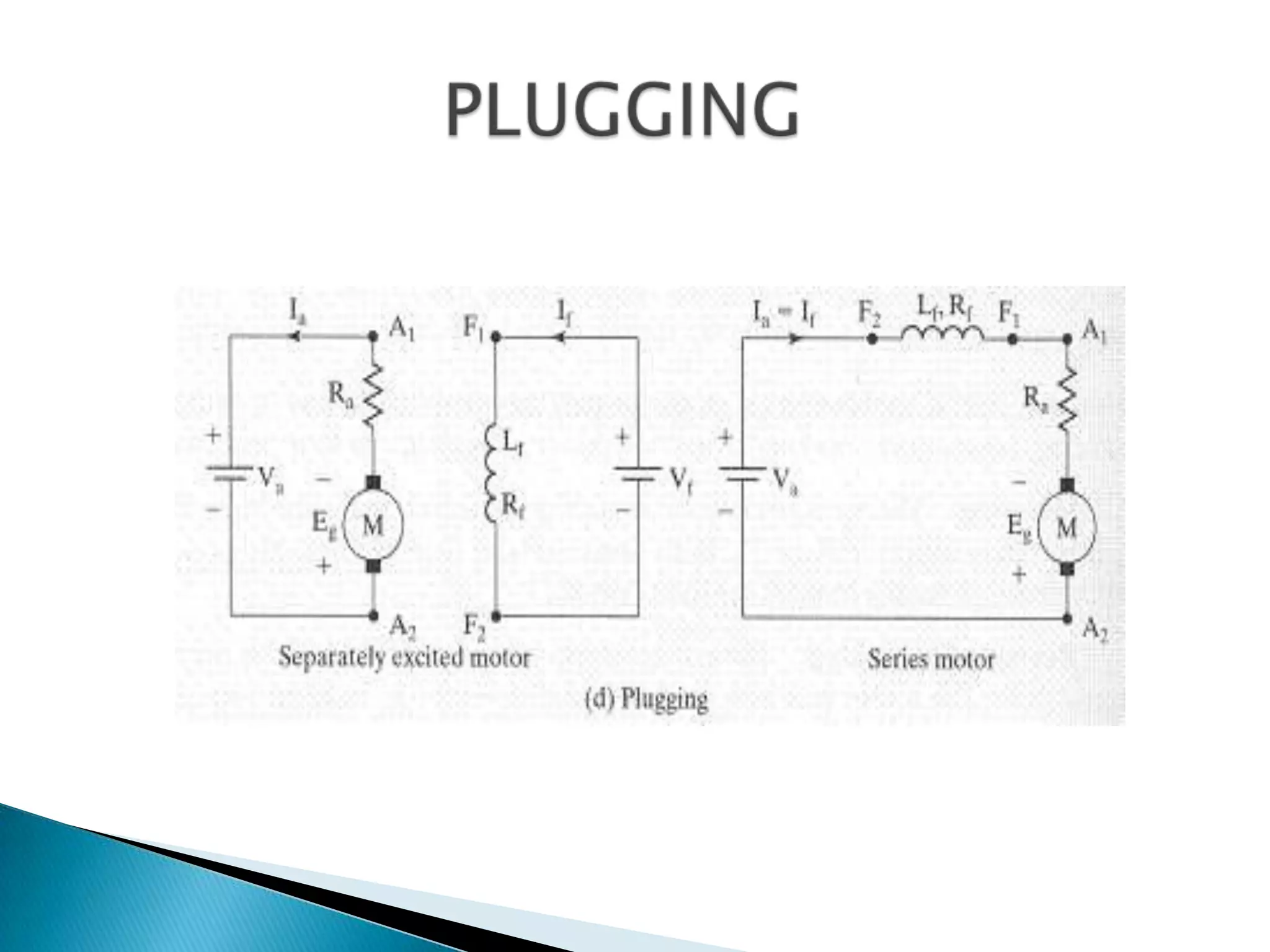
– Plugging.
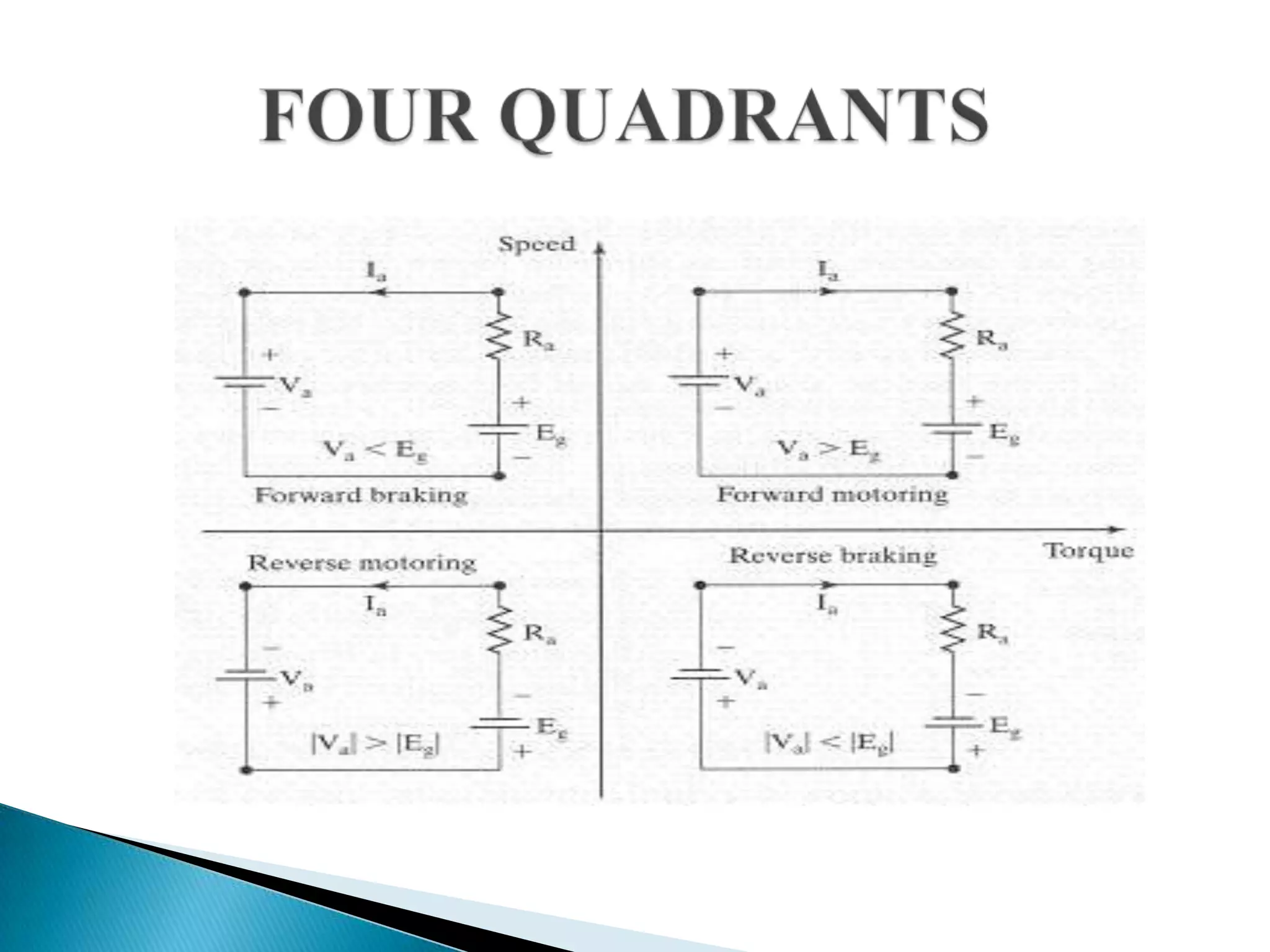
– four quadrants.
MOTORING
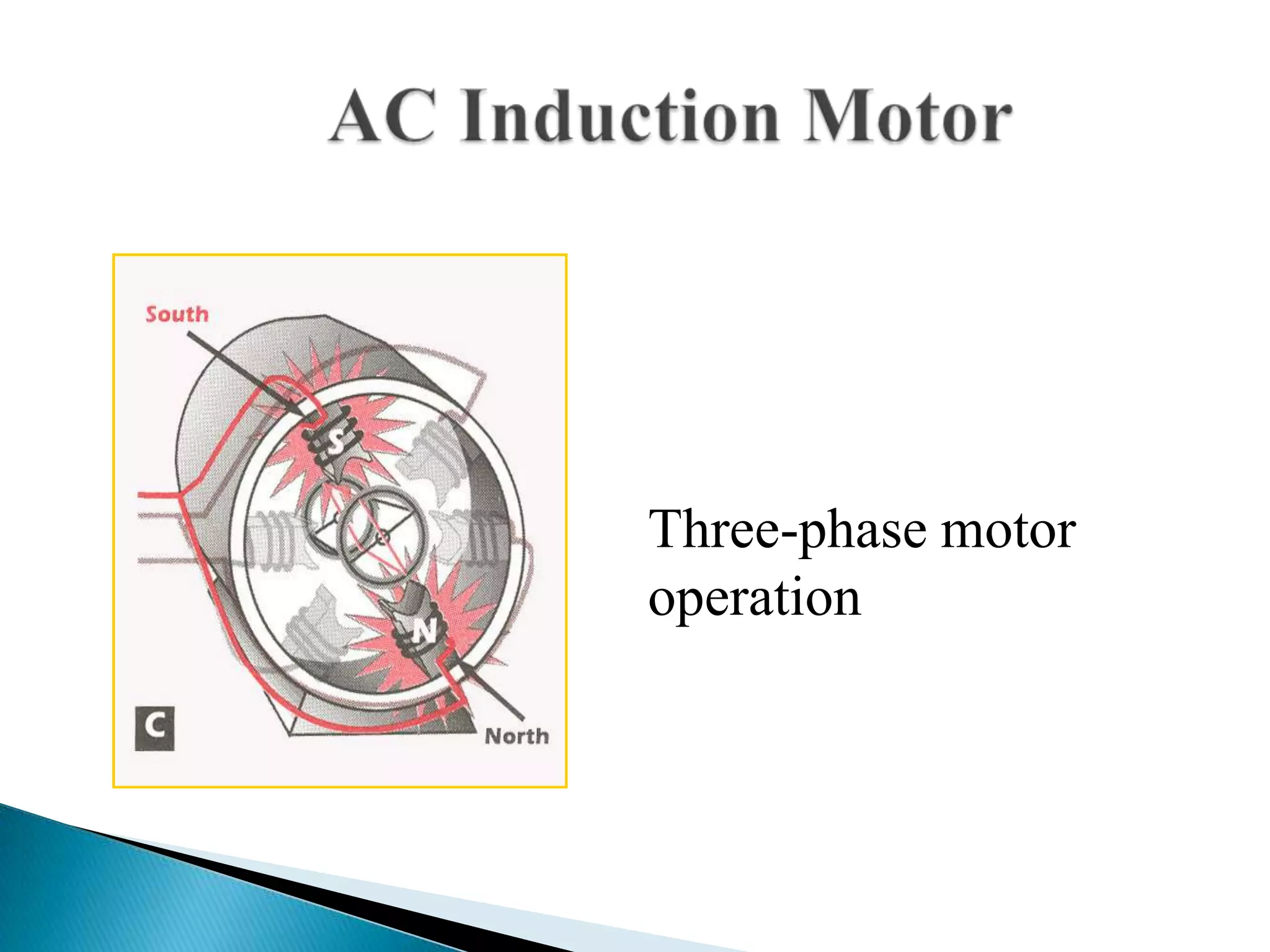
Three-phase motor
operation
• Torque is produced as the induction motor
generates flux in its rotating field.
• This flux must remain constant to produce
full-load torque.
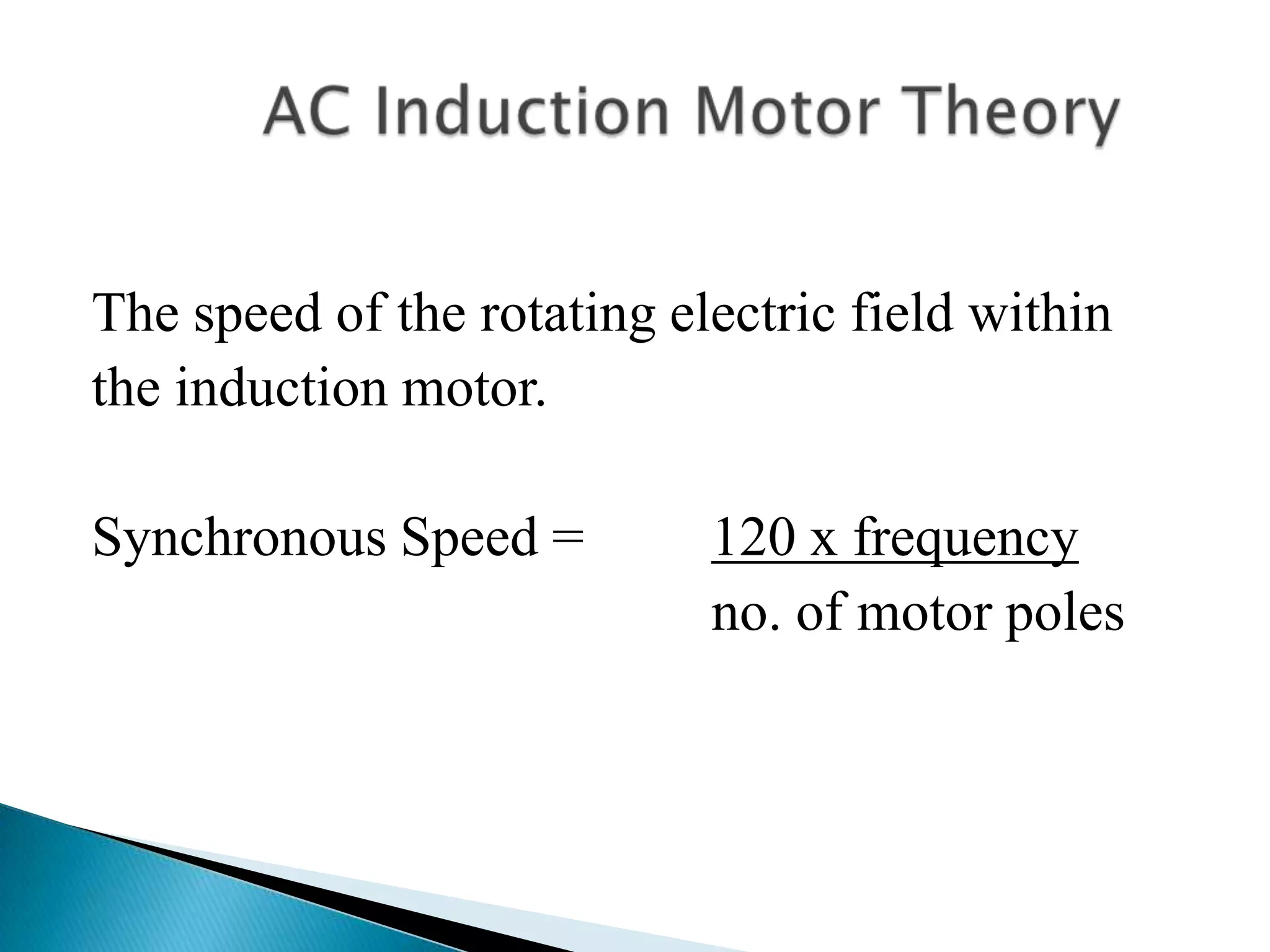
The speed of the rotating electric field within
the induction motor.
Synchronous Speed = 120 x frequency
no. of motor poles
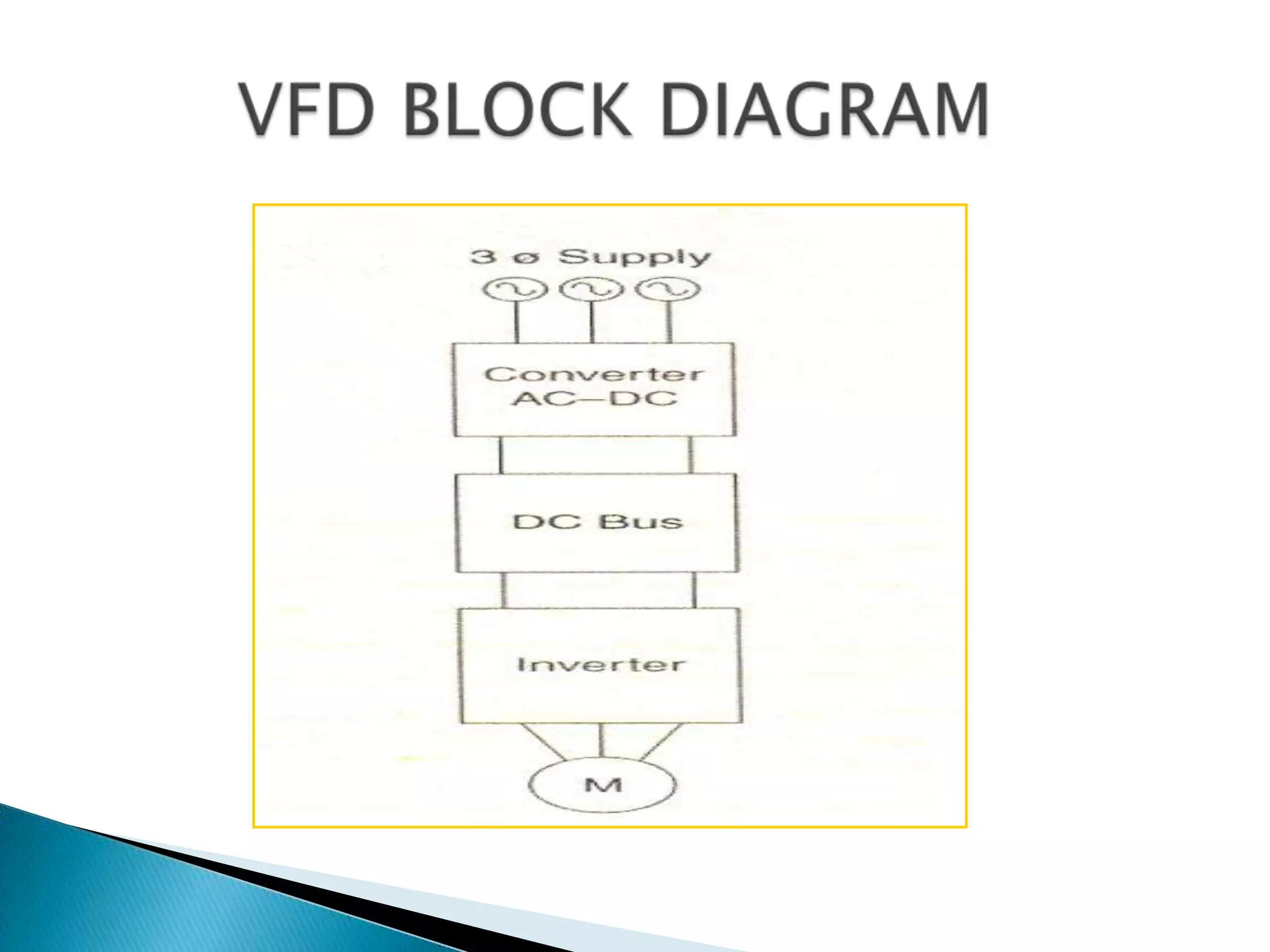
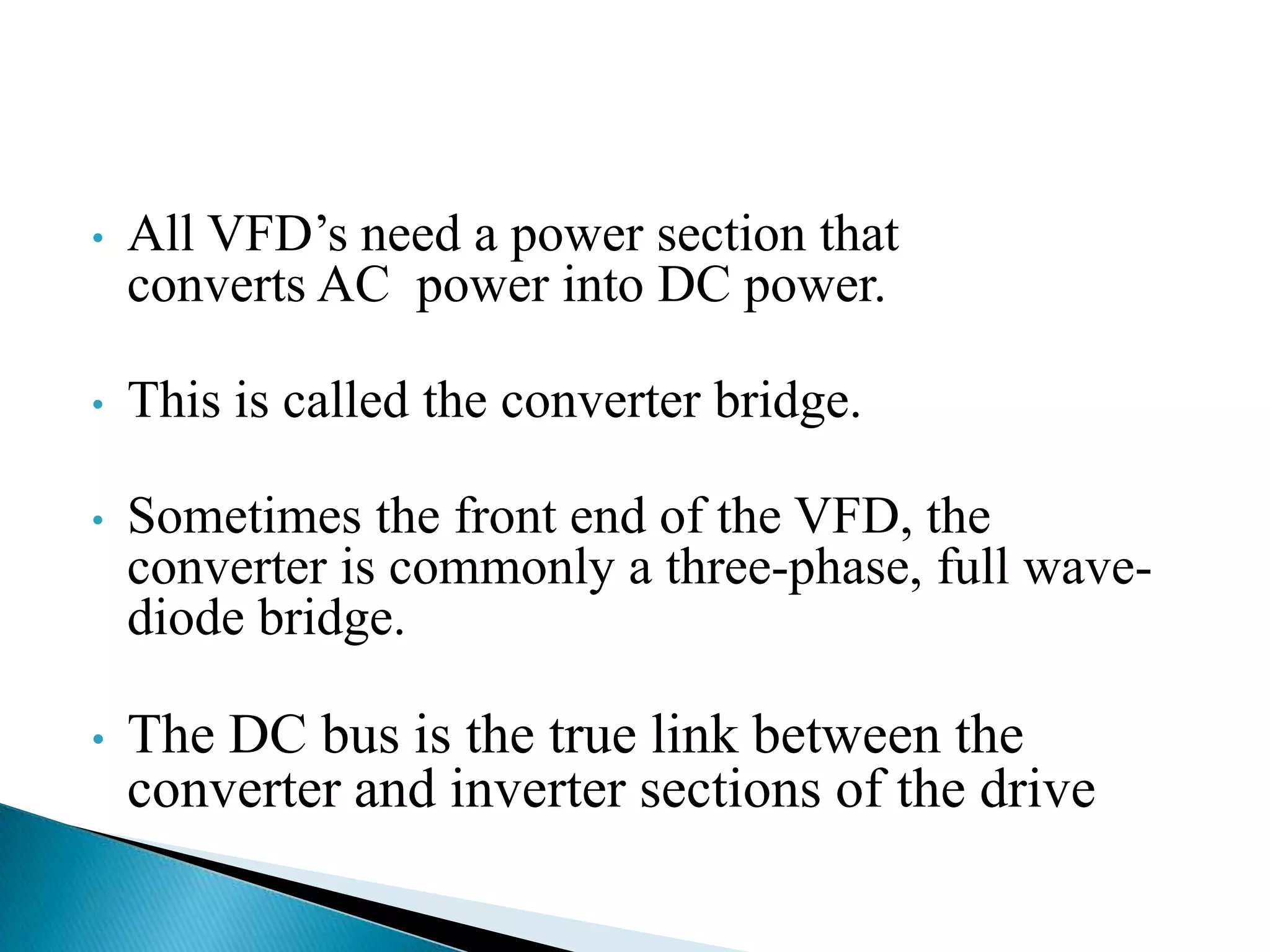
• All VFD’s need a power section that
converts AC power into DC power.
• This is called the converter bridge.
• Sometimes the front end of the VFD, the
converter is commonly a three-phase, full wave-
diode bridge.
• The DC bus is the true link between the
converter and inverter sections of the drive
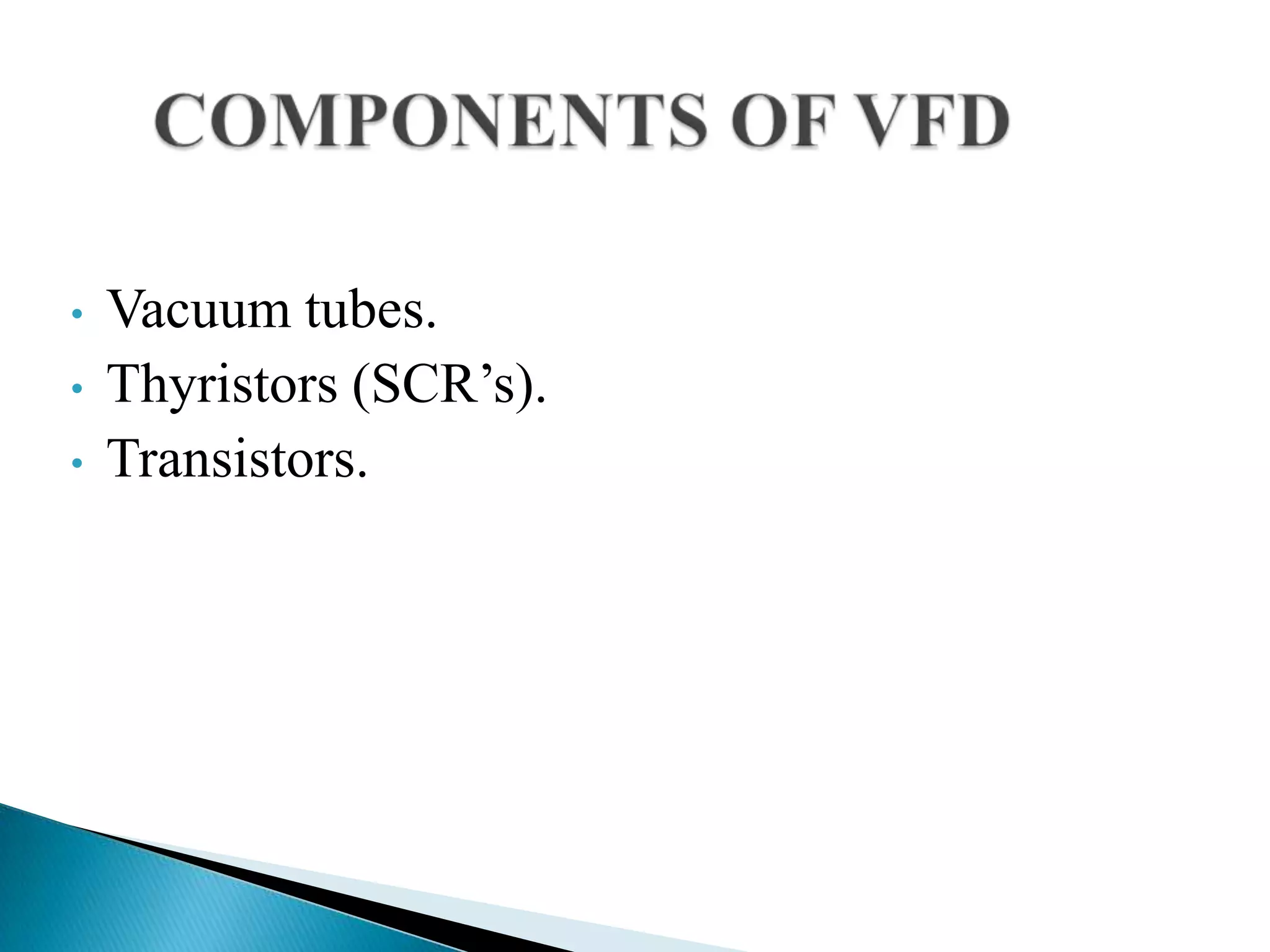
• Vacuum tubes.
• Thyristors (SCR’s).
• Transistors.
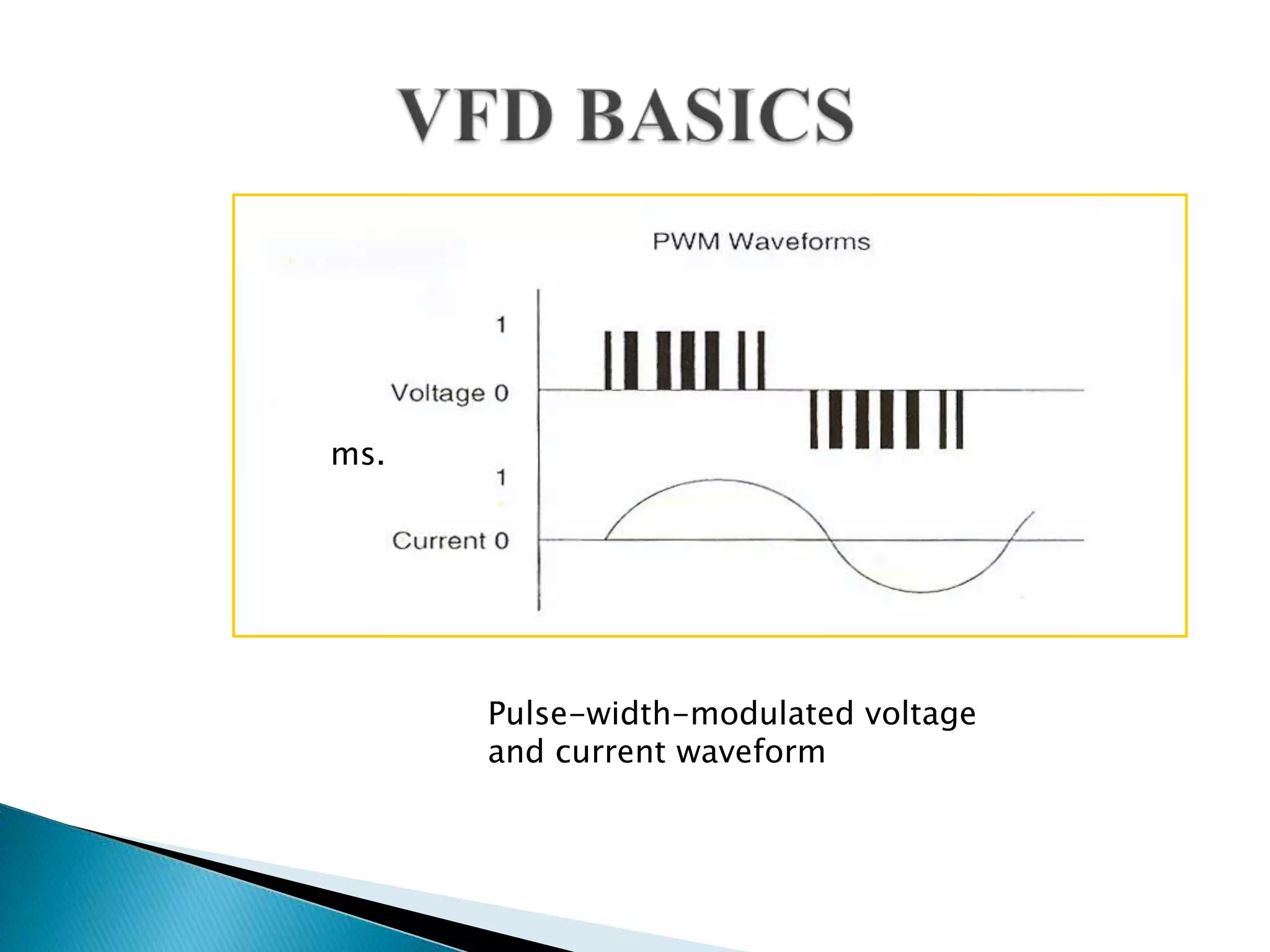
ms.
Pulse-width-modulated voltage
and current waveform
• Control of process temperature and pressure.
• Maintenance costs can be lower.
• Save energy.
• Limit the torque
• Set-up Parameters
• The Control Method
• Acceleration or Accel-Ramp Rate
• Automatic Restart
• Stopping Method
• Automatic Signals
• Water Supply Pump Application
• Conveyor Application
• Exhaust Fan Application
• Compressor Application
• Significant energy savings
• Easy setup & programming
• Better design
• Competitive edge

variablefrequencydrives

  • 1.
  • 2.
    1. What isVFD? 2. Purpose Of VFD 3. VFD System 4. Drive Operation 5. Operating Modes 6. AC Induction motor 7. components 8. Advantages 9. Function & Features 10. Applications.
  • 3.
    Variable Frequency Drives Thistechnology has several different names such as : • Variable speed drives. • Adjustable speed drives. • Adjustable frequency drives. • Frequency converter.
  • 4.
    • pump andfan applications. • control and regulation. • Speeding up or slowing down a machine or process. • Protection from overload currents • Safe Acceleration
  • 7.
    A variable frequencydrives used in a drive system consisting of the following three main sub-systems: • AC Motor. • Controller. • Operator Interface.
  • 9.
    • In variable-speedapplications, a dc motor may be operating in one or more modes: – Motoring. – regenerative braking. – dynamic braking. – Plugging. – four quadrants.
  • 10.
  • 15.
  • 16.
    • Torque isproduced as the induction motor generates flux in its rotating field. • This flux must remain constant to produce full-load torque.
  • 17.
    The speed ofthe rotating electric field within the induction motor. Synchronous Speed = 120 x frequency no. of motor poles
  • 19.
    • All VFD’sneed a power section that converts AC power into DC power. • This is called the converter bridge. • Sometimes the front end of the VFD, the converter is commonly a three-phase, full wave- diode bridge. • The DC bus is the true link between the converter and inverter sections of the drive
  • 20.
    • Vacuum tubes. •Thyristors (SCR’s). • Transistors.
  • 21.
  • 23.
    • Control ofprocess temperature and pressure. • Maintenance costs can be lower. • Save energy. • Limit the torque
  • 24.
    • Set-up Parameters •The Control Method • Acceleration or Accel-Ramp Rate • Automatic Restart • Stopping Method • Automatic Signals
  • 25.
    • Water SupplyPump Application • Conveyor Application • Exhaust Fan Application • Compressor Application
  • 26.
    • Significant energysavings • Easy setup & programming • Better design • Competitive edge