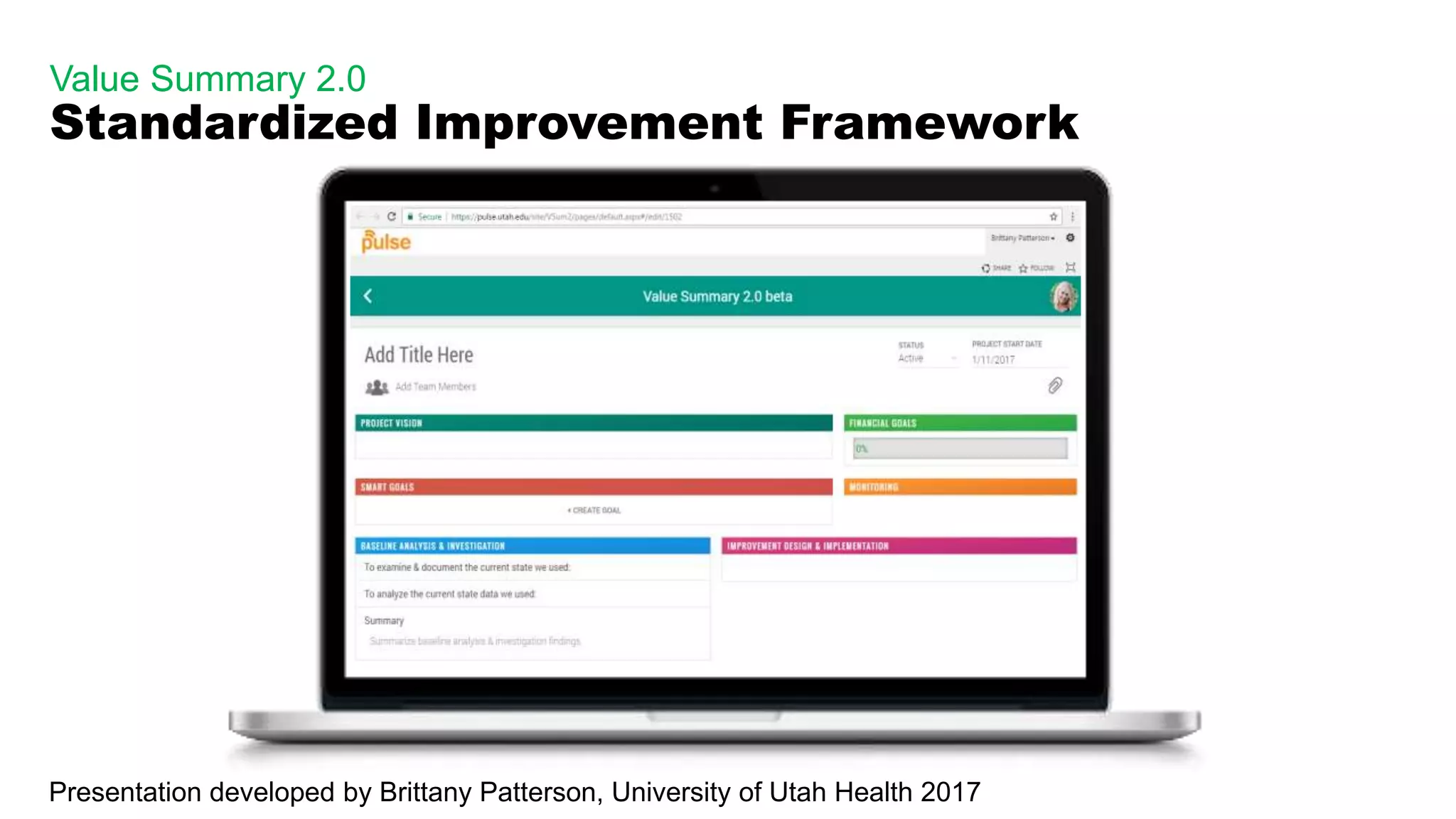
Value Summary 2.0
Standardized Improvement Framework
Presentation developed by Brittany Patterson, University of Utah Health 2017
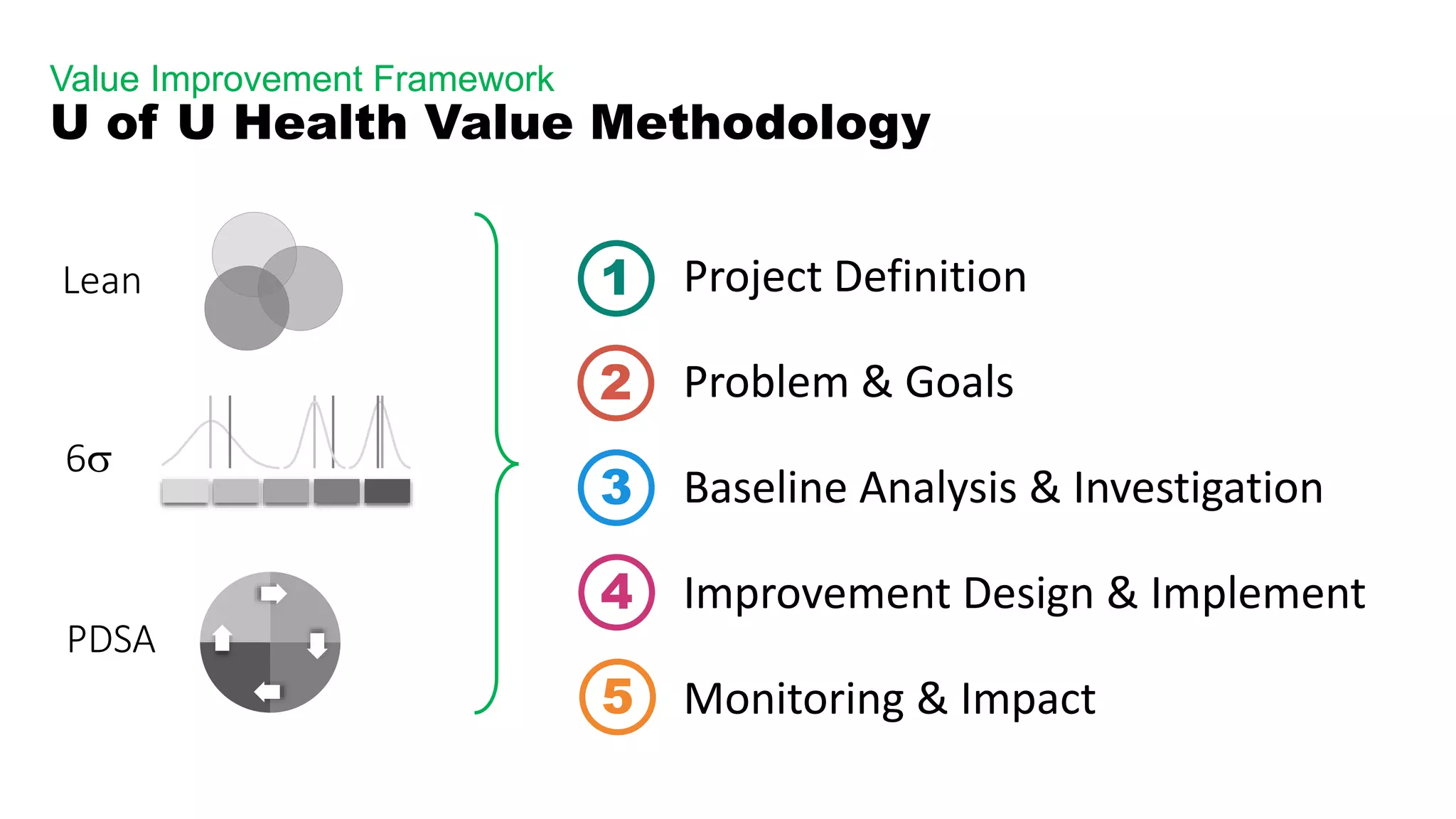
Lean
6s
PDSA
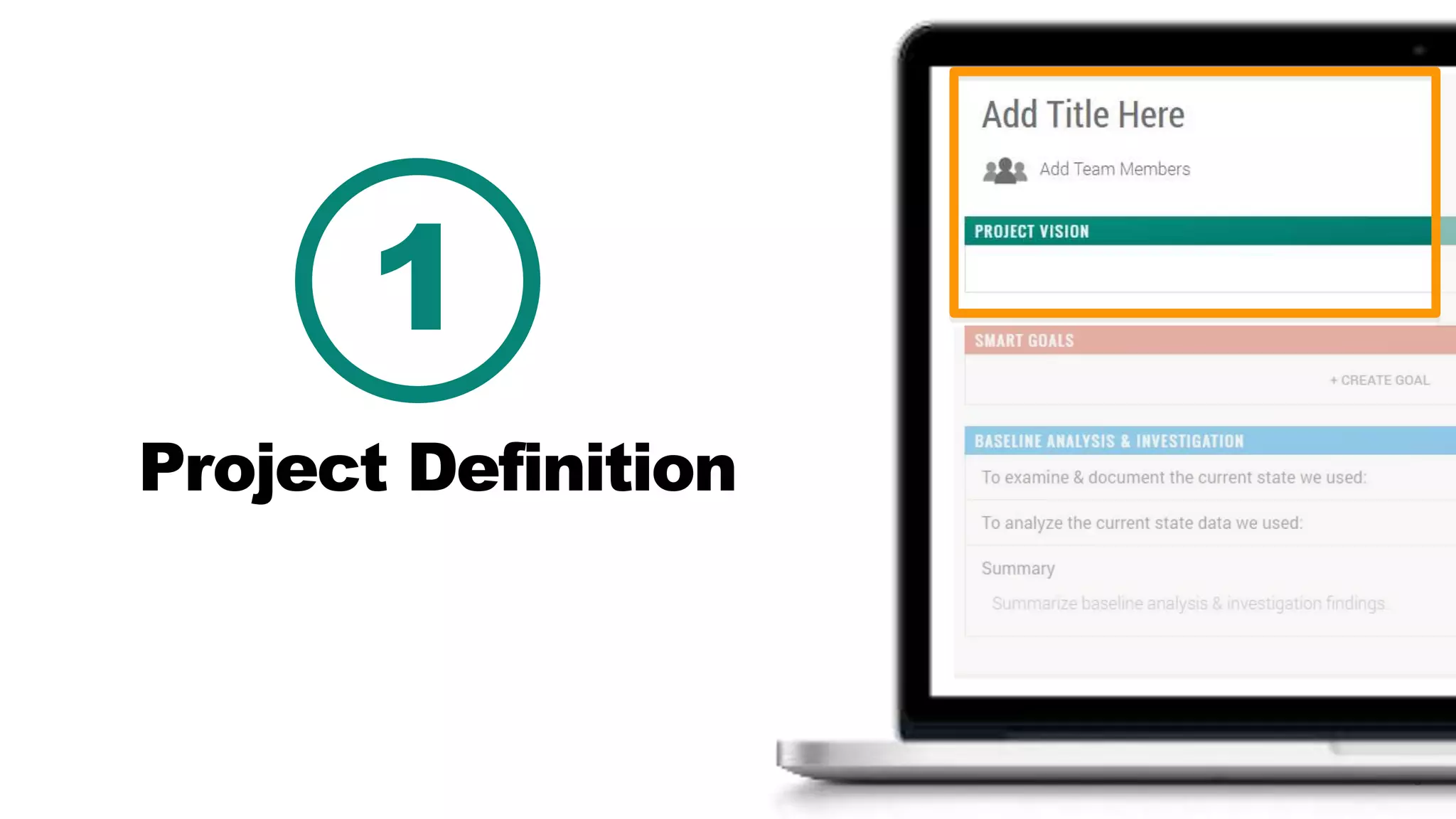
Project Definition
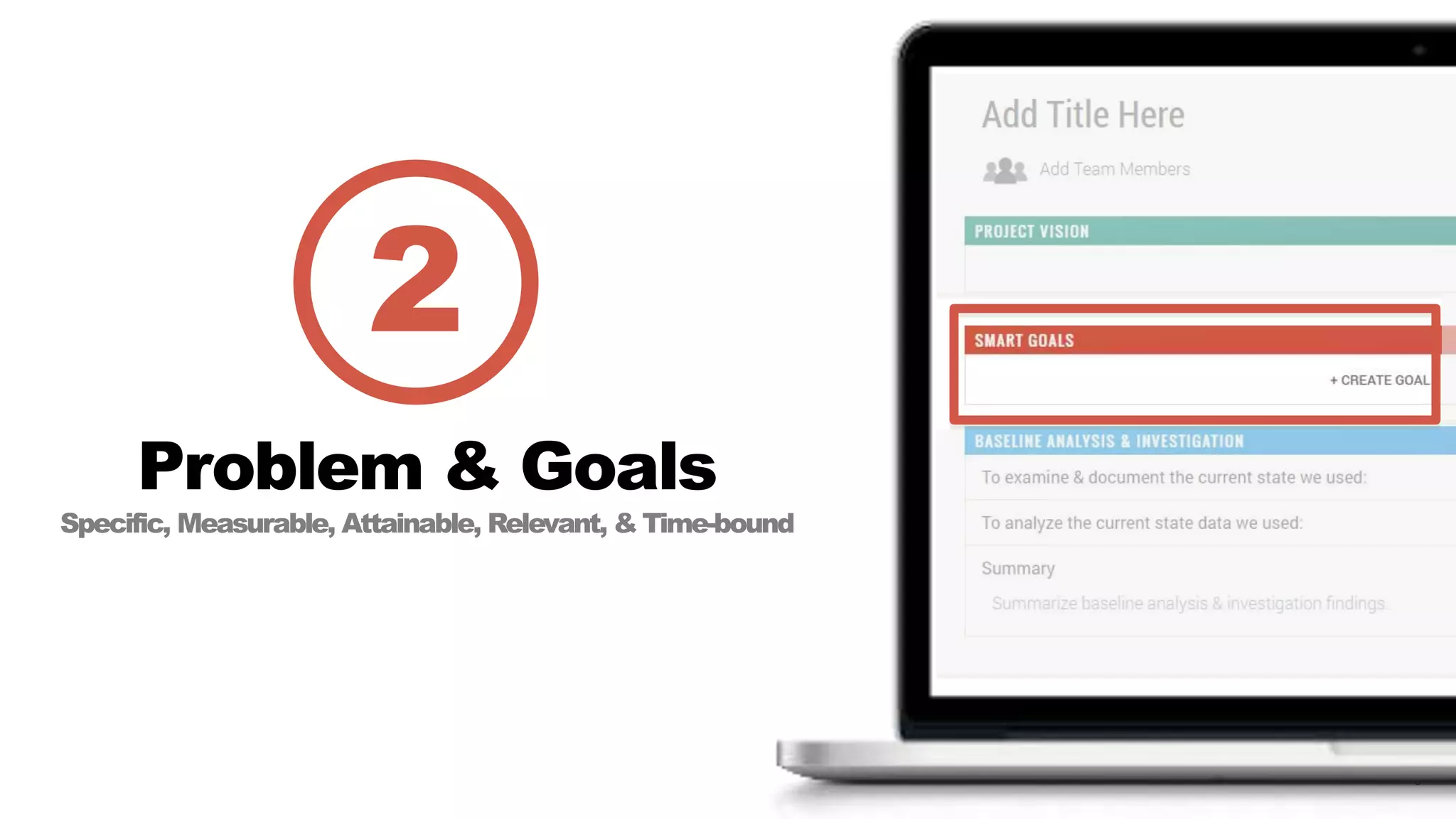
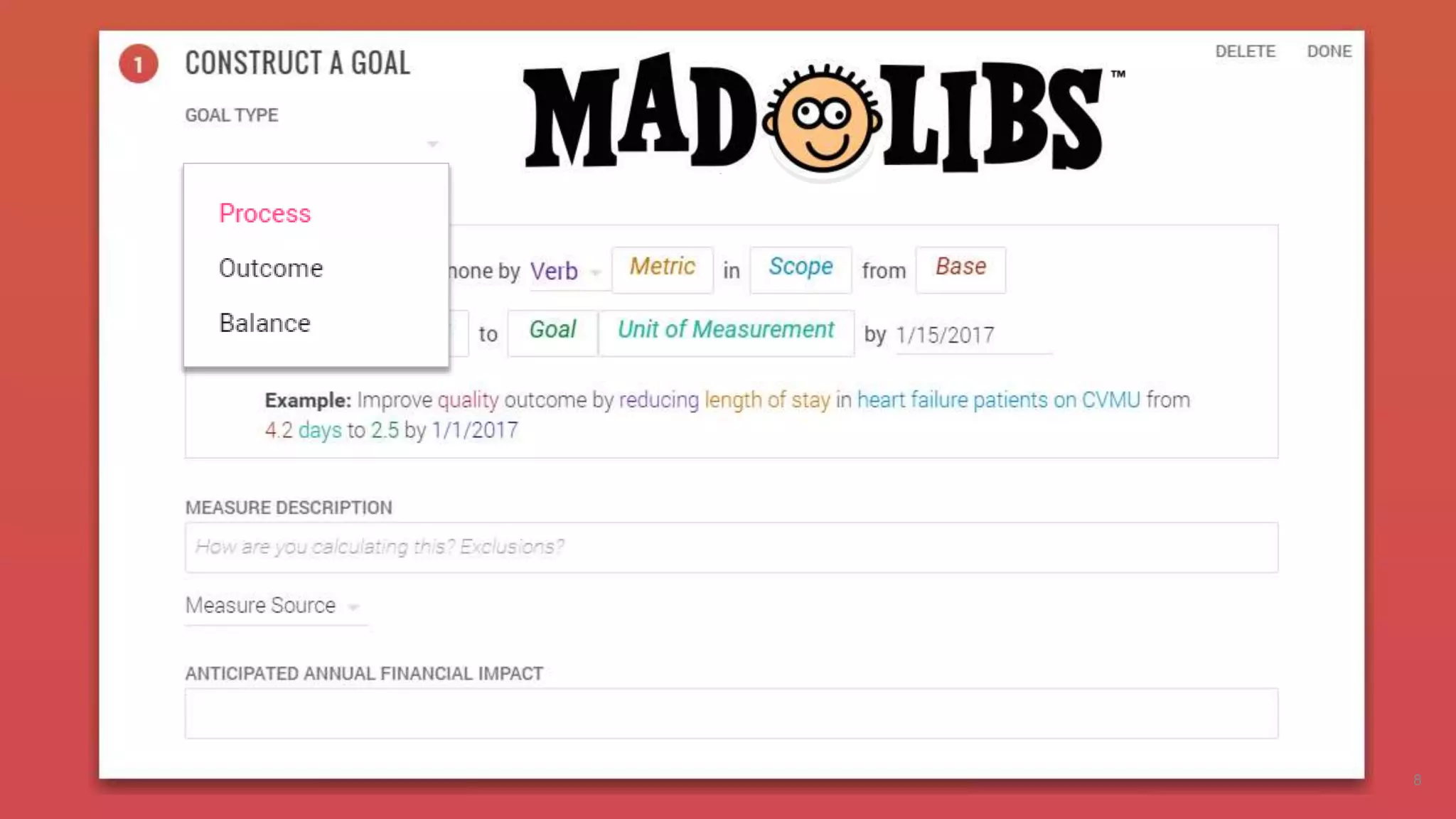
Problem & Goals
Baseline Analysis & Investigation
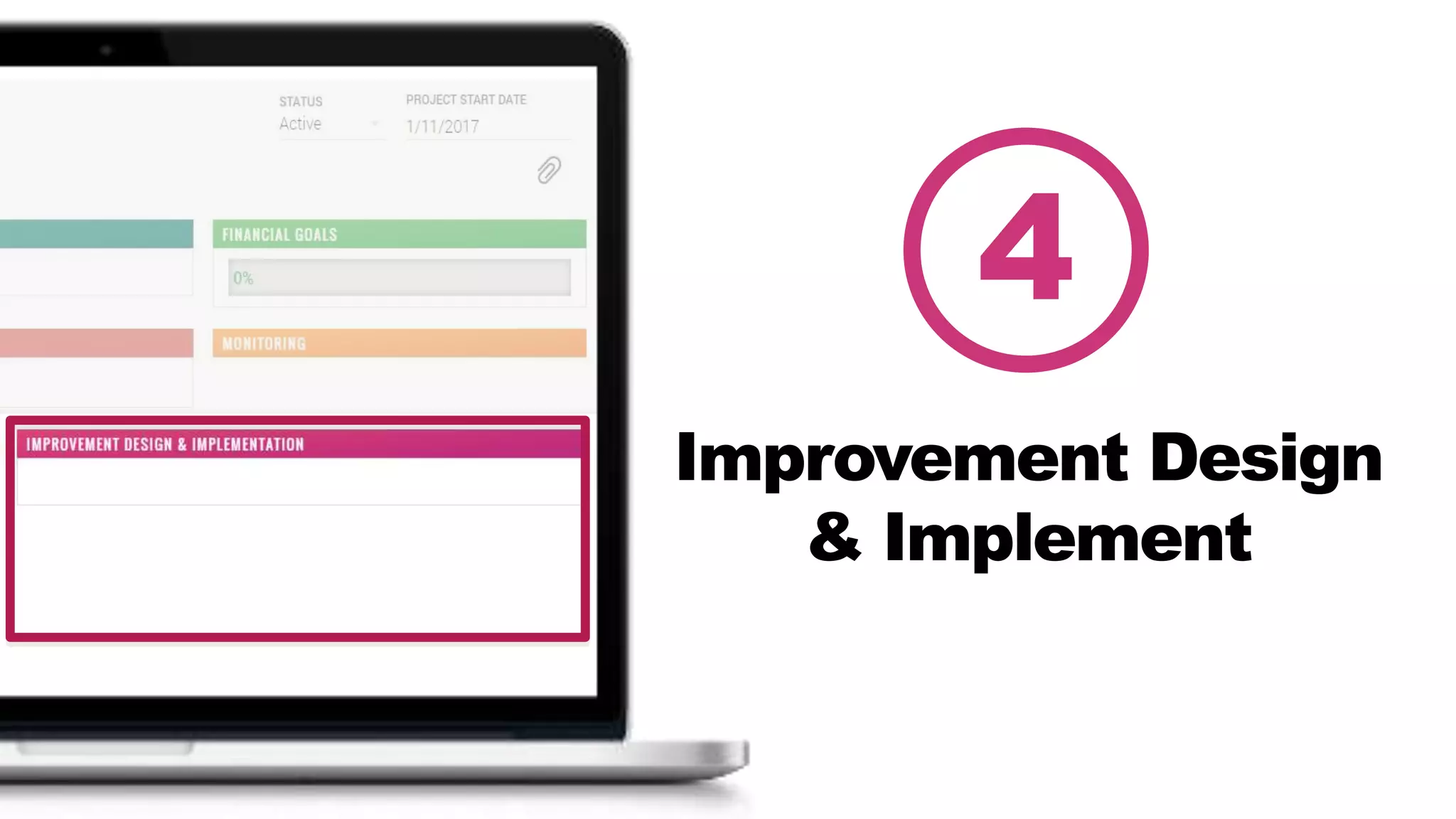
Improvement Design & Implement
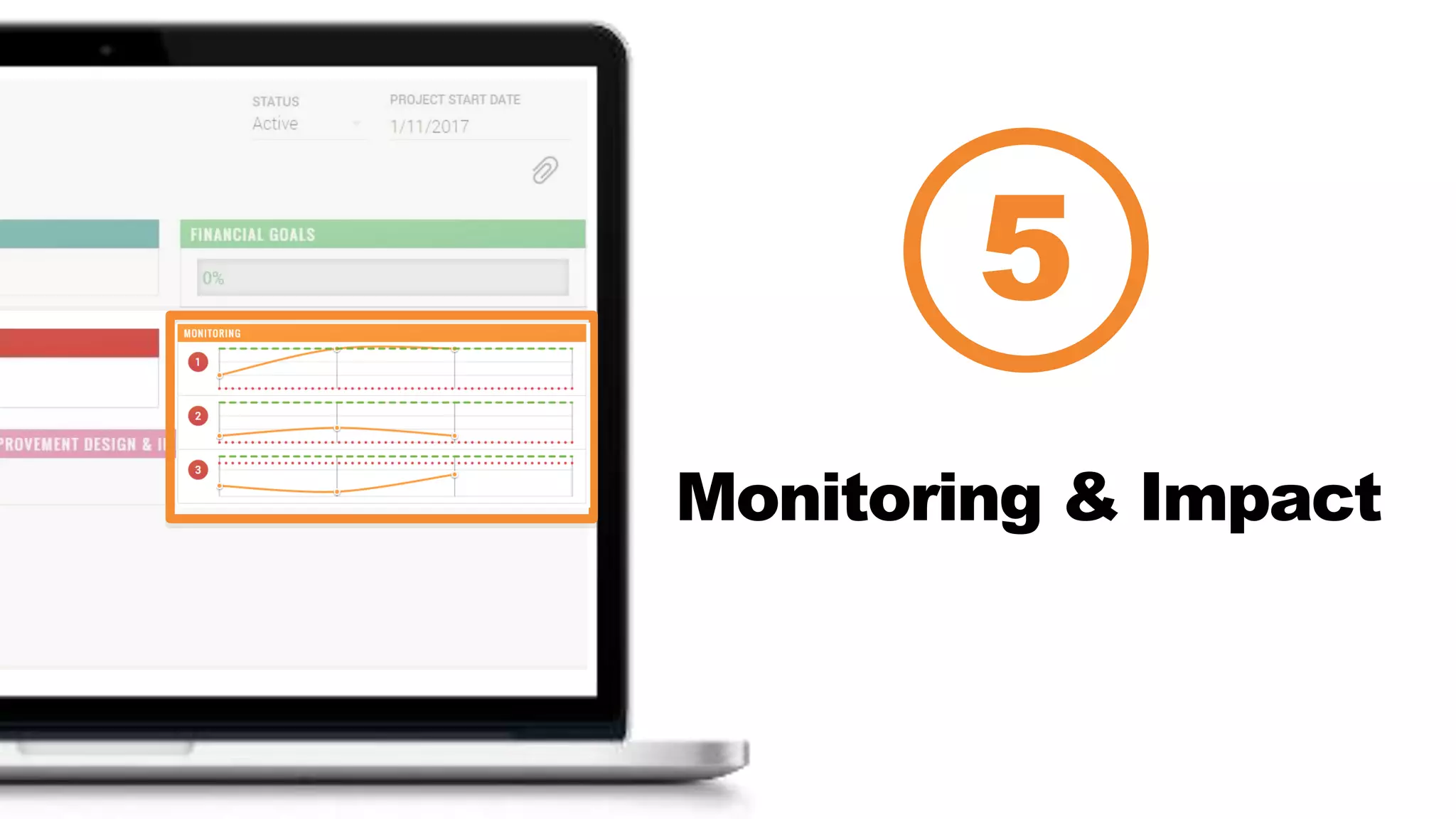
Monitoring & Impact
1
2
3
4
5
Value Improvement Framework
U of U Health Value Methodology
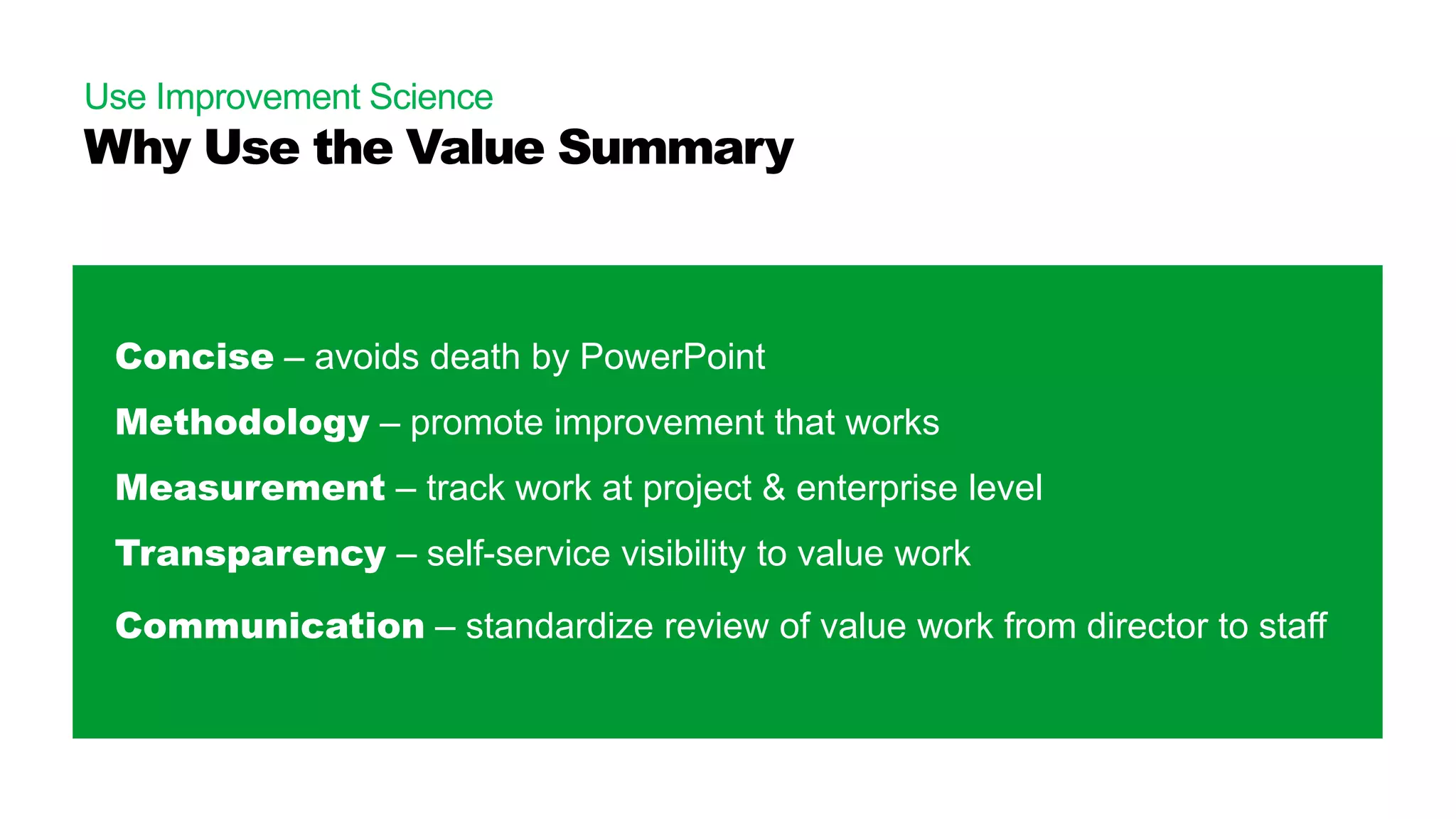
Use Improvement Science
Why Use the Value Summary
Concise – avoids death by PowerPoint
Methodology – promote improvement that works
Measurement – track work at project & enterprise level
Transparency – self-service visibility to value work
Communication – standardize review of value work from director to staff
5 Steps of Value Methodology
using the Value Summary
1 2 3 4 5
Project Definition
5
1
6
Problem & Goals
Specific, Measurable, Attainable, Relevant, & Time-bound
2
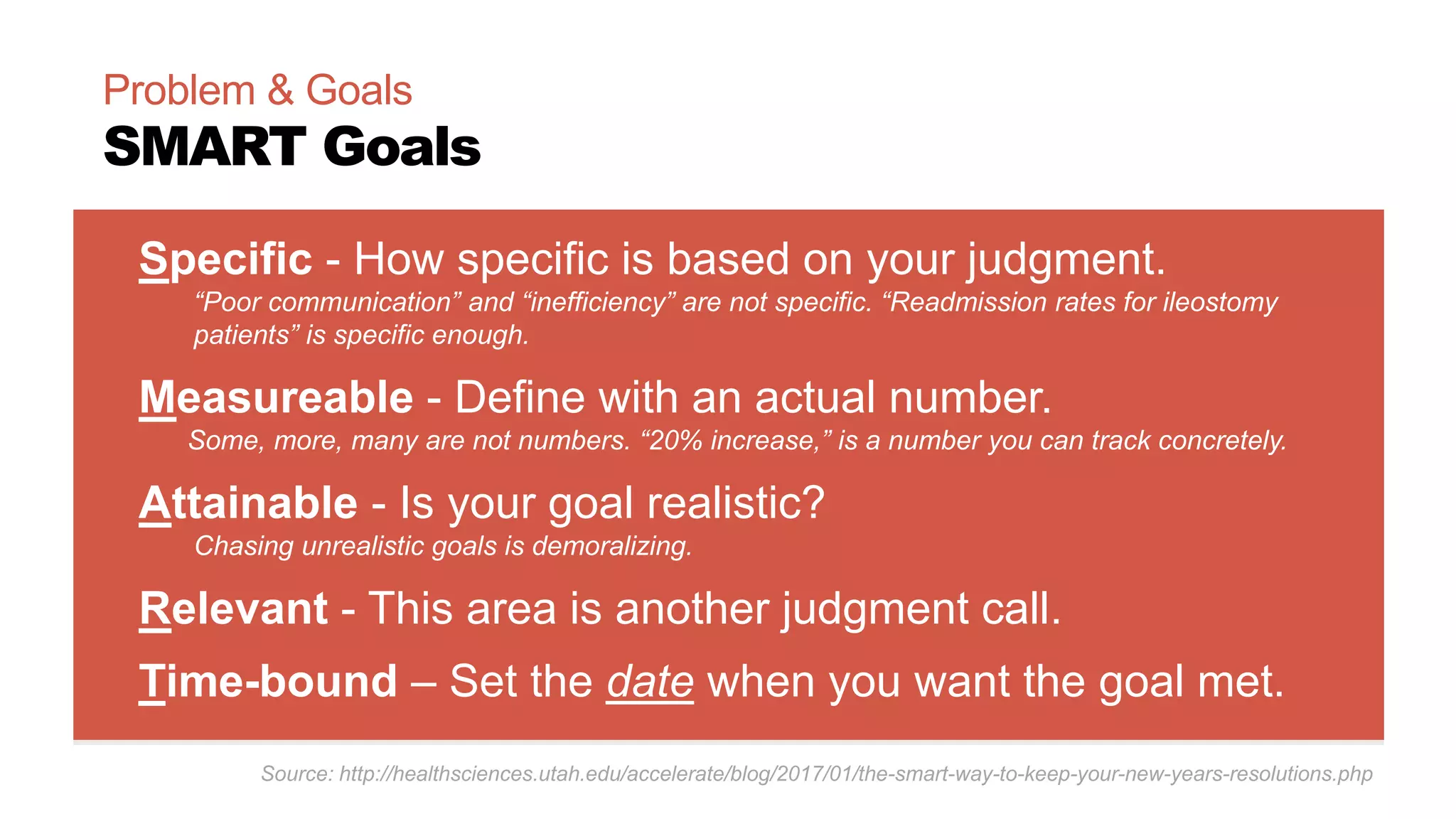
Specific - How specific is based on your judgment.
“Poor communication” and “inefficiency” are not specific. “Readmission rates for ileostomy
patients” is specific enough.
Measureable - Define with an actual number.
Some, more, many are not numbers. “20% increase,” is a number you can track concretely.
Attainable - Is your goal realistic?
Chasing unrealistic goals is demoralizing.
Relevant - This area is another judgment call.
Time-bound – Set the date when you want the goal met.
Problem & Goals
SMART Goals
Source: http://healthsciences.utah.edu/accelerate/blog/2017/01/the-smart-way-to-keep-your-new-years-resolutions.php
8
9
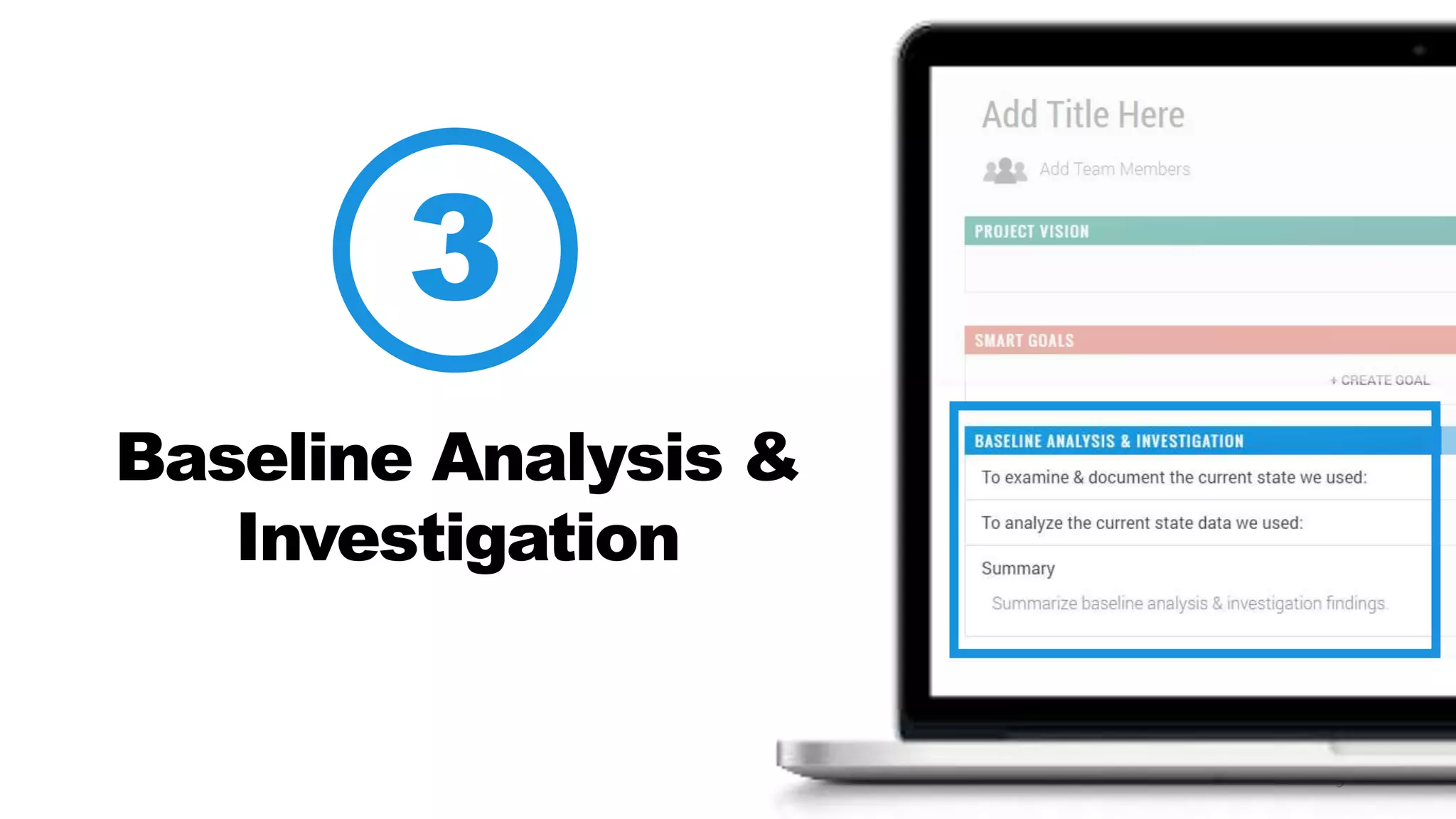
Baseline Analysis &
Investigation
3
Baseline Analysis & Investigation
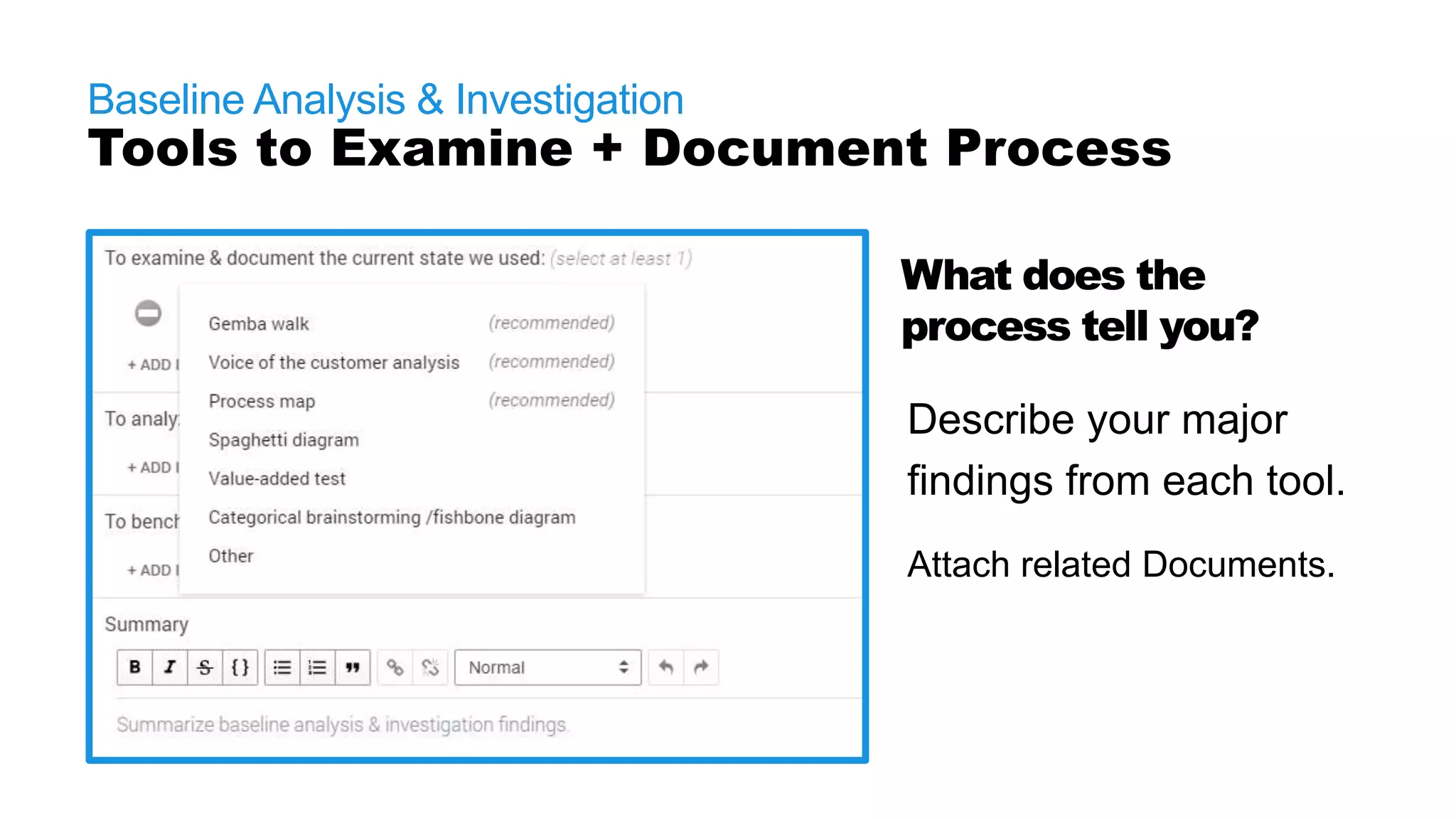
Tools to Examine + Document Process
What does the
process tell you?
Describe your major
findings from each tool.
Attach related Documents.
Baseline Analysis & Investigation
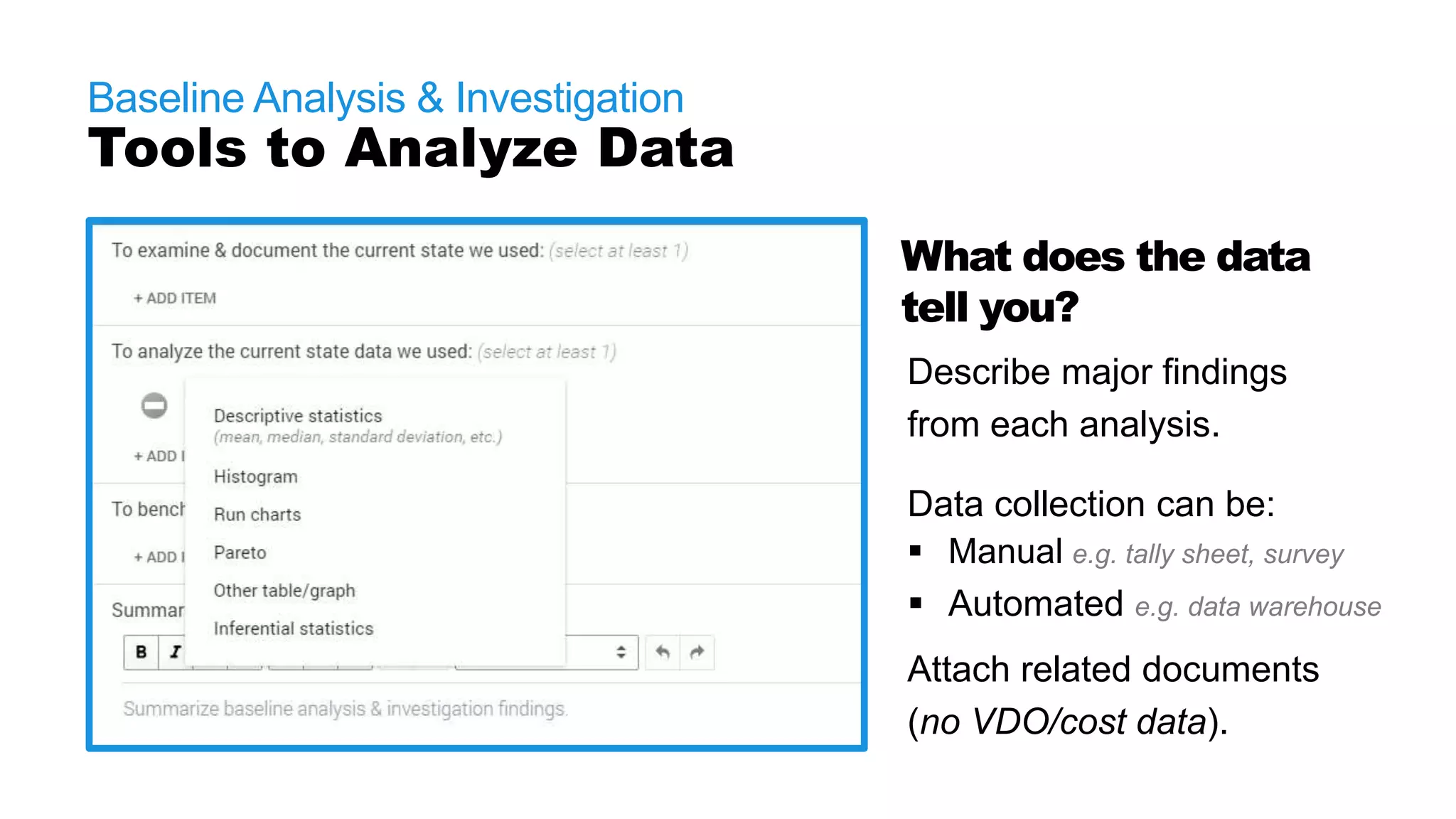
Tools to Analyze Data
What does the data
tell you?
Describe major findings
from each analysis.
Data collection can be:
 Manual e.g. tally sheet, survey
 Automated e.g. data warehouse
Attach related documents
(no VDO/cost data).
Baseline Analysis & Investigation
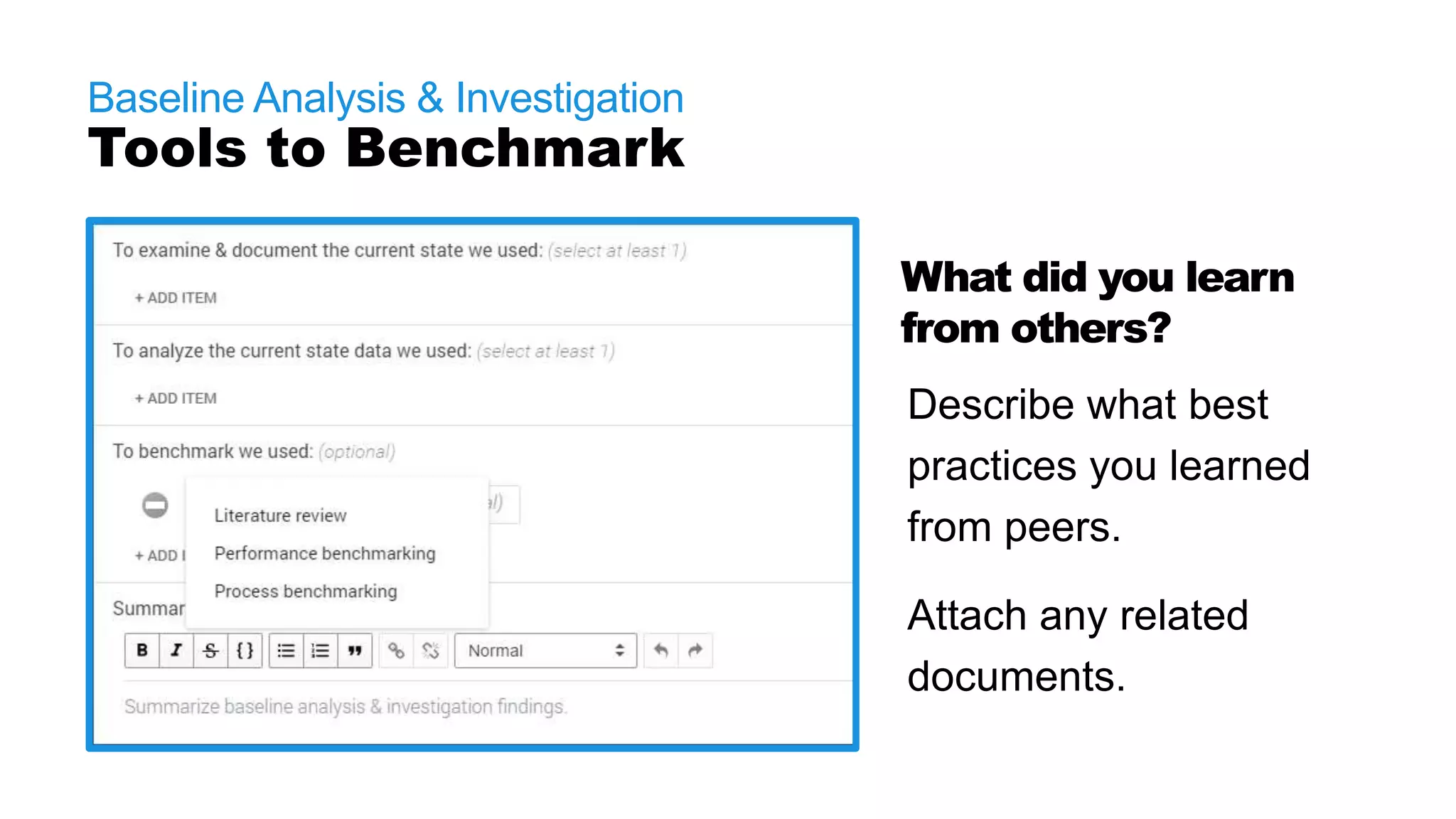
Tools to Benchmark
What did you learn
from others?
Describe what best
practices you learned
from peers.
Attach any related
documents.
Improvement Design
& Implement
4
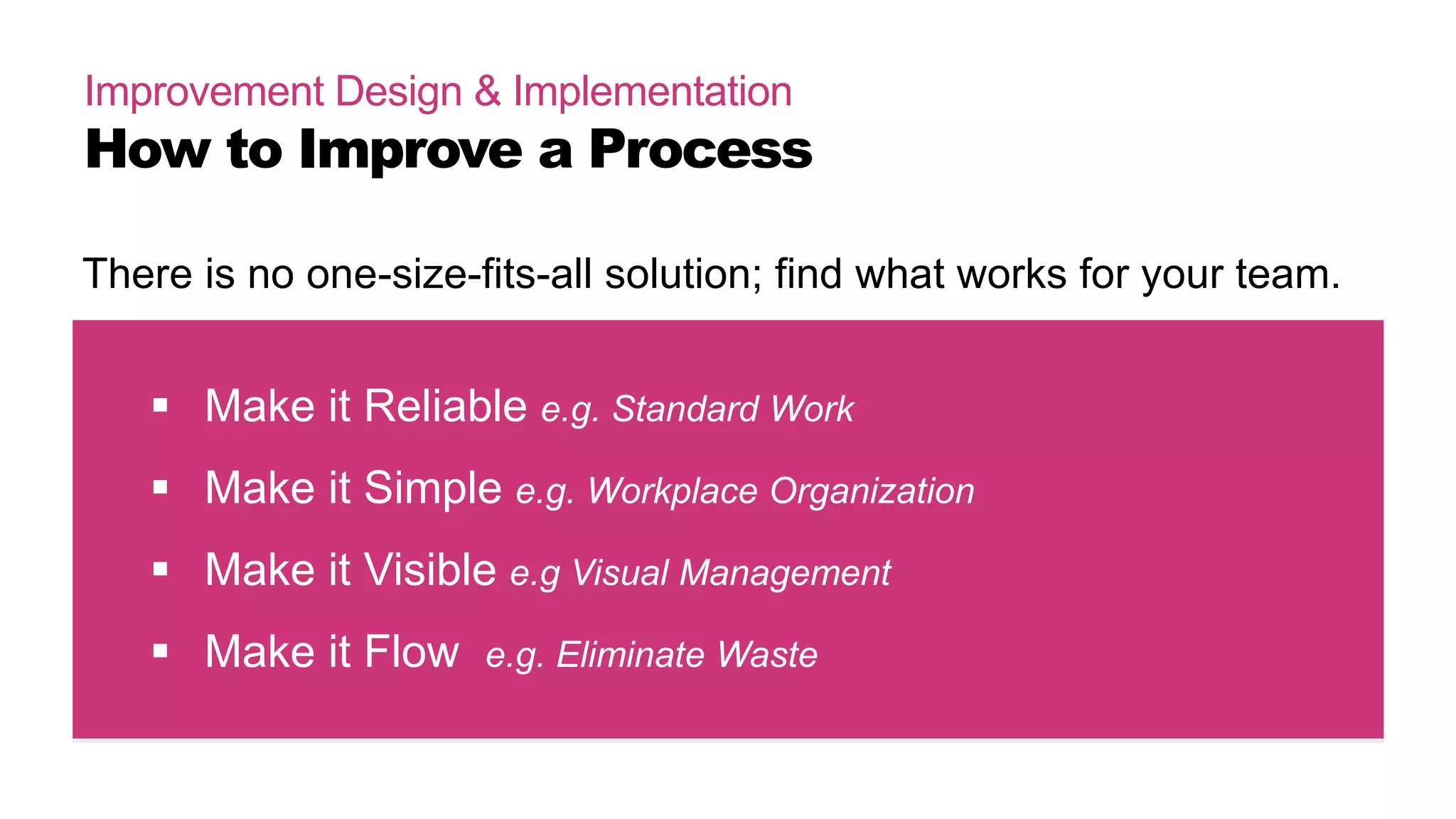
Improvement Design & Implementation
How to Improve a Process
 Make it Reliable e.g. Standard Work
 Make it Simple e.g. Workplace Organization
 Make it Visible e.g Visual Management
 Make it Flow e.g. Eliminate Waste
There is no one-size-fits-all solution; find what works for your team.
Monitoring & Impact
5
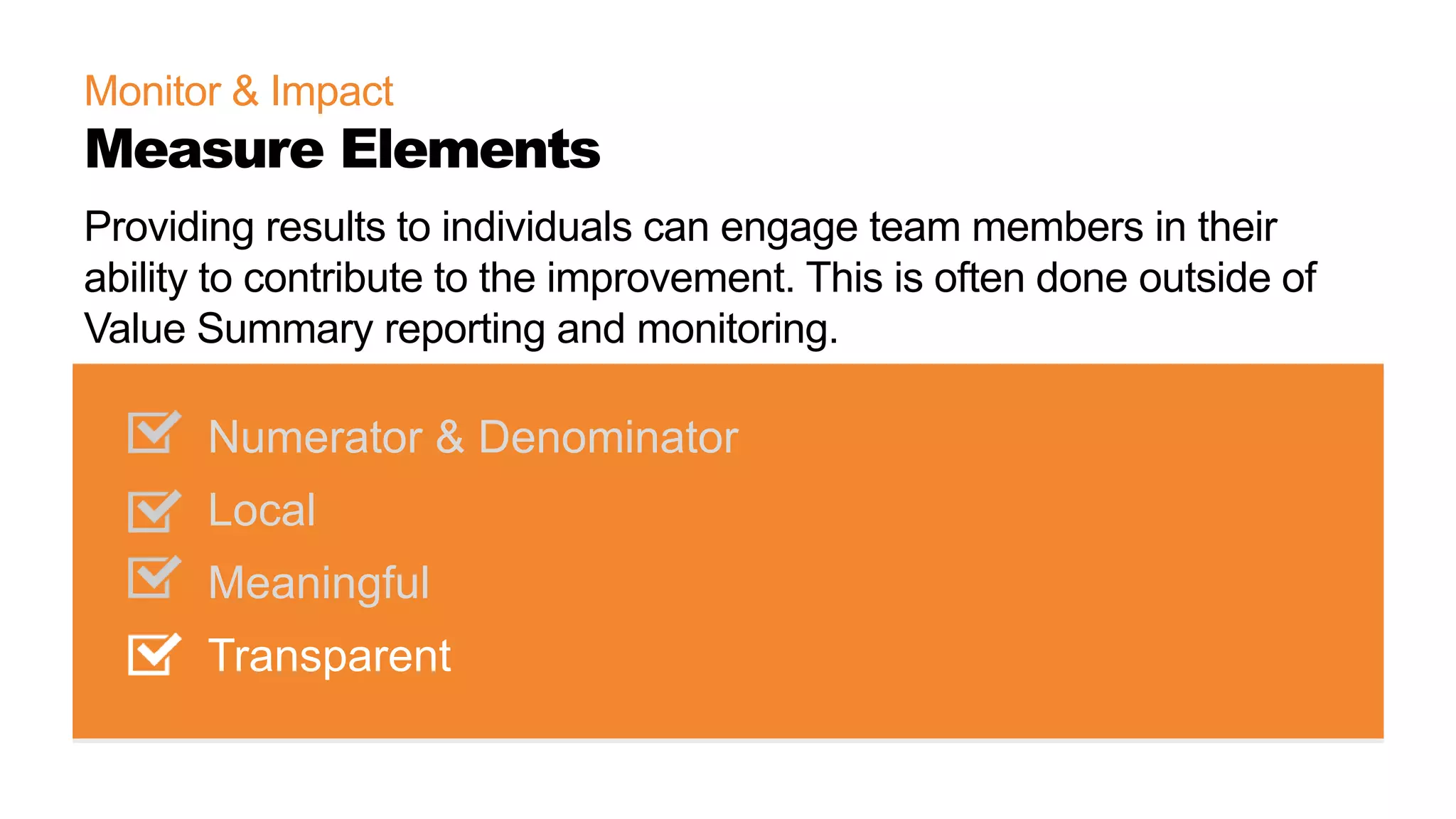
Monitor & Impact
Measure Elements
Numerator & Denominator
Local
Meaningful
Transparent
Providing results to individuals can engage team members in their
ability to contribute to the improvement. This is often done outside of
Value Summary reporting and monitoring.
Monitoring & Impact
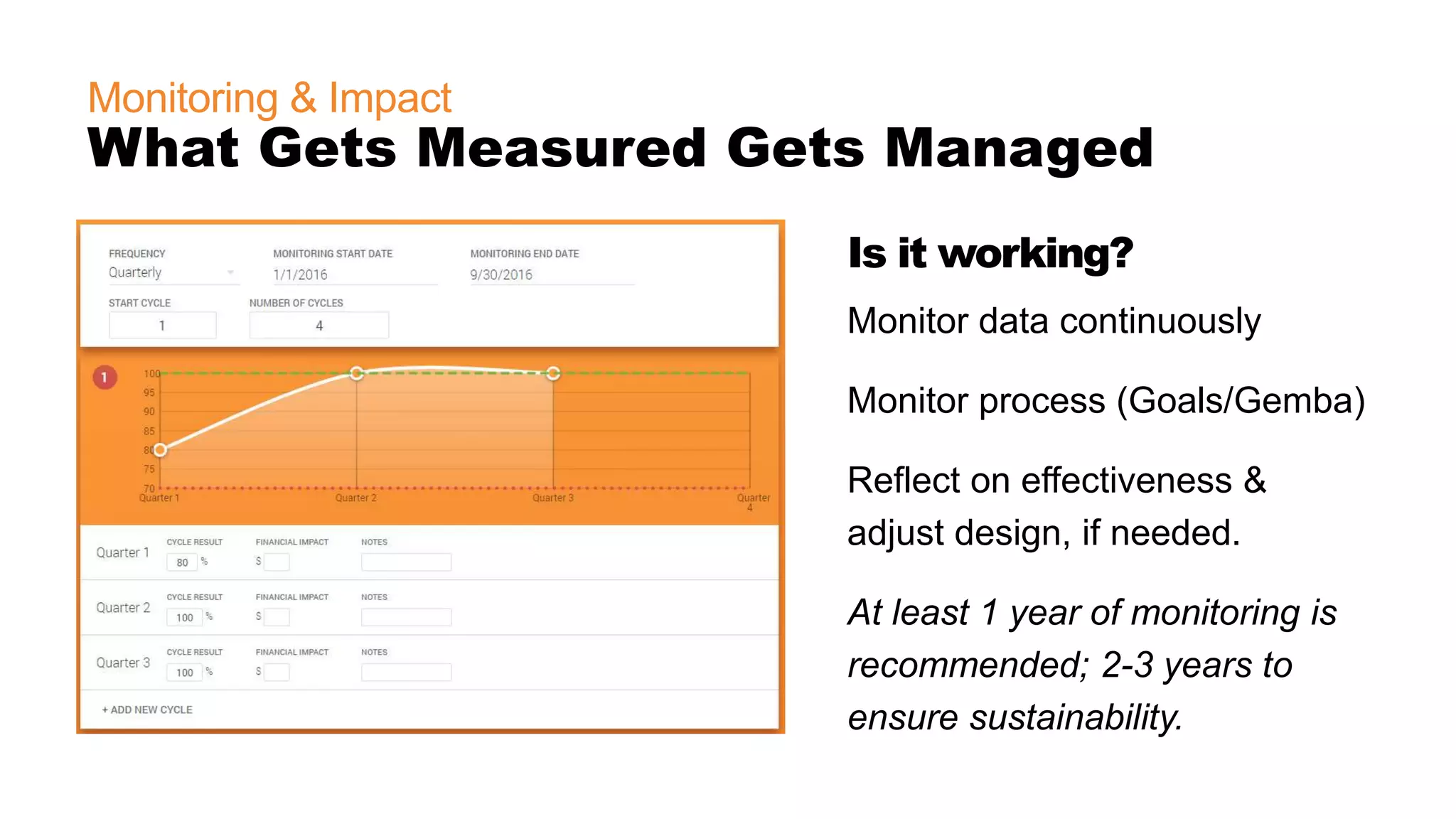
What Gets Measured Gets Managed
Monitor data continuously
Monitor process (Goals/Gemba)
Reflect on effectiveness &
adjust design, if needed.
At least 1 year of monitoring is
recommended; 2-3 years to
ensure sustainability.
Is it working?
Its Not for Everything
When NOT to Use Value Summary
 Known problem & troubleshooting the cause is simple
simple problem-cause-solution will suffice
 Analyses with no plans to implement change
(e.g. evaluate variation in Radiology)
If you don’t have real SMART goals, you may not need a value summary
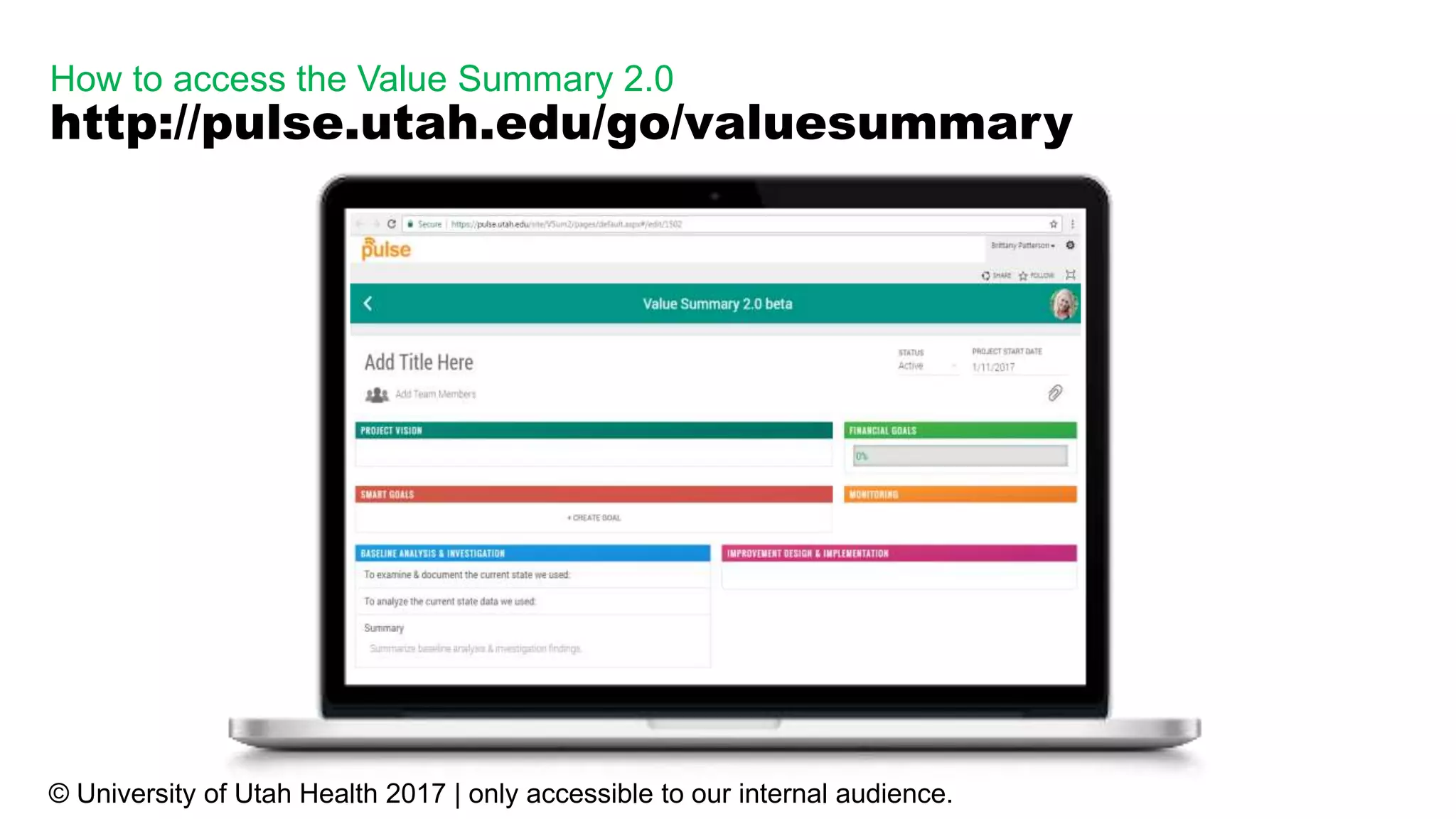
How to access the Value Summary 2.0
http://pulse.utah.edu/go/valuesummary
© University of Utah Health 2017 | only accessible to our internal audience.

Value Summary Online Improvement Portal: Product Overview

  • 1.
    Value Summary 2.0 StandardizedImprovement Framework Presentation developed by Brittany Patterson, University of Utah Health 2017
  • 2.
    Lean 6s PDSA Project Definition Problem &Goals Baseline Analysis & Investigation Improvement Design & Implement Monitoring & Impact 1 2 3 4 5 Value Improvement Framework U of U Health Value Methodology
  • 3.
    Use Improvement Science WhyUse the Value Summary Concise – avoids death by PowerPoint Methodology – promote improvement that works Measurement – track work at project & enterprise level Transparency – self-service visibility to value work Communication – standardize review of value work from director to staff
  • 4.
    5 Steps ofValue Methodology using the Value Summary 1 2 3 4 5
  • 5.
  • 6.
    6 Problem & Goals Specific,Measurable, Attainable, Relevant, & Time-bound 2
  • 7.
    Specific - Howspecific is based on your judgment. “Poor communication” and “inefficiency” are not specific. “Readmission rates for ileostomy patients” is specific enough. Measureable - Define with an actual number. Some, more, many are not numbers. “20% increase,” is a number you can track concretely. Attainable - Is your goal realistic? Chasing unrealistic goals is demoralizing. Relevant - This area is another judgment call. Time-bound – Set the date when you want the goal met. Problem & Goals SMART Goals Source: http://healthsciences.utah.edu/accelerate/blog/2017/01/the-smart-way-to-keep-your-new-years-resolutions.php
  • 8.
  • 9.
  • 10.
    Baseline Analysis &Investigation Tools to Examine + Document Process What does the process tell you? Describe your major findings from each tool. Attach related Documents.
  • 11.
    Baseline Analysis &Investigation Tools to Analyze Data What does the data tell you? Describe major findings from each analysis. Data collection can be:  Manual e.g. tally sheet, survey  Automated e.g. data warehouse Attach related documents (no VDO/cost data).
  • 12.
    Baseline Analysis &Investigation Tools to Benchmark What did you learn from others? Describe what best practices you learned from peers. Attach any related documents.
  • 13.
  • 14.
    Improvement Design &Implementation How to Improve a Process  Make it Reliable e.g. Standard Work  Make it Simple e.g. Workplace Organization  Make it Visible e.g Visual Management  Make it Flow e.g. Eliminate Waste There is no one-size-fits-all solution; find what works for your team.
  • 15.
  • 16.
    Monitor & Impact MeasureElements Numerator & Denominator Local Meaningful Transparent Providing results to individuals can engage team members in their ability to contribute to the improvement. This is often done outside of Value Summary reporting and monitoring.
  • 17.
    Monitoring & Impact WhatGets Measured Gets Managed Monitor data continuously Monitor process (Goals/Gemba) Reflect on effectiveness & adjust design, if needed. At least 1 year of monitoring is recommended; 2-3 years to ensure sustainability. Is it working?
  • 18.
    Its Not forEverything When NOT to Use Value Summary  Known problem & troubleshooting the cause is simple simple problem-cause-solution will suffice  Analyses with no plans to implement change (e.g. evaluate variation in Radiology) If you don’t have real SMART goals, you may not need a value summary
  • 19.
    How to accessthe Value Summary 2.0 http://pulse.utah.edu/go/valuesummary © University of Utah Health 2017 | only accessible to our internal audience.

Editor's Notes

  • #3 Measure with VDO
  • #8 http://healthsciences.utah.edu/accelerate/blog/2017/01/the-smart-way-to-keep-your-new-years-resolutions.php
  • #12 Your baseline state isn’t complete until you have data. This is a 2 part discussion: how to get the data (manual – tally sheets, work study or automated - data warehouse, etc. )
  • #15 Make it visible (Visual Management) Make it reliable (Standard Work) Make it simple (Workplace Organization) Make it Flow (Eliminate Waste) Make it …
  • #20 Problem solving is not a form you fill, but value summaries help us gather our thoughts. There is a method in this “madness” of process improvement: Define the problem (vision) What do you want the performance of the process to be (realistically) (goal) Find out why the process isn’t performing this way now (baseline) Implement a “fix” that based on your hypothesis will make the process perform that way (Pilot Implementations) Did it work? Why? Why not? (monitor)