Valentines
Day
Celebrating love, affection, and connection
through heartfelt traditions worldwide.
Introduction
Valentine's Day, celebrated on February 14,
honors love and affection. Originating from
Saint Valentine’s legacy, it’s now a global
tradition marked by exchanging gifts,
heartfelt messages, and romantic gestures.
History And Origins
Valentine's Day traces back to ancient Roman traditions and Saint
Valentine, a martyr who defied authority to marry couples. Over
centuries, it evolved into a global celebration of love and affection.
Evolution
n
Religious to Romantic
Began as a Christian feast, evolving into a
celebration of love in the Middle Ages.
Modern Celebration
Industrialization introduced cards and
gifts, now a global tradition.
Celebratio
n
Valentine’s Day is celebrated globally with
unique traditions: gift exchanges in the
U.S., chocolates in Japan, love letters in
the UK, and Brazil's “Dia dos Namorados”
honoring couples and love.
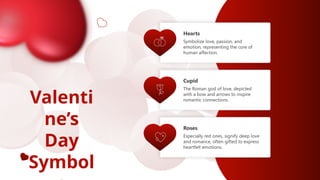
Valenti
ne’s
Day
Symbol
Hearts
Symbolize love, passion, and
emotion, representing the core of
human affection.
Cupid
The Roman god of love, depicted
with a bow and arrows to inspire
romantic connections.
Roses
Especially red ones, signify deep love
and romance, often gifted to express
heartfelt emotions.
Role of Cupid
Mythological Origin
Cupid, the Roman god of love,
symbolizes romance with his bow
and arrows that inspire love.
01
Valentine’s Icon
Often depicted on cards and gifts,
Cupid represents the playful and
passionate aspects of love.
02
Gifts and Traditions
Gifts
Roses, chocolates,
and jewelry
symbolize love
and affection.
Tradition
Exchanging cards,
romantic dinners, and
thoughtful gestures
celebrate meaningful
connections.
Consumeris
m
Valentine’s Day drives significant
consumerism, with billions spent on cards,
flowers, chocolates, and jewelry. Businesses
capitalize on the holiday, offering deals and
campaigns, making it a major economic
event worldwide.
Pop Culture
Valentine’s Day influences pop culture
through romantic movies like The Notebook,
love songs like "My Heart Will Go On," and
iconic literature, shaping how love and
relationships are celebrated globally.
Romantic Love
Romantic love symbolizes deep emotional
and physical connection between
partners. It fosters intimacy, trust, and
passion, celebrated on Valentine’s Day
through meaningful gestures, heartfelt
words, and shared experiences worldwide.
Myths and Facts
Valentine’s Day myths include its link to pagan
festivals and Cupid’s origin as purely Roman.
Facts reveal its Christian roots, evolving into a
global celebration of love and affection.
Importance
Strengthens Relationships
Love and gratitude deepen
emotional connections and trust.
Promotes Positivity
Appreciation uplifts spirits, builds
respect, and enriches bonds.
Proposals
Valentine’s Day is popular for proposals,
symbolizing romance. Couples often
choose this day for weddings. Events
include romantic getaways, themed parties,
and charitable activities, celebrating love in
diverse, memorable ways.
Conclusion
Valentine’s Day celebrates love, connection, and appreciation. It fosters meaningful
relationships through gestures of affection, uniting people worldwide in expressing gratitude,
deepening bonds, and cherishing the beauty of love.

Valentine's Day Program 2024 for G1.pptx

  • 1.
    Valentines Day Celebrating love, affection,and connection through heartfelt traditions worldwide.
  • 2.
    Introduction Valentine's Day, celebratedon February 14, honors love and affection. Originating from Saint Valentine’s legacy, it’s now a global tradition marked by exchanging gifts, heartfelt messages, and romantic gestures.
  • 3.
    History And Origins Valentine'sDay traces back to ancient Roman traditions and Saint Valentine, a martyr who defied authority to marry couples. Over centuries, it evolved into a global celebration of love and affection.
  • 4.
    Evolution n Religious to Romantic Beganas a Christian feast, evolving into a celebration of love in the Middle Ages. Modern Celebration Industrialization introduced cards and gifts, now a global tradition.
  • 5.
    Celebratio n Valentine’s Day iscelebrated globally with unique traditions: gift exchanges in the U.S., chocolates in Japan, love letters in the UK, and Brazil's “Dia dos Namorados” honoring couples and love.
  • 6.
    Valenti ne’s Day Symbol Hearts Symbolize love, passion,and emotion, representing the core of human affection. Cupid The Roman god of love, depicted with a bow and arrows to inspire romantic connections. Roses Especially red ones, signify deep love and romance, often gifted to express heartfelt emotions.
  • 7.
    Role of Cupid MythologicalOrigin Cupid, the Roman god of love, symbolizes romance with his bow and arrows that inspire love. 01 Valentine’s Icon Often depicted on cards and gifts, Cupid represents the playful and passionate aspects of love. 02
  • 8.
    Gifts and Traditions Gifts Roses,chocolates, and jewelry symbolize love and affection. Tradition Exchanging cards, romantic dinners, and thoughtful gestures celebrate meaningful connections.
  • 9.
    Consumeris m Valentine’s Day drivessignificant consumerism, with billions spent on cards, flowers, chocolates, and jewelry. Businesses capitalize on the holiday, offering deals and campaigns, making it a major economic event worldwide.
  • 10.
    Pop Culture Valentine’s Dayinfluences pop culture through romantic movies like The Notebook, love songs like "My Heart Will Go On," and iconic literature, shaping how love and relationships are celebrated globally.
  • 11.
    Romantic Love Romantic lovesymbolizes deep emotional and physical connection between partners. It fosters intimacy, trust, and passion, celebrated on Valentine’s Day through meaningful gestures, heartfelt words, and shared experiences worldwide.
  • 12.
    Myths and Facts Valentine’sDay myths include its link to pagan festivals and Cupid’s origin as purely Roman. Facts reveal its Christian roots, evolving into a global celebration of love and affection.
  • 13.
    Importance Strengthens Relationships Love andgratitude deepen emotional connections and trust. Promotes Positivity Appreciation uplifts spirits, builds respect, and enriches bonds.
  • 14.
    Proposals Valentine’s Day ispopular for proposals, symbolizing romance. Couples often choose this day for weddings. Events include romantic getaways, themed parties, and charitable activities, celebrating love in diverse, memorable ways.
  • 15.
    Conclusion Valentine’s Day celebrateslove, connection, and appreciation. It fosters meaningful relationships through gestures of affection, uniting people worldwide in expressing gratitude, deepening bonds, and cherishing the beauty of love.