cdc.gov/coronavirus
Building Vaccine Confidence in Health Systems
and Clinics
Tips for Immunization Coordinators
Developed by:
CDC COVID-19 Response
Vaccine Task Force
December 2020
2
Presentation Overview
 COVID-19 vaccines
 mRNA technology
 Vaccine safety monitoring
 Elements of vaccine confidence
 Strategies for building vaccine
confidence in your facility or system
COVID-19 Vaccines and
Vaccine Safety Monitoring
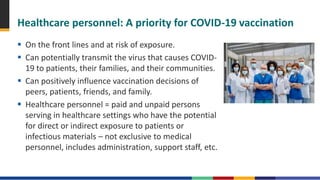
Healthcare personnel: A priority for COVID-19 vaccination
 On the front lines and at risk of exposure.
 Can potentially transmit the virus that causes COVID-
19 to patients, their families, and their communities.
 Can positively influence vaccination decisions of
peers, patients, friends, and family.
 Healthcare personnel = paid and unpaid persons
serving in healthcare settings who have the potential
for direct or indirect exposure to patients or
infectious materials – not exclusive to medical
personnel, includes administration, support staff, etc.
5
COVID-19 vaccines under development
 The federal government is funding and
coordinating the development of multiple
vaccine candidates, several of which are in
large-scale (Phase 3) trials.
 COVID-19 vaccines are being held to the same
safety standards as all other vaccines.
6
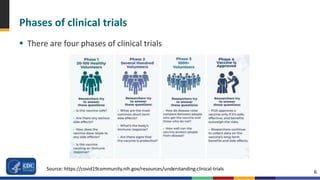
Phases of clinical trials
 There are four phases of clinical trials
Source: https://covid19community.nih.gov/resources/understanding-clinical-trials
7
COVID-19 vaccines expected to receive FDA Emergency
Use Authorizations
 Two vaccines are expected to receive FDA Emergency Use Authorizations (EUAs) :
– Pfizer/BioNTech (BNT162b2) – 95% effective (manufacturer data)
– Moderna (mRNA-1273) – 94.5% effective (manufacturer data)
 Both are mRNA vaccines with a 2-dose schedule.
 Duration of protection is not yet known.
 Both vaccines were tested in diverse adult populations, including older adults
and communities of color.
 For the latest information about authorized vaccines, visit
www.fda.gov/emergency-preparedness-and-response/coronavirus-disease-2019-
covid-19/covid-19-vaccines.
Sources: https://www.pfizer.com/news/press-release/press-release-detail/pfizer-and-biontech-conclude-phase-3-study-covid-19-vaccine
https://investors.modernatx.com/news-releases/news-release-details/modernas-covid-19-vaccine-candidate-meets-its-primary-efficacy
8
COVID-19 vaccine trials by the numbers
As of November 30, 2020
Pfizer/BioNTech
– 43,931 enrolled
– 150 clinical sites
• 39 U.S. states
– Racial/ethnic distribution
• 13% - Hispanic
• 10% - African American
• 6% - Asian
• 1% - Native American
– 45% ages 56-85
Moderna
– 30,000 enrolled
– 89 clinical sites
• 32 U.S. states
– Racial/ethnic distribution
• 63% - White
• 20% - Hispanic
• 10% - African American/Black
• 4% - Asian
• 3% - All others
– 64% ages 45 and older
• 39% ages 45-64
• 25% ages 65+
Sources: https://www.pfizer.com/science/coronavirus/vaccine;
https://www.modernatx.com/cove-study
For more information, visit www.clinicaltrials.gov
9
What are messenger RNA (mRNA) vaccines?
 Carry genetic material that teaches our cells how to make a harmless piece of “spike
protein,” which is found on the surface of the SARS-CoV-2 virus.
– Genetic material from the vaccine is destroyed by our cells once copies of the
spike protein are made and it is no longer needed.
 Cells display this piece of spike protein on their surface, and an immune response
is triggered inside our bodies. This produces antibodies to protect us from getting
infected if the SARS-CoV-2 virus enters our bodies.
 Do not affect our DNA; mRNA does not enter the cell nucleus.
 Cannot give someone COVID-19.
 Use technology that is new but not unknown. mRNA vaccines have been
studied for influenza, Zika, rabies, and cytomegalovirus (CMV).
Sources: College of Physicians of Philadelphia. What is an mRNA vaccine? https://historyofvaccines.blog/2020/07/29/what-is-an-mrna-vaccine/
JAMA. COVID-19 and mRNA Vaccines—First Large Test for a New Approach. https://jamanetwork.com/journals/jama/fullarticle/2770485
10
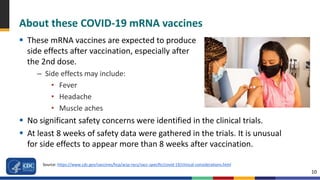
About these COVID-19 mRNA vaccines
 These mRNA vaccines are expected to produce
side effects after vaccination, especially after
the 2nd dose.
– Side effects may include:
• Fever
• Headache
• Muscle aches
 No significant safety concerns were identified in the clinical trials.
 At least 8 weeks of safety data were gathered in the trials. It is unusual
for side effects to appear more than 8 weeks after vaccination.
Source: https://www.cdc.gov/vaccines/hcp/acip-recs/vacc-specific/covid-19/clinical-considerations.html
11
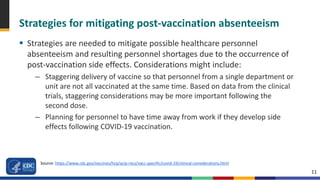
Strategies for mitigating post-vaccination absenteeism
 Strategies are needed to mitigate possible healthcare personnel
absenteeism and resulting personnel shortages due to the occurrence of
post-vaccination side effects. Considerations might include:
– Staggering delivery of vaccine so that personnel from a single department or
unit are not all vaccinated at the same time. Based on data from the clinical
trials, staggering considerations may be more important following the
second dose.
– Planning for personnel to have time away from work if they develop side
effects following COVID-19 vaccination.
Source: https://www.cdc.gov/vaccines/hcp/acip-recs/vacc-specific/covid-19/clinical-considerations.html
12
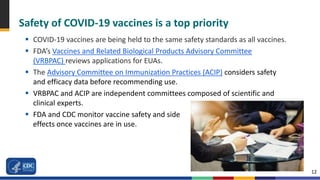
Safety of COVID-19 vaccines is a top priority
 COVID-19 vaccines are being held to the same safety standards as all vaccines.
 FDA’s Vaccines and Related Biological Products Advisory Committee
(VRBPAC) reviews applications for EUAs.
 The Advisory Committee on Immunization Practices (ACIP) considers safety
and efficacy data before recommending use.
 VRBPAC and ACIP are independent committees composed of scientific and
clinical experts.
 FDA and CDC monitor vaccine safety and side
effects once vaccines are in use.
13
Robust vaccine safety monitoring systems exist
 Existing systems and data sources are used to monitor safety of
vaccines post-authorization and post-licensure, such as:
– Vaccine Adverse Event Reporting System (VAERS)
– Vaccine Safety Datalink (VSD)
– Clinical Immunization Safety Assessment (CISA)
– Biologics Effectiveness and Safety System (BEST)
 New systems have been developed to monitor COVID-19
vaccine safety, such as v-safe:
– Active surveillance that uses text messaging to initiate
web-based survey monitoring.
– Will provide telephone follow up to anyone who reports
medically significant adverse events.
14
How was the vaccine development timeline accelerated
while ensuring safety?
 Researchers used existing clinical trial networks to begin conducting
COVID-19 vaccine trials.*
 Manufacturing started while the clinical trials were still underway.
Normally, manufacturing doesn’t begin until after completion of the trials.
 mRNA vaccines are faster to produce than traditional vaccines.
 FDA and CDC are prioritizing review, authorization, and recommendation
of COVID-19 vaccines.
*For more, visit the COVID-19 Prevention Network:
www.coronaviruspreventionnetwork.org/about-covpn
Elements of Vaccine Confidence
16
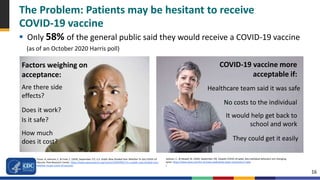
The Problem: Patients may be hesitant to receive
COVID-19 vaccine
 Only 58% of the general public said they would receive a COVID-19 vaccine
(as of an October 2020 Harris poll)
Factors weighing on
acceptance:
Are there side
effects?
Does it work?
Is it safe?
How much
does it cost?
Tyson, A, Johnson, C, & Funk, C. (2020, September 17). U.S. Public Now Divided Over Whether To Get COVID-19
Vaccine. Pew Research Center. https://www.pewresearch.org/science/2020/09/17/u-s-public-now-divided-over-
whether-to-get-covid-19-vaccine/
COVID-19 vaccine more
acceptable if:
Healthcare team said it was safe
No costs to the individual
It would help get back to
school and work
They could get it easily
Jackson, C., & Newall, M. (2020, September 29). Despite COVID-19 spike, few individual behaviors are changing.
Ipsos. https://www.ipsos.com/en-us/news-polls/axios-ipsos-coronavirus-index
/
17
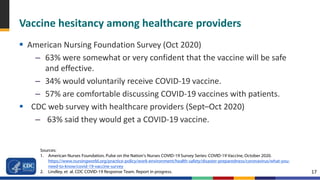
Vaccine hesitancy among healthcare providers
 American Nursing Foundation Survey (Oct 2020)
– 63% were somewhat or very confident that the vaccine will be safe
and effective.
– 34% would voluntarily receive COVID-19 vaccine.
– 57% are comfortable discussing COVID-19 vaccines with patients.
 CDC web survey with healthcare providers (Sept–Oct 2020)
– 63% said they would get a COVID-19 vaccine.
Sources:
1. American Nurses Foundation, Pulse on the Nation’s Nurses COVID-19 Survey Series: COVID-19 Vaccine, October 2020.
https://www.nursingworld.org/practice-policy/work-environment/health-safety/disaster-preparedness/coronavirus/what-you-
need-to-know/covid-19-vaccine-survey
2. Lindley, et al. CDC COVID-19 Response Team. Report in progress.
18
Defining vaccine confidence
 Vaccine confidence is the trust that patients,
parents, or providers have in:
– Recommended vaccines
– Providers who administer vaccines
– Processes and policies that lead to
vaccine development, licensure,
manufacturing, and recommendations
for use
19
Willingness to accept a vaccine falls on a continuum
Strategies for Building Vaccine Confidence
A National Strategy to Reinforce Confidence in COVID-19 Vaccines
21
22
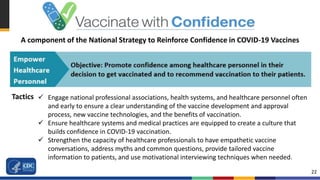
A component of the National Strategy to Reinforce Confidence in COVID-19 Vaccines
Tactics  Engage national professional associations, health systems, and healthcare personnel often
and early to ensure a clear understanding of the vaccine development and approval
process, new vaccine technologies, and the benefits of vaccination.
 Ensure healthcare systems and medical practices are equipped to create a culture that
builds confidence in COVID-19 vaccination.
 Strengthen the capacity of healthcare professionals to have empathetic vaccine
conversations, address myths and common questions, provide tailored vaccine
information to patients, and use motivational interviewing techniques when needed.
23
Top 6 strategies for building COVID-19 vaccine confidence
among healthcare personnel
1. Encourage senior leaders to be vaccine champions.
2. Host discussions where personnel at different levels can provide input
and ask questions.
3. Share key messages with staff through emails, breakroom posters, and
other channels
4. Educate healthcare teams about COVID-19 vaccines, how they are
developed and monitored for safety, and how teams can talk to others
about the vaccines.
5. Educate non-medical staff about the importance of getting vaccinated.
6. Make the decision to get vaccinated visible and celebrate it!
24
1. Encourage senior leaders to be vaccine champions
 Talk to your leaders about vaccine confidence and why
it’s important.
 Ask leaders to lead by example and be photographed
while getting COVID-19 vaccine.
 Invite leaders to share their personal reasons for getting
vaccinated and the importance of vaccination for all staff.
Share via:
– Testimonials given during elevator conversations,
meetings, and staff presentations
– Short videos
– Email blasts
– Social media
– Blogs or web articles
Photo credit: National Foundation for
Infectious Diseases
25
2. Host discussions with personnel at different levels
 Purpose: To provide a forum for questions and generate
ideas for how to increase COVID-19 vaccine confidence and
make it visible
 Format: Facilitated meeting (suggest 60-minutes)
 Participants: People representing management, healthcare
teams, labor unions, and support staff. Involve COVID-19
Incident Command Teams as appropriate.
 Facilitator: Staff member who is well-respected and seen as
a neutral convener on the topic
 Discussion Guide: https://www.cdc.gov/vaccines/covid-
19/health-systems-communication-toolkit.html
26
3. Share these key messages with staff
 Share the messages below through emails, breakroom posters, and other channels:
– Get a COVID-19 vaccine to protect yourself, your patients, your peers, your
friends, and your family from infection.
– Vaccine confidence starts with you! Building defenses against COVID-19 in this
facility is a team effort.
– Getting the COVID-19 vaccine is an added layer of protection against infection
for yourself, your colleagues and your patients.
– There are several things you can do to help build vaccine confidence:
• Choose to get vaccinated yourself (and get the recommended number of doses).
• Share your reasons for getting vaccinated and encourage others.
• Learn how to have effective COVID-19 vaccine conversations.
27
4. Educate healthcare teams
 Educate teams about COVID-19 vaccines, how they are
developed and monitored for safety, and how teams can
talk to others about vaccines.
 Teach teams how to have effective COVID-19 vaccine
conversations and answer common questions.
 CDC Resources:
– COVID-19 Vaccine Basics: What Healthcare Personnel Need to
Know (PowerPoint)
– Building Confidence in COVID-19 Vaccines Among Your Patients
(PowerPoint)
www.cdc.gov/vaccines/covid-19/health-systems-
communication-toolkit.html
28
4. Educate healthcare teams: Provider resources for COVID-
19 vaccine conversations with patients
 Preparing to Provide COVID-19 Vaccines
 Talking to Patients about COVID-19 Vaccines
 Understanding and Explaining mRNA COVID-
19 Vaccines
 Making a Strong Recommendation for COVID-
19 Vaccination
 Answering Patients’ Questions
 More tools coming soon!
www.cdc.gov/vaccines/hcp/covid-conversations
29
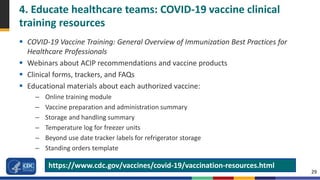
4. Educate healthcare teams: COVID-19 vaccine clinical
training resources
 COVID-19 Vaccine Training: General Overview of Immunization Best Practices for
Healthcare Professionals
 Webinars about ACIP recommendations and vaccine products
 Clinical forms, trackers, and FAQs
 Educational materials about each authorized vaccine:
– Online training module
– Vaccine preparation and administration summary
– Storage and handling summary
– Temperature log for freezer units
– Beyond use date tracker labels for refrigerator storage
– Standing orders template
https://www.cdc.gov/vaccines/covid-19/vaccination-resources.html
30
5. Educate non-medical staff about the importance of
getting vaccinated
 Educate non-medical staff about COVID-19 vaccines and
the vaccine development and safety monitoring process.
 Emphasize the benefits of protecting themselves, their
families, their coworkers, and patients.
 Create a feedback mechanism for asking questions.
 Let them know they also have an important role to play
in making vaccine confidence visible.
 CDC resources:
– COVID-19 Vaccine Basics: What Healthcare Personnel
Need to Know (PowerPoint)
www.cdc.gov/vaccines/covid-19/health-systems-
communication-toolkit.html
31
6. Make the decision to get vaccinated visible and
celebrate it!
 Provide “I got my COVID-19 vaccine!” pins, lanyards, masks,
bracelets, etc.
 Post a photo gallery in common or break areas or online showing
cheerful staff who just got vaccinated.
 Offer a small, sincere token of gratitude for early adopters.
 Record testimonials on why healthcare personnel in your facility
decided to get vaccinated and share with the media.
 Share inclusive, positive, behind-the-scenes moments showing
staff for caring for patients.
 Reach out to local news outlets to highlight your health facility’s
leadership in COVID-19 vaccine introduction.
www.cdc.gov/vaccines/covid-19/health-systems-
communication-toolkit.html
32
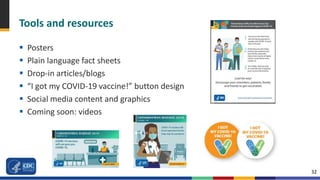
Tools and resources
 Posters
 Plain language fact sheets
 Drop-in articles/blogs
 “I got my COVID-19 vaccine!” button design
 Social media content and graphics
 Coming soon: videos
For more information, contact CDC
1-800-CDC-INFO (232-4636)
TTY: 1-888-232-6348 www.cdc.gov
The findings and conclusions in this report are those of the authors and do not necessarily represent the
official position of the Centers for Disease Control and Prevention.

VaccinateWConfidence-Immunization-Coordinators_508 (2).pptx

  • 1.
    cdc.gov/coronavirus Building Vaccine Confidencein Health Systems and Clinics Tips for Immunization Coordinators Developed by: CDC COVID-19 Response Vaccine Task Force December 2020
  • 2.
    2 Presentation Overview  COVID-19vaccines  mRNA technology  Vaccine safety monitoring  Elements of vaccine confidence  Strategies for building vaccine confidence in your facility or system
  • 3.
  • 4.
    Healthcare personnel: Apriority for COVID-19 vaccination  On the front lines and at risk of exposure.  Can potentially transmit the virus that causes COVID- 19 to patients, their families, and their communities.  Can positively influence vaccination decisions of peers, patients, friends, and family.  Healthcare personnel = paid and unpaid persons serving in healthcare settings who have the potential for direct or indirect exposure to patients or infectious materials – not exclusive to medical personnel, includes administration, support staff, etc.
  • 5.
    5 COVID-19 vaccines underdevelopment  The federal government is funding and coordinating the development of multiple vaccine candidates, several of which are in large-scale (Phase 3) trials.  COVID-19 vaccines are being held to the same safety standards as all other vaccines.
  • 6.
    6 Phases of clinicaltrials  There are four phases of clinical trials Source: https://covid19community.nih.gov/resources/understanding-clinical-trials
  • 7.
    7 COVID-19 vaccines expectedto receive FDA Emergency Use Authorizations  Two vaccines are expected to receive FDA Emergency Use Authorizations (EUAs) : – Pfizer/BioNTech (BNT162b2) – 95% effective (manufacturer data) – Moderna (mRNA-1273) – 94.5% effective (manufacturer data)  Both are mRNA vaccines with a 2-dose schedule.  Duration of protection is not yet known.  Both vaccines were tested in diverse adult populations, including older adults and communities of color.  For the latest information about authorized vaccines, visit www.fda.gov/emergency-preparedness-and-response/coronavirus-disease-2019- covid-19/covid-19-vaccines. Sources: https://www.pfizer.com/news/press-release/press-release-detail/pfizer-and-biontech-conclude-phase-3-study-covid-19-vaccine https://investors.modernatx.com/news-releases/news-release-details/modernas-covid-19-vaccine-candidate-meets-its-primary-efficacy
  • 8.
    8 COVID-19 vaccine trialsby the numbers As of November 30, 2020 Pfizer/BioNTech – 43,931 enrolled – 150 clinical sites • 39 U.S. states – Racial/ethnic distribution • 13% - Hispanic • 10% - African American • 6% - Asian • 1% - Native American – 45% ages 56-85 Moderna – 30,000 enrolled – 89 clinical sites • 32 U.S. states – Racial/ethnic distribution • 63% - White • 20% - Hispanic • 10% - African American/Black • 4% - Asian • 3% - All others – 64% ages 45 and older • 39% ages 45-64 • 25% ages 65+ Sources: https://www.pfizer.com/science/coronavirus/vaccine; https://www.modernatx.com/cove-study For more information, visit www.clinicaltrials.gov
  • 9.
    9 What are messengerRNA (mRNA) vaccines?  Carry genetic material that teaches our cells how to make a harmless piece of “spike protein,” which is found on the surface of the SARS-CoV-2 virus. – Genetic material from the vaccine is destroyed by our cells once copies of the spike protein are made and it is no longer needed.  Cells display this piece of spike protein on their surface, and an immune response is triggered inside our bodies. This produces antibodies to protect us from getting infected if the SARS-CoV-2 virus enters our bodies.  Do not affect our DNA; mRNA does not enter the cell nucleus.  Cannot give someone COVID-19.  Use technology that is new but not unknown. mRNA vaccines have been studied for influenza, Zika, rabies, and cytomegalovirus (CMV). Sources: College of Physicians of Philadelphia. What is an mRNA vaccine? https://historyofvaccines.blog/2020/07/29/what-is-an-mrna-vaccine/ JAMA. COVID-19 and mRNA Vaccines—First Large Test for a New Approach. https://jamanetwork.com/journals/jama/fullarticle/2770485
  • 10.
    10 About these COVID-19mRNA vaccines  These mRNA vaccines are expected to produce side effects after vaccination, especially after the 2nd dose. – Side effects may include: • Fever • Headache • Muscle aches  No significant safety concerns were identified in the clinical trials.  At least 8 weeks of safety data were gathered in the trials. It is unusual for side effects to appear more than 8 weeks after vaccination. Source: https://www.cdc.gov/vaccines/hcp/acip-recs/vacc-specific/covid-19/clinical-considerations.html
  • 11.
    11 Strategies for mitigatingpost-vaccination absenteeism  Strategies are needed to mitigate possible healthcare personnel absenteeism and resulting personnel shortages due to the occurrence of post-vaccination side effects. Considerations might include: – Staggering delivery of vaccine so that personnel from a single department or unit are not all vaccinated at the same time. Based on data from the clinical trials, staggering considerations may be more important following the second dose. – Planning for personnel to have time away from work if they develop side effects following COVID-19 vaccination. Source: https://www.cdc.gov/vaccines/hcp/acip-recs/vacc-specific/covid-19/clinical-considerations.html
  • 12.
    12 Safety of COVID-19vaccines is a top priority  COVID-19 vaccines are being held to the same safety standards as all vaccines.  FDA’s Vaccines and Related Biological Products Advisory Committee (VRBPAC) reviews applications for EUAs.  The Advisory Committee on Immunization Practices (ACIP) considers safety and efficacy data before recommending use.  VRBPAC and ACIP are independent committees composed of scientific and clinical experts.  FDA and CDC monitor vaccine safety and side effects once vaccines are in use.
  • 13.
    13 Robust vaccine safetymonitoring systems exist  Existing systems and data sources are used to monitor safety of vaccines post-authorization and post-licensure, such as: – Vaccine Adverse Event Reporting System (VAERS) – Vaccine Safety Datalink (VSD) – Clinical Immunization Safety Assessment (CISA) – Biologics Effectiveness and Safety System (BEST)  New systems have been developed to monitor COVID-19 vaccine safety, such as v-safe: – Active surveillance that uses text messaging to initiate web-based survey monitoring. – Will provide telephone follow up to anyone who reports medically significant adverse events.
  • 14.
    14 How was thevaccine development timeline accelerated while ensuring safety?  Researchers used existing clinical trial networks to begin conducting COVID-19 vaccine trials.*  Manufacturing started while the clinical trials were still underway. Normally, manufacturing doesn’t begin until after completion of the trials.  mRNA vaccines are faster to produce than traditional vaccines.  FDA and CDC are prioritizing review, authorization, and recommendation of COVID-19 vaccines. *For more, visit the COVID-19 Prevention Network: www.coronaviruspreventionnetwork.org/about-covpn
  • 15.
  • 16.
    16 The Problem: Patientsmay be hesitant to receive COVID-19 vaccine  Only 58% of the general public said they would receive a COVID-19 vaccine (as of an October 2020 Harris poll) Factors weighing on acceptance: Are there side effects? Does it work? Is it safe? How much does it cost? Tyson, A, Johnson, C, & Funk, C. (2020, September 17). U.S. Public Now Divided Over Whether To Get COVID-19 Vaccine. Pew Research Center. https://www.pewresearch.org/science/2020/09/17/u-s-public-now-divided-over- whether-to-get-covid-19-vaccine/ COVID-19 vaccine more acceptable if: Healthcare team said it was safe No costs to the individual It would help get back to school and work They could get it easily Jackson, C., & Newall, M. (2020, September 29). Despite COVID-19 spike, few individual behaviors are changing. Ipsos. https://www.ipsos.com/en-us/news-polls/axios-ipsos-coronavirus-index /
  • 17.
    17 Vaccine hesitancy amonghealthcare providers  American Nursing Foundation Survey (Oct 2020) – 63% were somewhat or very confident that the vaccine will be safe and effective. – 34% would voluntarily receive COVID-19 vaccine. – 57% are comfortable discussing COVID-19 vaccines with patients.  CDC web survey with healthcare providers (Sept–Oct 2020) – 63% said they would get a COVID-19 vaccine. Sources: 1. American Nurses Foundation, Pulse on the Nation’s Nurses COVID-19 Survey Series: COVID-19 Vaccine, October 2020. https://www.nursingworld.org/practice-policy/work-environment/health-safety/disaster-preparedness/coronavirus/what-you- need-to-know/covid-19-vaccine-survey 2. Lindley, et al. CDC COVID-19 Response Team. Report in progress.
  • 18.
    18 Defining vaccine confidence Vaccine confidence is the trust that patients, parents, or providers have in: – Recommended vaccines – Providers who administer vaccines – Processes and policies that lead to vaccine development, licensure, manufacturing, and recommendations for use
  • 19.
    19 Willingness to accepta vaccine falls on a continuum
  • 20.
    Strategies for BuildingVaccine Confidence
  • 21.
    A National Strategyto Reinforce Confidence in COVID-19 Vaccines 21
  • 22.
    22 A component ofthe National Strategy to Reinforce Confidence in COVID-19 Vaccines Tactics  Engage national professional associations, health systems, and healthcare personnel often and early to ensure a clear understanding of the vaccine development and approval process, new vaccine technologies, and the benefits of vaccination.  Ensure healthcare systems and medical practices are equipped to create a culture that builds confidence in COVID-19 vaccination.  Strengthen the capacity of healthcare professionals to have empathetic vaccine conversations, address myths and common questions, provide tailored vaccine information to patients, and use motivational interviewing techniques when needed.
  • 23.
    23 Top 6 strategiesfor building COVID-19 vaccine confidence among healthcare personnel 1. Encourage senior leaders to be vaccine champions. 2. Host discussions where personnel at different levels can provide input and ask questions. 3. Share key messages with staff through emails, breakroom posters, and other channels 4. Educate healthcare teams about COVID-19 vaccines, how they are developed and monitored for safety, and how teams can talk to others about the vaccines. 5. Educate non-medical staff about the importance of getting vaccinated. 6. Make the decision to get vaccinated visible and celebrate it!
  • 24.
    24 1. Encourage seniorleaders to be vaccine champions  Talk to your leaders about vaccine confidence and why it’s important.  Ask leaders to lead by example and be photographed while getting COVID-19 vaccine.  Invite leaders to share their personal reasons for getting vaccinated and the importance of vaccination for all staff. Share via: – Testimonials given during elevator conversations, meetings, and staff presentations – Short videos – Email blasts – Social media – Blogs or web articles Photo credit: National Foundation for Infectious Diseases
  • 25.
    25 2. Host discussionswith personnel at different levels  Purpose: To provide a forum for questions and generate ideas for how to increase COVID-19 vaccine confidence and make it visible  Format: Facilitated meeting (suggest 60-minutes)  Participants: People representing management, healthcare teams, labor unions, and support staff. Involve COVID-19 Incident Command Teams as appropriate.  Facilitator: Staff member who is well-respected and seen as a neutral convener on the topic  Discussion Guide: https://www.cdc.gov/vaccines/covid- 19/health-systems-communication-toolkit.html
  • 26.
    26 3. Share thesekey messages with staff  Share the messages below through emails, breakroom posters, and other channels: – Get a COVID-19 vaccine to protect yourself, your patients, your peers, your friends, and your family from infection. – Vaccine confidence starts with you! Building defenses against COVID-19 in this facility is a team effort. – Getting the COVID-19 vaccine is an added layer of protection against infection for yourself, your colleagues and your patients. – There are several things you can do to help build vaccine confidence: • Choose to get vaccinated yourself (and get the recommended number of doses). • Share your reasons for getting vaccinated and encourage others. • Learn how to have effective COVID-19 vaccine conversations.
  • 27.
    27 4. Educate healthcareteams  Educate teams about COVID-19 vaccines, how they are developed and monitored for safety, and how teams can talk to others about vaccines.  Teach teams how to have effective COVID-19 vaccine conversations and answer common questions.  CDC Resources: – COVID-19 Vaccine Basics: What Healthcare Personnel Need to Know (PowerPoint) – Building Confidence in COVID-19 Vaccines Among Your Patients (PowerPoint) www.cdc.gov/vaccines/covid-19/health-systems- communication-toolkit.html
  • 28.
    28 4. Educate healthcareteams: Provider resources for COVID- 19 vaccine conversations with patients  Preparing to Provide COVID-19 Vaccines  Talking to Patients about COVID-19 Vaccines  Understanding and Explaining mRNA COVID- 19 Vaccines  Making a Strong Recommendation for COVID- 19 Vaccination  Answering Patients’ Questions  More tools coming soon! www.cdc.gov/vaccines/hcp/covid-conversations
  • 29.
    29 4. Educate healthcareteams: COVID-19 vaccine clinical training resources  COVID-19 Vaccine Training: General Overview of Immunization Best Practices for Healthcare Professionals  Webinars about ACIP recommendations and vaccine products  Clinical forms, trackers, and FAQs  Educational materials about each authorized vaccine: – Online training module – Vaccine preparation and administration summary – Storage and handling summary – Temperature log for freezer units – Beyond use date tracker labels for refrigerator storage – Standing orders template https://www.cdc.gov/vaccines/covid-19/vaccination-resources.html
  • 30.
    30 5. Educate non-medicalstaff about the importance of getting vaccinated  Educate non-medical staff about COVID-19 vaccines and the vaccine development and safety monitoring process.  Emphasize the benefits of protecting themselves, their families, their coworkers, and patients.  Create a feedback mechanism for asking questions.  Let them know they also have an important role to play in making vaccine confidence visible.  CDC resources: – COVID-19 Vaccine Basics: What Healthcare Personnel Need to Know (PowerPoint) www.cdc.gov/vaccines/covid-19/health-systems- communication-toolkit.html
  • 31.
    31 6. Make thedecision to get vaccinated visible and celebrate it!  Provide “I got my COVID-19 vaccine!” pins, lanyards, masks, bracelets, etc.  Post a photo gallery in common or break areas or online showing cheerful staff who just got vaccinated.  Offer a small, sincere token of gratitude for early adopters.  Record testimonials on why healthcare personnel in your facility decided to get vaccinated and share with the media.  Share inclusive, positive, behind-the-scenes moments showing staff for caring for patients.  Reach out to local news outlets to highlight your health facility’s leadership in COVID-19 vaccine introduction. www.cdc.gov/vaccines/covid-19/health-systems- communication-toolkit.html
  • 32.
    32 Tools and resources Posters  Plain language fact sheets  Drop-in articles/blogs  “I got my COVID-19 vaccine!” button design  Social media content and graphics  Coming soon: videos
  • 33.
    For more information,contact CDC 1-800-CDC-INFO (232-4636) TTY: 1-888-232-6348 www.cdc.gov The findings and conclusions in this report are those of the authors and do not necessarily represent the official position of the Centers for Disease Control and Prevention.

Editor's Notes

  • #2 Healthcare personnel will be among the first to receive COVID-19 vaccine in the United States. A critical part of increasing COVID-19 vaccine uptake will be building vaccine confidence among all personnel within health systems, medical practices, and clinics. Immunization coordinators play a key role in building vaccine confidence within health systems and clinics. This slide deck can be used by anyone who is responsible for training immunization coordinators, such as: Immunization strategy leaders in large health systems who train immunization coordinators at individual sites Health department staff who train immunization coordinators in their states, cities or counties
  • #3 Thanks for joining us today. Building confidence in COVID-19 vaccination within health systems and clinics is critical to setting expectations, ensuring vaccine uptake, and helping protect our communities. Vaccine confidence may seem like a vague concept, but there are concrete things that we can do to foster it and help make it visible so that healthcare personnel feel confident getting vaccinated and feel comfortable recommending COVID-19 vaccine it to patients. Here’s what we will be discussing in this presentation: COVID-19 vaccines currently available in the United States; Vaccine safety monitoring; Elements of vaccine confidence; and Strategies for building vaccine confidence.
  • #5 Healthcare personnel have been identified as a top priority to have access to COVID-19 vaccines, in addition to residents of long-term care facilities. Healthcare personnel are on the front lines of this pandemic and are at high risk of exposure. They can potentially transmit COVID-19 to patients, including older adults and those with high-risk medical conditions, as well as their family and community. We also know that members of the healthcare team are influential when it comes to building vaccine confidence. The general public will be looking to them and taking their lead when it comes to COVID-19 vaccination. If they get vaccinated and recommend the vaccine to patients, this will help increase uptake among their patients, their friends, and their families. For the purposes of this presentation, healthcare personnel (HCP) refers to all paid and unpaid persons serving in healthcare settings who have the potential for direct or indirect exposure to patients or infectious materials, including body substances (e.g., blood, tissue, and specific body fluids); contaminated medical supplies, devices, and equipment; contaminated environmental surfaces; or contaminated air. These HCP may include, but are not limited to, emergency medical service personnel, nurses, nursing assistants, physicians, technicians, therapists, phlebotomists, pharmacists, students and trainees, contractual staff not employed by the health care facility, and persons (e.g., clerical, dietary, environmental services, laundry, security, maintenance, engineering and facilities management, administrative, billing, and volunteer personnel) not directly involved in patient care but potentially exposed to infectious agents that can be transmitted among from HCP and patients.
  • #6 The federal government is funding and coordinating the development of multiple vaccine candidates, several of which are in large-scale Phase 3 trials. It’s important to note that COVID-19 vaccines are being help to the same safety standards as all other vaccines.
  • #7 The idea for a clinical trial often starts in the lab. After researchers test new treatments or procedures in the lab, the most promising treatments are moved into clinical trials. As new treatments move through a series of steps called phases, more information is gained about the treatment, its risks, and how effective it is. This graphic shows the four phases of vaccine clinical trials: The first phase involves 20 to 100 health volunteers. Researchers try to answer questions like: Is this vaccine safe? Are there any serious side effects? How does the vaccine dose relate to any side effects? and Is the vaccine causing an immune response? The second phase involves several hundred volunteers. Researchers try to answer questions like: What are the most common short term side effects? and What’s the body’s immune response? Are there signs that the vaccine is pro The third phase involves a thousand or more volunteers. Researchers try to answer questions like: How do disease rates compare between people who get the vaccine and those who do not? And How well can the vaccine protect people from disease? The fourth phase happens after the vaccine is approved. In this phase, researchers continue to collect data on the vaccine’s long-term benefits and side effects.
  • #8 Two vaccines are expected to receive Emergency Use Authorizations (EUAs) from the FDA: One is produced by Pfizer and BioNTech and the other is produced by Moderna. Manufacturer data from the Phase 3 trials demonstrated that both vaccines were approximately 95% effective at preventing COVID-19 disease. These are both mRNA vaccines with a 2-dose schedule, and the duration of protection is not yet known. As those data become available, they will be posted on the CDC website and through other communication channels reaching clinicians. Both vaccines were tested in diverse adult populations, including older adults and communities of color.
  • #9 Many people want more information about the vaccine trials that led to the release of the COVID-19 vaccines that are available now. As of November 30, 2020, more than 43,000 volunteers were enrolled in Phase 3 of the Pfizer and BioNTech COVID-19 vaccine trial. These volunteers received the first dose of the vaccine. The vaccine trials are being conducted at approximately 150 sites domestically and internationally, and 39 U.S. states are represented in the study. Among U.S. participants, 13% identified as Hispanic, 10% as African American, 6% as Asian, and 1% as Native American. Forty-five percent were aged 56-85. As of November 30, 2020, more than 30,000 volunteers were enrolled in Phase 3 of the Moderna COVE COVID-19 vaccine trial. These volunteers received the first dose of the vaccine. The vaccine trials are being conducted at approximately 100 sites across the United States. Among participants, 63% identified as white, 20% identified as Hispanic, 10% as African American/Black, 4% as Asian, and 3% all other non-whites. Thirty-nine percent of participants were ages 45–64 and older and 25% were 65 and older.
  • #10 You may be wondering about messenger RNA, or mRNA, vaccines, given that they are a relatively new technology. Here are a few key facts: To trigger an immune response, many vaccines put a weakened or inactivated germ into our bodies. Not mRNA vaccines. Instead, they teach our cells how to make a harmless piece of what is called the “spike protein.” The spike protein is found on the surface of SARS-CoV-2, the virus that causes COVID-19. This protein piece serves as an antigen to trigger an immune response inside our bodies. That immune response, which produces antibodies, is what protects us from getting infected when the real virus enters our bodies. It’s important to note, however, that the mRNA does not enter the cell nucleus, so it does not affect or interact with our DNA in any way. This is a common myth about mRNA vaccines. mRNA in COVID-19 vaccine does not interact with DNA. One advantage of mRNA vaccines is that they are not produced using infectious antigens. The vaccines cannot give someone COVID-19. While there are no currently licensed vaccines using mRNA technology, this technology has been studied for decades in vaccine trials for influenza, Zika, rabies, and cytomegalovirus. Beyond vaccines, cancer research has used mRNA to trigger the immune system to target specific cancer cells.
  • #11 So what do we know about these mRNA COVID-19 vaccines? Both vaccines are well-tolerated and the clinical trials did not reveal any significant safety concerns. However, mRNA vaccines are expected to produce side effects after vaccination, especially after the 2nd dose. These may include fever, headache, and muscle aches. These are similar to side effects you may experience after other adult vaccines like the flu vaccine and the shingles vaccine. It’s important to note that at least 8 weeks of safety data were gathered in the trials. It is unusual for side effects to appear more than 8 weeks after vaccination. [For the latest information about authorized vaccines, visit the FDA website.]
  • #12 Strategies are needed to mitigate possible healthcare personnel absenteeism and resulting personnel shortages due to the occurrence of post-vaccination side effects. Your health system may need to consider staggering delivery of vaccine so that personnel from a single department are not all vaccinated at the same time. Based on data from the clinical trials, staggering considerations may be more important following the second dose. There may also be a need to plan for personnel to have time away from work if they develop side effects following COVID-19 vaccination.
  • #13 We realize there are many concerns about the safety of COVID-19 vaccines, given that they use new technology and have been developed quickly. It’s important to know that these vaccines are being held to the same safety standards as all vaccines. Several expert and independent groups evaluate the safety of vaccines being given to people in the United States. FDA’s Vaccines and Related Biological Products Advisory Committee (VRBPAC) reviews applications for EUAs. The Advisory Committee on Immunization Practices, or ACIP, considers safety and efficacy data before recommending use. Both of these are independent committees comprised of scientific and clinical experts. Once the vaccines are in use, both FDA and CDC continue to monitor the safety of vaccines. Existing data systems have analytic methods that can rapidly detect statistical signals for possible vaccine safety problems, systems that are the global gold standard for vaccine safety. These systems are being scaled up for COVID-19 vaccine introduction to fully meet the needs of the nation. Additional systems and data sources are also being developed to further enhance safety monitoring capabilities. 
  • #14 The United States has a robust post-licensure monitoring system that has been in place for decades to ensure the safety of routine vaccines. Components of this system include: VAERS, which collects and analyzes reports of adverse events that happen after vaccination. The Vaccine Safety Data Link and the Post-Licensure Rapid Immunization Safety Monitoring System, which are networks of healthcare organizations that actively analyze the healthcare information of millions of people; and The Clinical Immunization Safety Assessment, or CISA, which is a collaboration between CDC and 7 medical research centers. CISA assists healthcare providers with complex vaccine safety questions and conducts clinical research studies to better understand vaccine safety. FDA’s Biologics Effectiveness and Safety System, or BEST, which is a system of electronic health record, administrative, and claims-based data for active surveillance and research These existing data systems have validated analytic methods that can rapidly detect statistical signals for possible vaccine safety problems. These systems are being scaled up to fully meet the needs of the nation. New systems have been developed to further enhance safety monitoring capabilities. One example is V-Safe—an active surveillance system that uses text messaging to initiate web-based survey monitoring. V-safe will provide telephone follow up to anyone who reports medically significant adverse events. V-safe will complement the existing safety monitoring systems. People who use v-safe can still submit reports to VAERS. As you can see, no shortcuts on vaccine safety are taken for these COVID-19 vaccines or any other vaccine.
  • #15 Many people have been wondering how COVID-19 vaccines could be developed so quickly without sacrificing safety. There are a few ways: Researchers used existing clinical trial networks, like those that study HIV treatments and vaccines, to begin quickly conducting COVID-19 vaccine trials. Another critical piece has been the investment in manufacturing, even before COVID-19 vaccines have been proven effective. The U.S. government and vaccine manufacturers have invested millions of dollars to scale up vaccine production while clinical trials have been in progress, greatly reducing the amount of time between vaccine authorization and vaccine implementation. Because of the great financial risk, the investment in manufacturing normally doesn’t happen until later in the development process. mRNA vaccines are also faster to produce than traditional vaccines. Finally, given the unprecedented public health emergency, both FDA and CDC are prioritizing the review, approval and recommendation of COVID vaccines. For more information about trials networks, visit the COVID-19 Prevention Network website listed on this slide.
  • #17 Unfortunately, we know that many people may be hesitant to get a COVID-19 vaccine, and this number has been increasing in recent months. According to this Harris poll conducted in October, only about half of people said they would get a COVID-19 vaccine. We know there are several factors that can impact vaccine acceptance, including concern about side effects, vaccine efficacy, risk perception, and associated costs. We also know that people will be more likely to get a vaccine if their healthcare provider says it’s safe, if the vaccine is free, if it helps people get to work and school, and if it’s easily available. Worries and concerns about COVID-19 vaccine can impact people’s willingness to get vaccinated, which is why we need to address them fully so people can be confident in the decision to get vaccinated.
  • #18 We also know there is likely to be vaccine hesitancy among healthcare providers. The American Nursing Foundation conducted a survey in October showing that while over half of nurses were confident in the safety and efficacy of a COVID-19 vaccine, only about a third would voluntarily receive it. And only slightly more than half said they would feel comfortable discussing it with patients. Similarly, a web survey conducted this fall showed that only 63% of providers said they would get a COVID-19 vaccine. These data are worrisome, because if providers decline to get vaccinated, they could be putting themselves and their patients at risk of infection and potentially serious disease.
  • #19 So how can we address vaccine hesitancy? By building vaccine confidence, which is a multi-faceted concept, based largely on trust. Vaccine confidence is the trust that patients, parents, or providers have in: recommended vaccines; providers who administer vaccines; and processes and policies that lead to vaccine development, licensure, manufacturing, and recommendations for use. A person must have trust in all three of these items to feel fully confident in their decision to get vaccinated. The foundation of trust is critical, and this is something that must be built over time. This is a critical concept to think about when working with patient populations who may have a history of mistrust in the medical establishment or the government. As providers, you obviously have an impact on the second sub-bullet – helping patients to trust you in your role as vaccine administrators. It’s important to note, though, that you can also help build trust in vaccines as well as the processes and policies by helping your patients to understand new vaccine technologies, what to expect in terms of vaccine side effects, and how these vaccines are being continuously monitored for safety. Being honest about what you don’t know is also important for building trust.
  • #20 In order to curb the pandemic, it is critical to increase demand for a COVID-19 vaccine. This slide shows how the willingness to accept a vaccine falls on a continuum. The vaccine demand continuum illustrates behaviors, whereas confidence is both a feeling and can be acted on. Most people may fall in the middle of this spectrum with a wait-and-see approach. We want to move people toward the right. The closer you get to active demand on the right side of the continuum, the increasing confidence the person likely feels in the vaccine, the vaccinator, and the health system, because they actively chose vaccination. This requires effort. People vote with their feet. If there is sufficient confidence and trust and ability, then people will seek out vaccines, overcoming barriers to do so. People with less confidence or motivation or ability may have trouble overcoming barriers, such as transportation or getting time off work. It’s also important to note that where a person falls on the continuum may depend on whether the person is considering this relative to themselves or others that they care about such as minor child, adult child with disabilities, an older adult parent, etc.
  • #22 This slide shows CDC’s Vaccinate with Confidence strategy, which aims to build confidence in COVID vaccine, the providers who vaccinate, and the vaccination system. It’s not a communication campaign, but rather a framework for thinking about interventions to increase vaccine confidence. There are three components to the framework. The first aims to build trust by sharing clear, complete, and accurate messages about COVID-19 vaccine in collaboration with federal, state, and local agencies and partners. The second aims to empower healthcare personnel by helping them to feel confident in their own decision to get vaccinated and to recommend vaccination to their patients. This is the element that is most important for our discussion today. The third focuses on how to engage communities in a sustainable, equitable, and inclusive way in order to increase collaboration. This is closely related to the first element about building trust.
  • #23 These are some of the tactics that CDC will be using to empower healthcare personnel. Engaging national professional associations, health systems, and healthcare personnel often and early to ensure a clear understanding of the vaccine development and approval process, new vaccine technologies, and the benefits of vaccination. Ensuring healthcare systems and medical practices are equipped to create a culture that builds confidence in COVID-19 vaccination. Strengthening the capacity of healthcare professionals to have empathetic vaccine conversations, address myths and common questions, provide tailored vaccine information to patients, and use motivational interviewing techniques when needed. As an immunization coordinator, you have an important role to play in all three of these tactics. We will talk more about this in the coming slides.
  • #24 The idea of building COVID-19 vaccine confidence may seem daunting, but there are concrete steps you can take, as outlined in this slide. Encourage senior leaders to be vaccine champions. Host discussions where personnel at different levels can provide input and ask questions. Share key messages with staff through emails, breakroom posters, and other channels Educate healthcare teams about COVID-19 vaccines, how they are developed and monitored for safety, and how teams can talk to others about the vaccines. Educate non-medical staff about the importance of getting vaccinated. Make the decision to get vaccinated visible and celebrate it! We will go through each of these steps in depth.
  • #25 The first and perhaps most important step is to encourage senior leadership to be vaccine champions. Talk to your leaders about vaccine confidence and why it’s important. If your health system’s leaders are visibly supporting it, this will go a long way toward increasing vaccine uptake among your personnel. One simple way they can do this is to ask leaders to lead by example and be photographed or filmed while getting the vaccine. These leaders could include your executive suite team, such as your CEO, Chief Medical Officer, and your Chief Operating Officer. It could also include department heads, senior administrators, and labor representatives from unions or employee organizations. You can also ask leadership to share their personal reasons for getting vaccinated and talk about why they think vaccination is important for your health system or clinic. Ask them to lead by example and be photographed while getting COVID-19 vaccine. Then share these testimonials widely via testimonials given during elevator conversations, meetings, and staff presentations, short videos, email blasts, social media, blogs, and web articles. 
  • #26 Once you have leadership support, host facilitated discussion to get input from personnel at all levels in your health system or clinic. Sixty minutes is suggested. The objective of this discussion will be to provide a forum for questions and generate ideas for how to make COVID-19 vaccine confidence visible. Why? Because often the best ideas are generated by those who must implement them. Select people representing all levels of your health system or clinic, including management, healthcare teams, labor unions, and support staff. Depending on how many staff you have, you may wish to ask for volunteers or select people that you know bring particular insights to the table. If your facility has a COVID-19 Incident Command Team, consider how to involve them as well. The facilitator of this discussion should be well-respected and seen as neutral. This is especially important to ensure that lower-level staff members are free to express themselves in the presence of management. We recognize that staff is stretched thin during these challenging times, so schedule the discussion during a convenient time and offer breakfast or lunch if possible. The URL on this slide will bring you to the discussion guide. After the discussion, quickly write up the key findings and share them with your leadership.
  • #27 An important part of vaccine confidence is to share clear and consistent messages frequently and widely. These are some key messages to share through emails, breakroom posters, and other channels. Get a COVID-19 vaccine to protect yourself, your patients, your peers, your friends, and your family from infection.  Vaccine confidence starts with you! Building defenses against COVID-19 in this facility is a team effort. Getting the COVID-19 vaccine is an added layer of protection against infection for yourself, your colleagues and your patients.  There are several things you can do to help build vaccine confidence: Choose to get vaccinated yourself (and get the recommended number of doses). Share your reasons for getting vaccinated and encourage others. Learn how to have effective COVID-19 vaccine conversations. Meet with your communication staff to talk about how and where to share them.
  • #28 An important way to increase vaccine confidence among personnel is to ensure that they have all the information they need about COVID vaccines, how they are developed and monitored for safety, and how teams can have effective COVID-19 vaccine conversations and answer common questions. Organize trainings using the accompanying slide deck, COVID-19 Vaccine Basics: What Healthcare Personnel Need to Know. It’s also important to teach members of healthcare teams how to have effective vaccine conversations and answer common questions about COVID-19 vaccines. These conversations will be critical for ensuring that patients feel comfortable with their decision to get vaccinated. Use the slide deck, Talking to Your Patients about COVID-19 Vaccination, and the handout, Quick Answers to Common Questions Your Patients May Ask You about COVID-19 Vaccines.
  • #29 Understandably, there is a lot of anticipation at this time around the new COVID-19 vaccines. Your providers may already be getting questions from patients about these vaccines. Whether in your office or through a telehealth visit, talking to patients about COVID-19 vaccination is critical to setting expectations, ensuring vaccine uptake, and helping our country recover from this pandemic. CDC has created a suite of materials to help you plan for vaccination, as well as to assess patients’ vaccine information needs and communicate effectively to meet those needs. These include: Preparing to Provide COVID-19 Vaccines Talking to Patients about COVID-19 Vaccines Understanding and Explaining mRNA COVID-19 Vaccines Making a Strong Recommendation for COVID-19 Vaccination Answering Patients’ Questions There will be more materials available in the coming months.
  • #30 Healthcare professionals who are knowledgeable about evidence-based immunization strategies and best practices are critical to implementing a successful vaccination program. They are key to ensuring that vaccination is as safe and effective as possible. Some healthcare professionals administering COVID-19 vaccine may have extensive experience with immunization practices, since they routinely administer recommended vaccines in their clinical practice. For others, administering COVID-19 vaccine may be their first clinical experience with vaccination. Here are some of the COVID-19-vaccine-specific clinical resources that CDC is developing for providers: COVID-19 Vaccine Training: General Overview of Immunization Best Practices for Healthcare Professionals  Webinars about ACIP recommendations and vaccine products Clinical forms, trackers, and FAQs Educational materials about each authorized vaccine: Online training module  Vaccine preparation and administration summary  Storage and handling summary  Temperature log for freezer units  Beyond use date tracker labels for refrigerator storage  Standing orders template 
  • #31 While support staff like custodians, front desk staff, food service staff, and security guards may not be involved in vaccine administration, they still have a role to play in promoting vaccine confidence, and it is critical that they get vaccinated themselves. Use the slide deck, Vaccine Basics: What Healthcare Personnel Need to Know, to educate them about COVID-19 vaccines and the vaccine development process. Emphasize the benefits of vaccination for protecting themselves, their families, their coworkers, and patients. This slide deck can also be used with members of the healthcare team who may need some basic information about COVID-19 vaccines. It’s also important to create a safe way for them to ask questions of your clinical staff via email, phone, or other channels.
  • #32 Finally, make the decision to get vaccinated visible and celebrate it! The brainstorming discussion I mentioned earlier should generate ideas for how to do this that are tailored for your specific setting and personnel. Some ideas include: Provide “I got my COVID-19 vaccine!” pins, lanyards, masks, bracelets, etc. With permission, post a photo gallery in common or break areas of the health facility or online as part of a social media campaign showing cheerful staff who were just vaccinated. Offer a small, sincere token of gratitude for early adopters (such as a personalized thank you note from the chief medical officer, an ice cream treat, or a profile in your staff newsletter). With permission, record testimonials on why healthcare personnel in your facility decided to get vaccinated and share with the media. Get creative with producing and sharing inclusive, positive behind-the-scenes moments showing staff caring for patients (for example, record healthcare personnel’s reactions to the moment their first patient is protected against COVID-19). Reach out to local news outlets to highlight your health facility’s leadership in COVID-19 vaccine introduction.
  • #33 CDC has created a suite of communication resources to help you make vaccine confidence visible using online platforms and more traditional means like displaying posters and fact sheets. You can find them at the URL listed on this slide. Stopping this pandemic is going to take all of our tools. Vaccine confidence is a critical strategy to increase uptake and it requires a team effort. Thank you for helping to make this happen!
  • #34 Feel free to contact me directly if you have any additional questions [SHARE CONTACT INFORMATION]. You can also call CDC directly at 800-CDC-INFO.