Use Cases For
Computer Vision
In Manufacturing
About the Topic
Computer vision doesn’t require any physical
contact with the machinery. It works simultaneously
to process the input data from multiple sources and
provide insights to the workers, supervisors, and
managers.
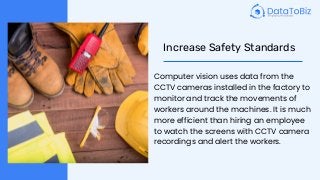
Increase Safety Standards
Computer vision uses data from the
CCTV cameras installed in the factory to
monitor and track the movements of
workers around the machines. It is much
more efficient than hiring an employee
to watch the screens with CCTV camera
recordings and alert the workers.
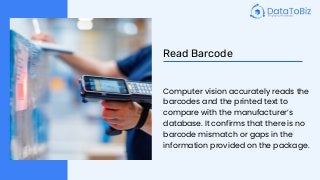
Read Barcode
Computer vision accurately reads the
barcodes and the printed text to
compare with the manufacturer’s
database. It confirms that there is no
barcode mismatch or gaps in the
information provided on the package.
Inventory Management
Large enterprises can use computer
vision for inventory management and
automate stock counting, database
updating, sending alerts to managers,
and so on.
Label and Track Products
The computer vision system reads the
text on the label and ensures that it
matches the data in the database. It
can also read handwritten notes and
signs made by employees.
Scrap Management
Computer vision and artificial
intelligence algorithms can monitor
the quantity of scarp generated at
every stage. It helps identify machinery
with more scarp generation. Such
machines can either be upgraded or
replaced with newer models to reduce
scrap.
Conclusion
Computer vision in manufacturing is
making enterprises energy-efficient
and consistent. Improve the quality of
production and eliminate bottlenecks
by implementing computer vision
technology in the manufacturing
units.
Thank You

Use Cases For Computer Vision In Manufacturing

  • 1.
    Use Cases For ComputerVision In Manufacturing
  • 2.
    About the Topic Computervision doesn’t require any physical contact with the machinery. It works simultaneously to process the input data from multiple sources and provide insights to the workers, supervisors, and managers.
  • 3.
    Increase Safety Standards Computervision uses data from the CCTV cameras installed in the factory to monitor and track the movements of workers around the machines. It is much more efficient than hiring an employee to watch the screens with CCTV camera recordings and alert the workers.
  • 4.
    Read Barcode Computer visionaccurately reads the barcodes and the printed text to compare with the manufacturer’s database. It confirms that there is no barcode mismatch or gaps in the information provided on the package.
  • 5.
    Inventory Management Large enterprisescan use computer vision for inventory management and automate stock counting, database updating, sending alerts to managers, and so on.
  • 6.
    Label and TrackProducts The computer vision system reads the text on the label and ensures that it matches the data in the database. It can also read handwritten notes and signs made by employees.
  • 7.
    Scrap Management Computer visionand artificial intelligence algorithms can monitor the quantity of scarp generated at every stage. It helps identify machinery with more scarp generation. Such machines can either be upgraded or replaced with newer models to reduce scrap.
  • 8.
    Conclusion Computer vision inmanufacturing is making enterprises energy-efficient and consistent. Improve the quality of production and eliminate bottlenecks by implementing computer vision technology in the manufacturing units.
  • 9.