US007556277B2
(12) Ulllted States Patent (10) Patent N0.: US 7,556,277 B2
Lytle (45) Date of Patent: Jul. 7, 2009
(54) BICYCLE TRAININGAID WITH 4,181,190 A * 1/1980 Yang ........................ .. 180/219
DYNAMICALLY DEPLOYABLE BALANCING 4,810,000 A * 3/1989 Saunders 280/293
FEATURES 4,826,194 A * 5/1989 Sakita ......... .. 285/302
5,054,803 A * 10/1991 Ellingsen, Jr. 280/301
(76) Inventor: Kimberly M- Lytle’ 9525 Leemay St" 5,064,213 A : 11/1991 Storch ........... 280/301
Vienna VA (Us) 22182 5,338,204 A 8/1994 Herndon . 434/247
’ 5,465,989 A * ll/l995 Grove 280/250
. . . . . 5,707,069 A * l/l998 Plana 280/293
( * ) Not1ce: Subject' to any d1scla1mer, the term ofth1s 6,022,037 A * 20000 Code 280603
P211811t 15 extended Or adlusted under 35 6,237,930 B1 * 5/2001 Code .... .. 280/303
U-S-C- 154(1)) by 378 days- 6,286,849 B1 * 9/2001 Slattery .. 280/301
6,360,838 Bl* 3/2002 Kulhavy ................... .. 180/219
(21) Appl. N0.: 11/499,745 6,676,150 B1 1/2004 Goldstein
6,942,053 B2* 9/2005 Hinton ..................... .. 180/209
(22) Filed: Aug. 7, 2006 7,314,225 B2 * l/2008 Murnen et a1. ............ .. 280/217
(65) Prior Publication Data * Cited by examiner
Us 2008/0029994 A1 Feb. 7, 2008 Primary Exami”@r*T°nY H- Winner
(51) Int CL (57) ABSTRACT
52 5652/00 (200601) 280/301_ 280093 A bicycle training aid has dynamically deployable balancing
E58; F: I'd "" """ ’280/293 mechanisms that are used When teaching a child to ride a
1e 0 ass1 ca 10n earc ............... .. ,
bicycle. The balancing mechanisms can be in the form of
deployable training Wheels that are actuated When the child
becomes unstable on the bicycle. One mechanism for deploy
280/204, 301, 302, 303; 180/282
See application ?le for complete search history.
(56) References Cited ing the balancing mechanisms is a remote control, held by an
adult supervisor, Who can remotely deploy the balancing
U-S~ PATENT DOCUMENTS mechanisms When the adult observes that the child may be
2 509 937 A * 5/1950 Olson ....................... .. 280/303 losing his or her balanmAltematively’ apressure Sensor may
235893023 A >1 3/1952 Partner 280/301 be used to sense When the child’s foot comes offa pedal.
3,362,726 A * l/l968 Bell . . . . . . . . . . . .. 280/303
3,877,727 A * 4/1975 Johannsen ................ .. 280/301 7 Claims, 7 Drawing Sheets
1 15
'1121
19 17
US. Patent Jul. 7, 2009 Sheet 1 of7 US 7,556,277 B2
Sheet 2 0f 7 US 7,556,277 B2US. Patent Jul. 7, 2009
US. Patent Jul. 7, 2009 Sheet 3 of7 US 7,556,277 B2
25a
21 23a
23b
25b 27
so
GYRO ll 87
/
SENSORS /’ s5
MEMORY”/ 24
RF SPEED WIRED
 s4
89 ; PROCESSOR MOTOR /
91 /// _83
E; RECHARGABLE51:}: BATTERY
FIG. 8
US. Patent Jul. 7, 2009 Sheet 4 017 US 7,556,277 B2
97 
l> XMIT CONTROLLER 96
l 
91a/ 91b
FIG. 9
105
103
FIG. 10
100
110
113
FIG. 11
US. Patent Jul. 7, 2009 Sheet 5 of7 US 7,556,277 B2
115
117
W12 FIG. 13A
119a
FIG. 14
US. Patent Jul. 7, 2009 Sheet 6 of7 US 7,556,277 B2
153
/
l
157
FIG. 15
US 7,556,277 B2
1
BICYCLE TRAINING AID WITH
DYNAMICALLY DEPLOYABLE BALANCING
FEATURES
BACKGROUND OF THE INVENTION
1. Field of the Invention
The present invention relates to mechanisms for assisting
neW bicycle riders. More particularly, the present invention
relates to systems and apparatuses that serve as training aids
to assist novice bicyclists learn hoW to balance When riding a
bicycle.
2. Discussion of the RelatedArt
Learning hoW to ride a bicycle is easy for some children,
but daunting for others. The real possibility of scrapping
one’s leg When falling doWn frightens many children, pre
venting them from effectively and quickly learning hoW to
ride a bicycle. While conventional training Wheels are often
used by many, the training Wheels become a crutch that the
childrelies on, thus limiting theirprogression in learning hoW
to balance on the bicycle. In essence, training Wheels serve as
a proxy for a tricycle, or other self-balancing human-powered
vehicle.
When transitioning from training Wheels to a bicycle, the
most common practice is for the child to attempt to keep his
orher balance, While an adult runs behindthe bicycle, holding
the seat to maintain stability. There are a variety of conven
tional techniques to assist the child-adult team achieve their
goal. U.S. Pat. No. 5,338,204 describes an apparatus With a
handle disposed at the rear ofthe bicycle that is easily grasped
by the adultWhenrunning behindthe bicycle. The handle also
actuates a set of deployable Wheels such that once the child
begins to gain enough speed, the adult can lift the Wheels
alloWing the child to ride by his or herself.
Another mechanism, that does not require an adult to run
behind the bicycle, is a set of compensating training Wheels
such as that described in Us. Pat. No. 4,810,000. In this
assembly, the training Wheels are not rigidly attached to the
bicycle, but rather can move up or doWn, based on the amount
of tilt by the rider. Likewise, motorbike training devices are
knoWn to have similar features, such as that described in Us.
Pat. No. 6,237,930, Which also provide an increased amount
of resistance for a greater degree of turning.
Learning hoW to gain one’s balance is an often dif?cult
thing to do With a bicycle since the child has not yet developed
a sense of balance Without the assistance of the training
Wheels. Therefore, the child may be too timid to pedal the
bicycle fast enough to generate su?icient gyroscopic force to
help maintain his or her balance. U.S. Pat. No. 6,676,150
attempts to address this problem by providing a bicycle train
ing apparatus that includes tWo ?yWheels poWered by a
motor. The tWo ?yWheels are disposed on opposite sides of
the rear Wheel ofthe bicycle and are actuated by hand controls
that are suspended underneath of the bicycle’s crossbar.
When riding the bicycle, the operator reaches underneath the
crossbar to actuate the ?yWheel mechanism.
SUMMARY OF THE INVENTION
The present invention has been made to address limitations
With the above-identi?ed and other prior art devices. In par
ticular, the present inventor recogniZed de?ciencies With the
conventional bicycle training aids as discussed beloW. The
bicycle balance training apparatus ofUs. Pat. No. 6,676,150,
is a large, bulky apparatus that Would make it even more
dif?cult for a light-Weight child to balance on the bicycle
When the apparatus is not engaged. Furthermore, a child
20
25
30
35
40
45
50
55
60
65
2
trying to learn hoW to use a bicycle has a dif?cult time simply
steering the bicycle let alone having to operate controls that
are suspended underneath of the crossbar. Also, a child Who
has not yet learned hoW to ride a bicycle is limited in their
ability to appreciate hoW a bicycle Will react under certain
conditions. This is Why many parents assist children in leam
ing hoW to ride a bicycle by running behind the bicycle.
The compensation mechanisms of Us. Pat. Nos. 4,810,
000 and 6,237,930, provide positive feedback to the rider
When the bicycle or motorcycle leans more than a desired
amount. HoWever, such a system Will not give a child an
accurate feel for hoW a bicycle Would actually operate With
out the use of the training Wheels.
Although U.S. Pat. No. 5,338,204 provides a mechanism
by Which a parent can remain actively involved in teaching a
child to ride a bicycle, the apparatus requires a parent to run
behind the bicycle in order to actuate the handle for deploying
or retracting the balance Wheels. The present inventor recog
niZed that the prior art is generally de?cient in providing a
system that Would alloW a parent or grandparent to assist a
child in learning hoW to ride a bicycle, Without having to run
behind the bicycle. Even a physically ?t parent may become
tired only after a short number of runs behind the bicycle.
The present invention addresses these and other limitations
of conventional devices by providing a remote control capa
bility, operated by the parent or grandparent. The remote
control device held by the parent or grandparent transmits a
signal to a device controller on the bicycle that selectively
deploys or retracts stabiliZing Wheels. Moreover, in a starting
position, the Wheels Would be deployed so that the bicycle is
balanced by the Wheels at a sloW speed and then as the child
gains speed andincreased gyroscopic force assists the child in
balancing, the parent or grandparent may actuate the retrac
tion mechanism so the Wheels are pulled aWay from the
ground. HoWever, ifthe parent or grandparent detects that the
child is becoming unstable on the bicycle and may fall over,
the parent or grandparent can remotely redeploy the Wheels
and prevent the child from crashing. Because the remote
control transmission is done Wirelessly, even a parent or
grandparent Who is not suf?ciently ?t to run behind the
bicycle may nevertheless be able to assist their child or grand
child in learning hoW to ride a bicycle.
Optionally, the present invention may include sensors that
detect Whether the child is becoming unstable on the bicycle.
As an example, the sensor may detect the child’s foot slipping
offofthe pedal, or determine that the angle ofthe bicycle has
exceeded a threshold angle, indicating that the child and the
bicycle may soon tip over. LikeWise, the sensor may include
a speed sensor so the Wheels are deployed only at sloW speeds
Where the gyroscopic force is relatively loW, and then
retracted at higher speeds Where the bicycle is more stable and
unlikely to tip over.
The invention optionally includes a mechanism for a
human-poWered ?yWheel to initially produce a gyroscopic
force before the child begins to ride the bicycle at a sloW
speed.
An advantage ofthe present invention is that it alloWs adult
supervision for a child learning hoW to ride a bicycle Without
the requirement for the parent or grandparent to ride or run
behind the bicycle. Furthermore, the training mechanism
alloWs the child more repetitions than Would otherWise occur
if the parent or grandparent attempted to run behind the
bicycle Without resting in betWeen intervals. Also, for the
especially timid rider, having the deployable Wheels alloWs
the child to experience a sense of accomplishment Without
being paralyZed by fear of falling.
US 7,556,277 B2
3
BRIEF DESCRIPTION OF THE DRAWINGS
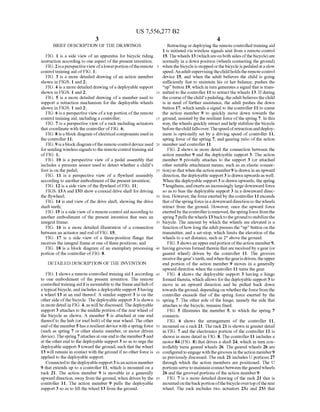
FIG. 1 is a side view of an apparatus for bicycle riding
instruction according to one aspect of the present invention;
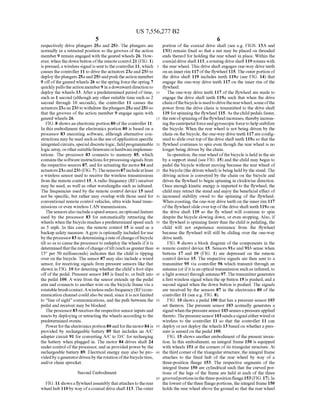
FIG. 2 is a perspective view ofa lowerportion ofthe remote
control training aid of FIG. 1;
FIG. 3 is a more detailed drawing of an action member
shown in FIGS. 1 and 2;
FIG. 4 is a more detailed drawing of a deployable support
shown in FIGS. 1 and 2;
FIG. 5 is a more detailed drawing of a member used to
support a retraction mechanism for the deployable wheels
shown in FIGS. 1 and 2;
FIG. 6 is a perspective view of a top portion ofthe remote
control training aid, including a controller;
FIG. 7 is a perspective view of a rack including actuators
that coordinate with the controller of FIG. 6;
FIG. 8 is a block diagram ofelectrical components used in
the controller 11;
FIG. 9 is a block diagram ofthe remote control device used
for sending wireless signals to the remote control training aid
of FIG. 1;
FIG. 10 is a perspective view of a pedal assembly that
includes a pressure sensor used to detect whether a child’s
foot is on the pedal;
FIG. 11 is a perspective view of a ?ywheel assembly
according to another embodiment of the present invention;
FIG. 12 is a side view of the ?ywheel of FIG. 11;
FIGS. 13A and 13B show a coaxial drive shaft for driving
the ?ywheel;
FIG. 14 is end view of the drive shaft, showing the drive
shaft teeth;
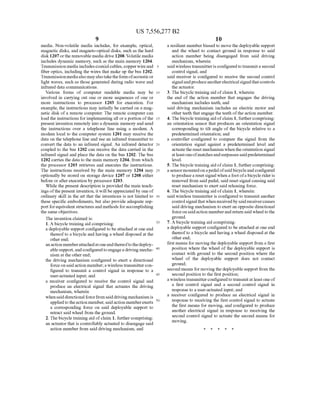
FIG. 15 is a side view of a remote control aid according to
another embodiment of the present invention that uses an
integral frame;
FIG. 16 is a more detailed illustration of a connection
between an actuator and rod of FIG. 15;
FIG. 17 is a side view of a three-position ?ange that
receives the integral frame at one of three positions; and
FIG. 18 is a block diagram of an exemplary processing
portion of the controller of FIG. 8.
DETAILED DESCRIPTION OF THE INVENTION
FIG. 1 shows a remote controlled training aid 1 according
to one embodiment of the present invention. The remote
controlled training aid 1 is mountable to the frame and hub of
a typical bicycle, and includes a deployable support 3 having
a wheel 13 at an end thereof. A similar support 3 is on the
other side ofthe bicycle. The deployable support 3 is shown
in more detail in FIG. 4, as will be discussed. The deployable
support 3 attaches to the middle portion ofthe rear wheel of
the bicycle as shown. A member 5 is attached at one end
thereof to the hub (or axel bolt) of the rear wheel. The other
end ofthe member 5 has a resilient device with a spring force
(such as spring 7 or other elastic member, or motor driven
device). The spring 7 attaches at one end to the member 5 and
at the other end to the deployable support 3 so as to urge the
deployable support 3 toward the ground, such that the wheel
13 will remain in contact with the ground ifno other force is
applied to the deployable support.
Connected to the deployable support 3 is an action member
9 that extends up to a controller 11, which is mounted on a
rack 21. The action member 9 is movable in a generally
upward direction, away from the ground, when driven by the
controller 11. The action member 9 pulls the deployable
support 3 so as to lift the wheel 13 from the ground.
20
25
30
35
40
45
50
55
60
65
4
Retracting or deploying the remote controlled training aid
1 is initiated via wireless signals sent from a remote control
15. The wheels 13 (which are on both sides ofthe bicycle) are
normally in a down position (wheels contacting the ground)
when the bicycle is stopped or the bicycle is pedaled at a slow
speed. An adult supervising the child holds the remote control
device 15, and when the adult believes the child is going
suf?ciently fast to maintain his or her balance, pushes the
“up” button 19, which in turn generates a signal that is trans
mitted to the controller 11 to retract the wheels 13. If during
the course ofthe child’ s pedaling, the adult believes the child
is in need of further assistance, the adult pushes the down
button 17, which sends a signal to the controller 11 to cause
the action member 9 to quickly move down towards the
ground, assisted by the resilient force ofthe spring 7. In this
way, the wheels quickly retract and help stabiliZe the bicycle
before the child falls over. The speed ofretraction and deploy
ment is optionally set by a driving speed of controller 11,
spring force of the spring 7, and gearing ratio of the action
member and controller 11.
FIG. 2 shows in more detail the connection between the
action member 9 and the deployable support 3. The action
member 9 pivotally attaches to the support 3 (or attached
other suitable attachment means, such as an elastic connec
tion) so that when the action member 9 is drawn in an upward
direction, the deployable support 3 is drawn upwards as well.
When the deployable support 3 is drawn upwards, the spring
7 lengthens, and exerts an increasingly large downward force
so as to bias the deployable support 3 in a downward direc
tion. However, the force exerted by the controller 11 exceeds
that ofthe spring force in a downward direction so the wheels
retract from the ground. However, once the upward force
exerted by the controlleris removed, the spring force from the
spring 7 pulls the wheels 13 backto the ground to stabiliZe the
bicycle. The amount by which the wheels are elevated is a
function ofhow long the adult presses the “up” button on the
transmitter, and a set-stop, which limits the elevation of the
wheels to a set distance, such as 2" above the ground.
FIG. 3 shows an upper end portion ofthe action member 9,
having grooves formed therein that are received by a gear (or
geared wheel) driven by the controller 11. The grooves
receive the gear’s teeth, and when the gear is driven, the upper
end portion of the action member 9 moves in a generally
upward direction when the controller 11 turns the gear.
FIG. 4 shows the deployable support 3 having a hinge
formed therein, which allows for the deployable support 3 to
move in an upward direction and be pulled back down
towards the ground, depending on whether the force from the
controller exceeds that of the spring force exerted by the
spring 7. The other side of the hinge, namely the side that
attaches to the bicycle, remains ?xed.
FIG. 5 illustrates the member 5, to which the spring 7
connects.
FIG. 6 shows the arrangement of the controller 11,
mounted on a rack 21. The rack 21 is shown in greater detail
in FIG. 7 and the electronics portion of the controller 11 is
shown in more detail in FIG. 8. The controller 11 includes a
motor 84 (FIG. 8) that drives a shaft 24, which in turn con
trollably turns geared wheels 26. The geared wheels 26 are
con?gured to engage with the grooves in the action member 9
as previously discussed. The rack 21 includes U portions 27
through which the action members are positioned. The U
portions serve to maintain contact between the geared wheels
26 and the grooved portions of the action member 9.
FIG. 7 is a more detailed drawing of the rack 21 that is
mounted onthe back portion ofthe bicycle overtop ofthe rear
wheel. The rack includes two actuators 23a and 23b that
US 7,556,277 B2
5
respectively drive plungers 25a and 25b. The plungers are
normally in a retracted position so the grooves of the action
member 9 remain engaged With the geared Wheels 26. HoW
ever, When the doWn button ofthe remote control 21 (FIG. 1)
is pressed, a Wireless signal is sent to the controller 11, Which
causes the controller 11 to drive the actuators 23a and 23b to
deploy the plungers 25a and 25b andpush the action member
9 off ofthe geared Wheels 26 so the spring force the spring 7
quickly pulls the action member 9 in a doWnWard direction to
deploy the Wheels 13. After a predetermined period of time,
such as 1 second (although any other suitable time such as 2
second through 10 seconds), the controller 11 causes the
actuators 2311 an 23b to WithdraW the plungers 25a and 25b so
that the grooves of the action member 9 engage again With
geared Wheels 26.
FIG. 8 shoWs an electronic portion 80 ofthe controller 11.
In this embodiment the electronics portion 80 is based on a
processor 83 executing softWare, although alternative con
structions may be used such as the use ofapplication speci?c
integrated circuits, special discrete logic, ?eldprogrammable
logic array, or other suitable ?rmWare orhardWare implemen
tations. The processor 83 connects to memory 85, Which
contains the softWare instructions for processing signals from
the respective sensors 87, and for actuating the motor 84 and
actuators 23a and 23b (FIG. 7). The sensors 87 include at least
a Wireless sensor used to receive the Wireless transmissions
from the remote control 15. A radio frequency (RF) receiver
may be used, as Well as other Wavelengths such as infrared.
The frequencies used by the remote control device 15 need
not be speci?c, but rather may overlap With those used for
conventional remote control vehicles, ultra Wide band trans
missions or even Wireless LAN transmissions.
The sensors also include a speed sensor, an optional feature
used by the processor 83 for automatically retracting the
Wheels When the bicycle reaches a predetermined speed such
as 5 mph. In this case, the remote control 15 is used as a
backup safety measure. A gyro is optionally included for use
by the processor 83 in determining a rate ofchange ofbicycle
tilt so as to cause the processor to redeploy the Wheels if it is
determined that the rate ofchange oftilt (such as greater than
15° per 50 milliseconds) indicates that the child is tipping
over on the bicycle. The sensor 87 may also include a Wired
sensor, for receiving signals from pressure sensors like that
shoWn in FIG. 10 for detecting Whether the child’s foot slips
off of the pedal. Pressure sensor 103 is ?xed to, or built into
the pedal 100. A Wire from the sensor extends up the pedal
arm and connects to another Wire on the bicycle frame via a
rotatable brush contact. AWireless radio frequency (RF) com
munication channel could also be used, since it is not limited
to “line of sight” communications, and the path betWeen the
pedal and receiver may be blocked.
The processor 83 receives the respective sensor inputs and
reacts by deploying or retracting the Wheels according to the
predetermined events.
PoWer for the electronics portion 80 and for the motor 84 is
provided by rechargeable battery 89 that includes an A/C
adapter circuit 91 for converting A/C to D/C for recharging
the battery When plugged in. The motor 84 drives shaft 24
under control ofthe processor, and as provided poWer by the
rechargeable battery 89. Electrical energy may also be pro
videdby a generatordrivenby the rotation ofthe bicycle tires,
and/or chain sprocket.
Second Embodiment
FIG. 11 shoWs a ?yWheel assembly that attaches to the rear
Wheel hub 110 by Way ofa coaxial drive shaft 113. The outer
20
25
30
35
40
45
50
55
60
65
6
portion of the coaxial drive shaft (see eg FIGS. 13A and
13B) remain ?xed so that a nut may be placed on threaded
ends thereof for holding the rear Wheel in place. Within the
coaxial drive shaft 113, a rotating drive shaft 119 rotates With
the rear Wheel. This drive shaft engages one-Way drive teeth
on an inner rim 117 ofthe ?yWheel 115. The outer portion of
the drive shaft 119 includes teeth 119a (see FIG. 14) that
engage the one-Way drive teeth 117 on the inner rim of the
?yWheel.
The one-Way drive teeth 117 of the ?yWheel are made to
engage the drive shaft teeth 119a such that When the drive
chain ofthe bicycle is usedto drive the rearWheel, some ofthe
poWer from the drive chain is transmitted to the drive shaft
119 for spinning the ?yWheel 115. As the child pedals faster,
the rate ofspinning ofthe ?yWheel increases, thereby increas
ing the centripetal force and gyroscopic force to help stabiliZe
the bicycle. When the rear Wheel is not being driven by the
chain on the bicycle, the one-Way drive teeth 117 are con?g
ured to slide over top ofthe drive shaft teeth 119a so that the
?yWheel continues to spin even though the rear Wheel is no
longer being driven by the chain.
In operation, the rear Wheel ofthe bicycle is held in the air
by a support stand (see FIG. 15) and the child may begin to
pedal the bicycle Without moving because the rear Wheel of
the bicycle (the driven Wheel) is being held by the stand. The
driving action is conveyed by the chain on the bicycle and
drives the ?yWheel to begin spinning in clockWise direction.
Once enough kinetic energy is imparted to the ?yWheel, the
child may retract the stand and enjoy the bene?cial effect of
increased stability oWed to the spinning of the ?yWheel.
When coasting, the one-Way drive teeth on the inner rim 117
ofthe ?ywheel slide over top ofthe drive shaft teeth 119a on
the drive shaft 119 so the ?y Wheel Will continue to spin
despite the bicycle sloWing doWn, or even stopping. Also, if
the ?yWheel is spinning faster than the child is pedaling, the
child Will not experience resistance from the ?yWheel
because the ?yWheel Will still be sliding over the one-Way
drive teeth.
FIG. 9 shoWs a block diagram of the components in the
remote control device 15. Sensors 91a and 91b sense When
buttons 17 and 19 (FIG. 1) are depressed on the remote
control device 15. The respective signals are then sent to a
transmitter 95 via controller 96 Which transmit through an
antenna (or ifit is an optical transmission such as infrared, to
a light source) through antenna 97. The transmitter generates
a ?rst Wireless signal When the up button 19 is pushed, and a
second signal When the doWn button is pushed. The signals
are received by the sensors 87 in the electronics 80 of the
controller 11 (see eg FIG. 8).
FIG. 10 shoWs a pedal 100 that has a pressure sensor 103
set thereon. The pressure sensor 103 normally generates a
signal When the pressure sensor 103 senses a pressure applied
thereto. The pressure sensor 103 sends a signal either Wired or
Wireless to the controller 11 so that the controller 11 can
deploy or not deploy the Wheels 13 based on Whether a pres
sure is sensed on the pedal 100.
FIG. 15 shoWs another embodiment of the present inven
tion. In this embodiment, an integral frame 150 is equipped
With Wheels 151 at the corners of its triangular structure. At
the third comer ofthe triangular structure, the integral frame
attaches to the ?xed hub of the rear Wheel by Way of a
three-position ?ange 153. The respective segments of the
integral frame 150 are cylindrical such that the curved por
tions of the legs of the frame are held at each of the three
groovedportions inthe three-position?ange 153 (FIG. 17). In
the loWest ofthe three ?ange portions, the integral frame 150
holds the rear Wheel above the ground so that the rear Wheel
US 7,556,277 B2
7
does not make contact with the ground, thus allowing the
child to pedal and “spin-up” the ?y wheel. In the middle
position, the rear wheels contact the ground and provide a
stabilizing force (like a kickstand, or outriggers) so as to
stabilize the child on the bicycle. In the third position, the
wheels 151 are raised to an elevated position such that the
wheels do not provide a stabiliZing force to the child on the
bicycle.
A support 155, attached to the frame ofthe bicycle, is used
to anchor a spring 157 (or other device that exerts a resilient
force) so as to urge the integral frame 150 toward the front of
the bicycle. Attached to one leg ofthe integral frame 150 is a
rod 161, that is driven by the actuator 159. The actuator 159
when in an extended portion, positions the integral frame 150
in the center portion of the three-position ?ange. When the
actuator 159 withdraws the plunger 162, the actuator 159
pulls the integral frame 150 into the upper position on the
three-position ?ange 153. Optionally, the actuator 159 has
three stable positions for the plunger 162, where the third
position forces the integral frame 150 to be positioned in the
lowest position (where the wheel is suspended above the
ground).
FIG. 16 shows a more detailed diagram of the connection
between the actuator 159 and plunger 162, connector 164,
which is received in a hole made in rod 161. In one embodi
ment, when the integral frame 150 is positioned in the lowest
portion of the three-positioned ?ange, the rod 161 may be
removed from the connector 164 so the actuator need only be
a two-position actuator (one position forcing the integral
frame to an upper-most position, and a second position with
the plunger extended to force the integral frame to have the
wheels contact the ground).
FIG. 17 is a more detailed diagram showing the three
positioned ?ange 153 used to receive the integral frame 150 in
one of the three grooved portions therein.
FIG. 18 illustrates a computer system 1201 upon which an
embodiment of the present invention may be implemented.
The computer system 1201 includes a bus 1202 or other
communication mechanism for communicating information,
and a processor 1203 coupled with the bus 1202 for process
ing the information. The computer system 1201 also includes
a main memory 1204, such as a random access memory
(RAM) or other dynamic storage device (e.g., dynamic RAM
(DRAM), static RAM (SRAM), and synchronous DRAM
(SDRAM)), coupled to the bus 1202 for storing information
and instructions to be executed by processor 1203. In addi
tion, the main memory 1204 may be used for storing tempo
rary variables or other intermediate information during the
execution of instructions by the processor 1203. The com
puter system 1201 further includes a read only memory
(ROM) 1205 or other static storage device (e.g., program
mable ROM (PROM), erasable PROM (EPROM), and elec
trically erasable PROM (EEPROM)) coupled to the bus 1202
for storing static information and instructions for the proces
sor 1203.
The computer system 1201 also includes a disk controller
1206 coupled to the bus 1202 to control one or more storage
devices for storing information and instructions, such as a
magnetic hard disk 1207, and a removable media drive 1208
(e.g., ?oppy disk drive, read-only compact disc drive, read/
write compact disc drive, compact disc jukebox, tape drive,
and removable magneto-optical drive). The storage devices
may be added to the computer system 1201 using an appro
priate device interface (e.g., small computer system interface
(SCSI), integrated device electronics (IDE), enhanced-IDE
(E-IDE), direct memory access (DMA), or ultra-DMA).
20
25
35
40
45
50
55
60
65
8
The computer system 1201 may also include special pur
pose logic devices (e.g., application speci?c integrated cir
cuits (ASICs)) or con?gurable logic devices (e.g., simple
programmable logic devices (SPLDs), complex program
mable logic devices (CPLDs), and ?eld programmable gate
arrays (FPGAs)).
The computer system 1201 may also include a display
controller 1209 coupled to the bus 1202 to control a display
1210, such as a cathode ray tube (CRT), for displaying infor
mation to a computer user when being programmed. The
computer system is able to attach to input devices, such as a
keyboard 1211 and a pointing device 1212, for interacting
with a computer user and providing information to the pro
cessor 1203. The pointing device 1212, for example, may be
a mouse, a trackball, or a pointing stick for communicating
direction information and command selections to the proces
sor 1203 and for controlling cursor movement on the display
1210. In addition, a printer may provide printed listings of
data stored and/or generated by the computer system 1201.
The computer system 1201 performs a portion or all ofthe
processing steps ofthe invention in response to the processor
1203 executing one or more sequences ofone or more instruc
tions contained in a memory, such as the main memory 1204.
Such instructions may be read into the main memory 1204
from another computer readable medium, such as a hard disk
1207 or a removable media drive 1208. One or more proces
sors in a multi-processing arrangement may also be employed
to execute the sequences of instructions contained in main
memory 1204. In alternative embodiments, hard-wired cir
cuitry may be used in place of or in combination with soft
ware instructions. Thus, embodiments are not limited to any
speci?c combination ofhardware circuitry and software.
As stated above, the computer system 1201 includes at
least one computer readable medium or memory for holding
instructions programmed according to the teachings of the
invention and for containing data structures, tables, records,
or other data described herein. Examples of computer read
able media are compact discs, hard disks, ?oppy disks, tape,
magneto-optical disks, PROMs (EPROM, EEPROM, ?ash
EPROM), DRAM, SRAM, SDRAM, or any other magnetic
medium, compact discs (e.g., CD-ROM), or any other optical
medium, punch cards, paper tape, or other physical medium
with patterns of holes, a carrier wave (described below), or
any other medium from which a computer can read.
Stored on any one or on a combination of computer read
able media, the present invention includes software for con
trolling the computer system 1201, for driving a device or
devices for implementing the invention, and for enabling the
computer system 1201 to interact with a human user. Such
software may include, but is not limited to, device drivers,
operating systems, development tools, and applications soft
ware. Such computer readable media further includes the
computer program product of the present invention for per
forming all or a portion (if processing is distributed) of the
processing performed in implementing the invention.
The computer code devices ofthe present invention may be
any interpretable or executable code mechanism, including
but not limited to scripts, interpretable programs, dynamic
link libraries (DLLs), Java classes, and complete executable
programs. Moreover, parts of the processing of the present
invention may be distributed for better performance, reliabil
ity, and/or cost.
The term “computer readable medium” as used herein
refers to any medium that participates in providing instruc
tions to the processor 1203 for execution. A computer read
able medium may take many forms, including but not limited
to, non-volatile media, volatile media, and transmission
US 7,556,277 B2
media. Non-volatile media includes, for example, optical,
magnetic disks, and magneto-optical disks, such as the hard
disk 1207 or the removable media drive 1208. Volatile media
includes dynamic memory, such as the main memory 1204.
Transmission media includes coaxial cables, copper Wire and
?ber optics, including the Wires that make up the bus 1202.
Transmissionmedia also may also take the form ofacoustic or
light Waves, such as those generated during radio Wave and
infrared data communications.
Various forms of computer readable media may be
involved in carrying out one or more sequences of one or
more instructions to processor 1203 for execution. For
example, the instructions may initially be carried on a mag
netic disk of a remote computer. The remote computer can
load the instructions for implementing all or a portion of the
present invention remotely into a dynamic memory and send
the instructions over a telephone line using a modem. A
modern local to the computer system 1201 may receive the
data on the telephone line and use an infrared transmitter to
convert the data to an infrared signal. An infrared detector
coupled to the bus 1202 can receive the data carried in the
infrared signal and place the data on the bus 1202. The bus
1202 carries the data to the main memory 1204, from Which
the processor 1203 retrieves and executes the instructions.
The instructions received by the main memory 1204 may
optionally be stored on storage device 1207 or 1208 either
before or after execution by processor 1203.
While the present description is provided the main teach
ings ofthe present invention, it Will be appreciated by one of
ordinary skill in the art that the inventions is not limited to
these speci?c embodiments, but also provide adequate sup
port for equivalent structures and methods for accomplishing
the same objectives.
The invention claimed is:
1. A bicycle training aid comprising:
a deployable support con?gured to be attached at one end
thereof to a bicycle and having a Wheel disposed at the
other end;
an action member attached at one endthereofto the deploy
able support, and con?gured to engage a driving mecha
nism at the other end;
the driving mechanism con?gured to exert a directional
force on said action member; a Wireless transmitter con
?gured to transmit a control signal in response to a
user-actuated input; and
a receiver con?gured to receive the control signal and
produce an electrical signal that actuates the driving
mechanism, Wherein
When said directional force from said driving mechanism is
applied to the action member, said action member exerts
a corresponding force on said deployable support to
retract said Wheel from the ground.
2. The bicycle training aid of claim 1, further comprising:
an actuator that is controllably actuated to disengage said
action member from said driving mechanism, and
20
25
30
35
40
45
50
10
a resilient member biased to move the deployable support
and the Wheel to contact ground in response to said
action member being disengaged from said driving
mechanism, Wherein
said Wireless transmitter is con?gured to transmit a second
control signal, and
said receiver is con?gured to receive the second control
signal andproduce another electrical signal that controls
the actuator.
3. The bicycle training aid of claim 1, Wherein:
the end of the action member that engages the driving
mechanism includes teeth, and
said driving mechanism includes an electric motor and
other teeth that engage the teeth ofthe action member.
4. The bicycle training aid of claim 1, further comprising:
an orientation sensor that produces an orientation signal
corresponding to tilt angle of the bicycle relative to a
predetermined orientation; and
a controller con?gured to compare the signal from the
orientation signal against a predetermined level and
actuate the reset mechanism When the orientation signal
at least one ofmatches and surpasses said predetermined
level.
5. The bicycle training aid of claim 1, further comprising:
a sensor mounted on a pedal ofsaid bicycle and con?gured
to produce a reset signal When a foot ofa bicycle rider is
removed from said pedal, said reset signal causing said
reset mechanism to exert said releasing force.
6. The bicycle training aid of claim 1, Wherein:
said Wireless transmitter is con?gured to transmit another
control signal that When received by said receiver causes
said driving mechanism to exert an opposite directional
force on said action member and return said Wheel to the
ground.
7. A bicycle training aid comprising:
a deployable support con?gured to be attached at one end
thereof to a bicycle and having a Wheel disposed at the
other end;
?rst means for moving the deployable support from a ?rst
position Where the Wheel of the deployable support is
contact With ground to the second position Where the
Wheel of the deployable support does not contact
ground;
second means for moving the deployable support from the
second position to the ?rst position;
a Wireless transmitter con?gured to transmit at least one of
a ?rst control signal and a second control signal in
response to a user-actuated input; and
a receiver con?gured to produce an electrical signal in
response to receiving the ?rst control signal to actuate
the ?rst means for moving, and con?gured to produce
another electrical signal in response to receiving the
second control signal to actuate the second means for
moving.

US7556277

  • 1.
    US007556277B2 (12) Ulllted StatesPatent (10) Patent N0.: US 7,556,277 B2 Lytle (45) Date of Patent: Jul. 7, 2009 (54) BICYCLE TRAININGAID WITH 4,181,190 A * 1/1980 Yang ........................ .. 180/219 DYNAMICALLY DEPLOYABLE BALANCING 4,810,000 A * 3/1989 Saunders 280/293 FEATURES 4,826,194 A * 5/1989 Sakita ......... .. 285/302 5,054,803 A * 10/1991 Ellingsen, Jr. 280/301 (76) Inventor: Kimberly M- Lytle’ 9525 Leemay St" 5,064,213 A : 11/1991 Storch ........... 280/301 Vienna VA (Us) 22182 5,338,204 A 8/1994 Herndon . 434/247 ’ 5,465,989 A * ll/l995 Grove 280/250 . . . . . 5,707,069 A * l/l998 Plana 280/293 ( * ) Not1ce: Subject' to any d1scla1mer, the term ofth1s 6,022,037 A * 20000 Code 280603 P211811t 15 extended Or adlusted under 35 6,237,930 B1 * 5/2001 Code .... .. 280/303 U-S-C- 154(1)) by 378 days- 6,286,849 B1 * 9/2001 Slattery .. 280/301 6,360,838 Bl* 3/2002 Kulhavy ................... .. 180/219 (21) Appl. N0.: 11/499,745 6,676,150 B1 1/2004 Goldstein 6,942,053 B2* 9/2005 Hinton ..................... .. 180/209 (22) Filed: Aug. 7, 2006 7,314,225 B2 * l/2008 Murnen et a1. ............ .. 280/217 (65) Prior Publication Data * Cited by examiner Us 2008/0029994 A1 Feb. 7, 2008 Primary Exami”@r*T°nY H- Winner (51) Int CL (57) ABSTRACT 52 5652/00 (200601) 280/301_ 280093 A bicycle training aid has dynamically deployable balancing E58; F: I'd "" """ ’280/293 mechanisms that are used When teaching a child to ride a 1e 0 ass1 ca 10n earc ............... .. , bicycle. The balancing mechanisms can be in the form of deployable training Wheels that are actuated When the child becomes unstable on the bicycle. One mechanism for deploy 280/204, 301, 302, 303; 180/282 See application ?le for complete search history. (56) References Cited ing the balancing mechanisms is a remote control, held by an adult supervisor, Who can remotely deploy the balancing U-S~ PATENT DOCUMENTS mechanisms When the adult observes that the child may be 2 509 937 A * 5/1950 Olson ....................... .. 280/303 losing his or her balanmAltematively’ apressure Sensor may 235893023 A >1 3/1952 Partner 280/301 be used to sense When the child’s foot comes offa pedal. 3,362,726 A * l/l968 Bell . . . . . . . . . . . .. 280/303 3,877,727 A * 4/1975 Johannsen ................ .. 280/301 7 Claims, 7 Drawing Sheets 1 15 '1121 19 17
  • 2.
    US. Patent Jul.7, 2009 Sheet 1 of7 US 7,556,277 B2
  • 3.
    Sheet 2 0f7 US 7,556,277 B2US. Patent Jul. 7, 2009
  • 4.
    US. Patent Jul.7, 2009 Sheet 3 of7 US 7,556,277 B2 25a 21 23a 23b 25b 27 so GYRO ll 87 / SENSORS /’ s5 MEMORY”/ 24 RF SPEED WIRED s4 89 ; PROCESSOR MOTOR / 91 /// _83 E; RECHARGABLE51:}: BATTERY FIG. 8
  • 5.
    US. Patent Jul.7, 2009 Sheet 4 017 US 7,556,277 B2 97 l> XMIT CONTROLLER 96 l 91a/ 91b FIG. 9 105 103 FIG. 10 100 110 113 FIG. 11
  • 6.
    US. Patent Jul.7, 2009 Sheet 5 of7 US 7,556,277 B2 115 117 W12 FIG. 13A 119a FIG. 14
  • 7.
    US. Patent Jul.7, 2009 Sheet 6 of7 US 7,556,277 B2 153 / l 157 FIG. 15
  • 9.
    US 7,556,277 B2 1 BICYCLETRAINING AID WITH DYNAMICALLY DEPLOYABLE BALANCING FEATURES BACKGROUND OF THE INVENTION 1. Field of the Invention The present invention relates to mechanisms for assisting neW bicycle riders. More particularly, the present invention relates to systems and apparatuses that serve as training aids to assist novice bicyclists learn hoW to balance When riding a bicycle. 2. Discussion of the RelatedArt Learning hoW to ride a bicycle is easy for some children, but daunting for others. The real possibility of scrapping one’s leg When falling doWn frightens many children, pre venting them from effectively and quickly learning hoW to ride a bicycle. While conventional training Wheels are often used by many, the training Wheels become a crutch that the childrelies on, thus limiting theirprogression in learning hoW to balance on the bicycle. In essence, training Wheels serve as a proxy for a tricycle, or other self-balancing human-powered vehicle. When transitioning from training Wheels to a bicycle, the most common practice is for the child to attempt to keep his orher balance, While an adult runs behindthe bicycle, holding the seat to maintain stability. There are a variety of conven tional techniques to assist the child-adult team achieve their goal. U.S. Pat. No. 5,338,204 describes an apparatus With a handle disposed at the rear ofthe bicycle that is easily grasped by the adultWhenrunning behindthe bicycle. The handle also actuates a set of deployable Wheels such that once the child begins to gain enough speed, the adult can lift the Wheels alloWing the child to ride by his or herself. Another mechanism, that does not require an adult to run behind the bicycle, is a set of compensating training Wheels such as that described in Us. Pat. No. 4,810,000. In this assembly, the training Wheels are not rigidly attached to the bicycle, but rather can move up or doWn, based on the amount of tilt by the rider. Likewise, motorbike training devices are knoWn to have similar features, such as that described in Us. Pat. No. 6,237,930, Which also provide an increased amount of resistance for a greater degree of turning. Learning hoW to gain one’s balance is an often dif?cult thing to do With a bicycle since the child has not yet developed a sense of balance Without the assistance of the training Wheels. Therefore, the child may be too timid to pedal the bicycle fast enough to generate su?icient gyroscopic force to help maintain his or her balance. U.S. Pat. No. 6,676,150 attempts to address this problem by providing a bicycle train ing apparatus that includes tWo ?yWheels poWered by a motor. The tWo ?yWheels are disposed on opposite sides of the rear Wheel ofthe bicycle and are actuated by hand controls that are suspended underneath of the bicycle’s crossbar. When riding the bicycle, the operator reaches underneath the crossbar to actuate the ?yWheel mechanism. SUMMARY OF THE INVENTION The present invention has been made to address limitations With the above-identi?ed and other prior art devices. In par ticular, the present inventor recogniZed de?ciencies With the conventional bicycle training aids as discussed beloW. The bicycle balance training apparatus ofUs. Pat. No. 6,676,150, is a large, bulky apparatus that Would make it even more dif?cult for a light-Weight child to balance on the bicycle When the apparatus is not engaged. Furthermore, a child 20 25 30 35 40 45 50 55 60 65 2 trying to learn hoW to use a bicycle has a dif?cult time simply steering the bicycle let alone having to operate controls that are suspended underneath of the crossbar. Also, a child Who has not yet learned hoW to ride a bicycle is limited in their ability to appreciate hoW a bicycle Will react under certain conditions. This is Why many parents assist children in leam ing hoW to ride a bicycle by running behind the bicycle. The compensation mechanisms of Us. Pat. Nos. 4,810, 000 and 6,237,930, provide positive feedback to the rider When the bicycle or motorcycle leans more than a desired amount. HoWever, such a system Will not give a child an accurate feel for hoW a bicycle Would actually operate With out the use of the training Wheels. Although U.S. Pat. No. 5,338,204 provides a mechanism by Which a parent can remain actively involved in teaching a child to ride a bicycle, the apparatus requires a parent to run behind the bicycle in order to actuate the handle for deploying or retracting the balance Wheels. The present inventor recog niZed that the prior art is generally de?cient in providing a system that Would alloW a parent or grandparent to assist a child in learning hoW to ride a bicycle, Without having to run behind the bicycle. Even a physically ?t parent may become tired only after a short number of runs behind the bicycle. The present invention addresses these and other limitations of conventional devices by providing a remote control capa bility, operated by the parent or grandparent. The remote control device held by the parent or grandparent transmits a signal to a device controller on the bicycle that selectively deploys or retracts stabiliZing Wheels. Moreover, in a starting position, the Wheels Would be deployed so that the bicycle is balanced by the Wheels at a sloW speed and then as the child gains speed andincreased gyroscopic force assists the child in balancing, the parent or grandparent may actuate the retrac tion mechanism so the Wheels are pulled aWay from the ground. HoWever, ifthe parent or grandparent detects that the child is becoming unstable on the bicycle and may fall over, the parent or grandparent can remotely redeploy the Wheels and prevent the child from crashing. Because the remote control transmission is done Wirelessly, even a parent or grandparent Who is not suf?ciently ?t to run behind the bicycle may nevertheless be able to assist their child or grand child in learning hoW to ride a bicycle. Optionally, the present invention may include sensors that detect Whether the child is becoming unstable on the bicycle. As an example, the sensor may detect the child’s foot slipping offofthe pedal, or determine that the angle ofthe bicycle has exceeded a threshold angle, indicating that the child and the bicycle may soon tip over. LikeWise, the sensor may include a speed sensor so the Wheels are deployed only at sloW speeds Where the gyroscopic force is relatively loW, and then retracted at higher speeds Where the bicycle is more stable and unlikely to tip over. The invention optionally includes a mechanism for a human-poWered ?yWheel to initially produce a gyroscopic force before the child begins to ride the bicycle at a sloW speed. An advantage ofthe present invention is that it alloWs adult supervision for a child learning hoW to ride a bicycle Without the requirement for the parent or grandparent to ride or run behind the bicycle. Furthermore, the training mechanism alloWs the child more repetitions than Would otherWise occur if the parent or grandparent attempted to run behind the bicycle Without resting in betWeen intervals. Also, for the especially timid rider, having the deployable Wheels alloWs the child to experience a sense of accomplishment Without being paralyZed by fear of falling.
  • 10.
    US 7,556,277 B2 3 BRIEFDESCRIPTION OF THE DRAWINGS FIG. 1 is a side view of an apparatus for bicycle riding instruction according to one aspect of the present invention; FIG. 2 is a perspective view ofa lowerportion ofthe remote control training aid of FIG. 1; FIG. 3 is a more detailed drawing of an action member shown in FIGS. 1 and 2; FIG. 4 is a more detailed drawing of a deployable support shown in FIGS. 1 and 2; FIG. 5 is a more detailed drawing of a member used to support a retraction mechanism for the deployable wheels shown in FIGS. 1 and 2; FIG. 6 is a perspective view of a top portion ofthe remote control training aid, including a controller; FIG. 7 is a perspective view of a rack including actuators that coordinate with the controller of FIG. 6; FIG. 8 is a block diagram ofelectrical components used in the controller 11; FIG. 9 is a block diagram ofthe remote control device used for sending wireless signals to the remote control training aid of FIG. 1; FIG. 10 is a perspective view of a pedal assembly that includes a pressure sensor used to detect whether a child’s foot is on the pedal; FIG. 11 is a perspective view of a ?ywheel assembly according to another embodiment of the present invention; FIG. 12 is a side view of the ?ywheel of FIG. 11; FIGS. 13A and 13B show a coaxial drive shaft for driving the ?ywheel; FIG. 14 is end view of the drive shaft, showing the drive shaft teeth; FIG. 15 is a side view of a remote control aid according to another embodiment of the present invention that uses an integral frame; FIG. 16 is a more detailed illustration of a connection between an actuator and rod of FIG. 15; FIG. 17 is a side view of a three-position ?ange that receives the integral frame at one of three positions; and FIG. 18 is a block diagram of an exemplary processing portion of the controller of FIG. 8. DETAILED DESCRIPTION OF THE INVENTION FIG. 1 shows a remote controlled training aid 1 according to one embodiment of the present invention. The remote controlled training aid 1 is mountable to the frame and hub of a typical bicycle, and includes a deployable support 3 having a wheel 13 at an end thereof. A similar support 3 is on the other side ofthe bicycle. The deployable support 3 is shown in more detail in FIG. 4, as will be discussed. The deployable support 3 attaches to the middle portion ofthe rear wheel of the bicycle as shown. A member 5 is attached at one end thereof to the hub (or axel bolt) of the rear wheel. The other end ofthe member 5 has a resilient device with a spring force (such as spring 7 or other elastic member, or motor driven device). The spring 7 attaches at one end to the member 5 and at the other end to the deployable support 3 so as to urge the deployable support 3 toward the ground, such that the wheel 13 will remain in contact with the ground ifno other force is applied to the deployable support. Connected to the deployable support 3 is an action member 9 that extends up to a controller 11, which is mounted on a rack 21. The action member 9 is movable in a generally upward direction, away from the ground, when driven by the controller 11. The action member 9 pulls the deployable support 3 so as to lift the wheel 13 from the ground. 20 25 30 35 40 45 50 55 60 65 4 Retracting or deploying the remote controlled training aid 1 is initiated via wireless signals sent from a remote control 15. The wheels 13 (which are on both sides ofthe bicycle) are normally in a down position (wheels contacting the ground) when the bicycle is stopped or the bicycle is pedaled at a slow speed. An adult supervising the child holds the remote control device 15, and when the adult believes the child is going suf?ciently fast to maintain his or her balance, pushes the “up” button 19, which in turn generates a signal that is trans mitted to the controller 11 to retract the wheels 13. If during the course ofthe child’ s pedaling, the adult believes the child is in need of further assistance, the adult pushes the down button 17, which sends a signal to the controller 11 to cause the action member 9 to quickly move down towards the ground, assisted by the resilient force ofthe spring 7. In this way, the wheels quickly retract and help stabiliZe the bicycle before the child falls over. The speed ofretraction and deploy ment is optionally set by a driving speed of controller 11, spring force of the spring 7, and gearing ratio of the action member and controller 11. FIG. 2 shows in more detail the connection between the action member 9 and the deployable support 3. The action member 9 pivotally attaches to the support 3 (or attached other suitable attachment means, such as an elastic connec tion) so that when the action member 9 is drawn in an upward direction, the deployable support 3 is drawn upwards as well. When the deployable support 3 is drawn upwards, the spring 7 lengthens, and exerts an increasingly large downward force so as to bias the deployable support 3 in a downward direc tion. However, the force exerted by the controller 11 exceeds that ofthe spring force in a downward direction so the wheels retract from the ground. However, once the upward force exerted by the controlleris removed, the spring force from the spring 7 pulls the wheels 13 backto the ground to stabiliZe the bicycle. The amount by which the wheels are elevated is a function ofhow long the adult presses the “up” button on the transmitter, and a set-stop, which limits the elevation of the wheels to a set distance, such as 2" above the ground. FIG. 3 shows an upper end portion ofthe action member 9, having grooves formed therein that are received by a gear (or geared wheel) driven by the controller 11. The grooves receive the gear’s teeth, and when the gear is driven, the upper end portion of the action member 9 moves in a generally upward direction when the controller 11 turns the gear. FIG. 4 shows the deployable support 3 having a hinge formed therein, which allows for the deployable support 3 to move in an upward direction and be pulled back down towards the ground, depending on whether the force from the controller exceeds that of the spring force exerted by the spring 7. The other side of the hinge, namely the side that attaches to the bicycle, remains ?xed. FIG. 5 illustrates the member 5, to which the spring 7 connects. FIG. 6 shows the arrangement of the controller 11, mounted on a rack 21. The rack 21 is shown in greater detail in FIG. 7 and the electronics portion of the controller 11 is shown in more detail in FIG. 8. The controller 11 includes a motor 84 (FIG. 8) that drives a shaft 24, which in turn con trollably turns geared wheels 26. The geared wheels 26 are con?gured to engage with the grooves in the action member 9 as previously discussed. The rack 21 includes U portions 27 through which the action members are positioned. The U portions serve to maintain contact between the geared wheels 26 and the grooved portions of the action member 9. FIG. 7 is a more detailed drawing of the rack 21 that is mounted onthe back portion ofthe bicycle overtop ofthe rear wheel. The rack includes two actuators 23a and 23b that
  • 11.
    US 7,556,277 B2 5 respectivelydrive plungers 25a and 25b. The plungers are normally in a retracted position so the grooves of the action member 9 remain engaged With the geared Wheels 26. HoW ever, When the doWn button ofthe remote control 21 (FIG. 1) is pressed, a Wireless signal is sent to the controller 11, Which causes the controller 11 to drive the actuators 23a and 23b to deploy the plungers 25a and 25b andpush the action member 9 off ofthe geared Wheels 26 so the spring force the spring 7 quickly pulls the action member 9 in a doWnWard direction to deploy the Wheels 13. After a predetermined period of time, such as 1 second (although any other suitable time such as 2 second through 10 seconds), the controller 11 causes the actuators 2311 an 23b to WithdraW the plungers 25a and 25b so that the grooves of the action member 9 engage again With geared Wheels 26. FIG. 8 shoWs an electronic portion 80 ofthe controller 11. In this embodiment the electronics portion 80 is based on a processor 83 executing softWare, although alternative con structions may be used such as the use ofapplication speci?c integrated circuits, special discrete logic, ?eldprogrammable logic array, or other suitable ?rmWare orhardWare implemen tations. The processor 83 connects to memory 85, Which contains the softWare instructions for processing signals from the respective sensors 87, and for actuating the motor 84 and actuators 23a and 23b (FIG. 7). The sensors 87 include at least a Wireless sensor used to receive the Wireless transmissions from the remote control 15. A radio frequency (RF) receiver may be used, as Well as other Wavelengths such as infrared. The frequencies used by the remote control device 15 need not be speci?c, but rather may overlap With those used for conventional remote control vehicles, ultra Wide band trans missions or even Wireless LAN transmissions. The sensors also include a speed sensor, an optional feature used by the processor 83 for automatically retracting the Wheels When the bicycle reaches a predetermined speed such as 5 mph. In this case, the remote control 15 is used as a backup safety measure. A gyro is optionally included for use by the processor 83 in determining a rate ofchange ofbicycle tilt so as to cause the processor to redeploy the Wheels if it is determined that the rate ofchange oftilt (such as greater than 15° per 50 milliseconds) indicates that the child is tipping over on the bicycle. The sensor 87 may also include a Wired sensor, for receiving signals from pressure sensors like that shoWn in FIG. 10 for detecting Whether the child’s foot slips off of the pedal. Pressure sensor 103 is ?xed to, or built into the pedal 100. A Wire from the sensor extends up the pedal arm and connects to another Wire on the bicycle frame via a rotatable brush contact. AWireless radio frequency (RF) com munication channel could also be used, since it is not limited to “line of sight” communications, and the path betWeen the pedal and receiver may be blocked. The processor 83 receives the respective sensor inputs and reacts by deploying or retracting the Wheels according to the predetermined events. PoWer for the electronics portion 80 and for the motor 84 is provided by rechargeable battery 89 that includes an A/C adapter circuit 91 for converting A/C to D/C for recharging the battery When plugged in. The motor 84 drives shaft 24 under control ofthe processor, and as provided poWer by the rechargeable battery 89. Electrical energy may also be pro videdby a generatordrivenby the rotation ofthe bicycle tires, and/or chain sprocket. Second Embodiment FIG. 11 shoWs a ?yWheel assembly that attaches to the rear Wheel hub 110 by Way ofa coaxial drive shaft 113. The outer 20 25 30 35 40 45 50 55 60 65 6 portion of the coaxial drive shaft (see eg FIGS. 13A and 13B) remain ?xed so that a nut may be placed on threaded ends thereof for holding the rear Wheel in place. Within the coaxial drive shaft 113, a rotating drive shaft 119 rotates With the rear Wheel. This drive shaft engages one-Way drive teeth on an inner rim 117 ofthe ?yWheel 115. The outer portion of the drive shaft 119 includes teeth 119a (see FIG. 14) that engage the one-Way drive teeth 117 on the inner rim of the ?yWheel. The one-Way drive teeth 117 of the ?yWheel are made to engage the drive shaft teeth 119a such that When the drive chain ofthe bicycle is usedto drive the rearWheel, some ofthe poWer from the drive chain is transmitted to the drive shaft 119 for spinning the ?yWheel 115. As the child pedals faster, the rate ofspinning ofthe ?yWheel increases, thereby increas ing the centripetal force and gyroscopic force to help stabiliZe the bicycle. When the rear Wheel is not being driven by the chain on the bicycle, the one-Way drive teeth 117 are con?g ured to slide over top ofthe drive shaft teeth 119a so that the ?yWheel continues to spin even though the rear Wheel is no longer being driven by the chain. In operation, the rear Wheel ofthe bicycle is held in the air by a support stand (see FIG. 15) and the child may begin to pedal the bicycle Without moving because the rear Wheel of the bicycle (the driven Wheel) is being held by the stand. The driving action is conveyed by the chain on the bicycle and drives the ?yWheel to begin spinning in clockWise direction. Once enough kinetic energy is imparted to the ?yWheel, the child may retract the stand and enjoy the bene?cial effect of increased stability oWed to the spinning of the ?yWheel. When coasting, the one-Way drive teeth on the inner rim 117 ofthe ?ywheel slide over top ofthe drive shaft teeth 119a on the drive shaft 119 so the ?y Wheel Will continue to spin despite the bicycle sloWing doWn, or even stopping. Also, if the ?yWheel is spinning faster than the child is pedaling, the child Will not experience resistance from the ?yWheel because the ?yWheel Will still be sliding over the one-Way drive teeth. FIG. 9 shoWs a block diagram of the components in the remote control device 15. Sensors 91a and 91b sense When buttons 17 and 19 (FIG. 1) are depressed on the remote control device 15. The respective signals are then sent to a transmitter 95 via controller 96 Which transmit through an antenna (or ifit is an optical transmission such as infrared, to a light source) through antenna 97. The transmitter generates a ?rst Wireless signal When the up button 19 is pushed, and a second signal When the doWn button is pushed. The signals are received by the sensors 87 in the electronics 80 of the controller 11 (see eg FIG. 8). FIG. 10 shoWs a pedal 100 that has a pressure sensor 103 set thereon. The pressure sensor 103 normally generates a signal When the pressure sensor 103 senses a pressure applied thereto. The pressure sensor 103 sends a signal either Wired or Wireless to the controller 11 so that the controller 11 can deploy or not deploy the Wheels 13 based on Whether a pres sure is sensed on the pedal 100. FIG. 15 shoWs another embodiment of the present inven tion. In this embodiment, an integral frame 150 is equipped With Wheels 151 at the corners of its triangular structure. At the third comer ofthe triangular structure, the integral frame attaches to the ?xed hub of the rear Wheel by Way of a three-position ?ange 153. The respective segments of the integral frame 150 are cylindrical such that the curved por tions of the legs of the frame are held at each of the three groovedportions inthe three-position?ange 153 (FIG. 17). In the loWest ofthe three ?ange portions, the integral frame 150 holds the rear Wheel above the ground so that the rear Wheel
  • 12.
    US 7,556,277 B2 7 doesnot make contact with the ground, thus allowing the child to pedal and “spin-up” the ?y wheel. In the middle position, the rear wheels contact the ground and provide a stabilizing force (like a kickstand, or outriggers) so as to stabilize the child on the bicycle. In the third position, the wheels 151 are raised to an elevated position such that the wheels do not provide a stabiliZing force to the child on the bicycle. A support 155, attached to the frame ofthe bicycle, is used to anchor a spring 157 (or other device that exerts a resilient force) so as to urge the integral frame 150 toward the front of the bicycle. Attached to one leg ofthe integral frame 150 is a rod 161, that is driven by the actuator 159. The actuator 159 when in an extended portion, positions the integral frame 150 in the center portion of the three-position ?ange. When the actuator 159 withdraws the plunger 162, the actuator 159 pulls the integral frame 150 into the upper position on the three-position ?ange 153. Optionally, the actuator 159 has three stable positions for the plunger 162, where the third position forces the integral frame 150 to be positioned in the lowest position (where the wheel is suspended above the ground). FIG. 16 shows a more detailed diagram of the connection between the actuator 159 and plunger 162, connector 164, which is received in a hole made in rod 161. In one embodi ment, when the integral frame 150 is positioned in the lowest portion of the three-positioned ?ange, the rod 161 may be removed from the connector 164 so the actuator need only be a two-position actuator (one position forcing the integral frame to an upper-most position, and a second position with the plunger extended to force the integral frame to have the wheels contact the ground). FIG. 17 is a more detailed diagram showing the three positioned ?ange 153 used to receive the integral frame 150 in one of the three grooved portions therein. FIG. 18 illustrates a computer system 1201 upon which an embodiment of the present invention may be implemented. The computer system 1201 includes a bus 1202 or other communication mechanism for communicating information, and a processor 1203 coupled with the bus 1202 for process ing the information. The computer system 1201 also includes a main memory 1204, such as a random access memory (RAM) or other dynamic storage device (e.g., dynamic RAM (DRAM), static RAM (SRAM), and synchronous DRAM (SDRAM)), coupled to the bus 1202 for storing information and instructions to be executed by processor 1203. In addi tion, the main memory 1204 may be used for storing tempo rary variables or other intermediate information during the execution of instructions by the processor 1203. The com puter system 1201 further includes a read only memory (ROM) 1205 or other static storage device (e.g., program mable ROM (PROM), erasable PROM (EPROM), and elec trically erasable PROM (EEPROM)) coupled to the bus 1202 for storing static information and instructions for the proces sor 1203. The computer system 1201 also includes a disk controller 1206 coupled to the bus 1202 to control one or more storage devices for storing information and instructions, such as a magnetic hard disk 1207, and a removable media drive 1208 (e.g., ?oppy disk drive, read-only compact disc drive, read/ write compact disc drive, compact disc jukebox, tape drive, and removable magneto-optical drive). The storage devices may be added to the computer system 1201 using an appro priate device interface (e.g., small computer system interface (SCSI), integrated device electronics (IDE), enhanced-IDE (E-IDE), direct memory access (DMA), or ultra-DMA). 20 25 35 40 45 50 55 60 65 8 The computer system 1201 may also include special pur pose logic devices (e.g., application speci?c integrated cir cuits (ASICs)) or con?gurable logic devices (e.g., simple programmable logic devices (SPLDs), complex program mable logic devices (CPLDs), and ?eld programmable gate arrays (FPGAs)). The computer system 1201 may also include a display controller 1209 coupled to the bus 1202 to control a display 1210, such as a cathode ray tube (CRT), for displaying infor mation to a computer user when being programmed. The computer system is able to attach to input devices, such as a keyboard 1211 and a pointing device 1212, for interacting with a computer user and providing information to the pro cessor 1203. The pointing device 1212, for example, may be a mouse, a trackball, or a pointing stick for communicating direction information and command selections to the proces sor 1203 and for controlling cursor movement on the display 1210. In addition, a printer may provide printed listings of data stored and/or generated by the computer system 1201. The computer system 1201 performs a portion or all ofthe processing steps ofthe invention in response to the processor 1203 executing one or more sequences ofone or more instruc tions contained in a memory, such as the main memory 1204. Such instructions may be read into the main memory 1204 from another computer readable medium, such as a hard disk 1207 or a removable media drive 1208. One or more proces sors in a multi-processing arrangement may also be employed to execute the sequences of instructions contained in main memory 1204. In alternative embodiments, hard-wired cir cuitry may be used in place of or in combination with soft ware instructions. Thus, embodiments are not limited to any speci?c combination ofhardware circuitry and software. As stated above, the computer system 1201 includes at least one computer readable medium or memory for holding instructions programmed according to the teachings of the invention and for containing data structures, tables, records, or other data described herein. Examples of computer read able media are compact discs, hard disks, ?oppy disks, tape, magneto-optical disks, PROMs (EPROM, EEPROM, ?ash EPROM), DRAM, SRAM, SDRAM, or any other magnetic medium, compact discs (e.g., CD-ROM), or any other optical medium, punch cards, paper tape, or other physical medium with patterns of holes, a carrier wave (described below), or any other medium from which a computer can read. Stored on any one or on a combination of computer read able media, the present invention includes software for con trolling the computer system 1201, for driving a device or devices for implementing the invention, and for enabling the computer system 1201 to interact with a human user. Such software may include, but is not limited to, device drivers, operating systems, development tools, and applications soft ware. Such computer readable media further includes the computer program product of the present invention for per forming all or a portion (if processing is distributed) of the processing performed in implementing the invention. The computer code devices ofthe present invention may be any interpretable or executable code mechanism, including but not limited to scripts, interpretable programs, dynamic link libraries (DLLs), Java classes, and complete executable programs. Moreover, parts of the processing of the present invention may be distributed for better performance, reliabil ity, and/or cost. The term “computer readable medium” as used herein refers to any medium that participates in providing instruc tions to the processor 1203 for execution. A computer read able medium may take many forms, including but not limited to, non-volatile media, volatile media, and transmission
  • 13.
    US 7,556,277 B2 media.Non-volatile media includes, for example, optical, magnetic disks, and magneto-optical disks, such as the hard disk 1207 or the removable media drive 1208. Volatile media includes dynamic memory, such as the main memory 1204. Transmission media includes coaxial cables, copper Wire and ?ber optics, including the Wires that make up the bus 1202. Transmissionmedia also may also take the form ofacoustic or light Waves, such as those generated during radio Wave and infrared data communications. Various forms of computer readable media may be involved in carrying out one or more sequences of one or more instructions to processor 1203 for execution. For example, the instructions may initially be carried on a mag netic disk of a remote computer. The remote computer can load the instructions for implementing all or a portion of the present invention remotely into a dynamic memory and send the instructions over a telephone line using a modem. A modern local to the computer system 1201 may receive the data on the telephone line and use an infrared transmitter to convert the data to an infrared signal. An infrared detector coupled to the bus 1202 can receive the data carried in the infrared signal and place the data on the bus 1202. The bus 1202 carries the data to the main memory 1204, from Which the processor 1203 retrieves and executes the instructions. The instructions received by the main memory 1204 may optionally be stored on storage device 1207 or 1208 either before or after execution by processor 1203. While the present description is provided the main teach ings ofthe present invention, it Will be appreciated by one of ordinary skill in the art that the inventions is not limited to these speci?c embodiments, but also provide adequate sup port for equivalent structures and methods for accomplishing the same objectives. The invention claimed is: 1. A bicycle training aid comprising: a deployable support con?gured to be attached at one end thereof to a bicycle and having a Wheel disposed at the other end; an action member attached at one endthereofto the deploy able support, and con?gured to engage a driving mecha nism at the other end; the driving mechanism con?gured to exert a directional force on said action member; a Wireless transmitter con ?gured to transmit a control signal in response to a user-actuated input; and a receiver con?gured to receive the control signal and produce an electrical signal that actuates the driving mechanism, Wherein When said directional force from said driving mechanism is applied to the action member, said action member exerts a corresponding force on said deployable support to retract said Wheel from the ground. 2. The bicycle training aid of claim 1, further comprising: an actuator that is controllably actuated to disengage said action member from said driving mechanism, and 20 25 30 35 40 45 50 10 a resilient member biased to move the deployable support and the Wheel to contact ground in response to said action member being disengaged from said driving mechanism, Wherein said Wireless transmitter is con?gured to transmit a second control signal, and said receiver is con?gured to receive the second control signal andproduce another electrical signal that controls the actuator. 3. The bicycle training aid of claim 1, Wherein: the end of the action member that engages the driving mechanism includes teeth, and said driving mechanism includes an electric motor and other teeth that engage the teeth ofthe action member. 4. The bicycle training aid of claim 1, further comprising: an orientation sensor that produces an orientation signal corresponding to tilt angle of the bicycle relative to a predetermined orientation; and a controller con?gured to compare the signal from the orientation signal against a predetermined level and actuate the reset mechanism When the orientation signal at least one ofmatches and surpasses said predetermined level. 5. The bicycle training aid of claim 1, further comprising: a sensor mounted on a pedal ofsaid bicycle and con?gured to produce a reset signal When a foot ofa bicycle rider is removed from said pedal, said reset signal causing said reset mechanism to exert said releasing force. 6. The bicycle training aid of claim 1, Wherein: said Wireless transmitter is con?gured to transmit another control signal that When received by said receiver causes said driving mechanism to exert an opposite directional force on said action member and return said Wheel to the ground. 7. A bicycle training aid comprising: a deployable support con?gured to be attached at one end thereof to a bicycle and having a Wheel disposed at the other end; ?rst means for moving the deployable support from a ?rst position Where the Wheel of the deployable support is contact With ground to the second position Where the Wheel of the deployable support does not contact ground; second means for moving the deployable support from the second position to the ?rst position; a Wireless transmitter con?gured to transmit at least one of a ?rst control signal and a second control signal in response to a user-actuated input; and a receiver con?gured to produce an electrical signal in response to receiving the ?rst control signal to actuate the ?rst means for moving, and con?gured to produce another electrical signal in response to receiving the second control signal to actuate the second means for moving.