Unit Testing PHP code
Sudar Muthu
http://sudarmuthu.com
https://github.com/sudar
Me
• Programming in PHP for more than a decade
• Programming in WordPress for 8 years
• Big fan of automating process and workflows
• Occasionally contribute to open source projects
2
What about you?
• What is your typical development environment
looks like?
• What is your experience with PHP?
• What is your experience with Unit Testing?
• What are your expectations out of this talk?
3
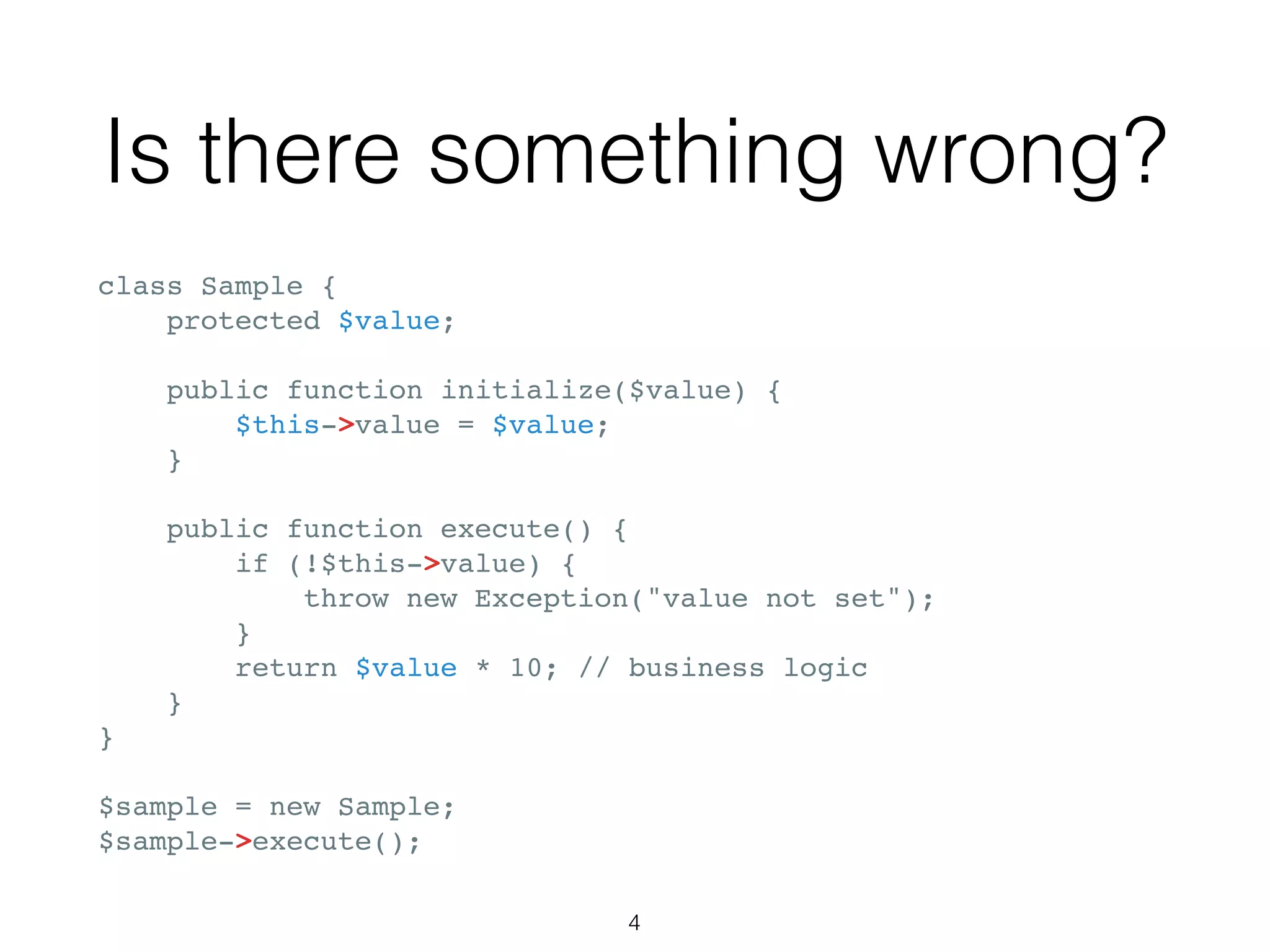
Is there something wrong?
class Sample {
protected $value;
public function initialize($value) {
$this->value = $value;
}
public function execute() {
if (!$this->value) {
throw new Exception("value not set");
}
return $value * 10; // business logic
}
}
$sample = new Sample;
$sample->execute();
4
Finding bugs is not
easy
5
Write Tests
6
Write Tests
7
It sounds obvious but getting started is the hardest part!
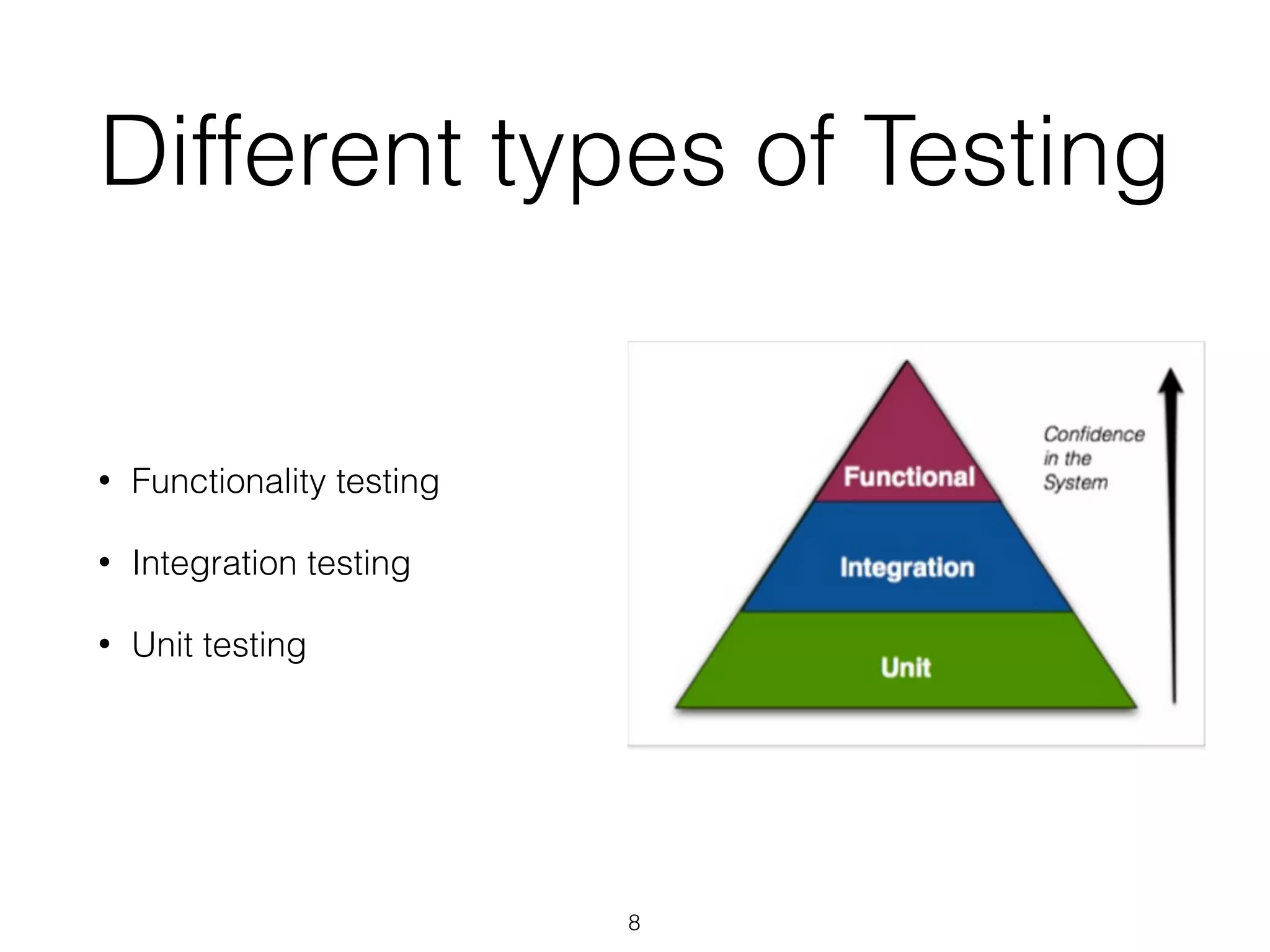
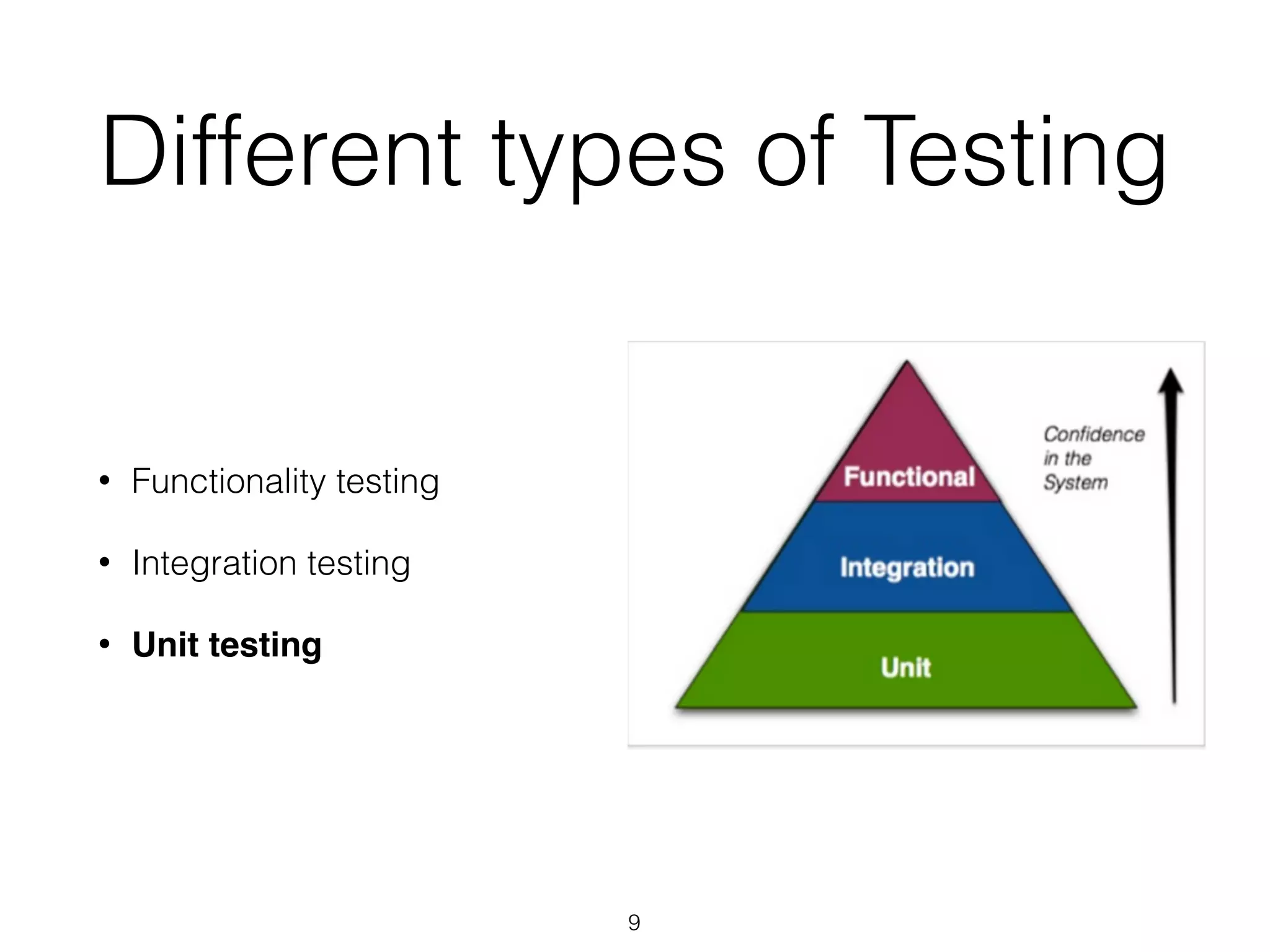
Different types of Testing
• Functionality testing
• Integration testing
• Unit testing
8
Different types of Testing
• Functionality testing
• Integration testing
• Unit testing
9
Briefly
• What is PHPUnit?
• Installing PHPUnit
• Setting up folder structure
• phpunit.xml
10
Test classes, not methods
• Unit testing, is about testing the observable
behaviours of a class!
• Observable from the outside! Nobody cares about
the internal state of a class if it never changes the
outcome of a method call.
• Don’t test getters and setters, unless they have
custom validation
Three steps in test cases
• setup
• act
• verify
Demo
13
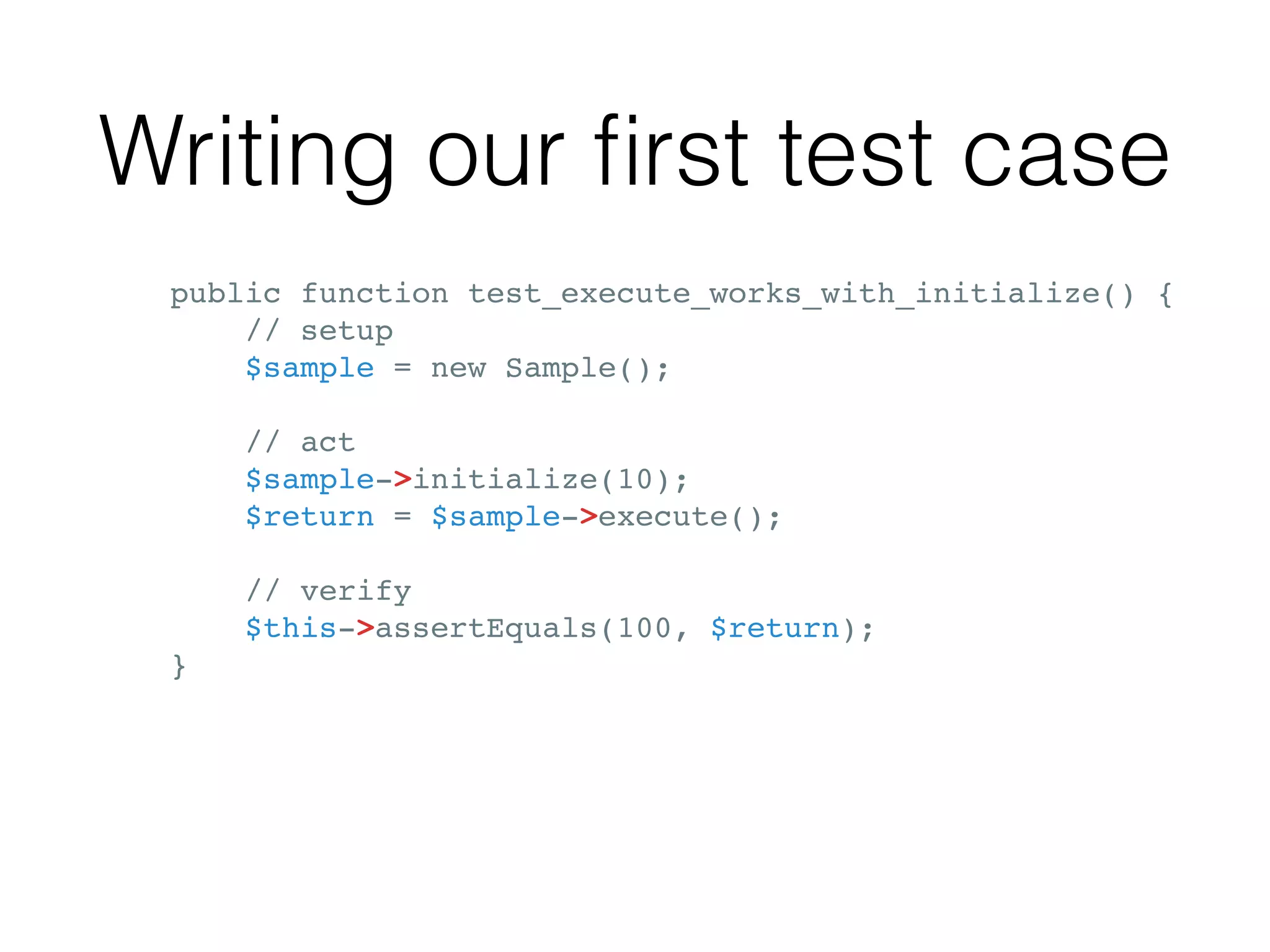
Writing our first test case
public function test_execute_works_with_initialize() {
// setup
$sample = new Sample();
// act
$sample->initialize(10);
$return = $sample->execute();
// verify
$this->assertEquals(100, $return);
}
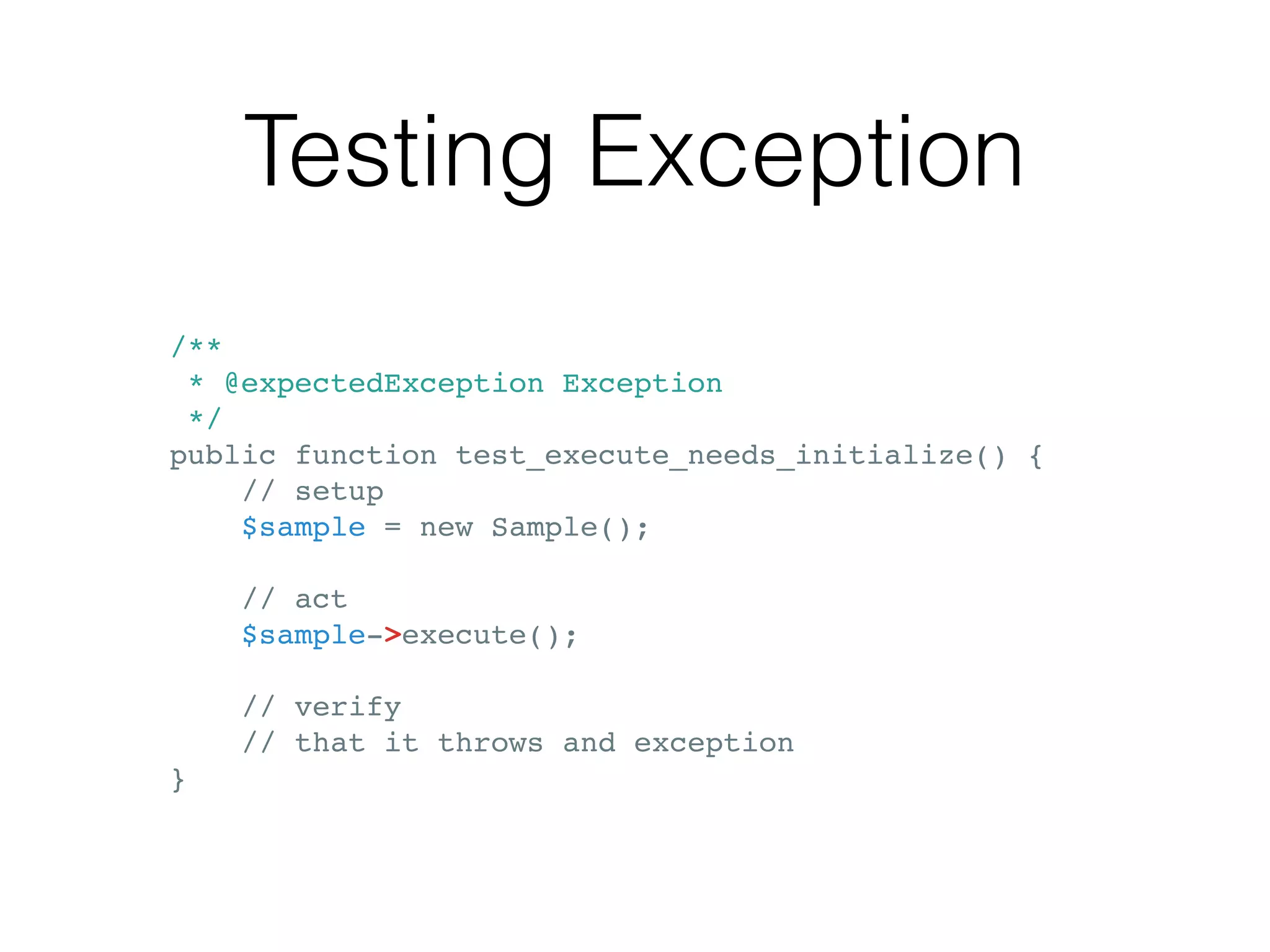
Testing Exception
/**
* @expectedException Exception
*/
public function test_execute_needs_initialize() {
// setup
$sample = new Sample();
// act
$sample->execute();
// verify
// that it throws and exception
}
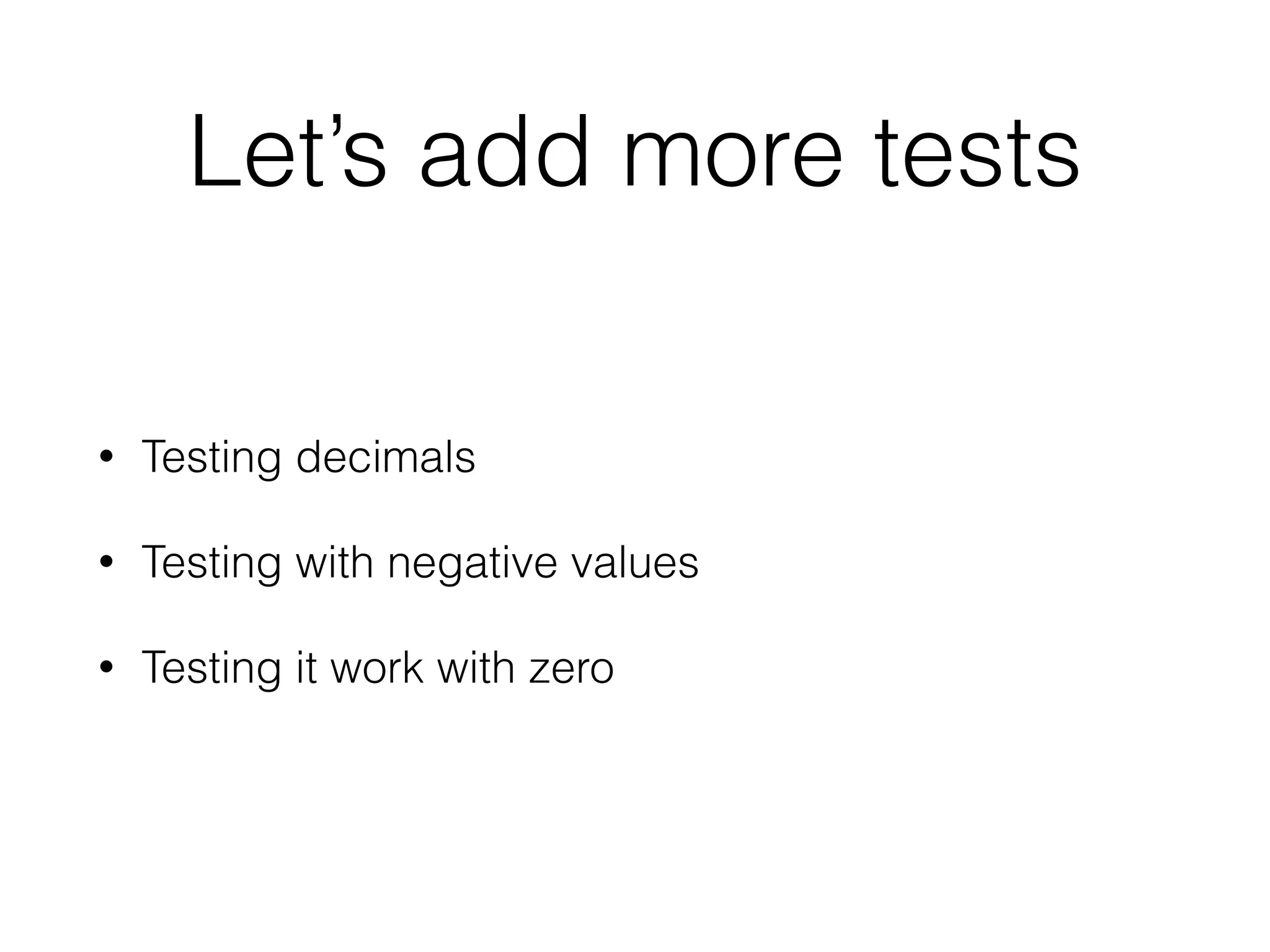
Let’s add more tests
• Testing decimals
• Testing with negative values
• Testing it work with zero
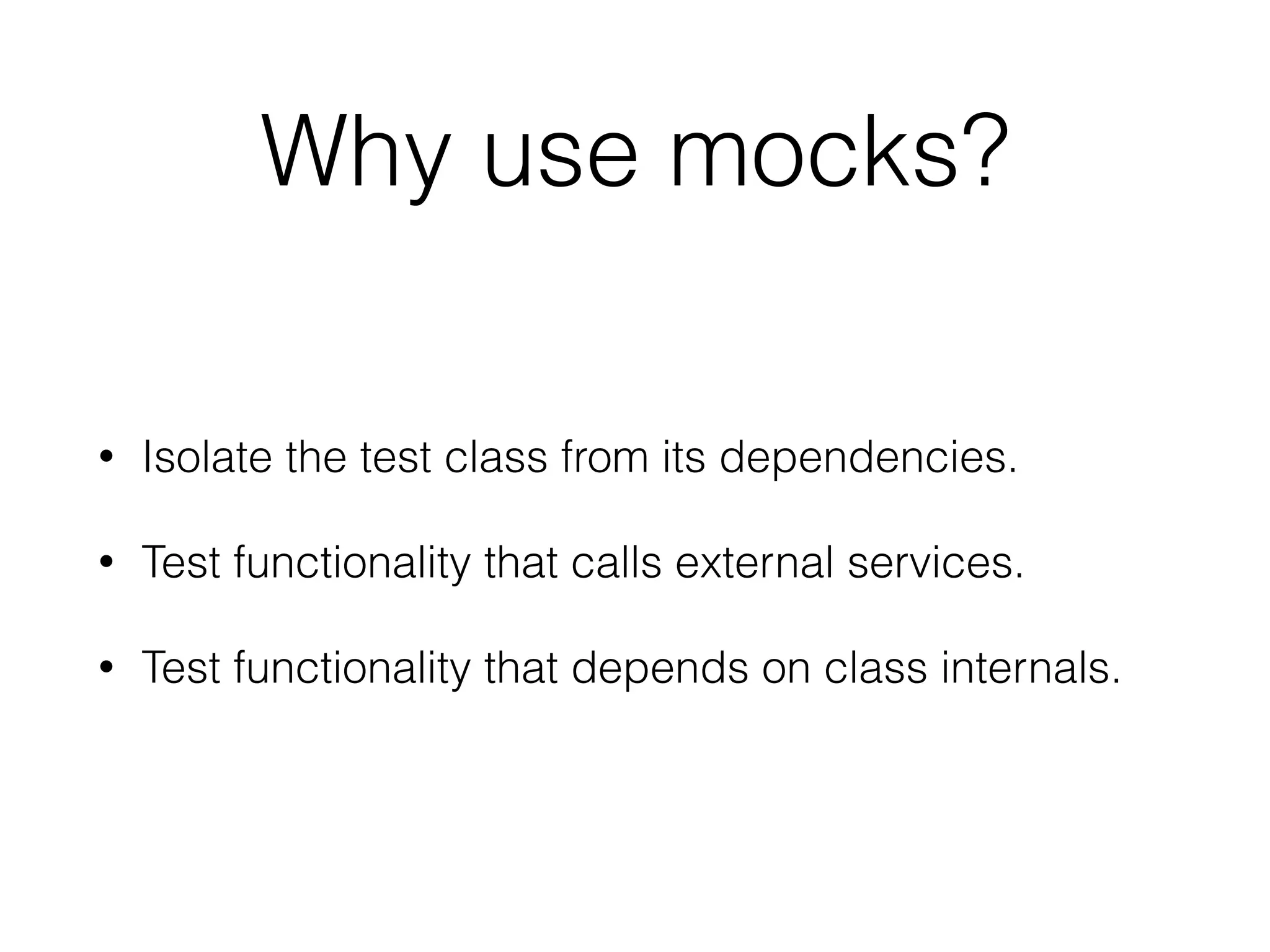
Why use mocks?
• Isolate the test class from its dependencies.
• Test functionality that calls external services.
• Test functionality that depends on class internals.
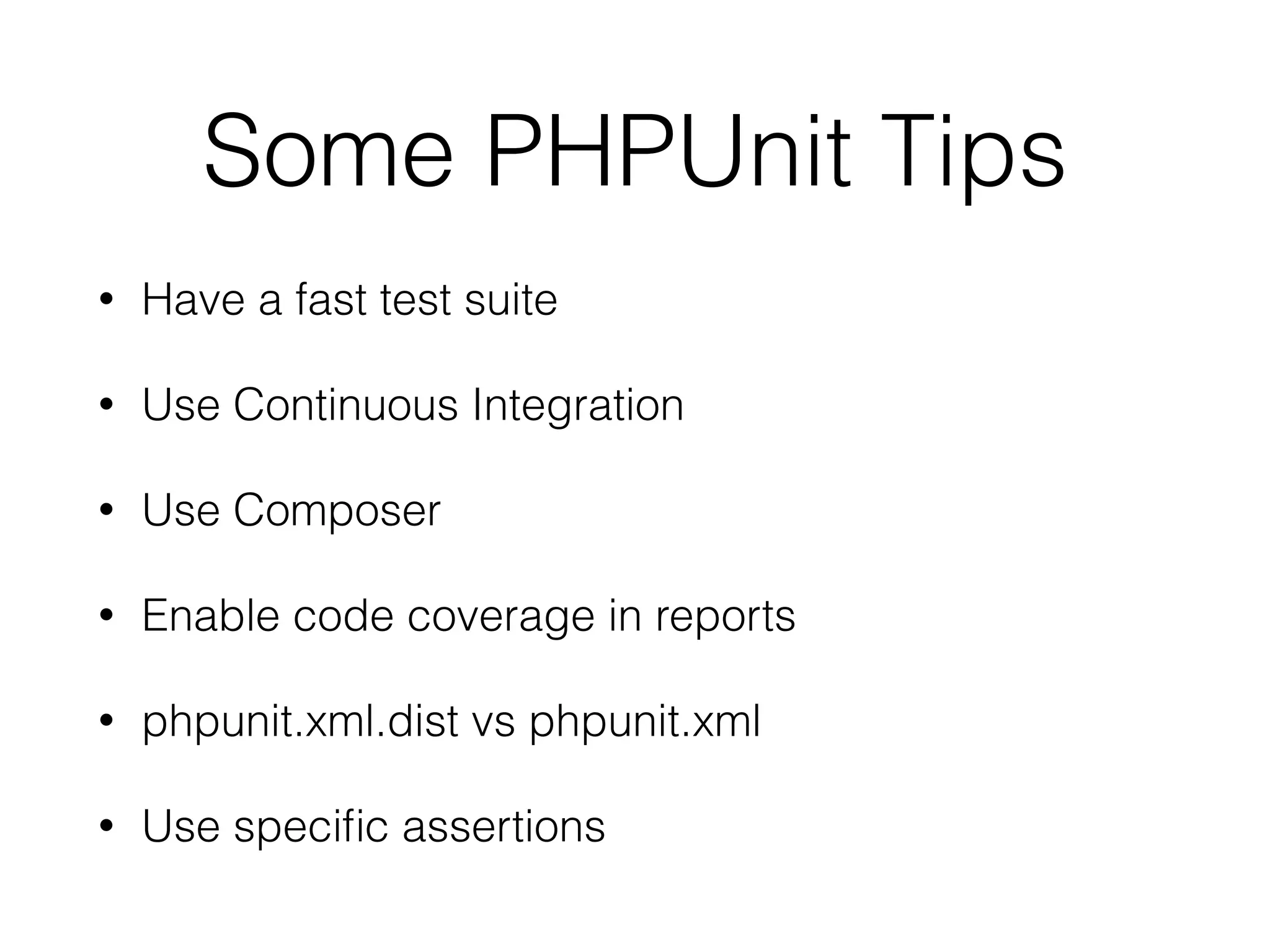
Some PHPUnit Tips
• Have a fast test suite
• Use Continuous Integration
• Use Composer
• Enable code coverage in reports
• phpunit.xml.dist vs phpunit.xml
• Use specific assertions
Thank You
19
@sudarmuthu
http://sudarmuthu.com
https://github.com/sudar

Unit testing in php

  • 1.
    Unit Testing PHPcode Sudar Muthu http://sudarmuthu.com https://github.com/sudar
  • 2.
    Me • Programming inPHP for more than a decade • Programming in WordPress for 8 years • Big fan of automating process and workflows • Occasionally contribute to open source projects 2
  • 3.
    What about you? •What is your typical development environment looks like? • What is your experience with PHP? • What is your experience with Unit Testing? • What are your expectations out of this talk? 3
  • 4.
    Is there somethingwrong? class Sample { protected $value; public function initialize($value) { $this->value = $value; } public function execute() { if (!$this->value) { throw new Exception("value not set"); } return $value * 10; // business logic } } $sample = new Sample; $sample->execute(); 4
  • 5.
    Finding bugs isnot easy 5
  • 6.
  • 7.
    Write Tests 7 It soundsobvious but getting started is the hardest part!
  • 8.
    Different types ofTesting • Functionality testing • Integration testing • Unit testing 8
  • 9.
    Different types ofTesting • Functionality testing • Integration testing • Unit testing 9
  • 10.
    Briefly • What isPHPUnit? • Installing PHPUnit • Setting up folder structure • phpunit.xml 10
  • 11.
    Test classes, notmethods • Unit testing, is about testing the observable behaviours of a class! • Observable from the outside! Nobody cares about the internal state of a class if it never changes the outcome of a method call. • Don’t test getters and setters, unless they have custom validation
  • 12.
    Three steps intest cases • setup • act • verify
  • 13.
  • 14.
    Writing our firsttest case public function test_execute_works_with_initialize() { // setup $sample = new Sample(); // act $sample->initialize(10); $return = $sample->execute(); // verify $this->assertEquals(100, $return); }
  • 15.
    Testing Exception /** * @expectedExceptionException */ public function test_execute_needs_initialize() { // setup $sample = new Sample(); // act $sample->execute(); // verify // that it throws and exception }
  • 16.
    Let’s add moretests • Testing decimals • Testing with negative values • Testing it work with zero
  • 17.
    Why use mocks? •Isolate the test class from its dependencies. • Test functionality that calls external services. • Test functionality that depends on class internals.
  • 18.
    Some PHPUnit Tips •Have a fast test suite • Use Continuous Integration • Use Composer • Enable code coverage in reports • phpunit.xml.dist vs phpunit.xml • Use specific assertions
  • 19.