Research Design
UNIT 3
MARKET RESEARCH
6-2
Learning Objectives
Understand . . .
• The basic stages of research design.
• The major descriptors of research design.
• The major types of research designs.
• The relationships that exist between variables
in research design and the steps for evaluating
those relationships.
6-3
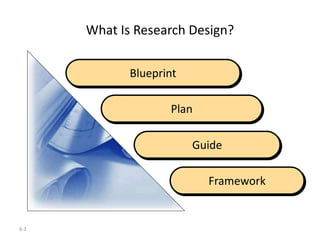
What Is Research Design?
Blueprint
Plan
Guide
Framework
6-6
What Tools Are Used in
Designing Research?
6-7
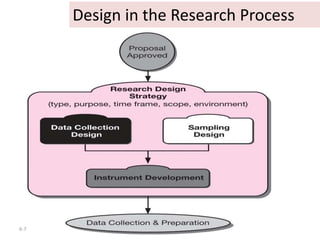
Design in the Research Process
6-15
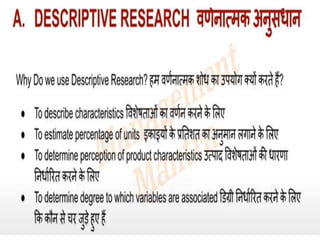
Descriptive Studies
When?
How much? What?
Who?
Where?
6-18
Descriptors of Research Design
Category Options
The degree to which the research question has
been crystallized
• Exploratory study
• Formal study
The method of data collection • Monitoring
• Communication Study
The power of the researcher to produce effects in
the variables under study
• Experimental
• Ex post facto
The purpose of the study • Reporting
• Descriptive
• Causal-Explanatory
• Causal-Predictive
The time dimension • Cross-sectional
• Longitudinal
The topical scope—breadth and depth—of the
study
• Case
• Statistical study
The research environment • Field setting
• Laboratory research
• Simulation
The participants’ perceptional awareness of the
research activity
• Actual routine
• Modified routine

UNIT 3 Research Design.pptx

  • 1.
  • 2.
    6-2 Learning Objectives Understand .. . • The basic stages of research design. • The major descriptors of research design. • The major types of research designs. • The relationships that exist between variables in research design and the steps for evaluating those relationships.
  • 3.
    6-3 What Is ResearchDesign? Blueprint Plan Guide Framework
  • 6.
    6-6 What Tools AreUsed in Designing Research?
  • 7.
    6-7 Design in theResearch Process
  • 15.
  • 18.
    6-18 Descriptors of ResearchDesign Category Options The degree to which the research question has been crystallized • Exploratory study • Formal study The method of data collection • Monitoring • Communication Study The power of the researcher to produce effects in the variables under study • Experimental • Ex post facto The purpose of the study • Reporting • Descriptive • Causal-Explanatory • Causal-Predictive The time dimension • Cross-sectional • Longitudinal The topical scope—breadth and depth—of the study • Case • Statistical study The research environment • Field setting • Laboratory research • Simulation The participants’ perceptional awareness of the research activity • Actual routine • Modified routine