Unit 3 - Functions
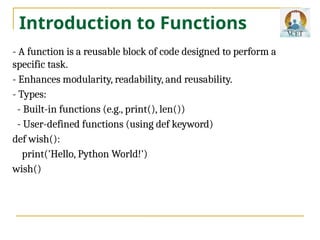
A function is a block of organized and
reusable program code that performs a
specific, single, and well-defined task.
A function provides an interface for
communication in terms of how
information is transferred to it and how
results are generated.
CS25C05 - PROBLEM SOLVING AND
PYTHON PROGRAMMING- UNIT 3
Introduction to Functions
- A function is a reusable block of code designed to perform a
specific task.
- Enhances modularity, readability, and reusability.
- Types:
- Built-in functions (e.g., print(), len())
- User-defined functions (using def keyword)
def wish():
print('Hello, Python World!')
wish()
Functions
CS25C05 - PROBLEM SOLVING AND PYTHON PROGRAMMING-
UNIT 3
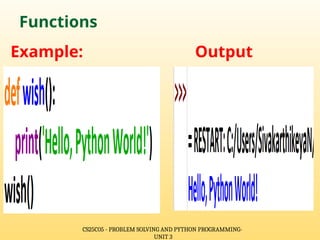
Example: Output
Function Declaration & Calling
Syntax:
def function_name(parameters):
# body
return value
Example:
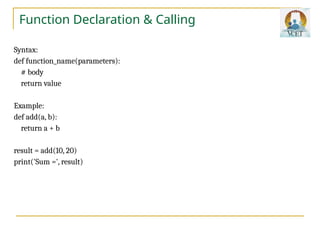
def add(a, b):
return a + b
result = add(10, 20)
print('Sum =', result)
Parameters vs Arguments
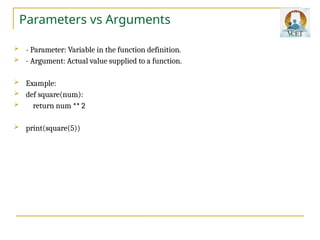
 - Parameter: Variable in the function definition.
 - Argument: Actual value supplied to a function.
 Example:
 def square(num):
 return num ** 2
 print(square(5))
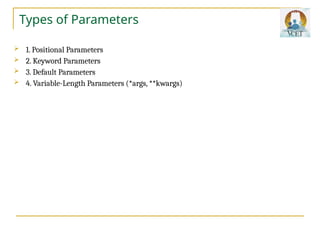
Types of Parameters
 1. Positional Parameters
 2. Keyword Parameters
 3. Default Parameters
 4. Variable-Length Parameters (*args, **kwargs)
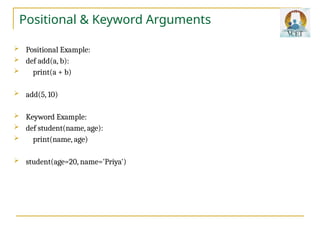
Positional & Keyword Arguments
 Positional Example:
 def add(a, b):
 print(a + b)
 add(5, 10)
 Keyword Example:
 def student(name, age):
 print(name, age)
 student(age=20, name='Priya')
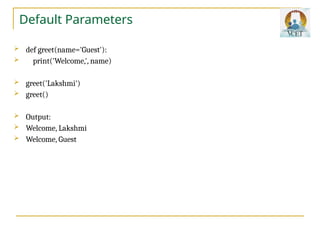
Default Parameters
 def greet(name='Guest'):
 print('Welcome,', name)
 greet('Lakshmi')
 greet()
 Output:
 Welcome, Lakshmi
 Welcome, Guest
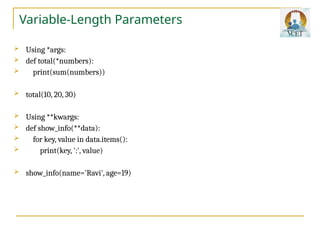
Variable-Length Parameters
 Using *args:
 def total(*numbers):
 print(sum(numbers))
 total(10, 20, 30)
 Using **kwargs:
 def show_info(**data):
 for key, value in data.items():
 print(key, ':', value)
 show_info(name='Ravi', age=19)
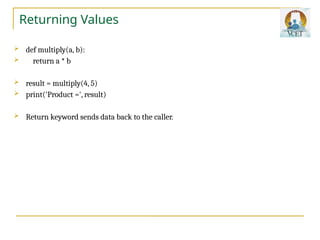
Returning Values
 def multiply(a, b):
 return a * b
 result = multiply(4, 5)
 print('Product =', result)
 Return keyword sends data back to the caller.
Mutable vs Immutable Arguments
 - Immutable (int, str, tuple): Changes inside function don’t affect original.
 - Mutable (list, dict): Changes persist.
 Example:
 def modify(lst):
 lst.append(99)
 nums = [1, 2, 3]
 modify(nums)
 print(nums) # [1, 2, 3, 99]
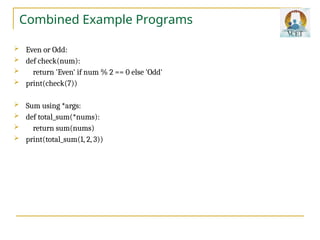
Combined Example Programs
 Even or Odd:
 def check(num):
 return 'Even' if num % 2 == 0 else 'Odd'
 print(check(7))
 Sum using *args:
 def total_sum(*nums):
 return sum(nums)
 print(total_sum(1, 2, 3))
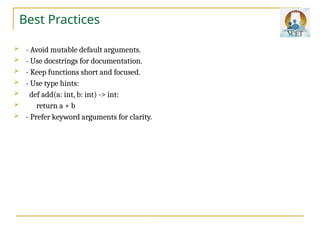
Best Practices
 - Avoid mutable default arguments.
 - Use docstrings for documentation.
 - Keep functions short and focused.
 - Use type hints:
 def add(a: int, b: int) -> int:
 return a + b
 - Prefer keyword arguments for clarity.
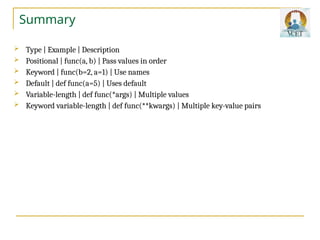
Summary
 Type | Example | Description
 Positional | func(a, b) | Pass values in order
 Keyword | func(b=2, a=1) | Use names
 Default | def func(a=5) | Uses default
 Variable-length | def func(*args) | Multiple values
 Keyword variable-length | def func(**kwargs) | Multiple key-value pairs
References
 - GeeksforGeeks: Python Functions & Parameters
 - Python.org Official Documentation
 - Tutorialspoint: Function Arguments in Python
unit 3 passing parameter in python program

  • 1.
    Unit 3 -Functions A function is a block of organized and reusable program code that performs a specific, single, and well-defined task. A function provides an interface for communication in terms of how information is transferred to it and how results are generated. CS25C05 - PROBLEM SOLVING AND PYTHON PROGRAMMING- UNIT 3
  • 2.
    Introduction to Functions -A function is a reusable block of code designed to perform a specific task. - Enhances modularity, readability, and reusability. - Types: - Built-in functions (e.g., print(), len()) - User-defined functions (using def keyword) def wish(): print('Hello, Python World!') wish()
  • 3.
    Functions CS25C05 - PROBLEMSOLVING AND PYTHON PROGRAMMING- UNIT 3 Example: Output
  • 4.
    Function Declaration &Calling Syntax: def function_name(parameters): # body return value Example: def add(a, b): return a + b result = add(10, 20) print('Sum =', result)
  • 5.
    Parameters vs Arguments - Parameter: Variable in the function definition.  - Argument: Actual value supplied to a function.  Example:  def square(num):  return num ** 2  print(square(5))
  • 6.
    Types of Parameters 1. Positional Parameters  2. Keyword Parameters  3. Default Parameters  4. Variable-Length Parameters (*args, **kwargs)
  • 7.
    Positional & KeywordArguments  Positional Example:  def add(a, b):  print(a + b)  add(5, 10)  Keyword Example:  def student(name, age):  print(name, age)  student(age=20, name='Priya')
  • 8.
    Default Parameters  defgreet(name='Guest'):  print('Welcome,', name)  greet('Lakshmi')  greet()  Output:  Welcome, Lakshmi  Welcome, Guest
  • 9.
    Variable-Length Parameters  Using*args:  def total(*numbers):  print(sum(numbers))  total(10, 20, 30)  Using **kwargs:  def show_info(**data):  for key, value in data.items():  print(key, ':', value)  show_info(name='Ravi', age=19)
  • 10.
    Returning Values  defmultiply(a, b):  return a * b  result = multiply(4, 5)  print('Product =', result)  Return keyword sends data back to the caller.
  • 11.
    Mutable vs ImmutableArguments  - Immutable (int, str, tuple): Changes inside function don’t affect original.  - Mutable (list, dict): Changes persist.  Example:  def modify(lst):  lst.append(99)  nums = [1, 2, 3]  modify(nums)  print(nums) # [1, 2, 3, 99]
  • 12.
    Combined Example Programs Even or Odd:  def check(num):  return 'Even' if num % 2 == 0 else 'Odd'  print(check(7))  Sum using *args:  def total_sum(*nums):  return sum(nums)  print(total_sum(1, 2, 3))
  • 13.
    Best Practices  -Avoid mutable default arguments.  - Use docstrings for documentation.  - Keep functions short and focused.  - Use type hints:  def add(a: int, b: int) -> int:  return a + b  - Prefer keyword arguments for clarity.
  • 14.
    Summary  Type |Example | Description  Positional | func(a, b) | Pass values in order  Keyword | func(b=2, a=1) | Use names  Default | def func(a=5) | Uses default  Variable-length | def func(*args) | Multiple values  Keyword variable-length | def func(**kwargs) | Multiple key-value pairs
  • 15.
    References  - GeeksforGeeks:Python Functions & Parameters  - Python.org Official Documentation  - Tutorialspoint: Function Arguments in Python