Unit 3: Advocacy Project
• Composing rhetoric to mediate change in our communities
What needs to change?
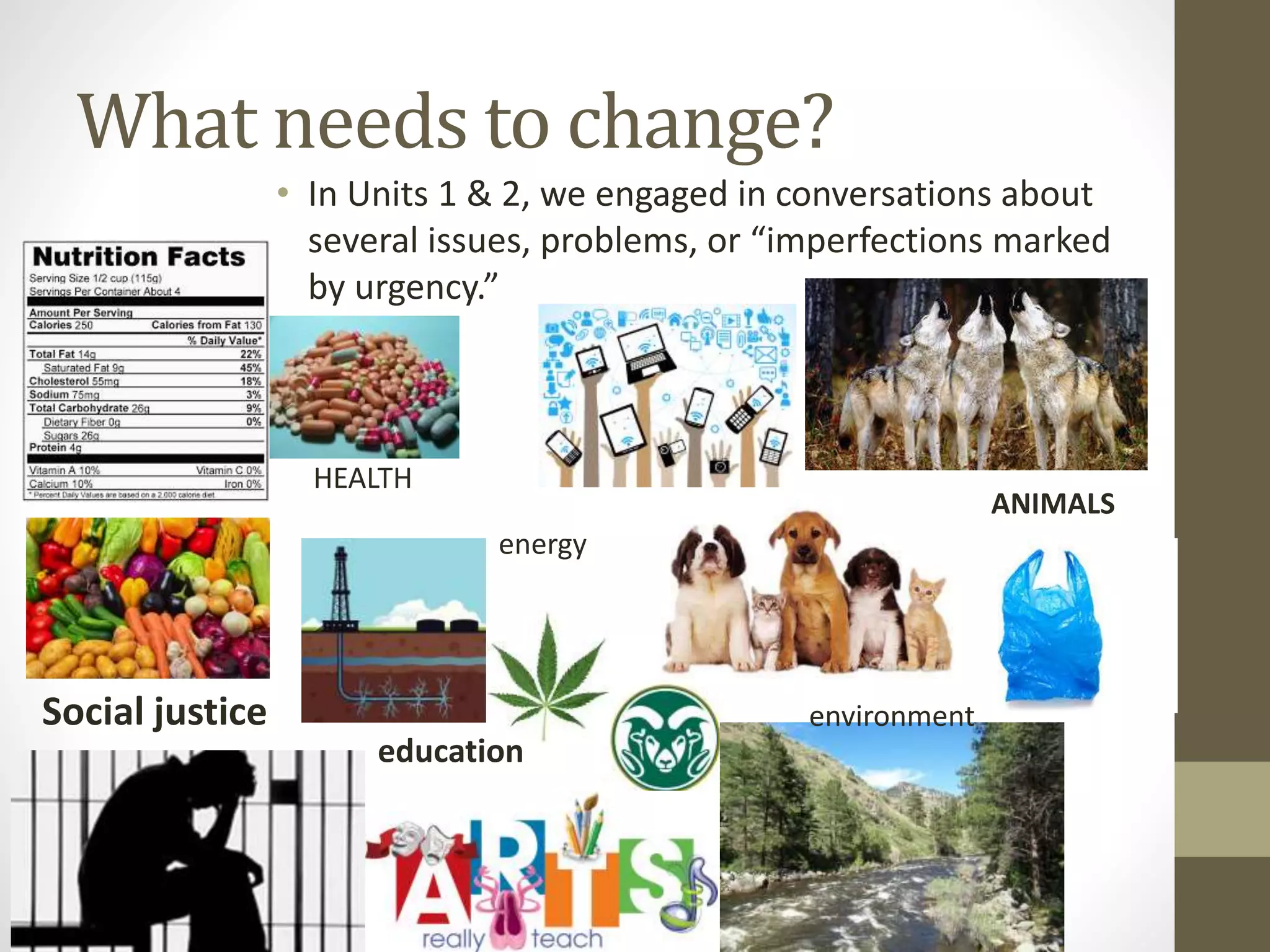
• In Units 1 & 2, we engaged in conversations about
several issues, problems, or “imperfections marked
by urgency.”
Social justice
education
environment
HEALTH
ANIMALS
energy
Agents of Change: strong ties, weak
ties, & organizations
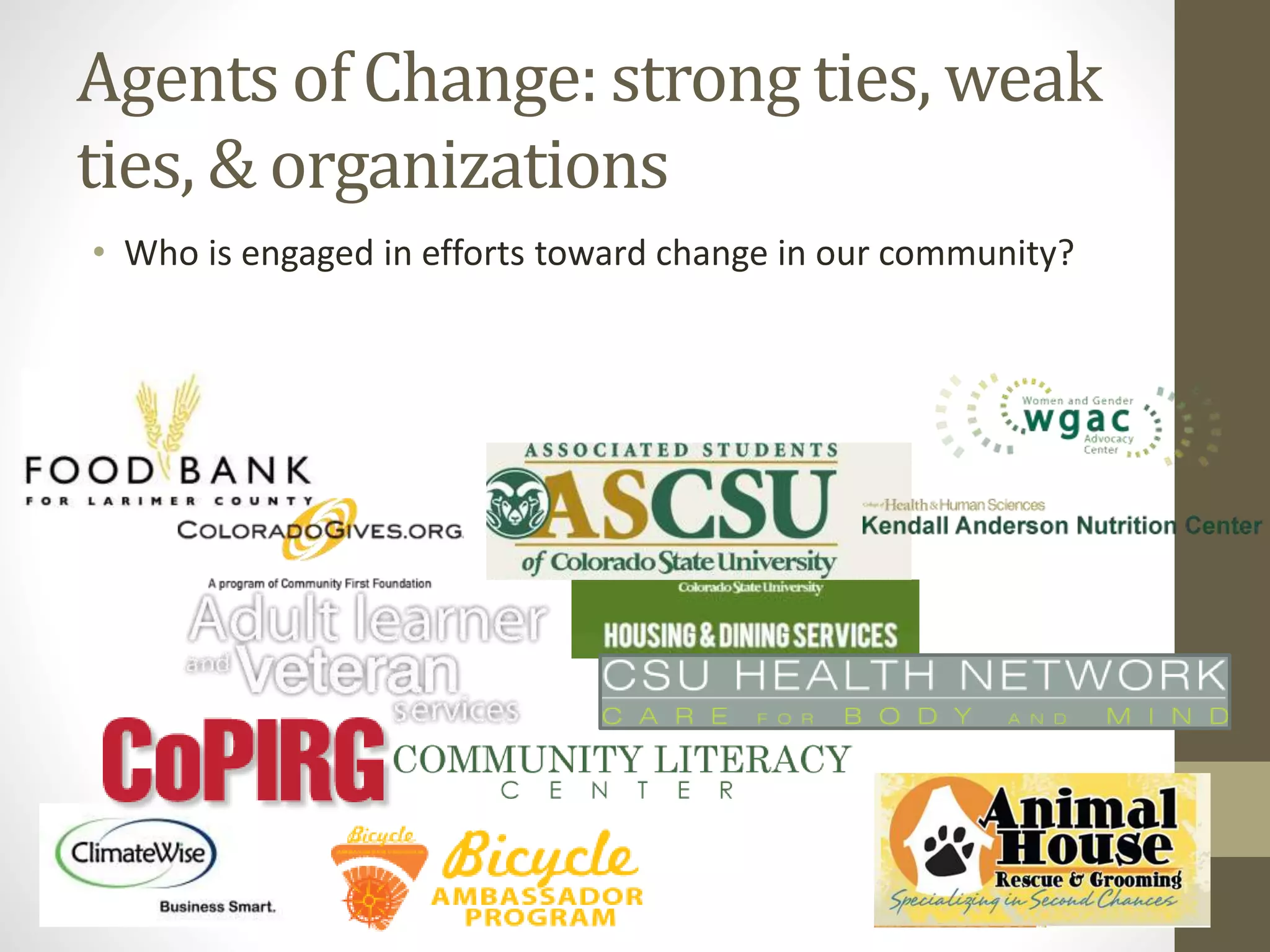
• Who is engaged in efforts toward change in our community?
Unit 3 Groups
Finding topics
• What did we write about
in Units 1 & 2?
• What (other) local issues
or problems concern
you?
• What local (campus, city,
county, state)
organizations are
addressing problems ?
Groups
• Form groups, based on
common interest in a
problem and/or ties to a
local organization
engaged in change.
• Each group may have no
fewer than 3 and no
more than 4 members
How does rhetoric mediate
change?
• Posters, brochures, flyers
• Social media: Facebook, Twitter, Tumblr, blogging
• Orally: presentations, speeches, performance, f2f
• Multimodal video, sound recording, photo essay, slide show,
buttons, stickers, etc.
• Mass media: guest editorial, commenting, public service
announcement (PSA)
• Correspondence: letters, memos, email messages
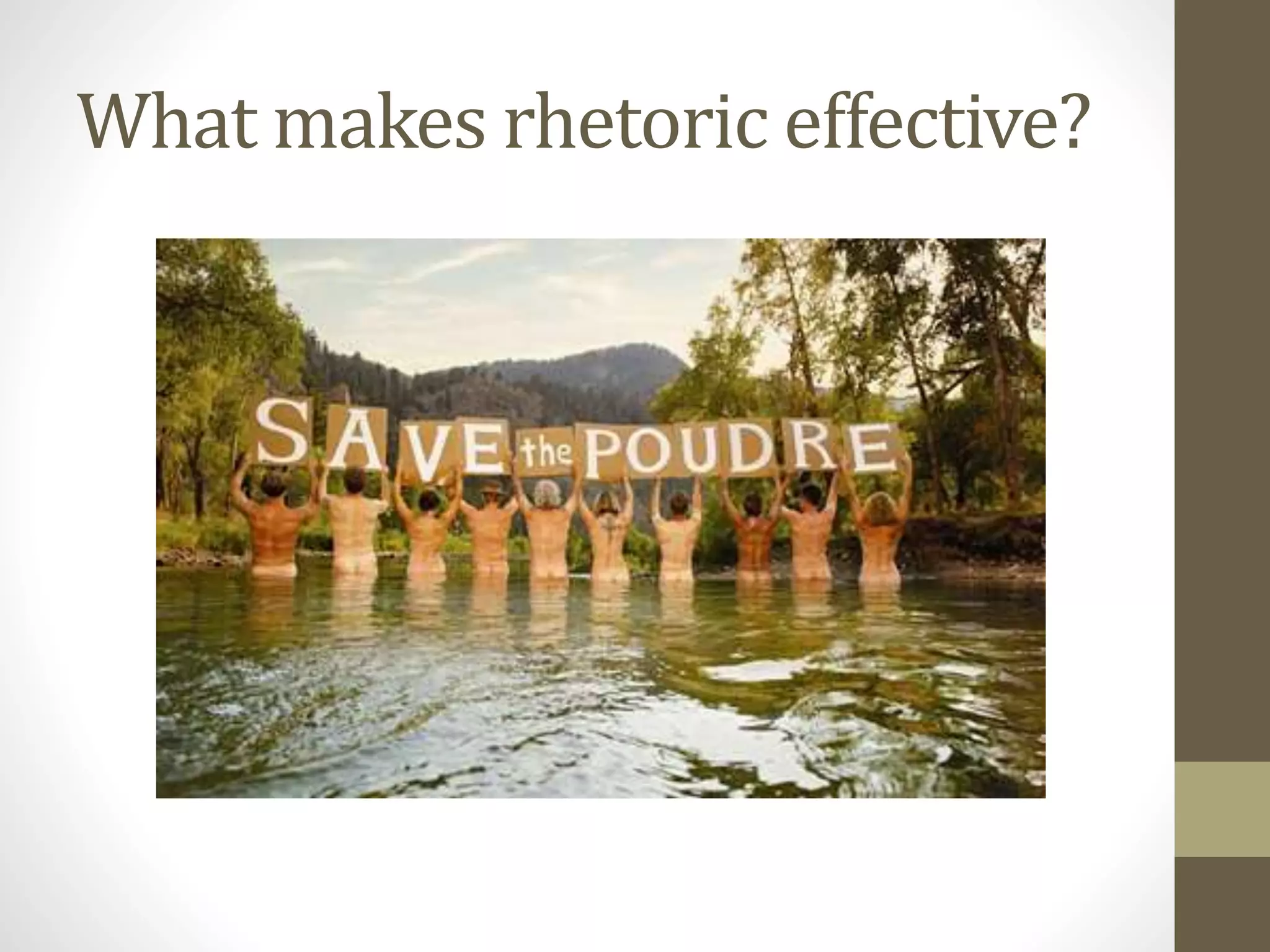
What makes rhetoric effective?
The Advocacy Project
Process
• Conduct inquiry into
the problem, organization,
& rhetorical situation.
• Analyze and evaluate
the rhetorical
situation
• Compose rhetoric
• Present your results to the
intended audience and to
the class
Assessments
Group portfolio—due May 4
Proposal (due 11/19)
Annotated Bibliography
Rhetorical Analysis
Discourse artifacts (rhetoric)
Group presentation—Last
week of class (May 4-8)
Individual Reflection—due
May 11

Unit 3 Introduction

  • 1.
    Unit 3: AdvocacyProject • Composing rhetoric to mediate change in our communities
  • 2.
    What needs tochange? • In Units 1 & 2, we engaged in conversations about several issues, problems, or “imperfections marked by urgency.” Social justice education environment HEALTH ANIMALS energy
  • 3.
    Agents of Change:strong ties, weak ties, & organizations • Who is engaged in efforts toward change in our community?
  • 4.
    Unit 3 Groups Findingtopics • What did we write about in Units 1 & 2? • What (other) local issues or problems concern you? • What local (campus, city, county, state) organizations are addressing problems ? Groups • Form groups, based on common interest in a problem and/or ties to a local organization engaged in change. • Each group may have no fewer than 3 and no more than 4 members
  • 5.
    How does rhetoricmediate change? • Posters, brochures, flyers • Social media: Facebook, Twitter, Tumblr, blogging • Orally: presentations, speeches, performance, f2f • Multimodal video, sound recording, photo essay, slide show, buttons, stickers, etc. • Mass media: guest editorial, commenting, public service announcement (PSA) • Correspondence: letters, memos, email messages
  • 6.
  • 7.
    The Advocacy Project Process •Conduct inquiry into the problem, organization, & rhetorical situation. • Analyze and evaluate the rhetorical situation • Compose rhetoric • Present your results to the intended audience and to the class Assessments Group portfolio—due May 4 Proposal (due 11/19) Annotated Bibliography Rhetorical Analysis Discourse artifacts (rhetoric) Group presentation—Last week of class (May 4-8) Individual Reflection—due May 11