1
Definition of
Universal Design
Universaldesign is an
architectural approach
focused on making
spaces usable for
everyone, regardless of
age or ability.
2
Goals of Universal
Design
The main goal is to
create inclusive
environments that
enhance usability and
foster community
engagement.
3
Principles of
Universal Design
It includes principles that
guide the design
process, ensuring
accessibility and
functionality for all
users.
4
Importance in
Architecture
Universal design is
crucial as it promotes
equal access and
participation in built
environments for
everyone.
5
Examples in
Practice
Real-life examples
showcase how universal
design has been effectively
implemented in various
architectural projects.
Understanding
Universal Design in
Architecture
3.
Definition of Universal
Design
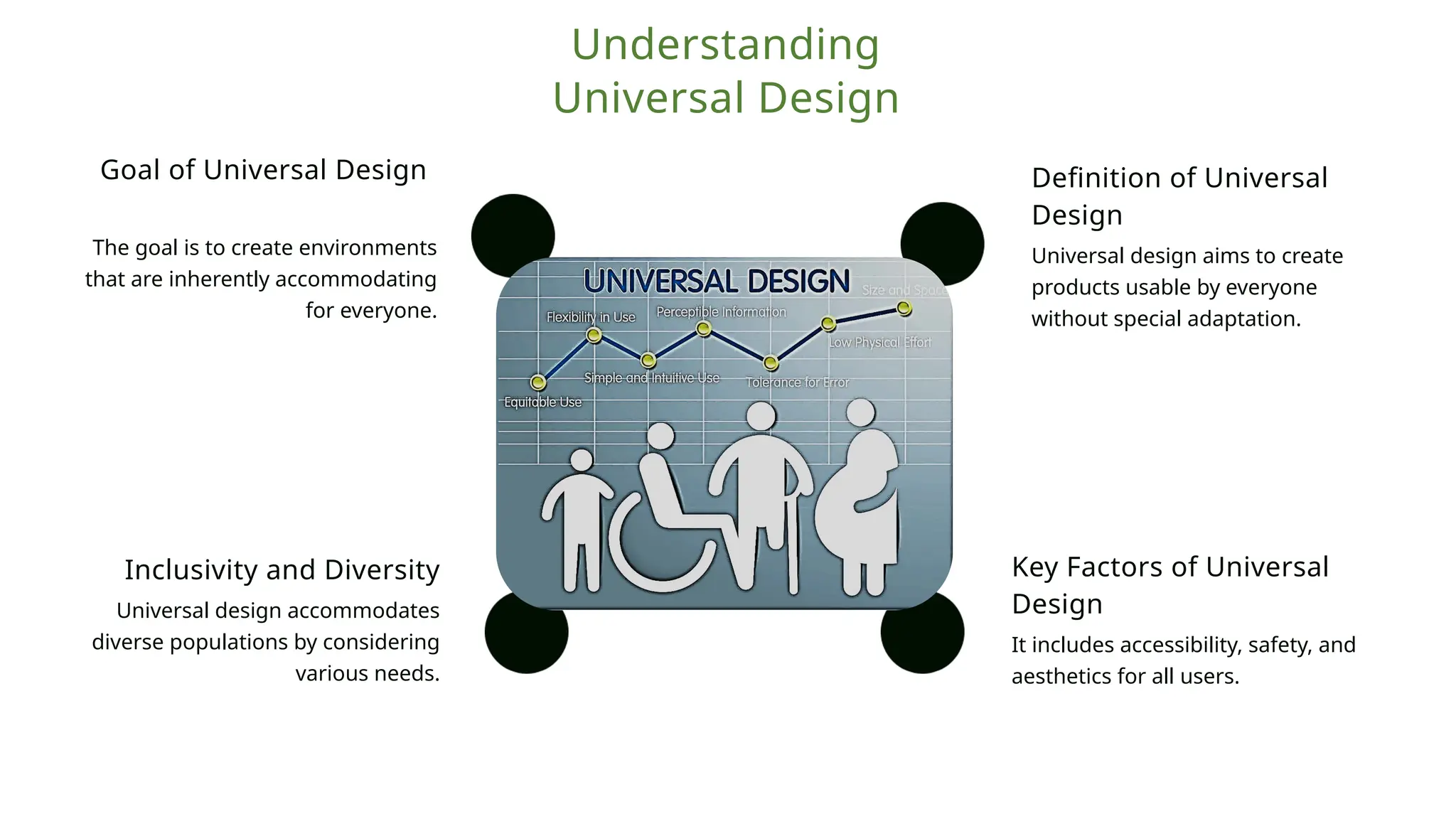
Universaldesign aims to create
products usable by everyone
without special adaptation.
Key Factors of Universal
Design
It includes accessibility, safety, and
aesthetics for all users.
Inclusivity and Diversity
Universal design accommodates
diverse populations by considering
various needs.
Goal of Universal Design
The goal is to create environments
that are inherently accommodating
for everyone.
Understanding
Universal Design
4.
1. Equitable
Use
Design is
beneficialand
marketable to
individuals with
diverse abilities.
2. Flexibility in
Use
Design caters to
a wide array of
individual
preferences and
capabilities.
3. Simple and
Intuitive Use
Design is easy to
understand for
all users,
regardless of
experience.
4. Perceptible
Information
Design
effectively
communicates
necessary
information to
users.
5. Tolerance for
Error
Design minimizes
risks and negative
outcomes from
unintentional
actions.
6. Low Physical
Effort
Design allows for
efficient and
comfortable use
with minimal
fatigue.
7. Size and Space for
Approach and Use
Key Principles of
Universal Design
Appropriate
dimensions and
space are provided
for all users
regardless of body
size or posture.
5.
Inclusivity
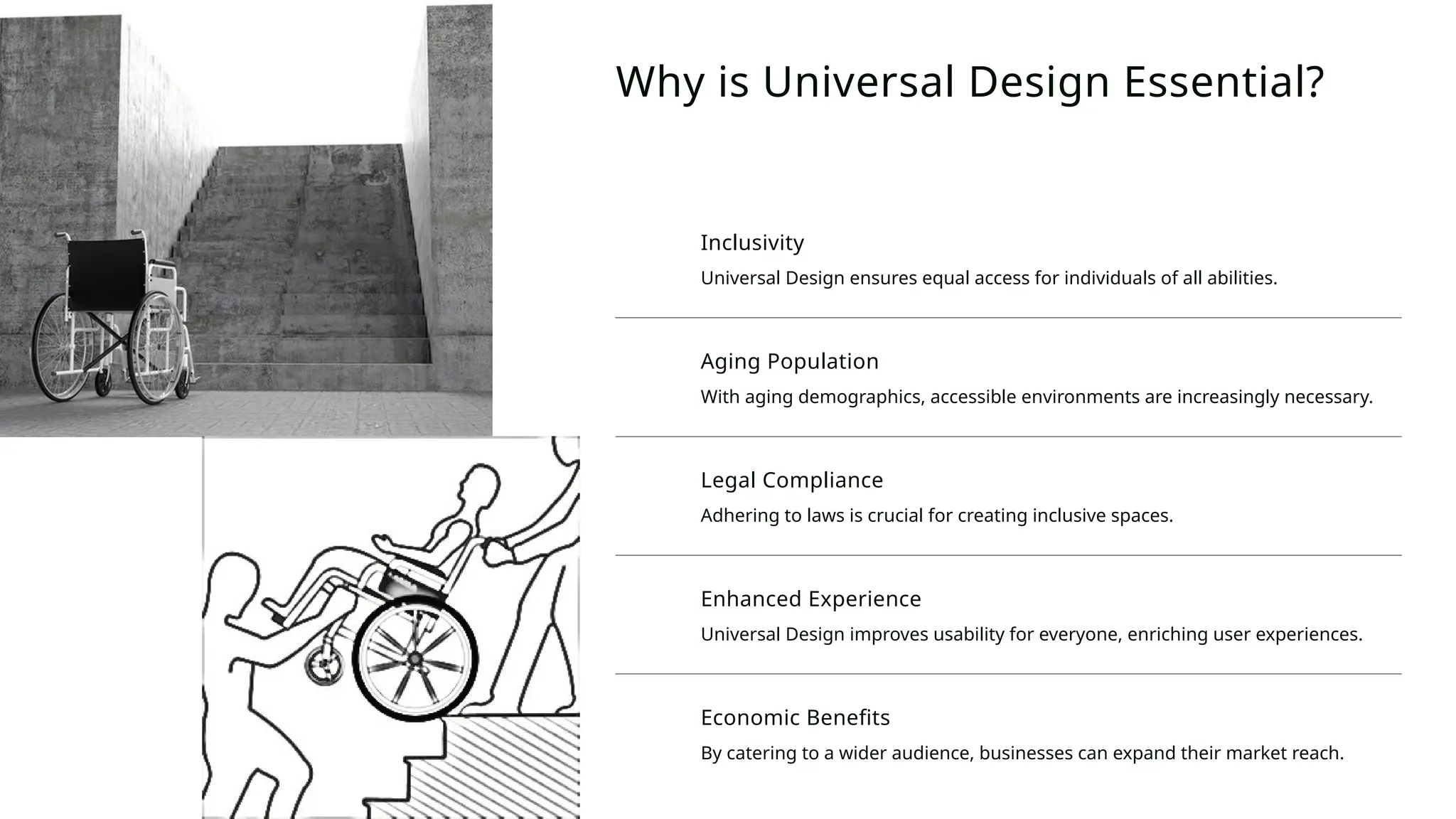
Universal Design ensuresequal access for individuals of all abilities.
Aging Population
With aging demographics, accessible environments are increasingly necessary.
Legal Compliance
Adhering to laws is crucial for creating inclusive spaces.
Enhanced Experience
Universal Design improves usability for everyone, enriching user experiences.
Economic Benefits
By catering to a wider audience, businesses can expand their market reach.
Why is Universal Design Essential?
6.
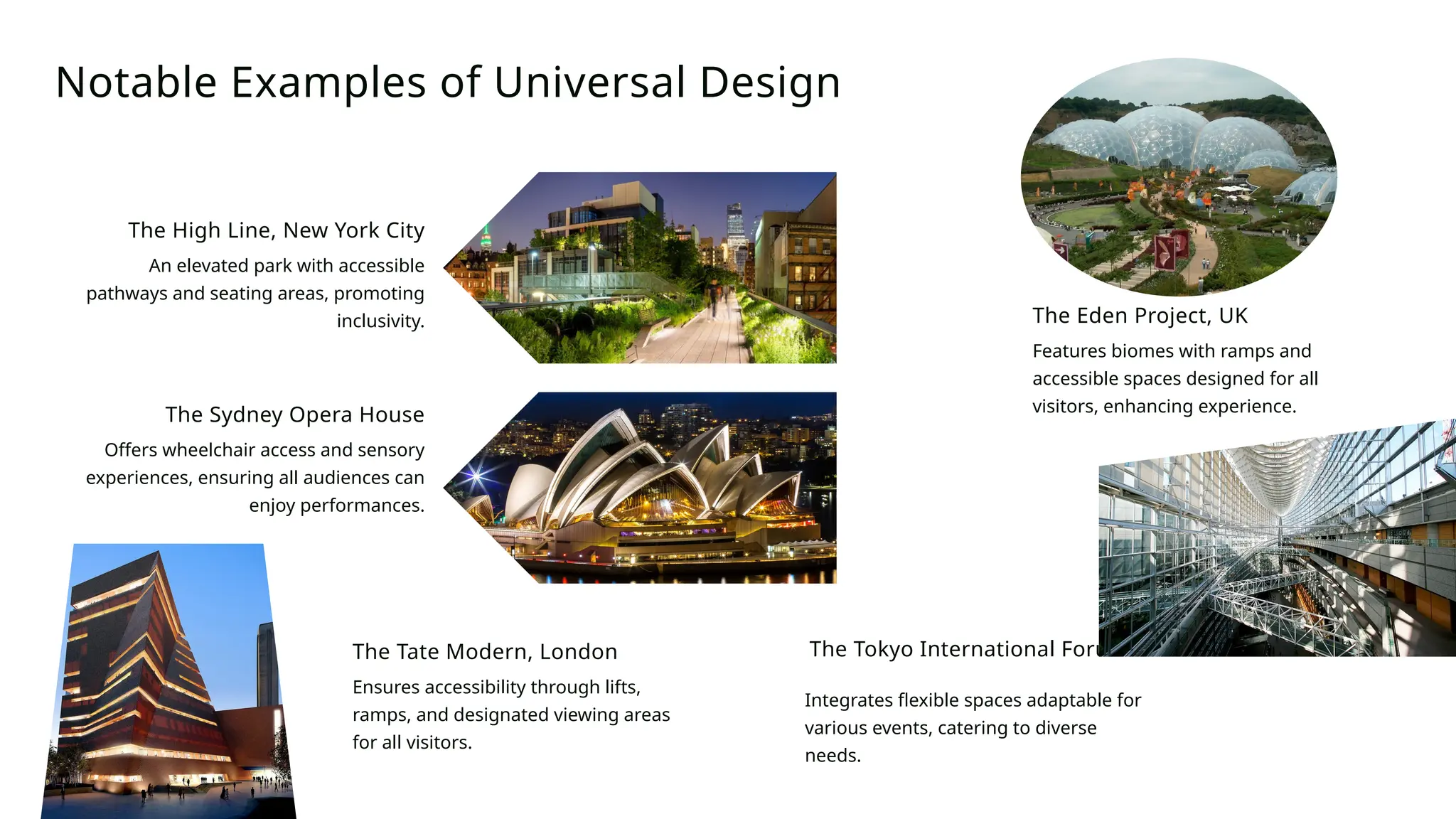
The High Line,New York City
An elevated park with accessible
pathways and seating areas, promoting
inclusivity. The Eden Project, UK
Features biomes with ramps and
accessible spaces designed for all
visitors, enhancing experience.
The Sydney Opera House
Offers wheelchair access and sensory
experiences, ensuring all audiences can
enjoy performances.
The Tokyo International Forum
Integrates flexible spaces adaptable for
various events, catering to diverse
needs.
The Tate Modern, London
Ensures accessibility through lifts,
ramps, and designated viewing areas
for all visitors.
Notable Examples of Universal Design
7.
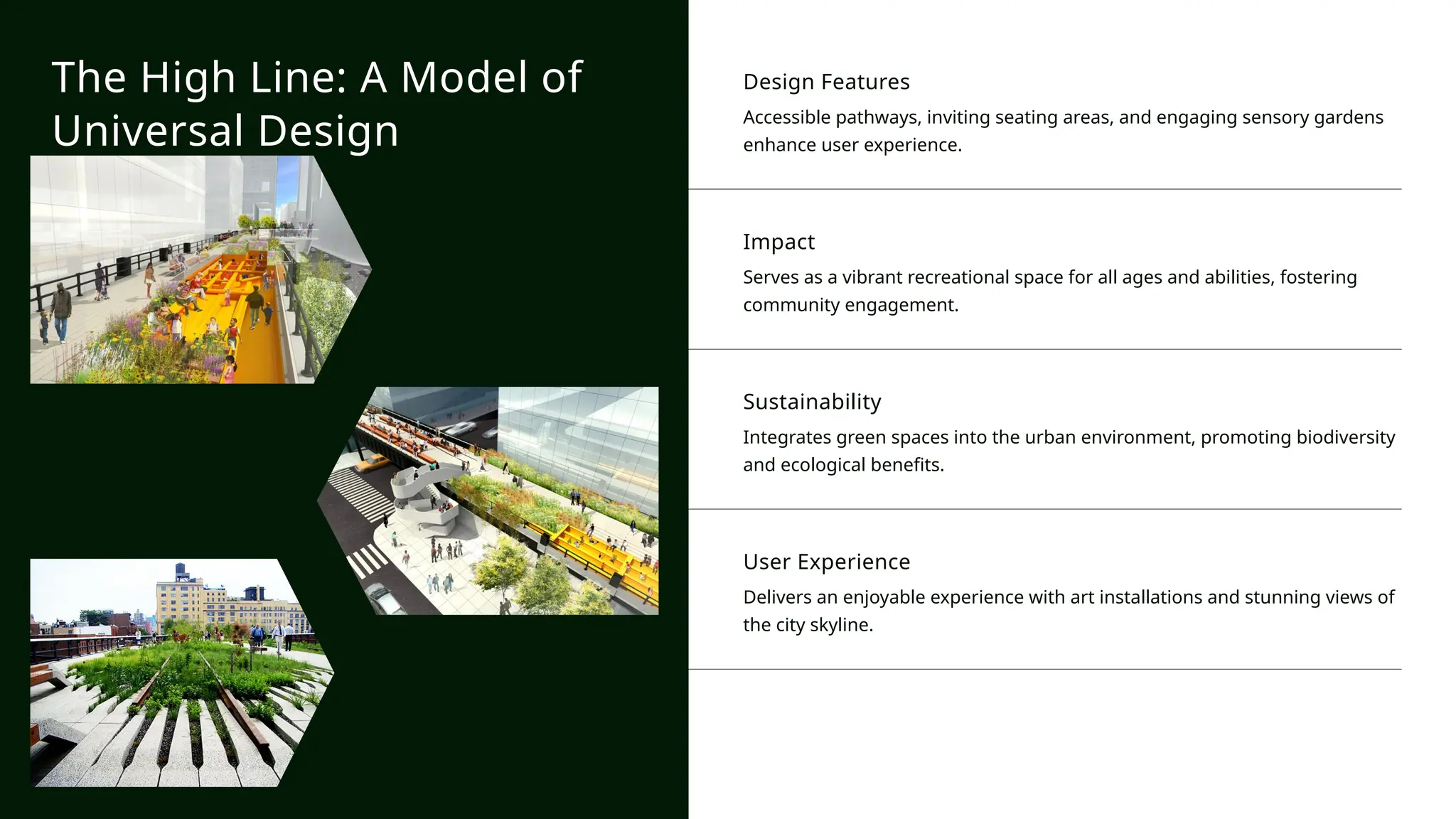
Design Features
Accessible pathways,inviting seating areas, and engaging sensory gardens
enhance user experience.
Impact
Serves as a vibrant recreational space for all ages and abilities, fostering
community engagement.
Sustainability
Integrates green spaces into the urban environment, promoting biodiversity
and ecological benefits.
User Experience
Delivers an enjoyable experience with art installations and stunning views of
the city skyline.
The High Line: A Model of
Universal Design
8.
Inclusive Design
Features
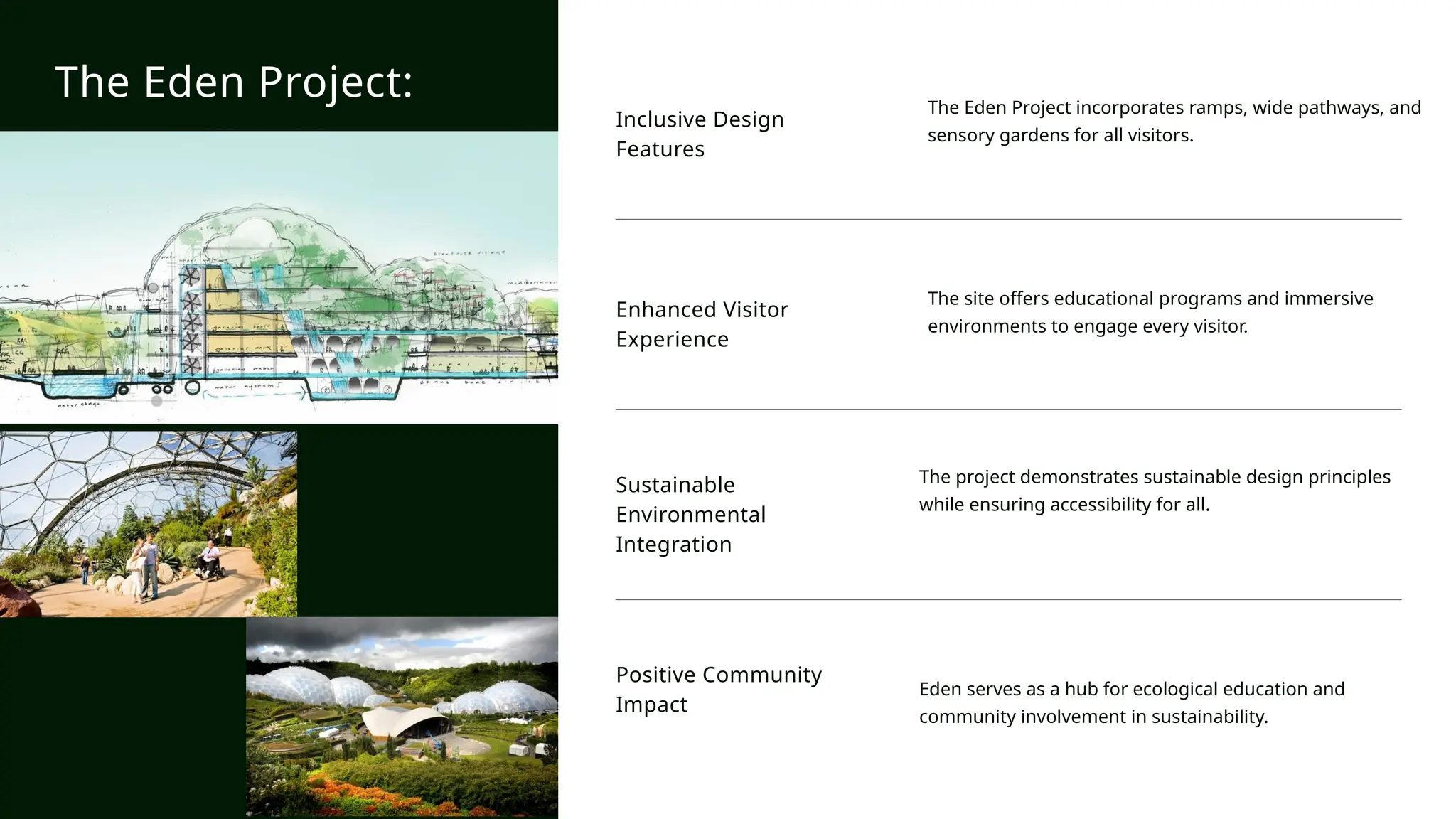
The EdenProject incorporates ramps, wide pathways, and
sensory gardens for all visitors.
Enhanced Visitor
Experience
The site offers educational programs and immersive
environments to engage every visitor.
Sustainable
Environmental
Integration
The project demonstrates sustainable design principles
while ensuring accessibility for all.
Positive Community
Impact
Eden serves as a hub for ecological education and
community involvement in sustainability.
The Eden Project:
9.
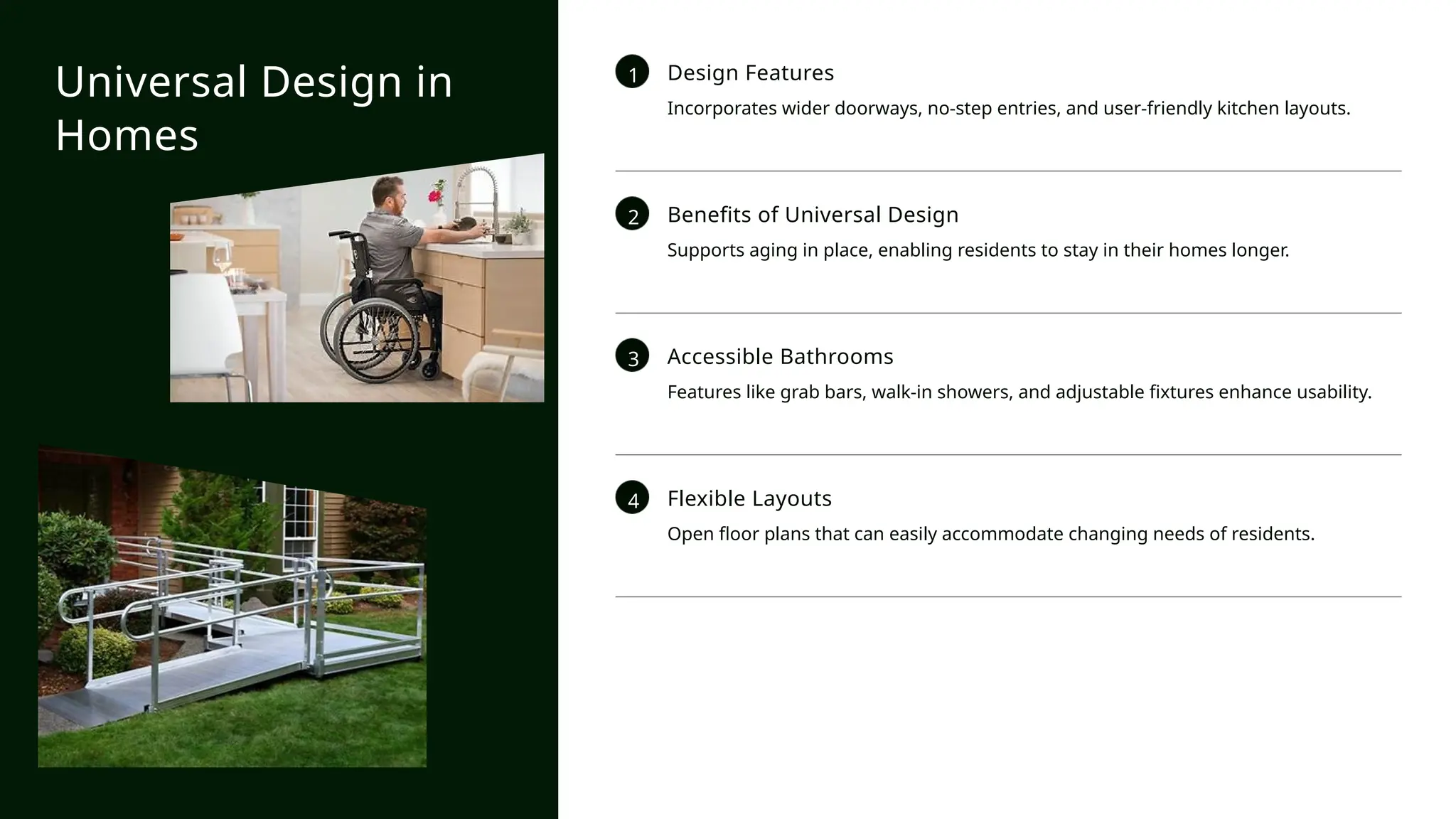
1 Design Features
Incorporateswider doorways, no-step entries, and user-friendly kitchen layouts.
2 Benefits of Universal Design
Supports aging in place, enabling residents to stay in their homes longer.
3 Accessible Bathrooms
Features like grab bars, walk-in showers, and adjustable fixtures enhance usability.
4 Flexible Layouts
Open floor plans that can easily accommodate changing needs of residents.
Universal Design in
Homes
10.
1
Cost Implications
Initial costsmay be higher, but the long-
term benefits of universal design exceed
these expenses.
2
Awareness and Education
Architects and designers must be educated
on universal design principles to
successfully implement them.
3
Regulatory Hurdles
Navigating building codes and regulations
can be complex, posing challenges for
implementation.
4
Resistance to Change
Overcoming traditional design mindsets is
essential for embracing inclusive practices
in architecture.
Challenges in
Universal Design


![WinRAR Crack 7.13 Final Mac Keygen 2026 Download [Latest] Software.pptx](https://cdn.slidesharecdn.com/ss_thumbnails/software-251207185858-eb450678-thumbnail.jpg?width=640&height=640&fit=bounds)


![Wondershare Filmora 15.0.11 Crack for Mac Key Full Download [Latest] pptx](https://cdn.slidesharecdn.com/ss_thumbnails/software-251207184836-1d16ba16-thumbnail.jpg?width=640&height=640&fit=bounds)
![Soundtoys Mac v5.5.5.0 Crack for MacOS Full Version [Latest] pptx](https://cdn.slidesharecdn.com/ss_thumbnails/softwareoverview-251207193711-91d8ae6b-thumbnail.jpg?width=640&height=640&fit=bounds)

![Driver Easy Pro Key 7.1.0.2641 Full Mac Crack Free Activated Download [2026]....](https://cdn.slidesharecdn.com/ss_thumbnails/software-251207185324-b2fb71b4-thumbnail.jpg?width=640&height=640&fit=bounds)


