Understanding SARS: A
Comprehensive Overview
This presentation will provide a detailed overview of the SARS virus,
including its symptoms, transmission, and treatment.
ZK
by Zubair Ahmed Kalhoro
What is SARS?
Severe Acute Respiratory Syndrome
SARS is a respiratory illness caused by a virus. It is a serious
illness that can lead to pneumonia and death.
Origin
The virus was first identified in China in 2002. It spread rapidly
throughout the world, causing a major outbreak in 2003.
Symptoms of SARS
1 1. Fever
High body temperature,
often above 100.4°F (38°C)
2 2. Chills
Sudden feeling of coldness,
shivering, and shaking
3 3. Headache
Pain in the head, sometimes
accompanied by dizziness
4 4. Muscle Aches
Pain and stiffness in the
muscles throughout the
body
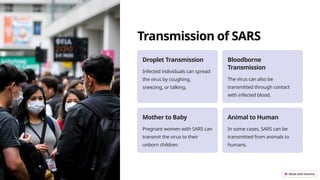
Transmission of SARS
Droplet Transmission
Infected individuals can spread
the virus by coughing,
sneezing, or talking.
Bloodborne
Transmission
The virus can also be
transmitted through contact
with infected blood.
Mother to Baby
Pregnant women with SARS can
transmit the virus to their
unborn children.
Animal to Human
In some cases, SARS can be
transmitted from animals to
humans.
Incubation Period of SARS
1
Exposure to Virus
An individual comes into contact with
the SARS virus.
2
Incubation Period
Time between exposure and the
appearance of symptoms.
3
Symptom Onset
The individual begins to experience
symptoms of SARS.
Mortality Rate of SARS
10%
Mortality Rate
Approximately 1 in 10 individuals diagnosed with SARS died from the
illness.
Diagnosing SARS
PCR Test
Detects viral RNA in respiratory samples.
Serological Test
Looks for antibodies against the virus in the blood.
Chest X-ray or CT Scan
Identifies pneumonia or other lung complications.
Treatment of SARS
Supportive Care
Oxygen therapy, fluid management, and nutritional support.
Medication
Antipyretics, corticosteroids, and antiviral medications.
Monitoring & Management of Complications
Close monitoring for pneumonia or acute respiratory distress syndrome.
Infection Control Measures
Personal protective equipment and isolation protocols.
Prevention of SARS
1
Vaccination
There is no specific vaccine for SARS, but ongoing research is exploring options.
2
Hygiene
Practice good hand hygiene and avoid touching your face.
3
Social Distancing
Maintain distance from others, especially when sick.
4
Mask Wearing
Wear a mask in crowded public spaces.
Conclusion: SARS - A Public Health Challenge
Understanding SARS and its impact is crucial for preventing future outbreaks. Continued research, improved public health
measures, and global cooperation are essential.

Understanding-SARS-A-Comprehensive-Overview.pptx

  • 1.
    Understanding SARS: A ComprehensiveOverview This presentation will provide a detailed overview of the SARS virus, including its symptoms, transmission, and treatment. ZK by Zubair Ahmed Kalhoro
  • 2.
    What is SARS? SevereAcute Respiratory Syndrome SARS is a respiratory illness caused by a virus. It is a serious illness that can lead to pneumonia and death. Origin The virus was first identified in China in 2002. It spread rapidly throughout the world, causing a major outbreak in 2003.
  • 3.
    Symptoms of SARS 11. Fever High body temperature, often above 100.4°F (38°C) 2 2. Chills Sudden feeling of coldness, shivering, and shaking 3 3. Headache Pain in the head, sometimes accompanied by dizziness 4 4. Muscle Aches Pain and stiffness in the muscles throughout the body
  • 4.
    Transmission of SARS DropletTransmission Infected individuals can spread the virus by coughing, sneezing, or talking. Bloodborne Transmission The virus can also be transmitted through contact with infected blood. Mother to Baby Pregnant women with SARS can transmit the virus to their unborn children. Animal to Human In some cases, SARS can be transmitted from animals to humans.
  • 5.
    Incubation Period ofSARS 1 Exposure to Virus An individual comes into contact with the SARS virus. 2 Incubation Period Time between exposure and the appearance of symptoms. 3 Symptom Onset The individual begins to experience symptoms of SARS.
  • 6.
    Mortality Rate ofSARS 10% Mortality Rate Approximately 1 in 10 individuals diagnosed with SARS died from the illness.
  • 7.
    Diagnosing SARS PCR Test Detectsviral RNA in respiratory samples. Serological Test Looks for antibodies against the virus in the blood. Chest X-ray or CT Scan Identifies pneumonia or other lung complications.
  • 8.
    Treatment of SARS SupportiveCare Oxygen therapy, fluid management, and nutritional support. Medication Antipyretics, corticosteroids, and antiviral medications. Monitoring & Management of Complications Close monitoring for pneumonia or acute respiratory distress syndrome. Infection Control Measures Personal protective equipment and isolation protocols.
  • 9.
    Prevention of SARS 1 Vaccination Thereis no specific vaccine for SARS, but ongoing research is exploring options. 2 Hygiene Practice good hand hygiene and avoid touching your face. 3 Social Distancing Maintain distance from others, especially when sick. 4 Mask Wearing Wear a mask in crowded public spaces.
  • 10.
    Conclusion: SARS -A Public Health Challenge Understanding SARS and its impact is crucial for preventing future outbreaks. Continued research, improved public health measures, and global cooperation are essential.