Understanding Practical Completion Inspection: Key to a
Successful Construction Project
About Us
In the realm of construction and project
management, the Practical Completion
Inspection (PCI) is a pivotal milestone that
signifies the nearing end of a
construction project. This critical phase
marks the transition from construction to
the operational phase, ensuring that the
project is ready for handover to the client.
Understanding the intricacies of Practical
Completion Inspection is essential for
stakeholders aiming to achieve a
successful and smooth project
completion.
What is a Practical Completion
Inspection?
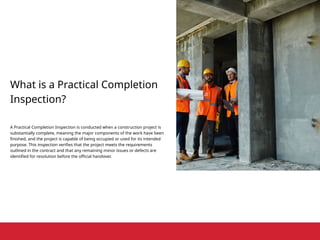
A Practical Completion Inspection is conducted when a construction project is
substantially complete, meaning the major components of the work have been
finished, and the project is capable of being occupied or used for its intended
purpose. This inspection verifies that the project meets the requirements
outlined in the contract and that any remaining minor issues or defects are
identified for resolution before the official handover.
Purpose and Benefits
The primary purpose of the PCI is to ensure that the
construction work aligns with the contractual specifications and
quality standards. During this inspection, various aspects of the
project are evaluated, including:
• Quality of Work: Inspectors assess the overall quality and
workmanship of the construction, checking for compliance
with design specifications and building codes.
• Functionality: The functionality of installed systems and
components is verified to ensure they operate correctly and
meet the project’s requirements.
• Safety and Compliance: The inspection ensures that the
project adheres to safety standards and regulatory
requirements, minimizing risks for future occupants.
• The benefits of a thorough Practical Completion Inspection
are manifold. It helps in identifying and addressing any
defects or incomplete work, thereby preventing costly repairs
or delays post-handover. Additionally, it provides clarity on any
remaining work or snagging items, ensuring that both the
client and contractor have a clear understanding of what
needs to be completed before final acceptance.
Process and Checklist
The PCI process involves several key steps:
1.Preparation: Before the inspection, contractors
should conduct their own internal review to address
any obvious issues or incomplete work.
2.Inspection: A formal inspection is carried out by a
qualified professional or inspector, often
accompanied by the project manager, contractor,
and client representatives.
3.Documentation: The findings are documented in a
PCI report, detailing any defects, outstanding work,
and a timeline for rectification.
4.Rectification: The contractor addresses the identified
issues, and a follow-up inspection may be conducted
to ensure all concerns are resolved.
Common Issues
Identified
During a PCI, common issues that may be identified include
minor cosmetic defects, incomplete finishes, or non-
functioning systems. It’s important to address these issues
promptly to avoid delays in project handover and ensure client
satisfaction.
The Practical Completion Inspection is a crucial step in the
construction process, ensuring that a project is completed to
the required standards and is ready for handover. By
understanding and effectively managing this phase,
stakeholders can achieve a smoother transition, enhance
project quality, and uphold contractual obligations. Properly
conducted PCI not only confirms project completion but also
sets the stage for successful occupancy and operation.
ZI MCOR E HUBS • PAG E 4
Contact Us
1300 852 496
info@masterbuildinginspectors.com.au
PO Box 6249, Swanbourne 6010 W.A

Understanding Practical Completion Inspection: Key to a Successful Construction Project

  • 1.
    Understanding Practical CompletionInspection: Key to a Successful Construction Project
  • 2.
    About Us In therealm of construction and project management, the Practical Completion Inspection (PCI) is a pivotal milestone that signifies the nearing end of a construction project. This critical phase marks the transition from construction to the operational phase, ensuring that the project is ready for handover to the client. Understanding the intricacies of Practical Completion Inspection is essential for stakeholders aiming to achieve a successful and smooth project completion.
  • 3.
    What is aPractical Completion Inspection? A Practical Completion Inspection is conducted when a construction project is substantially complete, meaning the major components of the work have been finished, and the project is capable of being occupied or used for its intended purpose. This inspection verifies that the project meets the requirements outlined in the contract and that any remaining minor issues or defects are identified for resolution before the official handover.
  • 4.
    Purpose and Benefits Theprimary purpose of the PCI is to ensure that the construction work aligns with the contractual specifications and quality standards. During this inspection, various aspects of the project are evaluated, including: • Quality of Work: Inspectors assess the overall quality and workmanship of the construction, checking for compliance with design specifications and building codes. • Functionality: The functionality of installed systems and components is verified to ensure they operate correctly and meet the project’s requirements. • Safety and Compliance: The inspection ensures that the project adheres to safety standards and regulatory requirements, minimizing risks for future occupants. • The benefits of a thorough Practical Completion Inspection are manifold. It helps in identifying and addressing any defects or incomplete work, thereby preventing costly repairs or delays post-handover. Additionally, it provides clarity on any remaining work or snagging items, ensuring that both the client and contractor have a clear understanding of what needs to be completed before final acceptance.
  • 5.
    Process and Checklist ThePCI process involves several key steps: 1.Preparation: Before the inspection, contractors should conduct their own internal review to address any obvious issues or incomplete work. 2.Inspection: A formal inspection is carried out by a qualified professional or inspector, often accompanied by the project manager, contractor, and client representatives. 3.Documentation: The findings are documented in a PCI report, detailing any defects, outstanding work, and a timeline for rectification. 4.Rectification: The contractor addresses the identified issues, and a follow-up inspection may be conducted to ensure all concerns are resolved.
  • 6.
    Common Issues Identified During aPCI, common issues that may be identified include minor cosmetic defects, incomplete finishes, or non- functioning systems. It’s important to address these issues promptly to avoid delays in project handover and ensure client satisfaction. The Practical Completion Inspection is a crucial step in the construction process, ensuring that a project is completed to the required standards and is ready for handover. By understanding and effectively managing this phase, stakeholders can achieve a smoother transition, enhance project quality, and uphold contractual obligations. Properly conducted PCI not only confirms project completion but also sets the stage for successful occupancy and operation. ZI MCOR E HUBS • PAG E 4
  • 7.
    Contact Us 1300 852496 info@masterbuildinginspectors.com.au PO Box 6249, Swanbourne 6010 W.A