Understanding
Ownership Structure
An ownership structure refers to the organization of a company in terms of
the distribution of ownership among stakeholders. This includes identifying
the different types of shareholders, such as individual investors, institutional
investors, and employee-owned shares, as well as the proportion of
ownership held by each. Understanding the ownership structure is crucial for
business professionals and stakeholders as it can impact decision-making,
corporate governance, and overall business strategy.
by ernie hendrawaty
The Role of Shareholders
Decision-Making
Shareholders have a say in the
major decisions of the
company, such as electing the
board of directors and voting
on important matters.
Financial Stake
Shareholders have a financial
interest in the company's
performance and are entitled to
dividends if the company is
profitable.
Corporate Governance
Shareholders play a crucial
role in ensuring that the
company's management is
acting in the best interest of the
shareholders.
Ownership Structure Types
1 Publicly Traded
Companies
Ownership is dispersed
among a large number of
shareholders, and the
company is listed on a
stock exchange.
2 Private Companies
Ownership is typically
concentrated in a few
hands and shares are not
available to the general
public.
3 Employee-Owned
Businesses
Employees hold a
significant portion of the
company's shares, often
through stock option
plans or employee stock
ownership programs.
Benefits of a Clear Ownership Structure
Transparency
A clear ownership structure
promotes transparency,
which can enhance investor
confidence and attract
potential shareholders.
Accountability
It ensures clear lines of
accountability, reducing the
potential for disputes and
facilitating effective decision-
making.
Strategic Planning
Clear ownership structure
can align stakeholders
around common goals and
facilitate strategic planning.
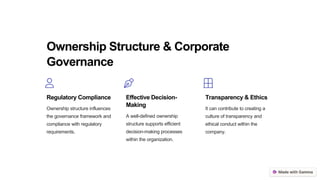
Ownership Structure & Corporate
Governance
Regulatory Compliance
Ownership structure influences
the governance framework and
compliance with regulatory
requirements.
Effective Decision-
Making
A well-defined ownership
structure supports efficient
decision-making processes
within the organization.
Transparency & Ethics
It can contribute to creating a
culture of transparency and
ethical conduct within the
company.
Challenges in Ownership Structure
Conflicting Interests
Different stakeholders may have conflicting interests and objectives, leading to
challenges in decision-making.
Power Struggles
Control and decision-making power can become a battleground, especially in
companies with complex ownership structures.
Succession Planning
Ownership transitions and succession planning can pose significant challenges in
family-owned businesses.
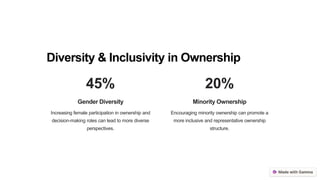
Diversity & Inclusivity in Ownership
45%
Gender Diversity
Increasing female participation in ownership and
decision-making roles can lead to more diverse
perspectives.
20%
Minority Ownership
Encouraging minority ownership can promote a
more inclusive and representative ownership
structure.
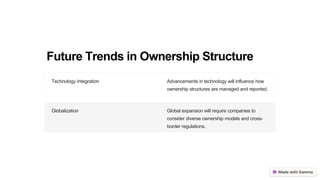
Future Trends in Ownership Structure
Technology Integration Advancements in technology will influence how
ownership structures are managed and reported.
Globalization Global expansion will require companies to
consider diverse ownership models and cross-
border regulations.

Understanding Ownership Structure ok.pptx

  • 1.
    Understanding Ownership Structure An ownershipstructure refers to the organization of a company in terms of the distribution of ownership among stakeholders. This includes identifying the different types of shareholders, such as individual investors, institutional investors, and employee-owned shares, as well as the proportion of ownership held by each. Understanding the ownership structure is crucial for business professionals and stakeholders as it can impact decision-making, corporate governance, and overall business strategy. by ernie hendrawaty
  • 2.
    The Role ofShareholders Decision-Making Shareholders have a say in the major decisions of the company, such as electing the board of directors and voting on important matters. Financial Stake Shareholders have a financial interest in the company's performance and are entitled to dividends if the company is profitable. Corporate Governance Shareholders play a crucial role in ensuring that the company's management is acting in the best interest of the shareholders.
  • 3.
    Ownership Structure Types 1Publicly Traded Companies Ownership is dispersed among a large number of shareholders, and the company is listed on a stock exchange. 2 Private Companies Ownership is typically concentrated in a few hands and shares are not available to the general public. 3 Employee-Owned Businesses Employees hold a significant portion of the company's shares, often through stock option plans or employee stock ownership programs.
  • 4.
    Benefits of aClear Ownership Structure Transparency A clear ownership structure promotes transparency, which can enhance investor confidence and attract potential shareholders. Accountability It ensures clear lines of accountability, reducing the potential for disputes and facilitating effective decision- making. Strategic Planning Clear ownership structure can align stakeholders around common goals and facilitate strategic planning.
  • 5.
    Ownership Structure &Corporate Governance Regulatory Compliance Ownership structure influences the governance framework and compliance with regulatory requirements. Effective Decision- Making A well-defined ownership structure supports efficient decision-making processes within the organization. Transparency & Ethics It can contribute to creating a culture of transparency and ethical conduct within the company.
  • 6.
    Challenges in OwnershipStructure Conflicting Interests Different stakeholders may have conflicting interests and objectives, leading to challenges in decision-making. Power Struggles Control and decision-making power can become a battleground, especially in companies with complex ownership structures. Succession Planning Ownership transitions and succession planning can pose significant challenges in family-owned businesses.
  • 7.
    Diversity & Inclusivityin Ownership 45% Gender Diversity Increasing female participation in ownership and decision-making roles can lead to more diverse perspectives. 20% Minority Ownership Encouraging minority ownership can promote a more inclusive and representative ownership structure.
  • 8.
    Future Trends inOwnership Structure Technology Integration Advancements in technology will influence how ownership structures are managed and reported. Globalization Global expansion will require companies to consider diverse ownership models and cross- border regulations.