Hands-On with
UiPath Studio Web
Practical Task Demonstrations
2
Vajrang Billlakurthi
Transformation Leader
@Vajrang IT Services Pvt Ltd
Swathi Nelakurthi
Associate Automation Developer
@Vajrang IT Services Pvt Ltd
3
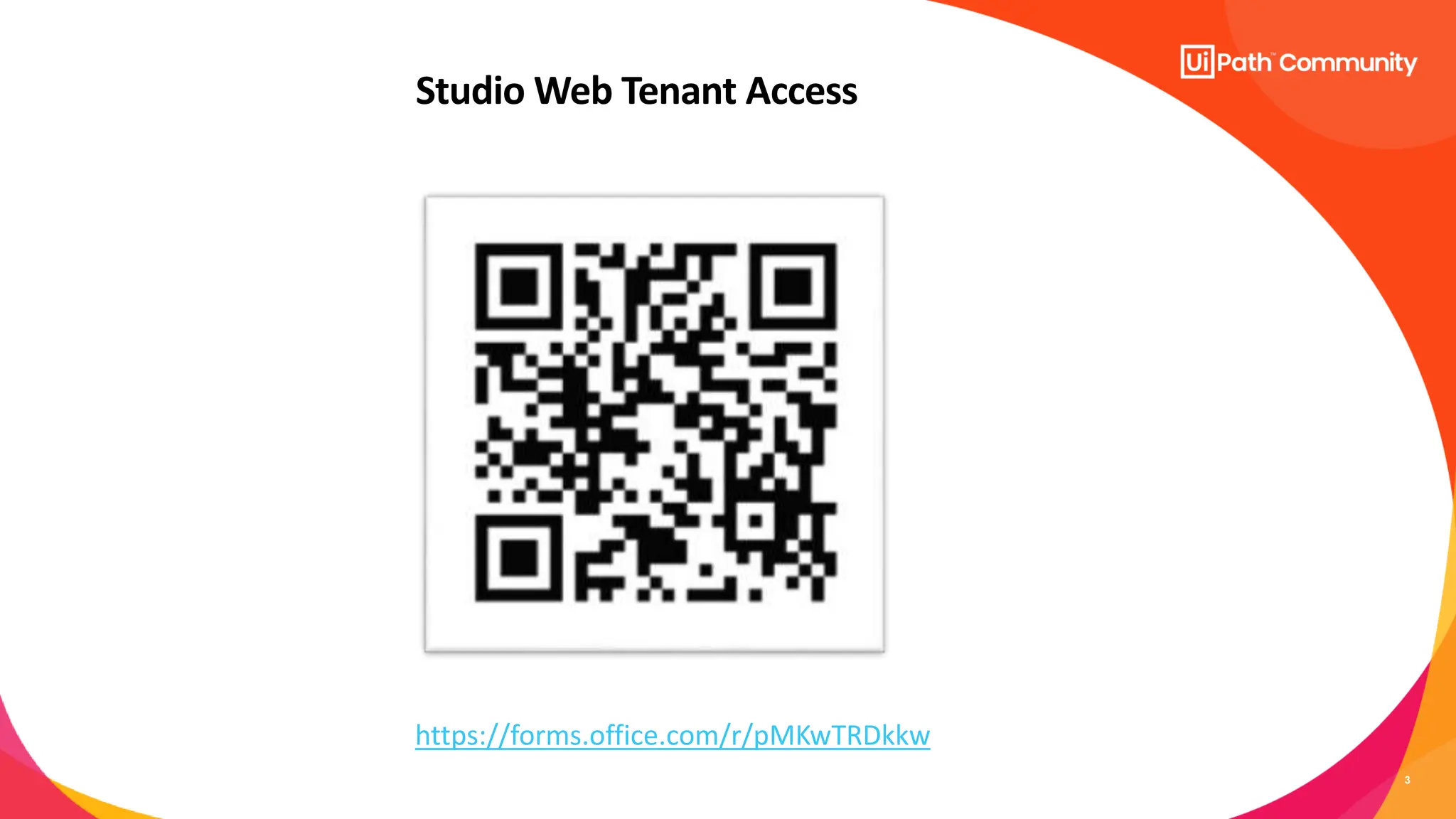
Studio Web Tenant Access
https://forms.office.com/r/pMKwTRDkkw
4
• Overview:
- This UiPath automation project aims to extract temperature data for cities provided in a spreadsheet and write
the extracted data into the corresponding temperature column in the same spreadsheet.
- Web scraping is utilized to retrieve temperature information from Google's search results.
- Note: During code execution, user interaction is required to grant consent for all cookies.
• Requirements:
- Navigate to www.google.com using a web browser.
- Access each city name provided in the spreadsheet.
- Search for the temperature of each city on Google.
- Extract the temperature value.
- Write the extracted temperature into the temperature column of the spreadsheet
• Variables Used:
- CurrentRow (Type: DataRow): Variable to represent the current row being processed in a loop
- Text Value (Type: String): Variable is dynamically generated by the activity and contains extracted temperature
1. City Temperature Tracker with Web Scraping
5
• Navigate to Google:
- Use the Use Browser activity to navigate to the Google website.
• Nest all browser-related activities inside the Use Browser activity.
• Iterate Through Each City:
- Use For Each Row in Spreadsheet activity to iterate through each city name in the spreadsheet.
• CurrentRow: Autogenerated variable holding each city name.
• Search for Temperature:
- Use Type Into activity to input the search query for the current city's temperature.
• Type this *: Provide "Temperature in "+CurrentRow("Cities").ToString+"[k(enter)]"
Workflow Overview
6
• Extract Temperature Data:
- Manually search for any city's temperature to indicate the location for web scraping.
- Use Get Text activity to extract the temperature value from the Google search results.
• Text Value: Autogenerated variable holding the extracted temperature.
• Write Temperature to Spreadsheet:
- Use Write Cell activity to write the extracted temperature into the temperature column of the spreadsheet.
- Determine the cell to write based on the Column, Current Row Index, and desired row position
• Cell: Provide "B"+(CurrentRowIndex+2).ToString
• What to Write: Provide Text Value Variable containing the extracted temperature
7
• Overview:
- This UiPath project offers an interactive exercise where users guess a randomly generated number within a
specified range.
- The automation guides users through the guessing process, providing feedback on each attempt and
congratulating them upon successful guess.
- It utilizes Boolean variables, random number generation, delay, Get Asset, and conditional logic to create an
engaging guessing game.
• Requirements:
- Generate a random number within a specified range.
- Prompt the user to guess the randomly generated number.
- Orchestrator Assets are utilized to store the guess value
- Provide feedback to the user based on their guess.
- Allow the user to retry the guessing game if desired.
2. Guessing Random Numbers in a Sequence
8
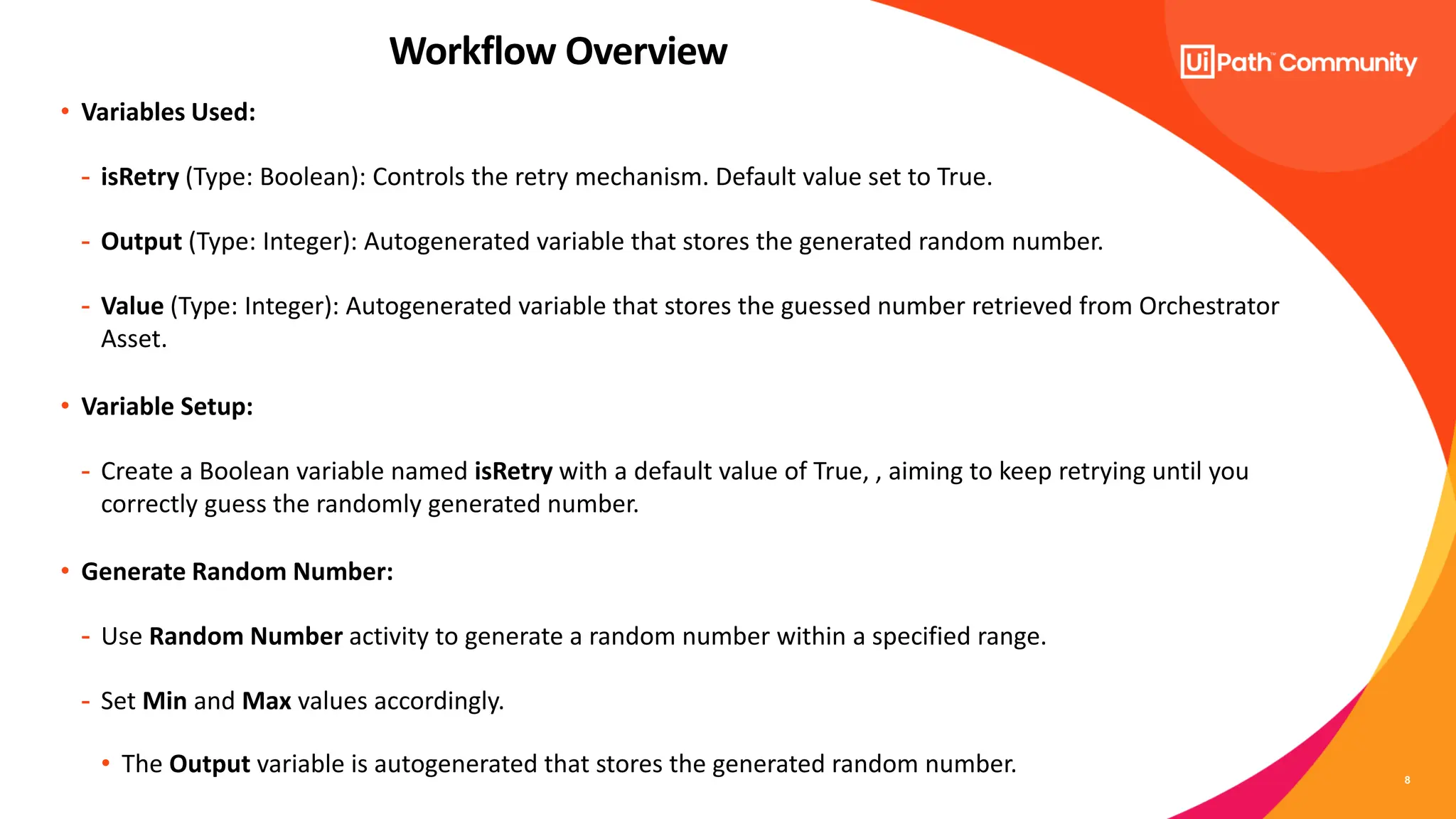
• Variables Used:
- isRetry (Type: Boolean): Controls the retry mechanism. Default value set to True.
- Output (Type: Integer): Autogenerated variable that stores the generated random number.
- Value (Type: Integer): Autogenerated variable that stores the guessed number retrieved from Orchestrator
Asset.
• Variable Setup:
- Create a Boolean variable named isRetry with a default value of True, , aiming to keep retrying until you
correctly guess the randomly generated number.
• Generate Random Number:
- Use Random Number activity to generate a random number within a specified range.
- Set Min and Max values accordingly.
• The Output variable is autogenerated that stores the generated random number.
Workflow Overview
9
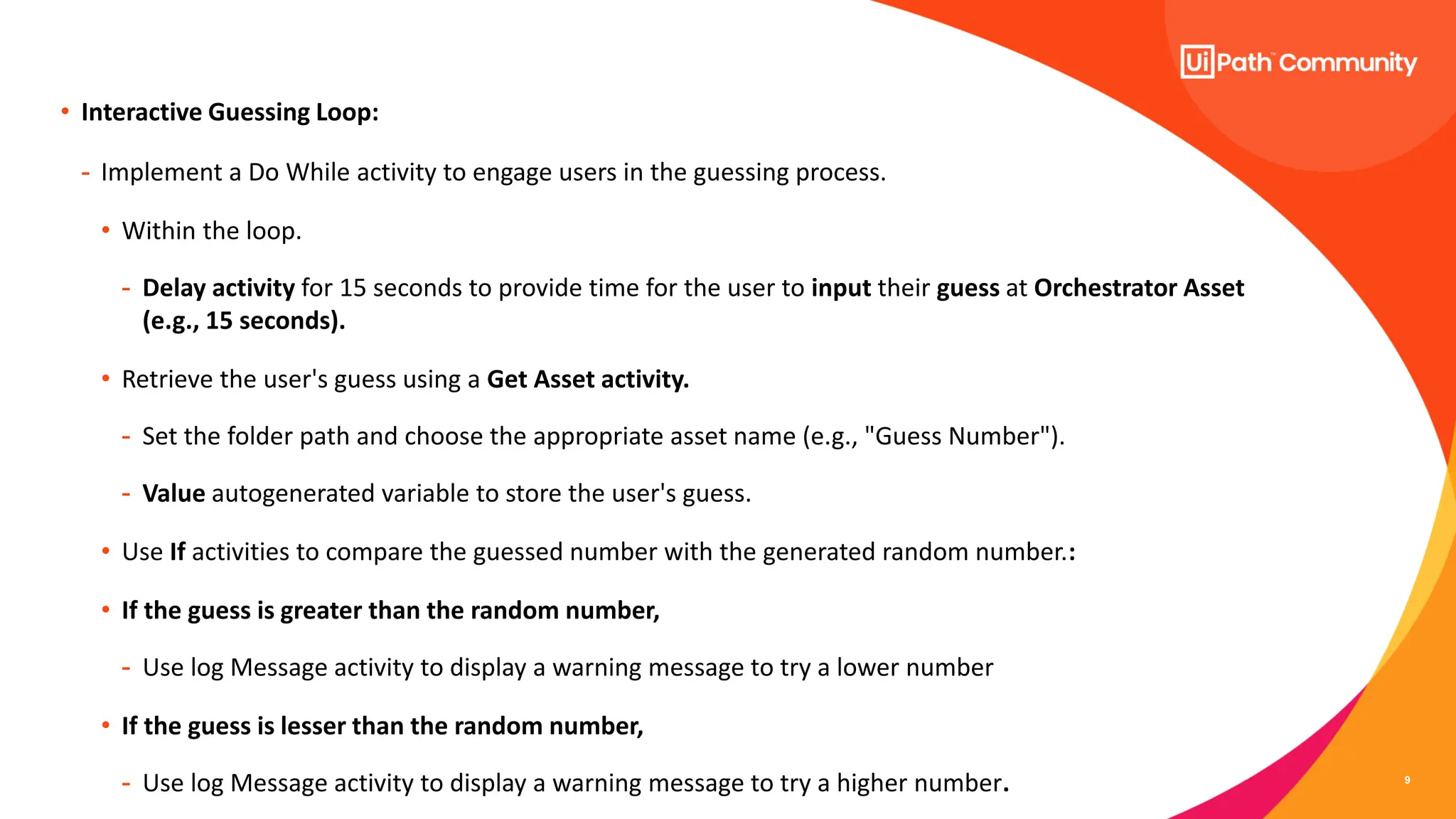
• Interactive Guessing Loop:
- Implement a Do While activity to engage users in the guessing process.
• Within the loop.
- Delay activity for 15 seconds to provide time for the user to input their guess at Orchestrator Asset
(e.g., 15 seconds).
• Retrieve the user's guess using a Get Asset activity.
- Set the folder path and choose the appropriate asset name (e.g., "Guess Number").
- Value autogenerated variable to store the user's guess.
• Use If activities to compare the guessed number with the generated random number.:
• If the guess is greater than the random number,
- Use log Message activity to display a warning message to try a lower number
• If the guess is lesser than the random number,
- Use log Message activity to display a warning message to try a higher number.
10
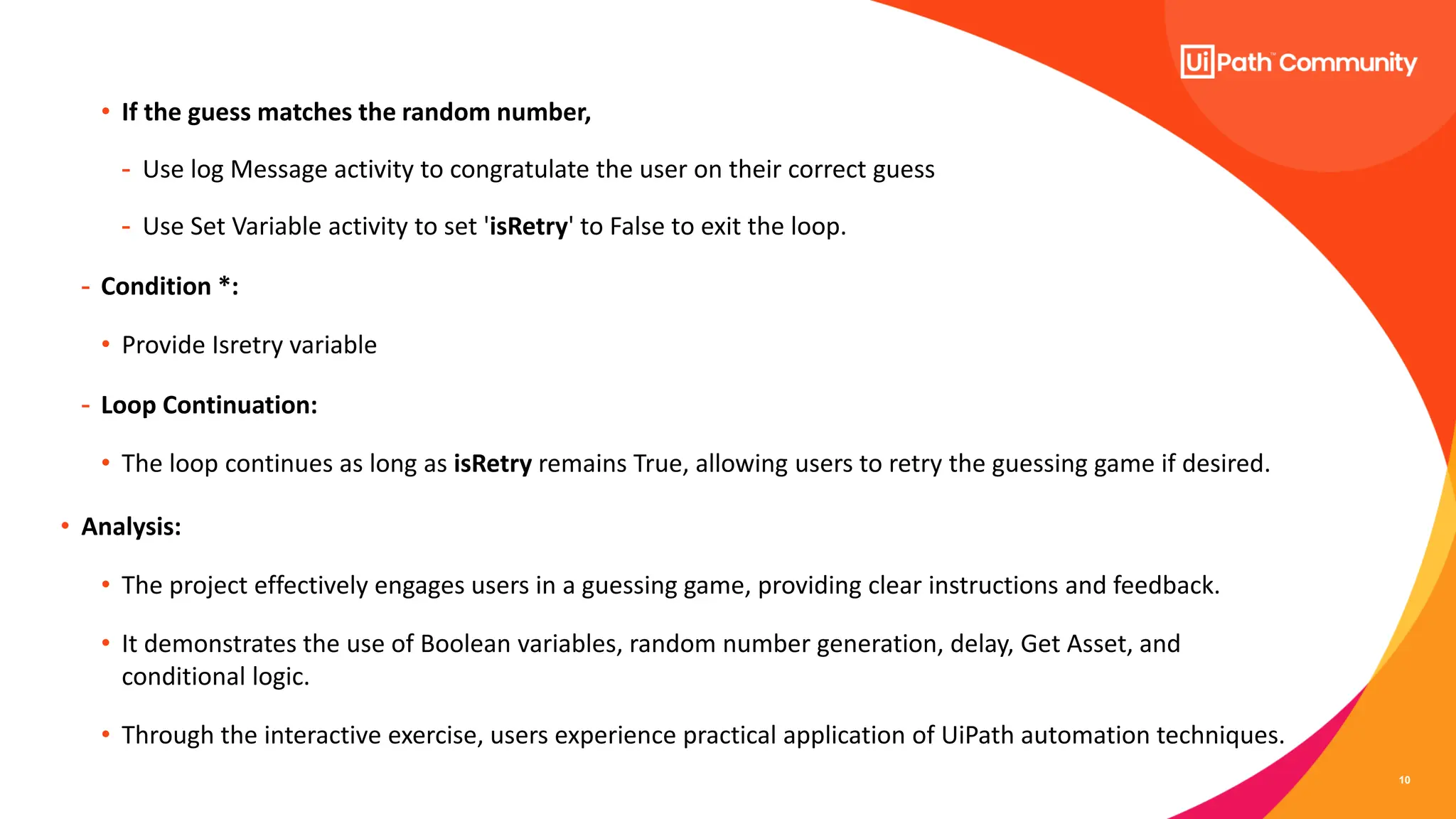
• If the guess matches the random number,
- Use log Message activity to congratulate the user on their correct guess
- Use Set Variable activity to set 'isRetry' to False to exit the loop.
- Condition *:
• Provide Isretry variable
- Loop Continuation:
• The loop continues as long as isRetry remains True, allowing users to retry the guessing game if desired.
• Analysis:
• The project effectively engages users in a guessing game, providing clear instructions and feedback.
• It demonstrates the use of Boolean variables, random number generation, delay, Get Asset, and
conditional logic.
• Through the interactive exercise, users experience practical application of UiPath automation techniques.

UiPath Studio Web workshop series - Day 5

  • 1.
    Hands-On with UiPath StudioWeb Practical Task Demonstrations
  • 2.
    2 Vajrang Billlakurthi Transformation Leader @VajrangIT Services Pvt Ltd Swathi Nelakurthi Associate Automation Developer @Vajrang IT Services Pvt Ltd
  • 3.
    3 Studio Web TenantAccess https://forms.office.com/r/pMKwTRDkkw
  • 4.
    4 • Overview: - ThisUiPath automation project aims to extract temperature data for cities provided in a spreadsheet and write the extracted data into the corresponding temperature column in the same spreadsheet. - Web scraping is utilized to retrieve temperature information from Google's search results. - Note: During code execution, user interaction is required to grant consent for all cookies. • Requirements: - Navigate to www.google.com using a web browser. - Access each city name provided in the spreadsheet. - Search for the temperature of each city on Google. - Extract the temperature value. - Write the extracted temperature into the temperature column of the spreadsheet • Variables Used: - CurrentRow (Type: DataRow): Variable to represent the current row being processed in a loop - Text Value (Type: String): Variable is dynamically generated by the activity and contains extracted temperature 1. City Temperature Tracker with Web Scraping
  • 5.
    5 • Navigate toGoogle: - Use the Use Browser activity to navigate to the Google website. • Nest all browser-related activities inside the Use Browser activity. • Iterate Through Each City: - Use For Each Row in Spreadsheet activity to iterate through each city name in the spreadsheet. • CurrentRow: Autogenerated variable holding each city name. • Search for Temperature: - Use Type Into activity to input the search query for the current city's temperature. • Type this *: Provide "Temperature in "+CurrentRow("Cities").ToString+"[k(enter)]" Workflow Overview
  • 6.
    6 • Extract TemperatureData: - Manually search for any city's temperature to indicate the location for web scraping. - Use Get Text activity to extract the temperature value from the Google search results. • Text Value: Autogenerated variable holding the extracted temperature. • Write Temperature to Spreadsheet: - Use Write Cell activity to write the extracted temperature into the temperature column of the spreadsheet. - Determine the cell to write based on the Column, Current Row Index, and desired row position • Cell: Provide "B"+(CurrentRowIndex+2).ToString • What to Write: Provide Text Value Variable containing the extracted temperature
  • 7.
    7 • Overview: - ThisUiPath project offers an interactive exercise where users guess a randomly generated number within a specified range. - The automation guides users through the guessing process, providing feedback on each attempt and congratulating them upon successful guess. - It utilizes Boolean variables, random number generation, delay, Get Asset, and conditional logic to create an engaging guessing game. • Requirements: - Generate a random number within a specified range. - Prompt the user to guess the randomly generated number. - Orchestrator Assets are utilized to store the guess value - Provide feedback to the user based on their guess. - Allow the user to retry the guessing game if desired. 2. Guessing Random Numbers in a Sequence
  • 8.
    8 • Variables Used: -isRetry (Type: Boolean): Controls the retry mechanism. Default value set to True. - Output (Type: Integer): Autogenerated variable that stores the generated random number. - Value (Type: Integer): Autogenerated variable that stores the guessed number retrieved from Orchestrator Asset. • Variable Setup: - Create a Boolean variable named isRetry with a default value of True, , aiming to keep retrying until you correctly guess the randomly generated number. • Generate Random Number: - Use Random Number activity to generate a random number within a specified range. - Set Min and Max values accordingly. • The Output variable is autogenerated that stores the generated random number. Workflow Overview
  • 9.
    9 • Interactive GuessingLoop: - Implement a Do While activity to engage users in the guessing process. • Within the loop. - Delay activity for 15 seconds to provide time for the user to input their guess at Orchestrator Asset (e.g., 15 seconds). • Retrieve the user's guess using a Get Asset activity. - Set the folder path and choose the appropriate asset name (e.g., "Guess Number"). - Value autogenerated variable to store the user's guess. • Use If activities to compare the guessed number with the generated random number.: • If the guess is greater than the random number, - Use log Message activity to display a warning message to try a lower number • If the guess is lesser than the random number, - Use log Message activity to display a warning message to try a higher number.
  • 10.
    10 • If theguess matches the random number, - Use log Message activity to congratulate the user on their correct guess - Use Set Variable activity to set 'isRetry' to False to exit the loop. - Condition *: • Provide Isretry variable - Loop Continuation: • The loop continues as long as isRetry remains True, allowing users to retry the guessing game if desired. • Analysis: • The project effectively engages users in a guessing game, providing clear instructions and feedback. • It demonstrates the use of Boolean variables, random number generation, delay, Get Asset, and conditional logic. • Through the interactive exercise, users experience practical application of UiPath automation techniques.