Types of Twins
Take a trip down memory lane this Mother's Day
Identical Twins
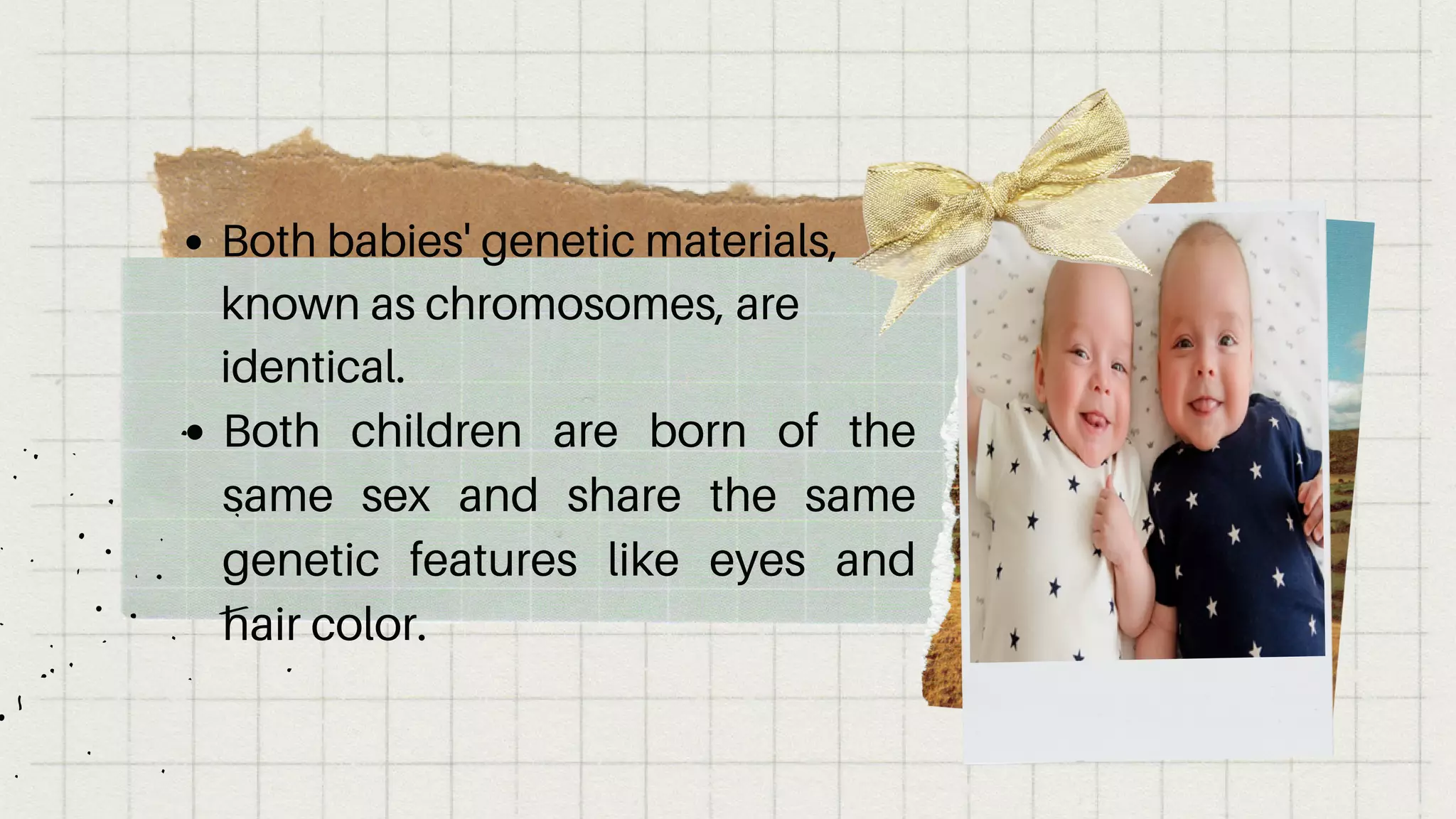
Both babies' genetic materials,
known as chromosomes, are
identical.
Both children are born of the
same sex and share the same
genetic features like eyes and
hair color.
Non-identical Twins
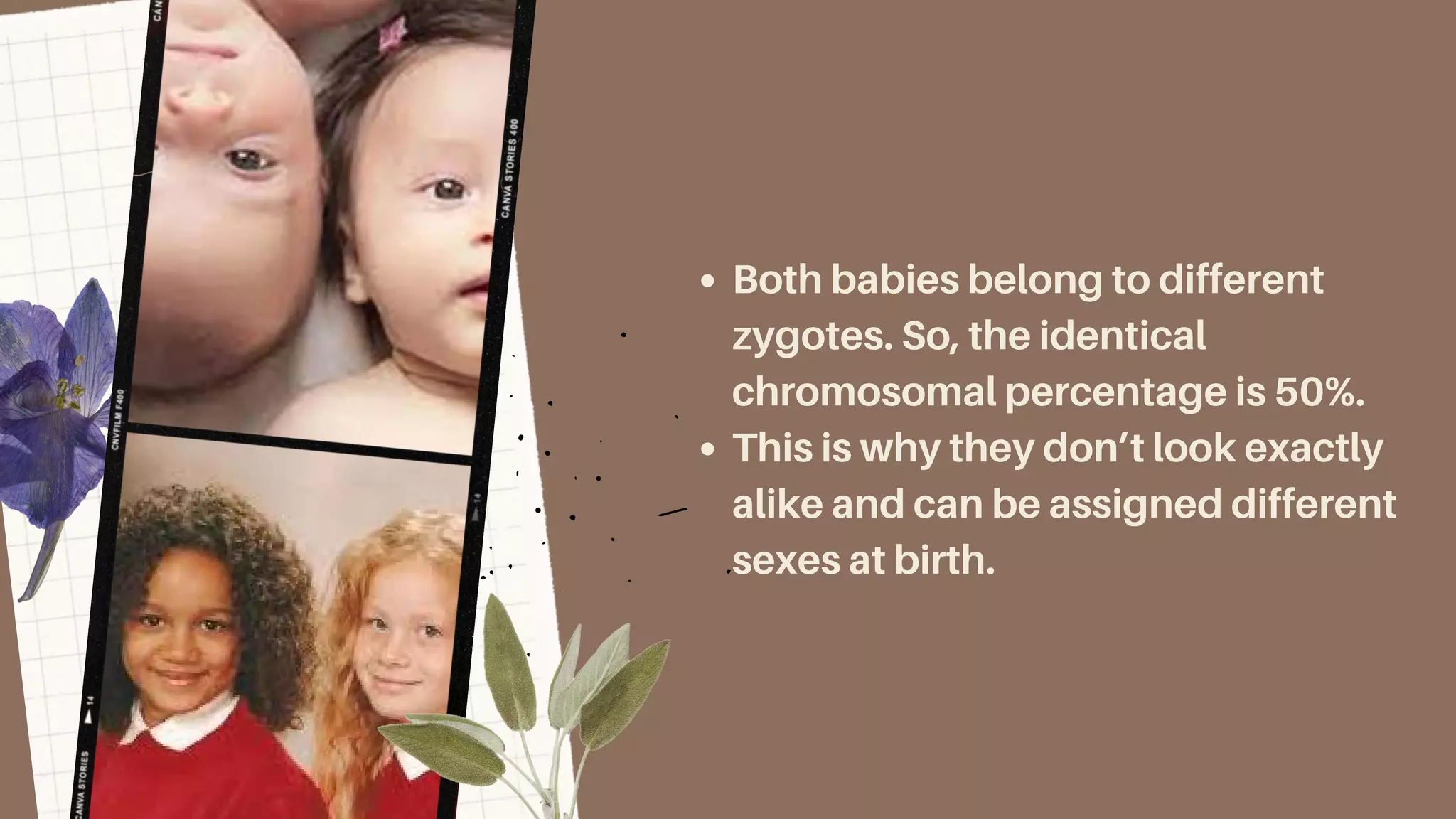
Both babies belong to different
zygotes. So, the identical
chromosomal percentage is 50%.
This is why they don’t look exactly
alike and can be assigned different
sexes at birth.
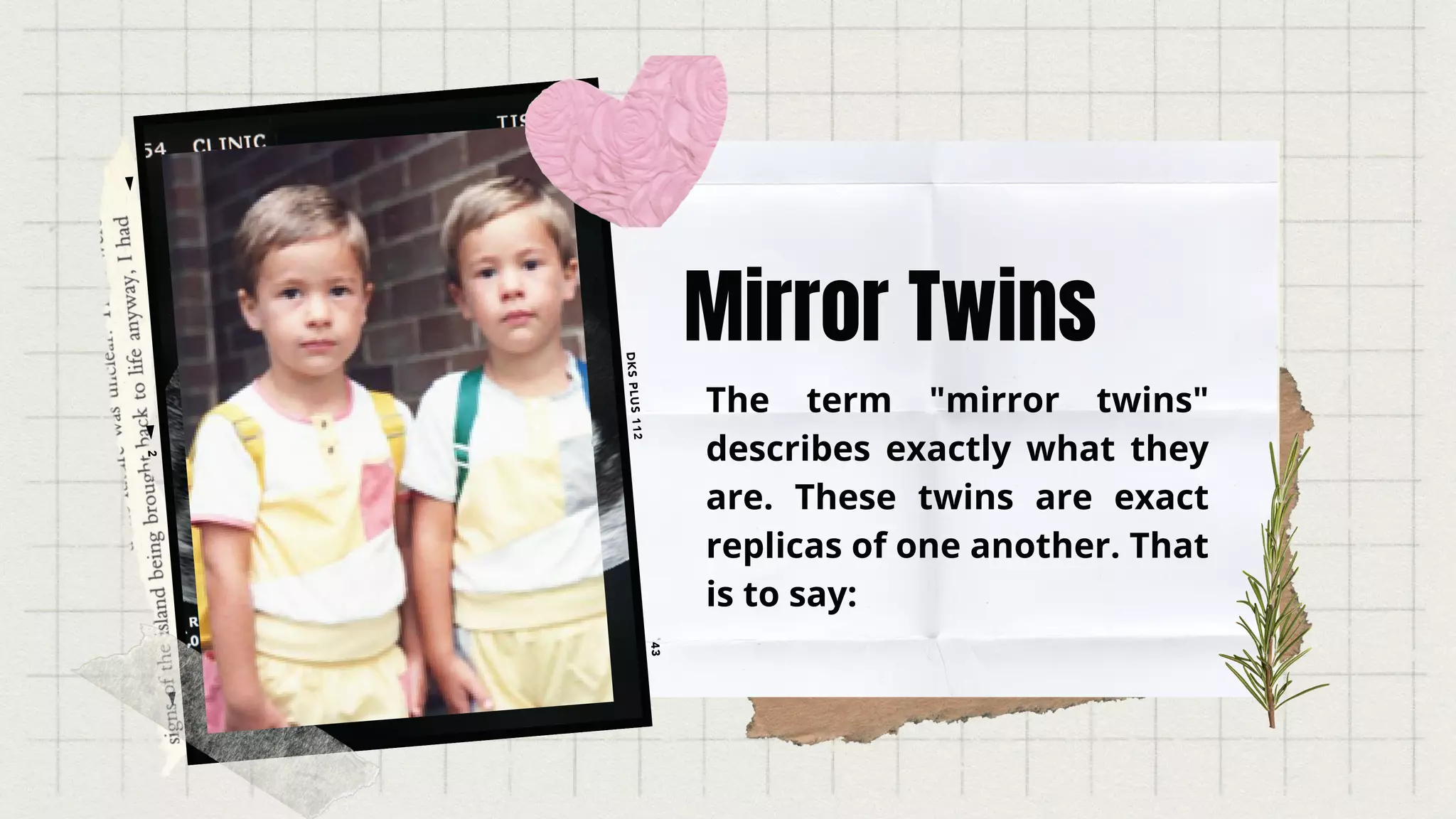
Mirror Twins
The term "mirror twins"
describes exactly what they
are. These twins are exact
replicas of one another. That
is to say:
It's possible that their hair
will naturally fall in opposite
directions.
Their teeth may emerge on
opposing sides of their
On the opposite side of
their body, they may have
birthmarks.
They also have separate
dominant hands in most
cases.
Conjoined Twins
They may share body parts or
other internal organs
Conjoined twins may be joined
at one or more places, and
their type depends on where
they are joined
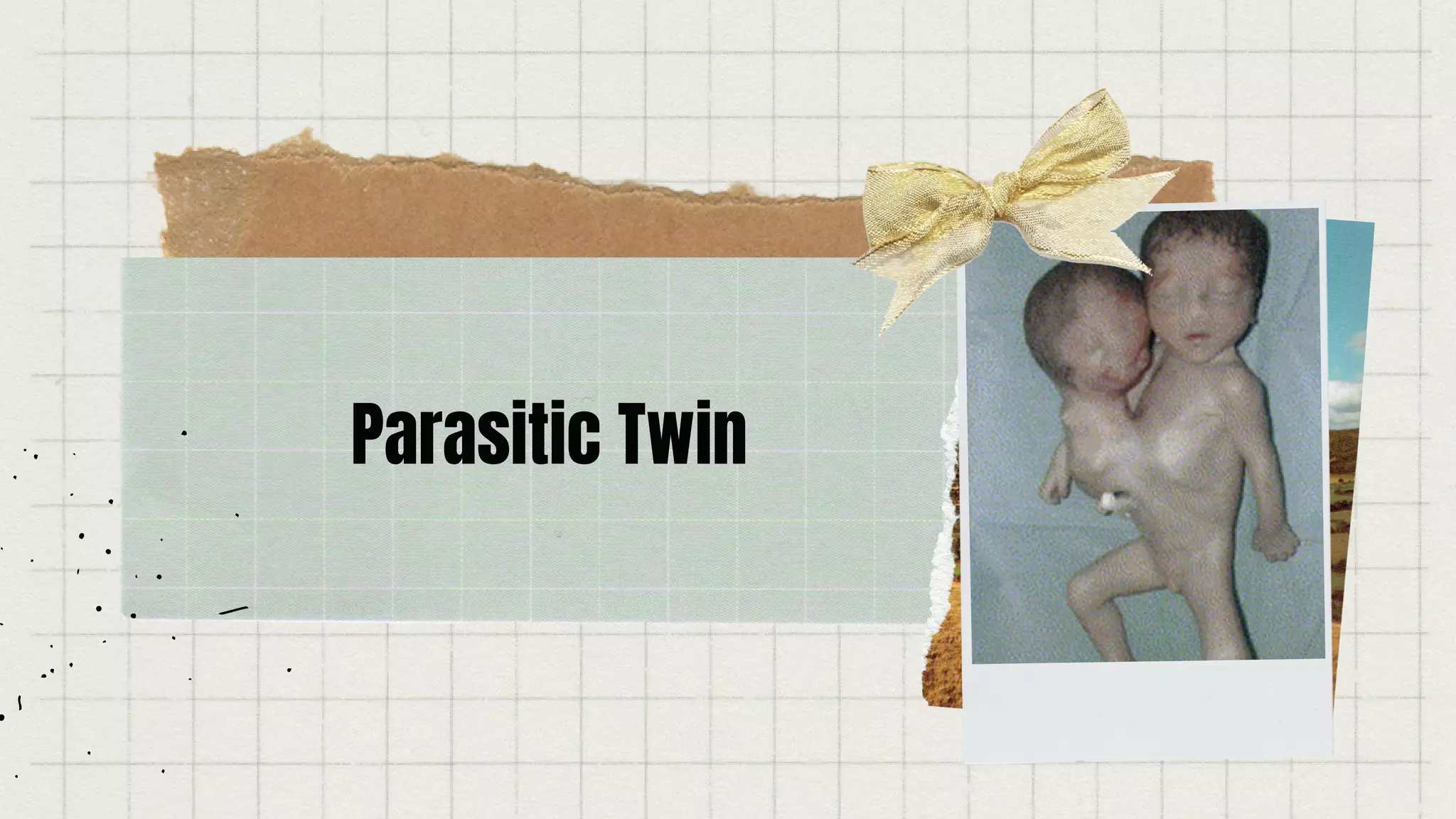
Parasitic Twin
Physically attached to the fully
developing twin
The parasitic twin never completes
development.
They usually don’t share organs
with the dominant twin. They can’t
survive on their own.
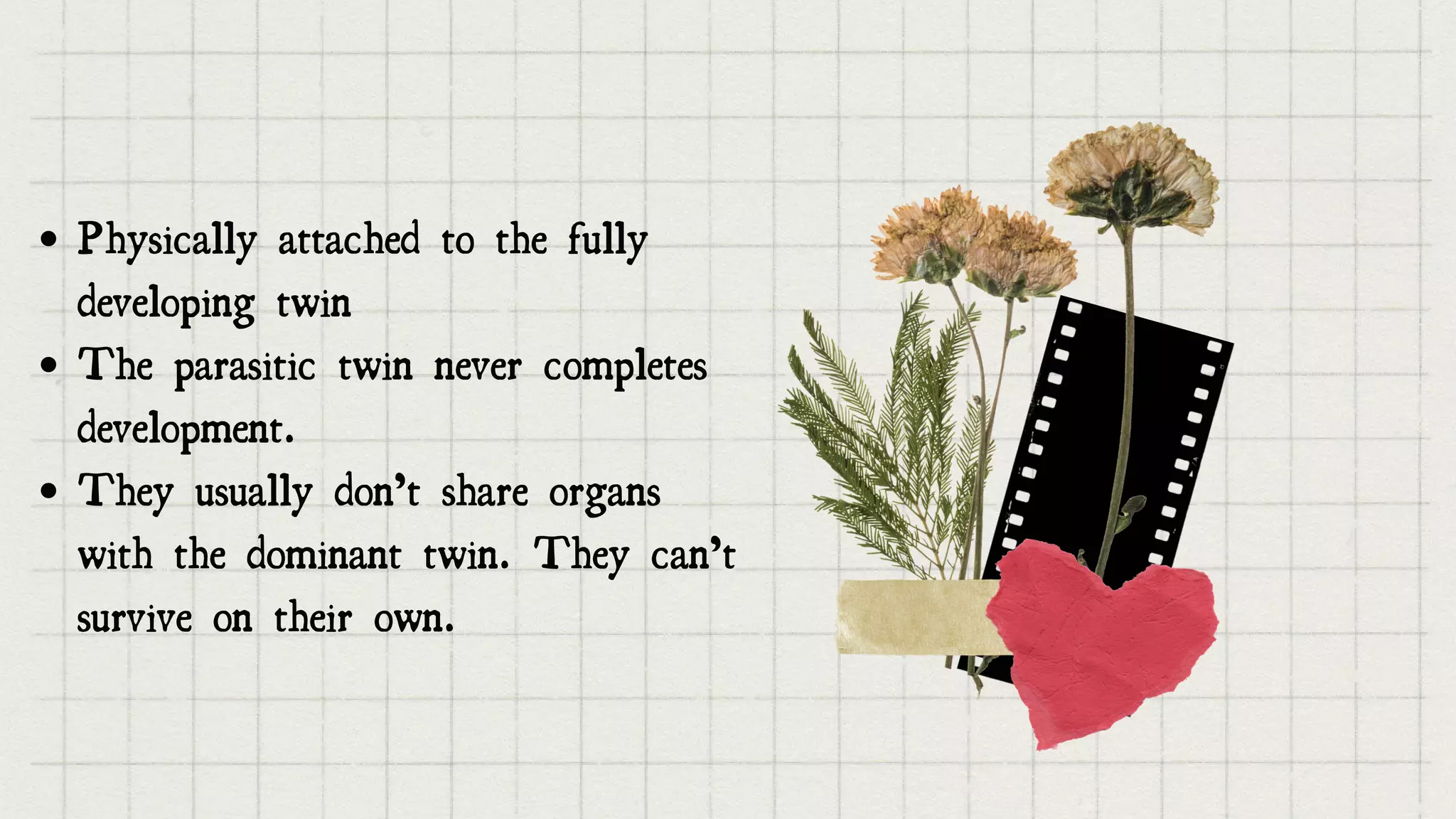
Semi-identical Twins
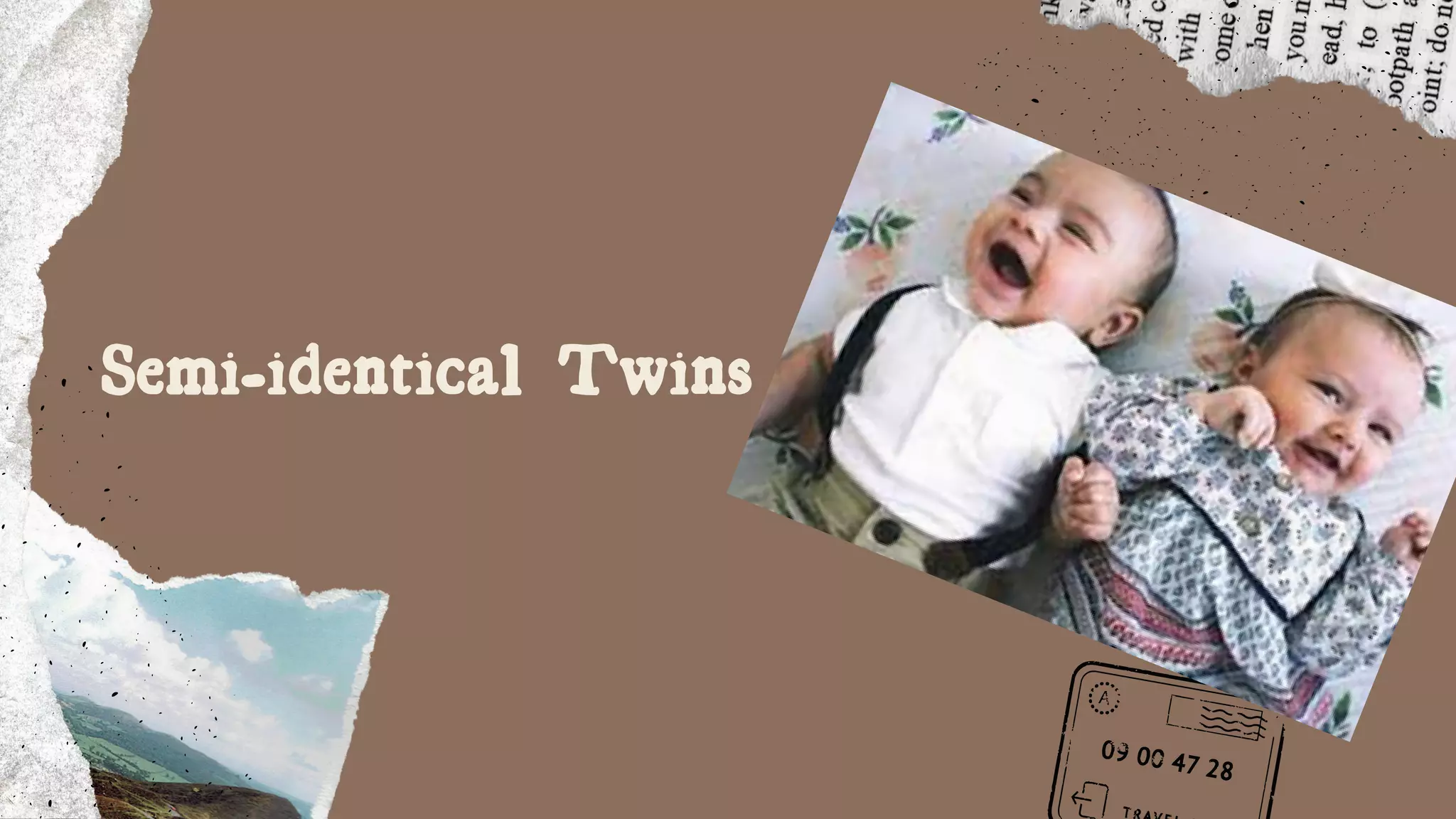
Described as identical on the mother's side
but sharing only half their father's genes.
The rare twins developed when two sperm
fertilized a single egg, which then split.
Thank You

Types of Twins.pdf

  • 1.
    Types of Twins Takea trip down memory lane this Mother's Day
  • 2.
  • 3.
    Both babies' geneticmaterials, known as chromosomes, are identical. Both children are born of the same sex and share the same genetic features like eyes and hair color.
  • 4.
  • 5.
    Both babies belongto different zygotes. So, the identical chromosomal percentage is 50%. This is why they don’t look exactly alike and can be assigned different sexes at birth.
  • 6.
    Mirror Twins The term"mirror twins" describes exactly what they are. These twins are exact replicas of one another. That is to say:
  • 7.
    It's possible thattheir hair will naturally fall in opposite directions. Their teeth may emerge on opposing sides of their On the opposite side of their body, they may have birthmarks. They also have separate dominant hands in most cases.
  • 8.
  • 9.
    They may sharebody parts or other internal organs Conjoined twins may be joined at one or more places, and their type depends on where they are joined
  • 10.
  • 11.
    Physically attached tothe fully developing twin The parasitic twin never completes development. They usually don’t share organs with the dominant twin. They can’t survive on their own.
  • 12.
  • 13.
    Described as identicalon the mother's side but sharing only half their father's genes. The rare twins developed when two sperm fertilized a single egg, which then split.
  • 14.