TYPES OF
ACCOMMODATION
Where would you like to
stay?
 There are many different types of
accommodation.
 Think of the advantages and
disadvantages of each type.
 Which would you choose? Why?
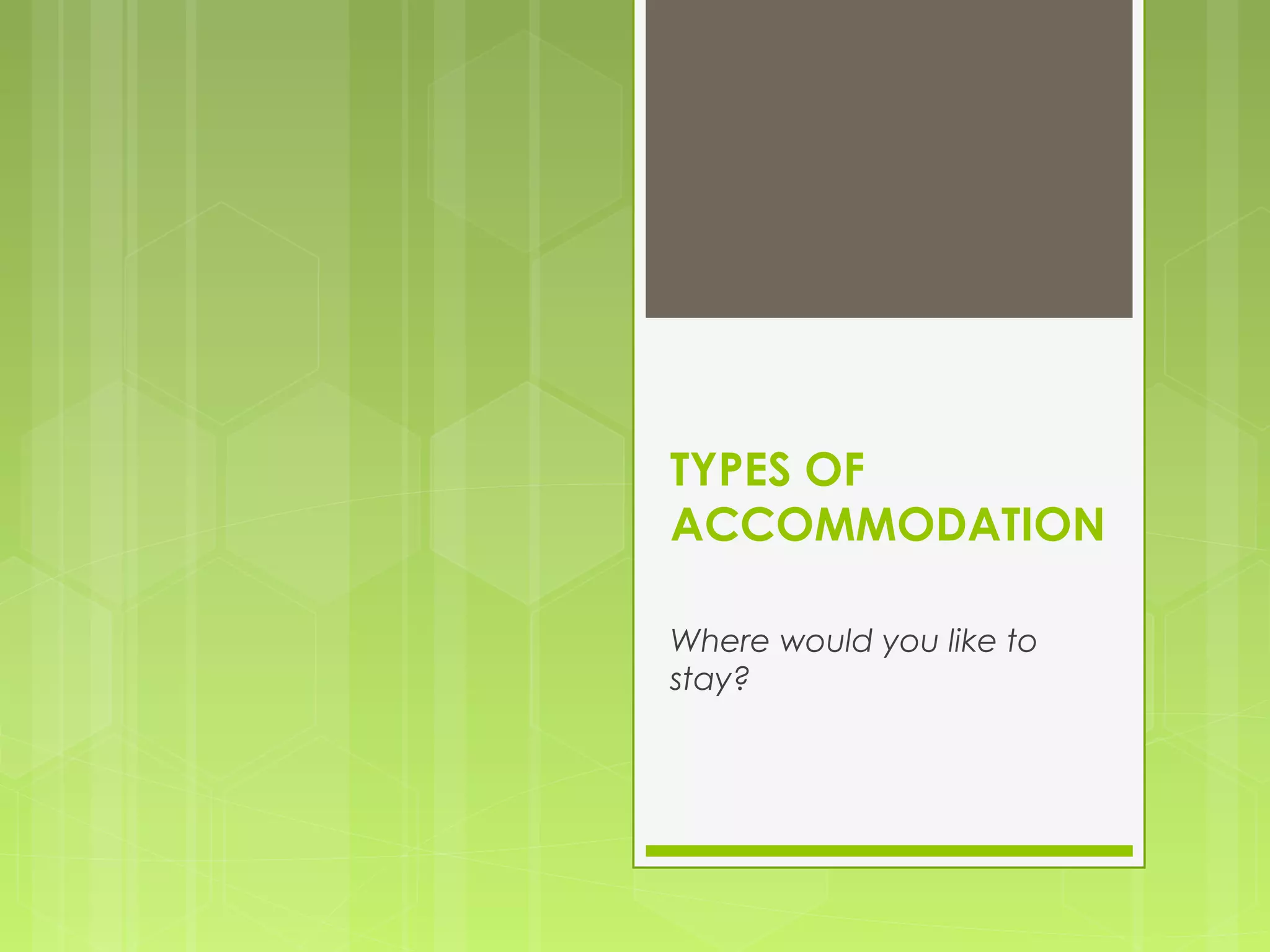
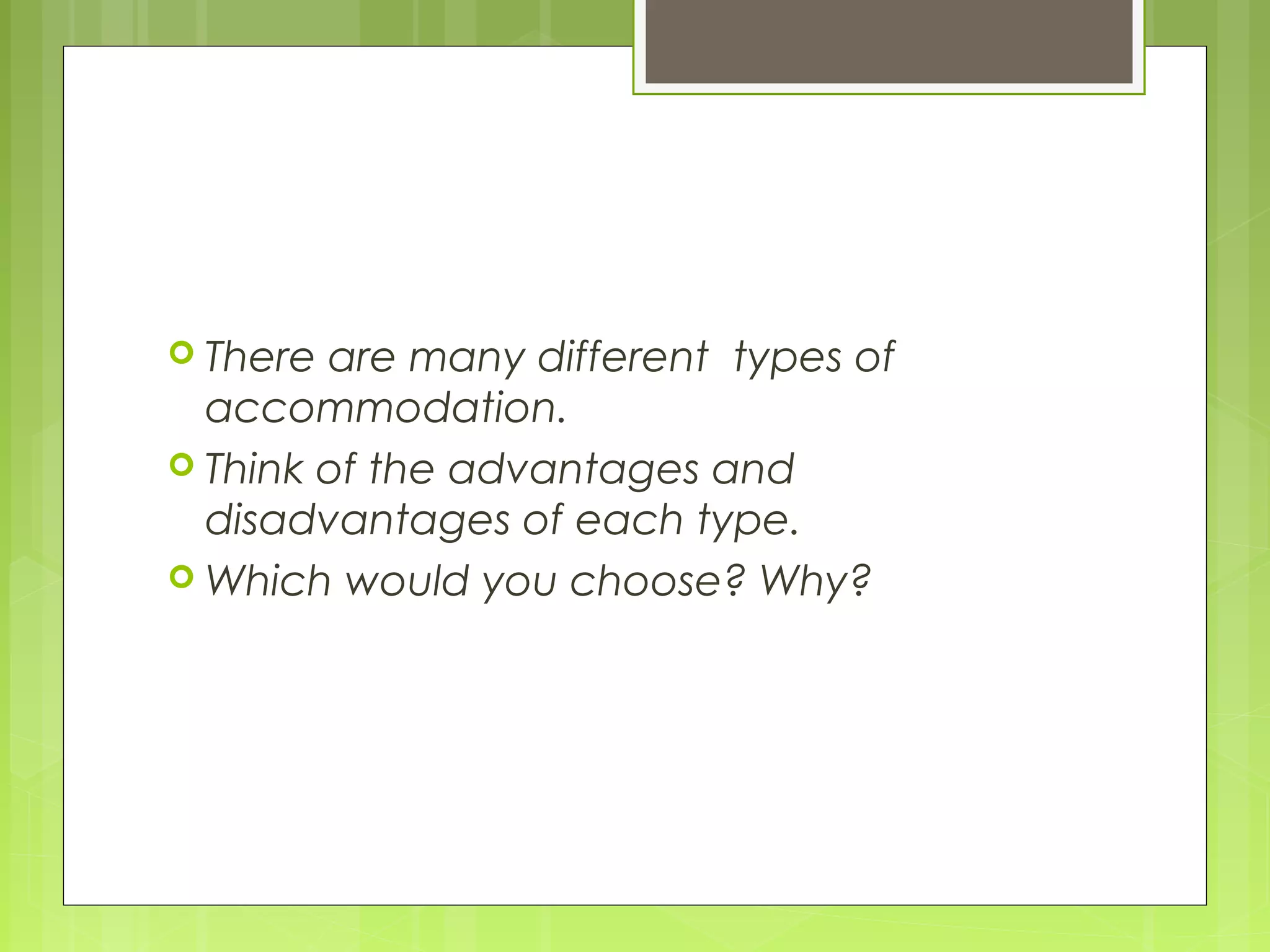
 Hotels provide private serviced rooms for
guests. They range from very basic
budget-style to extremely luxurious
accommodation.
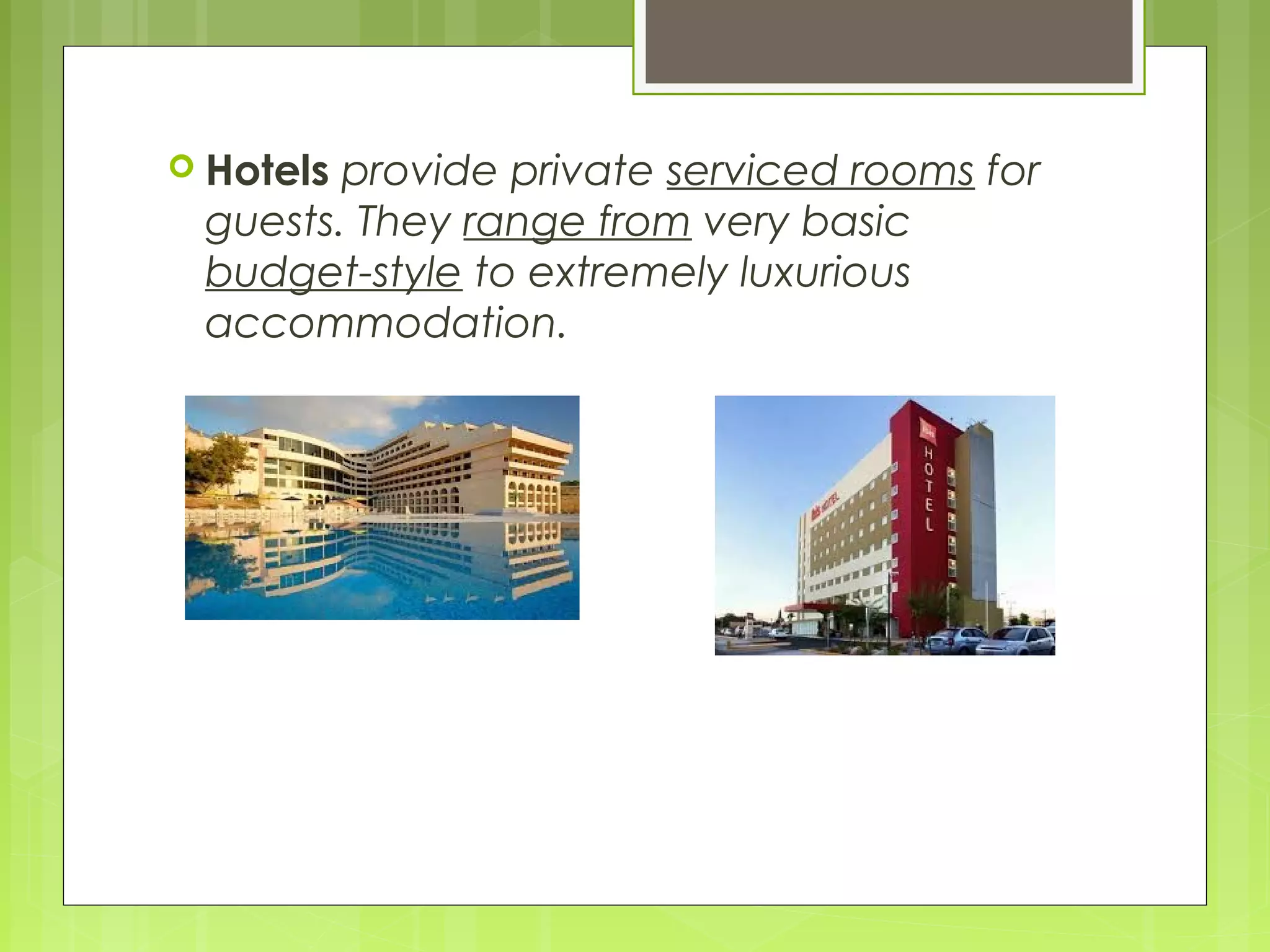
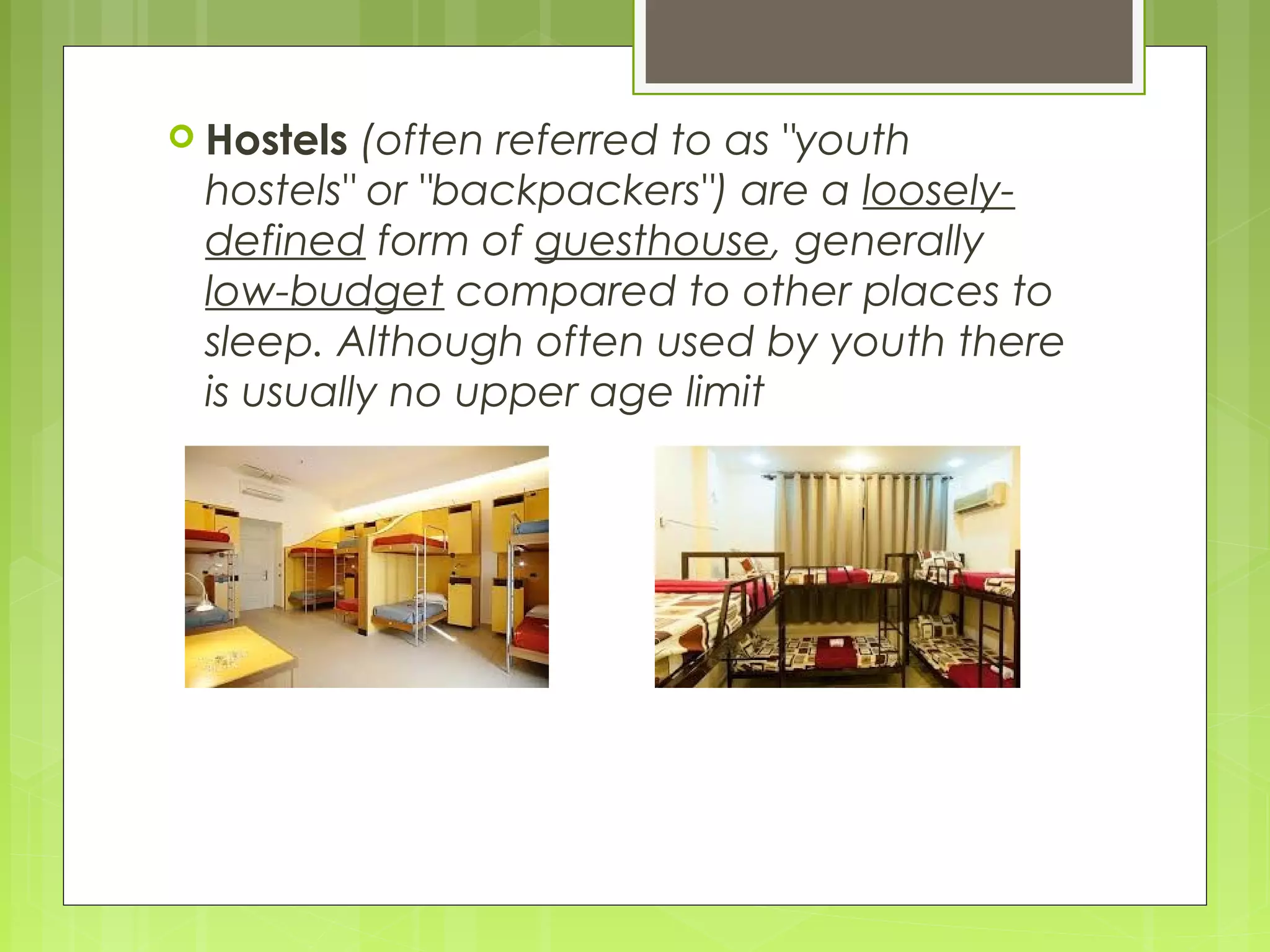
 Hostels (often referred to as "youth
hostels" or "backpackers") are a loosely-
defined form of guesthouse, generally
low-budget compared to other places to
sleep. Although often used by youth there
is usually no upper age limit
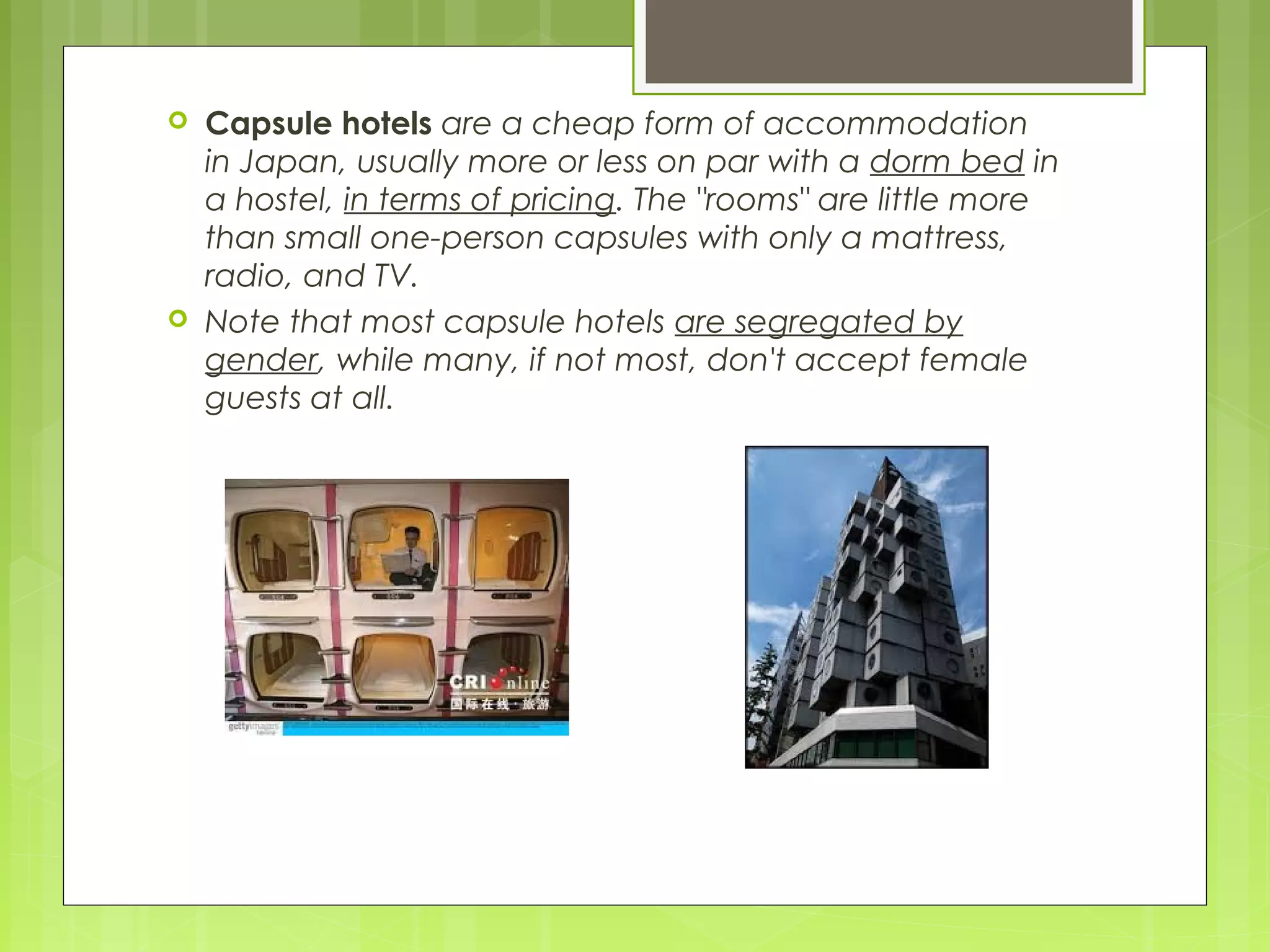
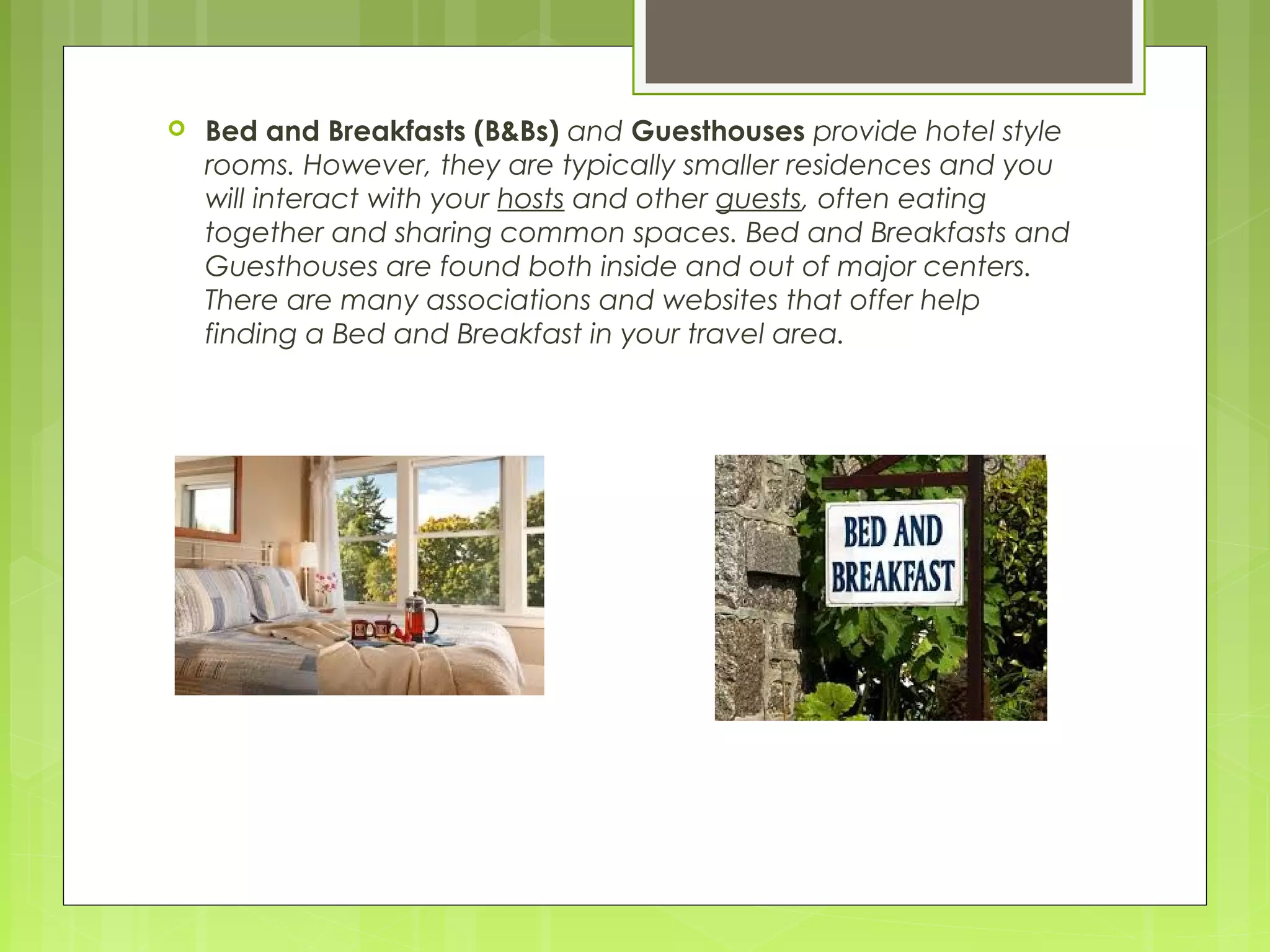
 Capsule hotels are a cheap form of accommodation
in Japan, usually more or less on par with a dorm bed in
a hostel, in terms of pricing. The "rooms" are little more
than small one-person capsules with only a mattress,
radio, and TV.
 Note that most capsule hotels are segregated by
gender, while many, if not most, don't accept female
guests at all.
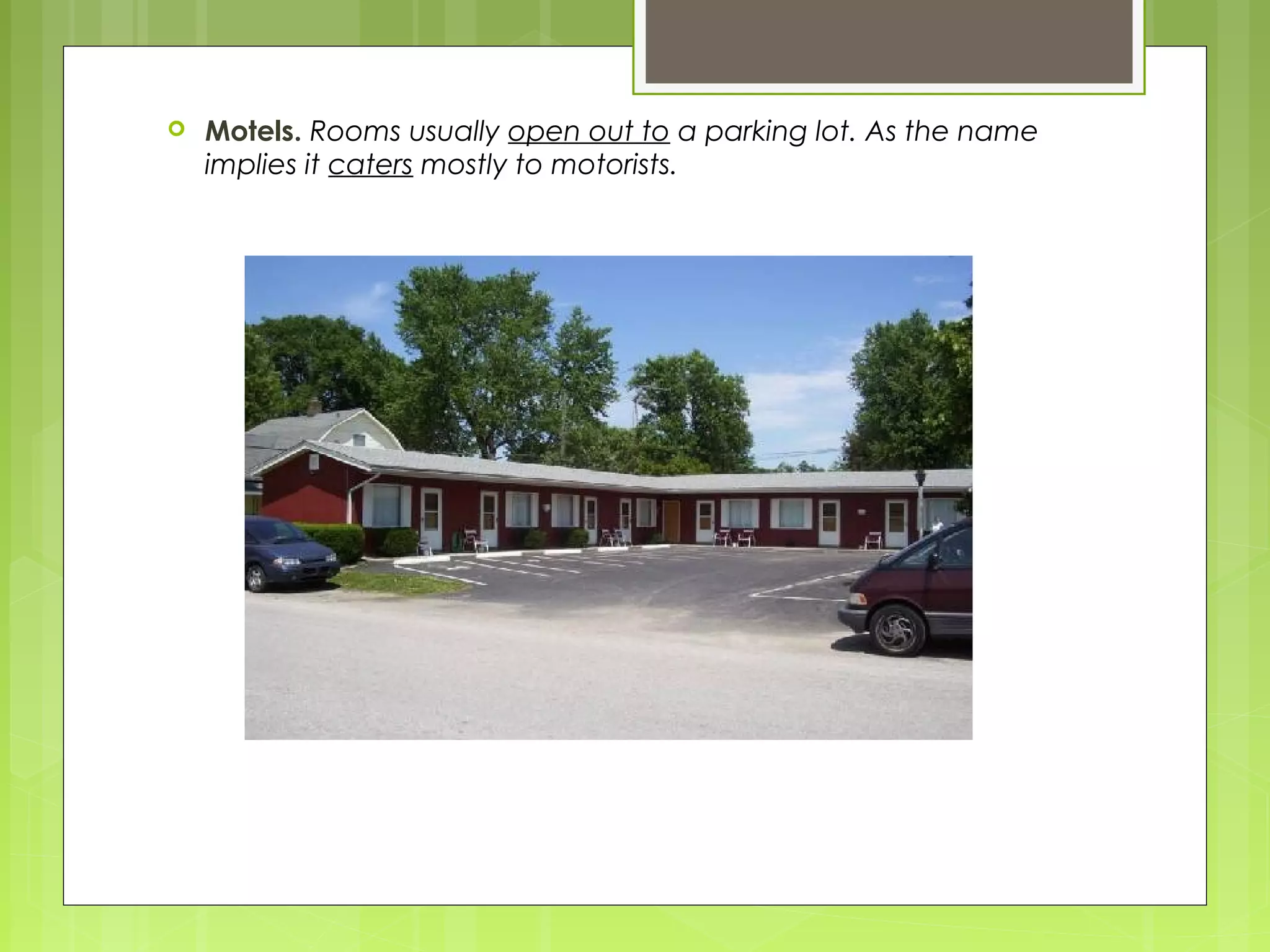
 Bed and Breakfasts (B&Bs) and Guesthouses provide hotel style
rooms. However, they are typically smaller residences and you
will interact with your hosts and other guests, often eating
together and sharing common spaces. Bed and Breakfasts and
Guesthouses are found both inside and out of major centers.
There are many associations and websites that offer help
finding a Bed and Breakfast in your travel area.
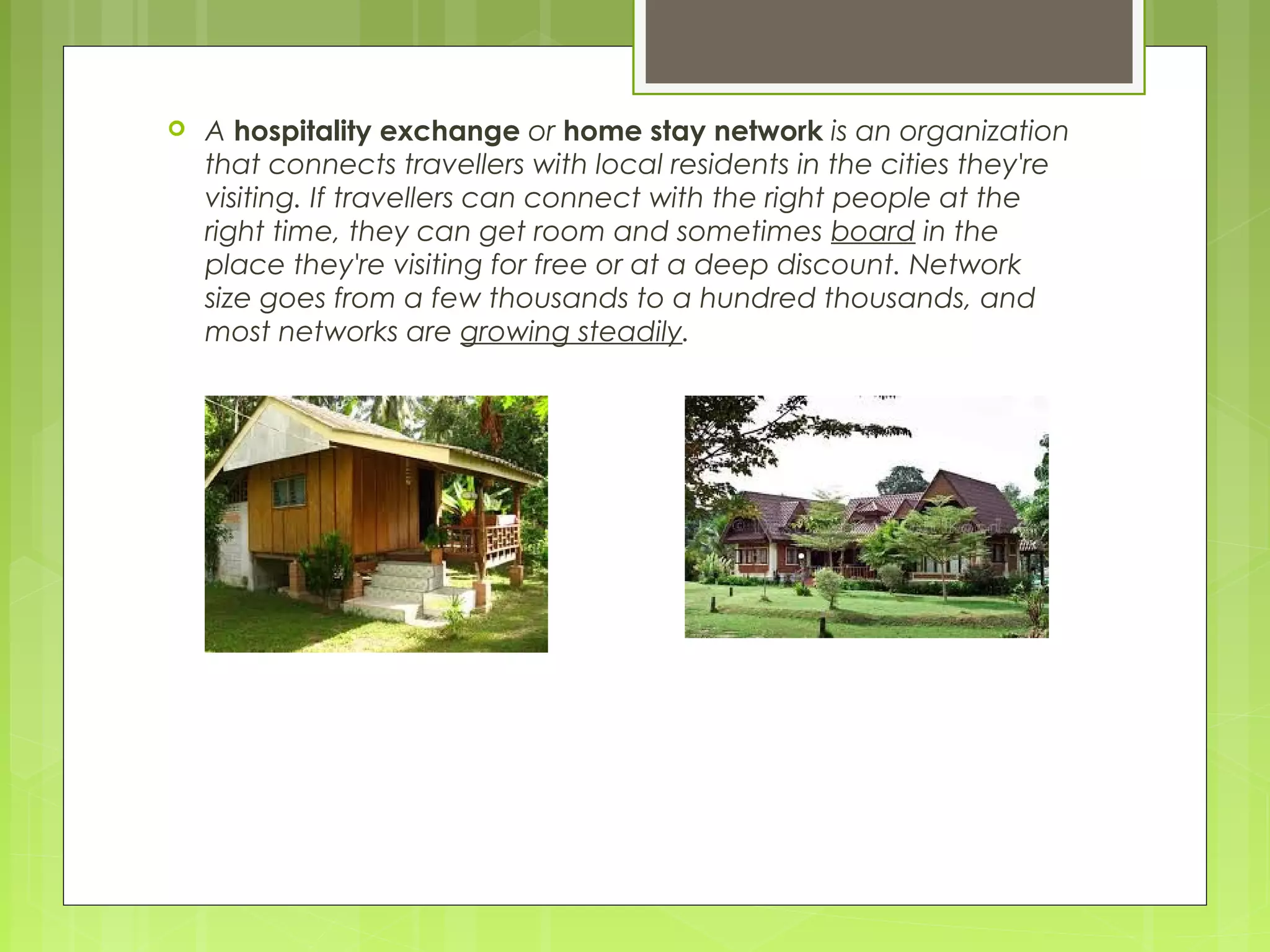
 Motels. Rooms usually open out to a parking lot. As the name
implies it caters mostly to motorists.
 A hospitality exchange or home stay network is an organization
that connects travellers with local residents in the cities they're
visiting. If travellers can connect with the right people at the
right time, they can get room and sometimes board in the
place they're visiting for free or at a deep discount. Network
size goes from a few thousands to a hundred thousands, and
most networks are growing steadily.
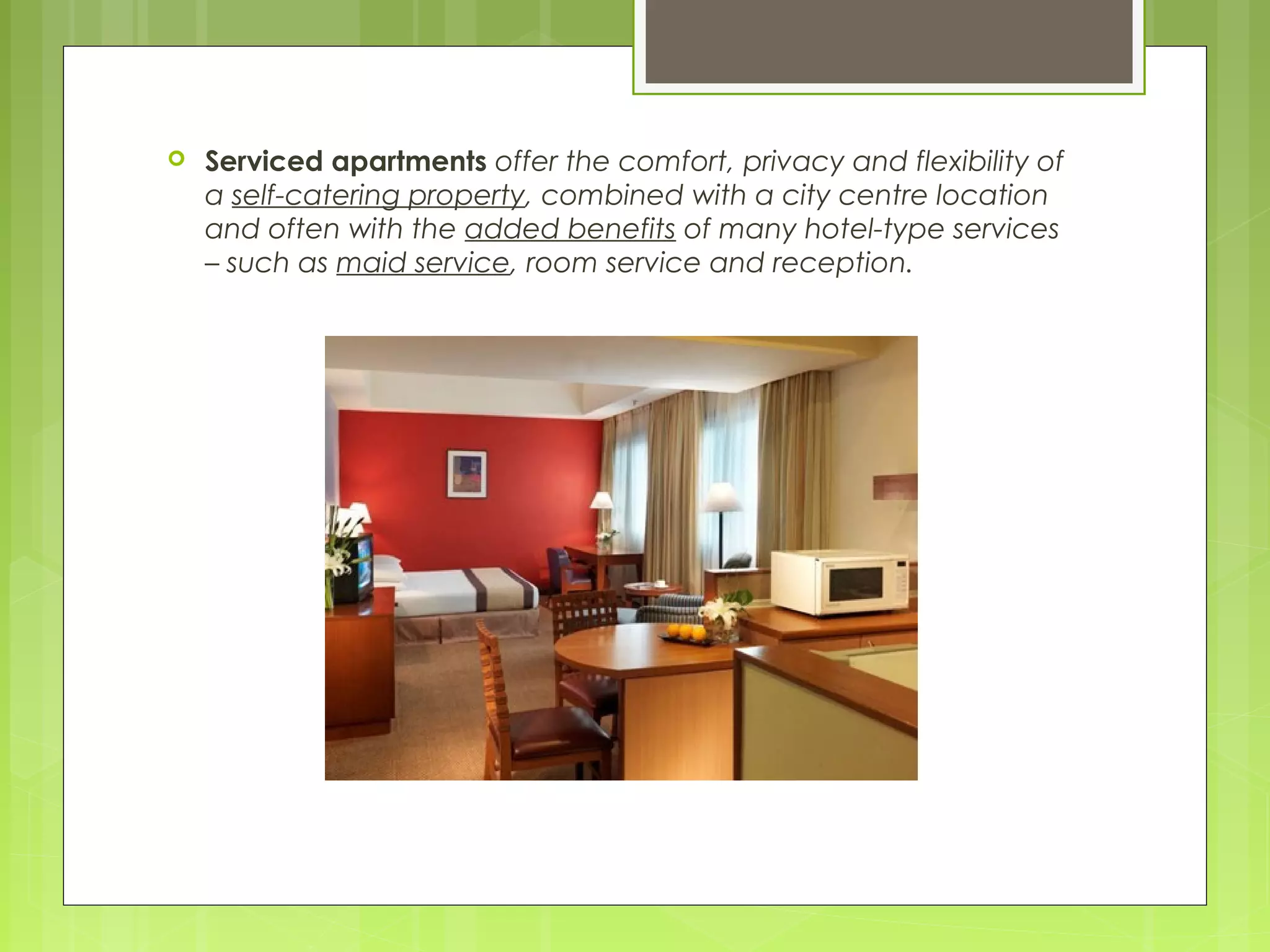
 Serviced apartments offer the comfort, privacy and flexibility of
a self-catering property, combined with a city centre location
and often with the added benefits of many hotel-type services
– such as maid service, room service and reception.
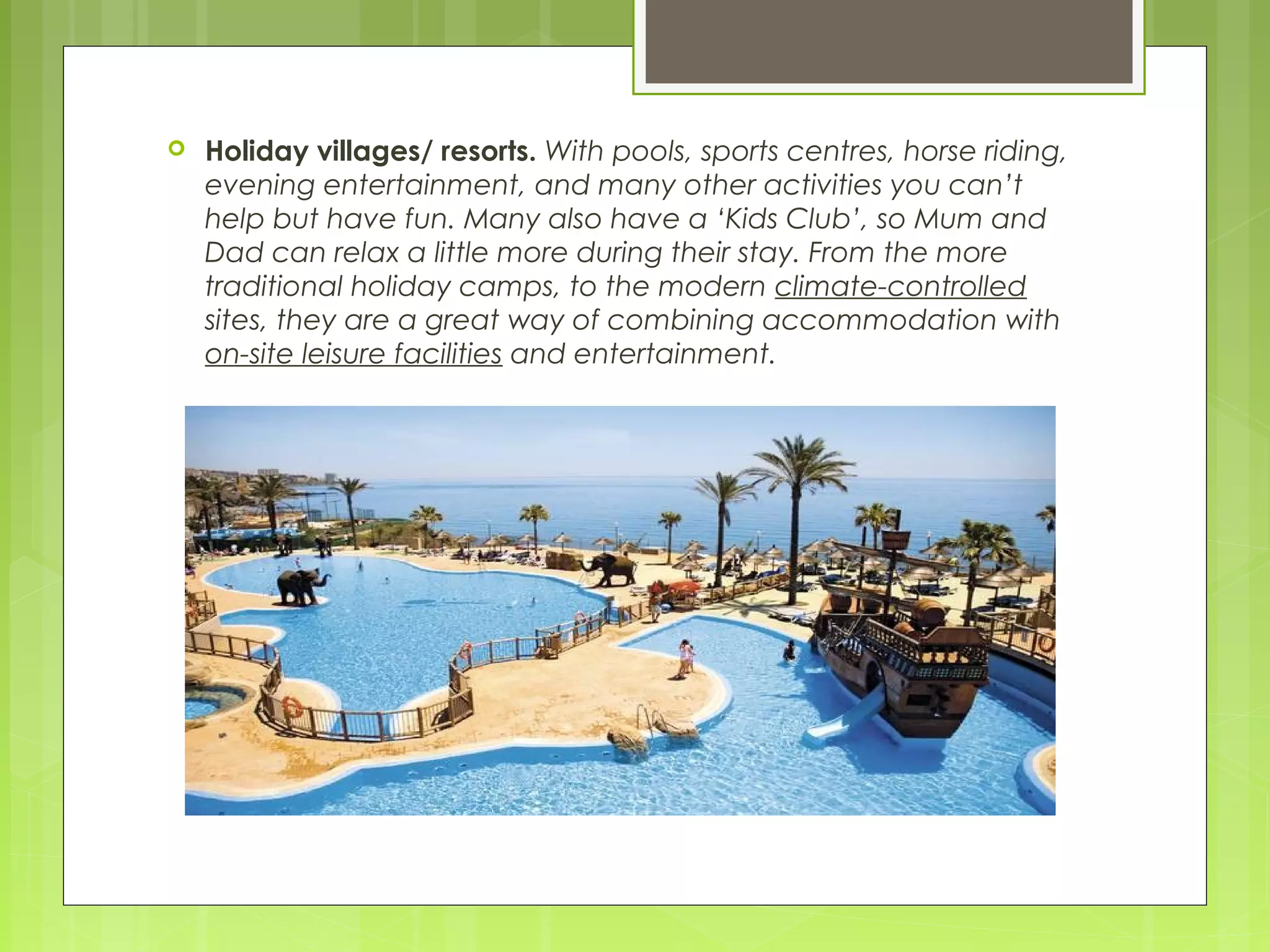
 Holiday villages/ resorts. With pools, sports centres, horse riding,
evening entertainment, and many other activities you can’t
help but have fun. Many also have a ‘Kids Club’, so Mum and
Dad can relax a little more during their stay. From the more
traditional holiday camps, to the modern climate-controlled
sites, they are a great way of combining accommodation with
on-site leisure facilities and entertainment.

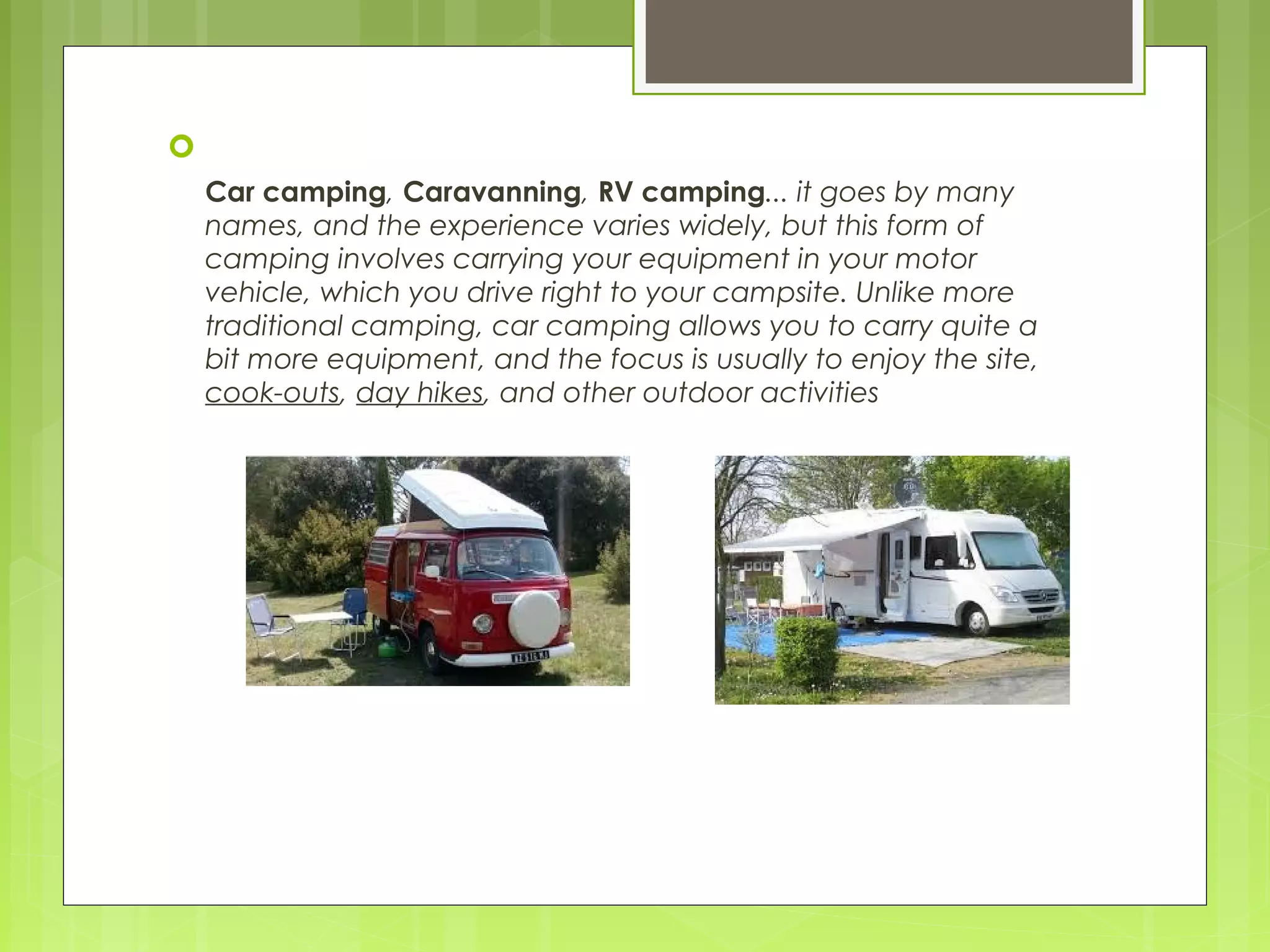
Car camping, Caravanning, RV camping... it goes by many
names, and the experience varies widely, but this form of
camping involves carrying your equipment in your motor
vehicle, which you drive right to your campsite. Unlike more
traditional camping, car camping allows you to carry quite a
bit more equipment, and the focus is usually to enjoy the site,
cook-outs, day hikes, and other outdoor activities
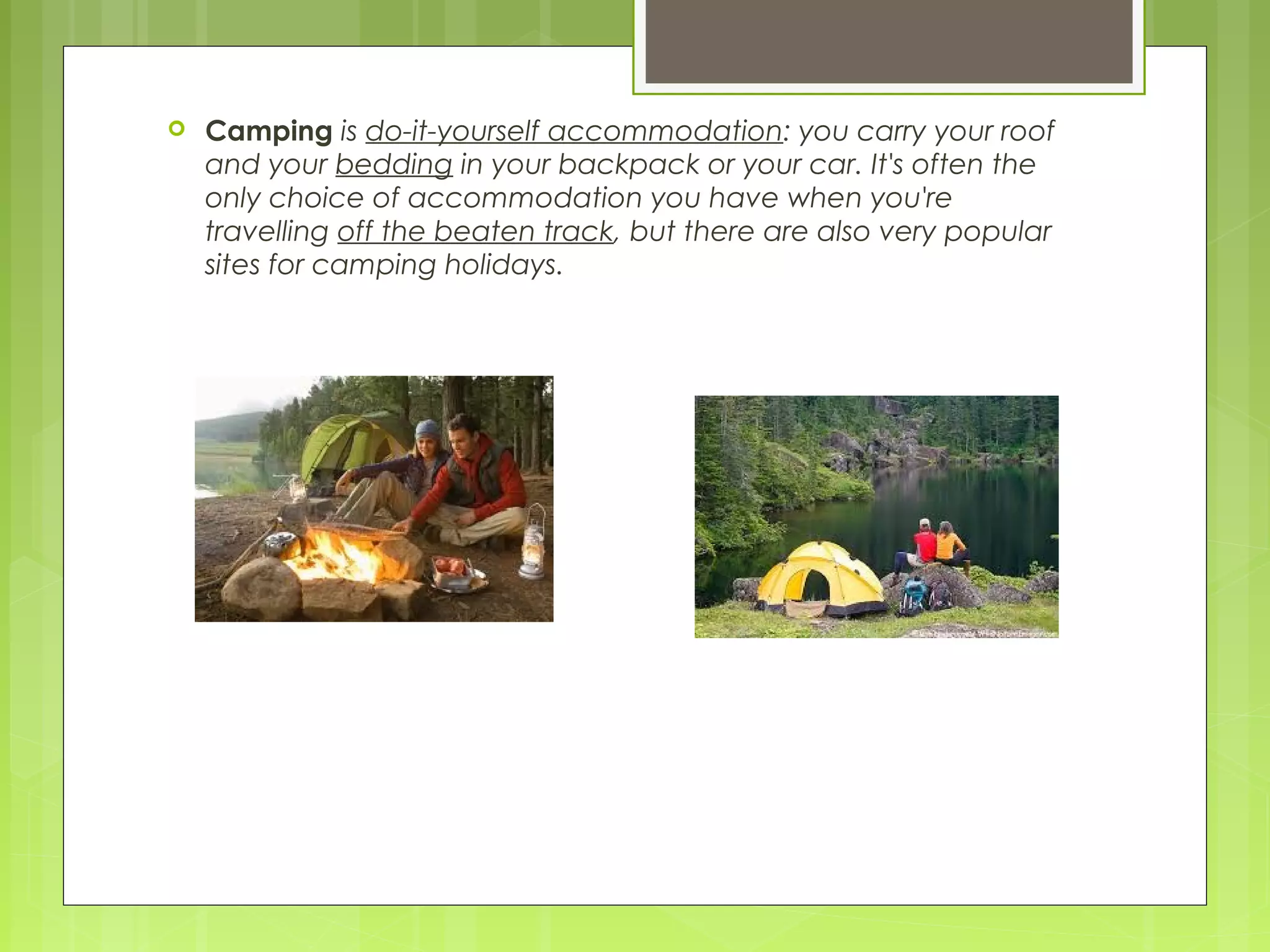
 Camping is do-it-yourself accommodation: you carry your roof
and your bedding in your backpack or your car. It's often the
only choice of accommodation you have when you're
travelling off the beaten track, but there are also very popular
sites for camping holidays.
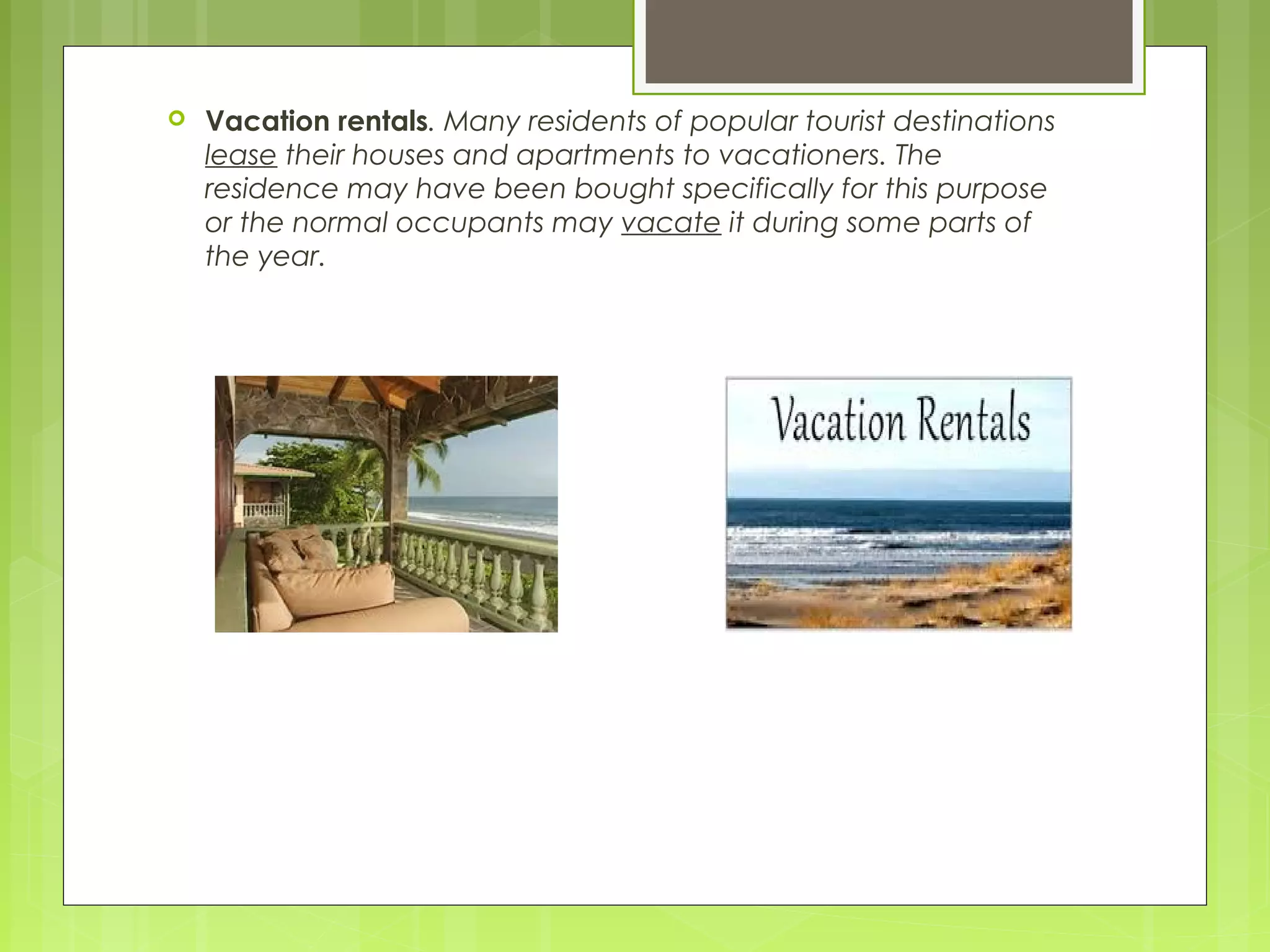
 Vacation rentals. Many residents of popular tourist destinations
lease their houses and apartments to vacationers. The
residence may have been bought specifically for this purpose
or the normal occupants may vacate it during some parts of
the year.
 Exotic hotels
 in sandstone
caves: Goreme(Turkey), Ia(Santorini,
Greece)
 in rock caves: Matala(Greece)
 on trees: Rafter's Retreat in Kitulgala(Sri
Lanka); tree houses in Çıralı(Turkey)
 on rock cliffs
 ice hotels: Jukkasjärvi(Sweden), Norway,
Canada, Finland and Romania: Ice hotel
 island hotels: Sveti Stefan (originally a fishers
village)
 underwater bedroom: Conrad Maldives
Rangali Island (Maldives)
 Can you think of any other types of
accommodation?
 Which ones have you stayed in?
 Which is the weirdest place you’ve ever
stayed in?

Types of accommodation

  • 1.
  • 2.
     There aremany different types of accommodation.  Think of the advantages and disadvantages of each type.  Which would you choose? Why?
  • 3.
     Hotels provide privateserviced rooms for guests. They range from very basic budget-style to extremely luxurious accommodation.
  • 4.
     Hostels (often referredto as "youth hostels" or "backpackers") are a loosely- defined form of guesthouse, generally low-budget compared to other places to sleep. Although often used by youth there is usually no upper age limit
  • 5.
     Capsule hotels area cheap form of accommodation in Japan, usually more or less on par with a dorm bed in a hostel, in terms of pricing. The "rooms" are little more than small one-person capsules with only a mattress, radio, and TV.  Note that most capsule hotels are segregated by gender, while many, if not most, don't accept female guests at all.
  • 6.
     Bed andBreakfasts (B&Bs) and Guesthouses provide hotel style rooms. However, they are typically smaller residences and you will interact with your hosts and other guests, often eating together and sharing common spaces. Bed and Breakfasts and Guesthouses are found both inside and out of major centers. There are many associations and websites that offer help finding a Bed and Breakfast in your travel area.
  • 7.
     Motels. Roomsusually open out to a parking lot. As the name implies it caters mostly to motorists.
  • 8.
     A hospitality exchange or homestay network is an organization that connects travellers with local residents in the cities they're visiting. If travellers can connect with the right people at the right time, they can get room and sometimes board in the place they're visiting for free or at a deep discount. Network size goes from a few thousands to a hundred thousands, and most networks are growing steadily.
  • 9.
     Serviced apartmentsoffer the comfort, privacy and flexibility of a self-catering property, combined with a city centre location and often with the added benefits of many hotel-type services – such as maid service, room service and reception.
  • 10.
     Holiday villages/resorts. With pools, sports centres, horse riding, evening entertainment, and many other activities you can’t help but have fun. Many also have a ‘Kids Club’, so Mum and Dad can relax a little more during their stay. From the more traditional holiday camps, to the modern climate-controlled sites, they are a great way of combining accommodation with on-site leisure facilities and entertainment.
  • 11.
     Car camping, Caravanning, RV camping...it goes by many names, and the experience varies widely, but this form of camping involves carrying your equipment in your motor vehicle, which you drive right to your campsite. Unlike more traditional camping, car camping allows you to carry quite a bit more equipment, and the focus is usually to enjoy the site, cook-outs, day hikes, and other outdoor activities
  • 12.
     Camping is do-it-yourselfaccommodation: you carry your roof and your bedding in your backpack or your car. It's often the only choice of accommodation you have when you're travelling off the beaten track, but there are also very popular sites for camping holidays.
  • 13.
     Vacation rentals.Many residents of popular tourist destinations lease their houses and apartments to vacationers. The residence may have been bought specifically for this purpose or the normal occupants may vacate it during some parts of the year.
  • 14.
     Exotic hotels in sandstone caves: Goreme(Turkey), Ia(Santorini, Greece)  in rock caves: Matala(Greece)  on trees: Rafter's Retreat in Kitulgala(Sri Lanka); tree houses in Çıralı(Turkey)  on rock cliffs  ice hotels: Jukkasjärvi(Sweden), Norway, Canada, Finland and Romania: Ice hotel  island hotels: Sveti Stefan (originally a fishers village)  underwater bedroom: Conrad Maldives Rangali Island (Maldives)
  • 15.
     Can youthink of any other types of accommodation?  Which ones have you stayed in?  Which is the weirdest place you’ve ever stayed in?