Isabel Bastida & Ana Mena
I WISH / IF ONLY ....
past simple to express a desire for something to be different in the
present:
I wish I wasn’t in the red.
If only I could set some money aside to travel more often.
part prefect to express a wish that something different had
happened in the past ( a regret / criticism):
I wish I hadn’t spent a fortune on that smartwatch.
could to express a desire we know is impossible to achieve, often
about ourselves:
I wish I could swim but I’m terrified of water!
would usually expresses a desire for someone to change their
behaviour in the present or future. We often use it to criticise or
complain about something:
I wish you would stop throwing your money at things you don’t
really need.
We can also use this pattern with inanimate subjects for
emphasis:
If only the sun would come out so we could take the photos.
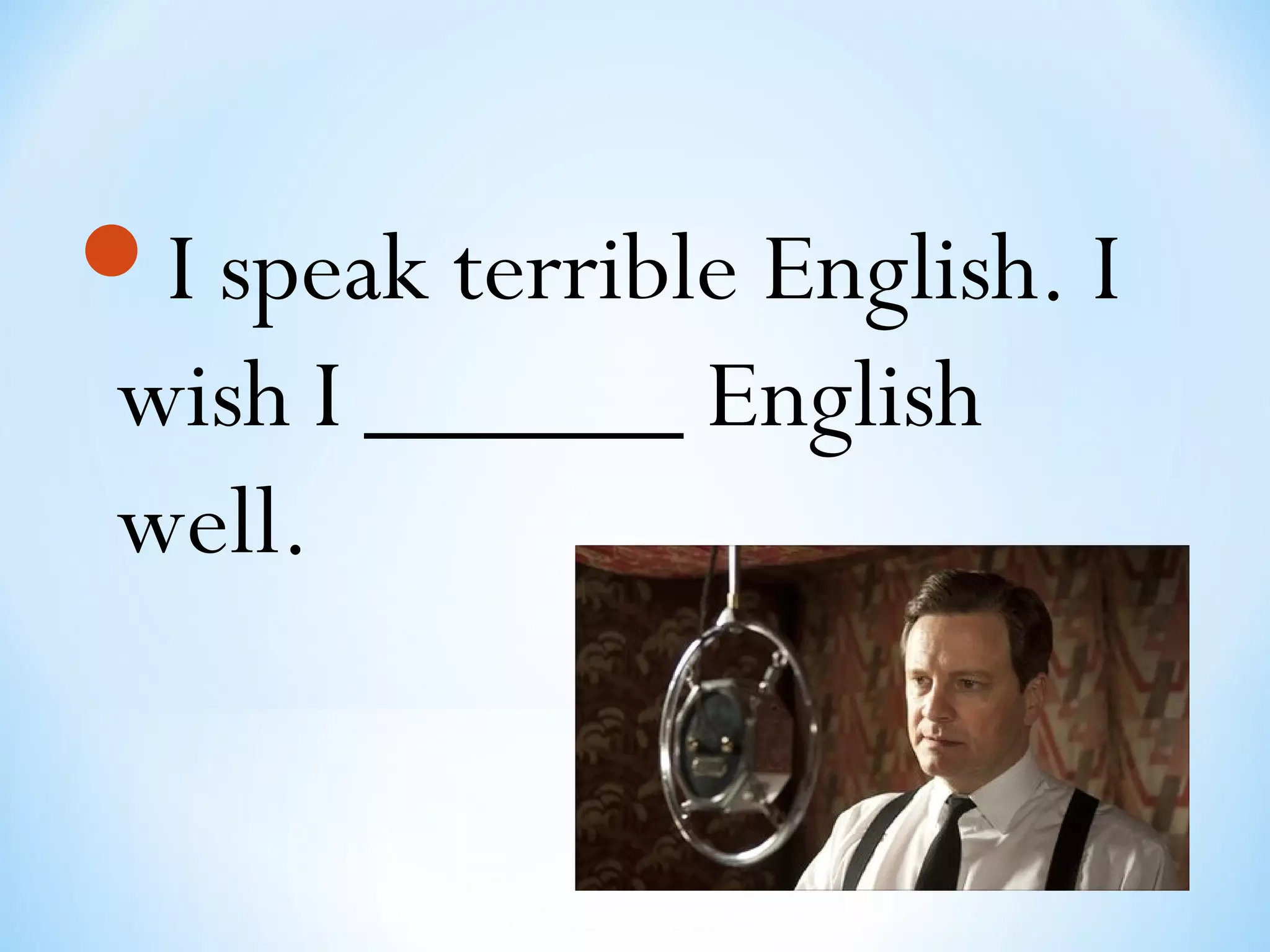
I speak terrible English. I
wish I ______ English
well.
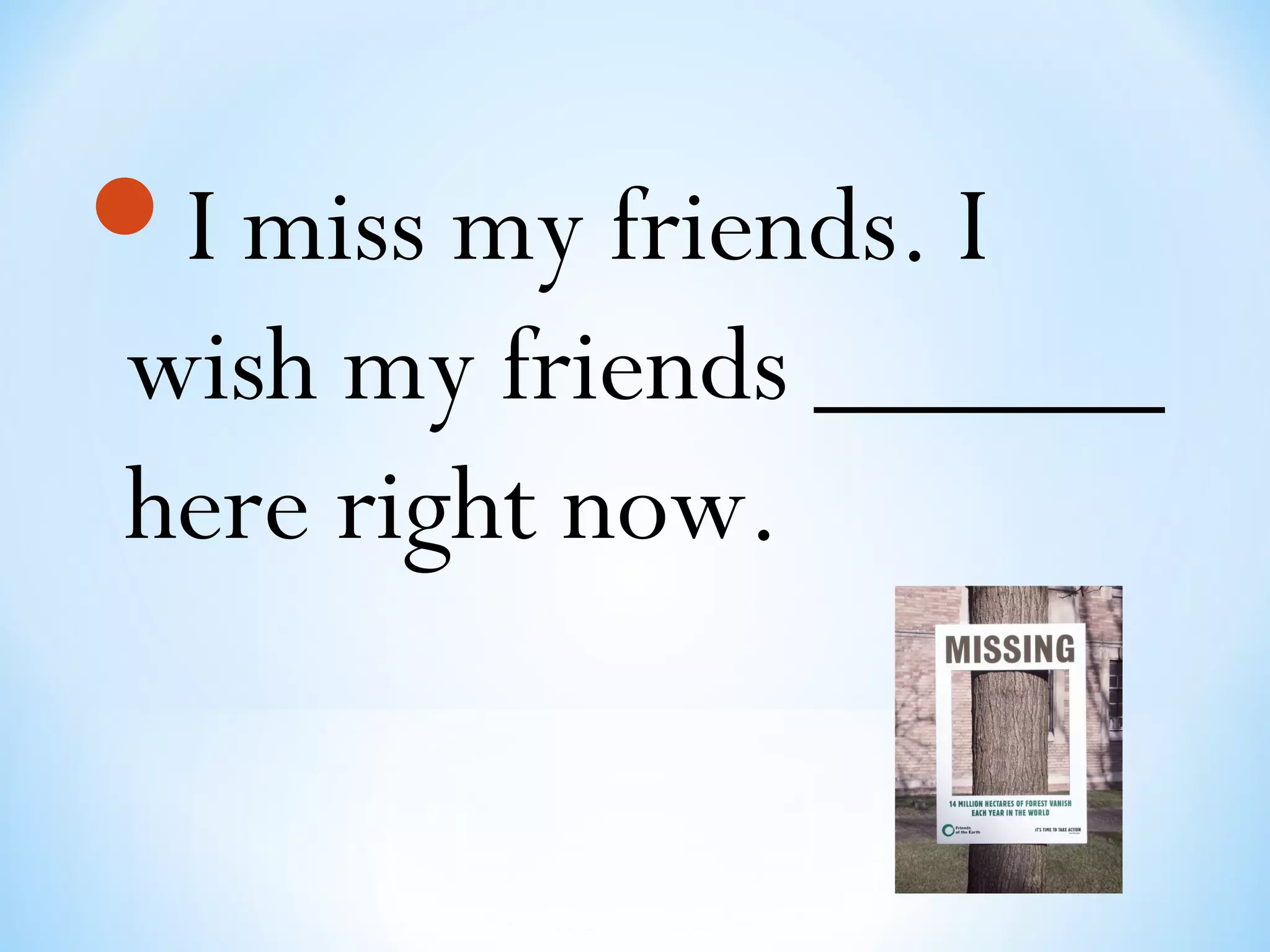
I miss my friends. I
wish my friends ______
here right now.
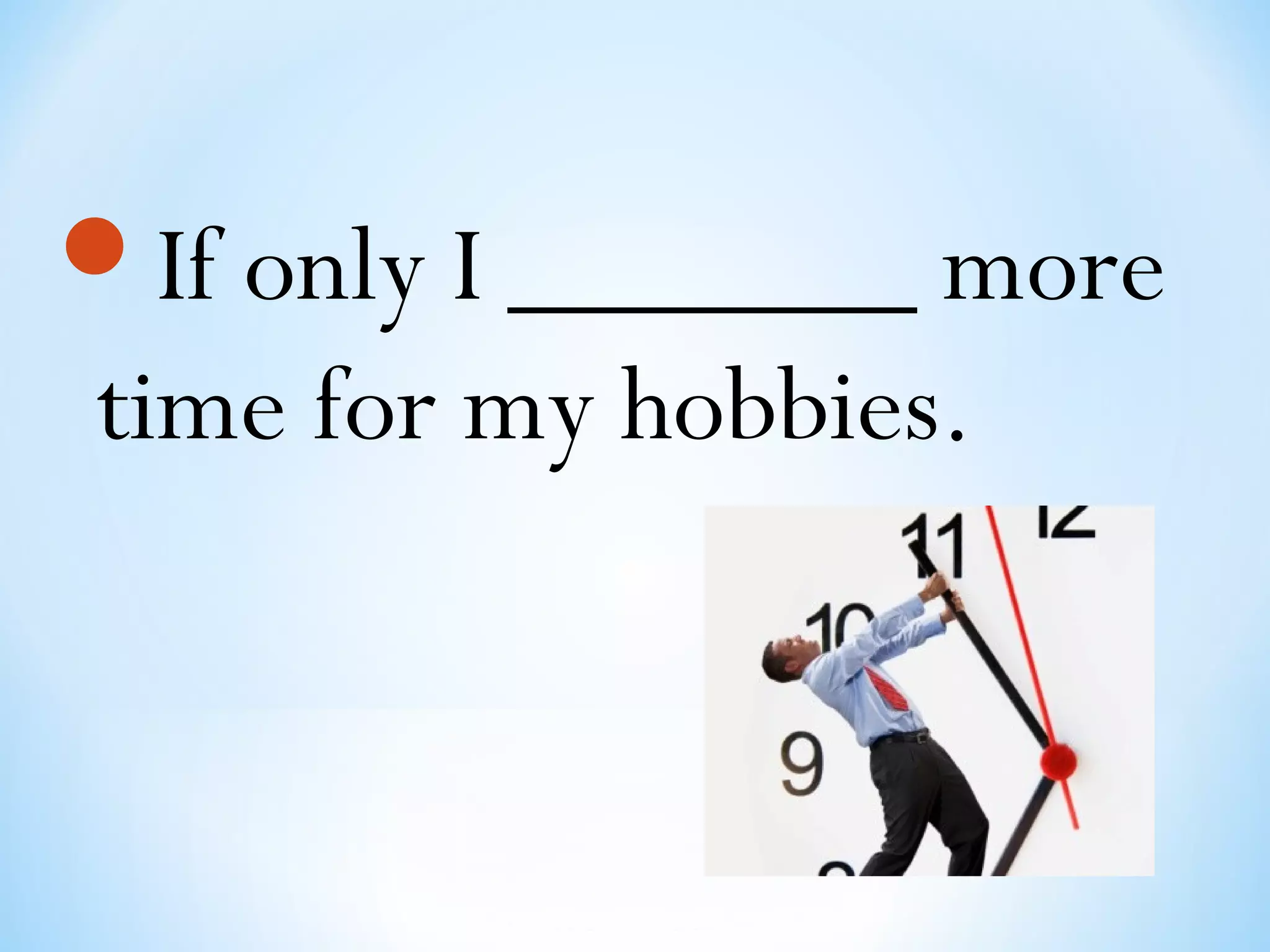
If only I _______ more
time for my hobbies.
I wish I _______ drunk
and kissed Samantha last
night.
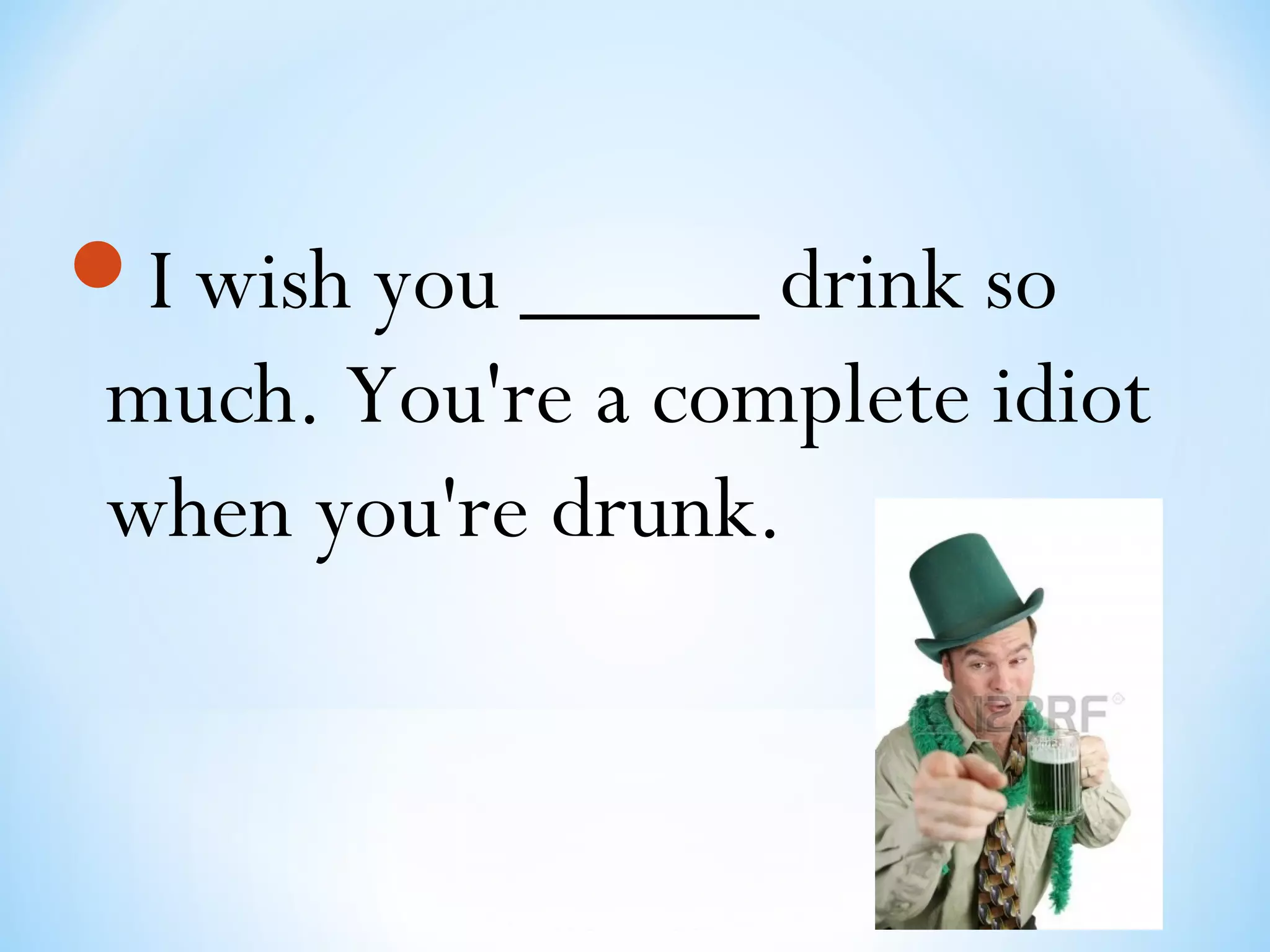
I wish you _____ drink so
much. You're a complete idiot
when you're drunk.
I wish I _____  her
she'd put on weight. She
hates me now.
*IT’S (HIGH / ABOUT) TIME ...
To express that something is not happening but it should
be:
It’s time you stopped splashing your money out!
The use of HIGH or ABOUT makes the sentence more
emphatic:
It’s high time you started saving for a rainy day.
You may use TO INF as well:
It’s time for our company to expand
*WHAT IF / SUPPOSE / SUPPOSING / IMAGINE ...
To ask about imaginary situations and their consequences
in the present or future. These are similar to second
conditional questions:
What if you won the lottery?
Suppose you were rich, where in the world would you buy
a house?
Imagine a cash dispenser ate your credit card, how would
you react?
We can also use these expressions with past perfect. This is similar
to third conditional:
Supposing you had invested in that company, what benefits would
you have obtained?
*WOULD RATHER / WOULD SOONER...
To express preferences:
I’d rather you paid me back before Tuesday.
I’m broke.
She’d sooner I inherited the ranch.
If the person expressing the preference is also
the subject of the preference, use INFINITIVE
without TO:
I’d rather not pay in cash, if you don’t mind.
*AS IF / AS THOUGH ...
To say that appearance is different from
reality:
She behaves as if she was made of money.
Peter spends money as though it grew on trees.
Use the present simple/ present perfect with
these expressions when the situation may be
true:
It looks as if you have spent all your money on
this new bag.

I WISH / IF ONLY & UNREAL PAST

  • 1.
  • 2.
    I WISH /IF ONLY .... past simple to express a desire for something to be different in the present: I wish I wasn’t in the red. If only I could set some money aside to travel more often. part prefect to express a wish that something different had happened in the past ( a regret / criticism): I wish I hadn’t spent a fortune on that smartwatch. could to express a desire we know is impossible to achieve, often about ourselves: I wish I could swim but I’m terrified of water! would usually expresses a desire for someone to change their behaviour in the present or future. We often use it to criticise or complain about something: I wish you would stop throwing your money at things you don’t really need. We can also use this pattern with inanimate subjects for emphasis: If only the sun would come out so we could take the photos.
  • 3.
    I speak terribleEnglish. I wish I ______ English well.
  • 4.
    I miss myfriends. I wish my friends ______ here right now.
  • 5.
    If only I_______ more time for my hobbies.
  • 6.
    I wish I_______ drunk and kissed Samantha last night.
  • 7.
    I wish you_____ drink so much. You're a complete idiot when you're drunk.
  • 8.
    I wish I_____  her she'd put on weight. She hates me now.
  • 9.
    *IT’S (HIGH /ABOUT) TIME ... To express that something is not happening but it should be: It’s time you stopped splashing your money out! The use of HIGH or ABOUT makes the sentence more emphatic: It’s high time you started saving for a rainy day. You may use TO INF as well: It’s time for our company to expand
  • 10.
    *WHAT IF /SUPPOSE / SUPPOSING / IMAGINE ... To ask about imaginary situations and their consequences in the present or future. These are similar to second conditional questions: What if you won the lottery? Suppose you were rich, where in the world would you buy a house? Imagine a cash dispenser ate your credit card, how would you react? We can also use these expressions with past perfect. This is similar to third conditional: Supposing you had invested in that company, what benefits would you have obtained?
  • 11.
    *WOULD RATHER /WOULD SOONER... To express preferences: I’d rather you paid me back before Tuesday. I’m broke. She’d sooner I inherited the ranch. If the person expressing the preference is also the subject of the preference, use INFINITIVE without TO: I’d rather not pay in cash, if you don’t mind.
  • 12.
    *AS IF /AS THOUGH ... To say that appearance is different from reality: She behaves as if she was made of money. Peter spends money as though it grew on trees. Use the present simple/ present perfect with these expressions when the situation may be true: It looks as if you have spent all your money on this new bag.