DIMENSIONS OF INFORMATION AND
COMMUNICATION TECHNOLOGY (ICT)
HISTORY AND DEVELOPMENT
OF INFORMATION AND
COMMUNICATION
TECHNOLOGY (ICT)
Technology - a manner of accomplishing a task especially using
technical processes, methods, or knowledge.
Information and Communication Technology (ICT)– the tools and
the processes to access, retrieve, store, organized, manipulate,
produced, present and exchange information by electronic and other
automated means (Marquez, 2018).
Communication - a process by which information is exchanged
between individuals through a common system of symbols, signs, or
behavior
Information - knowledge obtained from investigation, study, or
instruction
Digital Divide – the natural consequence of advancements in ICT. It
refers to the discrepancy in people’s access and skill related to ICT.
THE HISTORY OF ICT
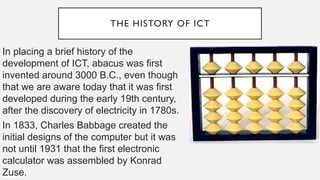
In placing a brief history of the
development of ICT, abacus was first
invented around 3000 B.C., even though
that we are aware today that it was first
developed during the early 19th century,
after the discovery of electricity in 1780s.
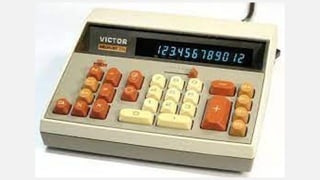
In 1833, Charles Babbage created the
initial designs of the computer but it was
not until 1931 that the first electronic
calculator was assembled by Konrad
Zuse.
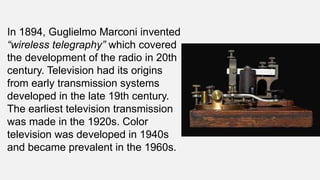
In 1894, Guglielmo Marconi invented
“wireless telegraphy” which covered
the development of the radio in 20th
century. Television had its origins
from early transmission systems
developed in the late 19th century.
The earliest television transmission
was made in the 1920s. Color
television was developed in 1940s
and became prevalent in the 1960s.
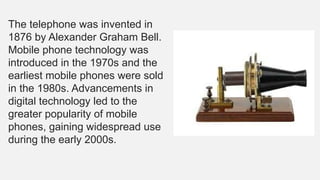
The telephone was invented in
1876 by Alexander Graham Bell.
Mobile phone technology was
introduced in the 1970s and the
earliest mobile phones were sold
in the 1980s. Advancements in
digital technology led to the
greater popularity of mobile
phones, gaining widespread use
during the early 2000s.
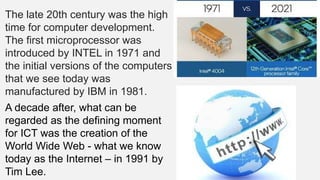
The late 20th century was the high
time for computer development.
The first microprocessor was
introduced by INTEL in 1971 and
the initial versions of the computers
that we see today was
manufactured by IBM in 1981.
A decade after, what can be
regarded as the defining moment
for ICT was the creation of the
World Wide Web - what we know
today as the Internet – in 1991 by
Tim Lee.
THE DIMENSIONS OF ICT
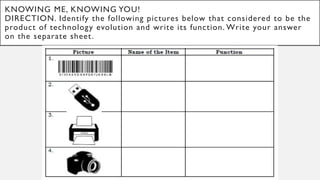
KNOWING ME, KNOWING YOU!
DIRECTION. Identify the following pictures below that considered to be the
product of technology evolution and write its function. Write your answer
on the separate sheet.
FUNCTIONS OF INFORMATION AND COMMUNICATION TECHNOLOGY
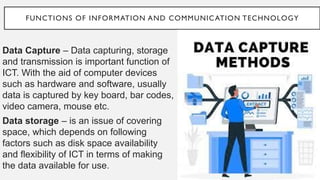
Data Capture – Data capturing, storage
and transmission is important function of
ICT. With the aid of computer devices
such as hardware and software, usually
data is captured by key board, bar codes,
video camera, mouse etc.
Data storage – is an issue of covering
space, which depends on following
factors such as disk space availability
and flexibility of ICT in terms of making
the data available for use.
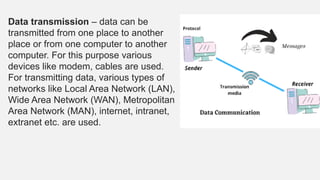
Data transmission – data can be
transmitted from one place to another
place or from one computer to another
computer. For this purpose various
devices like modem, cables are used.
For transmitting data, various types of
networks like Local Area Network (LAN),
Wide Area Network (WAN), Metropolitan
Area Network (MAN), internet, intranet,
extranet etc. are used.
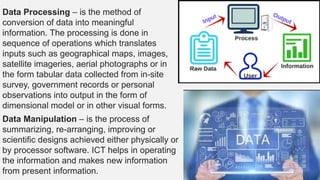
Data Processing – is the method of
conversion of data into meaningful
information. The processing is done in
sequence of operations which translates
inputs such as geographical maps, images,
satellite imageries, aerial photographs or in
the form tabular data collected from in-site
survey, government records or personal
observations into output in the form of
dimensional model or in other visual forms.
Data Manipulation – is the process of
summarizing, re-arranging, improving or
scientific designs achieved either physically or
by processor software. ICT helps in operating
the information and makes new information
from present information.
Data Retrieval – is the process of discovering required information. ICT
supports the recovery of information’s either in the form of features or
characteristic or both in a computer-generated form. Data can be retrieved
from one source to another source with the help of computer software.
Data Display – Data display includes presenting of information in the form
of text, graphics, audio, and video. Display can be made through computer
screen, speakers and printers. (Prasad & Prasad, 2009).
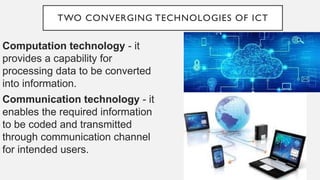
TWO CONVERGING TECHNOLOGIES OF ICT
Computation technology - it
provides a capability for
processing data to be converted
into information.
Communication technology - it
enables the required information
to be coded and transmitted
through communication channel
for intended users.
SCOPE OF ICT
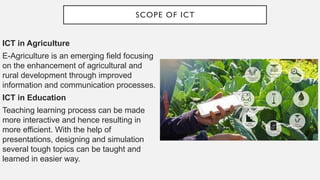
ICT in Agriculture
E-Agriculture is an emerging field focusing
on the enhancement of agricultural and
rural development through improved
information and communication processes.
ICT in Education
Teaching learning process can be made
more interactive and hence resulting in
more efficient. With the help of
presentations, designing and simulation
several tough topics can be taught and
learned in easier way.
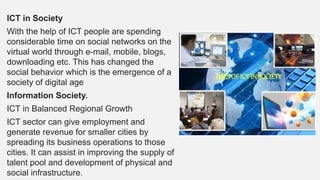
ICT in Society
With the help of ICT people are spending
considerable time on social networks on the
virtual world through e-mail, mobile, blogs,
downloading etc. This has changed the
social behavior which is the emergence of a
society of digital age
Information Society.
ICT in Balanced Regional Growth
ICT sector can give employment and
generate revenue for smaller cities by
spreading its business operations to those
cities. It can assist in improving the supply of
talent pool and development of physical and
social infrastructure.
ICT in Corporate Governance
Global exposure has created good
corporate governance practices with the
IT companies. This encourages other
industries to follow better governance and
embrace higher standards of disclosure.
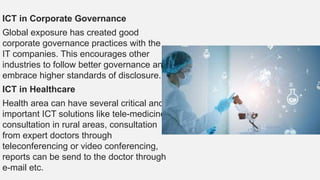
ICT in Healthcare
Health area can have several critical and
important ICT solutions like tele-medicine
consultation in rural areas, consultation
from expert doctors through
teleconferencing or video conferencing,
reports can be send to the doctor through
e-mail etc.
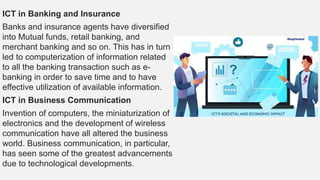
ICT in Banking and Insurance
Banks and insurance agents have diversified
into Mutual funds, retail banking, and
merchant banking and so on. This has in turn
led to computerization of information related
to all the banking transaction such as e-
banking in order to save time and to have
effective utilization of available information.
ICT in Business Communication
Invention of computers, the miniaturization of
electronics and the development of wireless
communication have all altered the business
world. Business communication, in particular,
has seen some of the greatest advancements
due to technological developments.
THE BENEFITS OF ICT
A. FACILITATING PUBLIC AND PRIVATE SECTOR ACTIVITIES AREAS
SUCH AS IN:
1. Public Administration - ICT brings transparency and efficiency
in the administrative work. Online working system will leave no
scope for laziness and dishonesty in work.
2. Urban and Rural Development - telecentres in rural areas can
facilitate economic liberation. Mobile telephony can also help rural
entrepreneurs in keeping in touch with their market outside their
communities.
3. Transport - used to improve road, air and rail transportation.
These operations include payment for parking meters, identification
of authorized parking space occupants.
B. IMPROVING THE QUALITY OF LIFE FOR CITIZENS IN:
1. Health - it supports efficient exchange of information between health
professionals, enable transfer of patient records between sites, telemedicine
and thus improve clinical effectiveness, continuity, and quality of care by
health professionals.
2. Special Needs (for the Physically Challenged) - can be extremely
useful in providing access to communication, education and open up
opportunities for them. Examples are Braille keyboards can help visually
impaired or blind people, Short Message Service (SMS) can be used to
send and receive messaged by the hearing impaired, the voice activated
dialing service can be used by visually impaired.
3. Education - it helps in facilitating learning and exchange of
educational materials. The online learning system is another web-
based application that is revolutionizing the learning platform of
education.
4. Environment – it helps collecting data about environmental
issues. They allow access to information and provide support
system to manage and monitor environmental issues.
5. Agriculture - can be used to impart information directly to
farmers and the farming community. It can handle agricultural
issues such as water utilization and management, pest control,
harvest management and so forth.
C. FACILITATING ACTIVITIES IN THE BUSINESS SECTOR SUCH AS:
1. Manufacturing - linking the process chains in manufacturing as
opposed to improving or facilitating single steps in the production
lines. The mass production of goods and services is gradually
giving way to a network-based production and manufacturing
system.
2. Electronic Commerce - Electronic commerce (e-commerce) is
the use of internet or telecommunications to carry out business of
any type. Common examples of e-commerce are online shopping,
online banking, online stock trading etc.
3. Travel and Tourism - It is used to provide multimedia
information about destination to prospective travelers. With the aid
of ICT applications, prospective travelers can view a destination,
book accommodation, book the flight and other forms of transport
and pay for all these without leaving their homes.
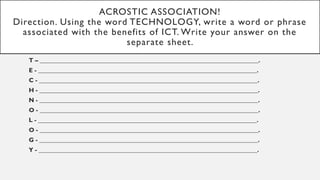
ACROSTIC ASSOCIATION!
Direction. Using the word TECHNOLOGY, write a word or phrase
associated with the benefits of ICT. Write your answer on the
separate sheet.
T – _______________________________________________________________________.
E - _______________________________________________________________________.
C - _______________________________________________________________________.
H - _______________________________________________________________________.
N - _______________________________________________________________________.
O - _______________________________________________________________________.
L - _______________________________________________________________________.
O - _______________________________________________________________________.
G - _______________________________________________________________________.
Y - _______________________________________________________________________.
ADVANCEMENT OF ICT SYSTEM USING
STRATEGIC AND INTUITIVE THINKING
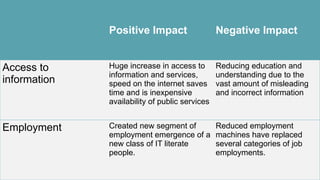
Positive Impact Negative Impact
Access to
information
Huge increase in access to
information and services,
speed on the internet saves
time and is inexpensive
availability of public services
Reducing education and
understanding due to the
vast amount of misleading
and incorrect information
Employment Created new segment of
employment emergence of a
new class of IT literate
people.
Reduced employment
machines have replaced
several categories of job
employments.
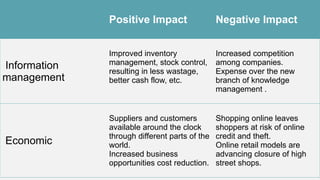
Positive Impact Negative Impact
Information
management
Improved inventory
management, stock control,
resulting in less wastage,
better cash flow, etc.
Increased competition
among companies.
Expense over the new
branch of knowledge
management .
Economic
Suppliers and customers
available around the clock
through different parts of the
world.
Increased business
opportunities cost reduction.
Shopping online leaves
shoppers at risk of online
credit and theft.
Online retail models are
advancing closure of high
street shops.
Positive Impact Negative Impact
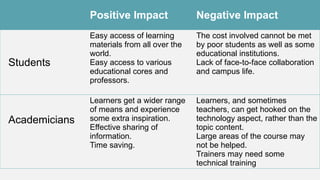
Students
Easy access of learning
materials from all over the
world.
Easy access to various
educational cores and
professors.
The cost involved cannot be met
by poor students as well as some
educational institutions.
Lack of face-to-face collaboration
and campus life.
Academicians
Learners get a wider range
of means and experience
some extra inspiration.
Effective sharing of
information.
Time saving.
Learners, and sometimes
teachers, can get hooked on the
technology aspect, rather than the
topic content.
Large areas of the course may
not be helped.
Trainers may need some
technical training
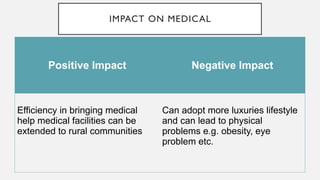
Positive Impact Negative Impact
Efficiency in bringing medical
help medical facilities can be
extended to rural communities
Can adopt more luxuries lifestyle
and can lead to physical
problems e.g. obesity, eye
problem etc.
IMPACT ON MEDICAL
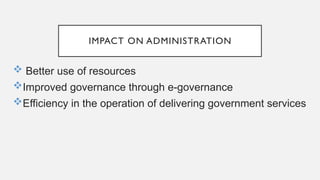
IMPACT ON ADMINISTRATION
 Better use of resources
Improved governance through e-governance
Efficiency in the operation of delivering government services
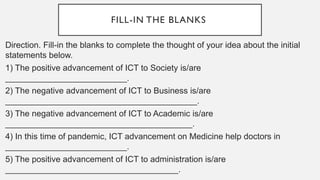
FILL-IN THE BLANKS
Direction. Fill-in the blanks to complete the thought of your idea about the initial
statements below.
1) The positive advancement of ICT to Society is/are
__________________________.
2) The negative advancement of ICT to Business is/are
_________________________________________.
3) The negative advancement of ICT to Academic is/are
________________________________________.
4) In this time of pandemic, ICT advancement on Medicine help doctors in
__________________________.
5) The positive advancement of ICT to administration is/are
_____________________________________.

TRENDS Information Communication Technology Q2 W3

  • 1.
    DIMENSIONS OF INFORMATIONAND COMMUNICATION TECHNOLOGY (ICT)
  • 2.
    HISTORY AND DEVELOPMENT OFINFORMATION AND COMMUNICATION TECHNOLOGY (ICT)
  • 3.
    Technology - amanner of accomplishing a task especially using technical processes, methods, or knowledge. Information and Communication Technology (ICT)– the tools and the processes to access, retrieve, store, organized, manipulate, produced, present and exchange information by electronic and other automated means (Marquez, 2018). Communication - a process by which information is exchanged between individuals through a common system of symbols, signs, or behavior Information - knowledge obtained from investigation, study, or instruction Digital Divide – the natural consequence of advancements in ICT. It refers to the discrepancy in people’s access and skill related to ICT.
  • 4.
    THE HISTORY OFICT In placing a brief history of the development of ICT, abacus was first invented around 3000 B.C., even though that we are aware today that it was first developed during the early 19th century, after the discovery of electricity in 1780s. In 1833, Charles Babbage created the initial designs of the computer but it was not until 1931 that the first electronic calculator was assembled by Konrad Zuse.
  • 6.
    In 1894, GuglielmoMarconi invented “wireless telegraphy” which covered the development of the radio in 20th century. Television had its origins from early transmission systems developed in the late 19th century. The earliest television transmission was made in the 1920s. Color television was developed in 1940s and became prevalent in the 1960s.
  • 7.
    The telephone wasinvented in 1876 by Alexander Graham Bell. Mobile phone technology was introduced in the 1970s and the earliest mobile phones were sold in the 1980s. Advancements in digital technology led to the greater popularity of mobile phones, gaining widespread use during the early 2000s.
  • 8.
    The late 20thcentury was the high time for computer development. The first microprocessor was introduced by INTEL in 1971 and the initial versions of the computers that we see today was manufactured by IBM in 1981. A decade after, what can be regarded as the defining moment for ICT was the creation of the World Wide Web - what we know today as the Internet – in 1991 by Tim Lee.
  • 9.
  • 10.
    KNOWING ME, KNOWINGYOU! DIRECTION. Identify the following pictures below that considered to be the product of technology evolution and write its function. Write your answer on the separate sheet.
  • 11.
    FUNCTIONS OF INFORMATIONAND COMMUNICATION TECHNOLOGY Data Capture – Data capturing, storage and transmission is important function of ICT. With the aid of computer devices such as hardware and software, usually data is captured by key board, bar codes, video camera, mouse etc. Data storage – is an issue of covering space, which depends on following factors such as disk space availability and flexibility of ICT in terms of making the data available for use.
  • 12.
    Data transmission –data can be transmitted from one place to another place or from one computer to another computer. For this purpose various devices like modem, cables are used. For transmitting data, various types of networks like Local Area Network (LAN), Wide Area Network (WAN), Metropolitan Area Network (MAN), internet, intranet, extranet etc. are used.
  • 13.
    Data Processing –is the method of conversion of data into meaningful information. The processing is done in sequence of operations which translates inputs such as geographical maps, images, satellite imageries, aerial photographs or in the form tabular data collected from in-site survey, government records or personal observations into output in the form of dimensional model or in other visual forms. Data Manipulation – is the process of summarizing, re-arranging, improving or scientific designs achieved either physically or by processor software. ICT helps in operating the information and makes new information from present information.
  • 14.
    Data Retrieval –is the process of discovering required information. ICT supports the recovery of information’s either in the form of features or characteristic or both in a computer-generated form. Data can be retrieved from one source to another source with the help of computer software. Data Display – Data display includes presenting of information in the form of text, graphics, audio, and video. Display can be made through computer screen, speakers and printers. (Prasad & Prasad, 2009).
  • 15.
    TWO CONVERGING TECHNOLOGIESOF ICT Computation technology - it provides a capability for processing data to be converted into information. Communication technology - it enables the required information to be coded and transmitted through communication channel for intended users.
  • 16.
    SCOPE OF ICT ICTin Agriculture E-Agriculture is an emerging field focusing on the enhancement of agricultural and rural development through improved information and communication processes. ICT in Education Teaching learning process can be made more interactive and hence resulting in more efficient. With the help of presentations, designing and simulation several tough topics can be taught and learned in easier way.
  • 17.
    ICT in Society Withthe help of ICT people are spending considerable time on social networks on the virtual world through e-mail, mobile, blogs, downloading etc. This has changed the social behavior which is the emergence of a society of digital age Information Society. ICT in Balanced Regional Growth ICT sector can give employment and generate revenue for smaller cities by spreading its business operations to those cities. It can assist in improving the supply of talent pool and development of physical and social infrastructure.
  • 18.
    ICT in CorporateGovernance Global exposure has created good corporate governance practices with the IT companies. This encourages other industries to follow better governance and embrace higher standards of disclosure. ICT in Healthcare Health area can have several critical and important ICT solutions like tele-medicine consultation in rural areas, consultation from expert doctors through teleconferencing or video conferencing, reports can be send to the doctor through e-mail etc.
  • 19.
    ICT in Bankingand Insurance Banks and insurance agents have diversified into Mutual funds, retail banking, and merchant banking and so on. This has in turn led to computerization of information related to all the banking transaction such as e- banking in order to save time and to have effective utilization of available information. ICT in Business Communication Invention of computers, the miniaturization of electronics and the development of wireless communication have all altered the business world. Business communication, in particular, has seen some of the greatest advancements due to technological developments.
  • 20.
  • 21.
    A. FACILITATING PUBLICAND PRIVATE SECTOR ACTIVITIES AREAS SUCH AS IN: 1. Public Administration - ICT brings transparency and efficiency in the administrative work. Online working system will leave no scope for laziness and dishonesty in work. 2. Urban and Rural Development - telecentres in rural areas can facilitate economic liberation. Mobile telephony can also help rural entrepreneurs in keeping in touch with their market outside their communities. 3. Transport - used to improve road, air and rail transportation. These operations include payment for parking meters, identification of authorized parking space occupants.
  • 22.
    B. IMPROVING THEQUALITY OF LIFE FOR CITIZENS IN: 1. Health - it supports efficient exchange of information between health professionals, enable transfer of patient records between sites, telemedicine and thus improve clinical effectiveness, continuity, and quality of care by health professionals. 2. Special Needs (for the Physically Challenged) - can be extremely useful in providing access to communication, education and open up opportunities for them. Examples are Braille keyboards can help visually impaired or blind people, Short Message Service (SMS) can be used to send and receive messaged by the hearing impaired, the voice activated dialing service can be used by visually impaired.
  • 23.
    3. Education -it helps in facilitating learning and exchange of educational materials. The online learning system is another web- based application that is revolutionizing the learning platform of education. 4. Environment – it helps collecting data about environmental issues. They allow access to information and provide support system to manage and monitor environmental issues. 5. Agriculture - can be used to impart information directly to farmers and the farming community. It can handle agricultural issues such as water utilization and management, pest control, harvest management and so forth.
  • 24.
    C. FACILITATING ACTIVITIESIN THE BUSINESS SECTOR SUCH AS: 1. Manufacturing - linking the process chains in manufacturing as opposed to improving or facilitating single steps in the production lines. The mass production of goods and services is gradually giving way to a network-based production and manufacturing system. 2. Electronic Commerce - Electronic commerce (e-commerce) is the use of internet or telecommunications to carry out business of any type. Common examples of e-commerce are online shopping, online banking, online stock trading etc.
  • 25.
    3. Travel andTourism - It is used to provide multimedia information about destination to prospective travelers. With the aid of ICT applications, prospective travelers can view a destination, book accommodation, book the flight and other forms of transport and pay for all these without leaving their homes.
  • 26.
    ACROSTIC ASSOCIATION! Direction. Usingthe word TECHNOLOGY, write a word or phrase associated with the benefits of ICT. Write your answer on the separate sheet. T – _______________________________________________________________________. E - _______________________________________________________________________. C - _______________________________________________________________________. H - _______________________________________________________________________. N - _______________________________________________________________________. O - _______________________________________________________________________. L - _______________________________________________________________________. O - _______________________________________________________________________. G - _______________________________________________________________________. Y - _______________________________________________________________________.
  • 27.
    ADVANCEMENT OF ICTSYSTEM USING STRATEGIC AND INTUITIVE THINKING
  • 28.
    Positive Impact NegativeImpact Access to information Huge increase in access to information and services, speed on the internet saves time and is inexpensive availability of public services Reducing education and understanding due to the vast amount of misleading and incorrect information Employment Created new segment of employment emergence of a new class of IT literate people. Reduced employment machines have replaced several categories of job employments.
  • 29.
    Positive Impact NegativeImpact Information management Improved inventory management, stock control, resulting in less wastage, better cash flow, etc. Increased competition among companies. Expense over the new branch of knowledge management . Economic Suppliers and customers available around the clock through different parts of the world. Increased business opportunities cost reduction. Shopping online leaves shoppers at risk of online credit and theft. Online retail models are advancing closure of high street shops.
  • 30.
    Positive Impact NegativeImpact Students Easy access of learning materials from all over the world. Easy access to various educational cores and professors. The cost involved cannot be met by poor students as well as some educational institutions. Lack of face-to-face collaboration and campus life. Academicians Learners get a wider range of means and experience some extra inspiration. Effective sharing of information. Time saving. Learners, and sometimes teachers, can get hooked on the technology aspect, rather than the topic content. Large areas of the course may not be helped. Trainers may need some technical training
  • 31.
    Positive Impact NegativeImpact Efficiency in bringing medical help medical facilities can be extended to rural communities Can adopt more luxuries lifestyle and can lead to physical problems e.g. obesity, eye problem etc. IMPACT ON MEDICAL
  • 32.
    IMPACT ON ADMINISTRATION Better use of resources Improved governance through e-governance Efficiency in the operation of delivering government services
  • 33.
    FILL-IN THE BLANKS Direction.Fill-in the blanks to complete the thought of your idea about the initial statements below. 1) The positive advancement of ICT to Society is/are __________________________. 2) The negative advancement of ICT to Business is/are _________________________________________. 3) The negative advancement of ICT to Academic is/are ________________________________________. 4) In this time of pandemic, ICT advancement on Medicine help doctors in __________________________. 5) The positive advancement of ICT to administration is/are _____________________________________.

Editor's Notes

  • #8 Desktop computers were made more mobile through laptops and tablets. Mobile phones, aside from being just tools for communication, are able to integrate other ICT innovations such as internet access, camera, AM/FM radio, television, data storage, and calculator, among others apart from being capable of using various software application to augment their features.
  • #9 Don’t you know that Philippines is one to have the slowest internet connectivity in the whole world. It is said that in terms of mobile internet speed, the Philippines ranks 103rd among 139 surveyed countries. The country’s average mobile internet download speed of 15.06 Megabits per second (Mbps) was far below the global average of 26.12. In contrary, Norway has the fastest mobile internet with a speed (67.54 Mbps), followed by Canada, Qatar, the Netherlands, and South Korea. Maybe you could have Youtube the whole day without buffering!
  • #27 The impact of information technology can be visualized at local, national, regional and global level both in positive and negative form. The followings are the major affected areas due to information technology.