TRAITS OF A GOOD LISTENER
What are the characteristics / qualities /
traits of a good listener ?
1. Being Non-evaluative
2. Paraphrasing
3. Reflecting Implication
4. Reflecting Hidden Feelings
5. Inviting Further Contribution
6. Responding Non Verbally
Being Non-evaluative
• If you are an active listener
your verbal and
non-verbal actions will
suggest your
understanding.
• It will show that speaker
is properly heard.
• You (listener) should overlook (avoid) the qualities
of the speaker. For example – Ideas , attitudes ,
knowledge ,information, values whether is right or
wrong.
• You should not judge the qualities of the speaker.
• Your behaviour should show that you accept
the speaker without making any judgement.
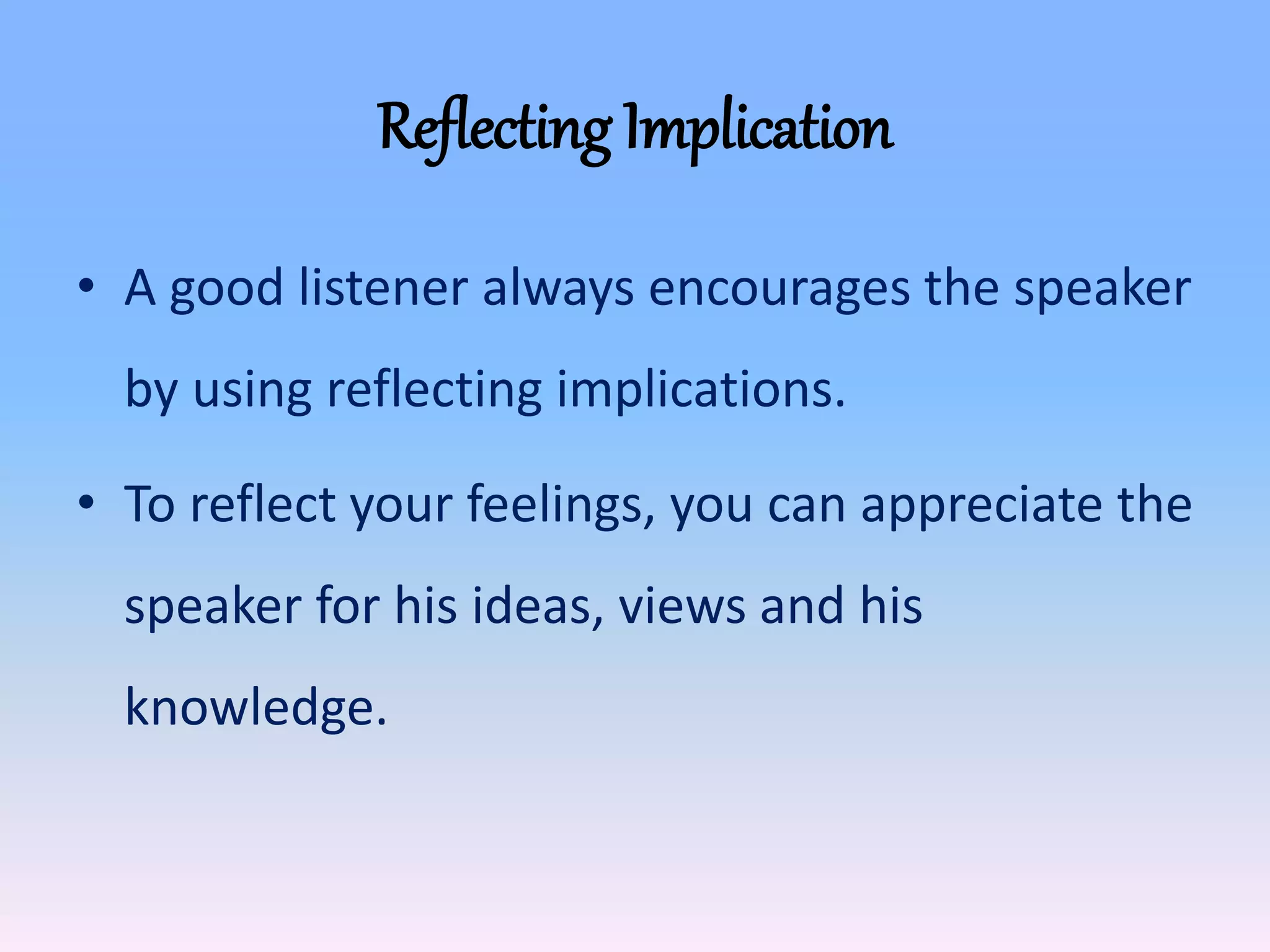
Paraphrasing
• Paraphrase means if you wish to clarify a point ,
you have to paraphrase the topic of the speaker.
• To check whether you
understood the speaker
properly , you can
inquire from the speaker.
• To paraphrase the point of the speaker
correctly you can use following phrases,
• 1. “So you mean to say that……”
• 2. “Do you mean that….”
Reflecting Implication
• A good listener always encourages the speaker
by using reflecting implications.
• To reflect your feelings, you can appreciate the
speaker for his ideas, views and his
knowledge.
• It will encourage the speaker to expand his
ideas.
• The listener can motivate the speaker by
nodding his head or verbal methods or giving
positive feedback.
• For example ;
• 1 “ So you mean to say that…”
• 2. “ I am sure if you did that, you…”
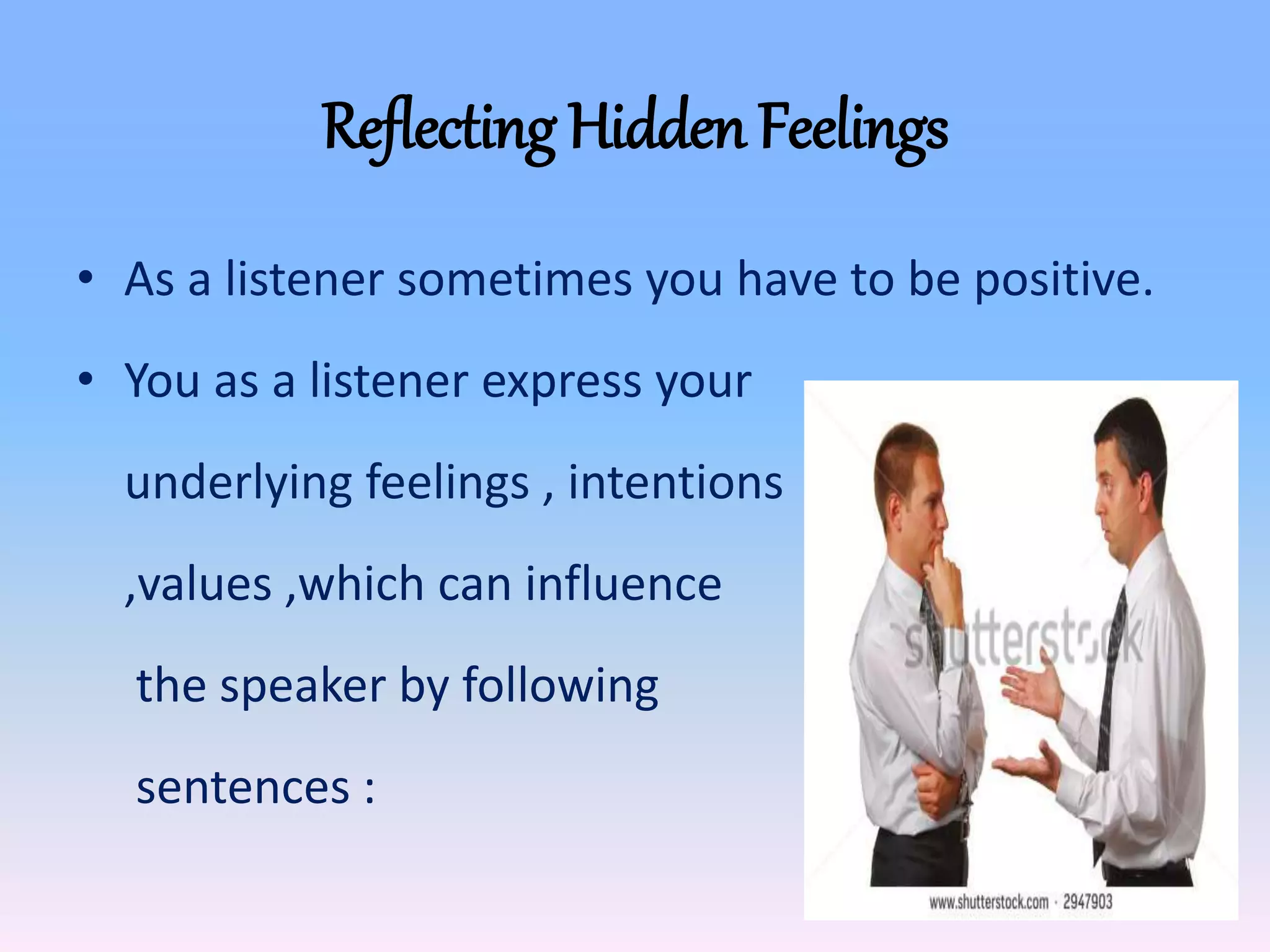
Reflecting Hidden Feelings
• As a listener sometimes you have to be positive.
• You as a listener express your
underlying feelings , intentions
,values ,which can influence
the speaker by following
sentences :
• 1. “If I were in your place…”
• 2. “If I were in such a situation…”
• 3. “If that had happened to me…”
Inviting Further Contribution
• If you have not heard or understood the
message clearly, but still if you want to
respond, you can ask the speaker to give more
information about the topic.
• For that we can use following phrases;
• 1. “Can you throw more light on it ?”
• 2. “After that what happened ?”
• 3. “How did you react ?”
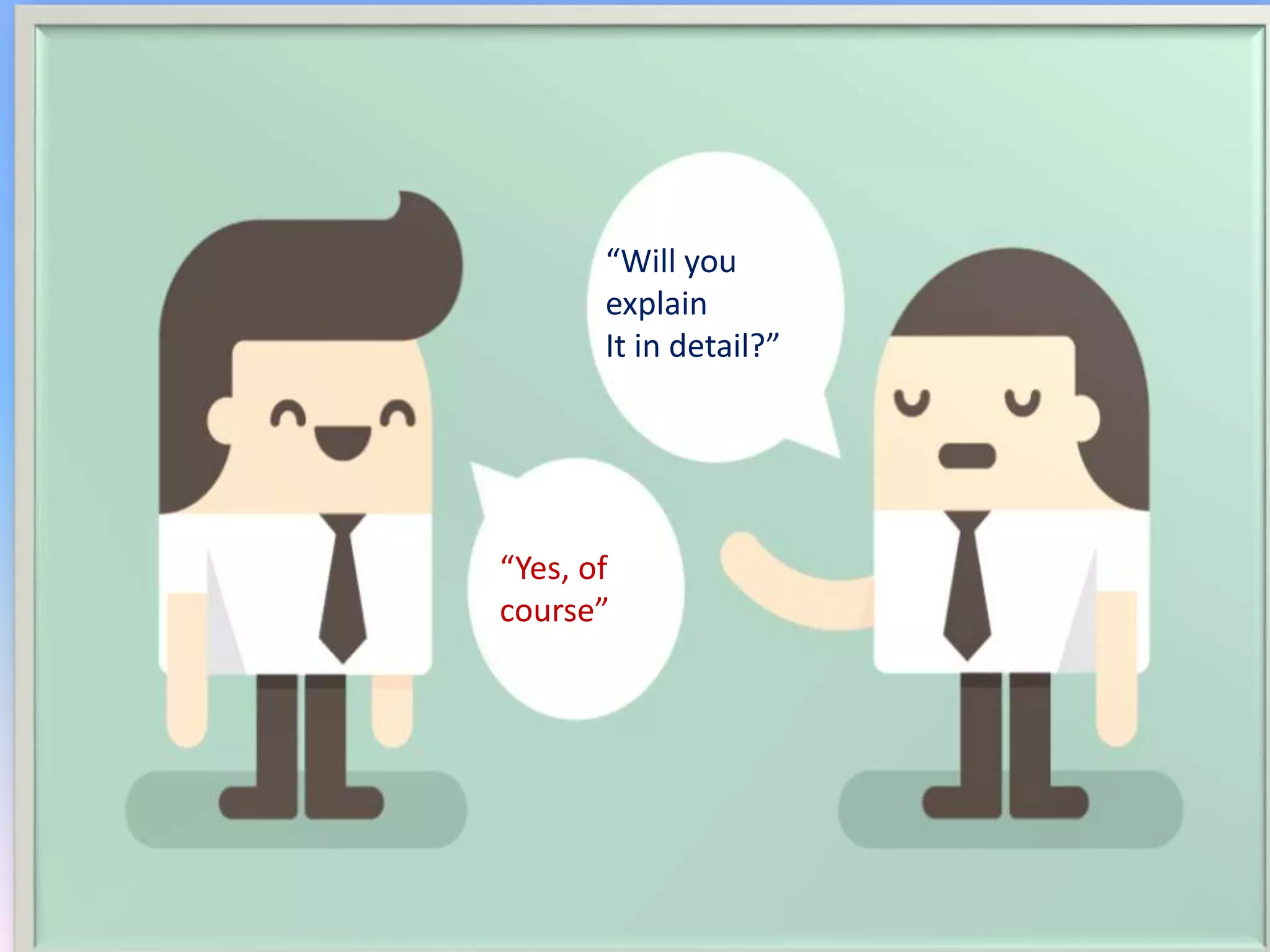
“Will you
explain
It in detail?”
“Yes, of
course”
• While it is useful to ask questions, be alert
about asking too many, If you ask too many
questions, it will create negative environment
in communication.
Responding Non-verbally
• A listener can show the speaker that he is an
active listener by showing positive gestures
and postures.
• Your non-verbal signals express your interests
and positive attitude.
• These include: body language, eye contact,
postures, gestures, facial expression, etc.
• These types of signals reflect trust, interest
and understanding.
Traits of a Good Listener

Traits of a Good Listener

  • 1.
    TRAITS OF AGOOD LISTENER
  • 2.
    What are thecharacteristics / qualities / traits of a good listener ? 1. Being Non-evaluative 2. Paraphrasing 3. Reflecting Implication 4. Reflecting Hidden Feelings 5. Inviting Further Contribution 6. Responding Non Verbally
  • 3.
    Being Non-evaluative • Ifyou are an active listener your verbal and non-verbal actions will suggest your understanding. • It will show that speaker is properly heard.
  • 4.
    • You (listener)should overlook (avoid) the qualities of the speaker. For example – Ideas , attitudes , knowledge ,information, values whether is right or wrong. • You should not judge the qualities of the speaker.
  • 5.
    • Your behaviourshould show that you accept the speaker without making any judgement.
  • 6.
    Paraphrasing • Paraphrase meansif you wish to clarify a point , you have to paraphrase the topic of the speaker. • To check whether you understood the speaker properly , you can inquire from the speaker.
  • 7.
    • To paraphrasethe point of the speaker correctly you can use following phrases, • 1. “So you mean to say that……” • 2. “Do you mean that….”
  • 8.
    Reflecting Implication • Agood listener always encourages the speaker by using reflecting implications. • To reflect your feelings, you can appreciate the speaker for his ideas, views and his knowledge.
  • 9.
    • It willencourage the speaker to expand his ideas. • The listener can motivate the speaker by nodding his head or verbal methods or giving positive feedback.
  • 10.
    • For example; • 1 “ So you mean to say that…” • 2. “ I am sure if you did that, you…”
  • 11.
    Reflecting Hidden Feelings •As a listener sometimes you have to be positive. • You as a listener express your underlying feelings , intentions ,values ,which can influence the speaker by following sentences :
  • 12.
    • 1. “IfI were in your place…” • 2. “If I were in such a situation…” • 3. “If that had happened to me…”
  • 13.
    Inviting Further Contribution •If you have not heard or understood the message clearly, but still if you want to respond, you can ask the speaker to give more information about the topic.
  • 14.
    • For thatwe can use following phrases; • 1. “Can you throw more light on it ?” • 2. “After that what happened ?” • 3. “How did you react ?”
  • 15.
    “Will you explain It indetail?” “Yes, of course”
  • 16.
    • While itis useful to ask questions, be alert about asking too many, If you ask too many questions, it will create negative environment in communication.
  • 17.
    Responding Non-verbally • Alistener can show the speaker that he is an active listener by showing positive gestures and postures. • Your non-verbal signals express your interests and positive attitude.
  • 19.
    • These include:body language, eye contact, postures, gestures, facial expression, etc. • These types of signals reflect trust, interest and understanding.