Effective
Listening
Skills
A BIG THANKS to those listeners who listen carefully to Homar and helped to spread these two epics.
If those listeners did not listen those epics carefully, We could miss these epic.
Lets Learn
to Listen Effectively
for Our Own.
Listening
The word ‘Listen’ is originated from German word ‘Hlysnan’ which means
‘Pay Attention to’
One of the basic skills for Language Acquisition.
We Listen to
- collect information.
- understand any subject.
- make decision.
- feel other.
In Organizations, the higher the position, the greater is the responsibility
to listen (45% out of 100%).
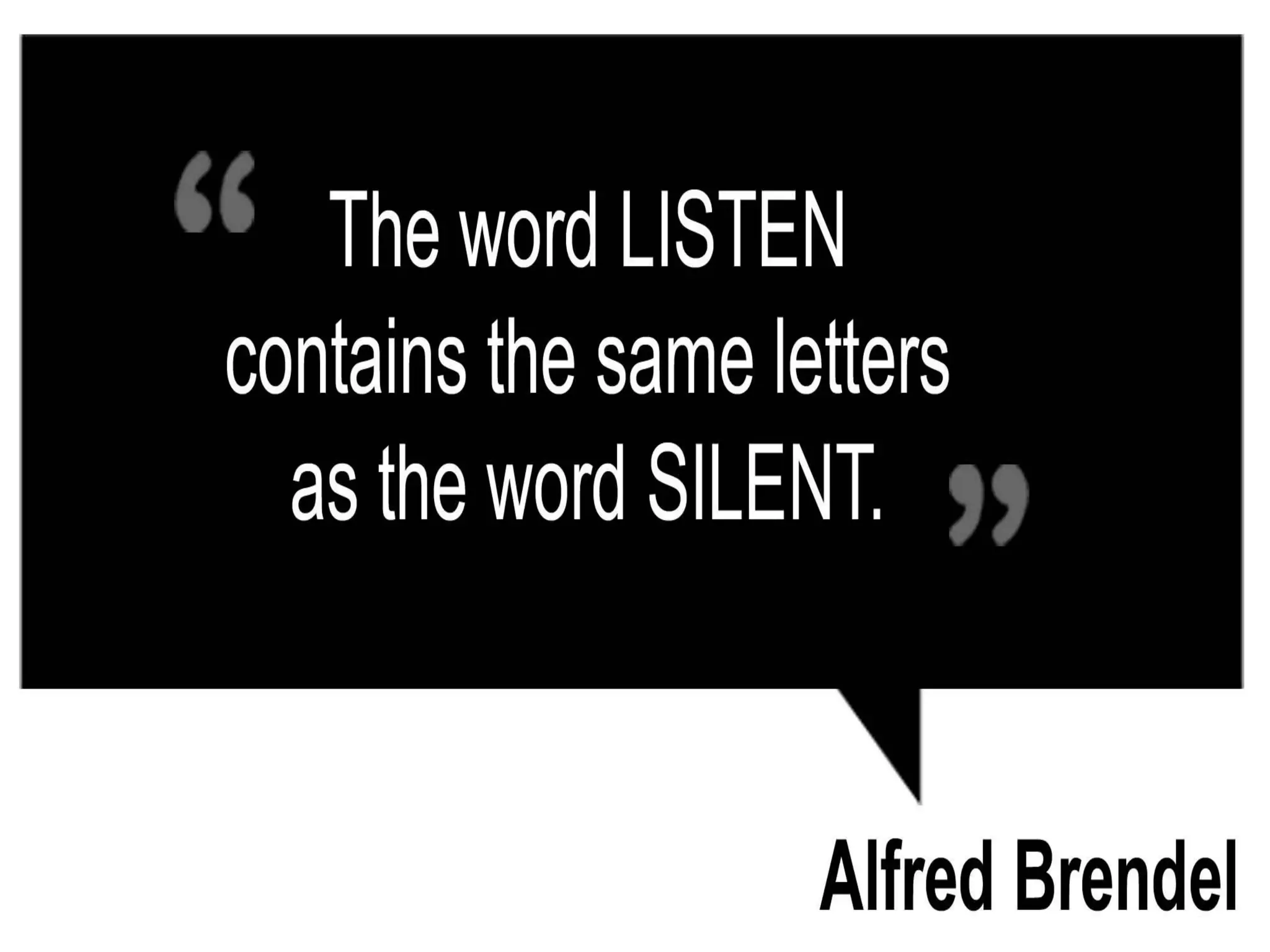
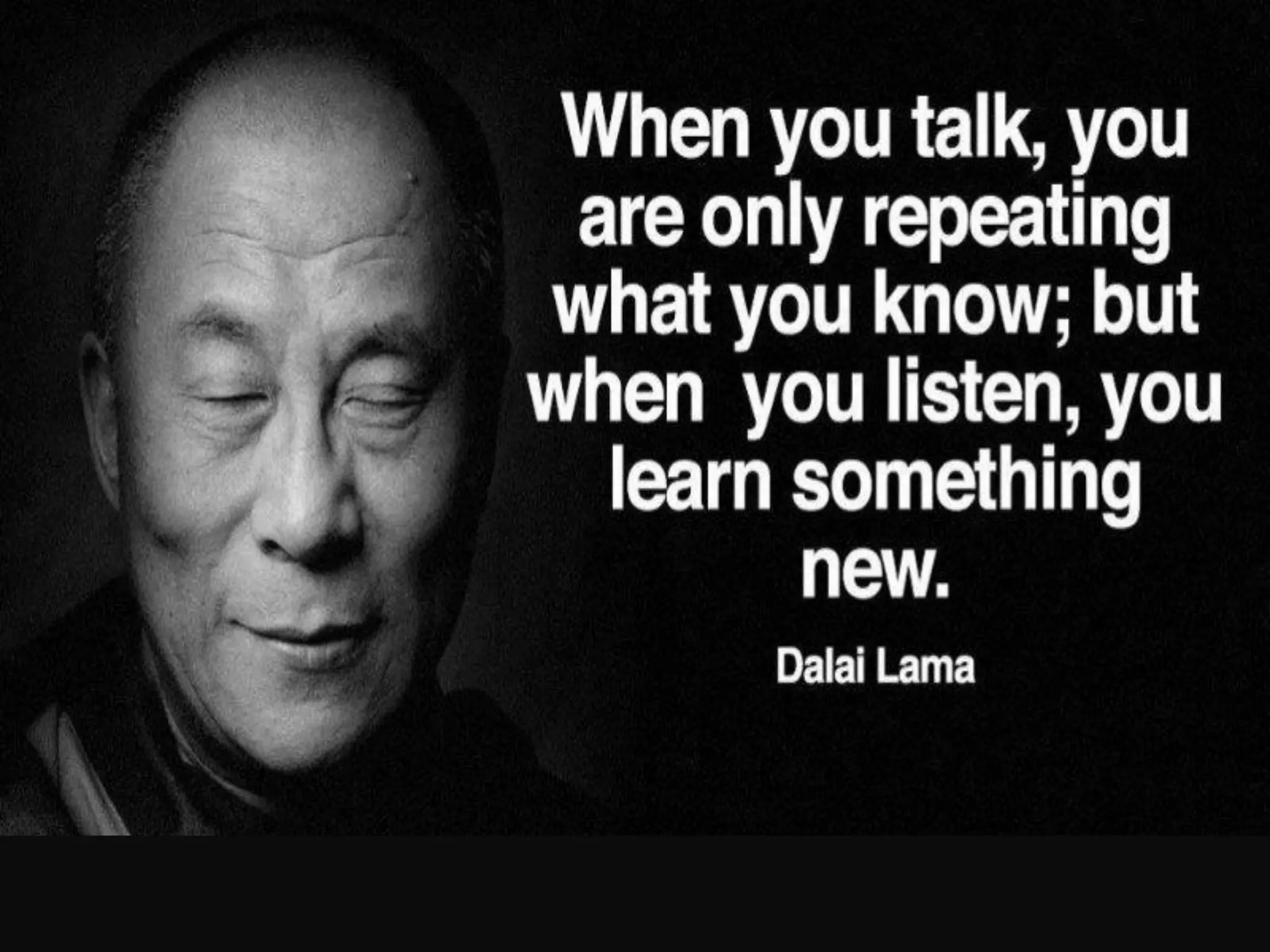
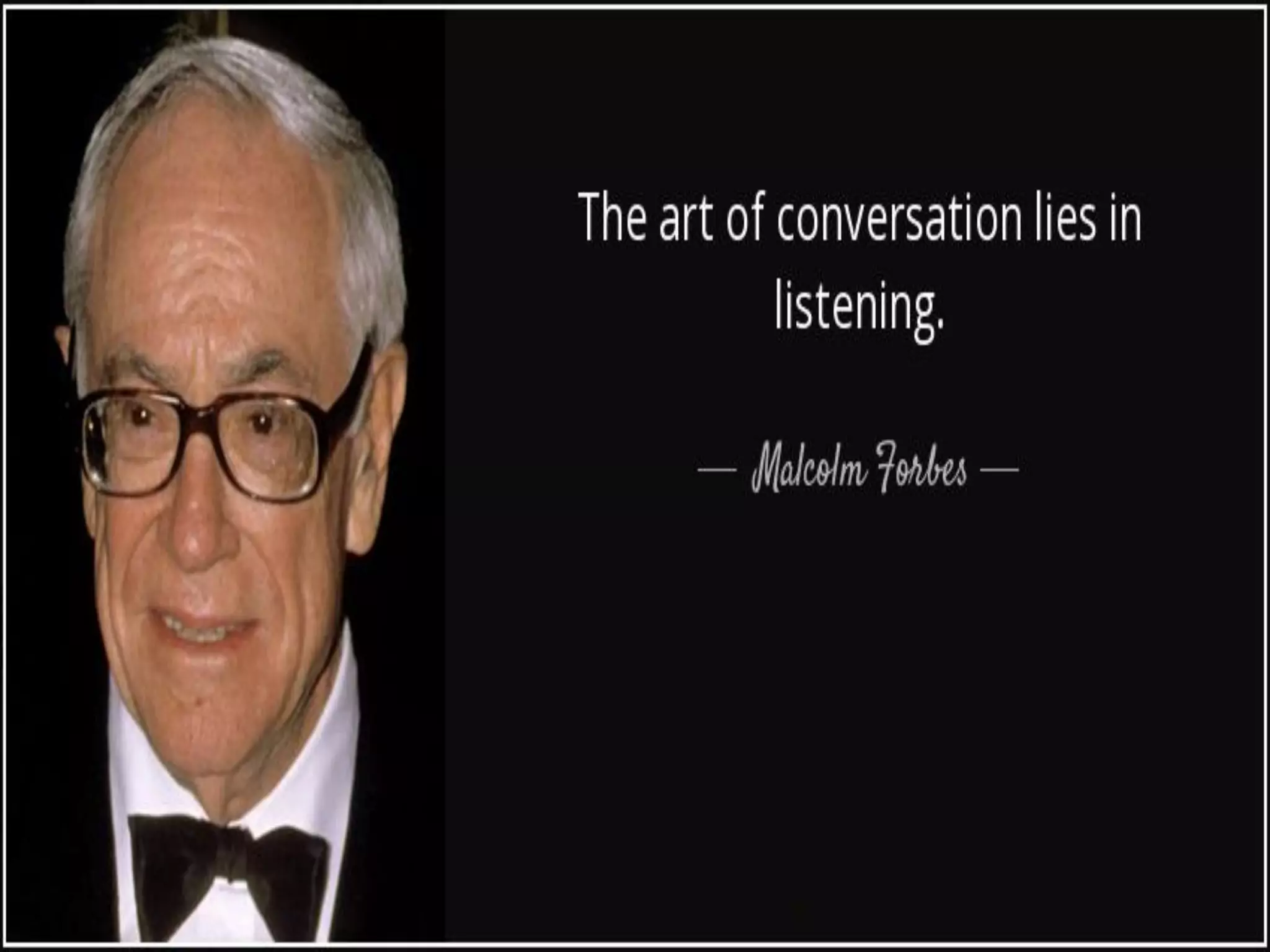
“Every Good Conversation
Starts with Good Listening.”
Steps of Listening
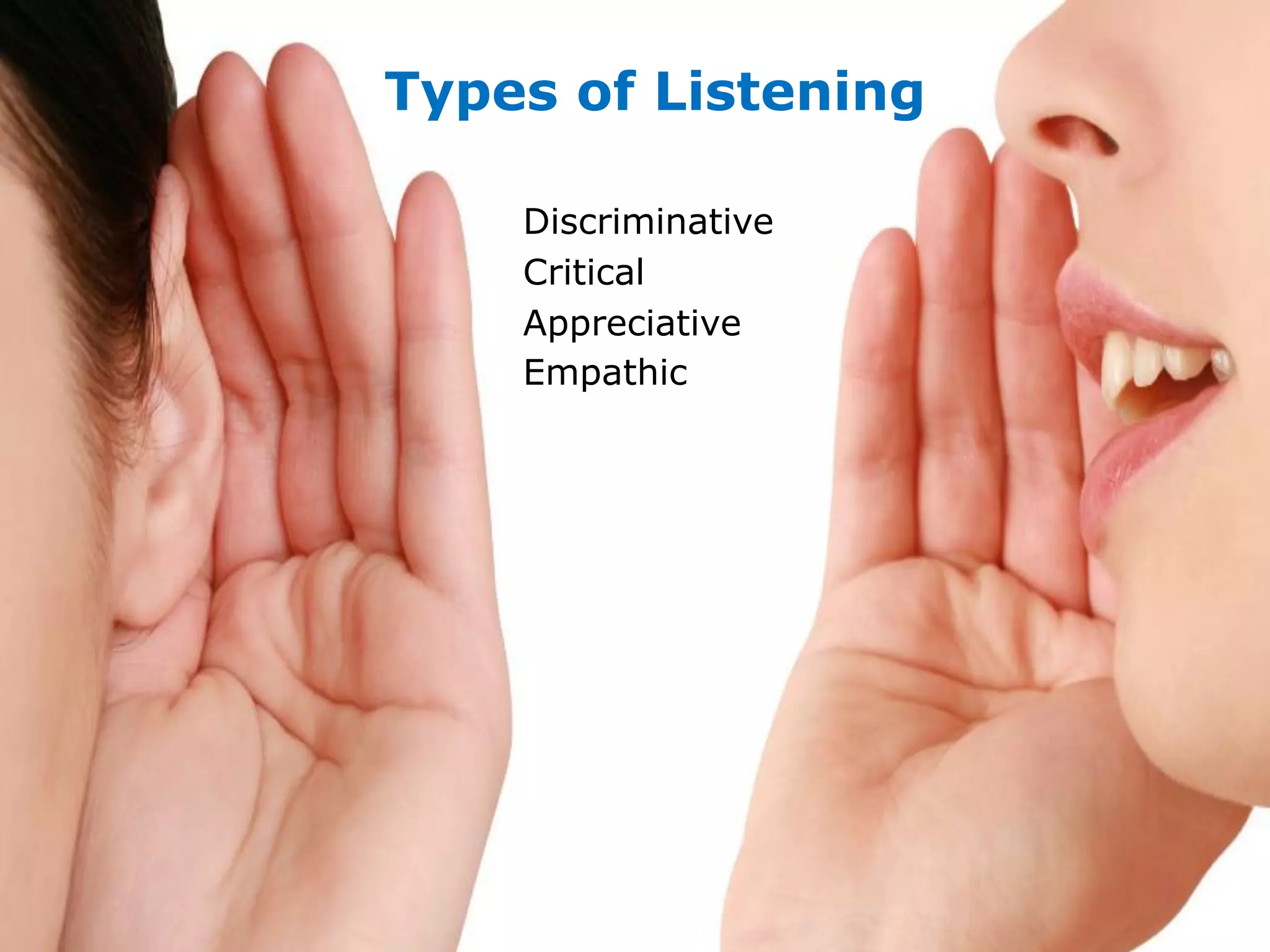
Types of Listening
Discriminative
Critical
Appreciative
Empathic
Discriminative
Develops at a very early age – perhaps before
birth, in womb.
This is the most basic form of listening.
May not understand the meaning but can
differentiate.
It develops through childhood and into
adulthood.
When two foreigners talk between them using
their own language, we can understand it is a
different language.
Critical
A much more active behavior of a listener.
Listener wants to understand the information in
order to achieve a specific purpose or goal.
It involves some sort of analyzing, problem
solving, decision making or making a
judgment.
Used when We -
Need to remember something important
Listen an announcements or get directions
Listen to lectures in class
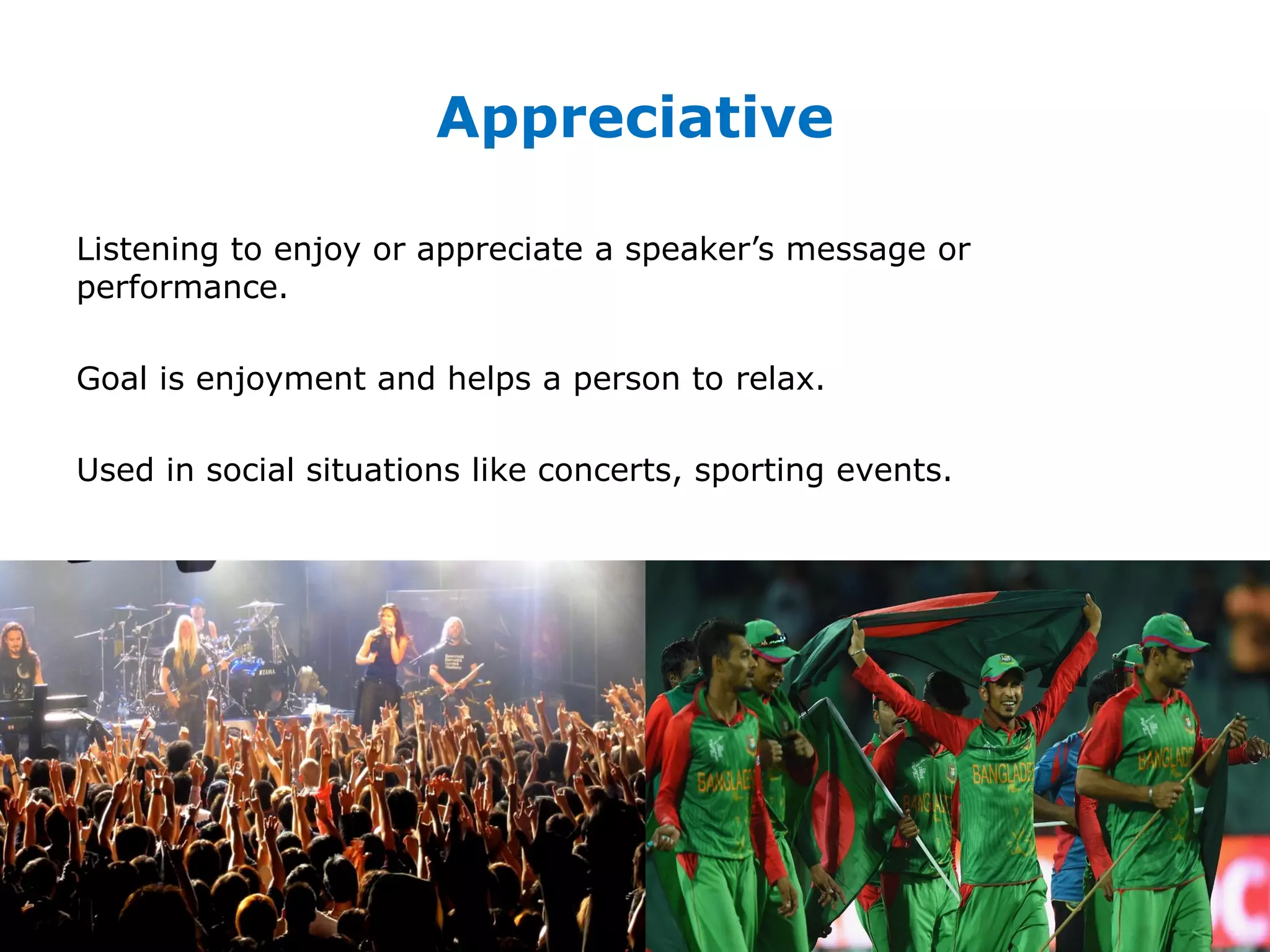
Appreciative
Listening to enjoy or appreciate a speaker’s message or
performance.
Goal is enjoyment and helps a person to relax.
Used in social situations like concerts, sporting events.
Empathic
Paying attention to another person
with empathy.
Put aside own viewpoint, and try to
see things from the other person's
point of view.
Usually used in interactions between
two persons or among a small group.
It creates trust and respect between
persons.
Customer Service.
Misconceptions Vs. Facts
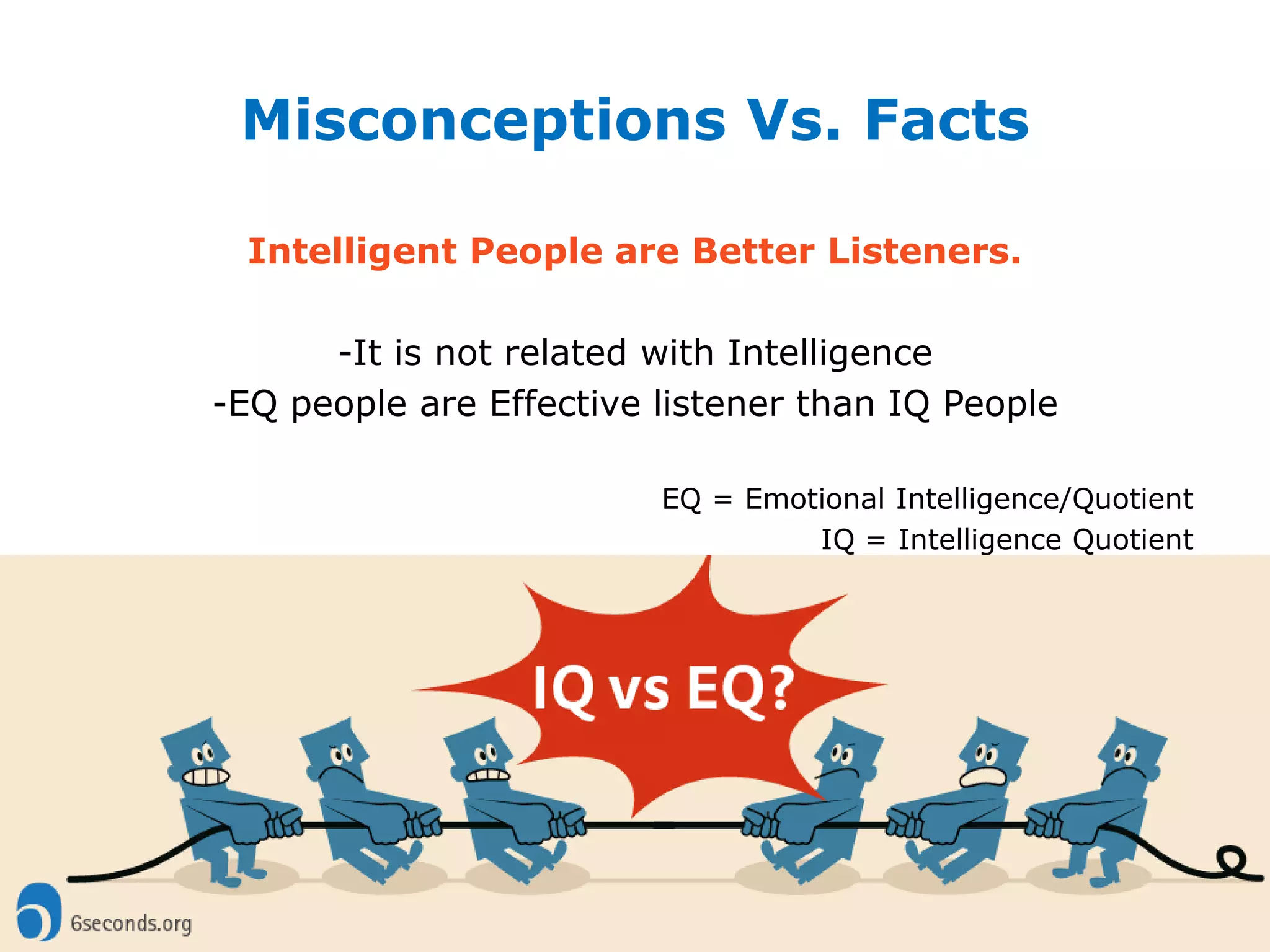
Intelligent People are Better Listeners.
-It is not related with Intelligence
-EQ people are Effective listener than IQ People
EQ = Emotional Intelligence/Quotient
IQ = Intelligence Quotient
Misconceptions Vs. Facts
Hearing is the same as Listening.
Hearing : Sounds which reaches to our ears
Listening : Sounds which reach to our hearts through the ears
Misconceptions Vs. Facts
Gender Affects Listening Ability.
-It does not depends on Gender
Misconceptions Vs. Facts
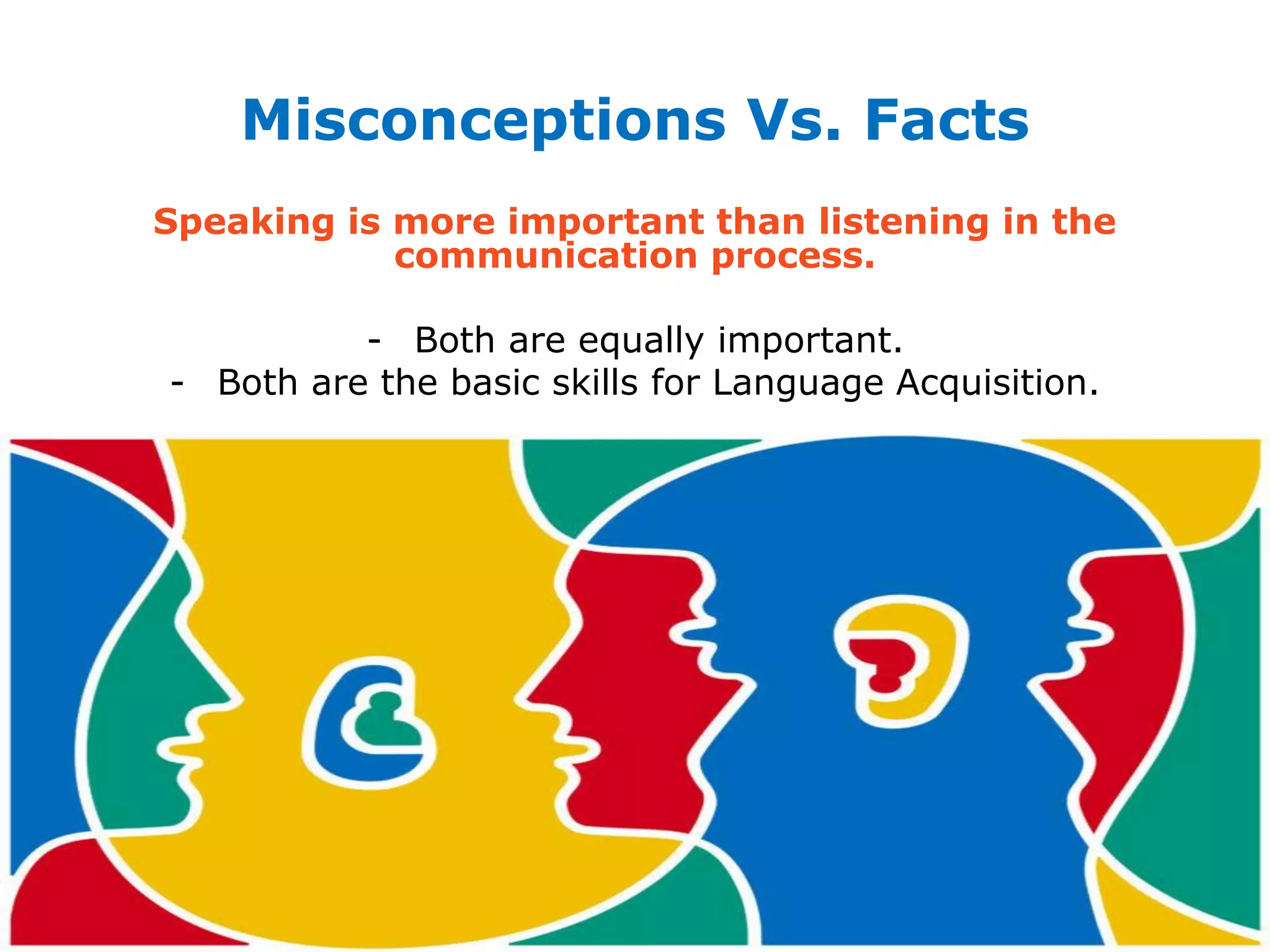
Speaking is more important than listening in the
communication process.
- Both are equally important.
- Both are the basic skills for Language Acquisition.
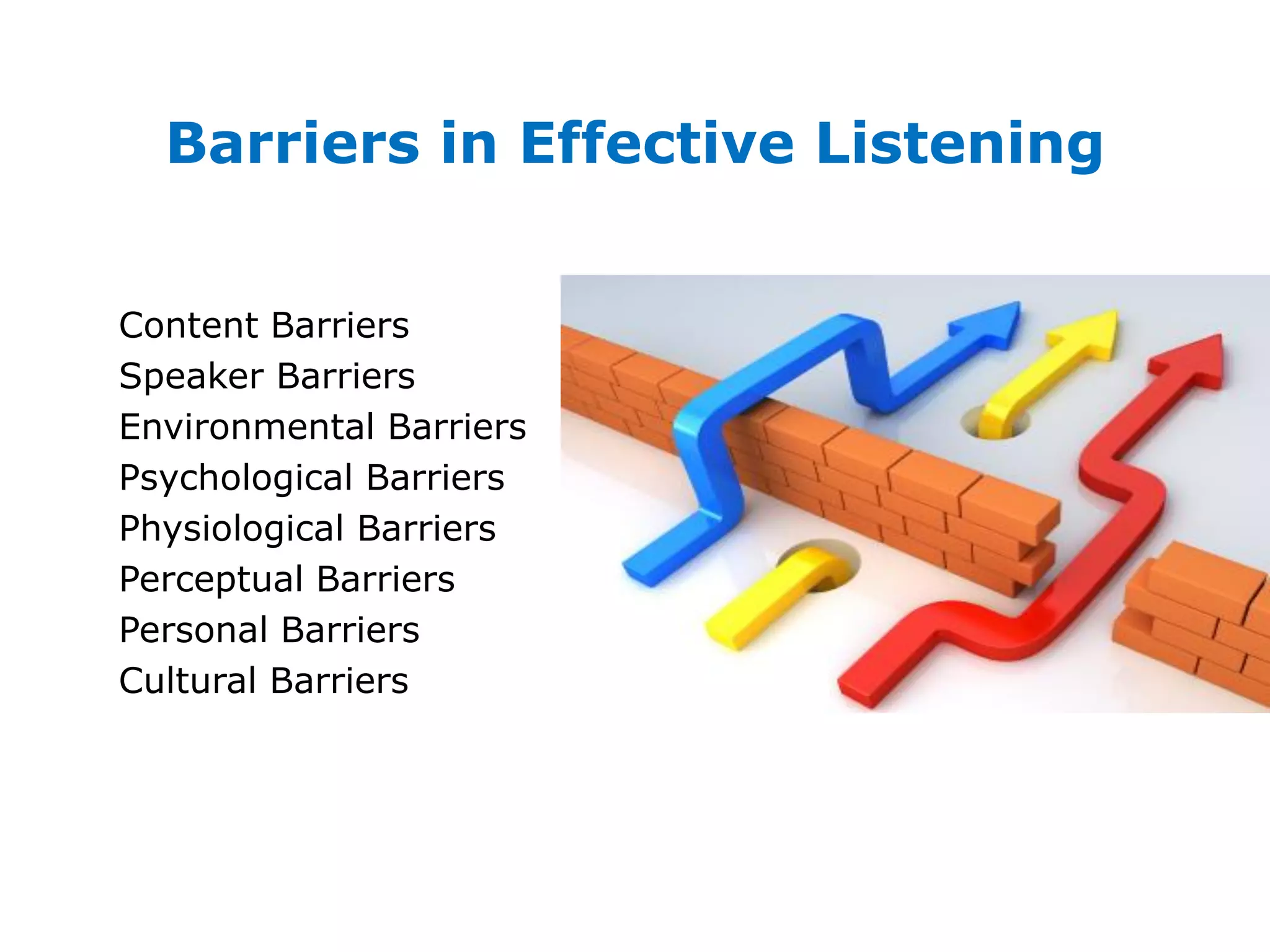
Barriers in Effective Listening
Content Barriers
Speaker Barriers
Environmental Barriers
Psychological Barriers
Physiological Barriers
Perceptual Barriers
Personal Barriers
Cultural Barriers
Techniques to Improve Listening Skills
Silence
Segregation
Savoring
Listening Position
RASA
Benefits of
Effective Listening
Enhances Productivity
Improves Relations
Avoids Conflict
Improves Understanding
Improves Negotiation Skills
Helps you stand out
People will appreciate it
When to Use
Active Listening
Family
Organizational Crises
Conflict Situations
Negotiation
Providing and Receiving Feedback
Brainstorming Session
Problem Solving Activity
Seeking Peers’ Cooperation
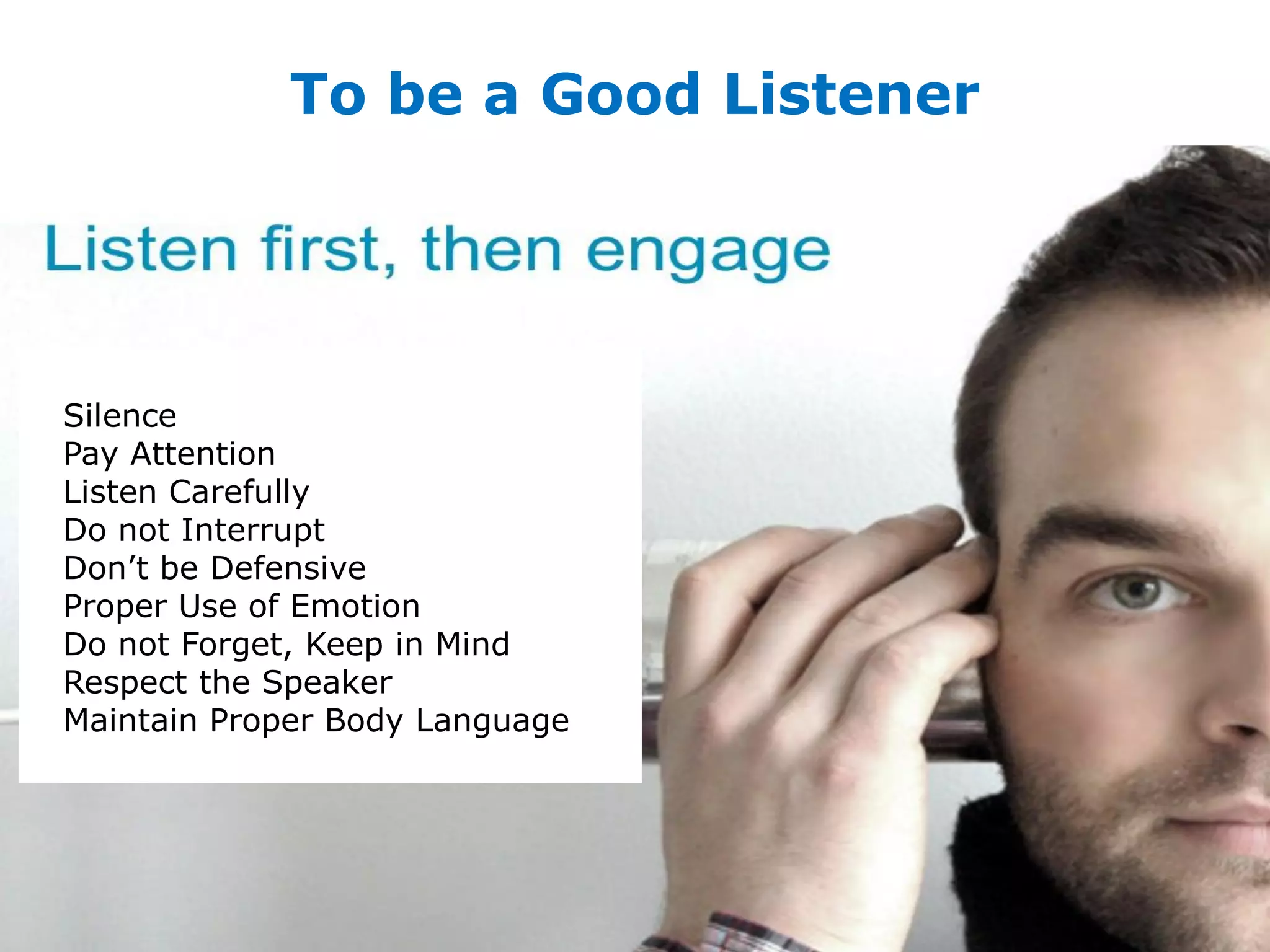
To be a Good Listener
Silence
Pay Attention
Listen Carefully
Do not Interrupt
Don’t be Defensive
Proper Use of Emotion
Do not Forget, Keep in Mind
Respect the Speaker
Maintain Proper Body Language
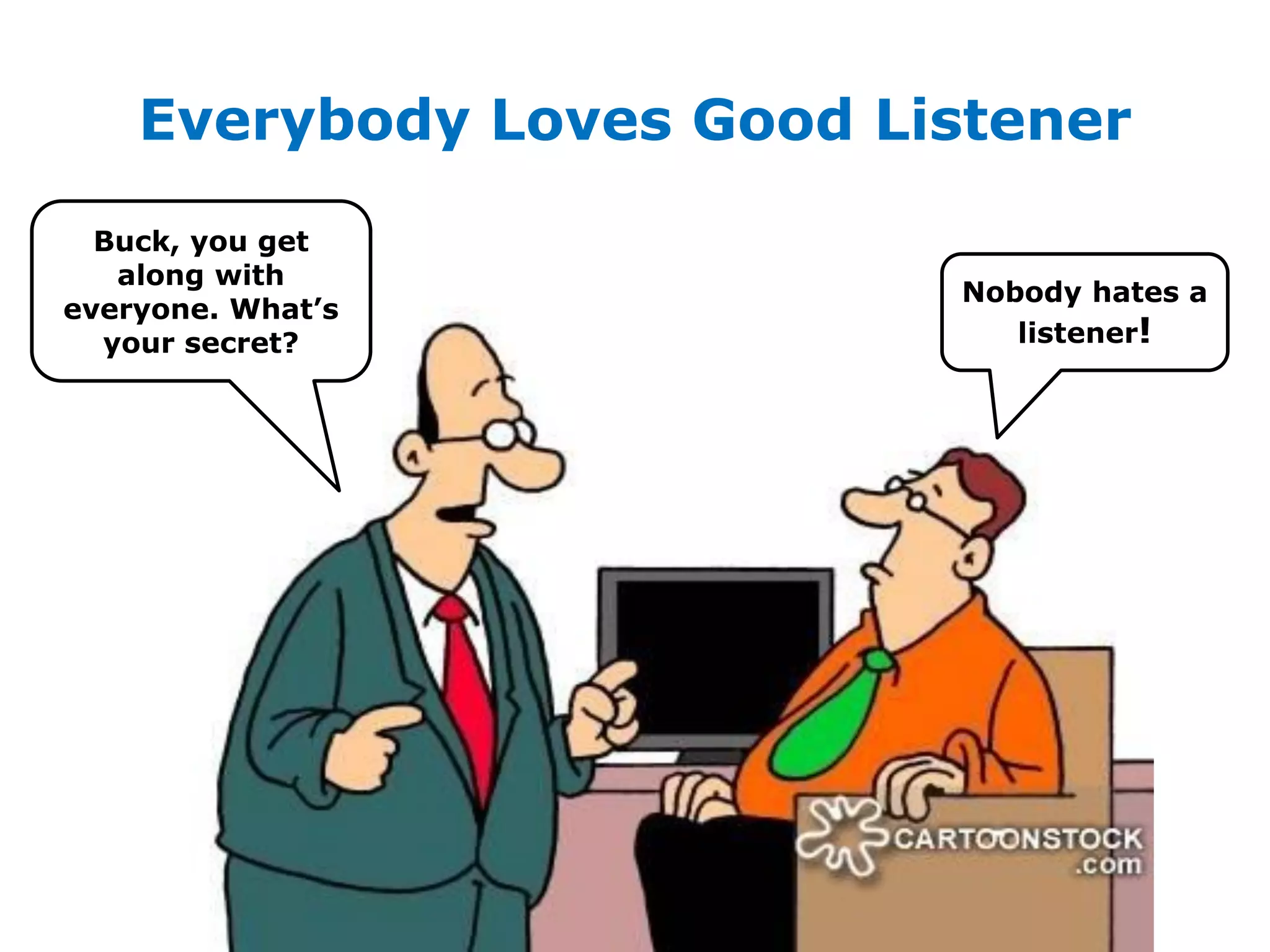
Everybody Loves Good Listener
Buck, you get
along with
everyone. What’s
your secret?
Nobody hates a
listener!
Eyes:
Looking at person talking.
Ears:
Both ears ready to hear.
Mouth:
Quiet and waiting for the turn to
talk.
Hands:
Quiet and kept to yourself.
Feet:
Quiet and still.
Body:
Facing towards the speaker.
Brain:
Thinking about what is being said.
Heart:
Consider the speaker and others
listening.
Effective Listening Skills

Effective Listening Skills

  • 1.
  • 2.
    A BIG THANKSto those listeners who listen carefully to Homar and helped to spread these two epics. If those listeners did not listen those epics carefully, We could miss these epic.
  • 3.
    Lets Learn to ListenEffectively for Our Own.
  • 4.
    Listening The word ‘Listen’is originated from German word ‘Hlysnan’ which means ‘Pay Attention to’ One of the basic skills for Language Acquisition. We Listen to - collect information. - understand any subject. - make decision. - feel other. In Organizations, the higher the position, the greater is the responsibility to listen (45% out of 100%). “Every Good Conversation Starts with Good Listening.”
  • 5.
  • 6.
  • 7.
    Discriminative Develops at avery early age – perhaps before birth, in womb. This is the most basic form of listening. May not understand the meaning but can differentiate. It develops through childhood and into adulthood. When two foreigners talk between them using their own language, we can understand it is a different language.
  • 8.
    Critical A much moreactive behavior of a listener. Listener wants to understand the information in order to achieve a specific purpose or goal. It involves some sort of analyzing, problem solving, decision making or making a judgment. Used when We - Need to remember something important Listen an announcements or get directions Listen to lectures in class
  • 9.
    Appreciative Listening to enjoyor appreciate a speaker’s message or performance. Goal is enjoyment and helps a person to relax. Used in social situations like concerts, sporting events.
  • 10.
    Empathic Paying attention toanother person with empathy. Put aside own viewpoint, and try to see things from the other person's point of view. Usually used in interactions between two persons or among a small group. It creates trust and respect between persons. Customer Service.
  • 11.
    Misconceptions Vs. Facts IntelligentPeople are Better Listeners. -It is not related with Intelligence -EQ people are Effective listener than IQ People EQ = Emotional Intelligence/Quotient IQ = Intelligence Quotient
  • 12.
    Misconceptions Vs. Facts Hearingis the same as Listening. Hearing : Sounds which reaches to our ears Listening : Sounds which reach to our hearts through the ears
  • 13.
    Misconceptions Vs. Facts GenderAffects Listening Ability. -It does not depends on Gender
  • 14.
    Misconceptions Vs. Facts Speakingis more important than listening in the communication process. - Both are equally important. - Both are the basic skills for Language Acquisition.
  • 15.
    Barriers in EffectiveListening Content Barriers Speaker Barriers Environmental Barriers Psychological Barriers Physiological Barriers Perceptual Barriers Personal Barriers Cultural Barriers
  • 16.
    Techniques to ImproveListening Skills Silence Segregation Savoring Listening Position RASA
  • 17.
    Benefits of Effective Listening EnhancesProductivity Improves Relations Avoids Conflict Improves Understanding Improves Negotiation Skills Helps you stand out People will appreciate it
  • 18.
    When to Use ActiveListening Family Organizational Crises Conflict Situations Negotiation Providing and Receiving Feedback Brainstorming Session Problem Solving Activity Seeking Peers’ Cooperation
  • 19.
    To be aGood Listener Silence Pay Attention Listen Carefully Do not Interrupt Don’t be Defensive Proper Use of Emotion Do not Forget, Keep in Mind Respect the Speaker Maintain Proper Body Language
  • 20.
    Everybody Loves GoodListener Buck, you get along with everyone. What’s your secret? Nobody hates a listener!
  • 21.
    Eyes: Looking at persontalking. Ears: Both ears ready to hear. Mouth: Quiet and waiting for the turn to talk. Hands: Quiet and kept to yourself. Feet: Quiet and still. Body: Facing towards the speaker. Brain: Thinking about what is being said. Heart: Consider the speaker and others listening.