PGI Marla Tecia Acapulco
Group 4
August 20, 2020
Training
Physicians for
COPC
The development of a unified
practice of community medicine
and primary health care, that is
COPC, requires practitioners who
have had training for such practice.
“Preventive medicine must be provided
in facilities comparable with those of the
teaching hospital.”
John Grant
1921: Head of the Department of
Hygiene, Peking University
Medical College
used health maintenance and preventive
and curative medicine in teaching
medical and nursing undergraduates,
and public health nurses.
established a “demonstration
health station” in Peking
John Grant
If COPC is to progress, university
health science faculties must have
COPC facilities attached to them in
much the same way as teaching
hospitals are now affiliated.
From Solo Practice
to Group Practice
and the Health Team
Solo Practice
practitioners attend postgrad
courses and grand rounds offered
by many hospitals
participate in the COPC rounds
at community-based teaching
centers where these exist
Group Practice
a number of specialists, or of
general practitioners, each
having additional knowledge and
special interest in a particular
field of practice
Health Team
extend clinical practice functions
by providing practitioners with
assistants for clinical work, as
well as for community health
made up of different
professional groups
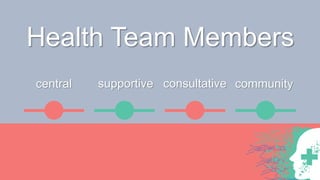
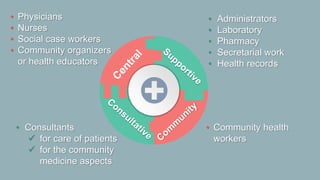
Health Team Members
supportive
central consultative community
• Physicians
• Nurses
• Social case workers
• Community organizers
or health educators
• Administrators
• Laboratory
• Pharmacy
• Secretarial work
• Health records
• Community health
workers
• Consultants
 for care of patients
 for the community
medicine aspects
Three important
elements in training that
emerged from the
movement towards
community
involvement…
Community health
workers require
special training to
help with their roles.
1
Members of the health team need
training in methods of educating
community health workers, and
experience in formulating the
content of the curriculum suited
for the community.
2
The community itself needs
to be introduced to COPC
as a modified way of
providing primary health
care.
3
The Preparation
of Physicians
for COPC
Training of various professional and
nonprofessional groups for COPC
involved basic or undergraduate
programs as well as postbasic and
postgraduate training.
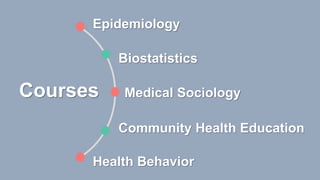
Epidemiology
Courses
Biostatistics
Medical Sociology
Community Health Education
Health Behavior
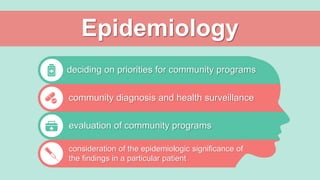
Epidemiology
deciding on priorities for community programs
community diagnosis and health surveillance
evaluation of community programs
consideration of the epidemiologic significance of
the findings in a particular patient
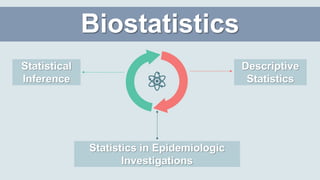
Biostatistics
Descriptive
Statistics
Statistics in Epidemiologic
Investigations
Statistical
Inference
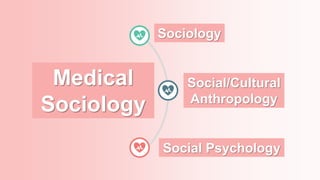
Sociology
Medical
Sociology
Social/Cultural
Anthropology
Social Psychology
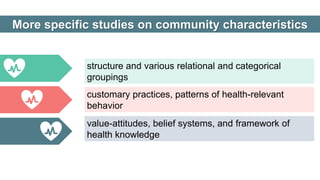
structure and various relational and categorical
groupings
value-attitudes, belief systems, and framework of
health knowledge
customary practices, patterns of health-relevant
behavior
More specific studies on community characteristics
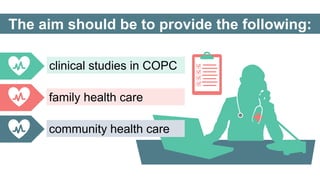
clinical studies in COPC
community health care
family health care
The aim should be to provide the following:
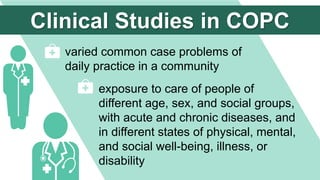
varied common case problems of
daily practice in a community
exposure to care of people of
different age, sex, and social groups,
with acute and chronic diseases, and
in different states of physical, mental,
and social well-being, illness, or
disability
Clinical Studies in COPC
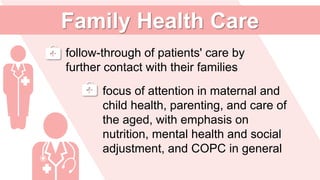
follow-through of patients' care by
further contact with their families
focus of attention in maternal and
child health, parenting, and care of
the aged, with emphasis on
nutrition, mental health and social
adjustment, and COPC in general
Family Health Care
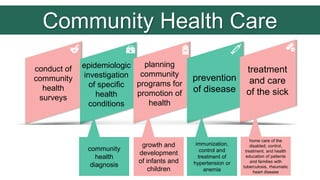
conduct of
community
health
surveys
epidemiologic
investigation
of specific
health
conditions
planning
community
programs for
promotion of
health
prevention
of disease
treatment
and care
of the sick
Community Health Care
community
health
diagnosis
growth and
development
of infants and
children
immunization,
control and
treatment of
hypertension or
anemia
home care of the
disabled; control,
treatment, and health
education of patients
and families with
tuberculosis, rheumatic
heart disease
Training Centers
The teaching objectives of a COPC
center require that it be linked
with suitable university faculties and
schools, such as medical and nursing
schools, schools of public health, or
other recognized teaching institutions.
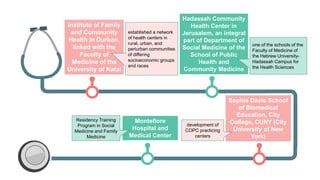
Institute of Family
and Community
Health in Durban,
linked with the
Faculty of
Medicine of the
University of Natal
Hadassah Community
Health Center in
Jerusalem, an integral
part of Department of
Social Medicine of the
School of Public
Health and
Community Medicine
Montefiore
Hospital and
Medical Center
Sophie Davis School
of Biomedical
Education, City
College, CUNY (City
University of New
York)
established a network
of health centers in
rural, urban, and
periurban communities
of differing
socioeconomic groups
and races
one of the schools of the
Faculty of Medicine of
the Hebrew University-
Hadassah Campus for
the Health Sciences
development of
COPC practicing
centers
Residency Training
Program in Social
Medicine and Family
Medicine
As in all teaching centers, the most
important factor for success in
developing a teaching program in COPC
is an adequately trained and
experienced health team.
Thank you for listening!

Training in copc training physicians for copc

  • 1.
    PGI Marla TeciaAcapulco Group 4 August 20, 2020 Training Physicians for COPC
  • 2.
    The development ofa unified practice of community medicine and primary health care, that is COPC, requires practitioners who have had training for such practice.
  • 3.
    “Preventive medicine mustbe provided in facilities comparable with those of the teaching hospital.” John Grant 1921: Head of the Department of Hygiene, Peking University Medical College
  • 4.
    used health maintenanceand preventive and curative medicine in teaching medical and nursing undergraduates, and public health nurses. established a “demonstration health station” in Peking John Grant
  • 5.
    If COPC isto progress, university health science faculties must have COPC facilities attached to them in much the same way as teaching hospitals are now affiliated.
  • 6.
    From Solo Practice toGroup Practice and the Health Team
  • 7.
    Solo Practice practitioners attendpostgrad courses and grand rounds offered by many hospitals participate in the COPC rounds at community-based teaching centers where these exist
  • 8.
    Group Practice a numberof specialists, or of general practitioners, each having additional knowledge and special interest in a particular field of practice
  • 9.
    Health Team extend clinicalpractice functions by providing practitioners with assistants for clinical work, as well as for community health made up of different professional groups
  • 10.
  • 11.
    • Physicians • Nurses •Social case workers • Community organizers or health educators • Administrators • Laboratory • Pharmacy • Secretarial work • Health records • Community health workers • Consultants  for care of patients  for the community medicine aspects
  • 12.
    Three important elements intraining that emerged from the movement towards community involvement…
  • 13.
    Community health workers require specialtraining to help with their roles. 1
  • 14.
    Members of thehealth team need training in methods of educating community health workers, and experience in formulating the content of the curriculum suited for the community. 2
  • 15.
    The community itselfneeds to be introduced to COPC as a modified way of providing primary health care. 3
  • 16.
  • 17.
    Training of variousprofessional and nonprofessional groups for COPC involved basic or undergraduate programs as well as postbasic and postgraduate training.
  • 18.
  • 19.
    Epidemiology deciding on prioritiesfor community programs community diagnosis and health surveillance evaluation of community programs consideration of the epidemiologic significance of the findings in a particular patient
  • 20.
  • 21.
  • 22.
    structure and variousrelational and categorical groupings value-attitudes, belief systems, and framework of health knowledge customary practices, patterns of health-relevant behavior More specific studies on community characteristics
  • 23.
    clinical studies inCOPC community health care family health care The aim should be to provide the following:
  • 24.
    varied common caseproblems of daily practice in a community exposure to care of people of different age, sex, and social groups, with acute and chronic diseases, and in different states of physical, mental, and social well-being, illness, or disability Clinical Studies in COPC
  • 25.
    follow-through of patients'care by further contact with their families focus of attention in maternal and child health, parenting, and care of the aged, with emphasis on nutrition, mental health and social adjustment, and COPC in general Family Health Care
  • 26.
    conduct of community health surveys epidemiologic investigation of specific health conditions planning community programsfor promotion of health prevention of disease treatment and care of the sick Community Health Care community health diagnosis growth and development of infants and children immunization, control and treatment of hypertension or anemia home care of the disabled; control, treatment, and health education of patients and families with tuberculosis, rheumatic heart disease
  • 27.
  • 28.
    The teaching objectivesof a COPC center require that it be linked with suitable university faculties and schools, such as medical and nursing schools, schools of public health, or other recognized teaching institutions.
  • 29.
    Institute of Family andCommunity Health in Durban, linked with the Faculty of Medicine of the University of Natal Hadassah Community Health Center in Jerusalem, an integral part of Department of Social Medicine of the School of Public Health and Community Medicine Montefiore Hospital and Medical Center Sophie Davis School of Biomedical Education, City College, CUNY (City University of New York) established a network of health centers in rural, urban, and periurban communities of differing socioeconomic groups and races one of the schools of the Faculty of Medicine of the Hebrew University- Hadassah Campus for the Health Sciences development of COPC practicing centers Residency Training Program in Social Medicine and Family Medicine
  • 30.
    As in allteaching centers, the most important factor for success in developing a teaching program in COPC is an adequately trained and experienced health team.
  • 31.
    Thank you forlistening!