ManooOrdeedolchest
Chairman ICT Policy
Sripatum University
The InternationalACM Conference on Management of
Emergent Digital EcoSystem
October 26, 2010
 Advances in digitization is increasing
opportunities to create new products and
services and transform businesses (Prahalad
and Ramaswamy)
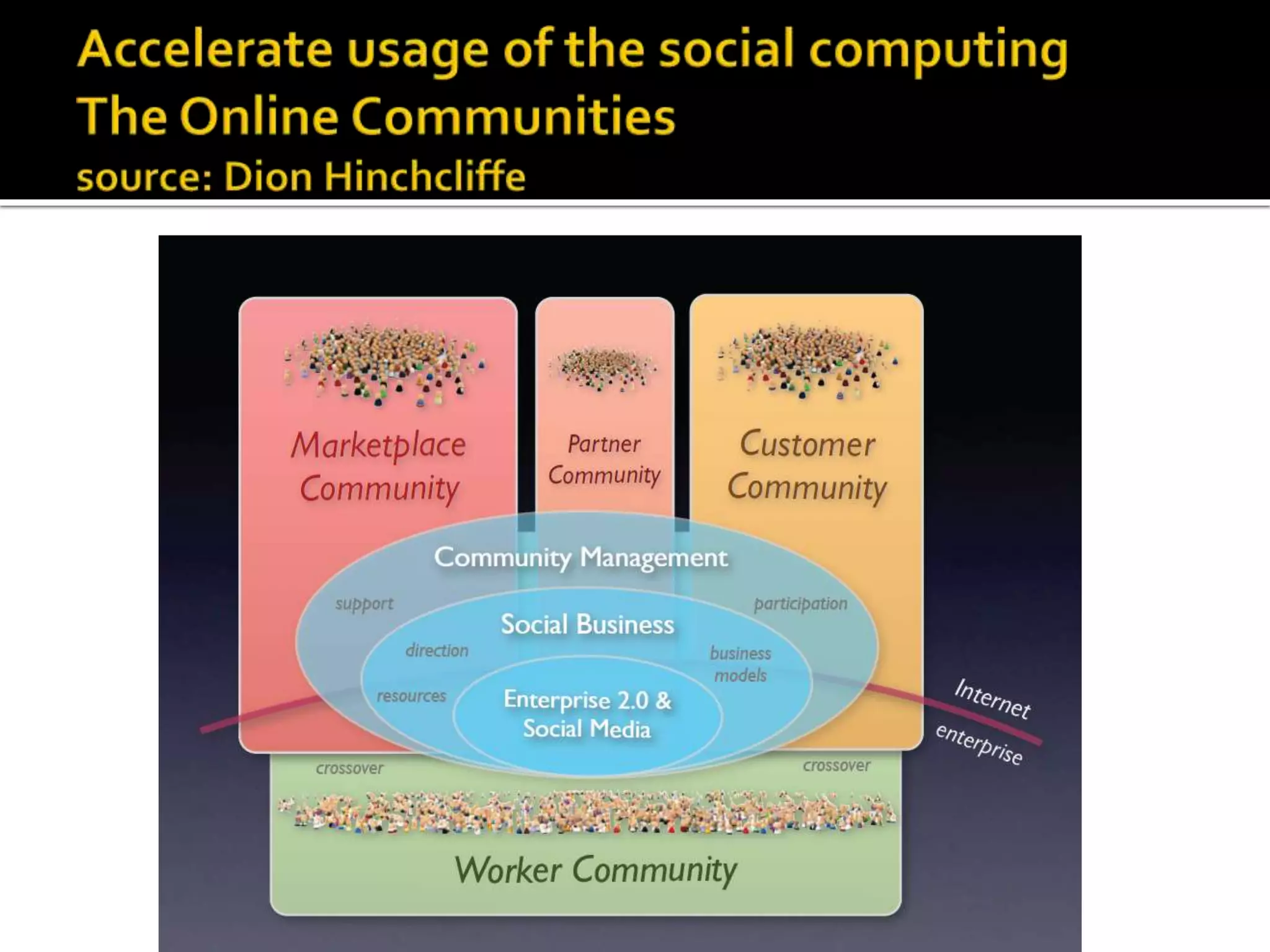
 New economic, social, government, and
cultural models emerging globally, largely
driven by theWeb (Dion Hinchcliffe)
 SSMED is an interdisciplinary approach to the
study, design, and implementation of
services systems
 Service science encompasses the application
of scientific, engineering and management
disciplines to tasks that one organization
performs beneficially for others, generally as
part of the services sector of the economy
(Springer)
 Industrialized nations have only two
technological avenues ahead to preserve or
improve competitiveness:
 Enhancement of their tech contents (high-tech
strategy)
 Acceleration and/or improvement of their existing
tech contents (low-tech strategy) (Giancarlo
Migliori)
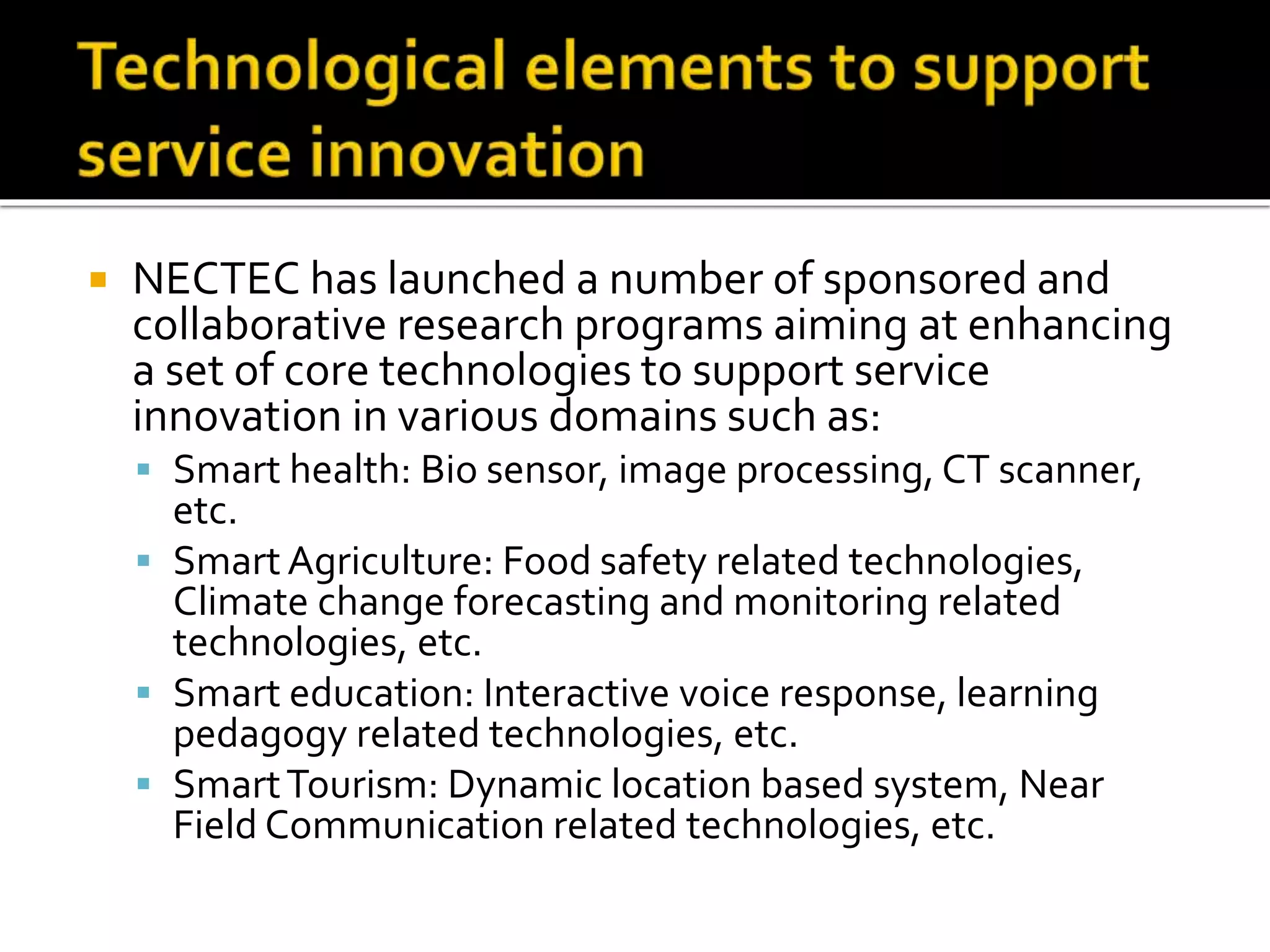
 NECTEC has launched a number of sponsored and
collaborative research programs aiming at enhancing
a set of core technologies to support service
innovation in various domains such as:
 Smart health: Bio sensor, image processing, CT scanner,
etc.
 Smart Agriculture: Food safety related technologies,
Climate change forecasting and monitoring related
technologies, etc.
 Smart education: Interactive voice response, learning
pedagogy related technologies, etc.
 SmartTourism: Dynamic location based system, Near
Field Communication related technologies, etc.
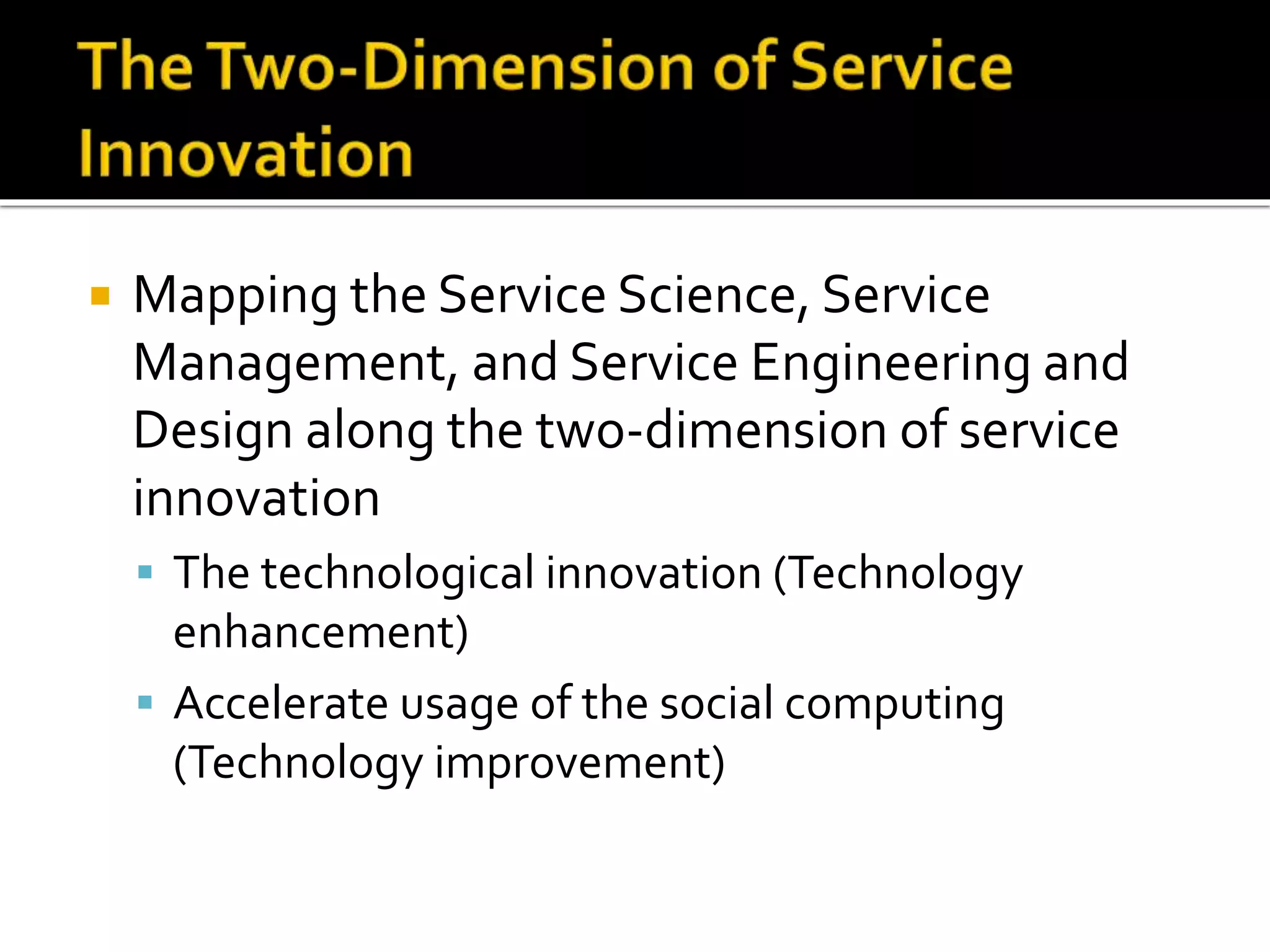
 Mapping the Service Science, Service
Management, and Service Engineering and
Design along the two-dimension of service
innovation
 The technological innovation (Technology
enhancement)
 Accelerate usage of the social computing
(Technology improvement)
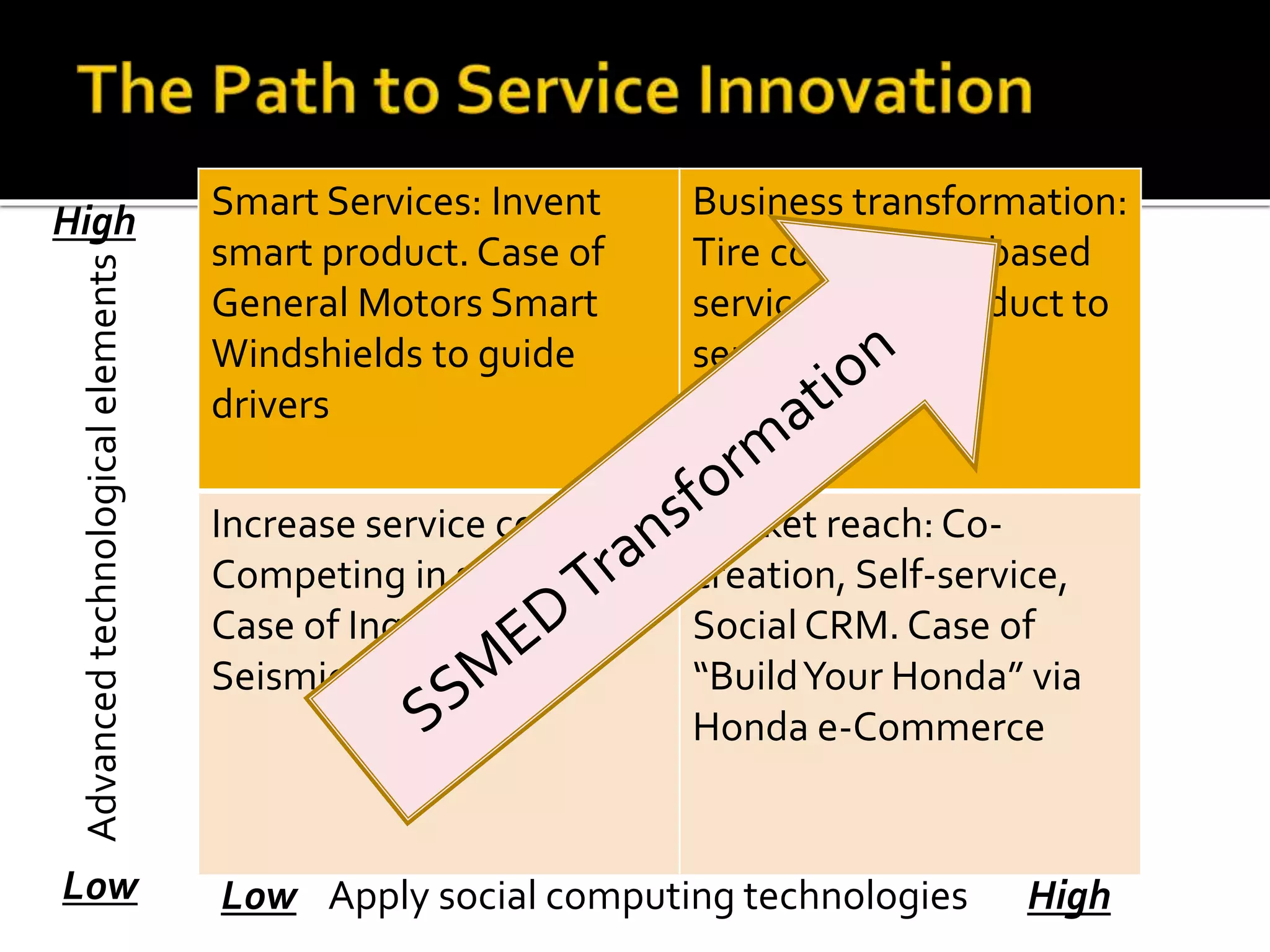
Smart Services: Invent
smart product. Case of
General Motors Smart
Windshields to guide
drivers
Business transformation:
Tire co. mileage based
service; from product to
service
Increase service contents:
Competing in service.
Case of Ingram Micro
Seismic service
Market reach: Co-
creation, Self-service,
Social CRM. Case of
“BuildYour Honda” via
Honda e-Commerce
Advancedtechnologicalelements
Low Apply social computing technologies High
High
Low
 Introduce new services in order to add more
value to the product
 The case of Ingram Micro Seismic service
 Ingram provides the Remote Network Monitoring
and Management system to itsVARs. Ingram’s
service offers great value toVARs; it givesVARs
the ability to:
▪ Proactively diagnose failure modes in advance
▪ Perform system maintenance before an outage occurs
▪ Fix the problem remotely without having to deploy
technicians to the client site
 Smart services are intelligence built within
products; it is about awareness and
connectivity rather than bundling products
with upkeep and upgrades. It requires
enhanced technologies.
 The case of GM’s innovation of the Smart
Windshield to enhance vision of the road for
drivers
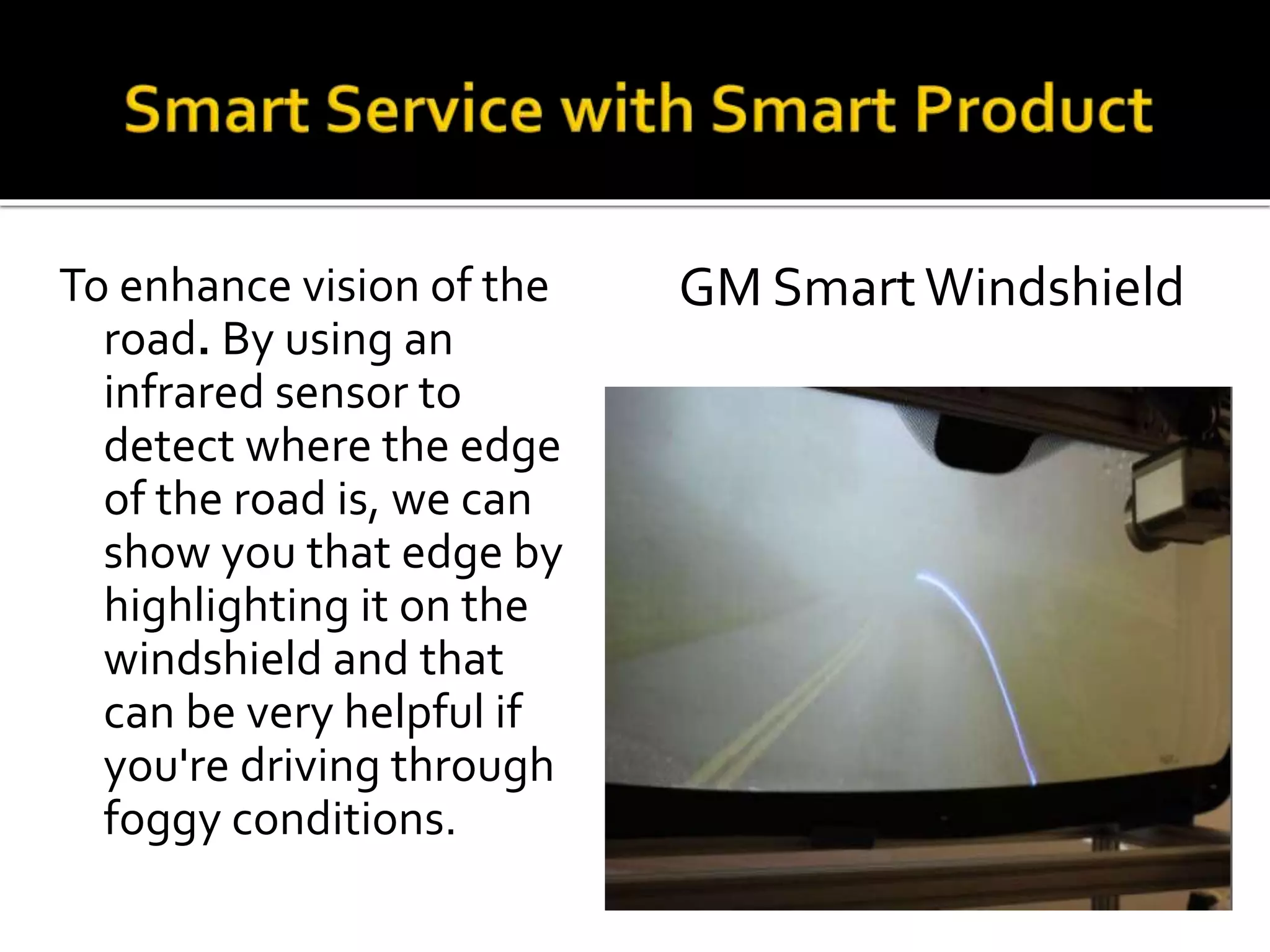
To enhance vision of the
road. By using an
infrared sensor to
detect where the edge
of the road is, we can
show you that edge by
highlighting it on the
windshield and that
can be very helpful if
you're driving through
foggy conditions.
GM SmartWindshield
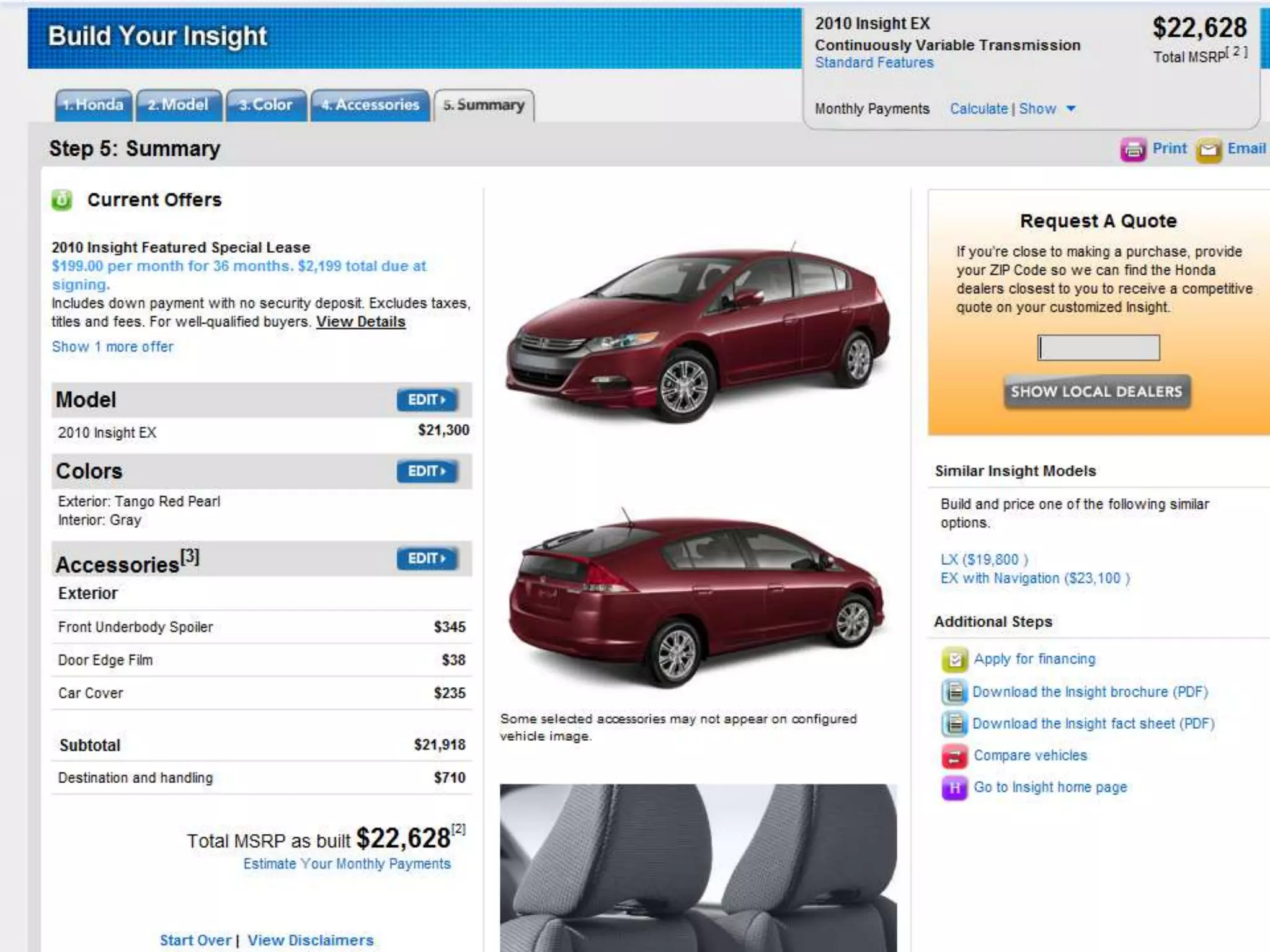
The case of extending “Customer Experience”
to the existing product; the case of Honda
(www.ehonda.com)
 Honda customization service through
eCommerce site allows customer select
model, features, color, etc. through an
interactive visual web portal (see the sample
view next page)
From business of selling product to selling
services
 Tire manufacturers are changing the selling
model to a charge for service model—charge
per mile of usage
 They use RFID/sensor technologies and GPS
to track speed and weight of loading, etc. as
the basis for charge calculation
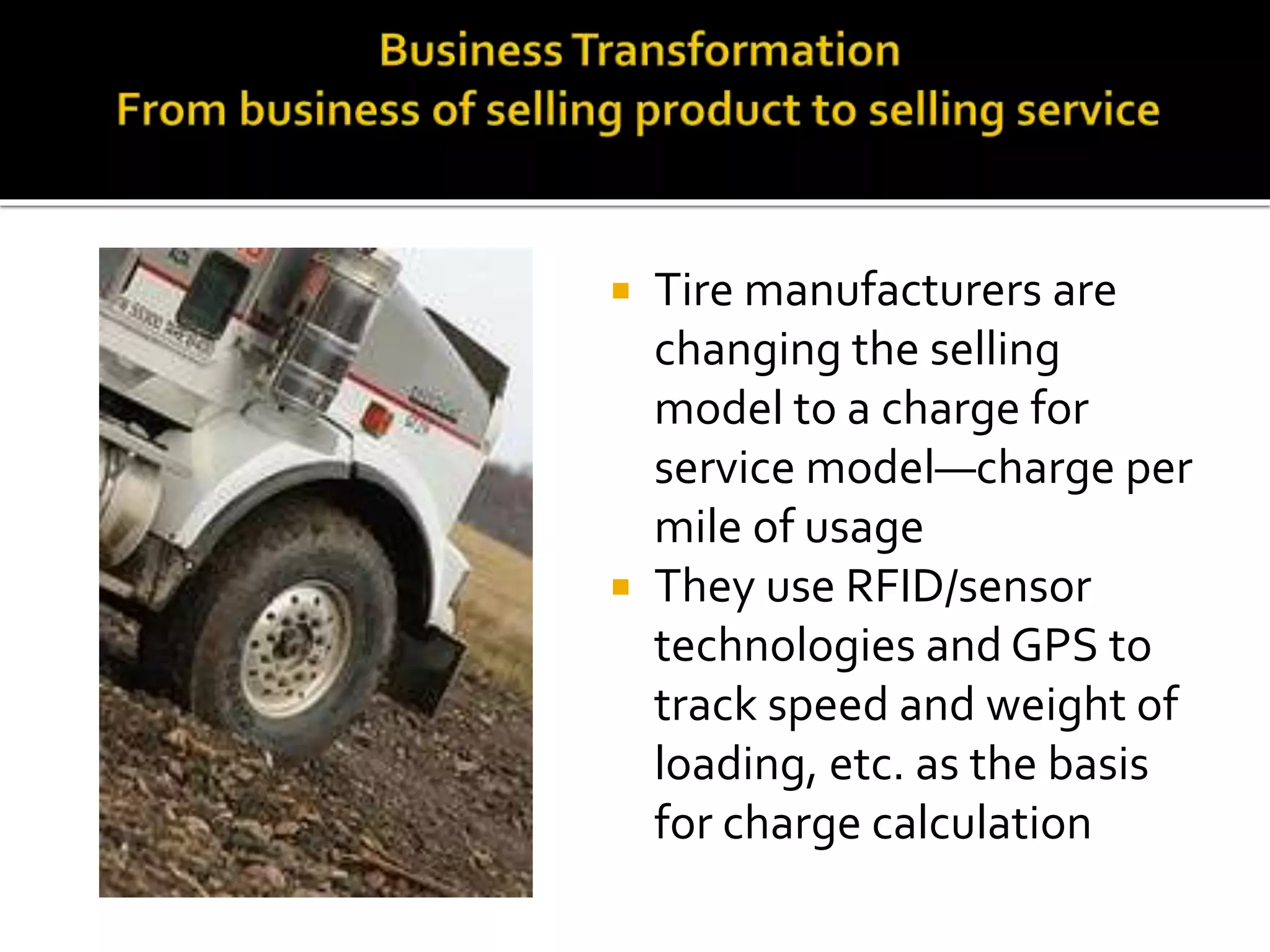
 Tire manufacturers are
changing the selling
model to a charge for
service model—charge per
mile of usage
 They use RFID/sensor
technologies and GPS to
track speed and weight of
loading, etc. as the basis
for charge calculation
16
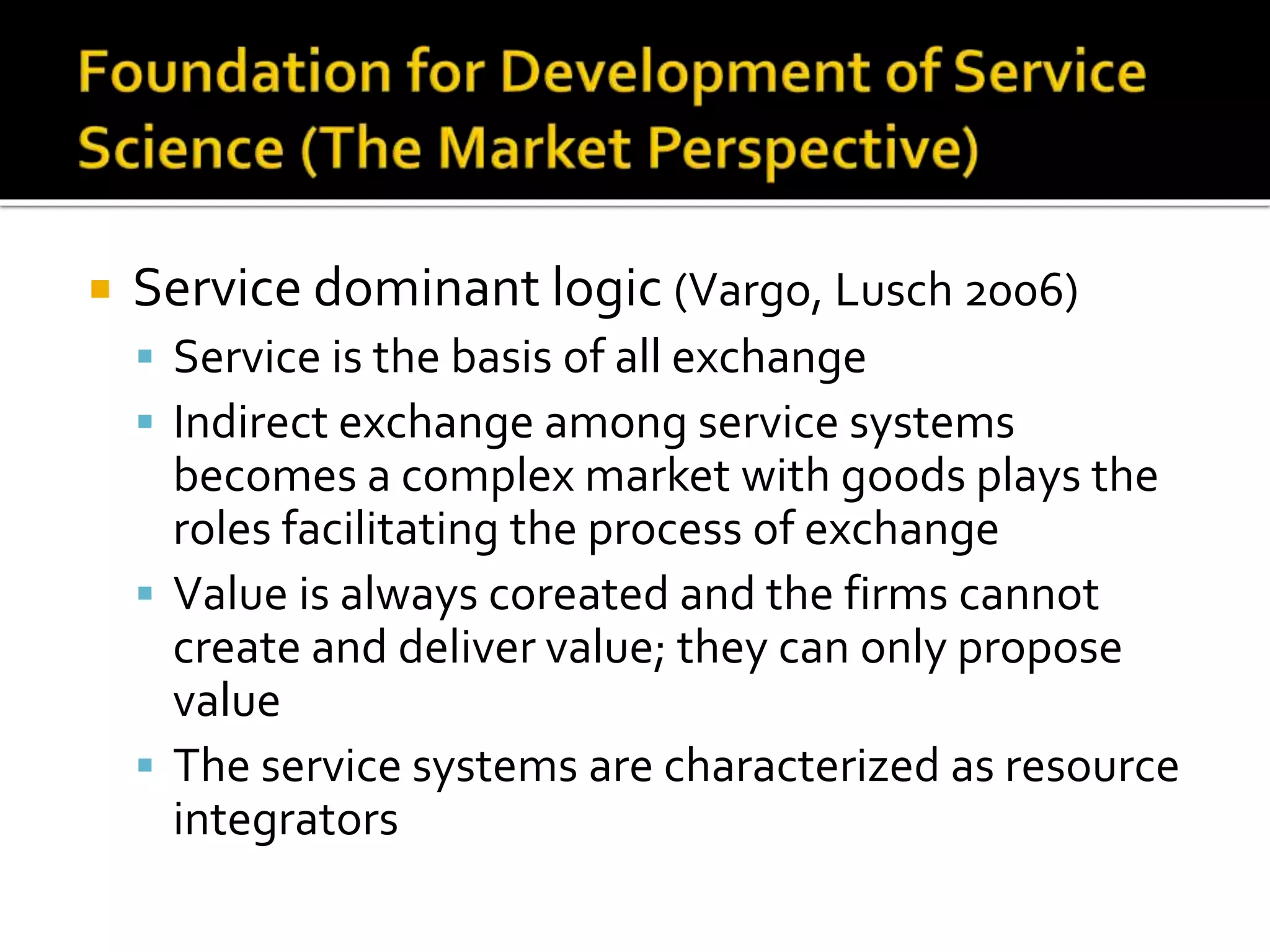
 Service dominant logic (Vargo, Lusch 2006)
 Service is the basis of all exchange
 Indirect exchange among service systems
becomes a complex market with goods plays the
roles facilitating the process of exchange
 Value is always coreated and the firms cannot
create and deliver value; they can only propose
value
 The service systems are characterized as resource
integrators
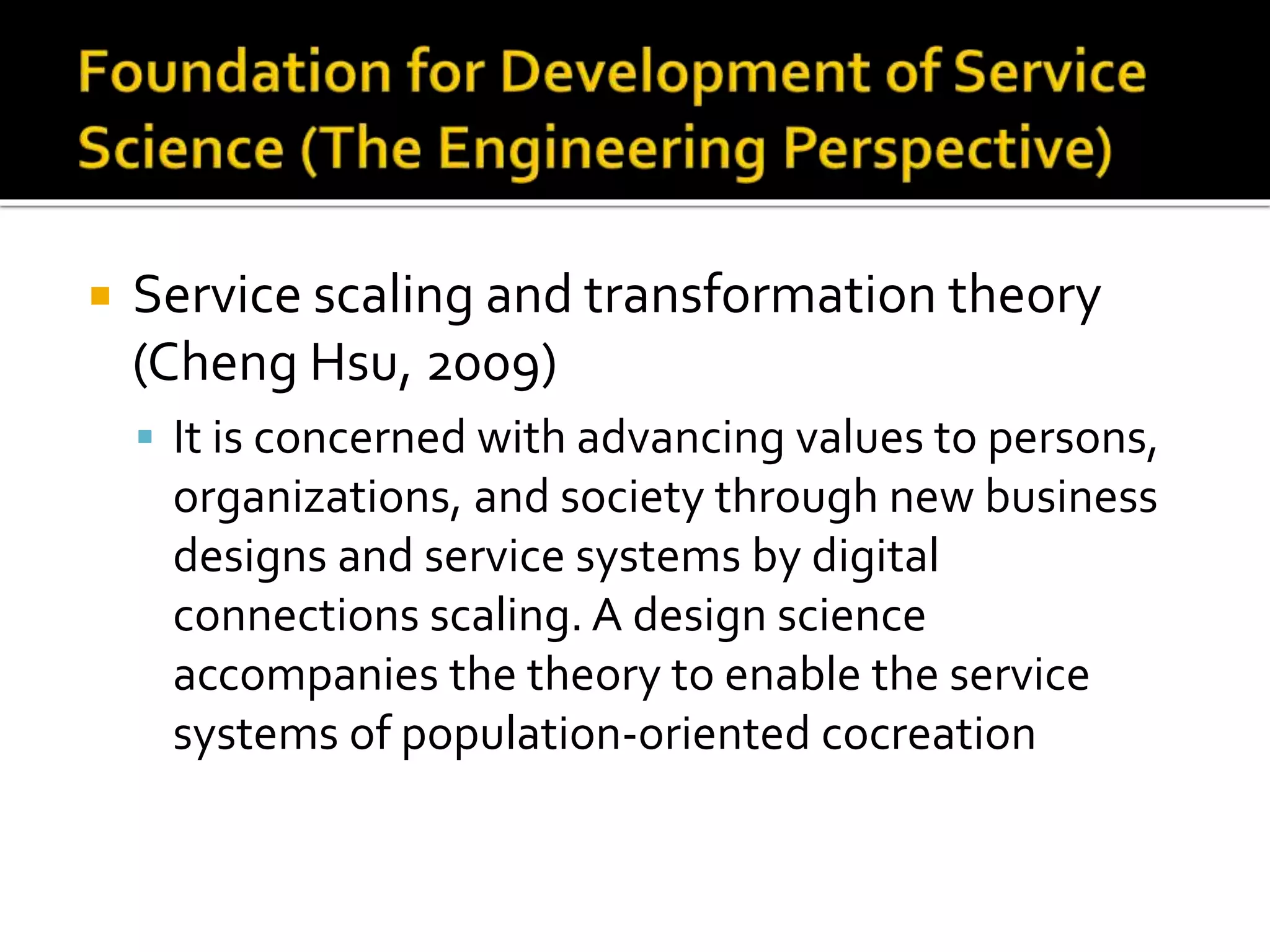
 Service scaling and transformation theory
(Cheng Hsu, 2009)
 It is concerned with advancing values to persons,
organizations, and society through new business
designs and service systems by digital
connections scaling. A design science
accompanies the theory to enable the service
systems of population-oriented cocreation
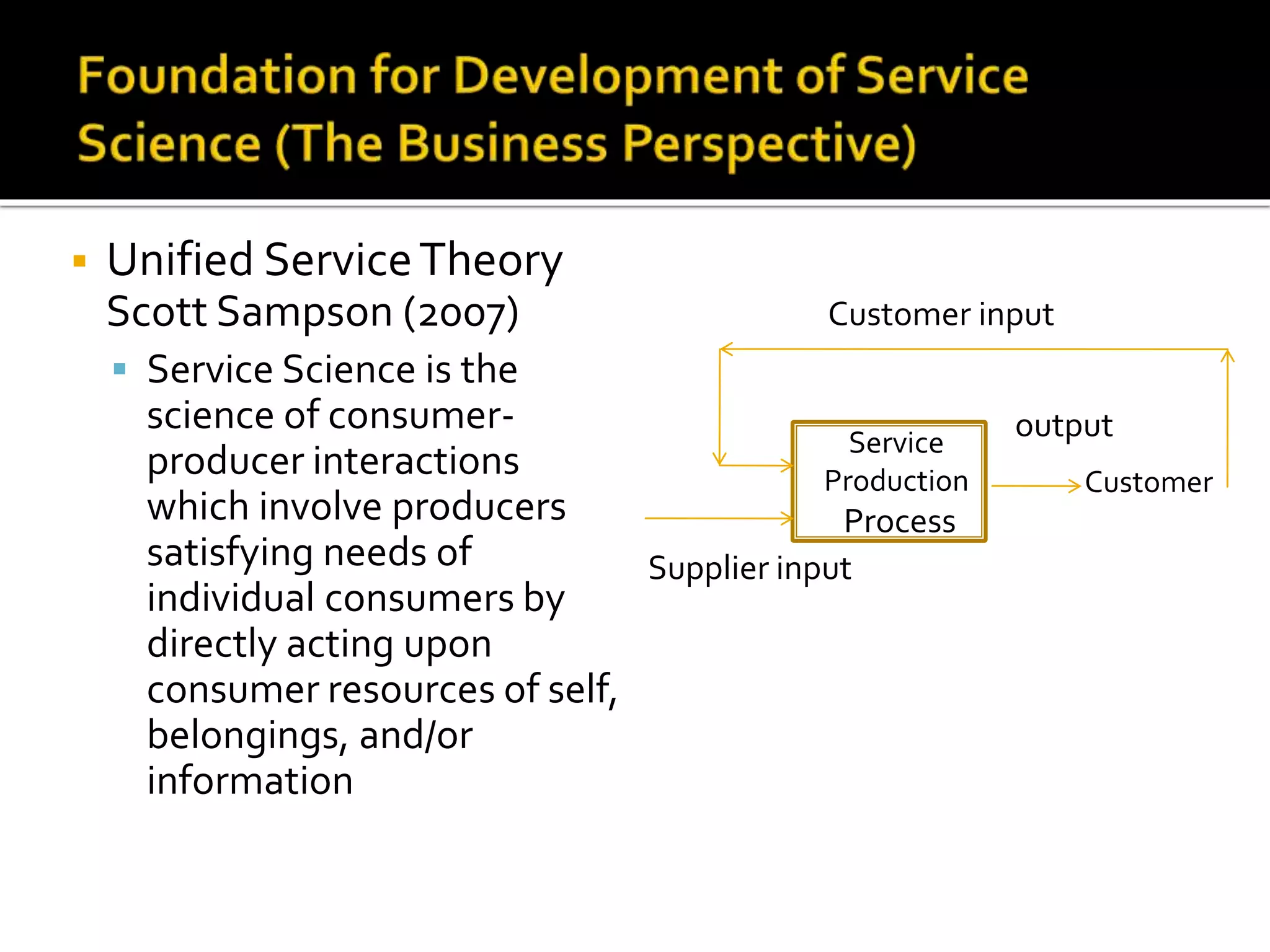
 Unified ServiceTheory
Scott Sampson (2007)
 Service Science is the
science of consumer-
producer interactions
which involve producers
satisfying needs of
individual consumers by
directly acting upon
consumer resources of self,
belongings, and/or
information
Service
Production
Process
Customer
Customer input
Supplier input
output
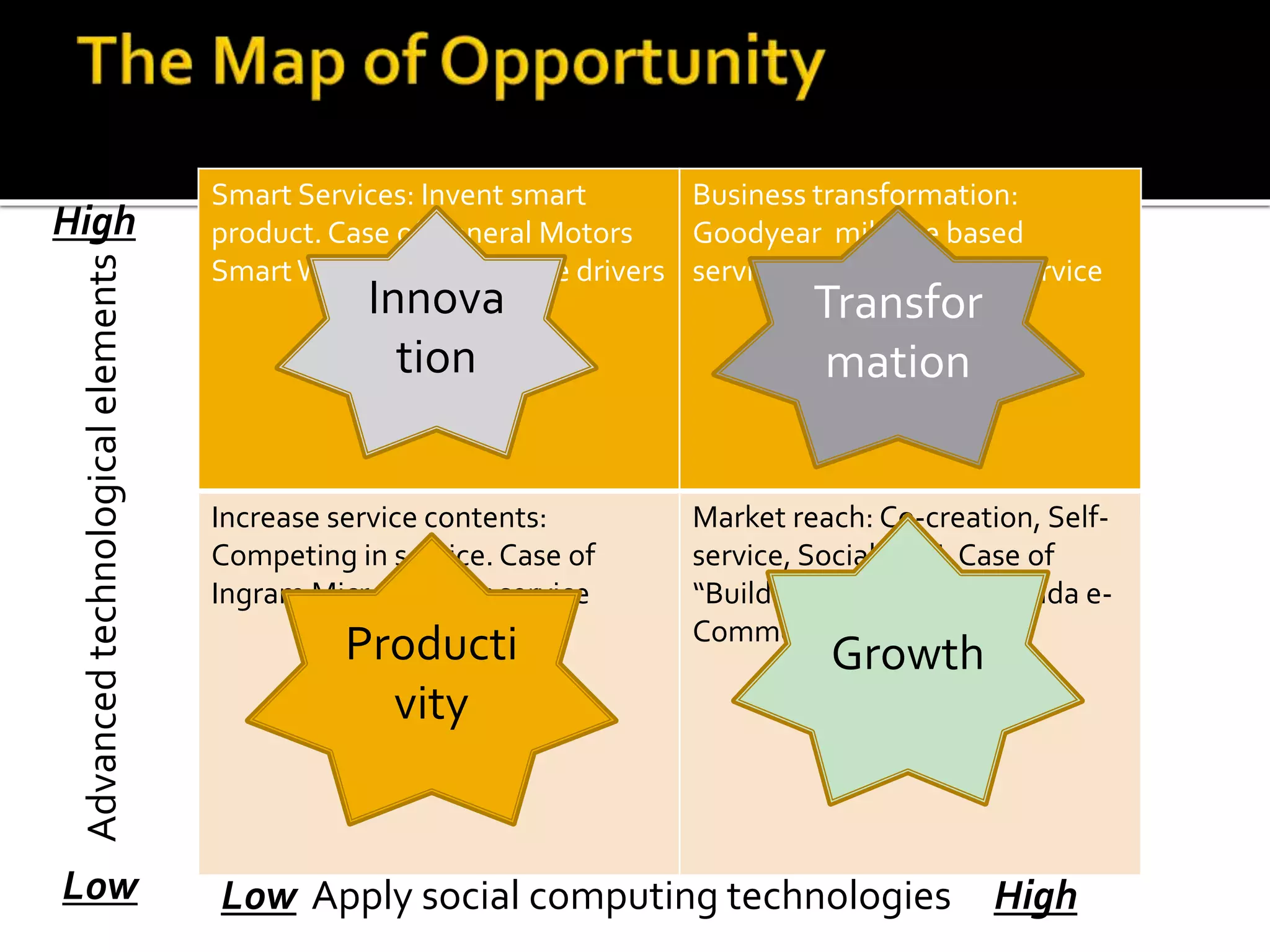
Smart Services: Invent smart
product. Case of General Motors
SmartWindshields to guide drivers
Business transformation:
Goodyear mileage based
service; from product to service
Increase service contents:
Competing in service. Case of
Ingram Micro Seismic service
Market reach: Co-creation, Self-
service, Social CRM. Case of
“BuildYour Honda” via Honda e-
Commerce
Advancedtechnologicalelements
Low Apply social computing technologies High
High
Low
Producti
vity
Innova
tion
Growth
Transfor
mation
 In service science: we still need to understand a
whole lot about service quality, customer
expectation, issues such as user control, access,
confidence and trust, and user experience.
 In service management: we need to understand
value creation, brand management,
personalization, coproduction, managing for
emergent behavior, knowing when and how to
capitalize on the innovations
 In service engineering: we need to know how
to adopt SOA and create a suitable service
platform, not only standard but adtoping and
using effectively.
 In service design:We need to know to unify in
a user centric design guided service
devlopment process, emphasize on user
interface and customer interaction at touch
points
23

Towards smart service research 2020 1010 v2

  • 1.
    ManooOrdeedolchest Chairman ICT Policy SripatumUniversity The InternationalACM Conference on Management of Emergent Digital EcoSystem October 26, 2010
  • 2.
     Advances indigitization is increasing opportunities to create new products and services and transform businesses (Prahalad and Ramaswamy)  New economic, social, government, and cultural models emerging globally, largely driven by theWeb (Dion Hinchcliffe)
  • 3.
     SSMED isan interdisciplinary approach to the study, design, and implementation of services systems  Service science encompasses the application of scientific, engineering and management disciplines to tasks that one organization performs beneficially for others, generally as part of the services sector of the economy (Springer)
  • 4.
     Industrialized nationshave only two technological avenues ahead to preserve or improve competitiveness:  Enhancement of their tech contents (high-tech strategy)  Acceleration and/or improvement of their existing tech contents (low-tech strategy) (Giancarlo Migliori)
  • 5.
     NECTEC haslaunched a number of sponsored and collaborative research programs aiming at enhancing a set of core technologies to support service innovation in various domains such as:  Smart health: Bio sensor, image processing, CT scanner, etc.  Smart Agriculture: Food safety related technologies, Climate change forecasting and monitoring related technologies, etc.  Smart education: Interactive voice response, learning pedagogy related technologies, etc.  SmartTourism: Dynamic location based system, Near Field Communication related technologies, etc.
  • 7.
     Mapping theService Science, Service Management, and Service Engineering and Design along the two-dimension of service innovation  The technological innovation (Technology enhancement)  Accelerate usage of the social computing (Technology improvement)
  • 8.
    Smart Services: Invent smartproduct. Case of General Motors Smart Windshields to guide drivers Business transformation: Tire co. mileage based service; from product to service Increase service contents: Competing in service. Case of Ingram Micro Seismic service Market reach: Co- creation, Self-service, Social CRM. Case of “BuildYour Honda” via Honda e-Commerce Advancedtechnologicalelements Low Apply social computing technologies High High Low
  • 9.
     Introduce newservices in order to add more value to the product  The case of Ingram Micro Seismic service  Ingram provides the Remote Network Monitoring and Management system to itsVARs. Ingram’s service offers great value toVARs; it givesVARs the ability to: ▪ Proactively diagnose failure modes in advance ▪ Perform system maintenance before an outage occurs ▪ Fix the problem remotely without having to deploy technicians to the client site
  • 10.
     Smart servicesare intelligence built within products; it is about awareness and connectivity rather than bundling products with upkeep and upgrades. It requires enhanced technologies.  The case of GM’s innovation of the Smart Windshield to enhance vision of the road for drivers
  • 11.
    To enhance visionof the road. By using an infrared sensor to detect where the edge of the road is, we can show you that edge by highlighting it on the windshield and that can be very helpful if you're driving through foggy conditions. GM SmartWindshield
  • 12.
    The case ofextending “Customer Experience” to the existing product; the case of Honda (www.ehonda.com)  Honda customization service through eCommerce site allows customer select model, features, color, etc. through an interactive visual web portal (see the sample view next page)
  • 14.
    From business ofselling product to selling services  Tire manufacturers are changing the selling model to a charge for service model—charge per mile of usage  They use RFID/sensor technologies and GPS to track speed and weight of loading, etc. as the basis for charge calculation
  • 15.
     Tire manufacturersare changing the selling model to a charge for service model—charge per mile of usage  They use RFID/sensor technologies and GPS to track speed and weight of loading, etc. as the basis for charge calculation
  • 16.
  • 17.
     Service dominantlogic (Vargo, Lusch 2006)  Service is the basis of all exchange  Indirect exchange among service systems becomes a complex market with goods plays the roles facilitating the process of exchange  Value is always coreated and the firms cannot create and deliver value; they can only propose value  The service systems are characterized as resource integrators
  • 18.
     Service scalingand transformation theory (Cheng Hsu, 2009)  It is concerned with advancing values to persons, organizations, and society through new business designs and service systems by digital connections scaling. A design science accompanies the theory to enable the service systems of population-oriented cocreation
  • 19.
     Unified ServiceTheory ScottSampson (2007)  Service Science is the science of consumer- producer interactions which involve producers satisfying needs of individual consumers by directly acting upon consumer resources of self, belongings, and/or information Service Production Process Customer Customer input Supplier input output
  • 20.
    Smart Services: Inventsmart product. Case of General Motors SmartWindshields to guide drivers Business transformation: Goodyear mileage based service; from product to service Increase service contents: Competing in service. Case of Ingram Micro Seismic service Market reach: Co-creation, Self- service, Social CRM. Case of “BuildYour Honda” via Honda e- Commerce Advancedtechnologicalelements Low Apply social computing technologies High High Low Producti vity Innova tion Growth Transfor mation
  • 21.
     In servicescience: we still need to understand a whole lot about service quality, customer expectation, issues such as user control, access, confidence and trust, and user experience.  In service management: we need to understand value creation, brand management, personalization, coproduction, managing for emergent behavior, knowing when and how to capitalize on the innovations
  • 22.
     In serviceengineering: we need to know how to adopt SOA and create a suitable service platform, not only standard but adtoping and using effectively.  In service design:We need to know to unify in a user centric design guided service devlopment process, emphasize on user interface and customer interaction at touch points
  • 23.