Towards Resilient Organizations and Societies Rómulo Pinheiro
Towards Resilient Organizations and Societies Rómulo Pinheiro
Towards Resilient Organizations and Societies Rómulo Pinheiro
Towards Resilient Organizations and Societies Rómulo Pinheiro
Towards Resilient Organizations and Societies Rómulo Pinheiro
1.
Download the fullversion and explore a variety of ebooks
or textbooks at https://ebookmass.com
Towards Resilient Organizations and Societies
Rómulo Pinheiro
_____ Follow the link below to get your download now _____
https://ebookmass.com/product/towards-resilient-
organizations-and-societies-romulo-pinheiro/
Access ebookmass.com now to download high-quality
ebooks or textbooks
2.
We have selectedsome products that you may be interested in
Click the link to download now or visit ebookmass.com
for more options!.
Higher Education and Regional Development 1st ed. Edition
Rómulo Pinheiro
https://ebookmass.com/product/higher-education-and-regional-
development-1st-ed-edition-romulo-pinheiro/
Resilient and Sustainable Cities: Research, Policy and
Practice Zaheer Allam
https://ebookmass.com/product/resilient-and-sustainable-cities-
research-policy-and-practice-zaheer-allam/
Monetary Transitions: Currencies, Colonialism and African
Societies 1st Edition
https://ebookmass.com/product/monetary-transitions-currencies-
colonialism-and-african-societies-1st-edition/
Everyday Boundaries, Borders and Post Conflict Societies
Renata Summa
https://ebookmass.com/product/everyday-boundaries-borders-and-post-
conflict-societies-renata-summa/
3.
Intergovernmental Relations inDivided Societies Fessha
https://ebookmass.com/product/intergovernmental-relations-in-divided-
societies-fessha/
Homeowners and the Resilient City: Climate-Driven Natural
Hazards and Private Land Thomas Thaler
https://ebookmass.com/product/homeowners-and-the-resilient-city-
climate-driven-natural-hazards-and-private-land-thomas-thaler/
Everyday Boundaries, Borders and Post Conflict Societies
1st ed. Edition Renata Summa
https://ebookmass.com/product/everyday-boundaries-borders-and-post-
conflict-societies-1st-ed-edition-renata-summa/
The Resilient Leader: Life Changing Strategies to Overcome
Today's Turmoil and Tomorrow's Uncertainty Christine
Perakis
https://ebookmass.com/product/the-resilient-leader-life-changing-
strategies-to-overcome-todays-turmoil-and-tomorrows-uncertainty-
christine-perakis/
Understanding and Managing Public Organizations, 5th
Edition
https://ebookmass.com/product/understanding-and-managing-public-
organizations-5th-edition/
5.
Towards Resilient Organizations
andSocieties
A Cross-Sectoral and Multi-Disciplinary
Perspective
Edited by
Rómulo Pinheiro
Maria Laura Frigotto
Mitchell Young
PUBLIC SECTOR ORGANIZATIONS
6.
Public Sector Organizations
SeriesEditors
B. Guy Peters, Department of Political Science, Pittsburgh University,
Pittsburgh, PA, USA
Geert Bouckaert, Public Management Institute, Katholieke Universiteit
Leuven, Leuven, Vlaams Brabant, Belgium
7.
Organizations are thebuilding blocks of governments. The role of
organizations, formal and informal, is most readily apparent in public
bureaucracy, but all the institutions of the public sector are comprised of
organizations, or have some organizational characteristics that affect their
performance. Therefore, if scholars want to understand how governments
work, a very good place to start is at the level of organizations involved in
delivering services. Likewise, if practitioners want to understand how to
be effective in the public sector, they would be well-advised to consider
examining the role of organizations and how to make organizations more
effective. This series publishes research-based books concerned with orga-
nizations in the public sector and covers such issues as: the autonomy
of public sector organizations; networks and network analysis; bureau-
cratic politics; organizational change and leadership; and methodology
for studying organizations.
More information about this series at
https://link.springer.com/bookseries/14525
8.
Rómulo Pinheiro ·Maria Laura Frigotto ·
Mitchell Young
Editors
Towards Resilient
Organizations
and Societies
A Cross-Sectoral and Multi-Disciplinary Perspective
Foreword
As sharply illustratedin this book, despite the common ancient root in
Latin, the meaning of resilience changes from discipline to discipline,
from domain to domain, from perspective to perspective. In recent years,
the very term resilience has attracted such increasing scholarly attention
that it has acquired centrality in managerial debate, becoming a jargon
or portmanteau term; an issue of ambiguity that this book is very clearly
addressing, by weaving back and forth in reconstructing the very complex
texture of resilience via an exhaustive, cross-sectoral and multi-disciplinary
perspective.
In the very days in which this book sees the light, the world is facing
the Covid-19 pandemic: an unprecedented jolt and shock to our personal,
professional, organizational and communitarian lives. As often happens
in times of crisis, politicians and decision-makers are encouraging us to
be resilient, and promote the nurturing of resilience at all levels (as
citizens, individual workers, teams, organizations and communities). A
question legitimately arises, though: Is resilience itself resilient enough to
be employed in these troubled days?
To get rid of the potential tautology, some further reflection may be
found useful. I like to frame resilience in the light of the Chinese proverb
“When the winds of change blow, some people build walls and others
build windmills” (Gallo, 2015; Giustiniano et al., 2020), as the capacity to
build walls and windmills at the same time, boasting the ability to absorb
shocks and endure, to be “sponge and titanium” (Giustiniano & Cantoni,
v
11.
vi FOREWORD
2018). Todo so, one might accept that resilience, however defined, is a
complex construct made of opposing tensions (e.g. executing vs. learning,
rethinking vs. adapting). As the book unshyly reveals, such tensions are
paradoxically intertwined (Giustiniano et al., 2018); hence, resilience has
a paradoxical side. To this extent, the practice of resilience can be seen
as “paradox work” with managers and policy makers called to resourcing
their organizations under tension. The cases presented in the book show
that the attempt—and sometimes the achievement—of resilience can be
pursued by identifying new scopes of meaning (situational, organiza-
tional or institutional) and by extending the very frameworks in which
organizational life takes place (see also Schneider, Bullinger & Brandl,
2020).
As organizational life relies on resilience, it’s necessary to remember
that resilience is not based on individuals but on collectives: entire
communities can express resilience, even in the absence of resilient
members; on the contrary, a group of resilient individuals does not
guarantee a resilient team (for example, if a collaborative atmosphere is
lacking).
What’s feeding such a resilient life, then? Learning appears to be the
main course on the menu, and in particular keeping the capacity of
“learning to learn” active and energetic. “Learning to learn” is about
nurturing generative doubt (Välikangas & Romme, 2013), by returning
to a sense of mission, requalifying and reinventing a new sense of orga-
nizational purpose, while asking “why are we doing this?” Resilience
emerges as a paradoxical force: Risk factors can destroy, but where they
do not, resilience can be energized. While a group of resilient individuals
does not guarantee a resilient team (for example, if it lacks a collabora-
tive and socially supportive culture), resilience is based not on individuals
alone but collectives; entire communities can express resilience, even in
the absence of resilient members. Similar to other related constructs (e.g.
grit), therefore, the presence of resilience does not grant the spread of
resilience. In fact, for resilience to escalate to higher levels of aggregation
(e.g. from the individual to the teams), it must be expressed by indi-
viduals, conveyed towards the others and perceived by the receivers (see
Rego et al., 2020). Hence, as clearly illustrated in the many cases reported
in the book, for organizations and communities to survive and flourish,
policy makers, managers and professionals should consider resilience as
the achievement and maintenance of “positive adaptation”, as reactive
organizational experimentation out of the ordinary, building on paradox
12.
FOREWORD vii
work anda paradoxical mindset (Miron-Spektor et al., 2018). Nonethe-
less, as the book gently suggests, “too much of a good thing can be
a bad thing”. As reality reports, an extreme concern for resilience may
induce people to become overly persistent in seeking to achieve unattain-
able goals or overly tolerant of adversity (like tolerating demoralizing jobs,
toxic bosses or dangerous working conditions). Additionally, “unwanted
phenomena” (crime, a cancer) can engender resilience.
In synthesis, I believe the construct of resilience can boost resilience
even in times of unprecedented uncertainty and ambiguity, both as
a construct in the academic debate and as a feature for managerial
practice. For that to happen, though, it must be approached from a
multi-disciplinary perspective and pursued with a strong-willed agency by
organizational leaders, as this book sharply suggests.
November 2020 Luca Giustiniano
Full Professor of Organization
Studies and Director of the
Center for Research on
Leadership, Innovation and
Organisation (CLIO)
Luiss University
Rome, Italy
References
Cunha, M. P., & Putnam, L. L. (2019). Paradox theory and the paradox of
success. Strategic Organization, 17 (1), 95–106.
Gallo, F. T. (2015). The enlightened leader: Lessons from China on the art of
executive coaching. Emerald Group Publishing.
Giustiniano, L., & Cantoni, F. (2018). Between Sponge and Titanium: Designing
micro and macro features for the resilient organization. In Boccardelli,
P, Annosi, M. C., Brunetta, F. & Magnusson, M. (Eds.), Learning and
innovation in hybrid organizations (pp. 167–190). Palgrave Macmillan, Cham.
Giustiniano, L., Clegg, S. R., Cunha, M. P., & Rego, A. (2018). Elgar
introduction to theories of organizational resilience. Edward Elgar Publishing.
Giustiniano, L., Cunha, M. P., Simpson, A. V., Rego, A., & Clegg, S. (2020).
Resilient leadership as paradox work: Notes from COVID-19. Management
and Organization Review, 1–5.
13.
viii FOREWORD
Miron-Spektor, E.,Ingram, A., Keller, J., Smith, W. K., & Lewis, M. W. (2018).
Microfoundations of organizational paradox: The problem is how we think
about the problem. Academy of Management Journal, 61(1), 26–45.
Rego, A., Cavazotte, F., Cunha, M. P. E., Valverde, C., Meyer, M., & Gius-
tiniano, L. (2020). Gritty leaders promoting employees’ thriving at work.
Journal of Management, 0149206320904765.
Schneider, A., Bullinger, B., & Brandl, J. (2020). Resourcing under tensions:
How frontline employees create resources to balance paradoxical tensions.
Organization Studies, 0170840620926825.
Välikangas, L., & Romme, A. G. L. (2013). How to design for strategic
resilience: A case study in retailing. Journal of Organization Design, 2(2),
44–53.
Acknowledgments
This edited volumetraces its origins to a 2018 panel on ‘The Surprising
Nature of Resilience Organizations’ hosted by the European Group for
Organizational Studies (EGOS), July 5–7, Tallinn, Estonia. The book is
the result of an intense and rewarding 2-year long collaboration involving
more than 30 researchers spread across 15 countries. In addition to the
(2-day) kick off panel in Tallinn, with 17 papers, a group of researchers
met face to face as well as online in Prague for a 2-day workshop (to
discuss revised drafts) in September 2019.
First and foremost, we sincerely thank all the participants, including
those who, for one reason or another, did not make it in the final volume,
for their important contributions in highly engaged and constructive
discussions throughout the entire process.
We also wish to give a special thanks to both EGOS and the Faculty
of Social Sciences at Charles University for hosting us during 2018 and
2019.
Finally, we would like to thank the following institutions for their valu-
able financial support in making this entire volume freely available as
Open Access:
• Faculty of Social Sciences, Charles University, Czech Republic
• Faculty of Economics and Administration, Masaryk University,
Czech Republic
• Faculty of Management and Business, Tampere University, Finland
xi
16.
xii ACKNOWLEDGMENTS
• Departmentof Economics and Management, University of Trento,
Italy
• Faculty of Economics and Management, Free University of Bozen-
Bolzano, Italy
• Wellington School of Business & Government, Victoria University
of Wellington, New Zealand
• University of Agder, Norway
• Western Norway University of Applied Sciences, Norway
• KTH Royal Institute of Technology, Sweden
October 2021
Kristiansand, Norway
Trento, Italy
Prague, Czech Republic
17.
Praise for TowardsResilient
Organizations and Societies
“Resilience is not just a buzzword, but a fundamental ingredient of the
cultural shift we need to address the challenges of the 21st Century and
take the world onto a sustainable development path. This book provides
an excellent framework to design innovative policies and strategies to
build a less vulnerable and more resilient socioeconomic system.”
—Enrico Giovannini, Italian Economist and Statistician, University of
Rome, Italy, and Italian Minister of Sustainable Infrastructure and
Mobility (2021-ongoing)
“Resilience in Organizations and Societies moves forward the notion that
organizational and societal resilience are interconnected. An important
book that sets the agenda for future thinking and research on the varieties
of ways that we think about resilience. Filled with engaging examples and
built on a strong conceptual foundation, this is a must read for academics
and practitioners interested in the interdisciplinary study of resilience at
all levels, individual, organizational, and societal.”
—Christopher Kayes, Professor of Management, The George Washington
University, School or Business, USA, and author of Organizational
Resilience: How Learning Sustains Organizations in Crisis, Disaster, and
Breakdown (2015)
“This timely book Towards Resilient Organizations and Societies adds a
much needed cross-sectoral and multi-disciplinary perspective to the field
xiii
18.
xiv PRAISE FORTOWARDS RESILIENT ORGANIZATIONS AND …
and offers an exciting collection of chapters that examine resilience both
at organizational and societal levels. A worthwhile read for academics and
practitioners!”
—Martina Linnenluecke, Director, Centre for Corporate Sustainability
and Environmental Finance, Macquarie Business School, Macquarie
University, Australia
19.
Contents
Part I Resilience:Antecedents, Paradigms and
Perspectives
1 Resilience in Organizations and Societies: The
State of the Art and Three Organizing Principles
for Moving Forward 3
Maria Laura Frigotto, Mitchell Young,
and Rómulo Pinheiro
Part II Resilience in Organisations
2 Decision Premises, Learning and Organizational
Resilience Addressing Novel Adversities 43
Maria Laura Frigotto, Loris Gaio, Alessandro Narduzzo,
and Marco Zamarian
3 Installing an Action Space for Resilience in Surprising
Situations 65
Johannes M. Lehner, Eva Born, Peter Kelemen,
and Rainer Born
4 Building Resilience in Temporary Organizations:
Lessons from a Shipyard 91
Anne Russel, Stéphanie Tillement, and Benoit Journé
xv
20.
xvi CONTENTS
5 APractical Perspective on Resilience in Organizations:
The Interplay Between Structure and Action 117
Anouck Adrot, Oriane Sitte de Longueval,
and Alexandre Largier
6 Growing and Adapting During Continuous Change:
Building Employee Resilience in the Public Sector 143
Esme Franken, Geoff Plimmer, Sanna Malinen,
and Jane Bryson
Part III Resilience in Organizational Fields and Societies
7 The Post-entrepreneurial University: The Case
for Resilience in Higher Education 173
Mitchell Young and Rómulo Pinheiro
8 Organizational Persistence in Highly Institutionalized
Environments: Unpacking the Relation Between
Identity and Resilience 195
Lars Geschwind, Rómulo Pinheiro, and Bjørn Stensaker
9 Resilience and Change in Opera Theatres: Travelling
the Edge of Tradition and Contemporaneity 223
Maria Laura Frigotto and Francesca Frigotto
10 Being Resilient Between the Region and the Higher
Education System? Views on Regional Higher
Education Institutions in Estonia and Finland 249
Jari Kolehmainen, Heli Kurikka, Anne Keerberg,
and Garri Raagmaa
11 Agency, Institutions and Regional Resilience:
An Approach from the Basque Region 277
Edurne Magro, Elvira Uyarra, and Jesus M. Valdaliso
21.
CONTENTS xvii
Part IVTaking Stock and Moving Forward
12 Towards Resilient Organisations and Societies?
Reflections on the Multifaceted Nature of Resilience 307
Mitchell Young, Maria Laura Frigotto,
and Rómulo Pinheiro
Index 333
22.
Notes on Contributors
AnouckAdrot is an Associate Professor at Paris-Dauphine University
PSL, affiliated to the Dauphine Recherches en Management (DRM)
research centre. She holds a dual-degree Ph.D. from Georgia State
University and Paris-Dauphine University. Her research interests cover
collective behaviours, information transmission, organizational collapse
and emergence in demanding and critical settings.
Eva Born is an Assistant Professor at the Department of Corporate
Economy, Faculty of Economics and Administration, Masaryk Univer-
sity, Brno, Czech Republic, and a Post-Doctoral Research Fellow at the
Cognitive Science Research Platform, University of Vienna, Austria. In
her research, she mainly focuses on both the identification as well as
the development of organizational antecedents and behavioural patterns
and skills on team and individual level allowing for resilient dealing with
surprise in and around organizations. Her research has been published
in journals, such as Journal of Organizational Transformation and Social
Change, and in various monographs.
Rainer Born (1943–2021) was an Associate Professor in Philosophy and
Theory of Science at the Department of Corporate Economy, Faculty
of Economics and Administration, Masaryk University, Brno, Czech
Republic and at the Institute of Business Informatics—Communications
Engineering at the Johannes Kepler University in Linz, Austria. He was a
member of the Scientific Committee of the Austrian Ministry of Defense
xix
23.
xx NOTES ONCONTRIBUTORS
and Sports. His research centred around the specific practical operational-
ization of explanatory concepts in applied economics and administrative
behaviour, as well as the decision- and action-guiding interplay of these
concepts. The second edition of his book Artificial Intelligence: The Case
Against was published in 2018 by Routledge.
Jane Bryson is a Professor in Human Resource Management and
Employment Relations at Victoria University of Wellington. She
researches the range of institutional, organizational and individual factors
which influence human capability at work. Most recently she has exam-
ined the impact of employment law on workplace management practices;
and the influence of collective voice on worker access to training.
Oriane Sitte de Longueval works as a Researcher at the University of
Geneva, Switzerland. She gained her Ph.D. in Management at Paris-
Dauphine University PSL in France and did a post-doctoral fellow at
Geneva University. Her research focuses on interactions in tense or risky
contexts, following a situated approach and ethnographic method. Her
work explores violence between clients and frontline staff, scapegoating in
organizations, crisis management professionalization and the negotiation
of safety between separate occupational groups.
Esme Franken is a Lecturer in Management at Edith Cowan Univer-
sity in Perth, Western Australia. Her research interests are in leadership
behaviours, employee development and resilience.
Francesca Frigotto is a harp Professor at the Conservatory of Music
Giovan Battista Martini in Bologna (Italy). As solo-Harpist, and in
chamber music groups, she has won several national and international
music competitions and recorded for RAI Italian National Radio and
Television and Radio France. She has played with the famous orchestras
and opera houses, such as Teatro alla Scala in Milano, Maggio Musi-
cale Fiorentino in Florence, Arena in Verona, Teatro La Fenice in Venice
and Teatro Comunale in Bologna. She earned her degree in harp at the
Conservatory of Music Claudio Monteverdi in Bolzano and her masters
at the Scuola di Alto Perfezionamento Musicale in Saluzzo (European
Master Music Course). She is also a scholar in Music Studies with a degree
in History, Critics and Performance Production from the University of
Florence. Her studies address the history of the harp as an instrument
and the role of music in the political discourse during fascism in Italy.
24.
NOTES ON CONTRIBUTORSxxi
Maria Laura Frigotto is an Associate Professor in Organization Theory
and Management at the University of Trento (Italy) where she is a
member of the Department of Economics and Management, of the Insti-
tute for Safety and Security (ISSTN) of the School of Innovation and of
the Ph.D. Programme in Economics and Management. She was a visiting
scholar at Stanford (SCANCOR) USA, at the University of Alberta,
Canada, and at IMT Lucca, Italy. Her research focuses on novelty, espe-
cially in its unexpected and emergent form, in relation to resilience and
innovation. She has studied emergency management organizations such as
civil protection agencies and paradigmatic events such as the 911 terrorist
attack in New York, but also very different contexts such as the operatic
sector.
Loris Gaio is an Associate Professor in Management at the Depart-
ment of Economics and Management of the University of Trento (Italy),
where he teaches courses in operations and project management. He is
a member of the RARE research group and co-director of the Master
Programme in Innovation Management. His past and current research
interests include topics such as the role of modularity and standardiza-
tion in the division of labour, the emergence of coordination dynamics in
the making of collective knowledge and the evolution of organizational
change in the automotive industry.
Lars Geschwind is a Professor in Engineering Education Policy and
Management, Coordinator of the research group HEOS (Higher Educa-
tion Organization Studies) and Head of Division at Learning in STEM
at KTH Royal Institute of Technology, Stockholm, Sweden. His main
research interests are higher education policy, institutional governance,
academic leadership and management and academic work. He is currently
involved in a number of projects focusing on change processes in
higher education institutions, including, e.g. governance and steering,
quality assurance, academic careers and partnership with external stake-
holder. Most studies include a comparative component and a historical
perspective.
Benoit Journé is a Professor in Management at Université de Nantes
(IAE), France, where he carries out field researches and organization
studies at LEMNA (Laboratoire d’Economie et de Management de
Nantes Atlantique). Specialized in organizational reliability and resilience,
he is also an Associate Professor at IMT Atlantique where he heads the
25.
xxii NOTES ONCONTRIBUTORS
Chaire RESOH, that conducts researches in Human and Organizational
Factors of industrial safety.
Anne Keerberg worked as Director of Kuressaare College, a regional
unit of Tallinn University of Technology on the island Saaremaa, Estonia
(2004–2016). Before that she worked as Deputy Mayor of Kuressaare
in the field of education. She currently works as Development Officer
at Kuressaare Nooruse School. Anne’s research focus is on regional
higher educational institutions contributing to regional development and
innovation.
Peter Kelemen is a Research Fellow and Doctoral Candidate in Knowl-
edge Management at the Department of Corporate Economy, Faculty
of Economics and Administration, Masaryk University, Brno, Czech
Republic. He wrote his Master Thesis on the relevance of knowledge
in support of resilient organizing. He writes his doctoral thesis on
the role of background knowledge in managerial practice. His research
results have been published in journals, such as Czechoslovak Psychology
(Československá psychologie), and Economic Research-Ekonomska Istraž-
ivanja and presented at various international conferences, such as the
Organizational Learning and Knowledge Capabilities Conference and
International Forum on Knowledge Asset Dynamics.
Jari Kolehmainen works as a Research Director at Tampere Univer-
sity, Faculty of Management and Business, Urban and regional Studies
Research Group, Sente. He holds Ph.D. in regional studies and he has
specialized in knowledge-based urban and regional development. His
research interests cover a number of themes, such as regional innovation
activities, economic development and innovation policies and strategic
urban and regional development.
Heli Kurikka works as a Researcher at Tampere University, Faculty of
Management and Business, Urban and regional Studies Research Group,
Sente. She is a licentiate of philosophy in geography and has previously
worked at the University of Helsinki and at thr University of Oulu. Her
research interests include regional development and resilience, strategies
and university-society interaction.
Alexandre Largier holds a Ph.D. in Sociology from Paris-Dauphine
University PSL, France. He is Deputy Head of the social sciences labo-
ratory at IRSN (Institut de Radioprotection et de Sûreté Nucléaire -
26.
NOTES ON CONTRIBUTORSxxiii
Institute for Radioprotection and Nuclear Safety), which corresponds
to the Technical Support Organization of the French Nuclear Regula-
tory Organization. His research topics concern human activity and safety
in both normal and crisis situations. He was formally head of a study
department at SNCF (French railway company).
Johannes M. Lehner is an Associate Professor at the Institute of
Organization Science, Johannes Kepler University, Linz, Austria. He is
researching at the intersection of organization and strategy, with a special
focus on collaborative sensemaking processes, by exploring a hetero-
geneous set of phenomena in organizations, fields and markets, from
the military, over financial markets and digital innovation domains. His
research appeared in journals, such as Management Science, and in various
monographs.
Edurne Magro is a Senior Researcher at Orkestra-Basque Institute
of Competitiveness, Spain. Edurne has a long professional career as a
Researcher, with 20 years of experience. In the last decade her work
has focused in the fields of territorial strategy and smart specialization
strategies, regional innovation systems, regional innovation policies and
innovation policy-mixes, having published several articles and books chap-
ters. Moreover, she has coordinated and participated in research projects
on competitiveness and innovation at European (ESPON, Framework
Programme), national and regional levels.
Sanna Malinen is an Associate Professor of Organizational Behaviour and
HRM at the University of Canterbury, New Zealand. Her background is
in organizational psychology, and she researches in the areas of workplace
resilience, employee well-being and disaster management.
Alessandro Narduzzo is a Full Professor in Strategy and Innovation at
the Faculty of Economics and Management—Free University of Bozen-
Bolzano, Italy. He was visiting scholar at the Department of Management
at Freie Universität Berlin and at the Carroll School of Management,
Boston College. His main research interest is on organizational capabili-
ties to cope with ill-structured problems, such as unexpected emergencies
or contexts dominated by innovation. In his empirical research he applied
various methods, including ethnography, computer simulations, field and
labs experiments. He has been serving as PI and local-unit coordinator of
national and international research projects, granted on competitive basis.
27.
xxiv NOTES ONCONTRIBUTORS
Rómulo Pinheiro is a Professor of Public Policy and Administration at
the University of Agder (UiA), Norway, where he is also Deputy Head
of Department of Political Science and Management and member of the
Centre for Digital Transformation (CeDiT) and for Advanced Studies in
Regional Innovation Strategies (RIS) based at UiA. Rómulo’s research
interests are located at the intersection of public policy and administra-
tion, organizational theory, economic geography, innovation and higher
education studies.
Geoff Plimmer is a Senior Lecturer at Victoria University of Wellington,
New Zealand. His research is centred on how workplace factors affect
individual wellbeing and performance. He studies career and organisa-
tional development, leadership, psychosocial safety climate and negative
workplace behaviours. His work is often focussed on the public sector
and he is regularly called in to help address workplace issues. He has
participated in and coordinated several large research projects.
Garri Raagmaa (Ph.D., Human Geography), born in Estonia 1966, has
published four books and over 70 papers about regional planning and
development focusing on regional innovation, entrepreneurship, iden-
tity and leadership issues. He has taught regional planning, economic
geography and regional innovation systems at several Nordic and Baltic
Universities. He has also practised since 1992 as a regional/local develop-
ment consultant. Garri is a national representative of the Regional Studies
Association as well as a member of the Association of Estonian Planners
and the Estonian Economic Association.
Anne Russel is a Ph.D. Student in Management at IMT Atlantique, in
Nantes and collaborates to the RESOH Chaire that conducts researches
in Human and Organizational Factors of Industrial Safety. Her research
focuses on the management of complex projects in high-risk industries.
She studies the work of multi-skilled workers and technicians in construc-
tion sites with a central attention to co-activity, resilience and occupational
identity issues. She adopts an interactionist approach.
Bjørn Stensaker is a Professor of higher education and Vice-Rector for
Education at the University of Oslo, Norway. He is also a Research
Professor at NIFU—the Nordic Institute for Studies in Innovation,
Research and Education. Dr. Stensaker has a special interest in studies
of governance and change in higher education, including studies of
how external and internal quality assurance impacts the higher education
28.
NOTES ON CONTRIBUTORSxxv
sector. He has published widely on these issues in a range of international
journals and books.
Stéphanie Tillement is an Associate Professor in Sociology at IMT Atlan-
tique and Researcher at LEMNA: University of Nantes, France. She coor-
dinates the ANR project AGORAS, funded by ‘Investissement d’Avenir’
and collaborates to the RESOH Chair. Her research focuses on organi-
zational reliability and resilience, on risk management in distributed work
context, notably project-based organizations and on decision-making
and innovation processes involved in the definition of the future ener-
getic mix. She develops a pragmatist and interactionist approach, with
a central attention to symbolic, socio-material and temporal dimensions.
She studies various sectors, notably railway and nuclear industries.
Elvira Uyarra is Professor of Innovation Studies at Alliance Manchester
Business School (University of Manchester) where she is currently co-
director of the Manchester Institute of Innovation Research. She is also
Professor II at the Mohn Centre of Innovation and Regional Develop-
ment at the University of Western Norway, visiting fellow at the Centre
for Innovation Management Research (CIMR) of Birkbeck, University
of London, and a Fellow of the Regional Studies Association (RSA).
Her research focuses mainly on: regional science and innovation policy;
spatial dimensions of knowledge and innovation; evolutionary approaches
to public policy, universities and regional development and the innovation
impact of public procurement.
Jesus M. Valdaliso is a Professor of Economic History and Institutions
at the School of Economics and Business Administration of the Univer-
sity of the Basque Country in Bilbao (Spain). He has been Vice President
(2001–2008) and President (2008–2012) of the International Maritime
Economic History Association and President of the Spanish Economic
History Association (2015). One of his research lines in the last years is
the historical approach to industrial and innovation policies and strate-
gies for economic development, topic on which he has edited, along
with James R. Wilson, Strategies for shaping territorial competitiveness,
Routledge, London 2015.
Mitchell Young is an Assistant Professor in the Department of Euro-
pean Studies at Charles University, Czech Republic. His research focuses
on knowledge governance and science policy in the EU and Member
States both internally as a form of European integration and externally
29.
xxvi NOTES ONCONTRIBUTORS
through science diplomacy as a tool in foreign policy. He is a work
package leader for the Horizon 2020 project ‘Using science for/in diplo-
macy for addressing global challenges’ (S4D4C) and is chair of the ECPR
Standing Group on Knowledge Politics and Policies. He teaches courses
on EU policies, comparative political economy and European economic
integration.
Marco Zamarian is an Associate Professor in Organization Theory and
Behavior at the Department of Economics and Management of the
University of Trento (Italy), where he is also a founding member of the
Institute for Safety and Security (ISSTN). His main research interest is on
organizational routines and learning, with a focus on the reproduction of
successful practices. Currently, he is working on the relationship between
routines and mindfulness in the context of High Reliability Organizations.
30.
List of Figures
Fig.1.1 Resilience as the overlap or interplay of stability
and change (Source Authors’ own) 14
Fig. 1.2 Resilience realm and types (Source Authors’ own. Legend:
L = Low, M = Medium, H = High) 15
Fig. 1.3 Resilience temporal dimension (Source Authors’ own,
following Fisher et al., 2019; Frigotto, 2020) 23
Fig. 2.1 The challenger of decision premises as a role (Source
Authors own elaboration) 56
Fig. 3.1 Relationships between types of skill development
and resilient action in situations of surprise (Source
Authors’ own work, based on research data) 81
Fig. 5.1 Resilience as a practice: social arrangements
between actions and structure, inspired from Schatzki
(2002) 121
Fig. 5.2 Resilience as practice in Ral and Fed: interplay
between structure and actions (inspired from Schatzki,
2002) 128
Fig. 10.1 Dimensions of organizational resilience. Source Denyer
(2017, p. 10) 253
Fig. 11.1 GDP per capita in the Basque Country, Spain
and the EU-15, 1980–2016 (Source Authors’ elaboration
from EUSTAT and EUROSTAT) 287
xxvii
31.
xxviii LIST OFFIGURES
Fig. 11.2 GDP variation and unemployment rates in the Basque
Country, 1976–2016 (Source Authors’ own elaboration
from EUSTAT and Caja Laboral Popular [1987]
for unemployment, and from De la Fuente [2017]
for GDP) 289
Fig. 12.1 Mapping and clustering the volume’s empirical
contributions 316
Fig. 12.2 Fostering interdisciplinarity through an iterative process
(Source Authors’ own, based on MacMynowski [2007,
p. 11]) 324
32.
List of Tables
Table1.1 Resilience papers (title) by disciplinary domain
(2010–2020) 5
Table 1.2 Definitions of resilience 6
Table 1.3 Absorptive, adaptive, and transformative resilience 20
Table 1.4 Adversity Triggers in Chapters by Novelty Profile 29
Table 4.1 Data collection summary 100
Table 4.2 Professional occupations and activities 102
Table 5.1 Commonalities and differences between Ral and Fed 126
Table 5.2 Data collection 127
Table 5.3 Overview of the interplay between resilience structure
and resilience action 135
Table 5.4 Synthesis of findings 136
Table 6.1 Resilient behaviours and examples 150
Table 6.2 Leadership beliefs and behaviours that foster resilience 152
Table 7.1 Alternative university models 180
Table 10.1 The coevolutionary components shaping the resilience
of the RHEI, region and HES 269
Table 11.1 Economic crises, structural changes and policy responses
in the Basque Country, 1976–2016 290
Table 12.1 Dimensions of resilience in the chapters of this volume 311
xxix
4 M. L.FRIGOTTO ET AL.
resilience has become central in various social science domains (Fisher
et al., 2019; Linnenluecke, 2017; Williams et al., 2017) and consti-
tutes a suitable concept for tackling contexts or situations that appear
to be increasingly volatile, uncertain, complex and ambiguous (VUCA).
Resilience emerged out of a general discontent with linear and reduc-
tionist perspectives in science and provides a more holistic approach
to understanding an increasingly interconnected, dynamic and complex
world. So-called ‘wicked problems’ (cf. Head, 2008) or ‘grand chal-
lenges’ (United Nations1)—such as climate change, poverty and racial
and gender equality—are thought to be impossible to address without
resorting to a more holistic view that brings together different disci-
plinary, theoretical and conceptual perspectives and explores both the
social entities in question and the nested systems and interrelation-
ships in which they are embedded. Extant research on resilience from
different research perspectives has ascertained that the phenomenon is
multifaceted (e.g. Giustiniano et al., 2018; Ruth & Goessling-Reisemann,
2019; Walker & Salt, 2006), making multidisciplinarity both essential to
addressing resilience as a phenomenon and a theory.
Resilience has been the target of numerous studies in recent years, and
it has gathered momentum (Manyena, 2006). A quick google scholar
search (27.05.2020) of the term ‘resilience’ in the period 2000–2020
yielded 1.27 million results, 97% of which occurred in the last decade
alone, attesting to the popularity of the concept/phenomena among
scientists. Scholars within the fields of environmental studies/science and
psychiatry were rather prominent (Table 1.1).
In a recent literature review, Giustiniano et al. (2018, pp. 18–19) iden-
tify 20 influential scientific papers on resilience between 1973 and 2017.
Twelve belonged to the management/business/administrative sciences
literature, while the rest pertained to the fields of psychology, ecology
and cybernetics. Bhamra’s (2016, p. 17) analysis of the state of the art of
resilience studies (108 papers; 1973–2015) identified the following five
key perspectives in descending order of importance/number of influential
papers: organizational, socio-ecological/community, individual, ecolog-
ical and supply chain. Behaviour and dynamics were the most prevalent
concepts, featuring in the majority (68%) of the publications, ‘possibly
due to theoretical and conceptual features of the concept of resilience
1 Online at: https://www.un.org/en/sections/issues-depth/global-issues-overview/.
36.
1 RESILIENCE INORGANIZATIONS AND SOCIETIES … 5
Table 1.1 Resilience papers (title) by disciplinary domain (2010–2020)
Source Web of Science
being developed’ (ibid.). Other topics of significant weight were capa-
bility, strategy and performance. This shows that resilience has become
highly multidisciplinary, and each discipline has brought forward its own
definitions and central bibliographical references. Regarding methodolog-
ical approaches, theory building and case studies ranked highest, and
surveys were the least preferred: ‘as the area of resilience-based research
has developed, the focus has become increasingly empirically focused’
(ibid.), and there is ample room for theoretical elaboration.
The Concept of Resilience
As a scientific term, ‘resilience’ originates from engineering and physics
and denotes elasticity under pressure (Giustiniano et al., 2018, p. 14).
The term derives from the Latin verb salire (climb or jump) and in
particular from its extension, resilire, which means to jump back or
recoil (Giustiniano et al., 2018; see also Zolli, 2012). Ontologically
speaking, resilience thinking pertains to the investigation of complex,
interconnected and emergent patterns of relations among entities and
their respective sub-entities (Grove, 2018, p. 19). As far as the existing
definitions are concerned (Table 1.2), Bhamra (2016) argues that ‘regard-
less of context, the [multifaceted] concept of resilience relates to achieving
stability within the functioning of an element or system’ (p. 18).
37.
6 M. L.FRIGOTTO ET AL.
Table 1.2 Definitions of resilience
Author Context Definition
Coutu (2002) Individual Resilient individuals possess
three common characteristics:
an acceptance of reality, a
strong belief that life is
meaningful, and the ability
to improvise
Bruneau et al. (2003) Disaster management The ability of social units to
mitigate hazards, contain the
effects of disasters when they
occur, and carry out recovery
activities that minimise social
disruption and mitigate the
effects of future events
Bodin and Wiman (2004) Physical systems The speed at which a system
returns to equilibrium after
displacement, irrespective of
oscillations, indicates its
elasticity (resilience)
McDonald (2006) Organisational Adapting to the requirements
of the environment and
being able to manage the
environment’s variability
Zolli (2012) Socioecology The capacity of a system,
enterprise, or person to
maintain its core purpose and
integrity in the face of
dramatically changed
circumstances
Walker et al. (2014) Ecological systems The capacity of a system to
withstand a disturbance and
reorganise itself while
retaining function, structure,
identity, and feedback
Schaffer and Schneider
(2019)
Sociotechnical systems Protect a system’s integrity
by strengthening links to
other systems and tolerating
or even fostering structural
changes
(continued)
38.
1 RESILIENCE INORGANIZATIONS AND SOCIETIES … 7
Table 1.2 (continued)
Author Context Definition
European Commission
(2019)
Multi-level governance The ability to face shocks
and persistent structural
changes in such a way that
societal well-being is
preserved without
compromising the heritage of
future generations
Sources Adapted from Bhamra et al. (2011, pp. 5379–5380), Zolli (2012, p. 7), Schaffer and
Schneider (2019, p. 8), European Commission (2019)2
In general, resilience is a property of societal systems, individuals, orga-
nizations and organizational fields that enables them to survive despite
minor or major disruptions (de Bruijne et al., 2010; Ramanujam &
Roberts, 2018; Walker & Salt, 2006; Weick et al., 1999; Westrum, 2006;
Zolli, 2012). There are two basic perspectives on resilience; they concern:
(a) the ability of systems of any kind, including individuals, to bounce
back to a state of normality following disruptive and often unexpected
events or crises (e.g. how a forest grows again after a fire), and (b) the flex-
ibility to adjust to new, emergent situations without crossing a threshold
(e.g. how a forest might adjust to climate change without becoming a
quasi-desert).
To some extent, the phenomenon of resilience can be seen as an
elaboration of existing theories that frame the interactions between
organizations and an increasingly unstable and unpredictable external
environment. According to the classic perspective within organizational
studies of contingency theory (e.g. Donaldson, 2001) observed outcomes
(e.g. striving, survival, etc.) result from a ‘fit’ or match between environ-
mental imperatives and internal designs or structures. The environment is
represented as a list of potential threats that, through the construction of
probabilities and scenarios of risk analysis, can be ranked according to risk
and uncertainty. This approach allows researchers to focus on the devel-
opment of effective responses to those categorized situations. A deeper
awareness of environmental complexity and volatility, probably due to
2 Online at: https://ec.europa.eu/jrc/en/research/crosscutting-activities/resilience.
39.
8 M. L.FRIGOTTO ET AL.
the unprecedented interconnectedness of the world, has recently chal-
lenged the possibility of limiting response elaboration to proper actions
related to probable contingencies. Systems thinkers have been signalling
this interconnectedness since the 1970s (e.g. Meadows et al., 1972), but
little attention was paid to indeterminateness until more recent years
when researchers started casting doubt on the determinateness of the
world and the ability of humans and organizations to understand it—e.g.
Weick and Sutcliffe’s (2001) ‘Expecting the unexpected’ and Bazerman
and Watkins’ (2004) ‘Predictable surprises’ (Frigotto, 2018). The envi-
ronment has proved to be hard to classify into precise probable events,
because the world is characterized by Knightian ‘ignorance’, rather than
by ‘risk’ and ‘uncertainty’ (Knight, 1921). In fact, ‘risk’ relates to a situ-
ation in which probabilities are given, and ‘uncertainty’ to cases in which
states are naturally defined but the translation into probabilities is not;
‘ignorance’ refers to situations in which states are neither naturally given
nor easily constructed (Gilboa & Schmeidler, 1995, p. 622). The concept
of resilience has gained momentum in the last decade, as it can capture
this change of perspective. This change also implies a shift in the abilities
of individuals, organizations and societies to address the shifts in environ-
ment: from the ability to classify it to the ability to resist it, with little
importance attributed to the definition of the disturbance, and ideally,
independently of the source, form and manifestation of the disturbance.
Although resilience embodies a holistic response that is appropriate
to the VUCA: (volatility, uncertainty, complexity and ambiguity) world
of today, the way in which it has been imported from engineering and
physics to the social sciences has brought to the fore some unaddressed
issues that, in our view, diminish the potential of the extant literature to
serve as a foundation for a thorough resilience framework. In the social
sciences, definitions of ‘resilience’ (Table 1.2) include the ability of a
social entity—i.e. an individual, organization, or system—to respond to
and recover from disturbances (Linnenluecke, 2017). The concept has
been transferred from the realms of physics and engineering to the realm
of social action with a metaphorical meaning and, as noted by Carpenter
et al. (2001), this has led to an increasing ambiguity in theoretical under-
standings, operationalizations and measurements (2001, p. 767). The
discourse on resilience has typically focused on one level of analysis at a
time and has developed within specific disciplines. For example, books on
resilience from an organizational perspective tend to have a narrow rather
than a systemic or holistic approach, for instance, focusing on topics such
40.
1 RESILIENCE INORGANIZATIONS AND SOCIETIES … 9
as learning and/or the role of leaders (Kayes, 2015; Pirotti, & Venzin,
2016). Other seminal contributions in the field tend to be more concep-
tual in nature (Giustiniano et al., 2018) or pay considerable attention to
certain subsystems such as ecology (Walker & Salt, 2006) and sociotech-
nical systems (Ruth & Goessling-Reiseman, 2019). Within this landscape
of flourishing and diverse literature, this edited volume advances an orig-
inal perspective on resilience in organizations and societies that combines
empirical evidence and theoretical developments at different levels of anal-
ysis, from a multiplicity of disciplinary backgrounds and perspectives, as
well as, sectors of the economy.
Missing Links on Resilience: Five Key Questions
In this section, we provide a brief overview of five key questions that
need to be addressed in order to reach the next step of resilience theory
development and empirical understanding.
In physics, resilience refers to a precise kind of disturbance, namely
the ability of a system (typically a material) to absorb energy before
breaking down when subject to a dynamic perpendicular force (shock)
(Kalpakjian & Schmid, 2016). This shock is standardized into the Charpy
pendulum, which is used to measure the resilience of materials. Resilience
is high when a material has a high level of elasticity. For example, the
strings of a tennis racket deform due to the impact of a ball and accu-
mulate potential energy that is released during the return stroke. The
opposite of resilience is fragility, which is characteristic of materials with
little elasticity and that are close to their breaking point. Unlike resistant
materials, resilient materials do not oppose shocks until they break, but
absorb shocks due to their elastic properties.
Similarly, resilience in the social sciences represents the ability of a
social entity—such as an individual, organization, system, or society—to
retain its function while responding to adversity. However, this metaphor
is responsible for both the appeal and the opaqueness of the concept in
the social sciences (Carpenter et al., 2001), as ‘ability’ and ‘adversity’ have
been variously understood (e.g. Britt et al., 2016), leading many scholars
to ask for further theoretical elaboration (Britt et al. 2016; Duchek,
2020; Fisher et al., 2019; Linnenluecke, 2017; Kossek & Perrigino, 2016;
Vanhove et al., 2016). A decade ago, de Bruijne et al. (2010) outlined
some of the elements that were lost in translation. This yielded a set
of pertinent questions regarding the need for theoretical elaboration,
41.
10 M. L.FRIGOTTO ET AL.
which have been echoed by more recent literature reviews (e.g. Duchek,
2020; Fisher et al., 2019; Linnenluecke, 2017; Kossek & Perrigino, 2016;
Ruiz-Martin et al., 2018).
Five questions have remained largely implicit in the understanding of
the parallel between materials in physics and individuals, organizations
and societies in the social sciences. Here we identify and reframe them to
develop three principles that both organize our current understanding of
resilience and suggest future directions of research.
First, in the social sciences, resilience has been used in quite a broad
way. Following a thorough literature review on existing perspectives,
concepts and methodologies, Bhamra (2016, p. 24) contended that ‘it
is essential to understand whether resilience is a measure, a feature, a
philosophy or a capability’, as in the present literature it refers to all of
these. Critics of resilience claim that the concept has been adopted too
broadly in the social sciences and provocatively ask: ‘At this rate, what isn’t
resilience?’ (Roe & Schulman, 2008, p. 163). To progress with conceptual
elaboration, this implies asking: What is the core of resilience? Addressing
this question clarifies how the concept of resilience can be characterized
and better specified to include different conceptual and analytical mani-
festations while still allowing for the cross-fertilization of concepts, ideas
and best practices across the social sciences.
Second, when we say that resilient social entities reach a final state after
facing adversities, how should this final state be understood? Answering
this question means clarifying when we can talk about resilience, and
when we cannot. Rather than redefining resilience, we aim to define
the boundaries and the core of the concept by specifying what ‘stable
final state’ in the social sciences might correspond to the steady states of
engineering materials. The fact that a given material finds an equilibrium
(i.e. the same state before and after a shock), allows scholars to claim
that it is resilient. However, the ways in which individuals, organizations
and/or societies respond, recover and return to ‘normality’ always entails
a change—if only because time has passed and experience (learning) has
occured. Contrary to physical materials, social systems and the agents that
are embedded in them exercise agency, which affects how they adapt to
external events. Moreover, it is crucial to clarify whether we can talk of
resilience when a ‘new normal’ is reached in a social system, or if that
means that the original system was not resilient and that a new system
(with a different state and function) has emerged. So, we ask: what is
42.
1 RESILIENCE INORGANIZATIONS AND SOCIETIES … 11
the outcome of resilience? Does the recognition of resilience depend upon this
outcome?
Third, how can disturbances or adversity triggers be qualified in the social
sciences? Recent studies reviewed the following examples of adversity trig-
gers (Britt et al., 2016; Duchek, 2020; Fisher et al., 2019; Kossek &
Perrigino, 2016; Linnenluecke, 2017; Vanhove et al., 2016): for the indi-
vidual, the death of a beloved person or a divorce; for organizations, a
new technology that challenges extant business value propositions; and for
systems, a new political movement that gains ground. In physics, shocks
are precisely defined: they have a certain strength and hit from a certain
angle (Frigotto, 2020). In the social sciences, the ability to anticipate,
resist and respond to adversity is contingent on knowledge of adversity
triggers: when they are well-known and well-defined, they can be antici-
pated or at least a precise response can be prepared that is activated when
they occur; when they are poorly-known and ill-defined, understanding
them is part of the challenge (cf. Logan, 2009). Some authors refer to
this in terms of the expected and the unexpected (e.g. Weick & Sutcliffe,
2001). While this distinction is intuitive, a more precise elaboration could
clarify the impacts of different kinds of adversity and their potential for
triggering resilience and its various empirical manifestations.
Fourth, in the social realm, resilience concerns an entity’s responses
to a shock over time, including before (preparedness), during (recovery)
and after (outcome). While a temporal dimension is noticeable in social
systems that might take time to show resilience, what some call ‘dynamic
capability’ (Giustiniano et al., 2018, p. 38), others consider a process, as
well as, a property and an outcome (Bhamra, 2016) So, the following
question arises: does resilience have a temporal deployment upon which it
should be observed and assessed as a whole?
Fifth, what is the subject of resilience? In general, we have referred to
system resilience as having a generic subject in the social sciences, and
other times and more precisely, we have articulated three main levels of
analysis, i.e. individual (micro), organization (meso) and society (macro).
This plurality of levels at which it can manifest adds a layer of fuzziness to
resilience, as in the same setting, a lower level entity can show resilience,
while at a higher level there might be none and vice versa. Carpenter et al.
(2001, pp. 765–767) claim that it is always necessary to specify resilience
in relation to a social system or a level of analysis by asking: ‘Resilience
of what to what?’ In particular, it is necessary to address if there is a
correspondence between lower and higher levels of resilience, and if lower
43.
12 M. L.FRIGOTTO ET AL.
levels of resilience guarantee higher levels of resilience. This has become
crucial for policymakers, institutions and citizens in understanding how
resilience can be cultivated, especially after the COVID-19 pandemic (e.g.
Giovannini et al., 2020).
These five questions, in our opinion, advance the academic debate
by allowing us to frame resilience in light of the dynamic nature and
complexity and ambiguity inherent to social systems at multiple levels of
analysis. This introduction outlines three organizing elements that serve
as a starting point for the theoretical and empirical analyses in the chap-
ters that make up the bulk of this edited volume. We argue that resilience
needs to be grounded in both stability and change, given that ‘becom-
ing’ is a characteristic of social entities. We define resilience in terms
of change that maintains a continuity of essence, whether self-assessed
by those that dealt with the adversity—and that recognize themselves
through change—or exogenously assessed when an observer can detect
or identify some form of persistence of identity, processes, mindsets, etc.
Organizing Principles for Resilience
Building upon the definitional consistencies and inconsistencies, theoret-
ical missing links and empirical puzzles found in the five questions above,
this section introduces three organizing principles for resilience. The first
pertains to the core of resilience, which comprises both change and
stability. The second principle concerns the novelty profiles of adversity
triggers. The third principle regards the temporal deployment of resilience
into foresight, mechanisms and outcomes, which take place either before
adversities trigger resilience, right after they have occurred and stimulated
a response, and/or after they have been addressed. This is followed by a
discussion of the temporal, spatial and social scale of resilience, which
serves both the advancement of our theoretical understanding and the
empirical adoption of resilience.
Stability and Change
Resilience has generally been used to indicate the ability to absorb shocks
with a limited impact on stability and functioning (Linnenluecke, 2017;
Roe & Schulman 2008; Walker & Salt, 2006; Williams et al., 2017) as
well as the ability to recover and learn from the shock (Ramanujam &
Roberts, 2018; Ruiz-Martin et al., 2018). In other words, in various
44.
1 RESILIENCE INORGANIZATIONS AND SOCIETIES … 13
definitions and disciplines, resilience entails change from an initial state
to a final state via adversity response. Change is, therefore, the first
fundamental constituent of resilience.
Change can be conceived of as being necessarily entailed by adversity,
because if a system does not change, then one could argue that it never
faced the sort of adversity for which resilience is needed. Moreover, if
it does not change, then it will probably fail, because adversity does not
allow systems to remain unaltered over time. If for some reason a system
neither changes nor fails, then we would argue that it does not display
resilience, but mere survival. Thus, survival is not the key to resilience.
Resilience goes beyond mere survival because it requires that the perse-
verance of being is characterized by change. Likewise, radical change is
incompatible with resilience. In fact, we would not call something that
changes completely in order to survive resilient, as it would no longer
relate to a previous state or function but to something else entirely.
There have been several attempts to theorize about the degree of
change that is included in resilience. Like most definitions, the first and
more general attempt held that resilience represents either a process of
‘bouncing back’ or of ‘remaining within a threshold’ (Table 1.2); ‘passing
the threshold’ was to be understood as too much change to constitute
resilience. From a complex systems perspective, Walker et al. (2004)
note that both resilience and adaptability have to do with the dynamics
of a system or a closely related set of systems. For them, transforma-
bility refers to fundamentally altering the nature of a system, yet the
dividing line between ‘closely related’ and ‘fundamentally altered’ can
be fuzzy and subject to interpretation. Folke et al. (2010, p. 3) argue
that resilience builds on adaptability and transformability, as it is ‘the
capacity to change [also through transformation] in order to maintain
the same identity’. In regional science studies, several authors (Boschma,
2015; Hu & Hassink, 2017; Pike et al., 2010) adopt a distinction
between two kinds of change within the context of geographic resilience,
‘adaptation’ and ‘adaptability’; the former relates to maintaining existing
economic paths/trajectories or ‘exploitation’ (March, 1991), while the
latter pertains to the creation of new regional growth paths or ‘explo-
ration’ (March, 1991). In other areas, transformation and transformability
are more explicitly mentioned and linked to resilience. The literature on
urban ecosystems (e.g. Gotham & Campanella, 2010) explicitly acknowl-
edges transformability among the various types of change; more recently,
45.
14 M. L.FRIGOTTO ET AL.
Satyal et al. (2017) showed how transformative resilience can consist of
regional pathways of evolution.
A second fundamental constituent of resilience that mirrors the first
is continuity of essence. In all cases, resilience is related to a subject—be
it an individual, organization or system—that undergoes some degree of
change but, nevertheless, maintains a continuity of essence throughout
this evolution. This means that, having changed, either the subject
or an external observer can recognize that the same entity is still
present following a series of internal and external adversities. Considering
both the constituents of resilience together, resilience encompasses both
stability and change (Fig. 1.1).
In their conceptual framework aimed at both grounding and trig-
gering a more resilient European society, Manca et al. (2017) proposed
a distinction between absorptive, adaptive and transformative capabilities
that support resilience. In the field of organizational resilience, Frig-
otto (2020) specified the following resilience outcomes that result from
different levels of change (and as a function of the novelty of adversity
triggers): absorptive, adaptive and transformative resilience.
Progressing our theoretical elaboration on the essence of resilience and
the different kinds of change that resilience encompasses, we posit the
following typology. If we position the combination of stability and change
on a continuum where at the extreme ends there are either only stability
or only change, resilience concerns only the area in which there is a blend
Fig. 1.1 Resilience as the overlap or interplay of stability and change (Source
Authors’ own)
46.
1 RESILIENCE INORGANIZATIONS AND SOCIETIES … 15
of stability and change. Building on Frigotto’s work on novelty (2020),
it is possible to define different types of resilience, encompassing not only
specific outcomes but also changing processes and antecedents. Along this
continuum, we can position three main types of resilience (Fig. 1.2).
Absorptive resilience reflects the fundamental stability of a system and
concerns the ability to return rapidly and efficiently to the original state;
change is limited in that it is both temporary and produces a near-zero
impact (Linnenluecke, 2017). Stability is not challenged; it is refreshed
or refined by perfecting competencies, and the previous state is restored.
Building upon the work of Folke et al. (2010), resilience in this case can
be defined as ‘absorbability’. In the metaphor provided by the ball-and-
cup model (de Bruijne et al., 2010, p. 17), the cup represents the stability
of the system, whereas the ball represents a social entity that is altered by
some force. Resilience is then measured by the time the entity takes to
absorb change.
Adaptive resilience includes both stability and change at a consistent
level; it refers to a system’s ability to produce buffer capacity, withstand
shock and maintain function during a transition to a new state. In this
case, change is persistent and consistent even though it does not chal-
lenge the essence of the social entity. In the ball-and-cup model, this
type of resilience is represented by the width of the cup, meaning that
while persistent change of functioning is necessary, it is still found in the
same context. In real-world situations, resilience is measured by robust-
ness, which is the amount of change that an entity can face within the
given context. In Folke et al.’s (2010) terminology, this type of resilience
is characterized by both adaptability and flexibility.
Fig. 1.2 Resilience realm and types (Source Authors’ own. Legend: L = Low,
M = Medium, H = High)
47.
16 M. L.FRIGOTTO ET AL.
Transformative resilience shows the ability of the social entity to
interact with disturbances and impact on the system’s change. In this
case, the essence of the social entity is challenged; as the context changes
dramatically, there is a high risk that it will be thrown into a completely
different reality, where points of reference and consolidated functioning
are revolutionized. In the realm of organizations, we could argue that
in this case, institutional settings are changing. The social entity must
undergo a profound renewal while a continuity with the past can be
clearly traced at some level. This renewal acknowledges that the entity has
also interacted with the changing context (co-evolution takes place) and
that the revolutionary potential of the context is scaled back. In complex
systems language (Walker & Salt, 2006), this type of resilience would
keep the entity away from the dramatic and totalizing change entailed by
passing the threshold. It is consistent with the definition of resilience as
‘adapting within a threshold’; however, it acknowledges that the threshold
might change over time and that resilience occurs when the social entity
is able to respond to that challenge by remaining within the renewed
threshold. Folke et al. (2010) refer to this ability as ‘transformability’.
At the organizational or system level, transformative resilience occurs
in relation to changes in institutional settings (cf. North, 1990) and is
measured by the ability to transform together with the setting in order
to maintain a position within the threshold—what systems theorists term
‘co-evolution’ (for a fascinating account of such processes within the
context of organizations and markets, see Padgett & Powell, 2012).
Adversity and Novelty
While change and stability can be used to typify resilience, they can also be
used to characterize its triggers or antecedents, i.e. adversities. Different
kinds of adversities require different levels of change and stability and,
therefore, resilience. Adversities vary according to their determinate-
ness, being well-known or unknown, expected or unexpected and/or
surprising. Giustiniano et al., (2018, p.17) claim that resilience is ‘not
only a matter of learning but also of ‘learning to learn’, including the will-
ingness to continuously engage in experimentation and embrace novelty.
According to Kayes (2015, p. 17), novel experiences are characterized by
a lack of apparent task constraints, which means that successful resolution
must go beyond typical expertise or established routines. In such situa-
tions, neither the goal to be achieved (‘what’) nor the path to solving
48.
1 RESILIENCE INORGANIZATIONS AND SOCIETIES … 17
the problem (‘how’) are clear, in this way they resemble ill-structured
or ‘wicked’ problems (Rittel & Weber, 1973). Finally, Kayes (2015,
pp. 18–20) points to four types of learning mechanisms: direct expe-
rience, counter experience, evidence and trial and error or exploration.
Studies have ascertained that different organizations adopt and excel at
different types of learning (March, 1991) and that context-specific and
locally embedded learning styles emerge over time (Powell, 1998). These
styles, in turn, enable organizations to develop distinct preferences or
habits when it comes to gathering, processing and acting upon different
types of knowledge (Kayes, 2015, p. 21). We follow Frigotto (2020) who
proposes that the concept of novelty be used to characterize disturbances
and to explain different resilience types in relation to triggers.
Defining resilience in terms of novelty produces three main advan-
tages (Frigotto, 2020). First, it allows us to clarify how resilience can
be conceived of as a source of stability by ensuring the maintenance of
functionality despite adversity, and as a source of change by stimulating
positive adaptation and thriving after adversity. Second, novelty is a rela-
tive concept that reflects the state of the art of knowledge (Frigotto,
2018); resilience that refers to novelty is not defined as a fixed set of
‘must haves’ in relation to a closed set of situations but as a changing
ability that is renewed continuously according to new challenges. Third,
novelty is also relative in a further sense: since knowledge is not homoge-
nously distributed, novelty does not appear equally to every entity because
it maps onto one’s own knowledge. As a result of differences in their
knowledge, entities will perceive different novelty differently. A defini-
tion of resilience grounded in novelty articulates that resilience stimulates
learning in various forms (e.g. from others that already know) and at
different levels (e.g. new knowledge for some or all).
Building upon the work of Levinthal (2008), novelty can be defined as
the opposite of knowledge; novelty consists of what is not known. It can
be observed in many forms and at many levels; it has been understood
as both an ingredient and as an outcome of change (Frigotto, 2018).
Novelty is pervasive, appearing in details or in dramatic changes, and thus
can be considered a continuous variable rather than a dichotomous one
(Frigotto, 2020).
When we assess the novelty of adversity triggers, we consider three
different aspects that reflect novelty dimensions (Frigotto, 2018). First,
triggers might be novel, meaning that they are not known and vary
according to how distant they are from what is already known; this
49.
18 M. L.FRIGOTTO ET AL.
reflects the degree of novelty. For example, when New Public Manage-
ment (NPM) was recommended as the appropriate approach for public
administration (cf. Christensen & Lægreid, 2011), it was perceived as
having a high novelty degree in relation to public administration theo-
ries: it brought principles of management into the public sector that
dramatically changed the idea of how public institutions are and should be
managed. Conversely, today, the introduction of new efficiency or effec-
tiveness measures represents just an add-on to that framework, which
scores lower in novelty degree.
Second, novelty is spatially and temporally relative, so the same
instance might appear novel to some observers and not to others, and
it might appear differently in different times, for example, in Europe, the
way we see lockdowns since the COVID-19 pandemic. Before January
2020, the idea of a lockdown was largely seen as an unnecessary measure
in the contemporary, developed world: it was perceived as something
obsolete, concerning the plagues of past centuries, most recently around
1920, or ‘remote’ and ‘far-away’ China. When a lockdown was imple-
mented in Italy in March 2020, it appeared as a major novelty—nobody
really knew what lockdown meant or entailed for their everyday behaviour
or for the whole economy. Then the lockdown measures slowly spread
across Europe, and countries began considering them appropriate and
indispensable. A lockdown is no longer a major novelty. When we
consider the future (we are writing in June, 2020), a lockdown in the
autumn of 2020 seems like a minor or medium novelty. Societies have
built up rich knowledge on what the lockdown is and means, and they
can also prepare for it in advance. The lesson from this is that novelty
should always be assessed in relation to a specific observer at a specific
time; otherwise, it is easily misjudged in retrospect. This is what we mean
when we refer to novelty’s relativity.
Third, novelty awareness refers to whether the lack of knowledge
corresponding to novelty is perceived or not—a ‘known unknown’ or
an ‘unknown unknown’ (Logan, 2009). Building upon the previous
example, the World Health Organization, as well as other institutions,
warned the world’s governments of the risk of pandemics in previous
years. This would lead one to think that the COVID-19 pandemic was
something which many should have been aware. While the pandemic
might have come as a minor surprise to some, to many it was a remote
event, either because they downplayed the warnings or because they
thought that the progress of the contemporary world would somehow
This ebook isfor the use of anyone anywhere in the United
States and most other parts of the world at no cost and with
almost no restrictions whatsoever. You may copy it, give it away
or re-use it under the terms of the Project Gutenberg License
included with this ebook or online at www.gutenberg.org. If you
are not located in the United States, you will have to check the
laws of the country where you are located before using this
eBook.
Title: Fig Culture
Author: Gustavus A. Eisen
F. S. Earle
Release date: September 23, 2016 [eBook #53136]
Most recently updated: October 23, 2024
Language: English
Credits: Produced by MWS, ellinora and the Online Distributed
Proofreading Team at http://www.pgdp.net (This file
was
produced from images generously made available by
The
Internet Archive/American Libraries.)
*** START OF THE PROJECT GUTENBERG EBOOK FIG CULTURE ***
56.
Transcriber’s Note
Obvious spellingand punctuation errors corrected.
Inconsistencies in spelling and capitalization left as in the original.
57.
Bulletin No. 5.
U.S. DEPARTMENT OF AGRICULTURE.
DIVISION OF POMOLOGY.
FIG CULTURE.
EDIBLE FIGS: THEIR CULTURE AND CURING.
By GUSTAV EISEN,
Curator in Biology, California Academy of Sciences,
San Francisco, Cal.
FIG CULTURE IN THE GULF STATES.
By FRANK S. EARLE,
Horticulturist, Alabama Experiment Station, Auburn, Ala.
58.
UNITED STATES DEPARTMENTOF
AGRICULTURE
1862 1889
AGRICULTURE IS
THE FOUNDATION OF
MANUFACTURE
AND COMMERCE
WASHINGTON:
GOVERNMENT PRINTING OFFICE.
1897.
60.
LETTER OF TRANSMITTAL.
U.S. Department of Agriculture,
Division of Pomology,
Washington, D. C., January 30, 1897.
Sir: I have the honor to transmit herewith, and to recommend for
publication as a bulletin of this division, articles on “Edible figs: their
culture and curing,” by Dr. Gustav Eisen, of San Francisco, Cal., and
“Fig culture in the Gulf States,” by Frank S. Earle, of Auburn, Ala.
The climatic conditions of the sections of the United States in
which figs can be successfully grown are so widely different that it
has been deemed advisable to publish these papers as one bulletin,
in order that a comprehensive presentation of the subject may be
within reach of those interested in this industry.
S. B. Heiges, Pomologist.
Hon. J. Sterling Morton,
Secretary of Agriculture.
62.
CONTENTS.
Page.
Edible Figs: TheirCulture and Curing. (By Gustav Eisen.) 5
Nature and structure of the flowers and fruit of the fig 5
Classification of varieties of edible figs 6
Varieties of figs found useful in California 7
Caprification 10
Climate suitable for fig culture 10
Figs for drying 10
Figs for table use 11
Figs for preserving, canning, and home consumption 11
Soil 11
Propagation 12
Seedlings 13
Budding and grafting 13
Planting 14
Double trees 14
Standard trees 15
Pruning 15
Drying and curing 16
Picking 16
Sulphuring 17
Dipping fresh figs 17
Drying on trays 18
63.
Degree of dryness19
Sweating and equalizing 19
Artificial drying 19
Packing 20
Dipping 20
Assorting 20
Pulling 20
Packing 21
Pressing 21
Fig Culture in the Gulf States. (By Frank S. Earle.) 23
Propagation 23
Soil and location 24
Cultivation and fertilization 25
Insect enemies and diseases 26
Fig-tree borer 26
Fig-leaf mite 27
Root knot 27
Fig-leaf rust 27
Fig Cercospora 27
Die back 28
Root rot 28
Varieties 28
List of figs recommended by American Pomological
Society
29
Uses 29
Marketing fresh figs 30
Canning factories 31
EDIBLE FIGS: THEIRCULTURE AND CURING.
By Gustav Eisen.
The edible figs cultivated in the United States both for eating fresh
and for drying all belong to one species, Ficus carica. Of this species
there are now described about 400 varieties which are sufficiently
distinct to be considered by the student and the practical
horticulturist. The intending planter should study the character of
the varieties more closely than has hitherto been customary in this
country, though his safest plan is, of course, to plant in quantity only
such varieties as have proved valuable in his own locality, or where
soil and climate are similar.
NATURE AND STRUCTURE OF THE FLOWERS AND
FRUIT OF THE FIG.
Before we consider these different varieties, a few remarks on the
nature and structure of the fruit are necessary. The fig which we eat
is really a receptacle, on the surface of which are situated the
numerous flowers. But as this surface is concave, or curved inwardly,
like the hollow of a closed hand, the flowers can not be seen except
when the fig is cut. Then it becomes apparent that the chamber
formed by the curved receptacle communicates with the outside by
means of the “eye” at its apex. In some varieties the “eye” is almost
closed, opening only when the fig has reached a certain age; in
others it is so large that a pea could easily pass through. The flowers
are always more or less fleshy, are generally imperfect, and do not
66.
much resemble thebright flowers of other fruit trees and plants in
our gardens. There are four distinct kinds of fig flowers, but these
are not always found in a single fig, in fact they are rarely all found
together. They are designated as follows:
Male flowers.—These possess four pollen-producing stamens.
They are found only in the wild or “caprifig,” the ancestor of our
cultivated figs, and in a very few varieties of edible figs.
Female flowers.—These possess a single style, stigma, and ovary,
and when fertilized, produce seeds. Owing to the absence of male
flowers, or the failure of the male and female flowers in the same fig
to mature at the same time, they rarely produce fertile seeds unless
fertilized by pollen carried by insects.
Gall flowers.—These are degenerate female flowers which do not
produce seeds, the abortive ovary serving only for the habitation and
breeding place of a very small wasp, the Blastophaga, which is used
in caprification. The gall flowers are found only in the original wild
fig.
Mule flowers.—These are imperfect female flowers, incapable of
producing seeds or of affording a breeding place for the wasp. These
flowers are found to the exclusion of all others in most of our
cultivated figs.
Because of these differences in the flowers the numerous varieties
of edible figs may be divided into tribes or subspecies. These are as
follows:
CLASSIFICATION OF VARIETIES OF EDIBLE FIGS.
Caprifigs (goat figs or wild figs).—These figs grow wild in southern
Europe, northern Africa, and western Asia, and have been recently
introduced into California. They bear all the kinds of flowers except
the mule flowers, and as they are the only figs bearing male flowers
they are essential in all fig districts where mature and fertile seeds
67.
are of importance,or in other words, where caprification is
necessary.
Smyrna figs.—These are grown only in the Smyrna district of Asia
Minor. They have only female flowers, and neither these latter nor
the receptacle on which they grow will come to any maturity without
caprification or pollination. So-called Smyrna figs, which have been
bought of nurserymen, have generally proved spurious, as, unlike
the true Smyrna figs, they mature their fruit without pollination. Of
late years true Smyrna figs have been planted in California, but they
have failed to ripen fruit except when artificially pollinated. These
will not produce ripe fruit in commercial quantities until caprification
can be practiced, and neither these nor the caprifig should be
planted at the present time, except for experimental purposes.
Common edible figs.—These are the common varieties of our
orchards, which bear fruit and mature it with regularity without
pollination or caprification. They bear two crops a year, the “early
figs” or “brebas,” and the later or “summer figs.” Of this tribe alone
there are some 400 varieties described more or less perfectly, and
probably as many more undescribed and unknown.
San Pedro figs.—This tribe contains only a few dozen varieties,
some of which are cultivated in California, and also in Florida and
other Southern States. They are characterized by maturing only the
first crop or “brebas.” The second crop always drops before reaching
maturity. The cause of this is that the first crop contains only “mule
flowers,” like those of the common figs, while the second contains
only “female flowers,” like those of the Smyrna figs.
The San Pedro tribe of fig varieties is specially valuable on account
of the large size and early maturity of the “brebas” or first crop.
They should, therefore, be planted only in places where it is
desirable to grow large, early figs, for marketing fresh. They do not
succeed everywhere, as they require a warm and early spring
climate.
In tropical countries there are numerous varieties of other species
of figs growing wild. Many of them are edible, but all are less
68.
palatable than ouredible fig, and with the exception of the
Sycomore fig, Ficus sycomorus, of Africa, are of no economic
importance except as food for animals.
For this purpose, however, they are very useful, and the Sycomore
fig should be introduced into the Southern States, where it would
probably thrive in frost-free localities.
VARIETIES OF FIGS FOUND USEFUL IN CALIFORNIA.
The existing confusion regarding the names of the varieties of the
fig is largely due to incomplete descriptions. The following points are
of importance in every fig description, and should always be noted:
Size, form, neck, stalk, ribs, eye, color of skin, color of pulp, seeds,
quality, growth, and leaf. In order to simplify descriptions, these
points should always be mentioned in the same order. It is also of
great importance to note whether the first crop alone matures fruit,
and whether the two crops differ materially in any of the above-
mentioned points.
Of the 400 or more described varieties of figs, comparatively few
have been tested in the United States. Most of those tested are
French or hot-house varieties, very few southern or Mediterranean
figs having been introduced, though many of the latter are worthy of
testing in this country.
A few of the varieties that have been found most useful in
California are described:
Adriatic.—Size medium, roundish; neck medium, stalk short; ribs
obscure; eye open, with red iris; skin very thin, greenish in the
shade, yellowish in the sun; pulp bright strawberry red or with violet
streaks in the meat; varies in quality according to location.
This has been found very useful in California, but is not of fine
flavor when dried. It requires rich soil, with considerable moisture
and a very large percentage of lime. This variety is not identical with
that known in Italy as Adriatic.
69.
Angelique (syn. Angelica).—Medium,pyriform; ribs prominent,
yellowish white; pulp white with rose-colored center; leaves five-
lobed. A very good variety in some of the coast valleys.
Athenes (syn. Marseillaise).—Small, roundish or turbinate, with
indistinct ribs, depressed at apex, skin rough; color whitish yellow,
pulp red, opaline; very sweet and one of the best drying figs both in
France and California.
Bourjassotte, Black (syn. Barnissotte, Black).—Medium, broader
than long, flattened at apex, with no neck and an uneven cheek; ribs
distinct, even; eye small, sunk, closed; skin waxy, black with violet
blush; bloom clear blue, wanting at apex; meat pink, pulp blood-red.
A most excellent fig for table. It requires rich, moist soil.
Bourjassotte, White (syn. Barnissotte, White).—A fig related to the
former, but larger; eye large, sunk; skin waxy, green; pulp bright
red. A very fine fig. Tree very large.
Brown Turkey.—Large, turbinate, pyriform, with hardly distinct
neck; stalk short; apex flattened; ribs few, slightly elevated; eye
medium, slightly open, scales large; skin smooth, greenish to violet-
brown in sun, with darker ribs; pulp dark, rosy red, quality good, and
tree a good bearer. Brunswick is frequently confounded with this fig.
Brunswick.—Very large, pyriform, with swollen cheeks, one of
which is larger than the other; apex very obtuse; neck and stalk very
short; ribs distinct, but not much elevated; eye medium, open; skin
pale amber with violet tint; pulp amber. An early, large fig, but with
no flavor. Very common; requires rich, moist soil.
Celeste, Blue (syn. Violette).—Small, ovate, turbinate; ribs few, but
distinct, especially near apex; eye raised, rough; color dark, violet
amber, without reddish blush; bloom confined to the neck; skin thin;
pulp deep rose; meat amber; sweet, but lacking in flavor.
Dottato.—Medium ovate, pyriform; neck well set; stalk very short
or none; ribs low; skin smooth; eye medium; skin thin, yellowish
green; meat white; pulp yellowish amber, sometimes with violet
flush. One of the best figs for drying; tree a strong grower, requiring
moist, rich soil. Lately introduced into California.
70.
Drap d’Or.—Large, pyriform,with very low neck and stalk; ribs
elevated; apex obtuse and concave; color light, violet, reddish
amber, not dark; pulp rosy red. A fig of very fine quality, especially
useful for confections and crystallizing; not identical with Brunswick.
Du Roi.—Above medium; round, pyriform; stalk very short; eye
large or variable, with scales standing out; skin smooth, pale bluish
green; pulp amber, with rosy streaks and exceedingly minute seeds.
Related to Marseillaise and Athenes, and one of the very best figs in
California for drying.
Early Violet.—Small to very small, round, turbinate; neck distinct
but short; stalk medium to long; ribs distinct, elevated, skin rough;
violet-brown, with thin, pearl-colored bloom; pulp red. This variety
bears almost continuously and is preferable to the Ischias and
Celeste.
Genoa, White.—Above medium, pyriform; neck small; stalk short;
ribs indistinct; skin downy; eye very small; skin pale olive-green;
pulp pale rose. One of the better figs, quite distinct from
Marseillaise.
Gentile.—Very large; ovate pyriform; neck short but distinct; stalk
very short; skin uneven, with ridges; eye very large, open, with
projecting scales; color greenish yellow spotted with white; pulp
amber, streaked with rose; seeds few but very large. Only the first
crop of this variety ripens. It is of the San Pedro tribe. One of the
best early figs.
Grosse Grise Bifère.—Medium, ovate pyriform; neck very short,
stalk short; ribs distinct; eye small; skin downy, dark violet amber,
pale olive in shade; the bloom is separated by a distinct line from the
apex; pulp deep red. A tender, good fig.
Ischia, black.—Small; neck short; stalk medium; skin smooth; color
dark, violet black, greenish around the apex; neck dark; eye
medium, open; bloom thin, dark blue; pulp red. Of fair quality but
small size.
Ischia, White.—Size below medium, round, with small neck; stalk
very short; eye open; skin smooth, bluish green with brown flush;
71.
pulp rosy red.Common in California, but hardly worthy of cultivation
in that State.
Magdalen.—Below medium; round; ribs distinct, rough,
disappearing around the eye; stalk longer than the fig; eye open,
large; skin greenish yellow; pulp amber white. A very delicious fig,
superior to the Ischias and Celeste; not synonymous with Angelique.
Marseillaise, Long.—Large, longer than wide; skin thick with
brownish shade; pulp dull red. Requires moist soils. A fair fig which
dries well; not related to either Black or White Marseillaise.
Marseillaise, White.—Medium ovate, pyriform; neck short; stalk
medium; ribs numerous and distinct; apex flattened; eye large,
open; skin downy, pale yellowish green, mottled with white; pulp
amber, with a few large seeds. One of the best figs for drying.
Requires sandy, rich soil.
Mission, Black.—Medium to large, turbinate; neck long; stalk short;
ribs distinct; eye prominent, open; skin rough, deep mahogany
violet, with a red flush; pulp not fine, red, but not bright or brownish
amber; sweet but not high-flavored; common in the Southern
States, California, and Mexico. The oldest fig in this country.
Monaco Bianco (syn. White Monaco).—Large, rounded, turbinate,
flattened; neck small but very distinct; ribs numerous; eye very
open; skin dark, bluish green with thin bloom; pulp dark-red rose; a
most excellent fig for table; one of the best in California.
Pastilière.—Large, 3 inches by 1½; elongated, pyriform with long
neck; stalk short; eye closed, surrounded by an elevated iris; skin
rough, hairy, with blue bloom; pulp red. Fine for preserves.
Ronde Noire.—Large, round, but irregular; neck distinct, short; eye
small; skin smooth, waxy, dark violet brown; pulp amber. Greatly to
be recommended as a table fig. It is not related to Black Ischia or
Osborn Prolific.
San Pedro, Black.—Very large, elongated ovate, with no stalk, but
with well set neck; skin smooth, violet black with green neck; pulp
red, coppery, tinted violet. For table use. The largest fig known. It is
not related to the following variety:
72.
San Pedro, White(syn. Brebas).—Very large, round, flattened at
apex; stalk and neck short; eye open; skin thick, tender, of a bright
yellow color or greenish in the shade, without bloom; pulp amber. A
remarkable and handsome fig. Only the first crop matures without
caprification. Suited only for table use. Requires moist, rich soil.
Verdal, Round.—Below medium, round pyriform, without stalk or
neck; skin smooth, waxy, bluish green; eye closed; pulp dark, blood
red. A small fig, but valuable for canning and preserves; better than
the Ischias or Celeste. It does well in the Santa Clara Valley, but is
inferior in the interior of the State.
CAPRIFICATION.
This process must be practiced wherever the Smyrna figs are
grown, for without it they will not mature either seeds or figs. The
flowers of the Smyrna figs are all pistillate and require pollination,
which in the case of these varieties can be effected on a large scale
only through caprification. The process consists in the suspension of
wild caprifigs, which possess staminate and gall flowers, in the
Smyrna fig trees, when the pistils in the blossoms of the latter are in
a receptive condition. A minute wasp, the Blastophaga, breeds in the
caprifig in large numbers, and on leaving it crawls into the Smyrna
fig, covered with the pollen of the caprifig. This pollen, transferred
by contact from the body of the wasp to the receptive stigmas of the
flowers in the Smyrna figs, effects the fertilization of the ovules of
those flowers and causes them to form seeds and mature the fruit of
which they are a part. These seeds impart a nutty aroma and flavor
to the fig when dried, and give it a marked superiority to our
common figs. Caprification is not yet practiced in the United States,
the wasp not existing here, though both it and some of the Smyrna
figs have been brought to this country several times. The first
importation of Smyrna fig trees was made by Gulian P. Rixford,
about 1880, when three varieties of Smyrna figs and a single caprifig
tree were introduced.
73.
CLIMATE SUITABLE FORFIG CULTURE.
A native of a semitropical climate, the fig requires a similar climate
to attain perfection. Many horticultural varieties, however, have
originated in temperate regions, and these can be grown with profit
in a climate much colder than that of the habitat of the wild fig. Figs,
in fact, may be grown in all regions where peaches and apricots
succeed without protection, and if given winter protection they can
be profitably grown in such regions near large cities which furnish a
market for the fresh fruit at profitable prices.
In considering the suitability of the climate of a region for fig
culture, the purpose for which the figs are to be grown must be first
determined.
Figs may be grown for drying, for canning and preserving, for sale
in the fresh state, or for general home consumption. As the
conditions and treatment necessary to produce fruit suited to these
different uses vary considerably, each subject will be discussed
separately.
FIGS FOR DRYING.
The best dried figs are produced in warm countries, such as the
Mediterranean region of Europe, Asia Minor, Upper and Lower
California, but especially in Asia Minor, in the valleys near Smyrna.
The conditions of climate there are as follows: The days are
moderately warm, the temperature seldom exceeding 90° F. These
conditions prevail during the summer, while the figs are growing and
ripening. The winter is seldom frosty. The winter climate, however, is
of less importance, provided it is not cold enough to injure the
young figs or the tips of the branches. Such frosts will not injure the
second crop, which is used for drying, but it is a great drawback to
the wild fig and to the fig insects, which are necessary to the
maturing of the fruit of certain varieties of drying figs. The summer
74.
climate is almostrainless, while in winter there are abundant rains.
The air in summer is not a dry, desert air, however, but carries
considerable moisture. The moisture of the air is an important point,
as in a very dry air the figs do not develop high flavor, but are “flat”
in taste. During the drying season there should be little or no rain.
FIGS FOR TABLE USE.
Figs are grown for the table as far north as Paris, in France, and in
the south of England.
They may be similarly grown in most of the Middle States of the
United States. In England figs are grown against walls as dwarf trees
or shrubs, and the trees are covered with mats during the winter. In
the vicinity of Paris the trees are dwarfed and grown as “suckers,”
which are bent to the ground in winter and covered with several feet
of soil. Only certain varieties are suitable for this culture, which,
however, is very profitable. The figs produced are all “first crop” figs,
and are as a rule of superior quality.
FIGS FOR PRESERVING, CANNING, AND HOME
CONSUMPTION.
Except in the most favored localities in the Southern States and
California, these are the uses to which American-grown figs must be
devoted. To produce fruit suitable for these purposes, freedom from
fogs, from summer rains, and from spring frosts is essential. If there
is a choice of locality, a warm southern or eastern exposure is to be
preferred. The soil should be well drained, never swampy, and the
locality should not be exposed to heavy winds. Elevated bottom
lands or benches along creeks are the most favorable localities for
figs. Large plains, swampy places, or exposed hillsides are all
unfavorable. The nearer the conditions approach those of the
75.
Welcome to ourwebsite – the perfect destination for book lovers and
knowledge seekers. We believe that every book holds a new world,
offering opportunities for learning, discovery, and personal growth.
That’s why we are dedicated to bringing you a diverse collection of
books, ranging from classic literature and specialized publications to
self-development guides and children's books.
More than just a book-buying platform, we strive to be a bridge
connecting you with timeless cultural and intellectual values. With an
elegant, user-friendly interface and a smart search system, you can
quickly find the books that best suit your interests. Additionally,
our special promotions and home delivery services help you save time
and fully enjoy the joy of reading.
Join us on a journey of knowledge exploration, passion nurturing, and
personal growth every day!
ebookmasss.com


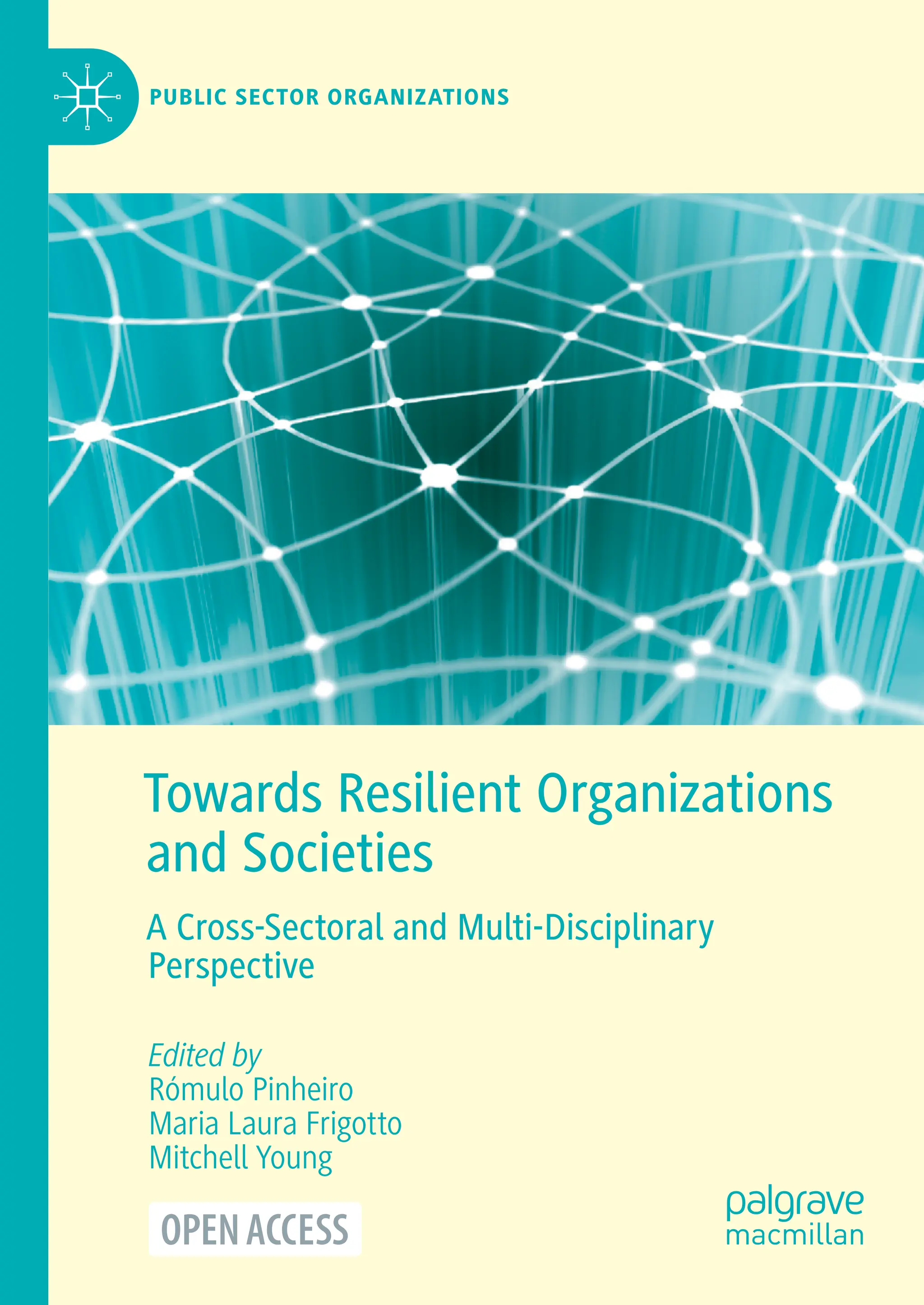


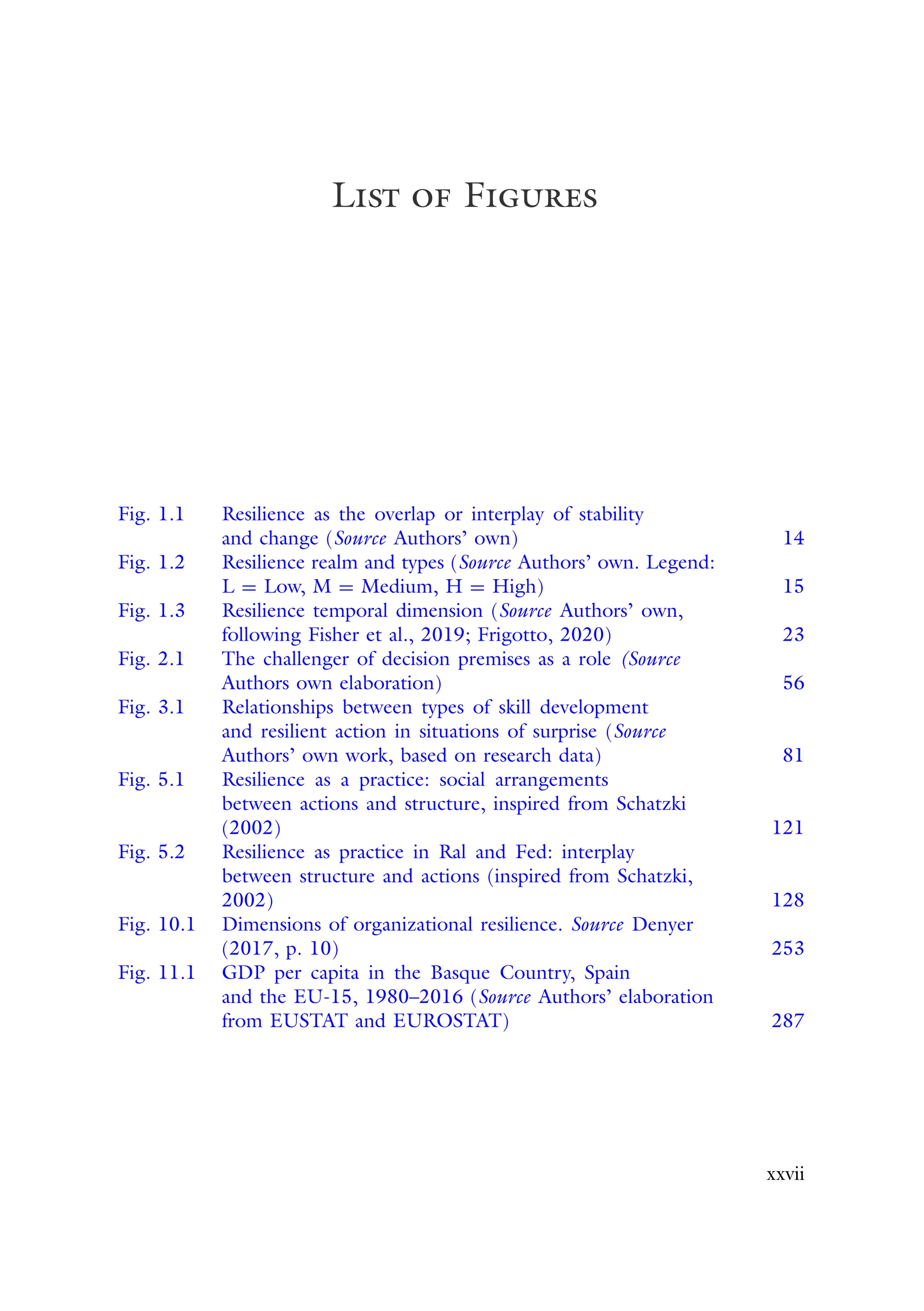
![xxviii LIST OF FIGURES
Fig. 11.2 GDP variation and unemployment rates in the Basque
Country, 1976–2016 (Source Authors’ own elaboration
from EUSTAT and Caja Laboral Popular [1987]
for unemployment, and from De la Fuente [2017]
for GDP) 289
Fig. 12.1 Mapping and clustering the volume’s empirical
contributions 316
Fig. 12.2 Fostering interdisciplinarity through an iterative process
(Source Authors’ own, based on MacMynowski [2007,
p. 11]) 324](https://image.slidesharecdn.com/66067-250415173334-cb1f7ba1/75/Towards-Resilient-Organizations-and-Societies-Romulo-Pinheiro-31-2048.jpg)
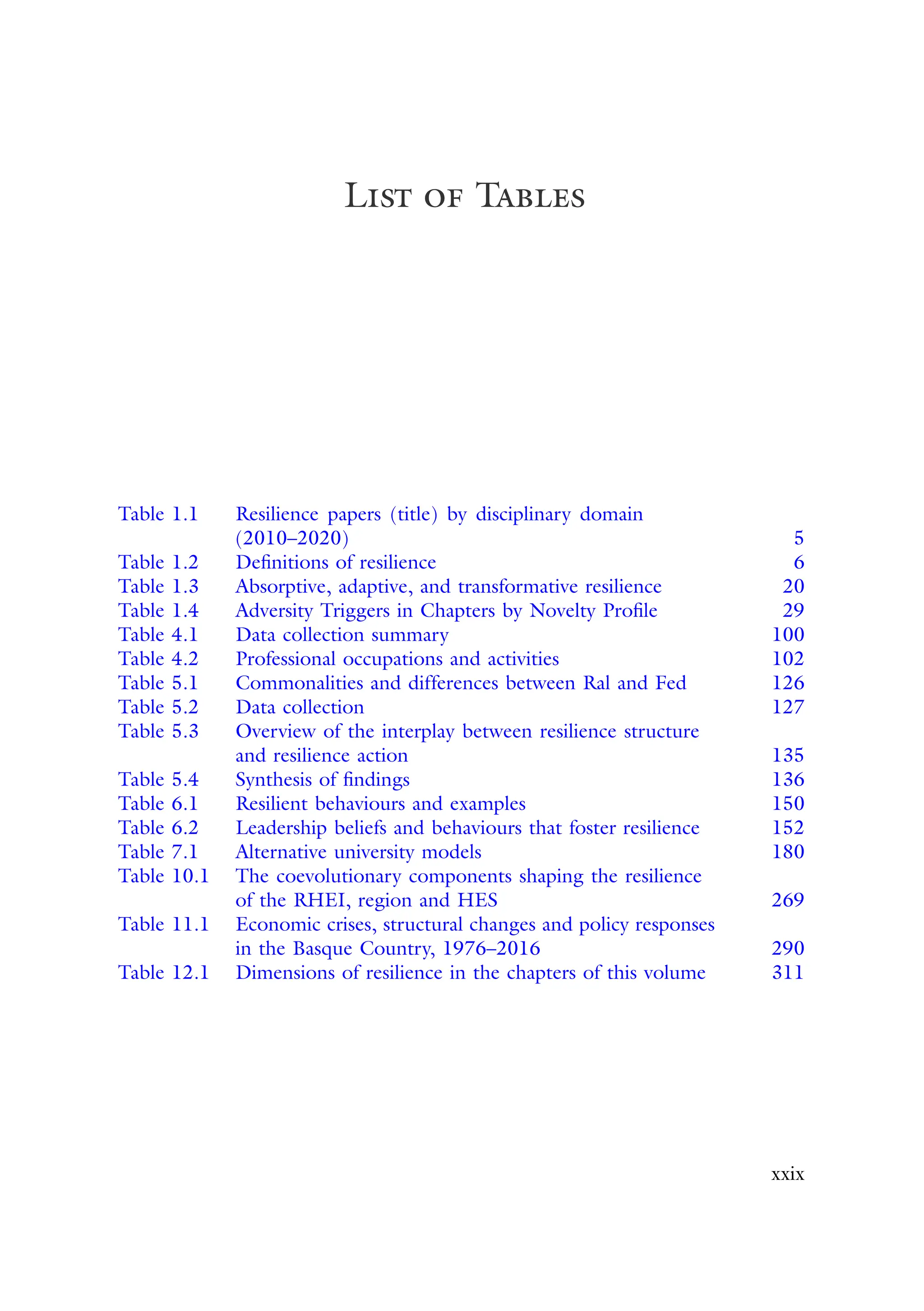

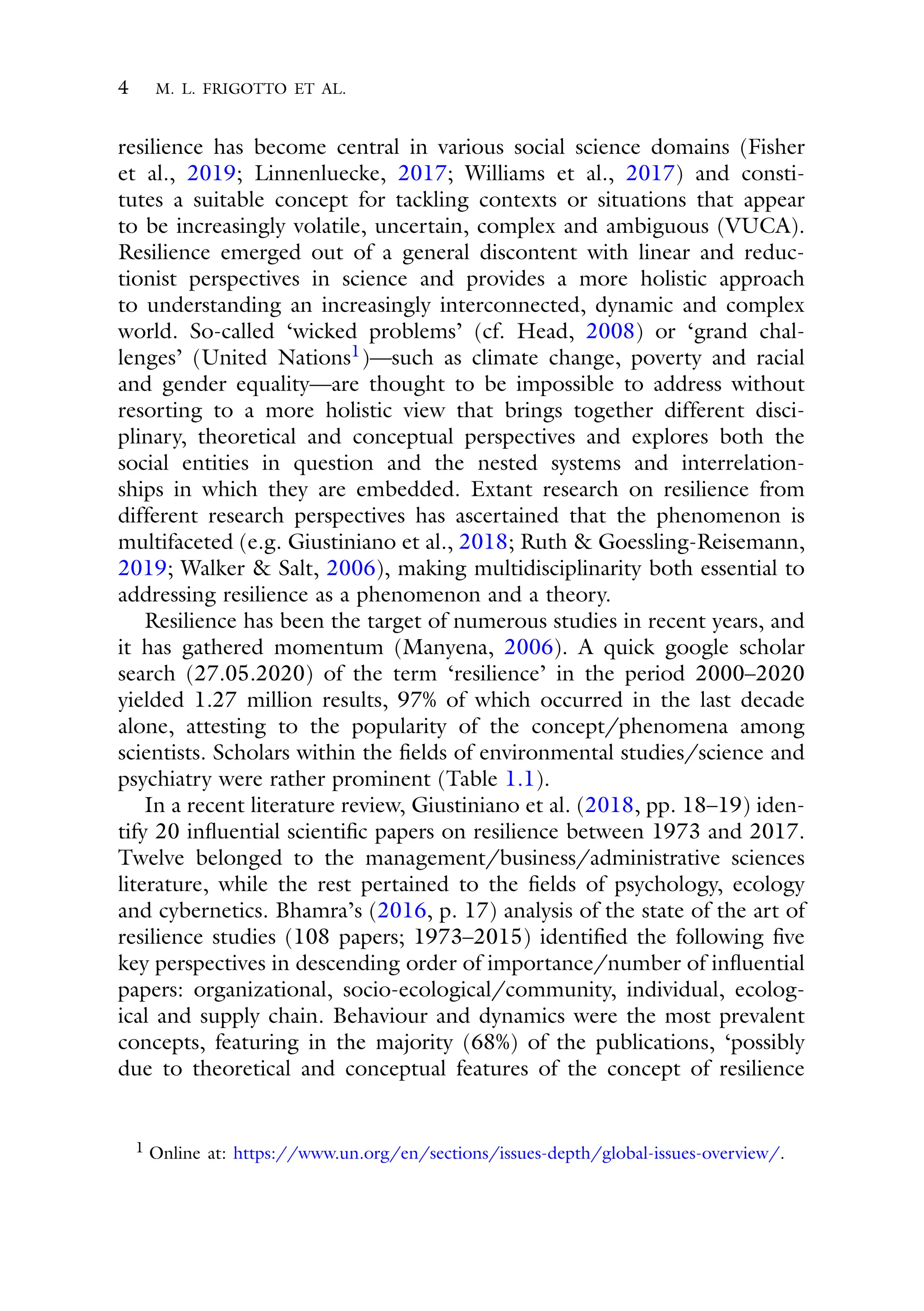
![1 RESILIENCE IN ORGANIZATIONS AND SOCIETIES … 5
Table 1.1 Resilience papers (title) by disciplinary domain (2010–2020)
Source Web of Science
being developed’ (ibid.). Other topics of significant weight were capa-
bility, strategy and performance. This shows that resilience has become
highly multidisciplinary, and each discipline has brought forward its own
definitions and central bibliographical references. Regarding methodolog-
ical approaches, theory building and case studies ranked highest, and
surveys were the least preferred: ‘as the area of resilience-based research
has developed, the focus has become increasingly empirically focused’
(ibid.), and there is ample room for theoretical elaboration.
The Concept of Resilience
As a scientific term, ‘resilience’ originates from engineering and physics
and denotes elasticity under pressure (Giustiniano et al., 2018, p. 14).
The term derives from the Latin verb salire (climb or jump) and in
particular from its extension, resilire, which means to jump back or
recoil (Giustiniano et al., 2018; see also Zolli, 2012). Ontologically
speaking, resilience thinking pertains to the investigation of complex,
interconnected and emergent patterns of relations among entities and
their respective sub-entities (Grove, 2018, p. 19). As far as the existing
definitions are concerned (Table 1.2), Bhamra (2016) argues that ‘regard-
less of context, the [multifaceted] concept of resilience relates to achieving
stability within the functioning of an element or system’ (p. 18).](https://image.slidesharecdn.com/66067-250415173334-cb1f7ba1/75/Towards-Resilient-Organizations-and-Societies-Romulo-Pinheiro-36-2048.jpg)
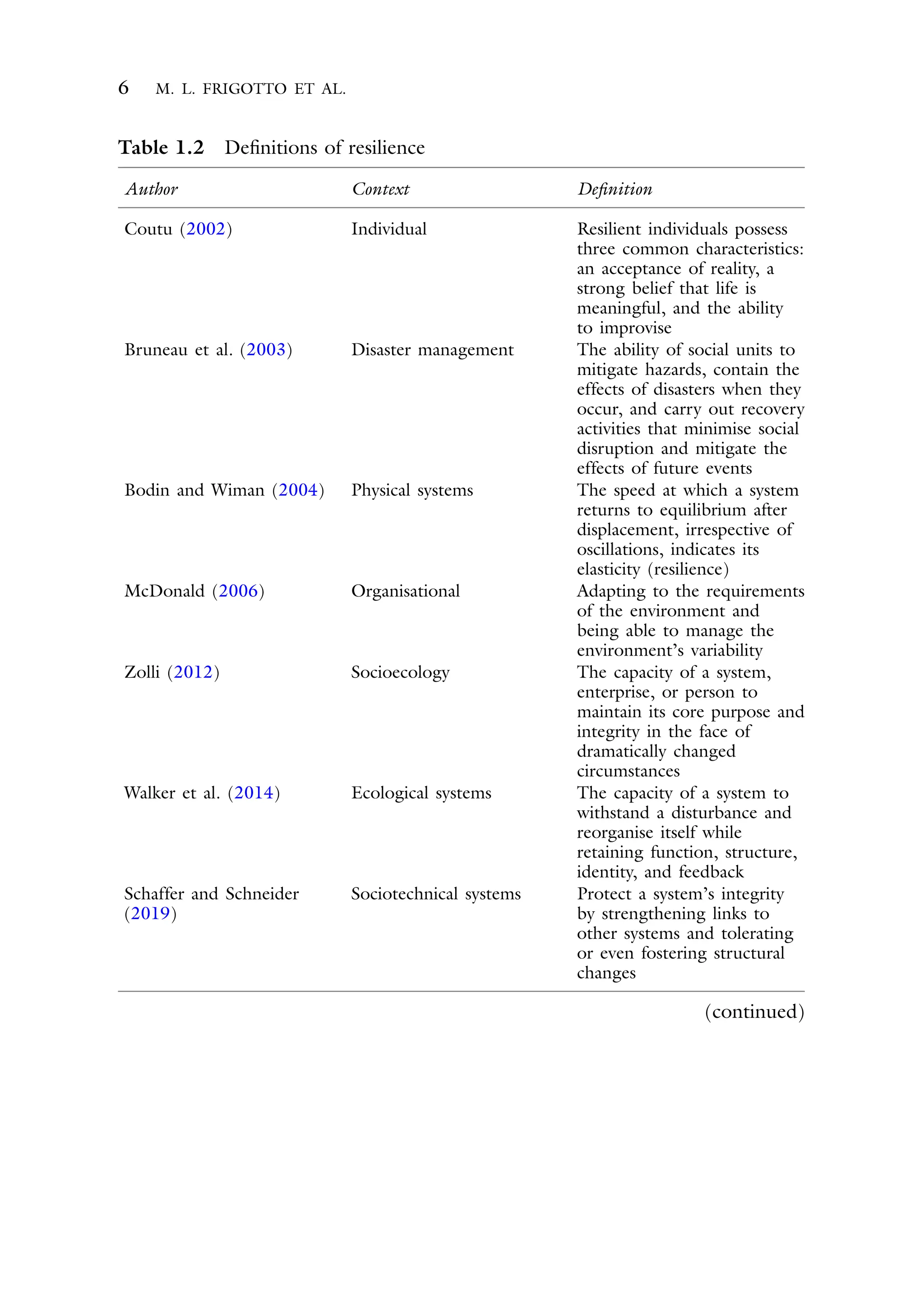
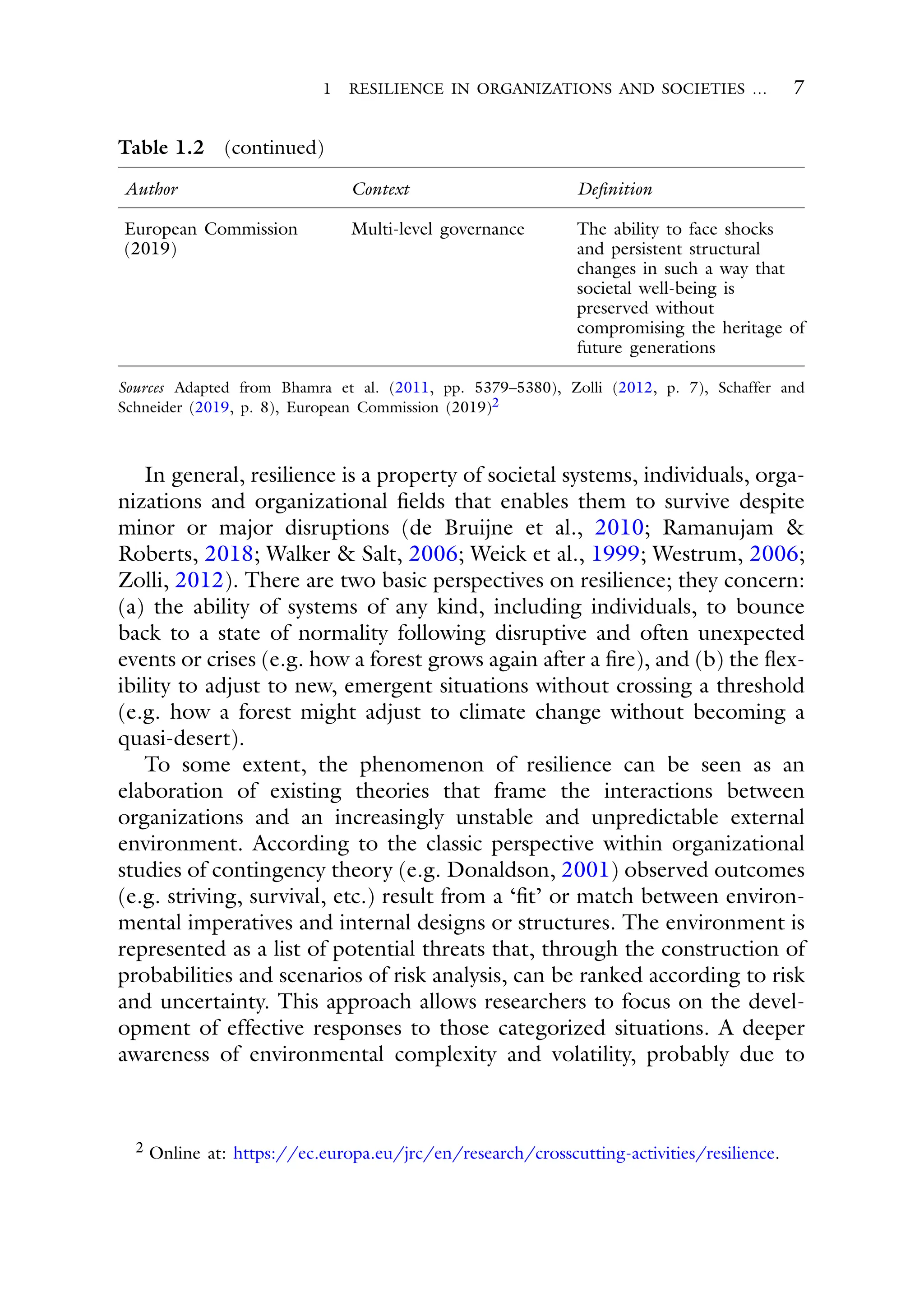
![1 RESILIENCE IN ORGANIZATIONS AND SOCIETIES … 13
definitions and disciplines, resilience entails change from an initial state
to a final state via adversity response. Change is, therefore, the first
fundamental constituent of resilience.
Change can be conceived of as being necessarily entailed by adversity,
because if a system does not change, then one could argue that it never
faced the sort of adversity for which resilience is needed. Moreover, if
it does not change, then it will probably fail, because adversity does not
allow systems to remain unaltered over time. If for some reason a system
neither changes nor fails, then we would argue that it does not display
resilience, but mere survival. Thus, survival is not the key to resilience.
Resilience goes beyond mere survival because it requires that the perse-
verance of being is characterized by change. Likewise, radical change is
incompatible with resilience. In fact, we would not call something that
changes completely in order to survive resilient, as it would no longer
relate to a previous state or function but to something else entirely.
There have been several attempts to theorize about the degree of
change that is included in resilience. Like most definitions, the first and
more general attempt held that resilience represents either a process of
‘bouncing back’ or of ‘remaining within a threshold’ (Table 1.2); ‘passing
the threshold’ was to be understood as too much change to constitute
resilience. From a complex systems perspective, Walker et al. (2004)
note that both resilience and adaptability have to do with the dynamics
of a system or a closely related set of systems. For them, transforma-
bility refers to fundamentally altering the nature of a system, yet the
dividing line between ‘closely related’ and ‘fundamentally altered’ can
be fuzzy and subject to interpretation. Folke et al. (2010, p. 3) argue
that resilience builds on adaptability and transformability, as it is ‘the
capacity to change [also through transformation] in order to maintain
the same identity’. In regional science studies, several authors (Boschma,
2015; Hu & Hassink, 2017; Pike et al., 2010) adopt a distinction
between two kinds of change within the context of geographic resilience,
‘adaptation’ and ‘adaptability’; the former relates to maintaining existing
economic paths/trajectories or ‘exploitation’ (March, 1991), while the
latter pertains to the creation of new regional growth paths or ‘explo-
ration’ (March, 1991). In other areas, transformation and transformability
are more explicitly mentioned and linked to resilience. The literature on
urban ecosystems (e.g. Gotham & Campanella, 2010) explicitly acknowl-
edges transformability among the various types of change; more recently,](https://image.slidesharecdn.com/66067-250415173334-cb1f7ba1/75/Towards-Resilient-Organizations-and-Societies-Romulo-Pinheiro-44-2048.jpg)
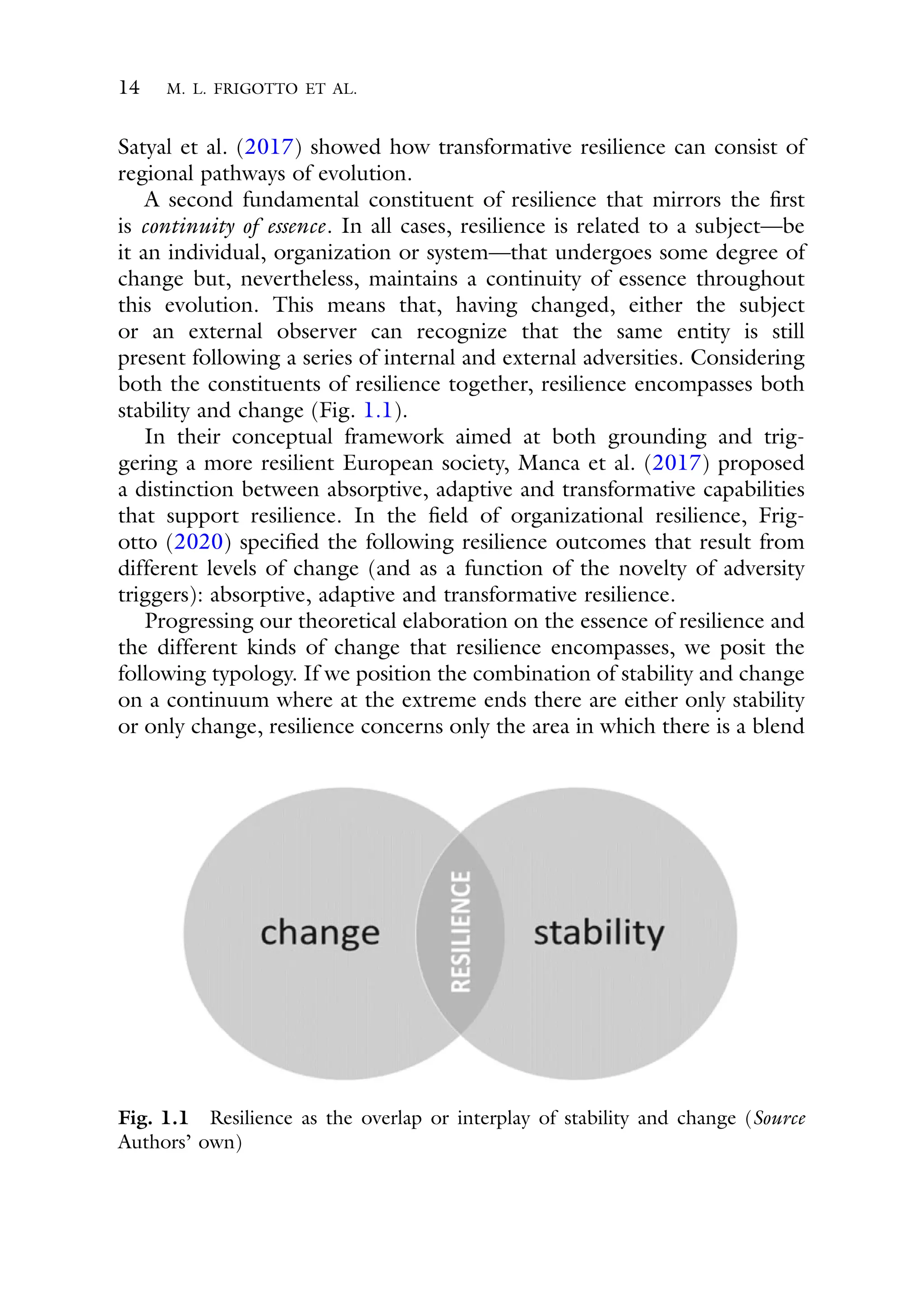
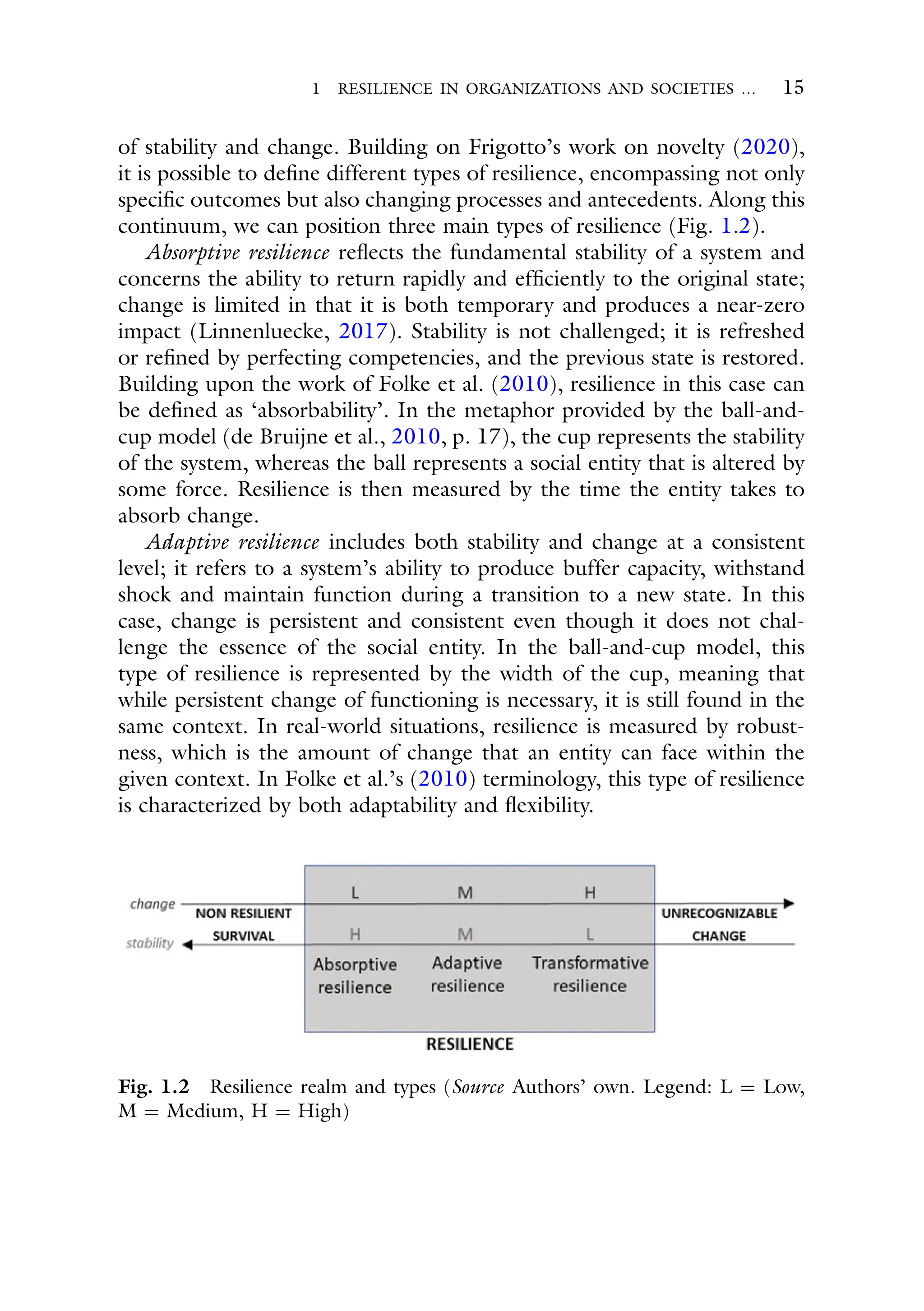




![This ebook is for the use of anyone anywhere in the United
States and most other parts of the world at no cost and with
almost no restrictions whatsoever. You may copy it, give it away
or re-use it under the terms of the Project Gutenberg License
included with this ebook or online at www.gutenberg.org. If you
are not located in the United States, you will have to check the
laws of the country where you are located before using this
eBook.
Title: Fig Culture
Author: Gustavus A. Eisen
F. S. Earle
Release date: September 23, 2016 [eBook #53136]
Most recently updated: October 23, 2024
Language: English
Credits: Produced by MWS, ellinora and the Online Distributed
Proofreading Team at http://www.pgdp.net (This file
was
produced from images generously made available by
The
Internet Archive/American Libraries.)
*** START OF THE PROJECT GUTENBERG EBOOK FIG CULTURE ***](https://image.slidesharecdn.com/66067-250415173334-cb1f7ba1/75/Towards-Resilient-Organizations-and-Societies-Romulo-Pinheiro-55-2048.jpg)