bamboohr.com payscale.com
Tough Comp Conversations: A Guide to Doing Them Right
bamboohr.com payscale.com
Tough Comp Conversations: A Guide to Doing Them Right
Rusty Lindquist Camie Bailey
Vice President, Thought Leadership
BambooHR
Comp Software Implementation Manager
PayScale
Understanding The
Employee Journey
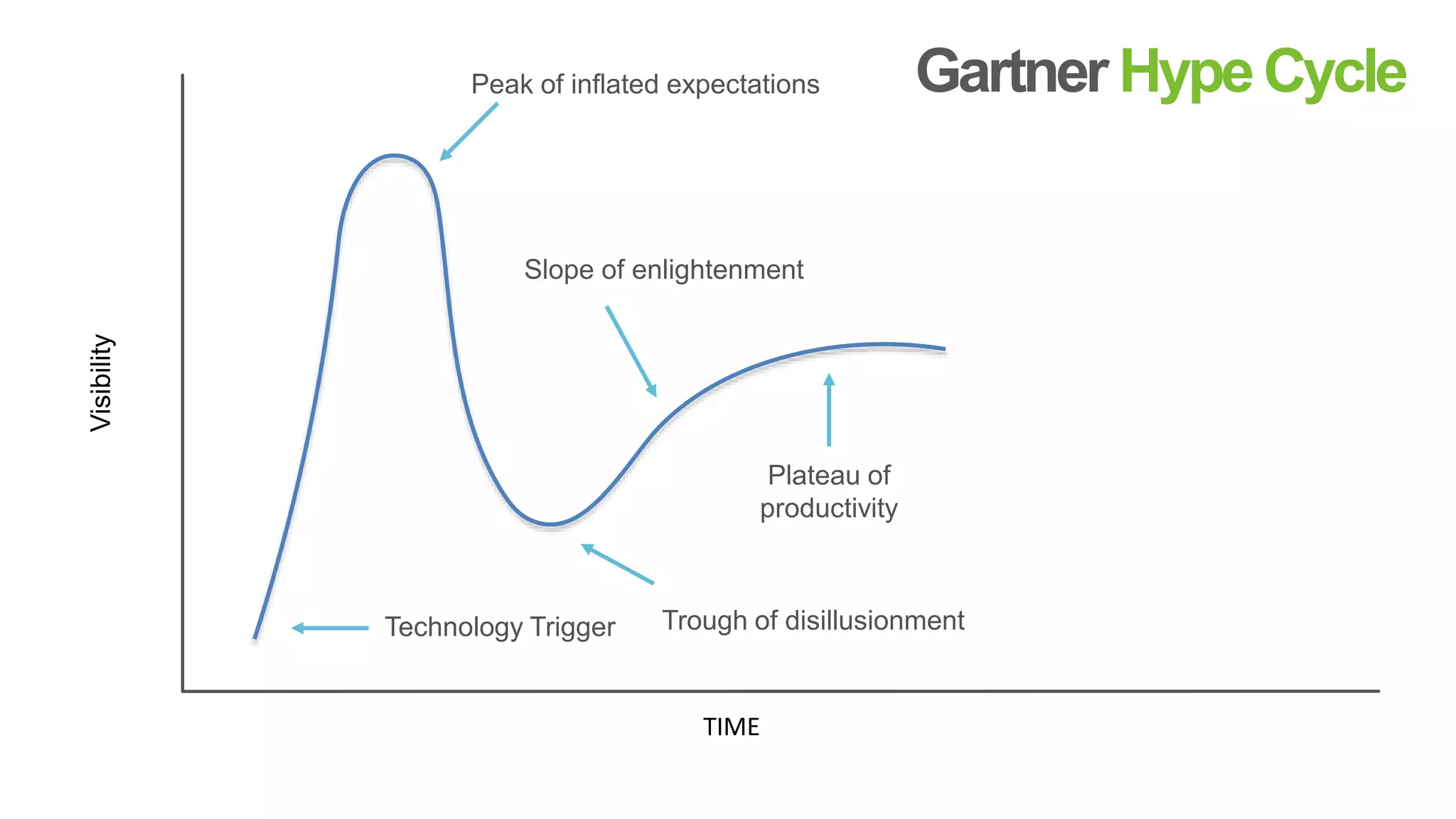
TIME
Visibility
Technology Trigger
Peak of inflated expectations
Trough of disillusionment
Slope of enlightenment
Plateau of
productivity
Gartner HypeCycle
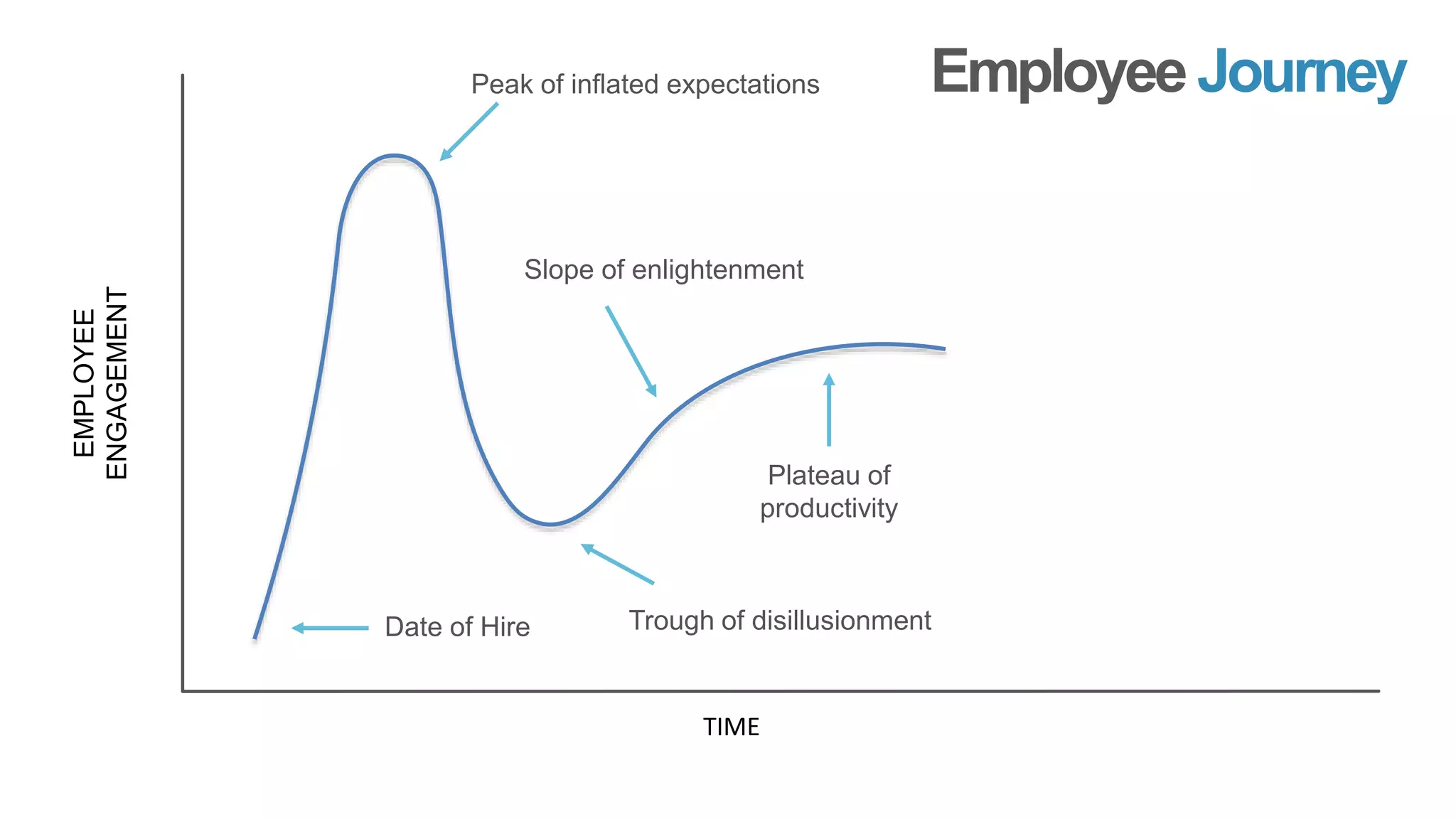
TIME
EMPLOYEE
ENGAGEMENT
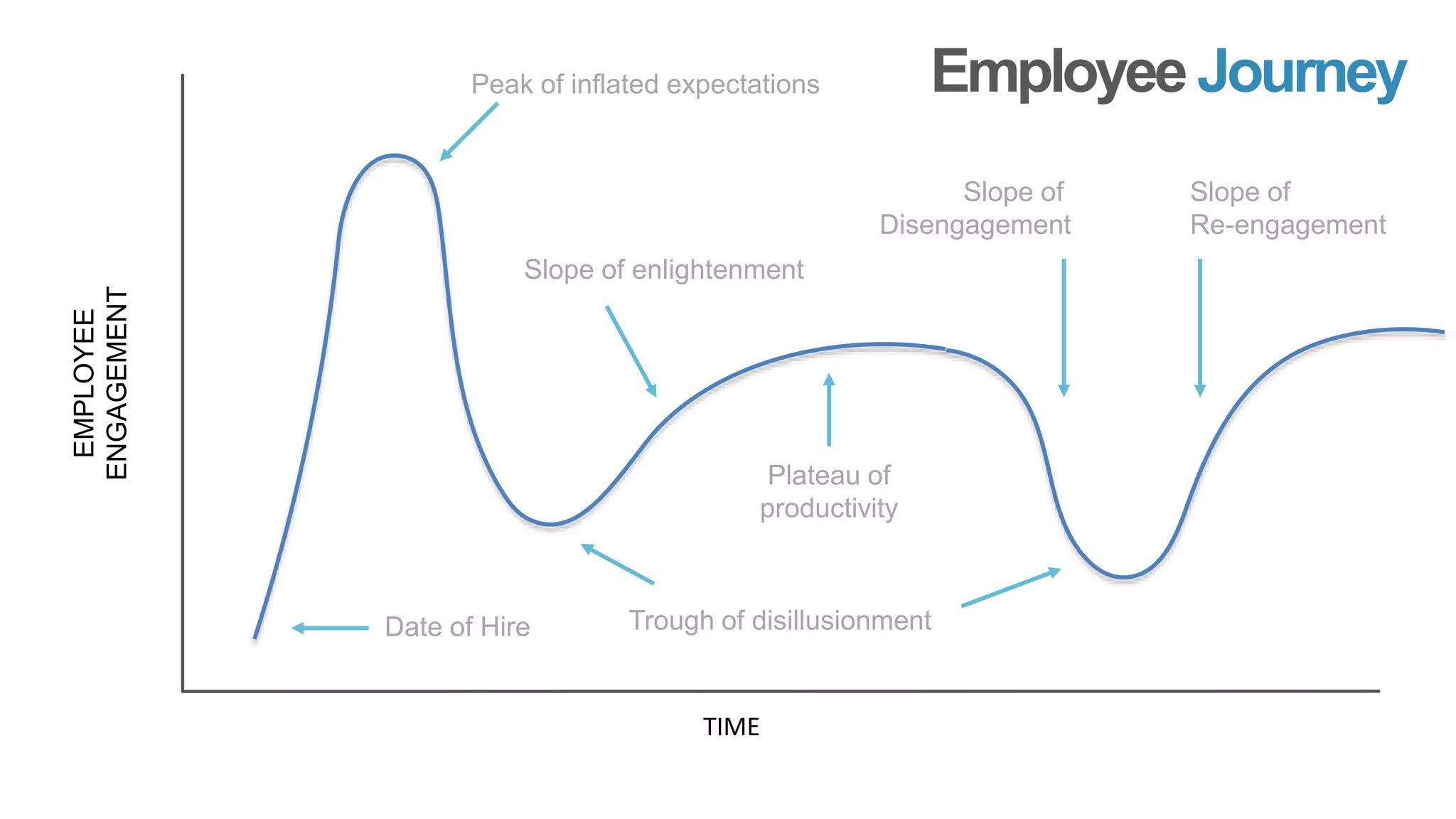
Date of Hire
Peak of inflated expectations
Trough of disillusionment
Slope of enlightenment
Plateau of
productivity
EmployeeJourney
TIME
EMPLOYEE
ENGAGEMENT
Date of Hire
Peak of inflated expectations
Trough of disillusionment
Slope of enlightenment
Plateau of
productivity
Slope of
Disengagement
Slope of
Re-engagement
EmployeeJourney
EmployeeJourney
EmployeeJourney
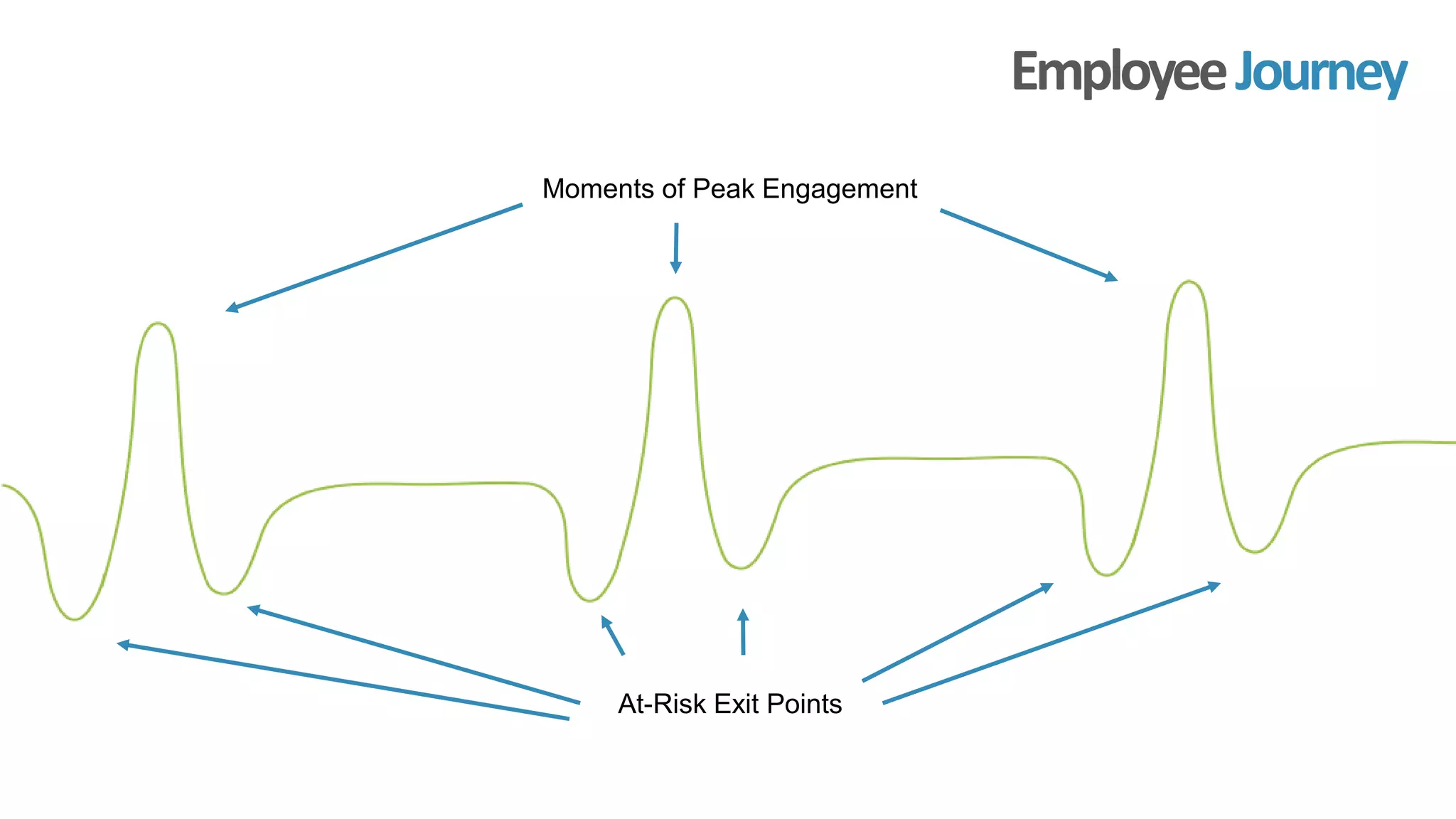
Moments of Peak Engagement
At-Risk Exit Points
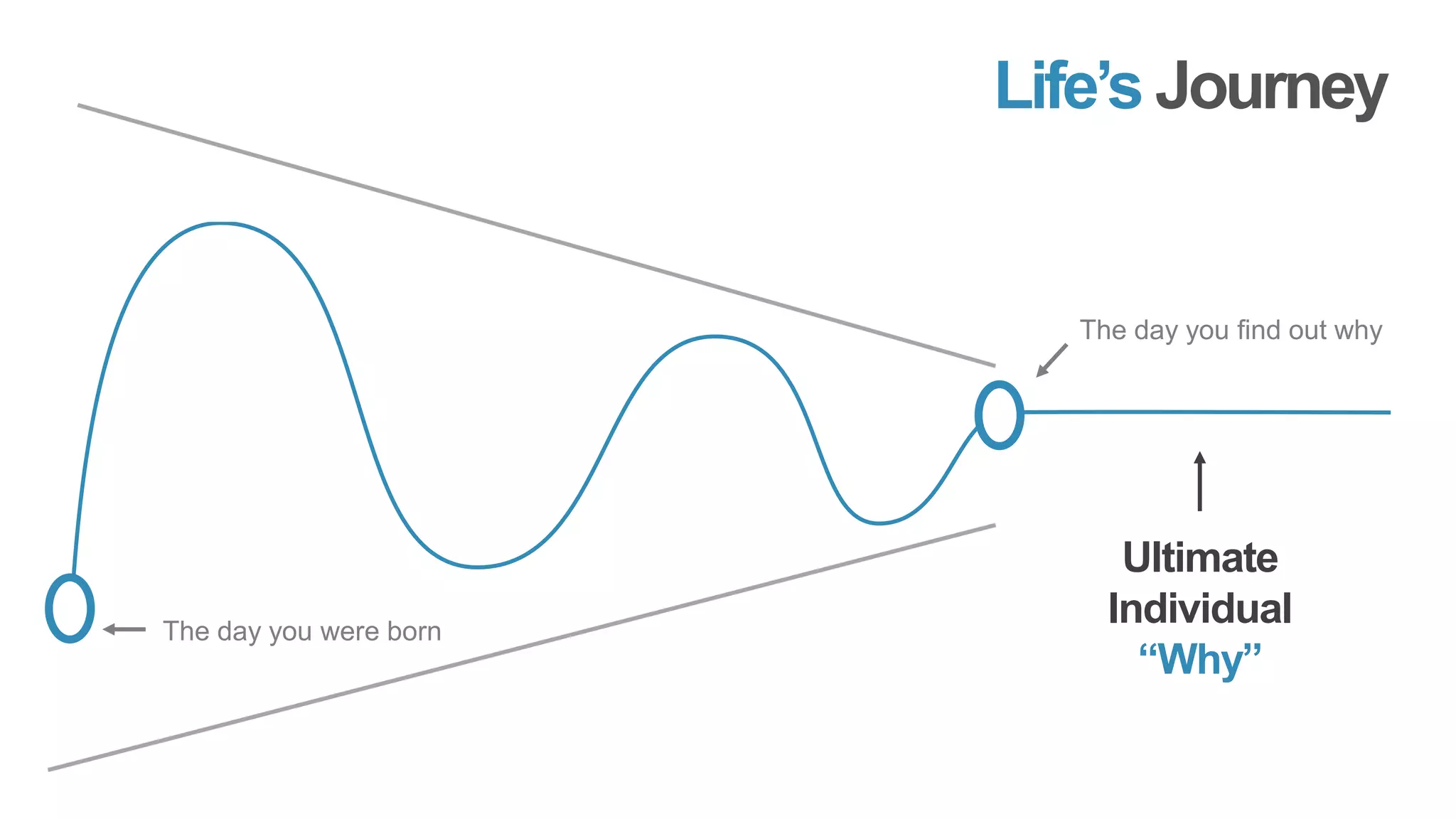
Life’s Journey
Ultimate
Individual
“Why”
The day you were born
The day you find out why
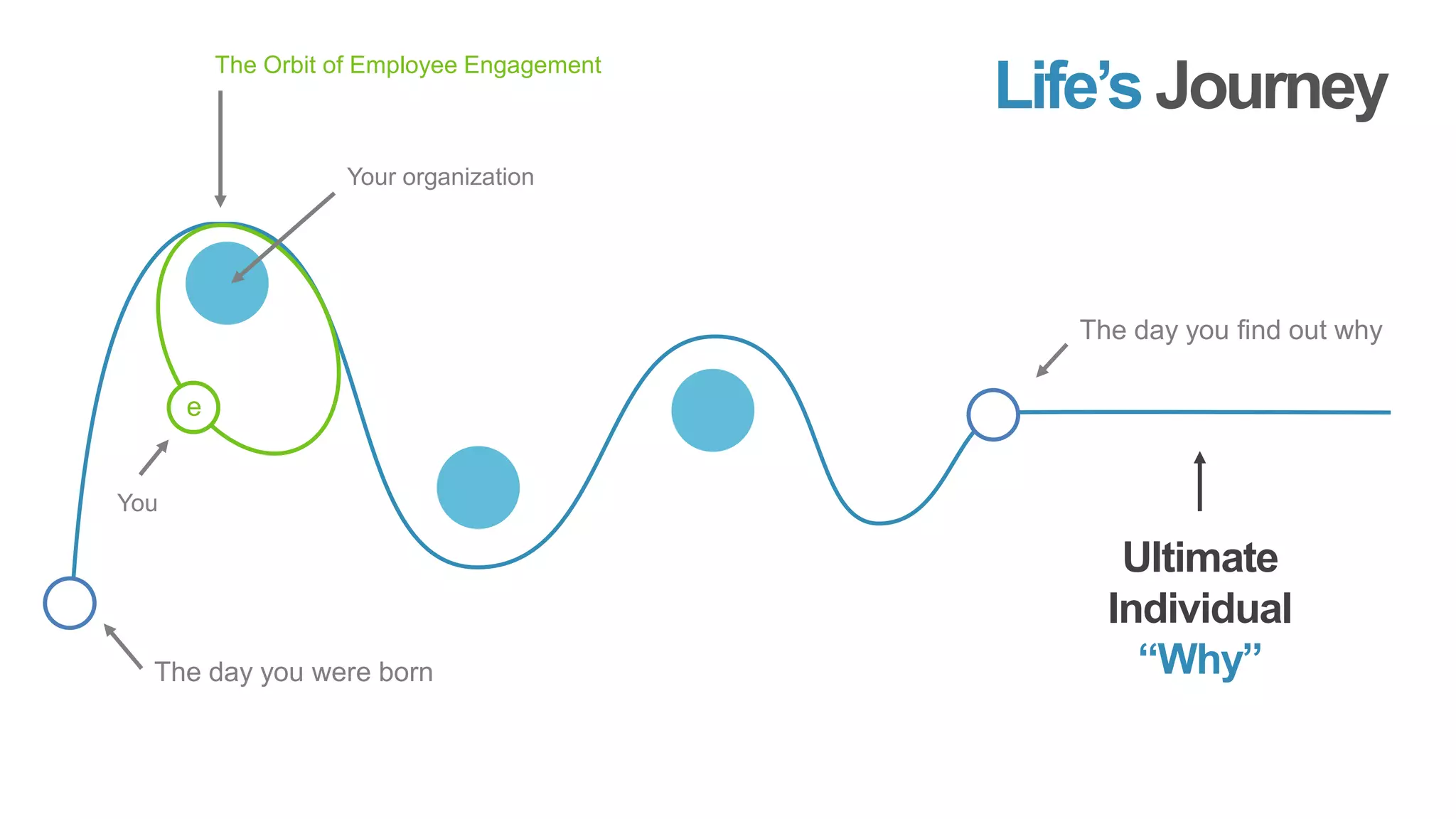
Life’s Journey
Ultimate
Individual
“Why”
The Orbit of Employee Engagement
Life’s Journey
The day you find out why
The day you were born
You
e
Your organization
Your
Company
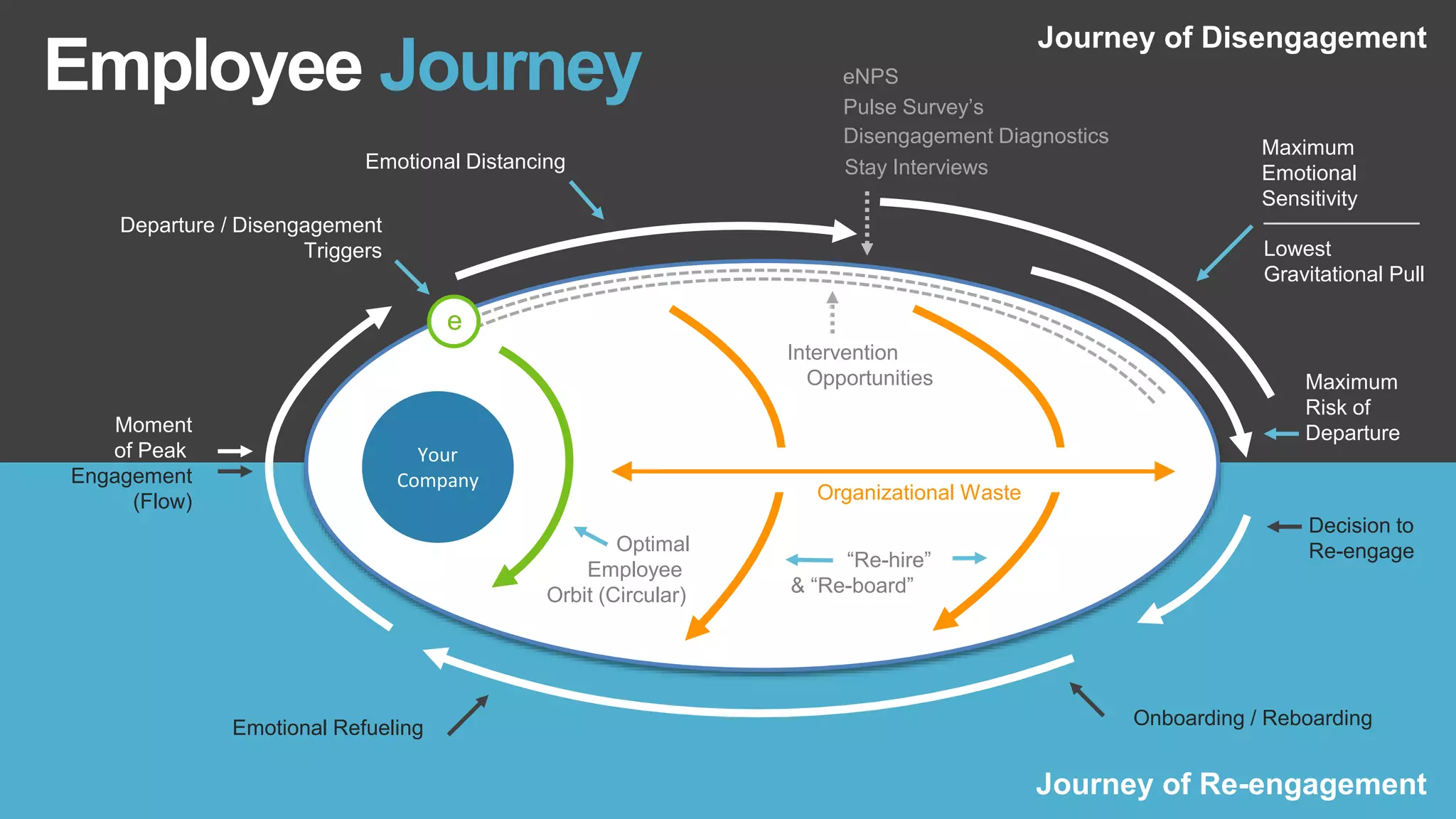
Employee Journey
Journey of Re-engagement
e
Your
Company
Moment
of Peak
Engagement
(Flow)
Departure / Disengagement
Triggers
Emotional Distancing
Maximum
Risk of
Departure
Decision to
Re-engage
Emotional Refueling Onboarding / Reboarding
Employee Journey
Journey of Re-engagement
Journey of Disengagement
Optimal
Employee
Orbit (Circular)
“Re-hire”
& “Re-board”
Disengagement Diagnostics
Stay Interviews
eNPS
Pulse Survey’s
Intervention
Opportunities
Maximum
Emotional
Sensitivity
Lowest
Gravitational Pull
e
Organizational Waste
TRAINING MANAGERS
Tough Comp Conversations: A Guide to Doing Them Right
bamboohr.com payscale.com
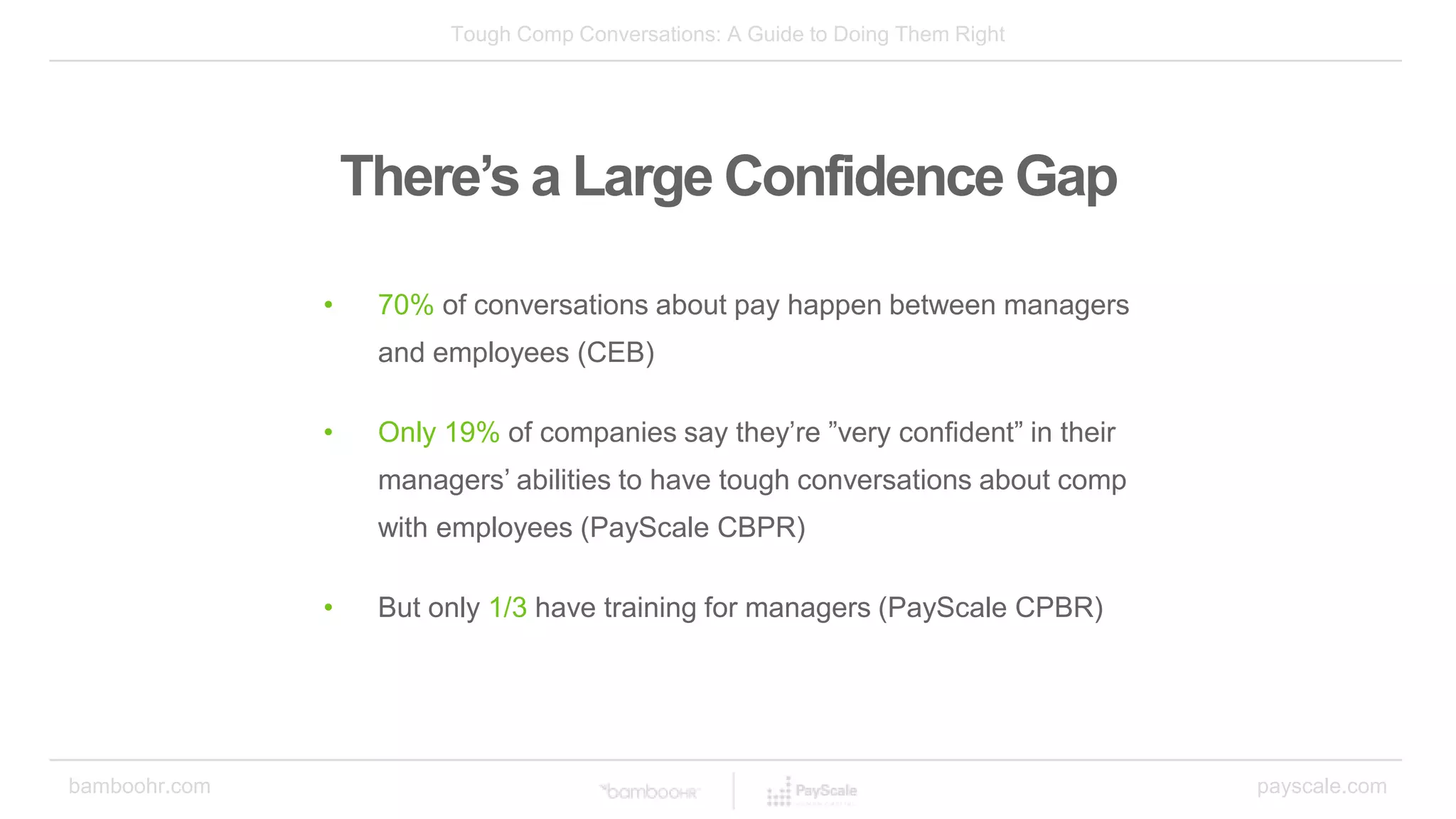
There’s a Large Confidence Gap
• 70% of conversations about pay happen between managers
and employees (CEB)
• Only 19% of companies say they’re ”very confident” in their
managers’ abilities to have tough conversations about comp
with employees (PayScale CBPR)
• But only 1/3 have training for managers (PayScale CPBR)
Tough Comp Conversations: A Guide to Doing Them Right
bamboohr.com payscale.com
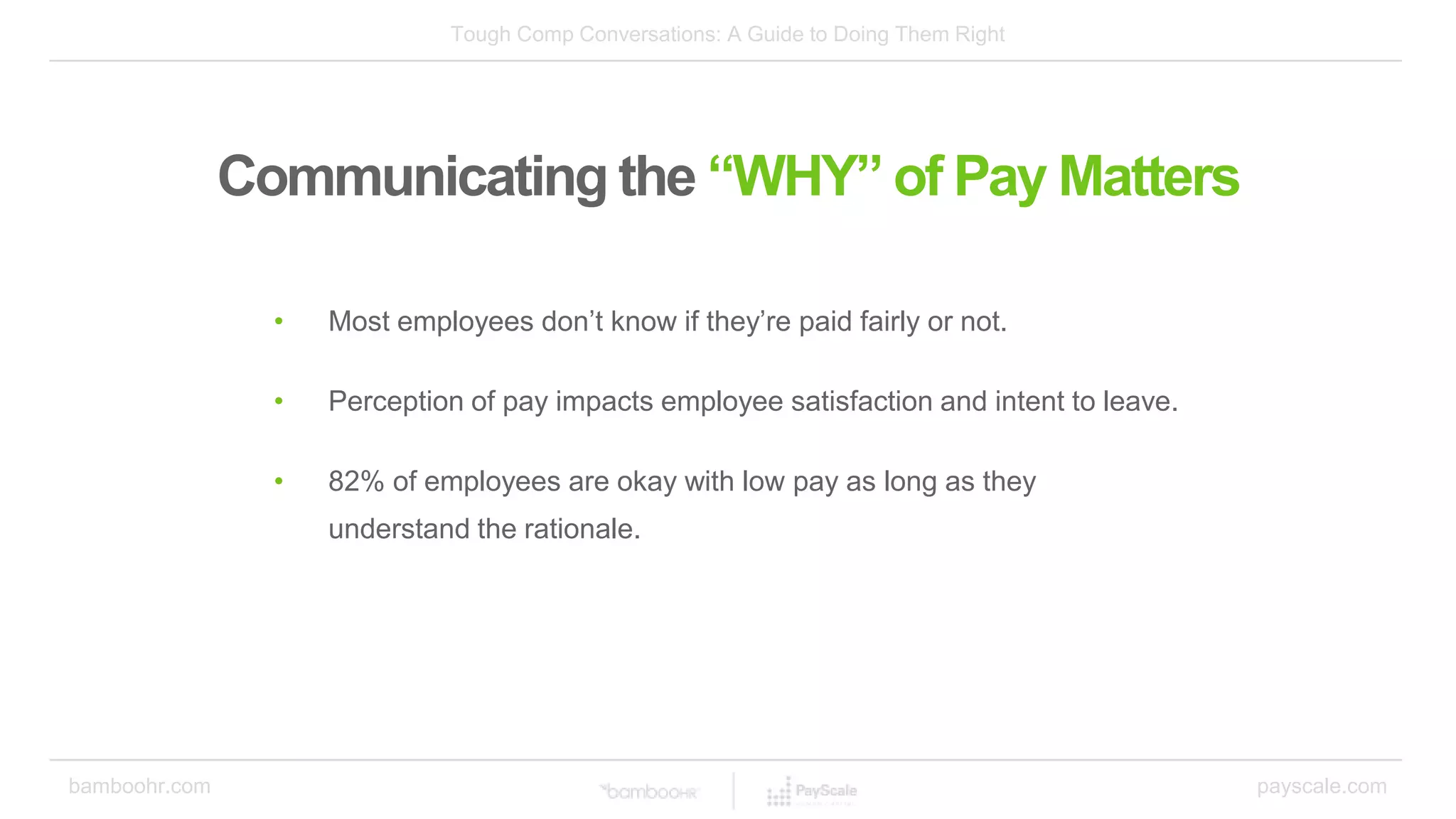
Communicating the “WHY” of Pay Matters
• Most employees don’t know if they’re paid fairly or not.
• Perception of pay impacts employee satisfaction and intent to leave.
• 82% of employees are okay with low pay as long as they
understand the rationale.
Tough Comp Conversations: A Guide to Doing Them Right
bamboohr.com payscale.com
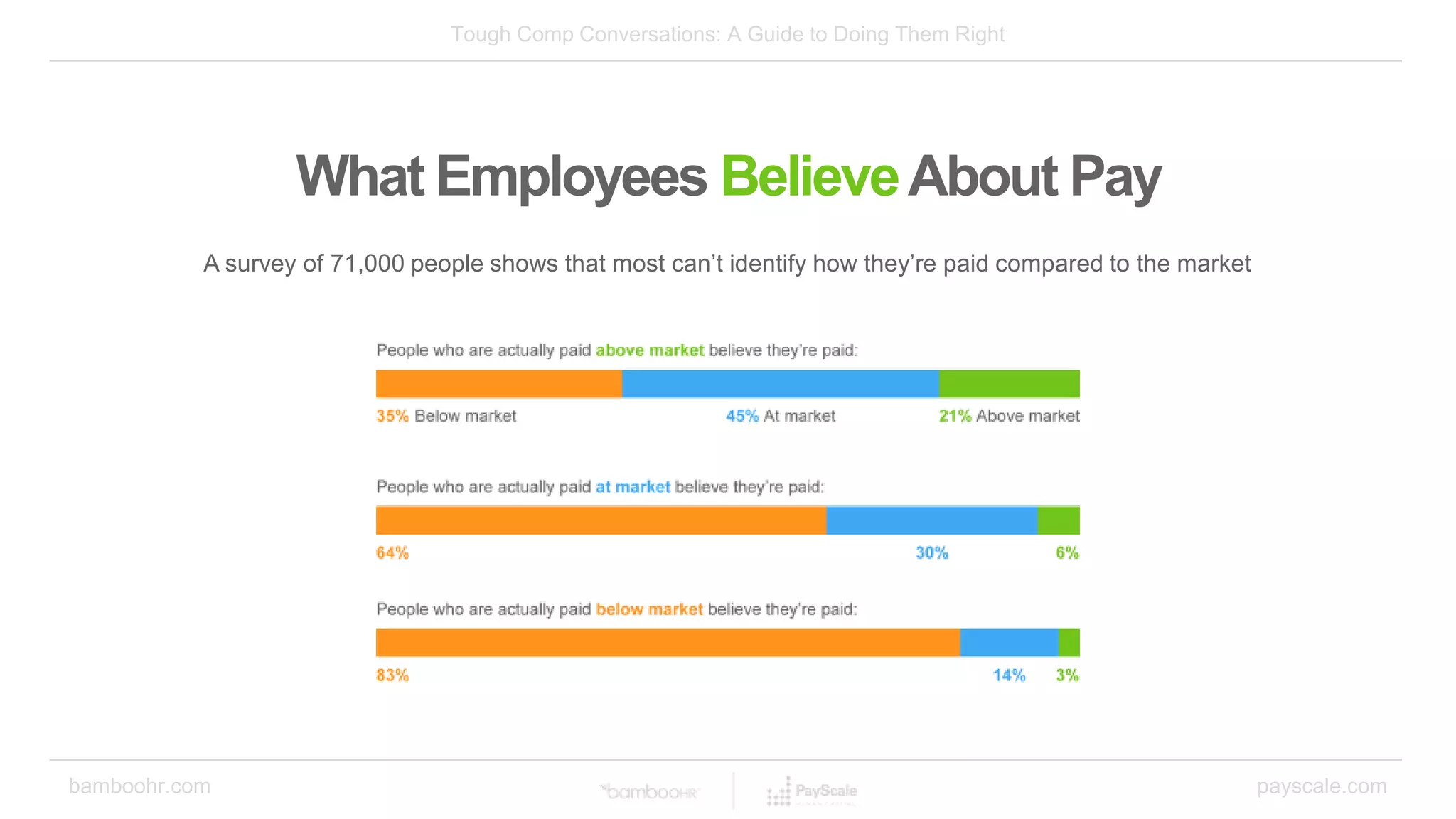
What Employees BelieveAbout Pay
A survey of 71,000 people shows that most can’t identify how they’re paid compared to the market
Tough Comp Conversations: A Guide to Doing Them Right
bamboohr.com payscale.com
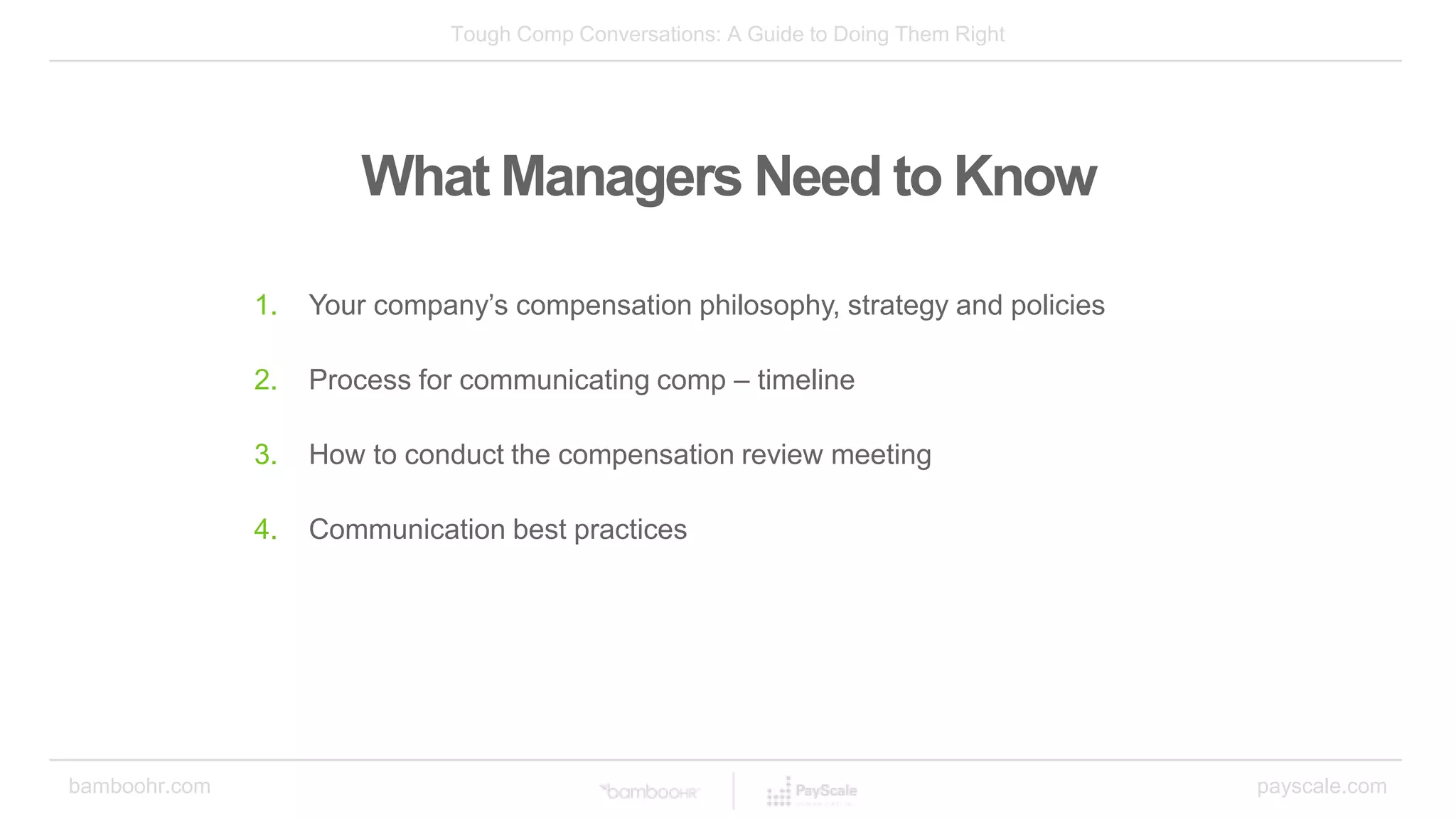
What Managers Need to Know
1. Your company’s compensation philosophy, strategy and policies
2. Process for communicating comp – timeline
3. How to conduct the compensation review meeting
4. Communication best practices
Tough Comp Conversations: A Guide to Doing Them Right
bamboohr.com payscale.com
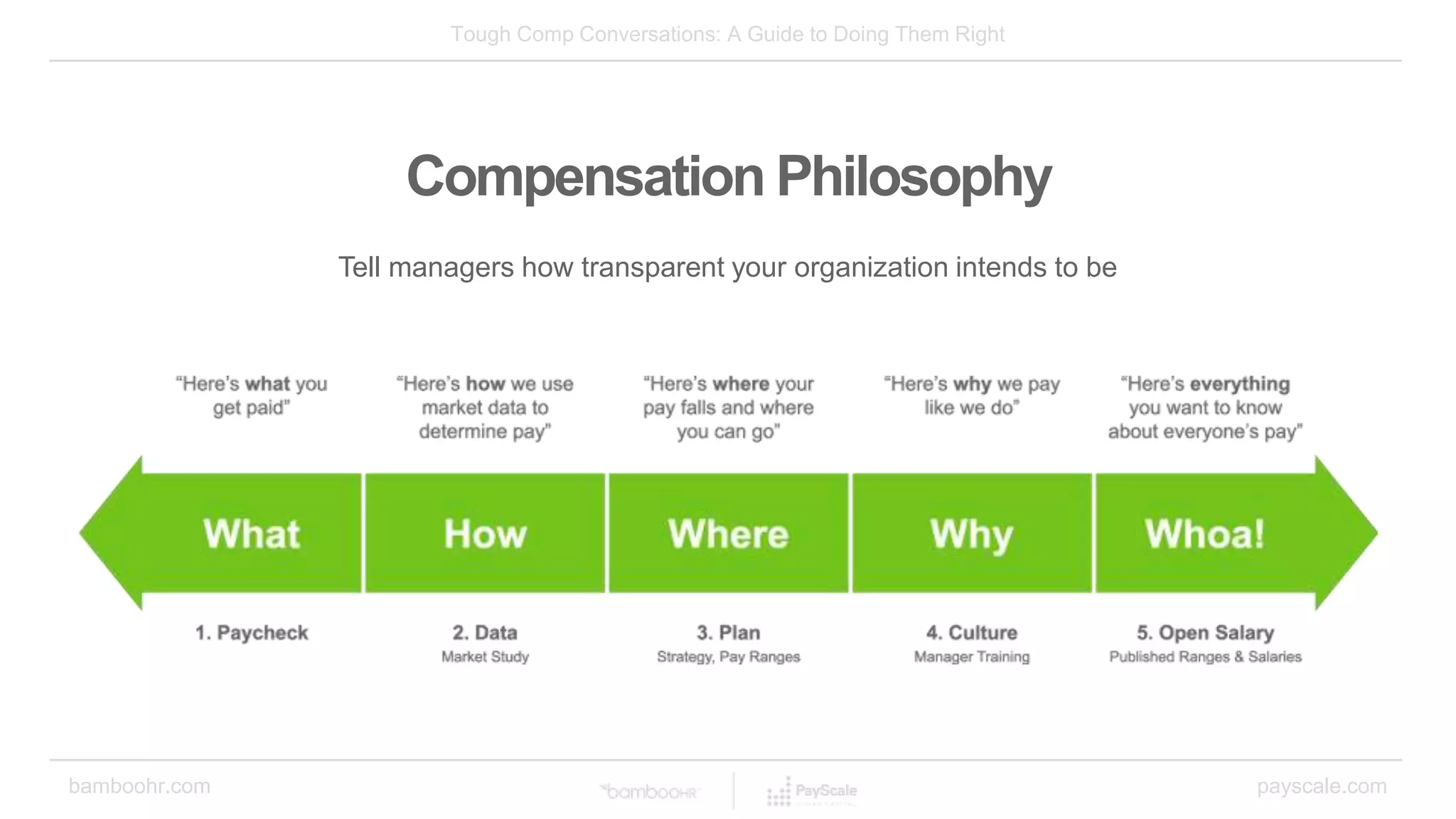
Compensation Philosophy
Tell managers how transparent your organization intends to be
Tough Comp Conversations: A Guide to Doing Them Right
bamboohr.com payscale.com
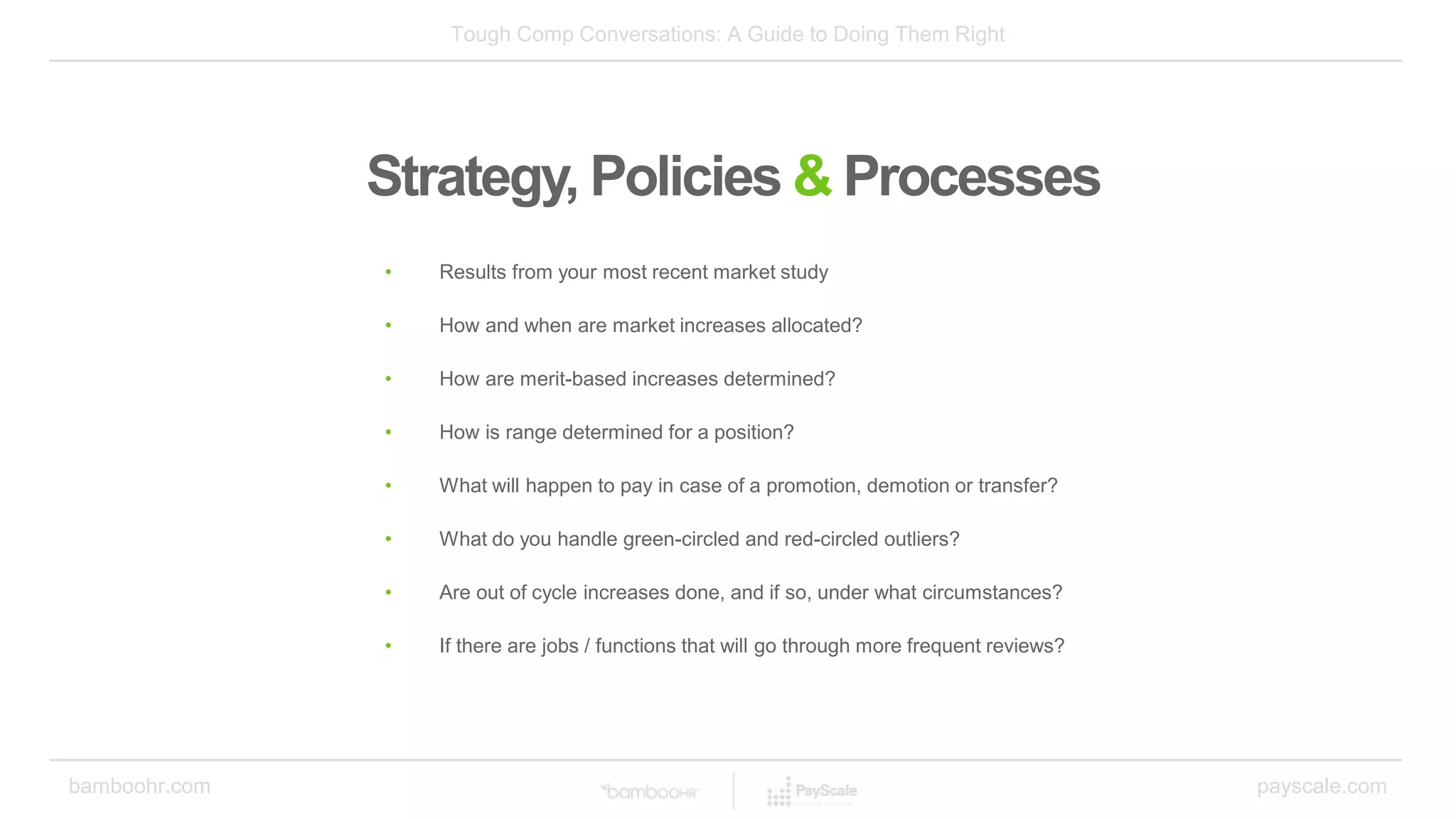
Strategy, Policies & Processes
• Results from your most recent market study
• How and when are market increases allocated?
• How are merit-based increases determined?
• How is range determined for a position?
• What will happen to pay in case of a promotion, demotion or transfer?
• What do you handle green-circled and red-circled outliers?
• Are out of cycle increases done, and if so, under what circumstances?
• If there are jobs / functions that will go through more frequent reviews?
Tough Comp Conversations: A Guide to Doing Them Right
bamboohr.com payscale.com
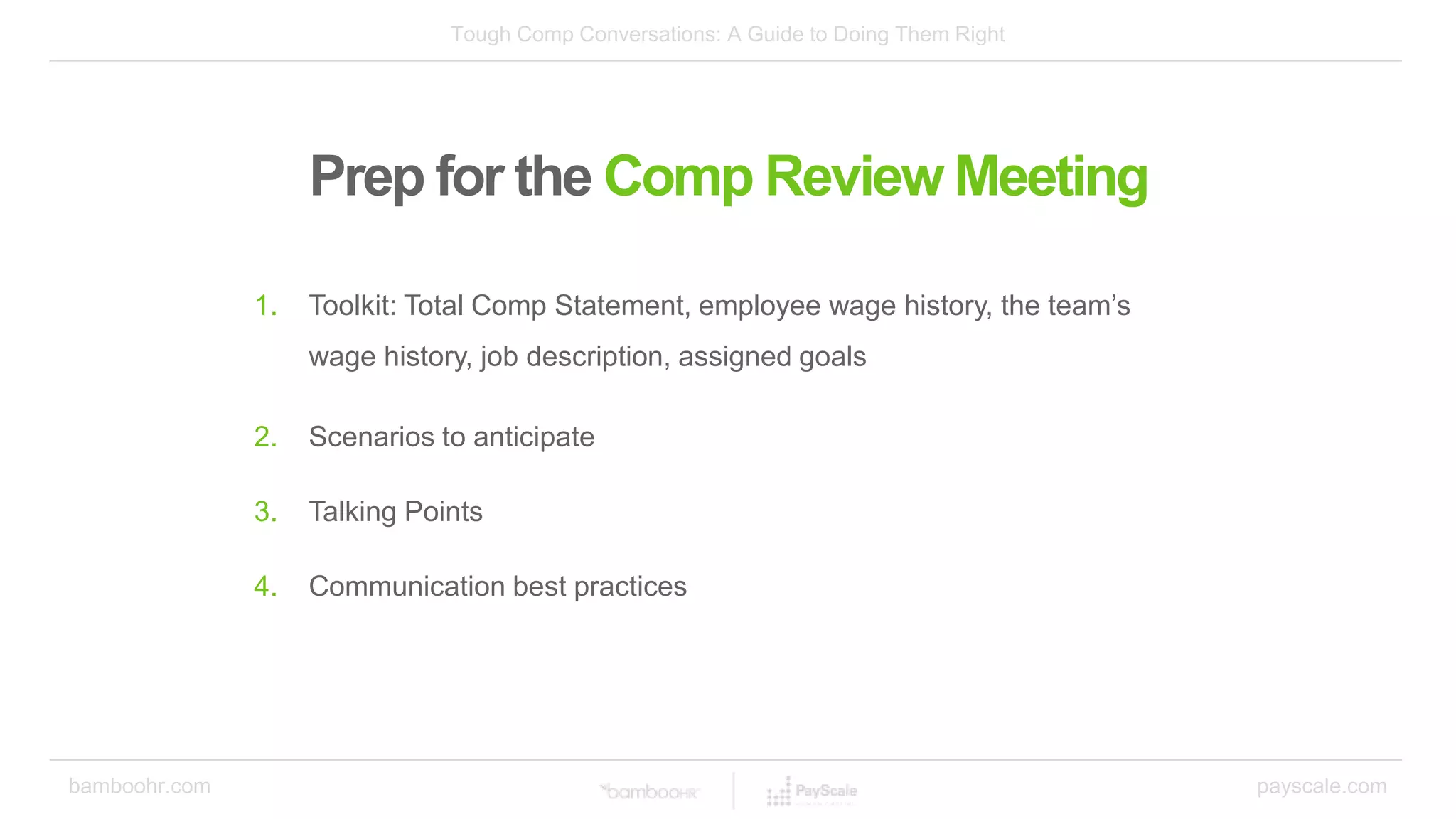
Prep for the Comp Review Meeting
1. Toolkit: Total Comp Statement, employee wage history, the team’s
wage history, job description, assigned goals
2. Scenarios to anticipate
3. Talking Points
4. Communication best practices
Tough Comp Conversations: A Guide to Doing Them Right
bamboohr.com payscale.com
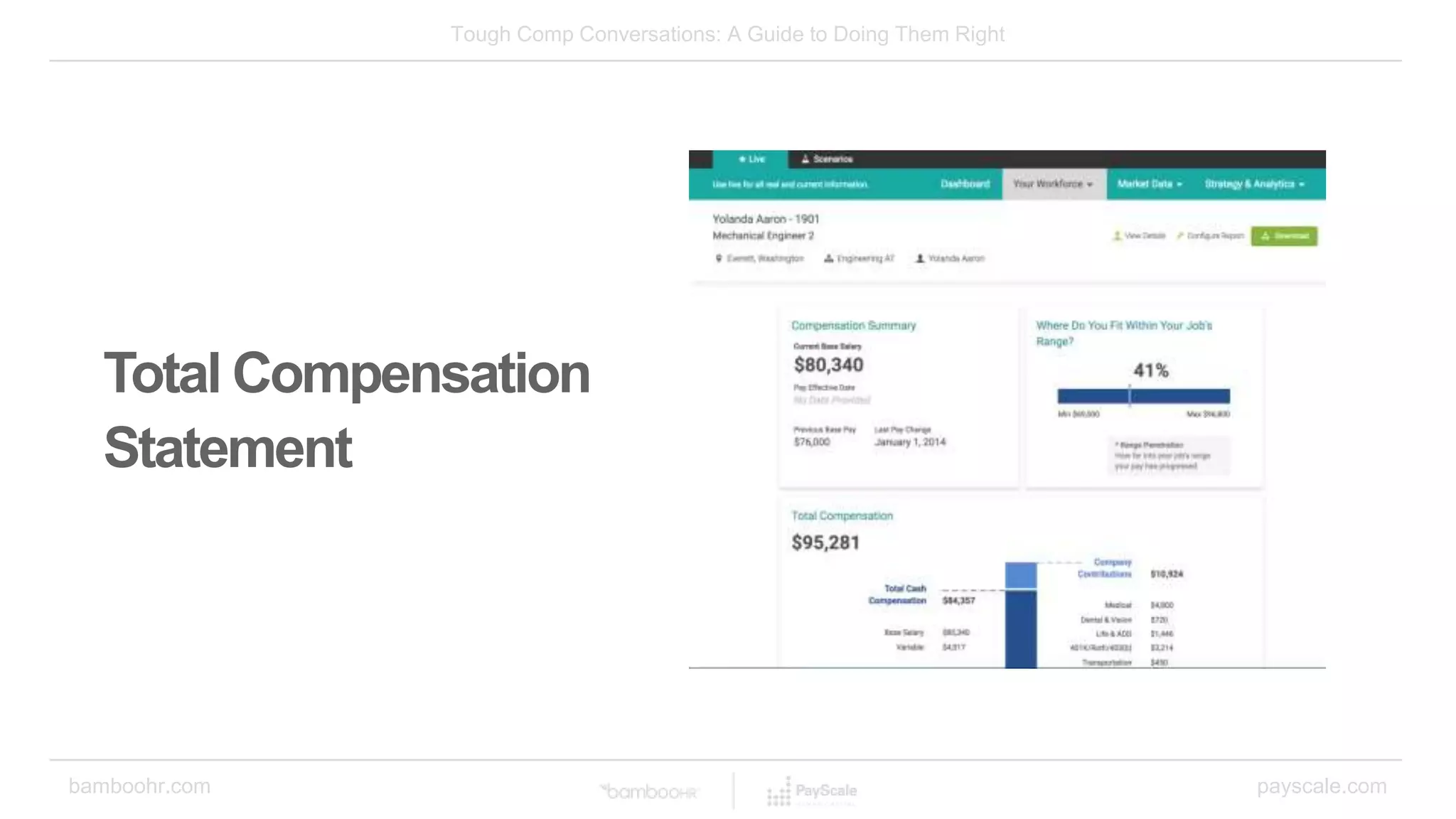
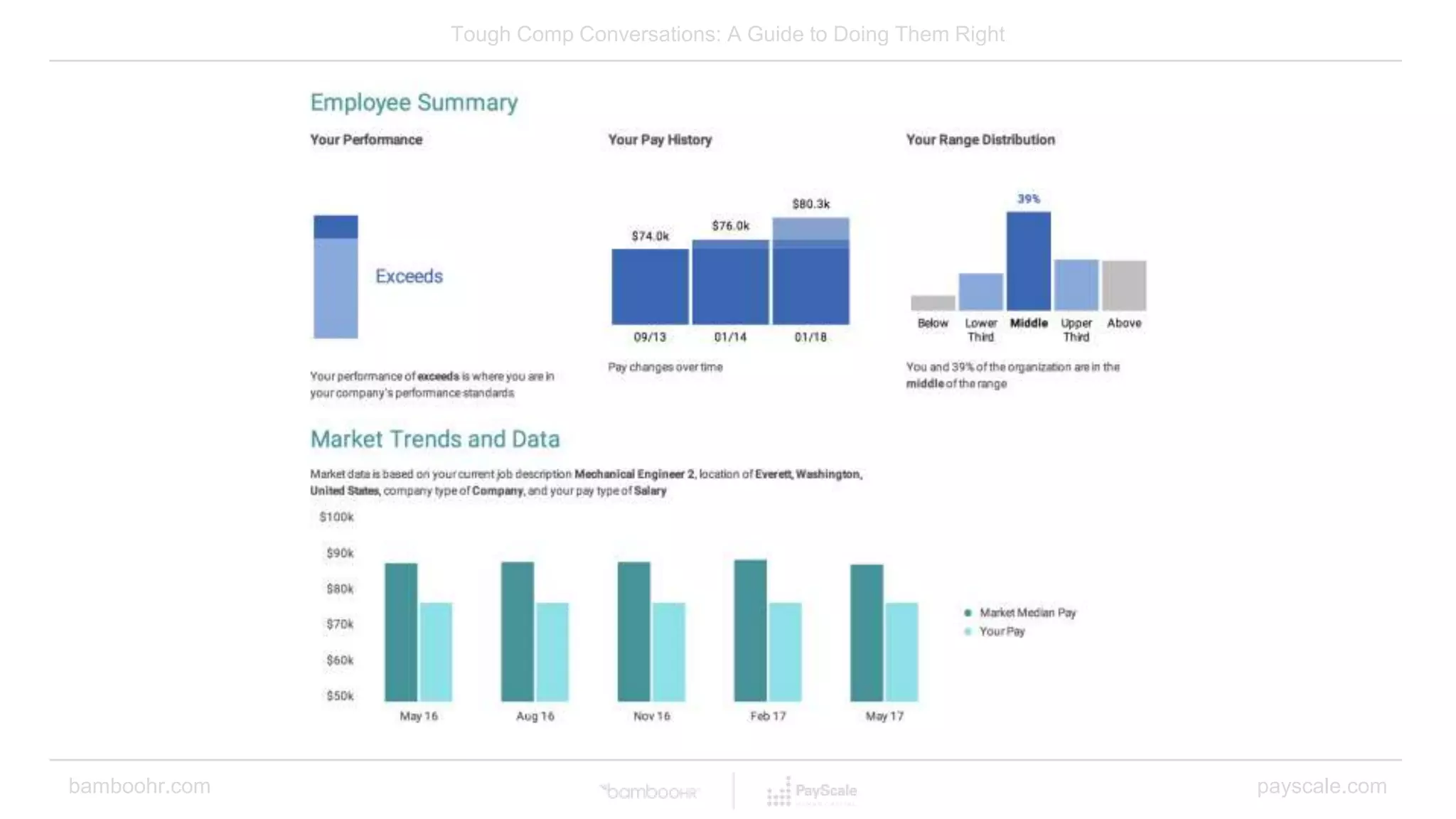
Total Compensation
Statement
Tough Comp Conversations: A Guide to Doing Them Right
bamboohr.com payscale.com
Tough Comp Conversations: A Guide to Doing Them Right
bamboohr.com payscale.com
What Employees Want to Know
• Am I getting a raise?
• Am I getting a promotion? If not this cycle, then when is it
possible for my pay to be adjusted?
• How is my pay determined?
• What do I need to do to increase my value within the
organization and earn more?
• How does my pay compare to my peers?
Tough Comp Conversations: A Guide to Doing Them Right
bamboohr.com payscale.com
Communication Tips
• Sell the organization and mention all its value drivers
• Point out what’s good about the employee’s offer (if their pay is high
relative to his or her peers)
• Listen to the employee’s concerns to figure out what’s behind the ask
• Let employee know what they can do to increase their value within
the organization and earn more
Understanding Comp
And Culture
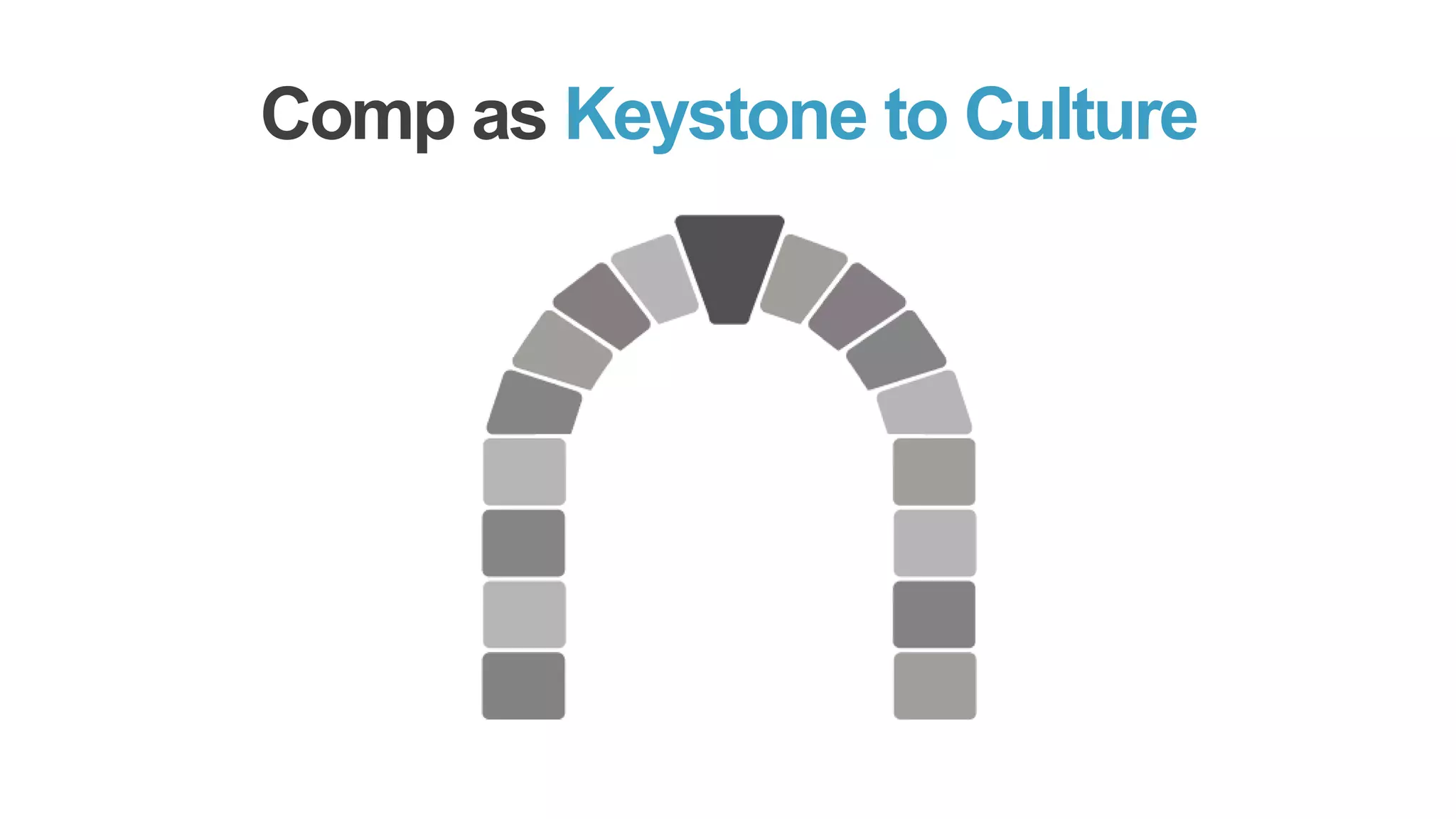
Comp as Keystone to Culture
Culture is story
Everything you do
becomes part of that story…
The story of what you value
Compensation is the story
The story of how much you are valued.
Your
Company
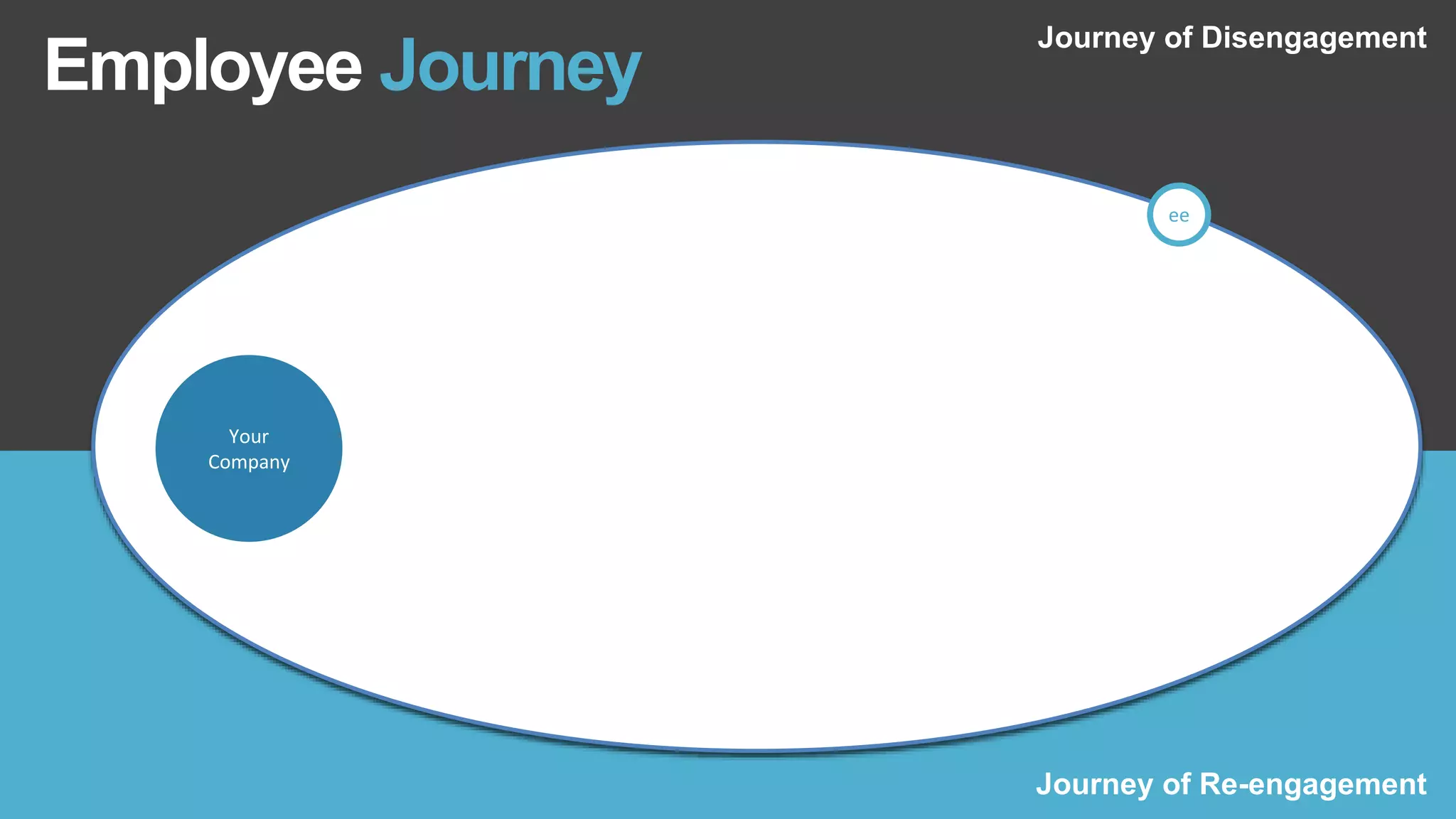
Employee Journey
Journey of Re-engagement
Journey of Disengagement
ee
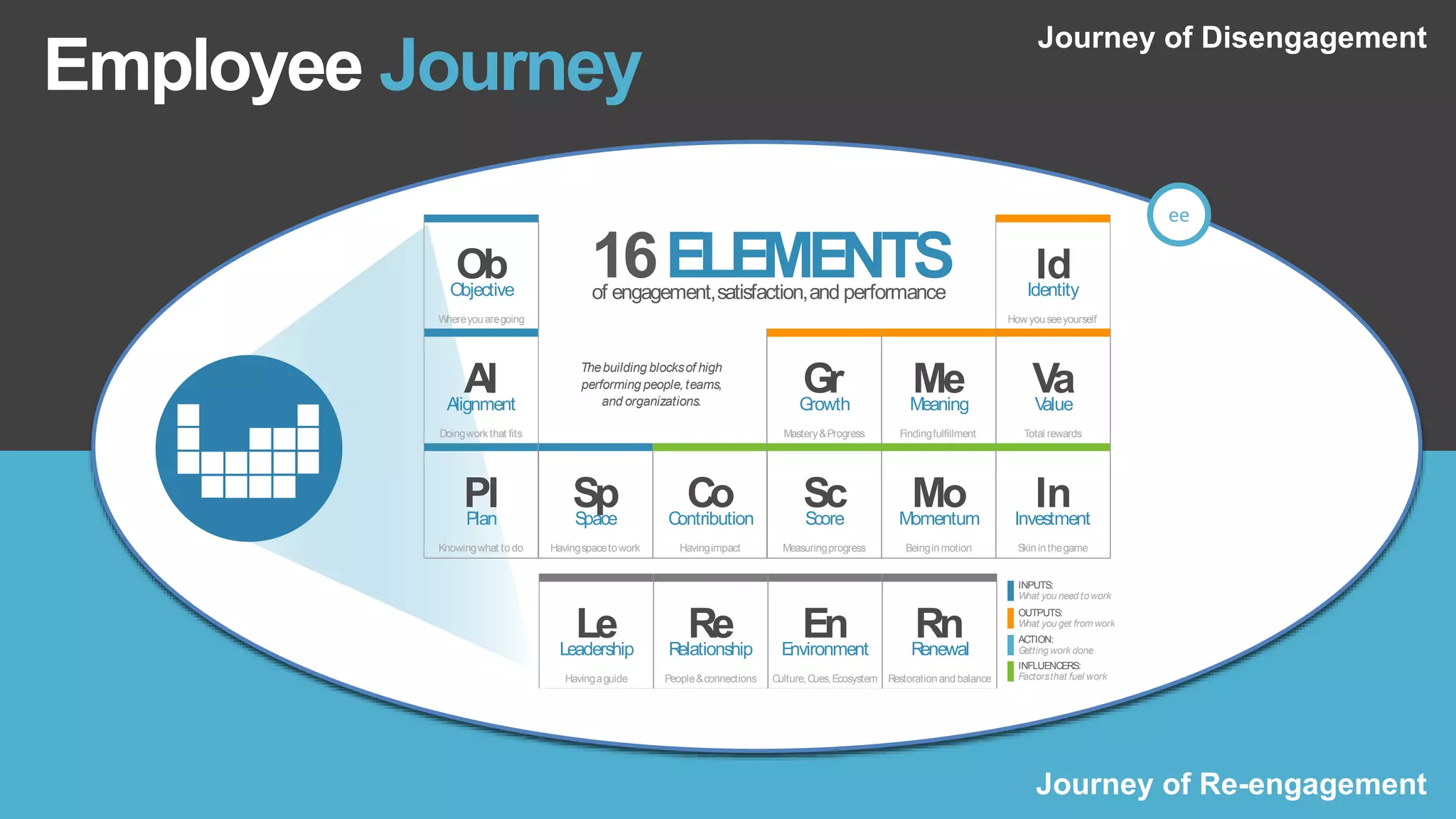
Employee Journey
Journey of Re-engagement
Journey of Disengagement
ee
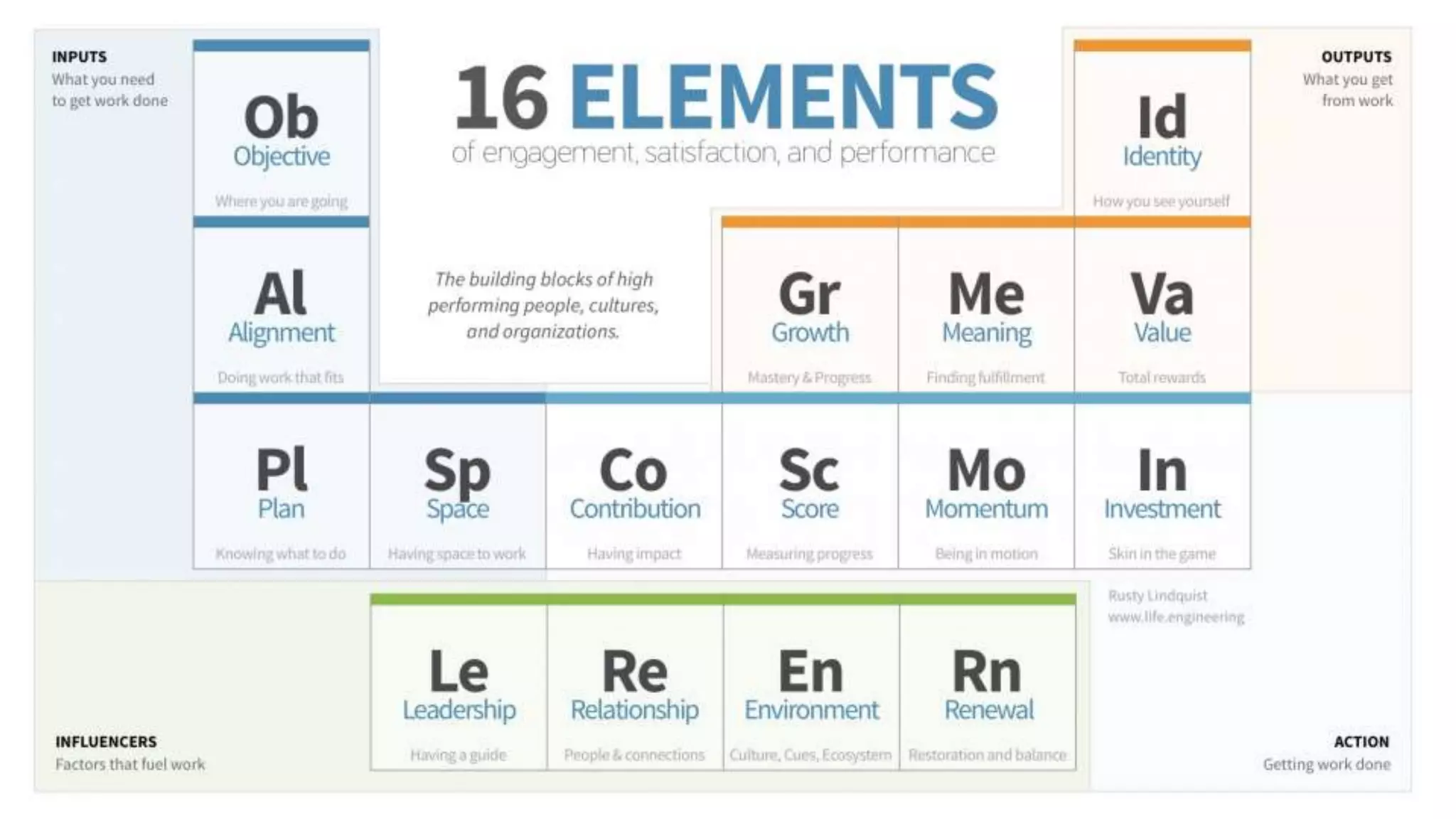
IdIdentity
Howyouseeyourself
ObObjective
Whereyouaregoing
MeMeaning
Findingfulfillment
AlAlignment
Doingworkthat fits
MoMomentum
Beinginmotion
EnEnvironment
Culture,Cues,Ecosystem
LeLeadership
Havingaguide
PlPlan
Knowingwhat todo
SpSpace
Havingspacetowork
ReRelationship
People&connections
GrGrowth
Mastery&Progress
CoContribution
Havingimpact
RnRenewal
Restorationandbalance
VaValue
Total rewards
InInvestment
Skininthegame
ScScore
Measuringprogress
Thebuilding blocksof high
performing people,teams,
and organizations.
of engagement,satisfaction,and performance
16ELEMENTS
INFLUENCERS:
Factorsthat fuel work
INPUTS:
What you need towork
ACTION:
Getting work done
OUTPUTS:
What you get from work
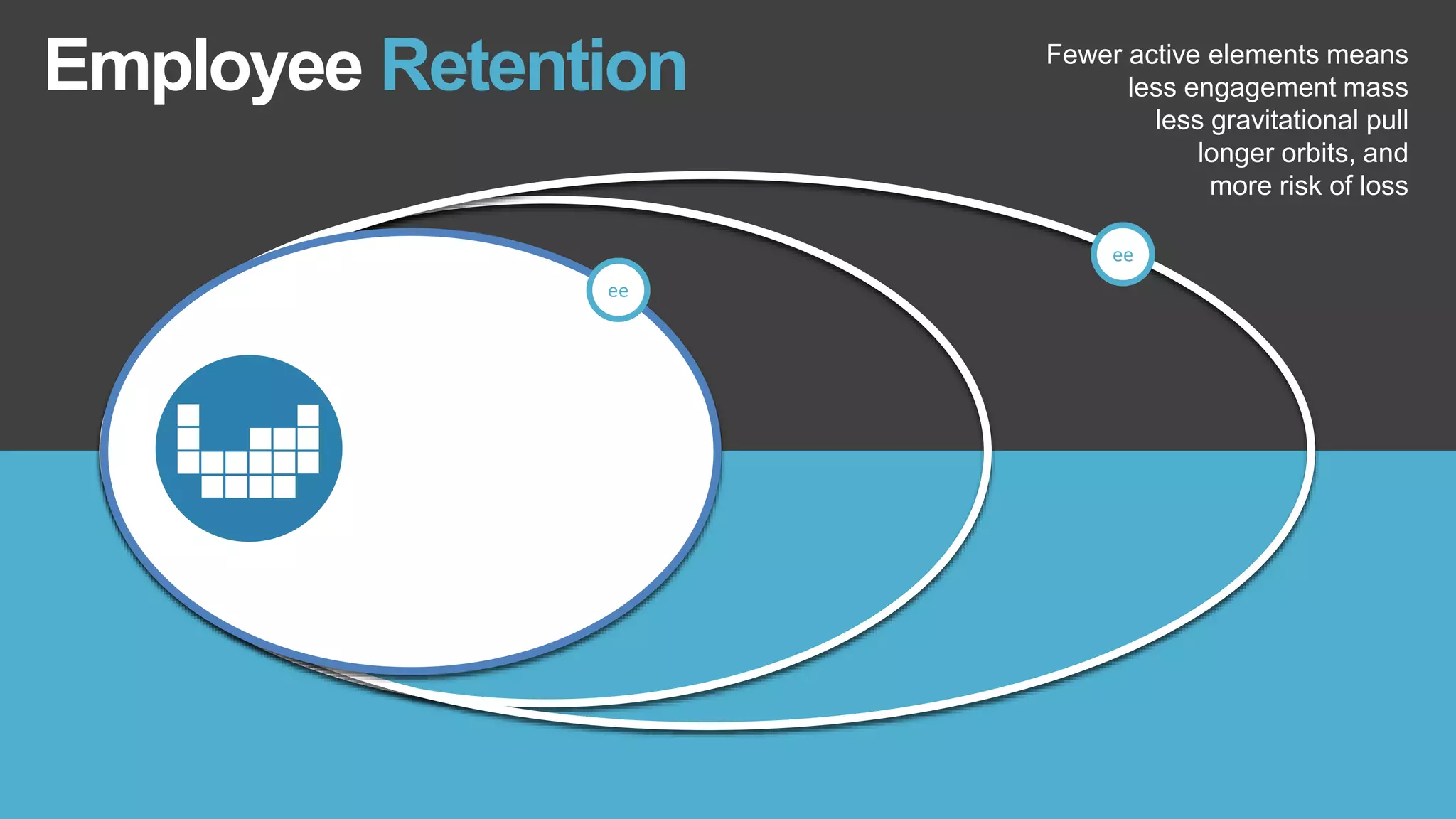
Employee Retention Fewer active elements means
less engagement mass
less gravitational pull
longer orbits, and
more risk of loss
ee
ee
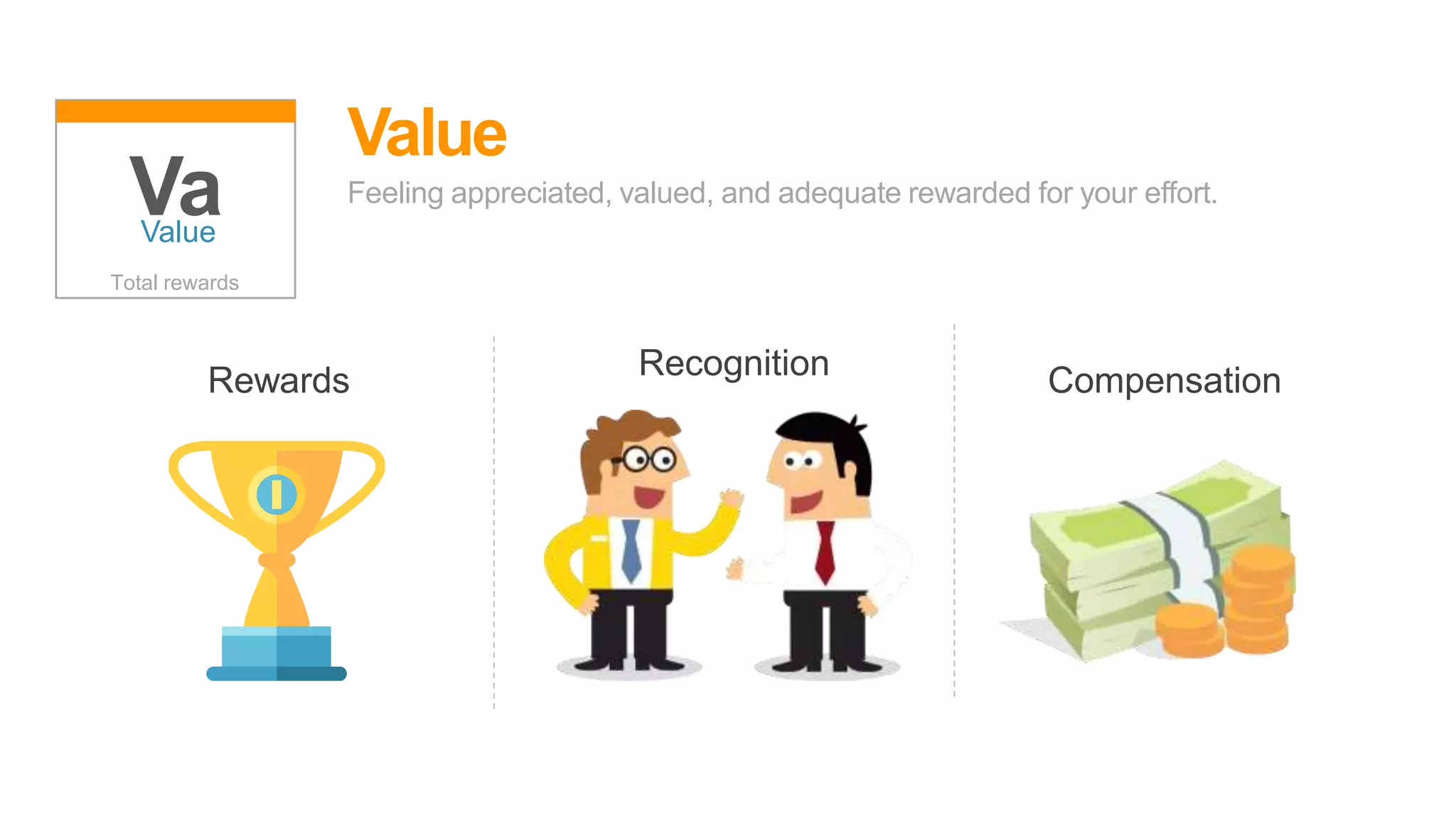
Feeling appreciated, valued, and adequate rewarded for your effort.
Value
Total rewards
Va
Value
Rewards Recognition Compensation
Common
Conversation Scenarios
Tough Comp Conversations: A Guide to Doing Them Right
bamboohr.com payscale.com
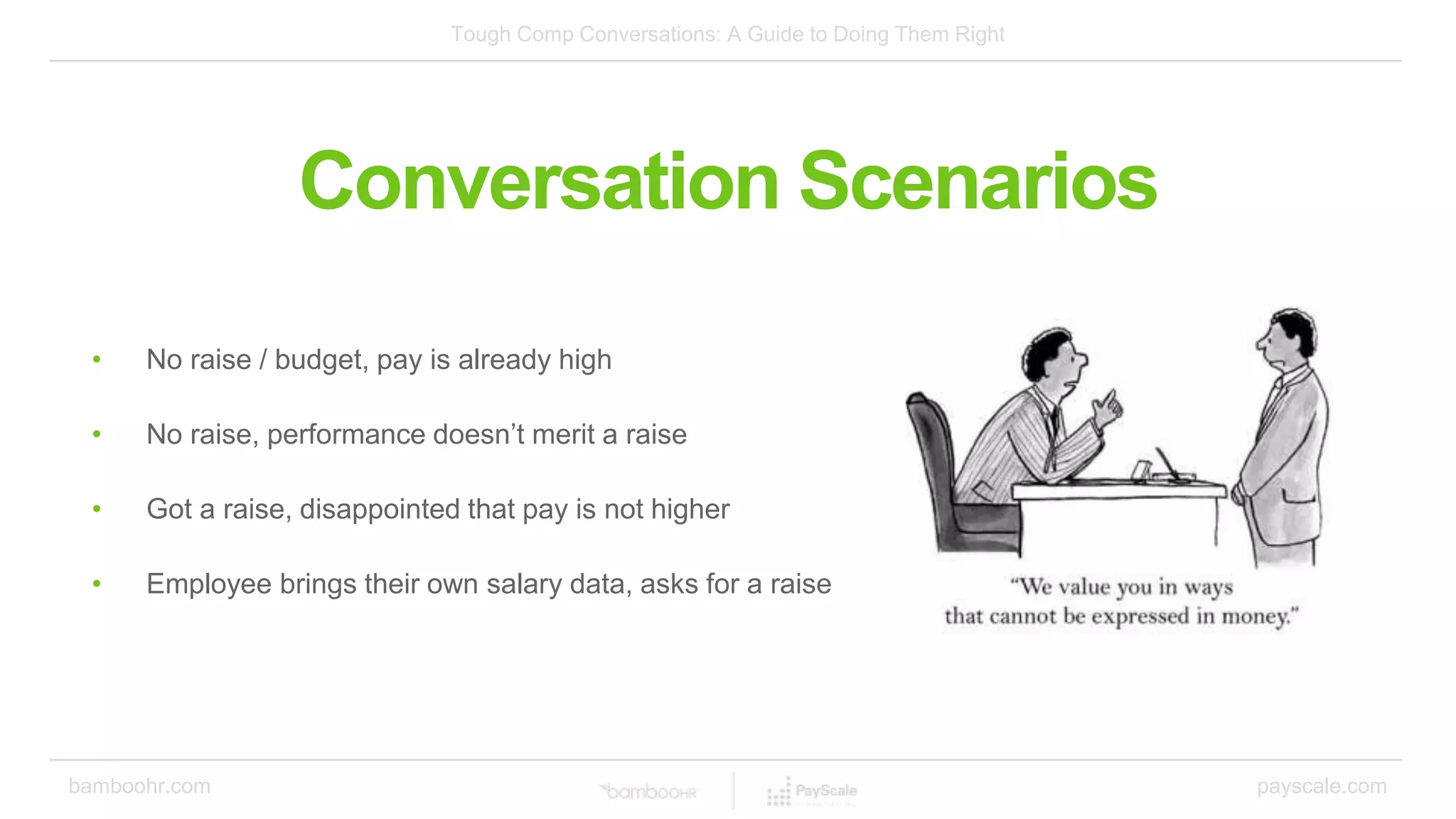
Conversation Scenarios
• No raise / budget, pay is already high
• No raise, performance doesn’t merit a raise
• Got a raise, disappointed that pay is not higher
• Employee brings their own salary data, asks for a raise
Tough Comp Conversations: A Guide to Doing Them Right
bamboohr.com payscale.com
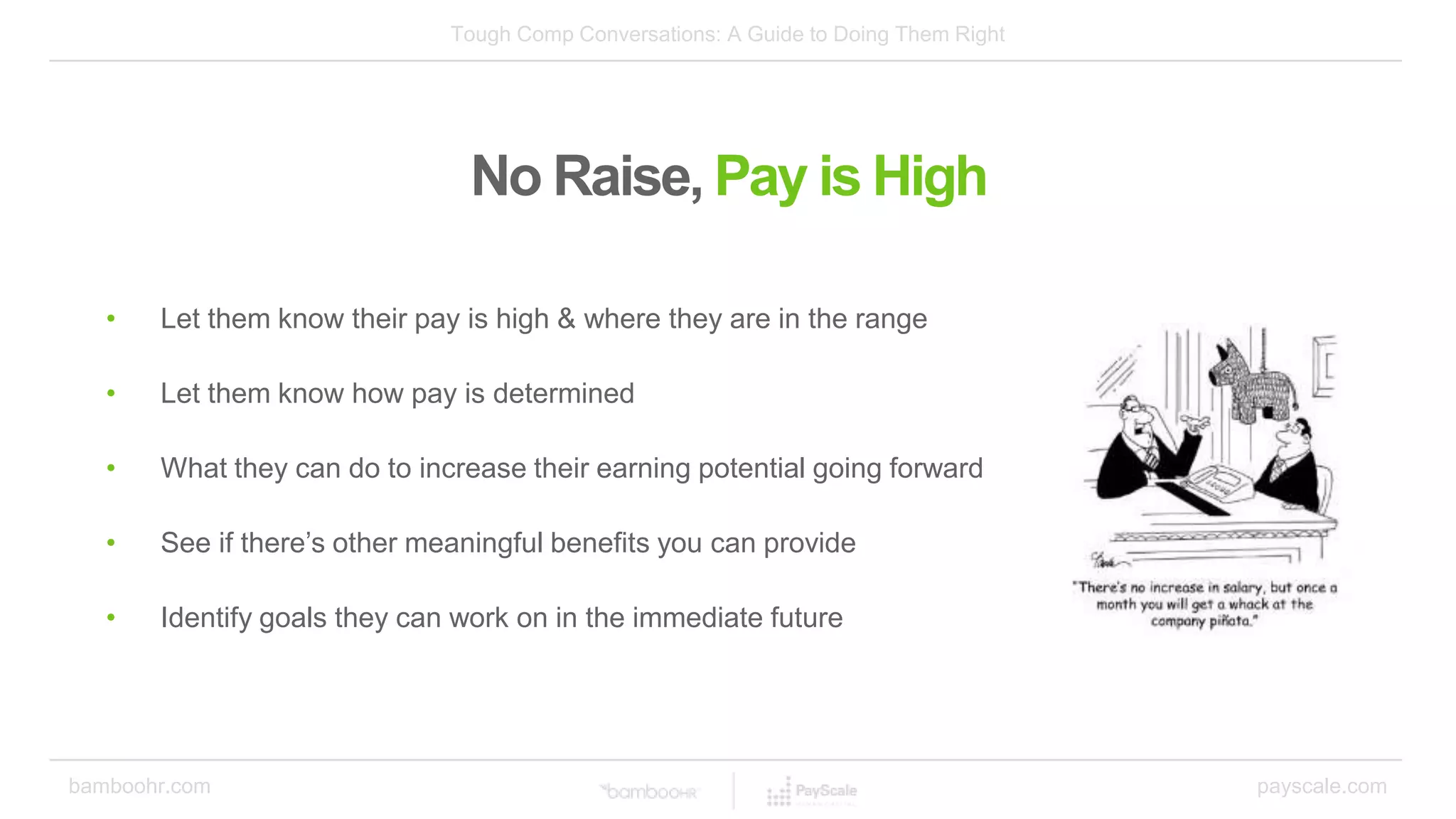
No Raise, Pay is High
• Let them know their pay is high & where they are in the range
• Let them know how pay is determined
• What they can do to increase their earning potential going forward
• See if there’s other meaningful benefits you can provide
• Identify goals they can work on in the immediate future
Tough Comp Conversations: A Guide to Doing Them Right
bamboohr.com payscale.com
No Raise, Performance is Low
• Rationale for why they’re not eligible for a raise
• What actions they can take to be considered for an increase in the future
• Show them a way forward. Set specific performance goals to work on
• Set timeframe for checking in on progress
Tough Comp Conversations: A Guide to Doing Them Right
bamboohr.com payscale.com
Got a Raise, Not Happy
• Highlight their key accomplishments and how pay is linked directly to
those accomplishments
• Remind them of the market value for their role & skillset
• Discuss why pay is fair and your involvement in getting them the raise
• Listen to what’s behind the concern
Tough Comp Conversations: A Guide to Doing Them Right
bamboohr.com payscale.com
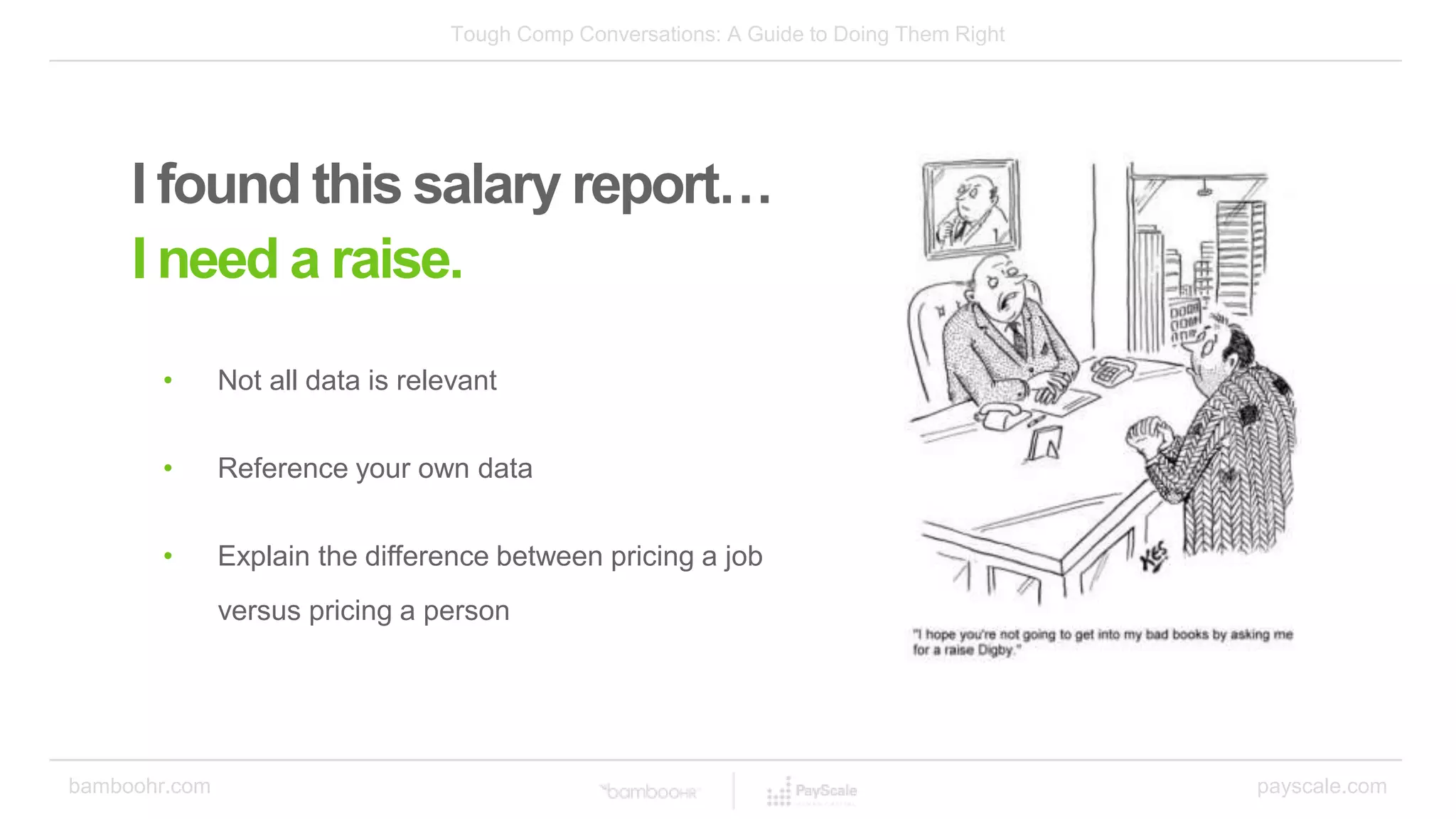
I found this salary report…
I need a raise.
• Not all data is relevant
• Reference your own data
• Explain the difference between pricing a job
versus pricing a person
Tough Comp Conversations: A Guide to Doing Them Right
bamboohr.com payscale.com
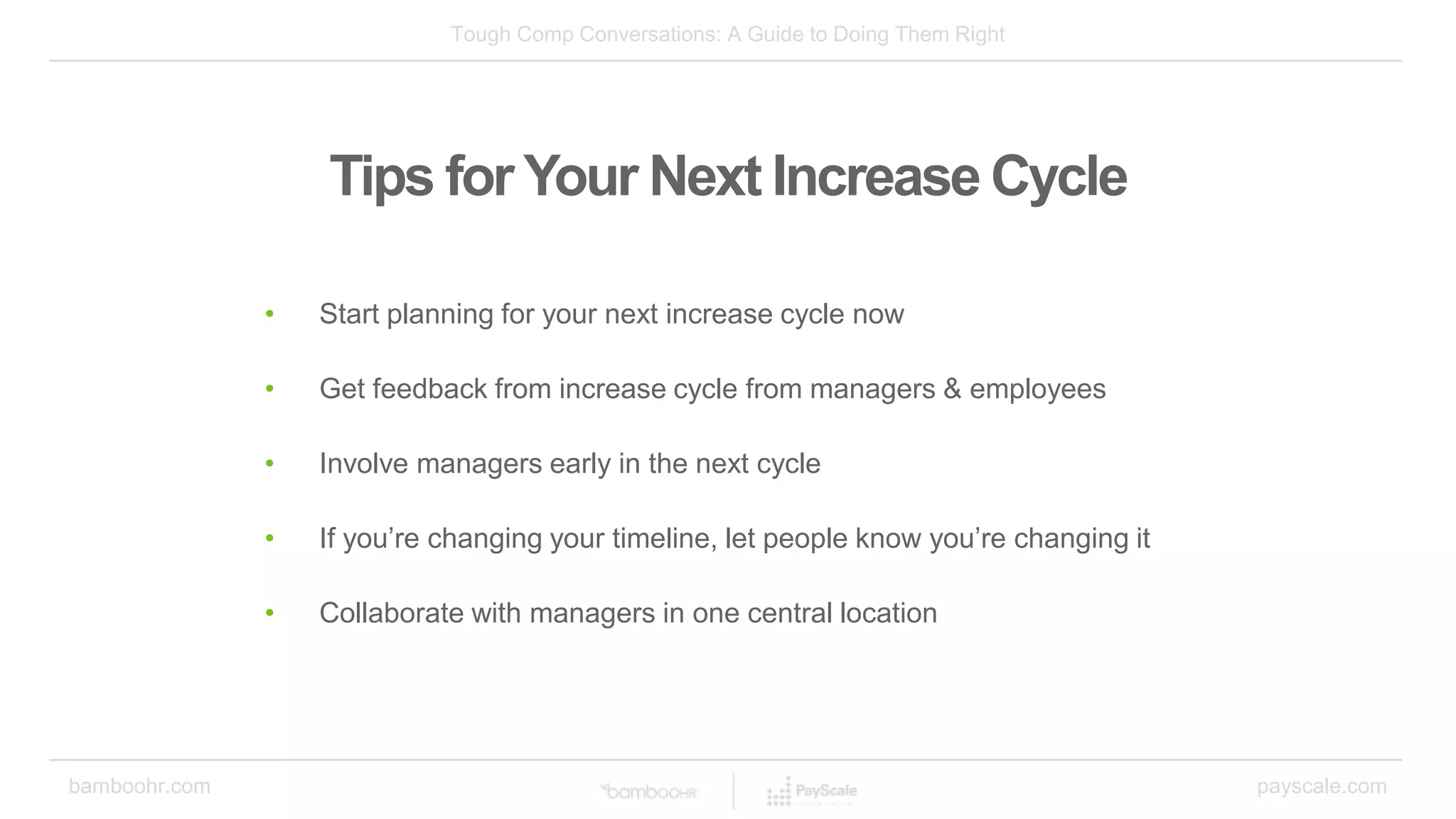
Tips for Your Next Increase Cycle
• Start planning for your next increase cycle now
• Get feedback from increase cycle from managers & employees
• Involve managers early in the next cycle
• If you’re changing your timeline, let people know you’re changing it
• Collaborate with managers in one central location
Your
Company
Moment
of Peak
Engagement
(Flow)
Departure / Disengagement
Triggers
Emotional Distancing
Maximum
Emotional
Sensitivity
Maximum
Risk of
Departure
Decision to
Re-engage
Emotional Refueling Onboarding / Reboarding
Employee Journey
Organizational Waste
Journey of Re-engagement
Journey of Disengagement
Disengagement Diagnostics
Stay Interviews
eNPS
Pulse Survey’s
Optimal
Employee
Orbit (Circular)
“Re-hire”
& “Re-board”
Intervention
Opportunities
Lowest
Gravitational Pull
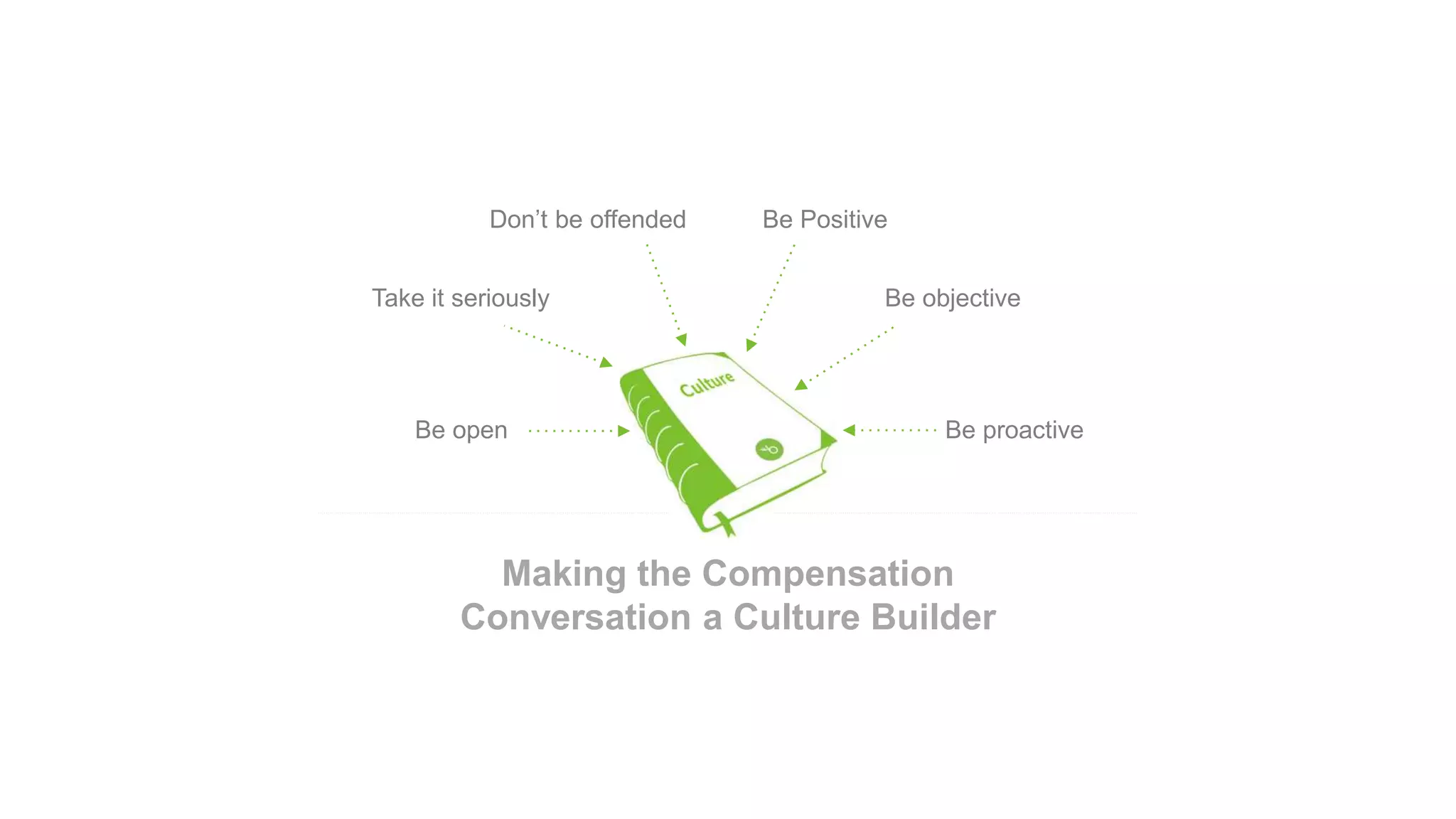
Making the Compensation
Conversation a Culture Builder
Don’t be offended
Be open
Take it seriously Be objective
Be proactive
Be Positive
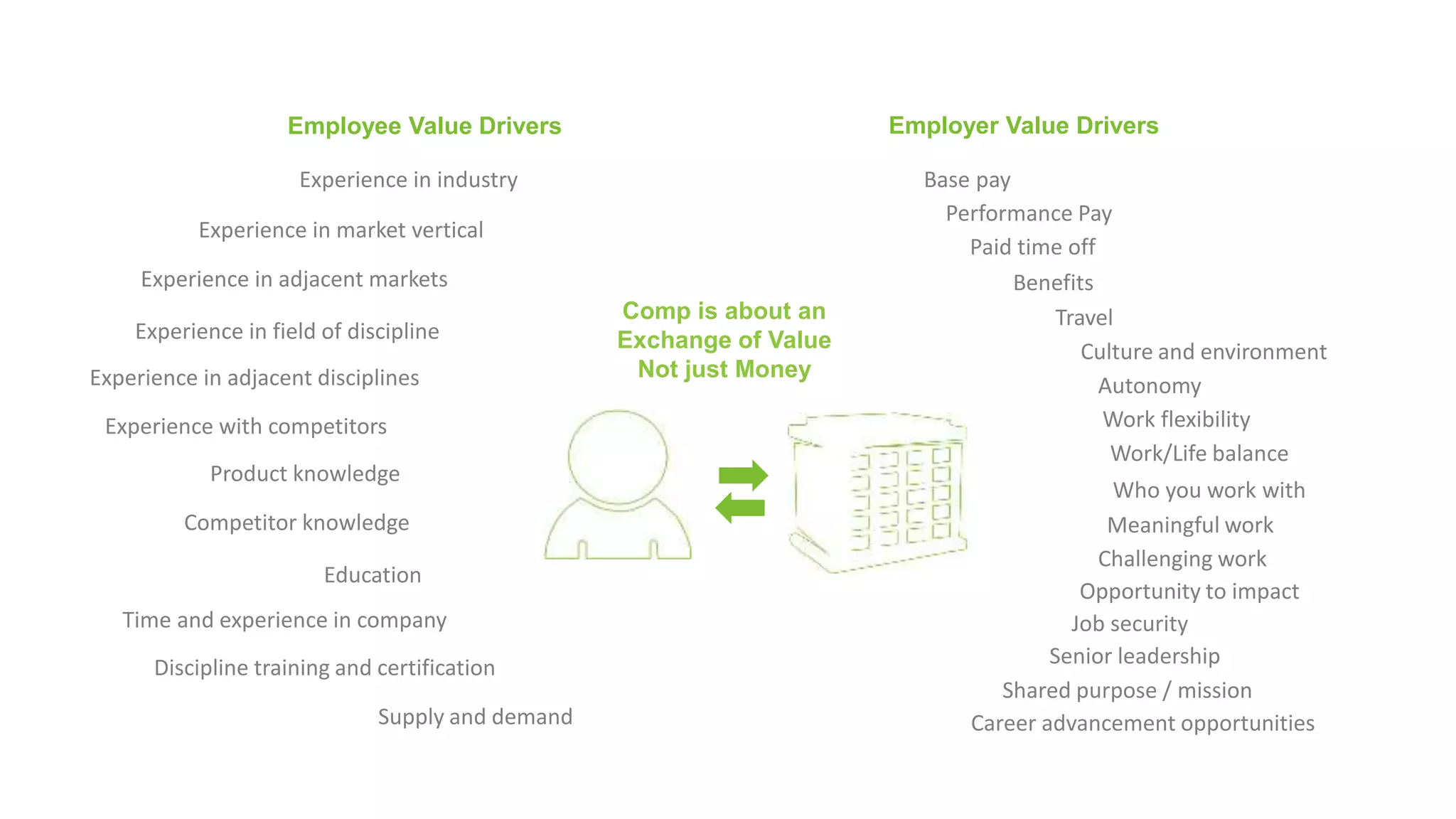
Comp is about an
Exchange of Value
Not just Money
Experience in industry
Experience in market vertical
Experience in adjacent markets
Experience in field of discipline
Experience in adjacent disciplines
Experience with competitors
Product knowledge
Competitor knowledge
Time and experience in company
Education
Discipline training and certification
Supply and demand
Employer Value DriversEmployee Value Drivers
Base pay
Performance Pay
Paid time off
Benefits
Travel
Culture and environment
Work flexibility
Work/Life balance
Meaningful work
Who you work with
Challenging work
Opportunity to impact
Job security
Shared purpose / mission
Career advancement opportunities
Autonomy
Senior leadership
bamboohr.com payscale.com
Tough Comp Conversations: A Guide to Doing Them Right
Thank you!
BambooHR
Receive a free job posting on our ATS and full HRIS for one week.
We will contact everyone within a few days to set this up.
Keep up with the latest in modern compensation best practices.
PayScale
Check out our blog Compensation Today: payscale.com/compensation-today
bamboohr.com payscale.com
Tough Comp Conversations: A Guide to Doing Them Right
Rusty Lindquist Camie Bailey
Vice President, Thought Leadership
BambooHR
Comp Software Implementation Manager
PayScale
Questions?

Tough Comp Conversations: A Guide For Doing Them Right

  • 1.
    bamboohr.com payscale.com Tough CompConversations: A Guide to Doing Them Right
  • 2.
    bamboohr.com payscale.com Tough CompConversations: A Guide to Doing Them Right Rusty Lindquist Camie Bailey Vice President, Thought Leadership BambooHR Comp Software Implementation Manager PayScale
  • 3.
  • 4.
    TIME Visibility Technology Trigger Peak ofinflated expectations Trough of disillusionment Slope of enlightenment Plateau of productivity Gartner HypeCycle
  • 5.
    TIME EMPLOYEE ENGAGEMENT Date of Hire Peakof inflated expectations Trough of disillusionment Slope of enlightenment Plateau of productivity EmployeeJourney
  • 6.
    TIME EMPLOYEE ENGAGEMENT Date of Hire Peakof inflated expectations Trough of disillusionment Slope of enlightenment Plateau of productivity Slope of Disengagement Slope of Re-engagement EmployeeJourney
  • 7.
  • 8.
    EmployeeJourney Moments of PeakEngagement At-Risk Exit Points
  • 9.
  • 10.
    Ultimate Individual “Why” The day youwere born The day you find out why Life’s Journey
  • 11.
    Ultimate Individual “Why” The Orbit ofEmployee Engagement Life’s Journey The day you find out why The day you were born You e Your organization
  • 12.
  • 13.
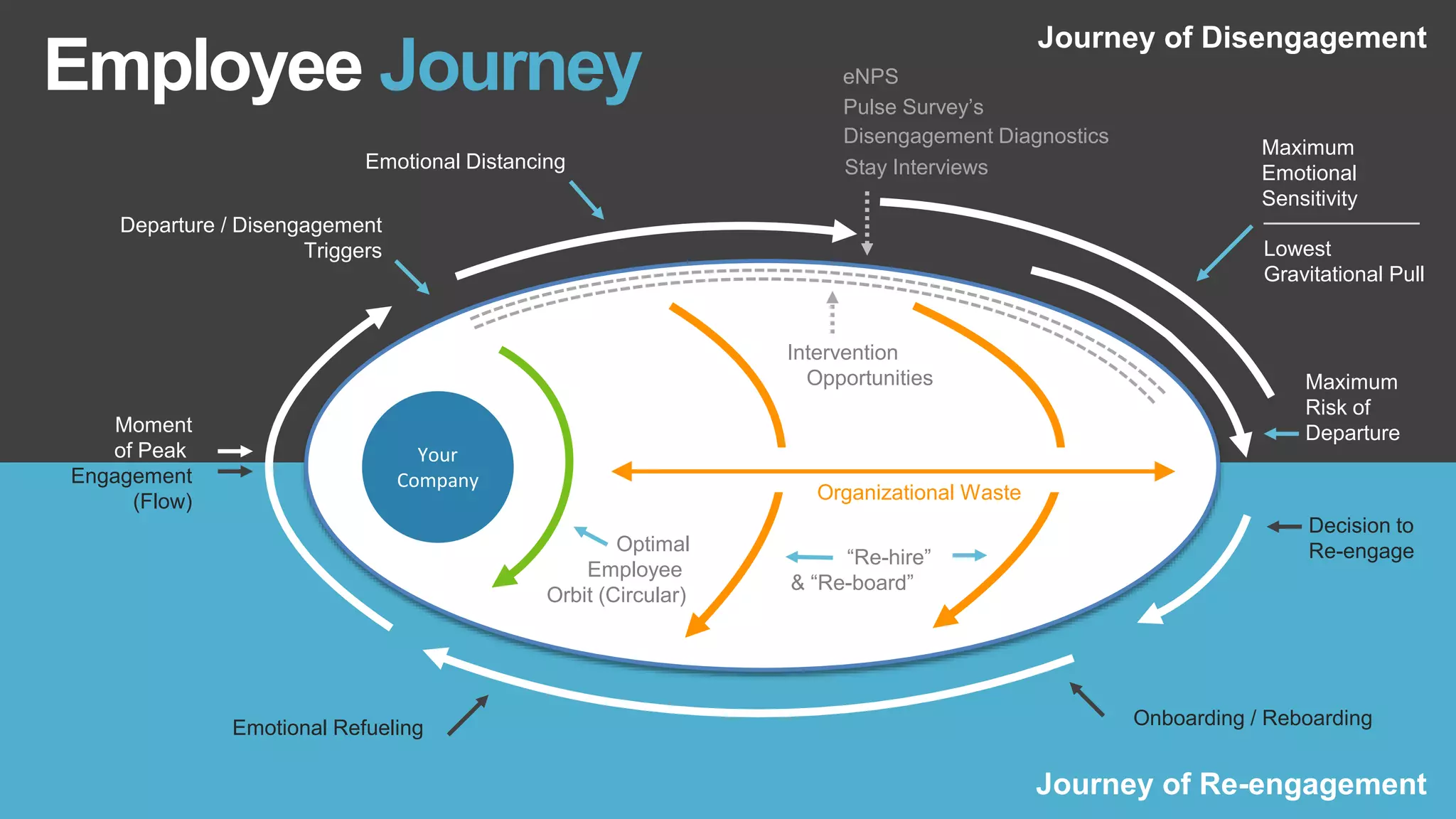
    Your Company Moment of Peak Engagement (Flow) Departure /Disengagement Triggers Emotional Distancing Maximum Risk of Departure Decision to Re-engage Emotional Refueling Onboarding / Reboarding Employee Journey Journey of Re-engagement Journey of Disengagement Optimal Employee Orbit (Circular) “Re-hire” & “Re-board” Disengagement Diagnostics Stay Interviews eNPS Pulse Survey’s Intervention Opportunities Maximum Emotional Sensitivity Lowest Gravitational Pull e Organizational Waste
  • 14.
  • 15.
    Tough Comp Conversations:A Guide to Doing Them Right bamboohr.com payscale.com There’s a Large Confidence Gap • 70% of conversations about pay happen between managers and employees (CEB) • Only 19% of companies say they’re ”very confident” in their managers’ abilities to have tough conversations about comp with employees (PayScale CBPR) • But only 1/3 have training for managers (PayScale CPBR)
  • 16.
    Tough Comp Conversations:A Guide to Doing Them Right bamboohr.com payscale.com Communicating the “WHY” of Pay Matters • Most employees don’t know if they’re paid fairly or not. • Perception of pay impacts employee satisfaction and intent to leave. • 82% of employees are okay with low pay as long as they understand the rationale.
  • 17.
    Tough Comp Conversations:A Guide to Doing Them Right bamboohr.com payscale.com What Employees BelieveAbout Pay A survey of 71,000 people shows that most can’t identify how they’re paid compared to the market
  • 18.
    Tough Comp Conversations:A Guide to Doing Them Right bamboohr.com payscale.com What Managers Need to Know 1. Your company’s compensation philosophy, strategy and policies 2. Process for communicating comp – timeline 3. How to conduct the compensation review meeting 4. Communication best practices
  • 19.
    Tough Comp Conversations:A Guide to Doing Them Right bamboohr.com payscale.com Compensation Philosophy Tell managers how transparent your organization intends to be
  • 20.
    Tough Comp Conversations:A Guide to Doing Them Right bamboohr.com payscale.com Strategy, Policies & Processes • Results from your most recent market study • How and when are market increases allocated? • How are merit-based increases determined? • How is range determined for a position? • What will happen to pay in case of a promotion, demotion or transfer? • What do you handle green-circled and red-circled outliers? • Are out of cycle increases done, and if so, under what circumstances? • If there are jobs / functions that will go through more frequent reviews?
  • 21.
    Tough Comp Conversations:A Guide to Doing Them Right bamboohr.com payscale.com Prep for the Comp Review Meeting 1. Toolkit: Total Comp Statement, employee wage history, the team’s wage history, job description, assigned goals 2. Scenarios to anticipate 3. Talking Points 4. Communication best practices
  • 22.
    Tough Comp Conversations:A Guide to Doing Them Right bamboohr.com payscale.com Total Compensation Statement
  • 23.
    Tough Comp Conversations:A Guide to Doing Them Right bamboohr.com payscale.com
  • 24.
    Tough Comp Conversations:A Guide to Doing Them Right bamboohr.com payscale.com What Employees Want to Know • Am I getting a raise? • Am I getting a promotion? If not this cycle, then when is it possible for my pay to be adjusted? • How is my pay determined? • What do I need to do to increase my value within the organization and earn more? • How does my pay compare to my peers?
  • 25.
    Tough Comp Conversations:A Guide to Doing Them Right bamboohr.com payscale.com Communication Tips • Sell the organization and mention all its value drivers • Point out what’s good about the employee’s offer (if their pay is high relative to his or her peers) • Listen to the employee’s concerns to figure out what’s behind the ask • Let employee know what they can do to increase their value within the organization and earn more
  • 26.
  • 27.
    Comp as Keystoneto Culture
  • 29.
    Culture is story Everythingyou do becomes part of that story… The story of what you value
  • 30.
    Compensation is thestory The story of how much you are valued.
  • 31.
    Your Company Employee Journey Journey ofRe-engagement Journey of Disengagement ee
  • 32.
    Employee Journey Journey ofRe-engagement Journey of Disengagement ee IdIdentity Howyouseeyourself ObObjective Whereyouaregoing MeMeaning Findingfulfillment AlAlignment Doingworkthat fits MoMomentum Beinginmotion EnEnvironment Culture,Cues,Ecosystem LeLeadership Havingaguide PlPlan Knowingwhat todo SpSpace Havingspacetowork ReRelationship People&connections GrGrowth Mastery&Progress CoContribution Havingimpact RnRenewal Restorationandbalance VaValue Total rewards InInvestment Skininthegame ScScore Measuringprogress Thebuilding blocksof high performing people,teams, and organizations. of engagement,satisfaction,and performance 16ELEMENTS INFLUENCERS: Factorsthat fuel work INPUTS: What you need towork ACTION: Getting work done OUTPUTS: What you get from work
  • 33.
    Employee Retention Feweractive elements means less engagement mass less gravitational pull longer orbits, and more risk of loss ee ee
  • 35.
    Feeling appreciated, valued,and adequate rewarded for your effort. Value Total rewards Va Value Rewards Recognition Compensation
  • 36.
  • 37.
    Tough Comp Conversations:A Guide to Doing Them Right bamboohr.com payscale.com Conversation Scenarios • No raise / budget, pay is already high • No raise, performance doesn’t merit a raise • Got a raise, disappointed that pay is not higher • Employee brings their own salary data, asks for a raise
  • 38.
    Tough Comp Conversations:A Guide to Doing Them Right bamboohr.com payscale.com No Raise, Pay is High • Let them know their pay is high & where they are in the range • Let them know how pay is determined • What they can do to increase their earning potential going forward • See if there’s other meaningful benefits you can provide • Identify goals they can work on in the immediate future
  • 39.
    Tough Comp Conversations:A Guide to Doing Them Right bamboohr.com payscale.com No Raise, Performance is Low • Rationale for why they’re not eligible for a raise • What actions they can take to be considered for an increase in the future • Show them a way forward. Set specific performance goals to work on • Set timeframe for checking in on progress
  • 40.
    Tough Comp Conversations:A Guide to Doing Them Right bamboohr.com payscale.com Got a Raise, Not Happy • Highlight their key accomplishments and how pay is linked directly to those accomplishments • Remind them of the market value for their role & skillset • Discuss why pay is fair and your involvement in getting them the raise • Listen to what’s behind the concern
  • 41.
    Tough Comp Conversations:A Guide to Doing Them Right bamboohr.com payscale.com I found this salary report… I need a raise. • Not all data is relevant • Reference your own data • Explain the difference between pricing a job versus pricing a person
  • 42.
    Tough Comp Conversations:A Guide to Doing Them Right bamboohr.com payscale.com Tips for Your Next Increase Cycle • Start planning for your next increase cycle now • Get feedback from increase cycle from managers & employees • Involve managers early in the next cycle • If you’re changing your timeline, let people know you’re changing it • Collaborate with managers in one central location
  • 43.
    Your Company Moment of Peak Engagement (Flow) Departure /Disengagement Triggers Emotional Distancing Maximum Emotional Sensitivity Maximum Risk of Departure Decision to Re-engage Emotional Refueling Onboarding / Reboarding Employee Journey Organizational Waste Journey of Re-engagement Journey of Disengagement Disengagement Diagnostics Stay Interviews eNPS Pulse Survey’s Optimal Employee Orbit (Circular) “Re-hire” & “Re-board” Intervention Opportunities Lowest Gravitational Pull
  • 44.
    Making the Compensation Conversationa Culture Builder Don’t be offended Be open Take it seriously Be objective Be proactive Be Positive
  • 45.
    Comp is aboutan Exchange of Value Not just Money Experience in industry Experience in market vertical Experience in adjacent markets Experience in field of discipline Experience in adjacent disciplines Experience with competitors Product knowledge Competitor knowledge Time and experience in company Education Discipline training and certification Supply and demand Employer Value DriversEmployee Value Drivers Base pay Performance Pay Paid time off Benefits Travel Culture and environment Work flexibility Work/Life balance Meaningful work Who you work with Challenging work Opportunity to impact Job security Shared purpose / mission Career advancement opportunities Autonomy Senior leadership
  • 46.
    bamboohr.com payscale.com Tough CompConversations: A Guide to Doing Them Right Thank you! BambooHR Receive a free job posting on our ATS and full HRIS for one week. We will contact everyone within a few days to set this up. Keep up with the latest in modern compensation best practices. PayScale Check out our blog Compensation Today: payscale.com/compensation-today
  • 47.
    bamboohr.com payscale.com Tough CompConversations: A Guide to Doing Them Right Rusty Lindquist Camie Bailey Vice President, Thought Leadership BambooHR Comp Software Implementation Manager PayScale Questions?

Editor's Notes

  • #3 Crystal TIME: ~ 5 min
  • #4 BAMBOO - (Section Total – 15 min)
  • #15 PS
  • #16 PS There’s a large confidence gap where most HR teams do not trust their managers’ abilities to have tough pay conversations with employees. Yet 70 % of conversations about pay happen between managers and employees - based on research from CEB.
  • #17 PS Communicating to employees about how their pay is determined is really important to employee satisfaction and their intent to leave. Our research found that most employees do not know if they’re paid fairly or not. They only know what they make, they may know what others make, but they have no idea how their pay is determined and how it aligns to the market. During 2015 and 2016, PayScale collected data on the employee experience from 501,796 workers in the PayScale salary survey. We found that perception of pay has a large impact on employee satisfaction and their intent to leave. What’s interesting is that we found that 82% of employees are okay with low pay as long as they understand the rationale for it.
  • #18 PS Most people have no idea how they’re paid.
  • #19 PS Your managers need training on a few areas: -Make sure managers understand your compensation philosophy and processes and tie it back to concerns employees have. This is most important that managers can articulate your compensation philosophy and strategy to employees. -Managers need to know what level of transparency your organization has decided on. For example, if it’s been decided that managers can only share with employees the pay ranges up to the employee’s level, managers shouldn’t share higher level pay ranges that may detract from a sense of fairness. - Your managers will need to be current on your process for communicating pay increases including when they need to talk to their employees and have the comp reviews. -You’ll want to provide guidance on how to conduct the compensation review meetings and give them the tools so that they’re prepared for any questions employees may throw their way. -Let managers know what resources and data will be at their disposal when they have pay conversations. For example, you may share with managers the results from the most recent market study you’ve conducted. -Most important communication tips you want to share -You’ll want to train managers on communication best practices – so that they can really listen to employees, understand their concerns and address them in a constructive fashion.
  • #20 PS Managers should understand how transparent your organization intends to be so they can communicate the appropriate level of information to their employees. Managers should also be clear on your compensation strategy and know what you’ve chosen to reward.
  • #21 PS Your managers should be clear on how your organization makes decisions about pay increases. Let your manager know – what are you going to do with pay in light of your most recent market study? Let your managers know: What are increases based on? Market? Merit? Experience? Skills? Results? Or some combination. Let your managers know how the hiring range is determine for a position. Let your managers know how the organization handles employees who are paid below their range or above their range when it comes to pay raises. Let your managers know the pay ranges for their employees are set. -If you do out of cycle increases, under what circumstances can the increases happen? Managers won’t be sharing all this information during the compensation review meetings with employees, but it’s important for managers to have this context so they can clearly articulate your strategy, policies and processes when asked.
  • #22 PS How to help managers prepare for the compensation review meeting -Provide talking points -Toolkit: employee wage history, the team’s wage history (useful when discussing where this employee’s pay fits into the whole), the employee’s job description, and assigned goals. -Train managers in how to give feedback. -Manager should make it clear how the employee can do more to earn more. -Manager should know when to follow up  
  • #23 PS CPBR 2017 research showed that 40 percent of all organizations provide total compensation statements. The research also uncovered that top performing companies are more likely to share total comp statements (43 percent), as are the largest organizations – 51 percent. A total compensation statement (also known as total reward or employee comp report) is a great communication tool to help the employee better understand their total compensation. This report can help managers have better conversations about pay with employees – provided that they themselves are confident about the content. Most comp statements will at a minimum provide information on the employee’s cash compensation and a non-monetary value for non-cash benefits. If your organization intends to be more transparent, you can include more information on the statement such as the range for the employee’s role and their penetration within the range. As to sharing non-cash benefits in a total comp statement, you’ll want to ask yourself: would employees benefit from knowing what you know about all the non-cash benefits offered by your company? Managers need to understand the content in their employees’ total comp report – they are typically not well-received when they come with bad news or mixed signals. For example, non-cash benefits should not be given as a justification for receiving a cash increase. It’s really easy to build a total comp statement report for each employee within PayScale.
  • #24 PS CPBR 2017 research showed that 40 percent of all organizations provide total compensation statements. The research also uncovered that top performing companies are more likely to share total comp statements (43 percent), as are the largest organizations – 51 percent. A total compensation statement (also known as total reward or employee comp report) is a great communication tool to help the employee better understand their total compensation. This report can help managers have better conversations about pay with employees – provided that they themselves are confident about the content. Most comp statements will at a minimum provide information on the employee’s cash compensation and a non-monetary value for non-cash benefits. If your organization intends to be more transparent, you can include more information on the statement such as the range for the employee’s role and their penetration within the range. As to sharing non-cash benefits in a total comp statement, you’ll want to ask yourself: would employees benefit from knowing what you know about all the non-cash benefits offered by your company? Managers need to understand the content in their employees’ total comp report – they are typically not well-received when they come with bad news or mixed signals. For example, non-cash benefits should not be given as a justification for receiving a cash increase. It’s really easy to build a total comp statement report for each employee within PayScale.
  • #25 PS Whether they ask you outright or not, you can bet that your employees have these questions on their mind:    Am I getting a raise? Am I getting a promotion? If not this cycle, then what do I need to do to increase my value to the organization, get that promotion and earn more?    How does my pay compare to my peers? How is my pay determined?   Empl
  • #26 PS -When managers meet with employees to discuss pay, they should expect to: -Sell the organization. Your compensation includes not only cash, but benefits and perks. -Sell the benefits of the offer. Is your employee’s compensation high relative to his or her peers? -Know what’s the ask behind the ask. -Be clear to the employee on what they can do to increase his or her value within the organization and earn more money.
  • #27 BAMBOO - (Section Total – 15 min)
  • #28 Payscale
  • #29 Bamboo
  • #30 Bamboo
  • #31 Bamboo
  • #37 PS
  • #38 PS
  • #39 PS Your company’s had a lean year. There’s no room for increases for anyone who is already close to (or over) the top of their range. You’ll have to deliver the not-so-good news that this employee isn’t getting a pay increase. In this case, it’s important to make sure to let the employee knows that their pay is already high,  understands how their pay was determined and what they can do to increase their earning potential going forward. Talking points to use: Show appreciation for this employee’s work and be specific about their individual contributions. Let them know how their pay is determined. For example, you may share that your organization conducted a market study three months ago and the research showed that this employee’s pay is high for their skillset. Therefore, they will not receive a pay increase this year. Remind them of the other value drivers you bring to the table. There might be something else you can offer to this employee. Perhaps they value more flexibility or autonomy or the opportunity to work with particular project. It’s up to you to find out what each individual cares about. Show them the way forward. Explain how they can continue to advance within the organization and earn more - whether it’s by improving their performance, obtaining new skills, or when market data shows a gain in the position’s value. Be sure to mention the timeline for when salaries will be reviewed next. Give them some goals they can work on in the immediate future. Make it clear how they can increase their value to the organization and earn more as a result.  
  • #40 PS
  • #41 PS If an employee did get a raise, but their reaction to the raise is muted or unenthusiastic, it could be because the employee perceives their pay increase to be lower than what their peers are making. It could also be because they want something else from the organization. For example, they could feel like they did a great job, was targeting a promotion but didn’t get the promtion. You’ll need to take time to figure out what this employee wants and why they are disappointed. Talking points to use: Reiterate their accomplishments Re-focus the conversation on the key accomplishments they’ve met and how on their pay is linked directly to those accomplishments Remind them of the market value for their role and skill set Discuss why their pay is fair -- and let them know you already advocated for that increase amount Listen to what’s behind their concern. There may be room for negotiation; can you offer other things they deem valuable, such as more challenging work and career advancement opportunities?   
  • #42 PS Your employee has access to all kinds of wage information on the Internet, including PayScale’s personal salary reports. If an employee brings you information from the cloud and asks for more money, here’s a few things you can do. Explain that not all data is relevant. The salary report your employee finds may not be relevant to your business, your industry, or the size of your organization. Be prepared to tell them that. Refer to your own data. if you’ve been matching your compensation data against  reliable market data sources (such as PayScale’s compensation data) or employer-sourced salary surveys (such as from Mercer), you’ll have all the information you need to address your employee concerns intelligently.   Explain the difference between position pricing versus people pricing. Let your employee know that organizational needs dictate job requirements. Job requirements are used to determine the appropriate value and range for jobs; employee skills, abilities, and experience dictate position in range.
  • #43 PS
  • #45 Bamboo
  • #46 BAMBOO Help them understand the spectrum, and build the ability to identify what matters most to the employee. Every comp conversation is an opportunity to talk about everything else. But they have to be looking at the whole spectru. Often when they say “I want more money” actually what they mean is “I don’t feel valued”, and it very well could be the path to fixing that is not about money (in fact, it often has the shortest-term impact on feeling valued). Sometimes they just don’t have the language, don’t understand the equation, and so the only thing they think to talk about is pay. But it might not be as much about pay as you would think. It might. But it might not.
  • #48 Crystal TIME: ~ 5 min