Writing and
Composition
English 8: Second Quarter Lesson 1
Topic 1: Composing Effective Paragraph
Composing Effective Paragraphs
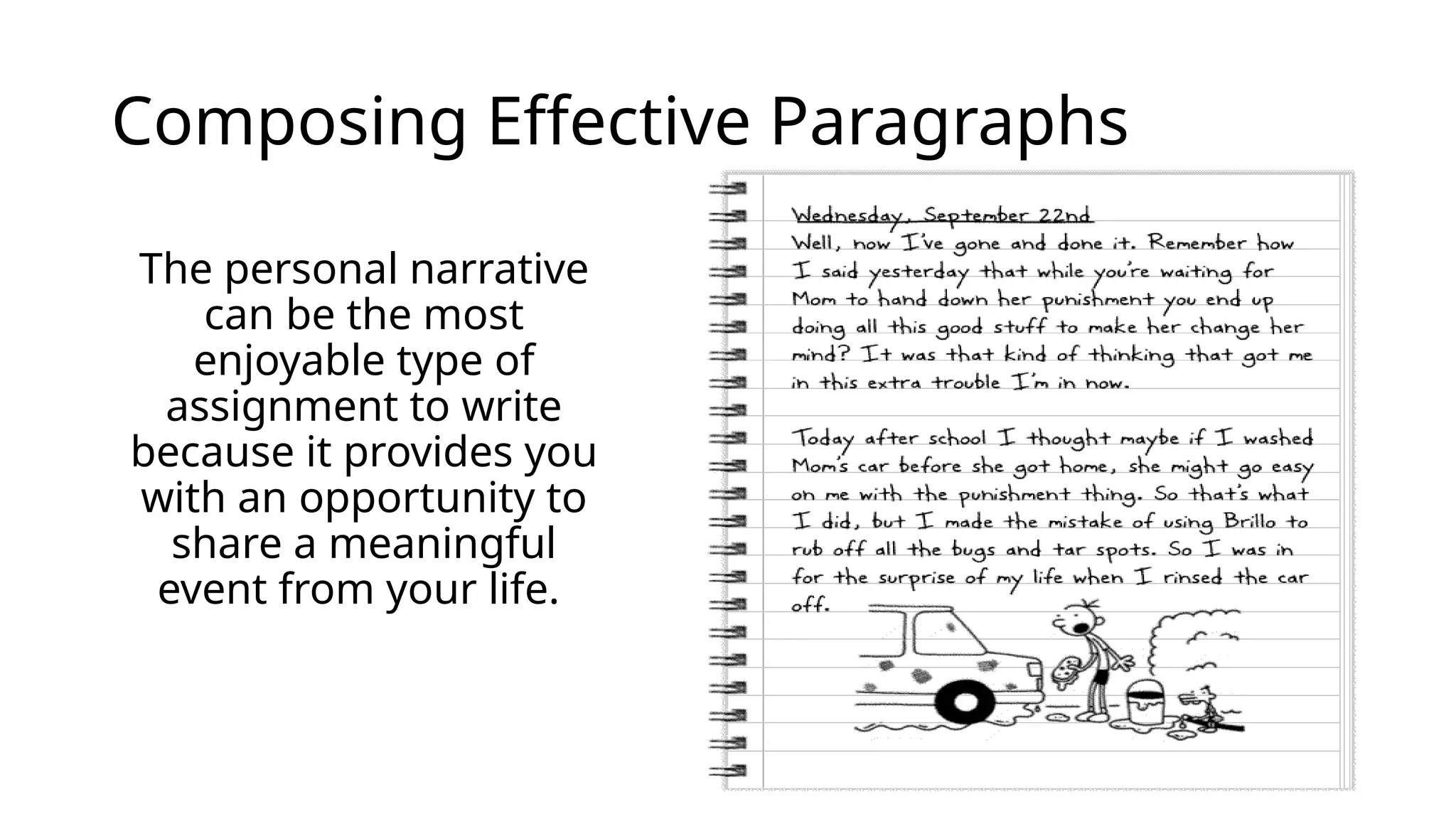
The personal narrative
can be the most
enjoyable type of
assignment to write
because it provides you
with an opportunity to
share a meaningful
event from your life.
Composing Effective Paragraphs
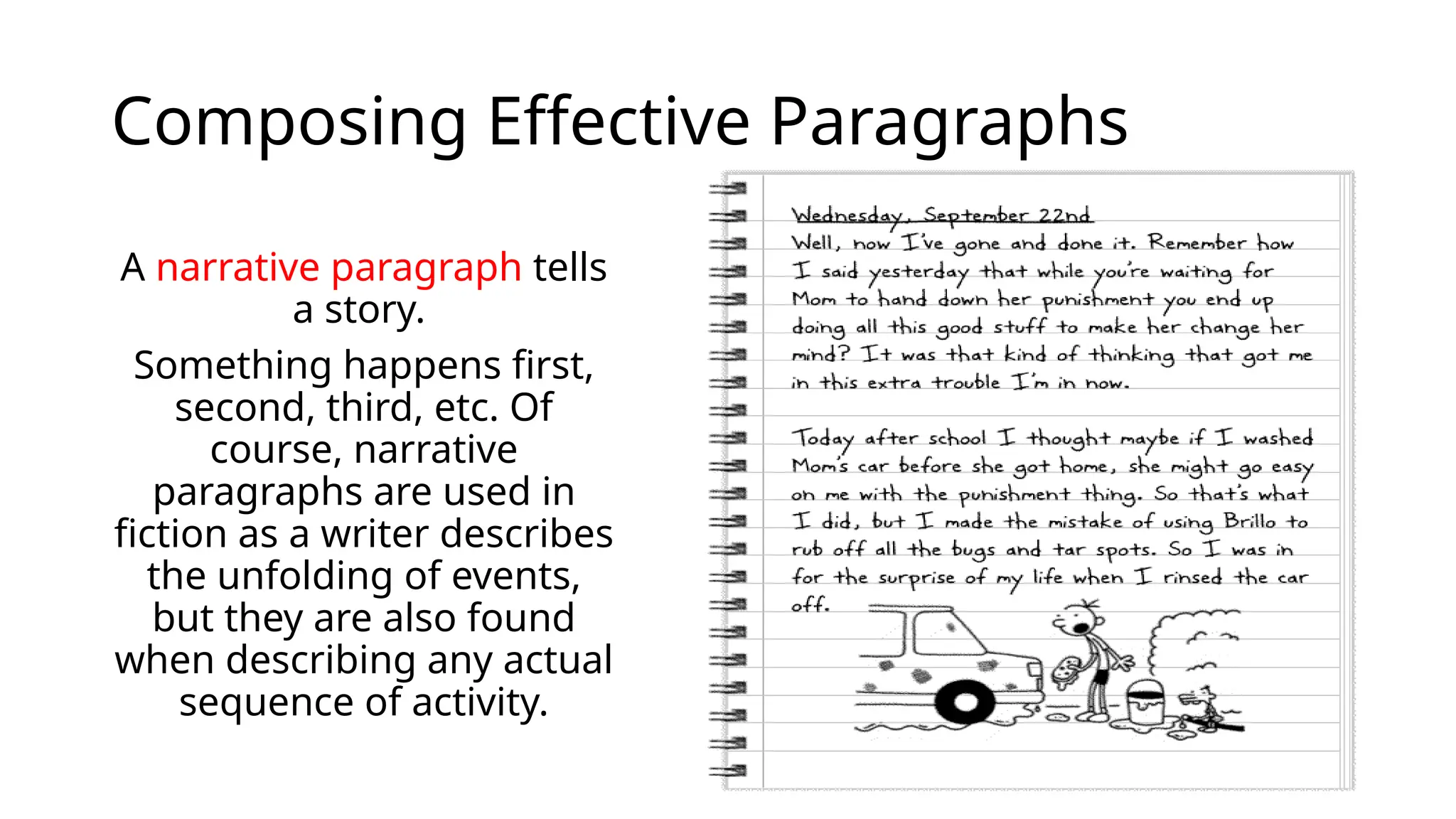
A narrative paragraph tells
a story.
Something happens first,
second, third, etc. Of
course, narrative
paragraphs are used in
fiction as a writer describes
the unfolding of events,
but they are also found
when describing any actual
sequence of activity.
Composing Effective Paragraphs
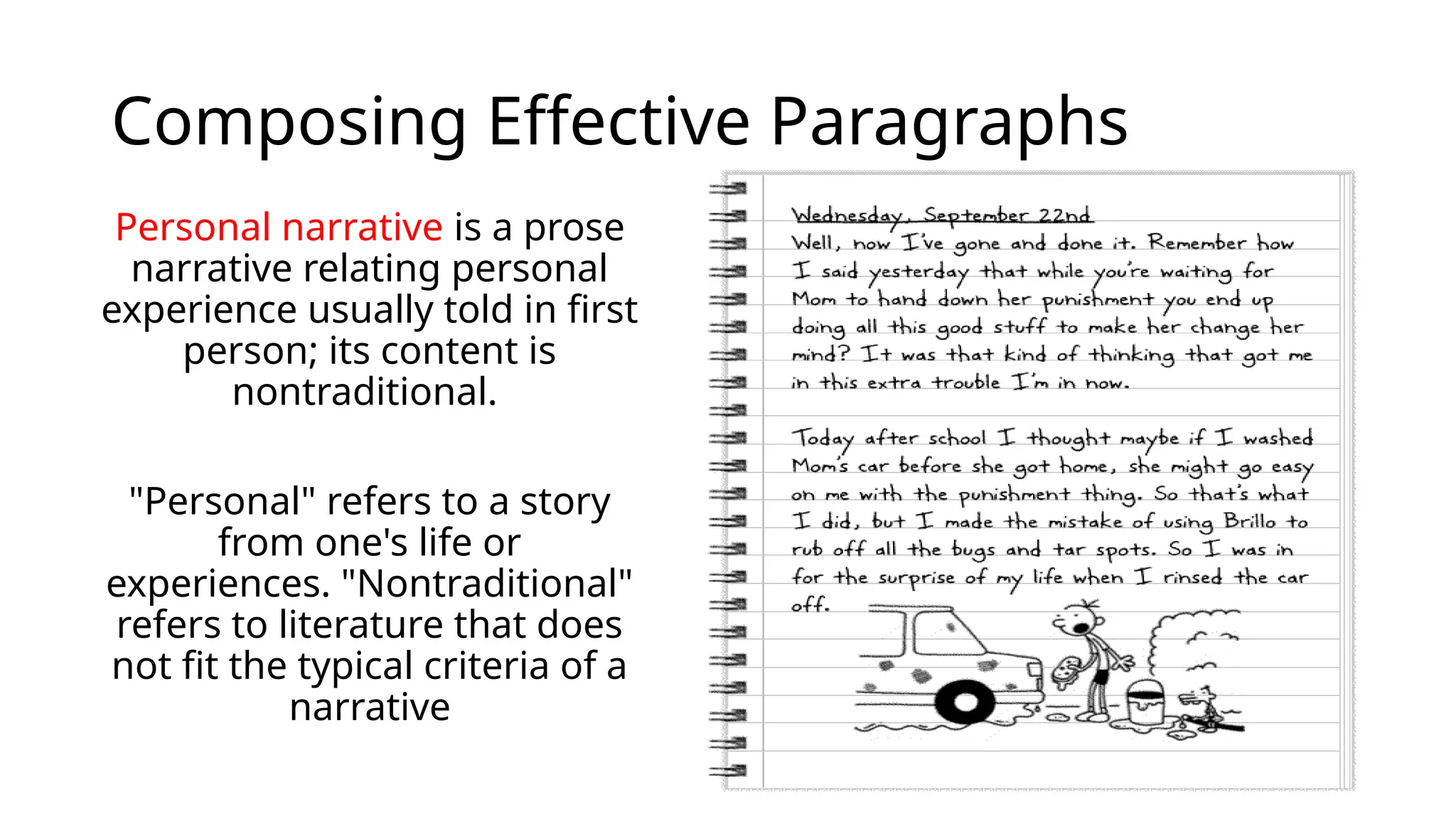
Personal narrative is a prose
narrative relating personal
experience usually told in first
person; its content is
nontraditional.
"Personal" refers to a story
from one's life or
experiences. "Nontraditional"
refers to literature that does
not fit the typical criteria of a
narrative
Think of a Memorable Event
• A learning experience that challenged and changed you;
• A new discovery that came about in an interesting way;
• Something funny that happened to you or your family;
• A lesson you learned the hard way.
Planning Your Narrative
Start this process with a brainstorming session, taking a few
moments to scribble down several memorable events from your
life.
Your event could be anything. If you think your life doesn't
have that many interesting events, try to come up with one or more
examples for each of the following:
• Times you laughed the hardest
• Times you felt sorry for your actions
• Painful memories
• Times you were surprised
• Scariest moments
Show, Don’t Tell
Your story should be written in the first-person point
of view. In a narrative, the writer is the storyteller, so you
can write this through your own eyes and ears.
Make the reader experience what you experienced
—not just read what you experienced.
Do this by imagining that you are reliving your
event. As you think about your story, describe on paper
what you see, hear, smell, and felt.
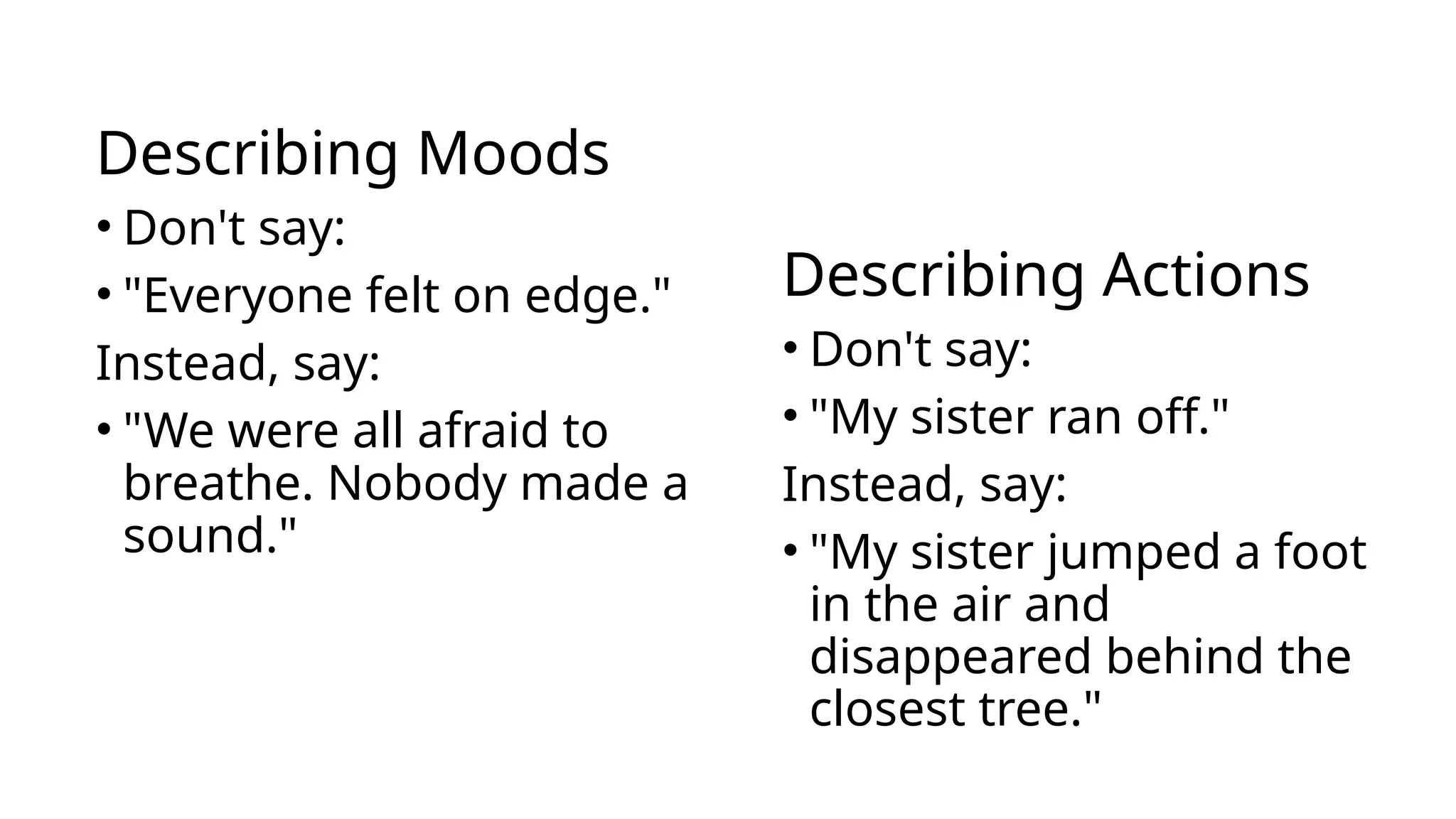
Describing Moods
• Don't say:
• "Everyone felt on edge."
Instead, say:
• "We were all afraid to
breathe. Nobody made a
sound."
Describing Actions
• Don't say:
• "My sister ran off."
Instead, say:
• "My sister jumped a foot
in the air and
disappeared behind the
closest tree."
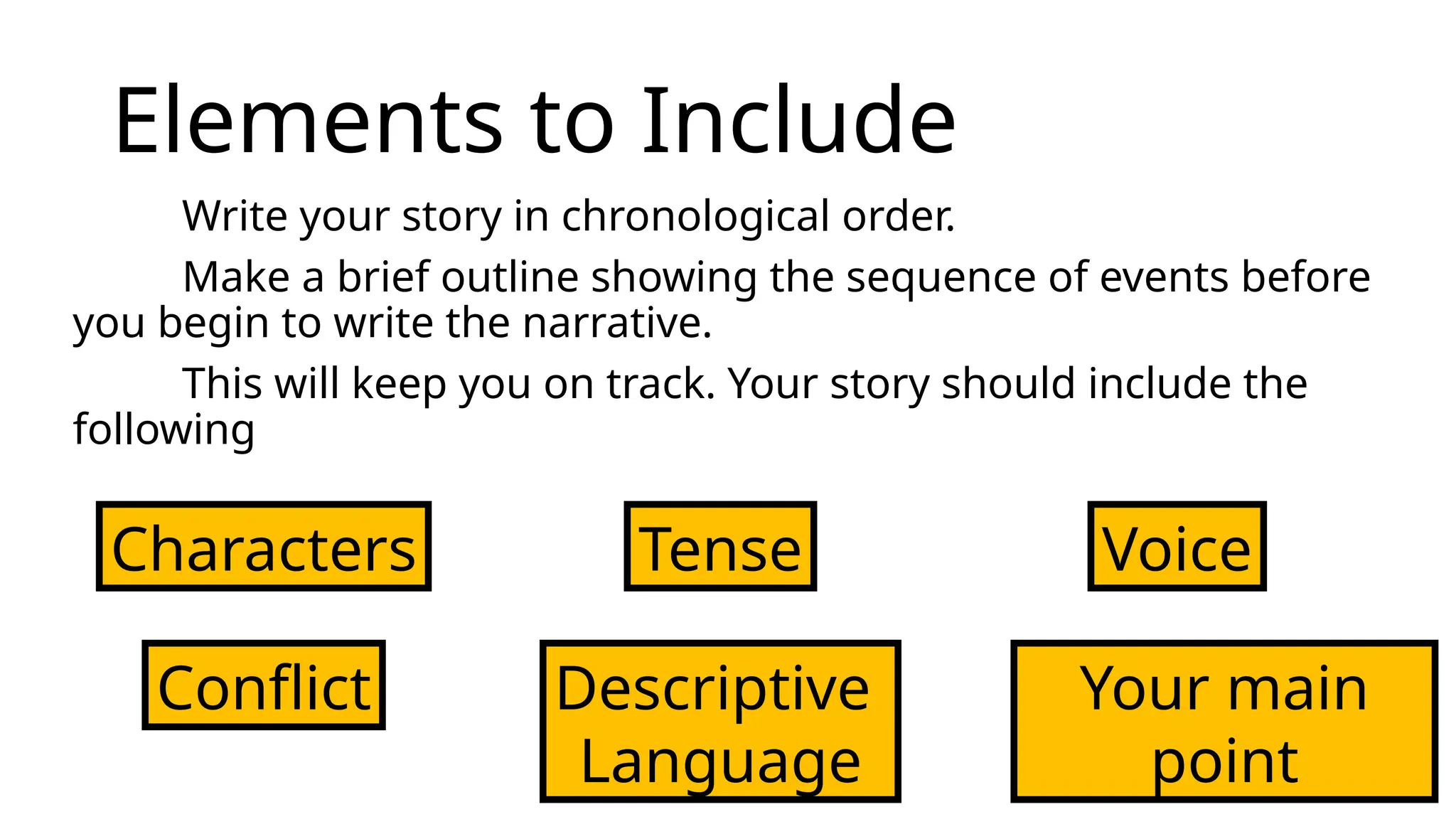
Elements to Include
Write your story in chronological order.
Make a brief outline showing the sequence of events before
you begin to write the narrative.
This will keep you on track. Your story should include the
following
Characters Tense Voice
Conflict Descriptive
Language
Your main
point
Elements to Include
Characters
Who are the people involved in your
story? What are their significant
character traits?
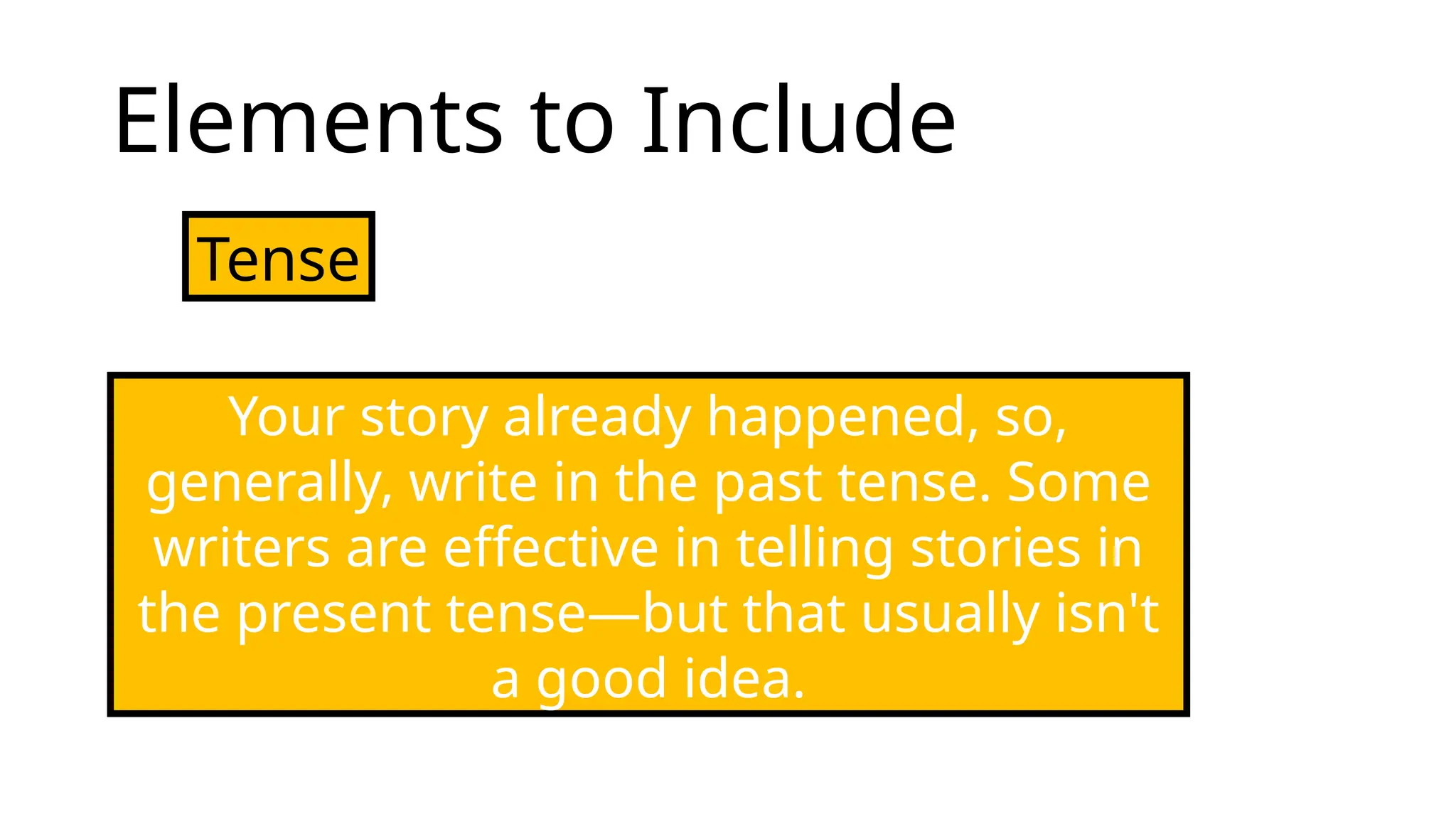
Elements to Include
Tense
Your story already happened, so,
generally, write in the past tense. Some
writers are effective in telling stories in
the present tense—but that usually isn't
a good idea.
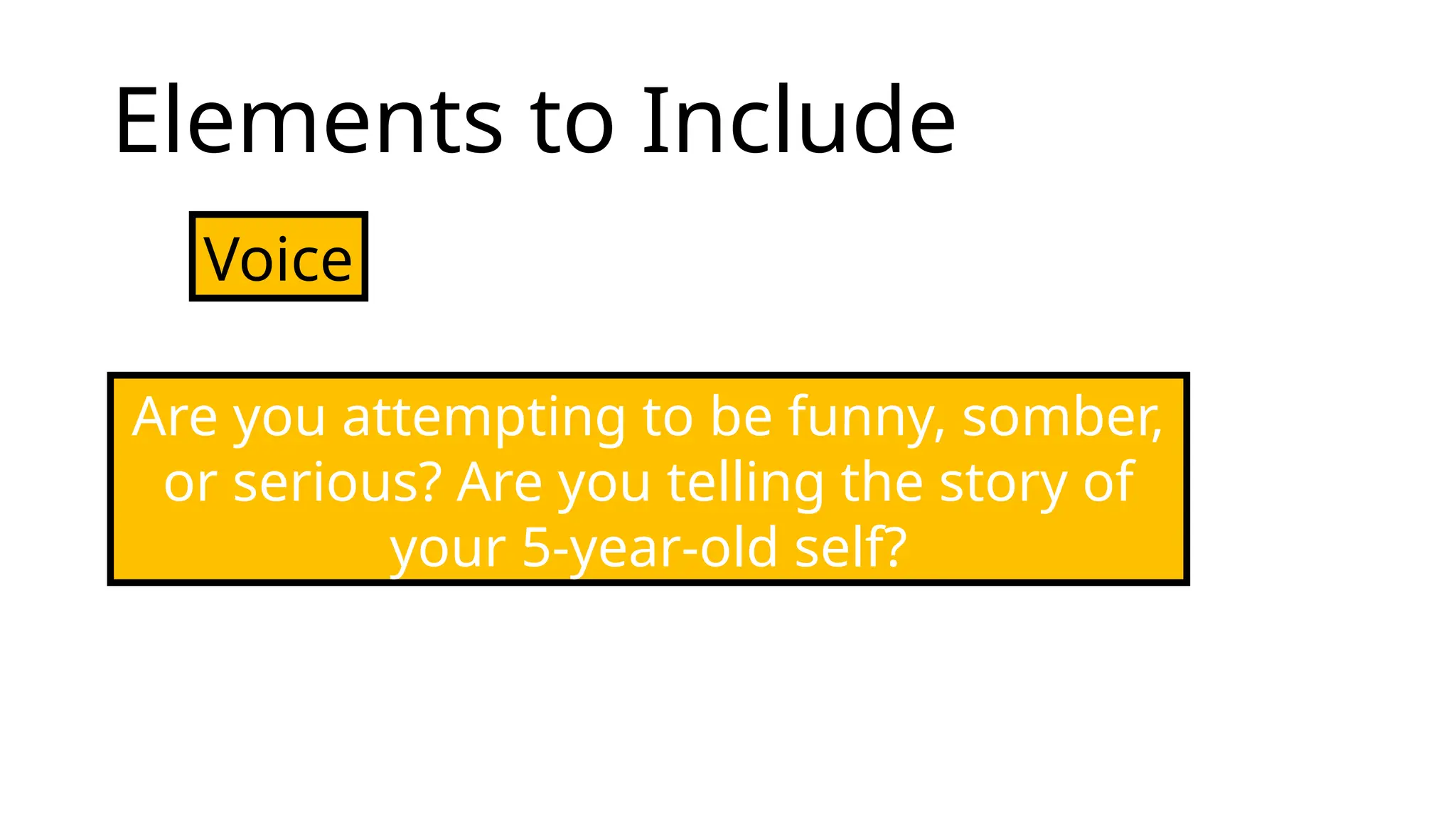
Elements to Include
Voice
Are you attempting to be funny, somber,
or serious? Are you telling the story of
your 5-year-old self?
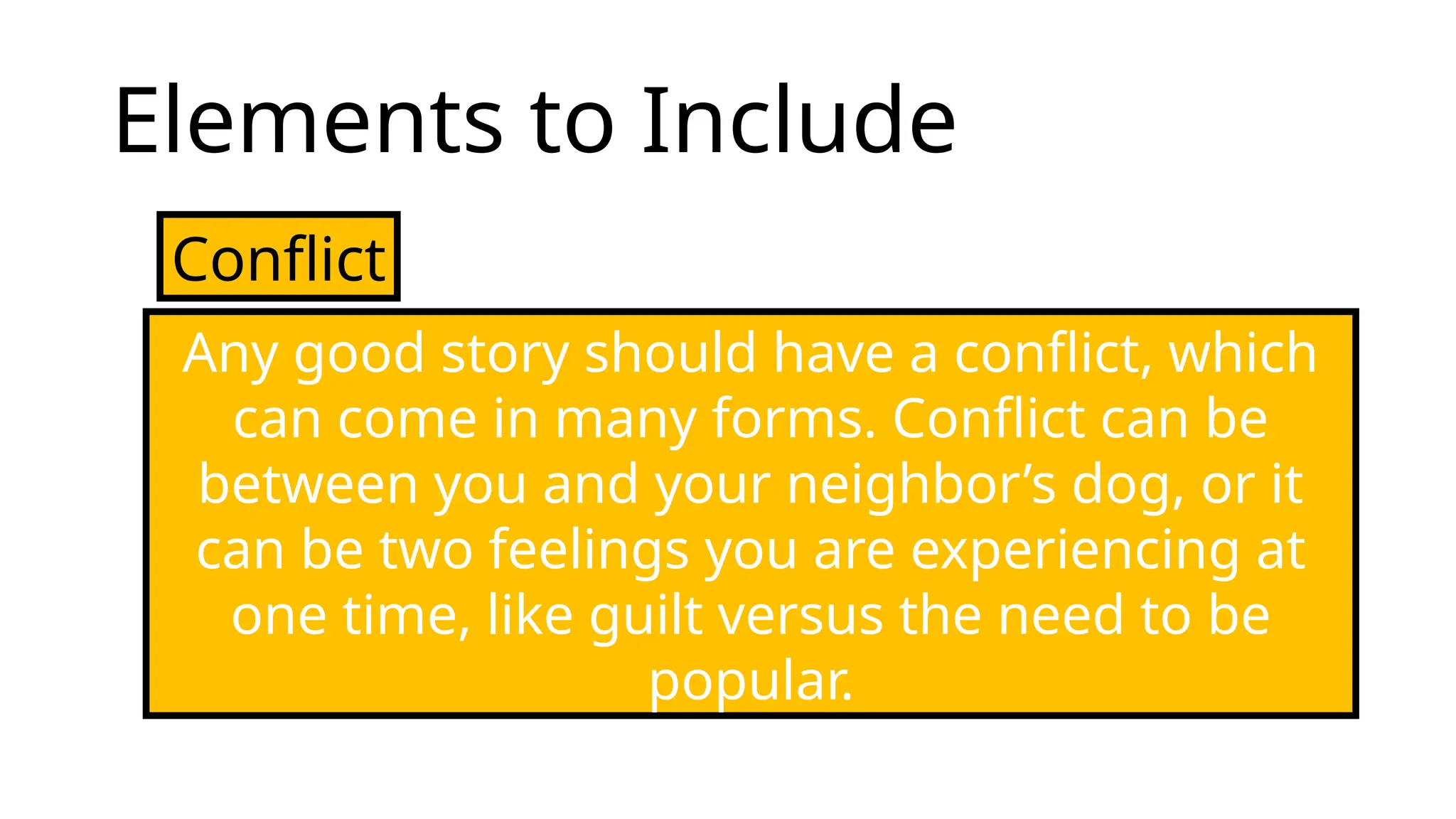
Elements to Include
Conflict
Any good story should have a conflict, which
can come in many forms. Conflict can be
between you and your neighbor’s dog, or it
can be two feelings you are experiencing at
one time, like guilt versus the need to be
popular.
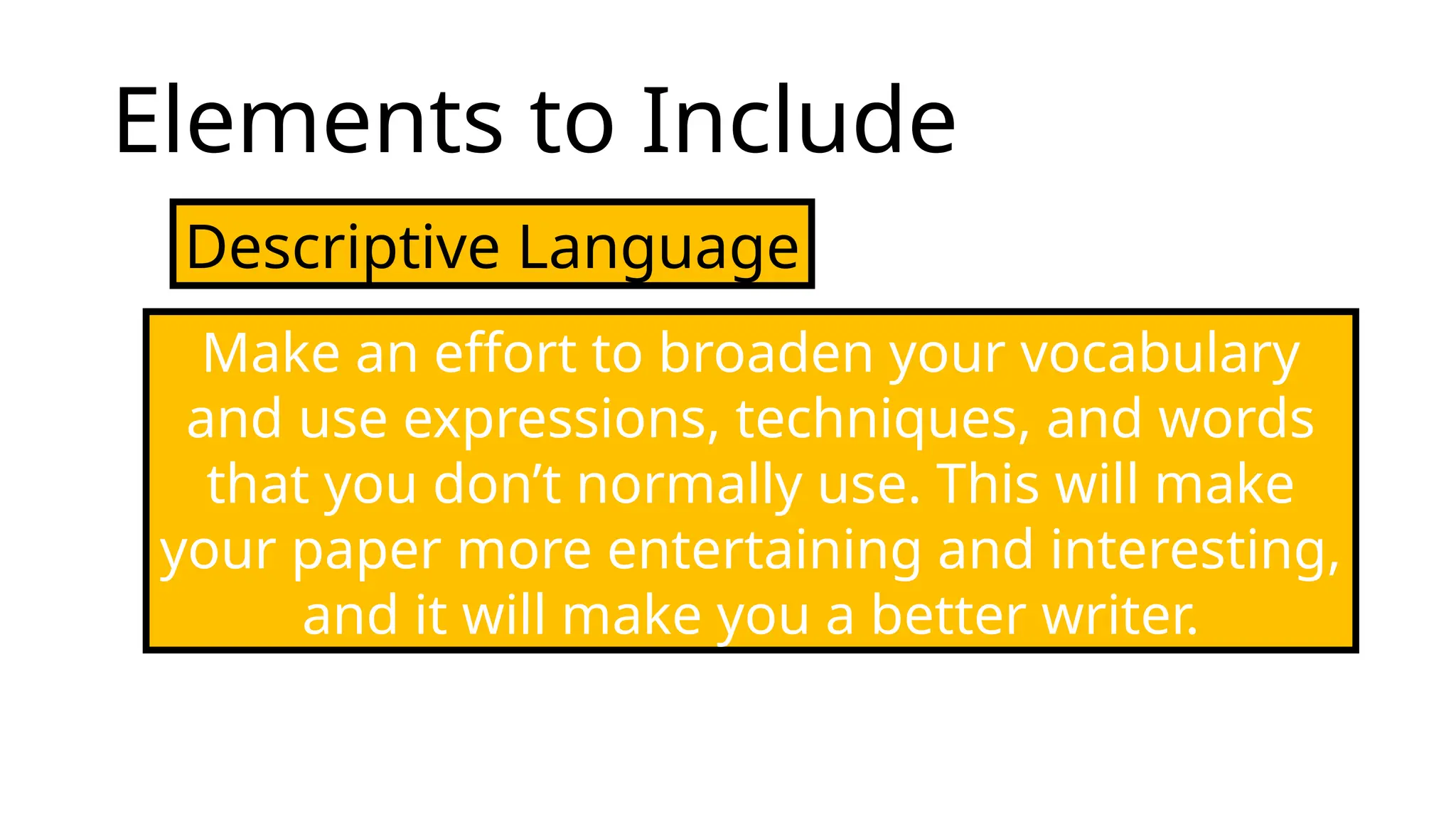
Elements to Include
Descriptive Language
Make an effort to broaden your vocabulary
and use expressions, techniques, and words
that you don’t normally use. This will make
your paper more entertaining and interesting,
and it will make you a better writer.
Elements to Include
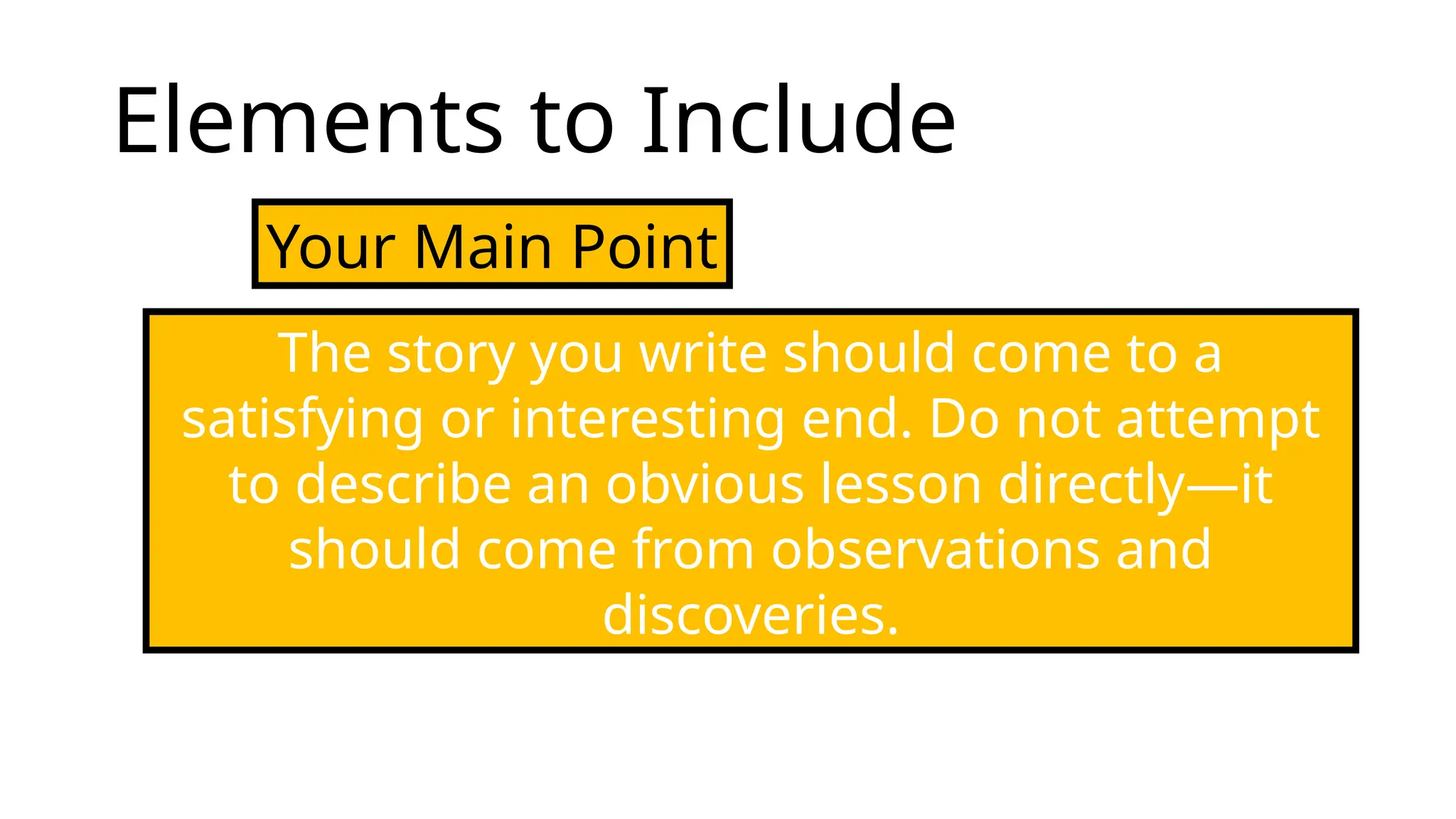
Your Main Point
The story you write should come to a
satisfying or interesting end. Do not attempt
to describe an obvious lesson directly—it
should come from observations and
discoveries.
Elements to Include
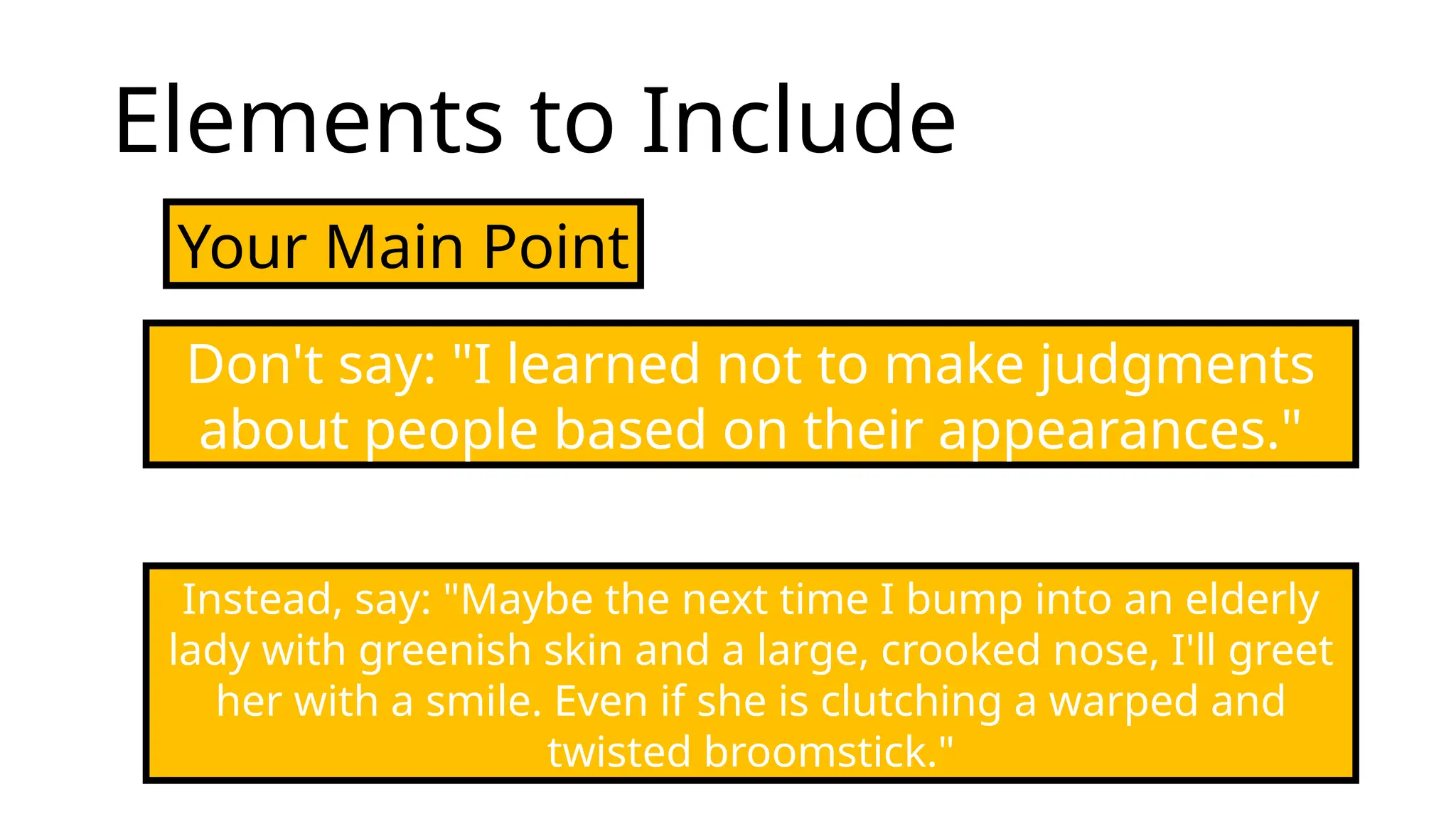
Your Main Point
Don't say: "I learned not to make judgments
about people based on their appearances."
Instead, say: "Maybe the next time I bump into an elderly
lady with greenish skin and a large, crooked nose, I'll greet
her with a smile. Even if she is clutching a warped and
twisted broomstick."
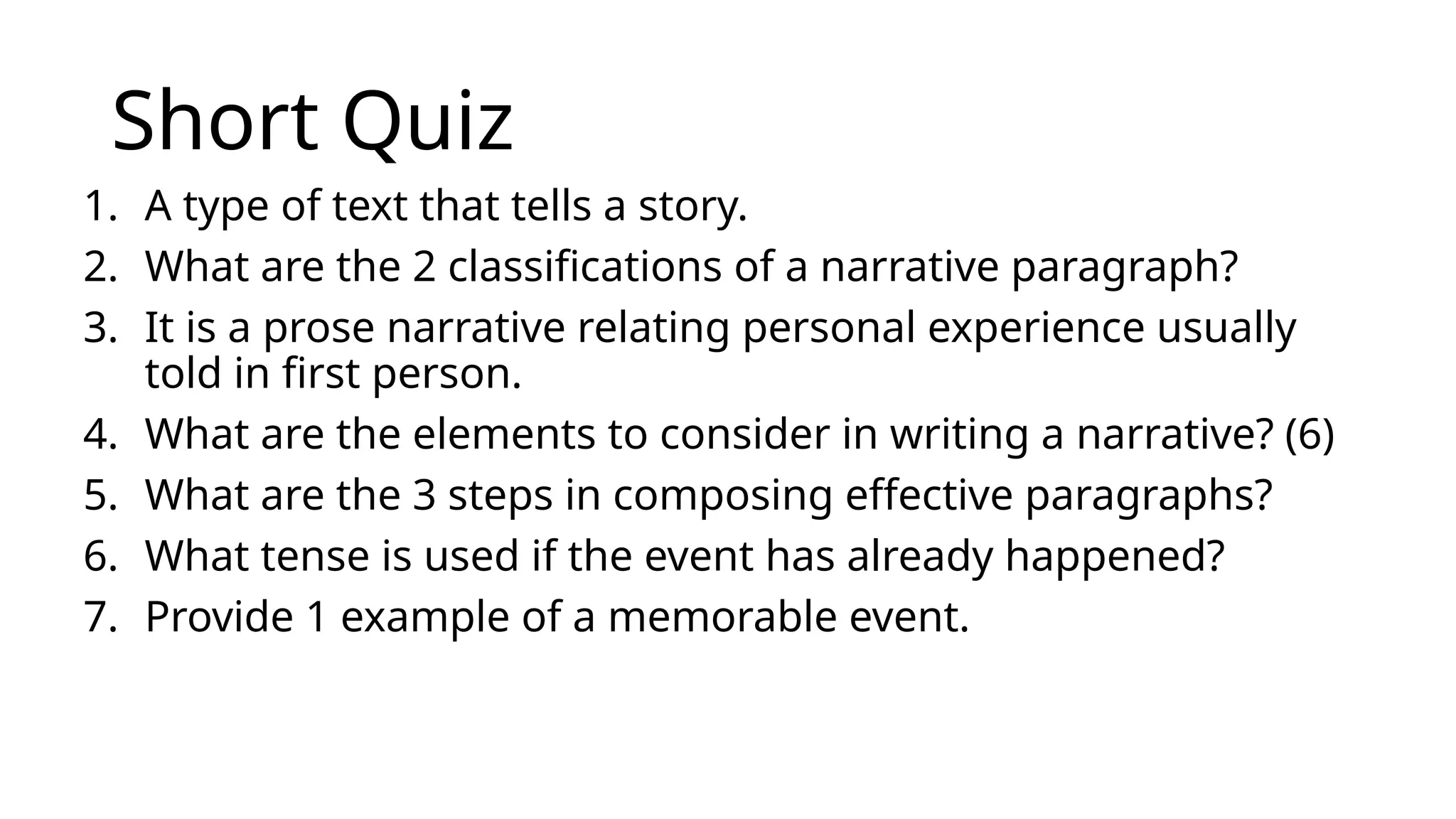
Short Quiz
1. A type of text that tells a story.
2. What are the 2 classifications of a narrative paragraph?
3. It is a prose narrative relating personal experience usually
told in first person.
4. What are the elements to consider in writing a narrative? (6)
5. What are the 3 steps in composing effective paragraphs?
6. What tense is used if the event has already happened?
7. Provide 1 example of a memorable event.

Topic 1: Writing and Composition Composing Effective Paragraph

  • 1.
    Writing and Composition English 8:Second Quarter Lesson 1 Topic 1: Composing Effective Paragraph
  • 2.
    Composing Effective Paragraphs Thepersonal narrative can be the most enjoyable type of assignment to write because it provides you with an opportunity to share a meaningful event from your life.
  • 3.
    Composing Effective Paragraphs Anarrative paragraph tells a story. Something happens first, second, third, etc. Of course, narrative paragraphs are used in fiction as a writer describes the unfolding of events, but they are also found when describing any actual sequence of activity.
  • 4.
    Composing Effective Paragraphs Personalnarrative is a prose narrative relating personal experience usually told in first person; its content is nontraditional. "Personal" refers to a story from one's life or experiences. "Nontraditional" refers to literature that does not fit the typical criteria of a narrative
  • 5.
    Think of aMemorable Event • A learning experience that challenged and changed you; • A new discovery that came about in an interesting way; • Something funny that happened to you or your family; • A lesson you learned the hard way.
  • 6.
    Planning Your Narrative Startthis process with a brainstorming session, taking a few moments to scribble down several memorable events from your life. Your event could be anything. If you think your life doesn't have that many interesting events, try to come up with one or more examples for each of the following: • Times you laughed the hardest • Times you felt sorry for your actions • Painful memories • Times you were surprised • Scariest moments
  • 7.
    Show, Don’t Tell Yourstory should be written in the first-person point of view. In a narrative, the writer is the storyteller, so you can write this through your own eyes and ears. Make the reader experience what you experienced —not just read what you experienced. Do this by imagining that you are reliving your event. As you think about your story, describe on paper what you see, hear, smell, and felt.
  • 8.
    Describing Moods • Don'tsay: • "Everyone felt on edge." Instead, say: • "We were all afraid to breathe. Nobody made a sound." Describing Actions • Don't say: • "My sister ran off." Instead, say: • "My sister jumped a foot in the air and disappeared behind the closest tree."
  • 9.
    Elements to Include Writeyour story in chronological order. Make a brief outline showing the sequence of events before you begin to write the narrative. This will keep you on track. Your story should include the following Characters Tense Voice Conflict Descriptive Language Your main point
  • 10.
    Elements to Include Characters Whoare the people involved in your story? What are their significant character traits?
  • 11.
    Elements to Include Tense Yourstory already happened, so, generally, write in the past tense. Some writers are effective in telling stories in the present tense—but that usually isn't a good idea.
  • 12.
    Elements to Include Voice Areyou attempting to be funny, somber, or serious? Are you telling the story of your 5-year-old self?
  • 13.
    Elements to Include Conflict Anygood story should have a conflict, which can come in many forms. Conflict can be between you and your neighbor’s dog, or it can be two feelings you are experiencing at one time, like guilt versus the need to be popular.
  • 14.
    Elements to Include DescriptiveLanguage Make an effort to broaden your vocabulary and use expressions, techniques, and words that you don’t normally use. This will make your paper more entertaining and interesting, and it will make you a better writer.
  • 15.
    Elements to Include YourMain Point The story you write should come to a satisfying or interesting end. Do not attempt to describe an obvious lesson directly—it should come from observations and discoveries.
  • 16.
    Elements to Include YourMain Point Don't say: "I learned not to make judgments about people based on their appearances." Instead, say: "Maybe the next time I bump into an elderly lady with greenish skin and a large, crooked nose, I'll greet her with a smile. Even if she is clutching a warped and twisted broomstick."
  • 17.
    Short Quiz 1. Atype of text that tells a story. 2. What are the 2 classifications of a narrative paragraph? 3. It is a prose narrative relating personal experience usually told in first person. 4. What are the elements to consider in writing a narrative? (6) 5. What are the 3 steps in composing effective paragraphs? 6. What tense is used if the event has already happened? 7. Provide 1 example of a memorable event.

Editor's Notes

  • #2 After all, how often do you get to tell funny stories or brag about a great experience and receive school credit for it?
  • #3 After all, how often do you get to tell funny stories or brag about a great experience and receive school credit for it?
  • #4 After all, how often do you get to tell funny stories or brag about a great experience and receive school credit for it?
  • #5 A personal narrative can focus on any event, whether it is one that lasted a few seconds or spanned a few years. Your topic can reflect your personality, or it can reveal an event that shaped your outlook and opinions. Your story should have a clear point. If nothing comes to mind, try one of these examples:
  • #6 Next, look over your list of events and narrow your choices by selecting those that have a clear chronological pattern, and those that would enable you to use colorful, entertaining, or interesting details and descriptions. Finally, decide if your topic has a point. A funny story might represent irony in life or a lesson learned in a comical way; a scary story might demonstrate how you learned from a mistake. Decide on the point of your final topic and keep it in mind as you write.
  • #17 Narrative paragraph/text Fiction and nonfiction Personal narrative Characters, tense, conflict, voice, descriptive language, your main point Think of a memorable event, planning your narrative, show, don’t tell Past tense