Cohort/Small Group Project
What to expect when you’re creating the
Service Learning Manual
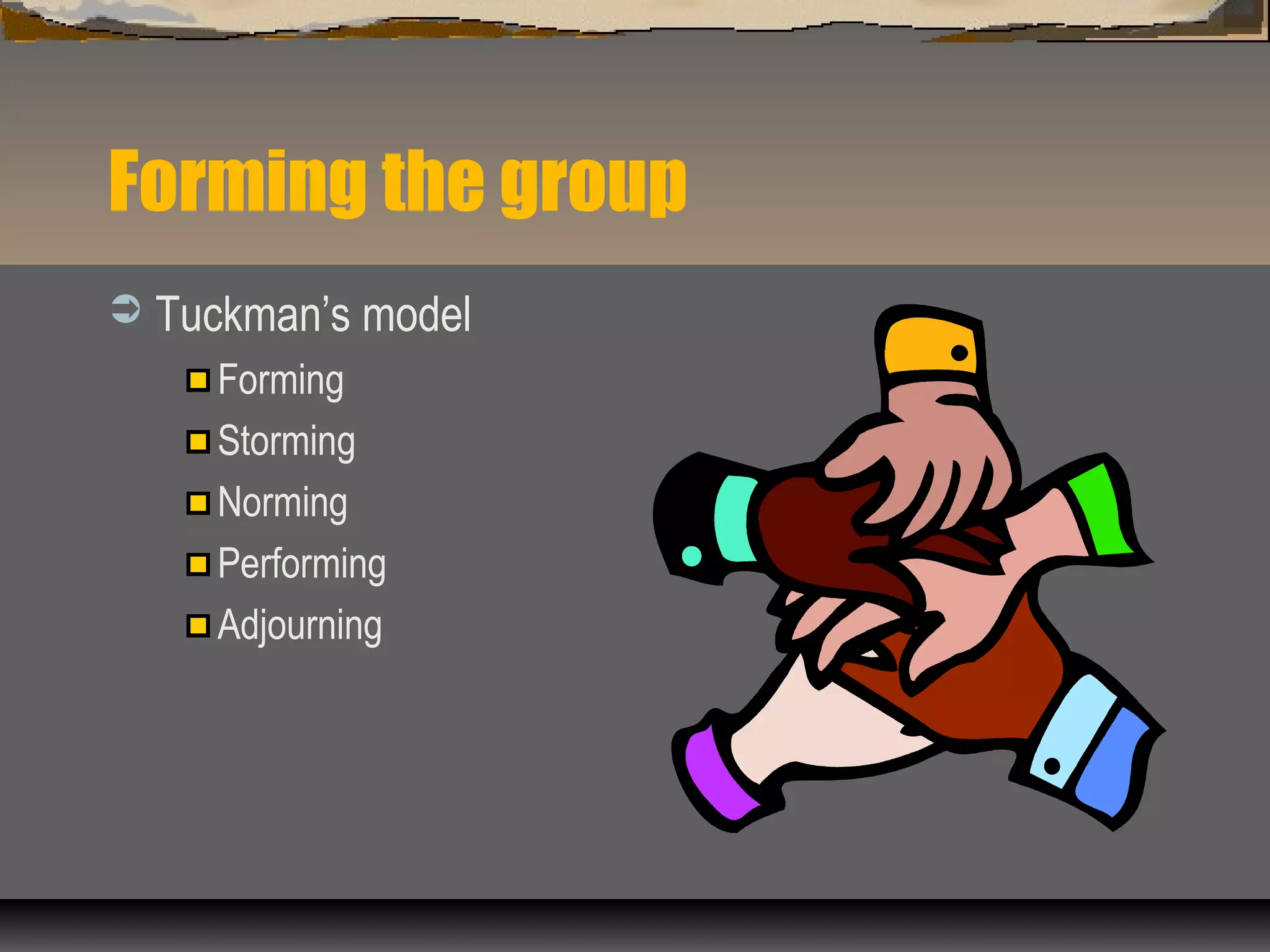
Forming the group
 Tuckman’s model
Forming
Storming
Norming
Performing
Adjourning
Timeline
Timeline will go here….
Stage 1
 Forming
The first stage of a
group’s process is a
period of uncertainty
where members try to
determine their place in
the group, the
procedures, and the
rules.
Forming
 Observations
Although the group has been together for a year, the
introduction of this project made us go through the
team development stages again.
The addition of a new cohort member changed
group dynamics.
Roles and groups changed.
Our previous experiences with each other allowed
us to work constructively with each other.
Forming (continued)
 Advice
Ask and encourage a lot of questions.
Have someone take notes and keep a list of questions to ask
the instructor.
Determine everyone’s roles for the project.
Maintain a positive attitude
Address any problems/concerns right away.
Make sure everyone is “on board” with every decision.
Communicate
Stage 2
 Storming
The second stage of a
group's process is
where conflict and
confrontation arise.
Storming
 Observations
No harsh conflicts or arguments arose in cohort
Many questions arose, clarifications were needed
Questioning and searching for individual roles,
responsibilities, control, and influence
Jockeying for position to patch individual desires and
abilities with tasks that need to be done.
Storming (continued)
 Advice
12 months of working together created trust in each
other which kept the group more focused on tasks
than on personal relationships
The better the “forming”, the more constructive the
“storming”
Communicate
Stage 3
 Norming
The third stage of a
group’s process is where
the team (Your Cohort)
reaches a consensus on
the "To-Be" process.
Everyone wants and
needs to share the newly
found focus
Norming
 Observations
Enthusiasm and concern are high
Members are comfortable sharing ideas, feelings,
give and receive feedback
More reserved members are frequently asked for
their opinions and ideas
Norming (continued)
 Advice
Try to gain a sense of team cohesion, spirit, and positive
energy
Gain the ability to express constructive criticism
Accept members of the team
Establish and maintain ground rules and boundaries
The sooner you work out differences among members, the
more time and energy you will have for the project
Communicate.
Stage 4
 Performing
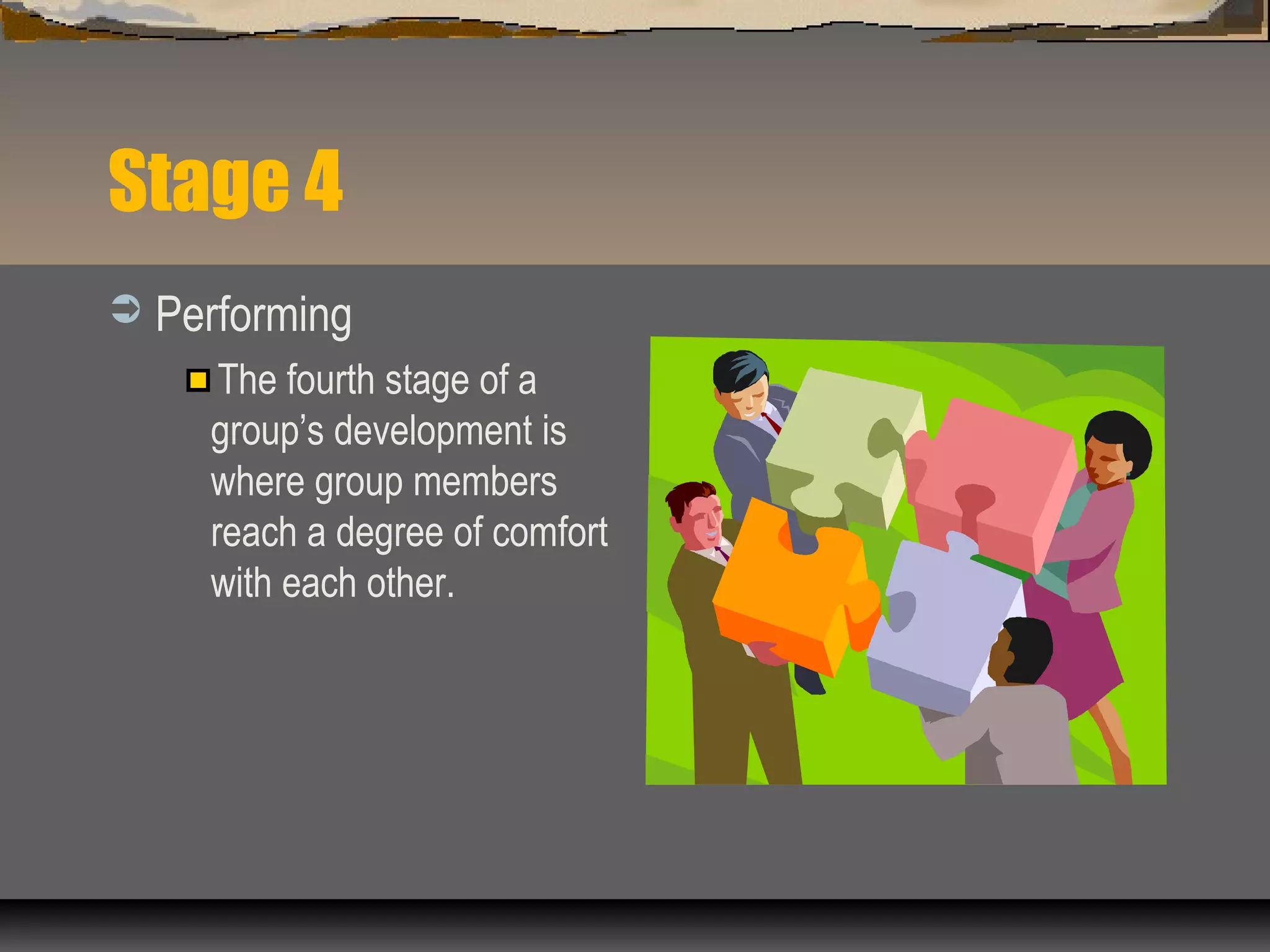
The fourth stage of a
group’s development is
where group members
reach a degree of comfort
with each other.
Performing
 Observations
The group is working interdependently at this point
Problem solving is done is an open, friendly,
coordinated, and cooperative way
Roles, goals, and tasks within the group are defined
and well established
Cohesion within the team is evident because the
overall goal is achieving success as a team.
Performing (continued)
 Advice
The group’s focus should be on the task ahead with
an aim at working together productively
Maintain and respect each other’s roles.
Communicate.
Stage 5
 Adjourning
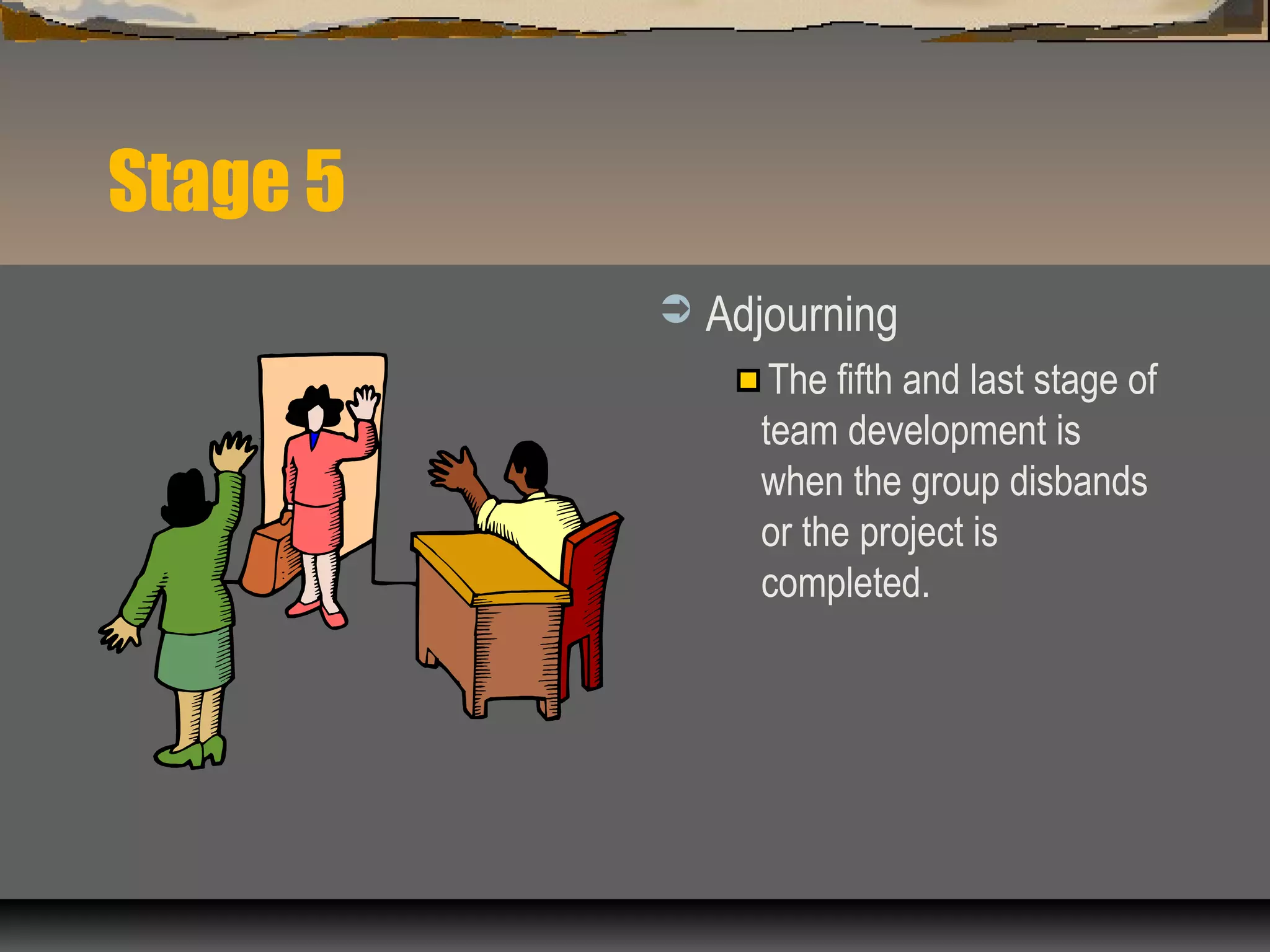
The fifth and last stage of
team development is
when the group disbands
or the project is
completed.
What we learned

Todd vatalaro usf 1

  • 1.
    Cohort/Small Group Project Whatto expect when you’re creating the Service Learning Manual
  • 2.
    Forming the group Tuckman’s model Forming Storming Norming Performing Adjourning
  • 3.
  • 4.
    Stage 1  Forming Thefirst stage of a group’s process is a period of uncertainty where members try to determine their place in the group, the procedures, and the rules.
  • 5.
    Forming  Observations Although thegroup has been together for a year, the introduction of this project made us go through the team development stages again. The addition of a new cohort member changed group dynamics. Roles and groups changed. Our previous experiences with each other allowed us to work constructively with each other.
  • 6.
    Forming (continued)  Advice Askand encourage a lot of questions. Have someone take notes and keep a list of questions to ask the instructor. Determine everyone’s roles for the project. Maintain a positive attitude Address any problems/concerns right away. Make sure everyone is “on board” with every decision. Communicate
  • 7.
    Stage 2  Storming Thesecond stage of a group's process is where conflict and confrontation arise.
  • 8.
    Storming  Observations No harshconflicts or arguments arose in cohort Many questions arose, clarifications were needed Questioning and searching for individual roles, responsibilities, control, and influence Jockeying for position to patch individual desires and abilities with tasks that need to be done.
  • 9.
    Storming (continued)  Advice 12months of working together created trust in each other which kept the group more focused on tasks than on personal relationships The better the “forming”, the more constructive the “storming” Communicate
  • 10.
    Stage 3  Norming Thethird stage of a group’s process is where the team (Your Cohort) reaches a consensus on the "To-Be" process. Everyone wants and needs to share the newly found focus
  • 11.
    Norming  Observations Enthusiasm andconcern are high Members are comfortable sharing ideas, feelings, give and receive feedback More reserved members are frequently asked for their opinions and ideas
  • 12.
    Norming (continued)  Advice Tryto gain a sense of team cohesion, spirit, and positive energy Gain the ability to express constructive criticism Accept members of the team Establish and maintain ground rules and boundaries The sooner you work out differences among members, the more time and energy you will have for the project Communicate.
  • 13.
    Stage 4  Performing Thefourth stage of a group’s development is where group members reach a degree of comfort with each other.
  • 14.
    Performing  Observations The groupis working interdependently at this point Problem solving is done is an open, friendly, coordinated, and cooperative way Roles, goals, and tasks within the group are defined and well established Cohesion within the team is evident because the overall goal is achieving success as a team.
  • 15.
    Performing (continued)  Advice Thegroup’s focus should be on the task ahead with an aim at working together productively Maintain and respect each other’s roles. Communicate.
  • 16.
    Stage 5  Adjourning Thefifth and last stage of team development is when the group disbands or the project is completed.
  • 17.