TLE 9
WEEK 6 na bebekes
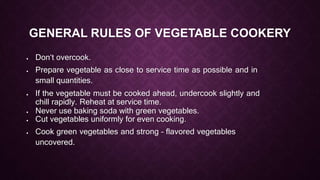
GENERAL RULES OF VEGETABLE COOKERY
 Don‘t overcook.
 Prepare vegetable as close to service time as possible and in
small quantities.
 If the vegetable must be cooked ahead, undercook slightly and
chill rapidly. Reheat at service time.
 Never use baking soda with green vegetables.
 Cut vegetables uniformly for even cooking.
 Cook green vegetables and strong – flavored vegetables
uncovered.
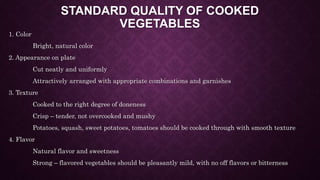
STANDARD QUALITY OF COOKED
VEGETABLES
1. Color
Bright, natural color
2. Appearance on plate
Cut neatly and uniformly
Attractively arranged with appropriate combinations and garnishes
3. Texture
Cooked to the right degree of doneness
Crisp – tender, not overcooked and mushy
Potatoes, squash, sweet potatoes, tomatoes should be cooked through with smooth texture
4. Flavor
Natural flavor and sweetness
Strong – flavored vegetables should be pleasantly mild, with no off flavors or bitterness
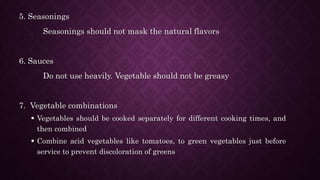
5. Seasonings
Seasonings should not mask the natural flavors
6. Sauces
Do not use heavily. Vegetable should not be greasy
7. Vegetable combinations
 Vegetables should be cooked separately for different cooking times, and
then combined
 Combine acid vegetables like tomatoes, to green vegetables just before
service to prevent discoloration of greens
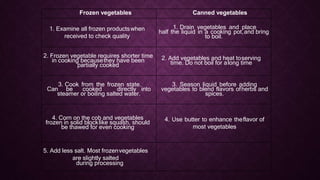
Frozen vegetables Canned vegetables
1. Examine all frozen productswhen
received to check quality
1. Drain vegetables and place
half the liquid in a cooking pot,and bring
to boil.
2. Frozen vegetable requires shorter time
in cooking becausethey have been
partially cooked
2. Add vegetables and heat toserving
time. Do not boil for along time
3. Cook from the frozen state.
Can be cooked directly into
steamer or boiling salted water.
3. Season liquid before adding
vegetables to blend flavors ofherbs and
spices.
4. Corn on the cob and vegetables
frozen in solid blocklike squash, should
be thawed for even cooking
4. Use butter to enhance theflavor of
most vegetables
5. Add less salt. Most frozenvegetables
are slightly salted
during processing
WAYS OF COOKING VEGETABLES
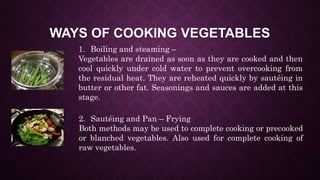
1. Boiling and steaming –
Vegetables are drained as soon as they are cooked and then
cool quickly under cold water to prevent overcooking from
the residual heat. They are reheated quickly by sautéing in
butter or other fat. Seasonings and sauces are added at this
stage.
2. Sautéing and Pan – Frying
Both methods may be used to complete cooking or precooked
or blanched vegetables. Also used for complete cooking of
raw vegetables.
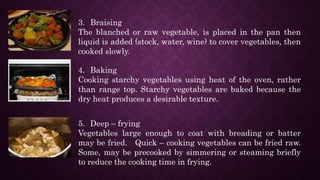
3. Braising
The blanched or raw vegetable, is placed in the pan then
liquid is added (stock, water, wine) to cover vegetables, then
cooked slowly.
4. Baking
Cooking starchy vegetables using heat of the oven, rather
than range top. Starchy vegetables are baked because the
dry heat produces a desirable texture.
5. Deep – frying
Vegetables large enough to coat with breading or batter
may be fried. Quick – cooking vegetables can be fried raw.
Some, may be precooked by simmering or steaming briefly
to reduce the cooking time in frying.
PREPARE AND COOK SEAFOOD DISHES
Seafood is any form of sea life regarded as food by humans. Seafood
includes fish and shellfish. Shellfish include various species of
mollusks, crustaceans, and echinoderms. A wide variety of fish and
seafood are available in the market from many different sources.
There are so many methods for cooking seafood, most of them are
fast and easy, making them the perfect choice for a quick and healthy
meal. This lesson provides information about fish and shellfish, ways
on preparing and cooking fish, along with some of the most popular
seafood recipes, and presenting and storing seafood.
CLASSIFICATIONS OF SEAFOOD
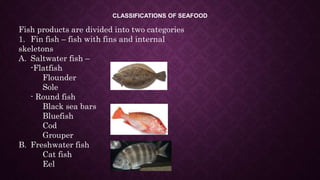
Fish products are divided into two categories
1. Fin fish – fish with fins and internal
skeletons
A. Saltwater fish –
-Flatfish
Flounder
Sole
- Round fish
Black sea bars
Bluefish
Cod
Grouper
B. Freshwater fish
Cat fish
Eel
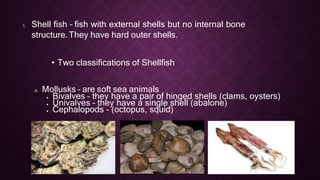
1. Shell fish – fish with external shells but no internal bone
structure.They have hard outer shells.
• Two classifications of Shellfish
A. Mollusks – are soft sea animals
 Bivalves – they have a pair of hinged shells (clams, oysters)
 Univalves – they have a single shell (abalone)
 Cephalopods – (octopus, squid)
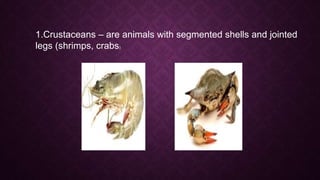
1.Crustaceans – are animals with segmented shells and jointed
legs (shrimps, crabs)
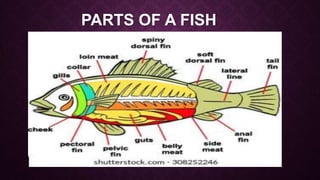
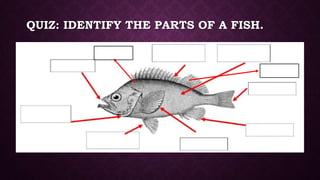
PARTS OF A FISH
• Composition and Structure:
• Fish consists of water, protein, fats and small amount of
minerals andvitamins.
• Fish has very little connective tissue. It means:
1. Fish cooks very quickly, even at low heat.
2. Fish is naturally tender. High heat will result to toughening of protein.
3. Moist-heat methods are used not to create tenderness but to
preservemoistness and provide variety.
4. Cooked fish must be handled very carefully.
1. Fat Fish -- are those that are high in fat. (salmon, tuna, trout, mackerel)
2. Lean Fish – are those that are low in fat. (sole, cod, red snapper, bass)
QUIZ: IDENTIFY THE PARTS OF A FISH.

TLE 10.pptx

  • 1.
    TLE 9 WEEK 6na bebekes
  • 2.
    GENERAL RULES OFVEGETABLE COOKERY  Don‘t overcook.  Prepare vegetable as close to service time as possible and in small quantities.  If the vegetable must be cooked ahead, undercook slightly and chill rapidly. Reheat at service time.  Never use baking soda with green vegetables.  Cut vegetables uniformly for even cooking.  Cook green vegetables and strong – flavored vegetables uncovered.
  • 3.
    STANDARD QUALITY OFCOOKED VEGETABLES 1. Color Bright, natural color 2. Appearance on plate Cut neatly and uniformly Attractively arranged with appropriate combinations and garnishes 3. Texture Cooked to the right degree of doneness Crisp – tender, not overcooked and mushy Potatoes, squash, sweet potatoes, tomatoes should be cooked through with smooth texture 4. Flavor Natural flavor and sweetness Strong – flavored vegetables should be pleasantly mild, with no off flavors or bitterness
  • 4.
    5. Seasonings Seasonings shouldnot mask the natural flavors 6. Sauces Do not use heavily. Vegetable should not be greasy 7. Vegetable combinations  Vegetables should be cooked separately for different cooking times, and then combined  Combine acid vegetables like tomatoes, to green vegetables just before service to prevent discoloration of greens
  • 5.
    Frozen vegetables Cannedvegetables 1. Examine all frozen productswhen received to check quality 1. Drain vegetables and place half the liquid in a cooking pot,and bring to boil. 2. Frozen vegetable requires shorter time in cooking becausethey have been partially cooked 2. Add vegetables and heat toserving time. Do not boil for along time 3. Cook from the frozen state. Can be cooked directly into steamer or boiling salted water. 3. Season liquid before adding vegetables to blend flavors ofherbs and spices. 4. Corn on the cob and vegetables frozen in solid blocklike squash, should be thawed for even cooking 4. Use butter to enhance theflavor of most vegetables 5. Add less salt. Most frozenvegetables are slightly salted during processing
  • 6.
    WAYS OF COOKINGVEGETABLES 1. Boiling and steaming – Vegetables are drained as soon as they are cooked and then cool quickly under cold water to prevent overcooking from the residual heat. They are reheated quickly by sautéing in butter or other fat. Seasonings and sauces are added at this stage. 2. Sautéing and Pan – Frying Both methods may be used to complete cooking or precooked or blanched vegetables. Also used for complete cooking of raw vegetables.
  • 7.
    3. Braising The blanchedor raw vegetable, is placed in the pan then liquid is added (stock, water, wine) to cover vegetables, then cooked slowly. 4. Baking Cooking starchy vegetables using heat of the oven, rather than range top. Starchy vegetables are baked because the dry heat produces a desirable texture. 5. Deep – frying Vegetables large enough to coat with breading or batter may be fried. Quick – cooking vegetables can be fried raw. Some, may be precooked by simmering or steaming briefly to reduce the cooking time in frying.
  • 8.
    PREPARE AND COOKSEAFOOD DISHES Seafood is any form of sea life regarded as food by humans. Seafood includes fish and shellfish. Shellfish include various species of mollusks, crustaceans, and echinoderms. A wide variety of fish and seafood are available in the market from many different sources. There are so many methods for cooking seafood, most of them are fast and easy, making them the perfect choice for a quick and healthy meal. This lesson provides information about fish and shellfish, ways on preparing and cooking fish, along with some of the most popular seafood recipes, and presenting and storing seafood.
  • 9.
    CLASSIFICATIONS OF SEAFOOD Fishproducts are divided into two categories 1. Fin fish – fish with fins and internal skeletons A. Saltwater fish – -Flatfish Flounder Sole - Round fish Black sea bars Bluefish Cod Grouper B. Freshwater fish Cat fish Eel
  • 10.
    1. Shell fish– fish with external shells but no internal bone structure.They have hard outer shells. • Two classifications of Shellfish A. Mollusks – are soft sea animals  Bivalves – they have a pair of hinged shells (clams, oysters)  Univalves – they have a single shell (abalone)  Cephalopods – (octopus, squid)
  • 11.
    1.Crustaceans – areanimals with segmented shells and jointed legs (shrimps, crabs)
  • 12.
  • 13.
    • Composition andStructure: • Fish consists of water, protein, fats and small amount of minerals andvitamins. • Fish has very little connective tissue. It means: 1. Fish cooks very quickly, even at low heat. 2. Fish is naturally tender. High heat will result to toughening of protein. 3. Moist-heat methods are used not to create tenderness but to preservemoistness and provide variety. 4. Cooked fish must be handled very carefully. 1. Fat Fish -- are those that are high in fat. (salmon, tuna, trout, mackerel) 2. Lean Fish – are those that are low in fat. (sole, cod, red snapper, bass)
  • 14.
    QUIZ: IDENTIFY THEPARTS OF A FISH.