Exploring Careers
in Engineering
Steve Snelling
Industrial Engineer
Boeing – Everett
Stephen.r.snelling@boeing.com
(425) 342-4121
Engineering: solving problems
with math & science
 How many of you know
someone who is an
engineer?
 What does an engineer do?
What is engineering?
Engineering is the
application of math and
science to create
something of value from
our natural resources.
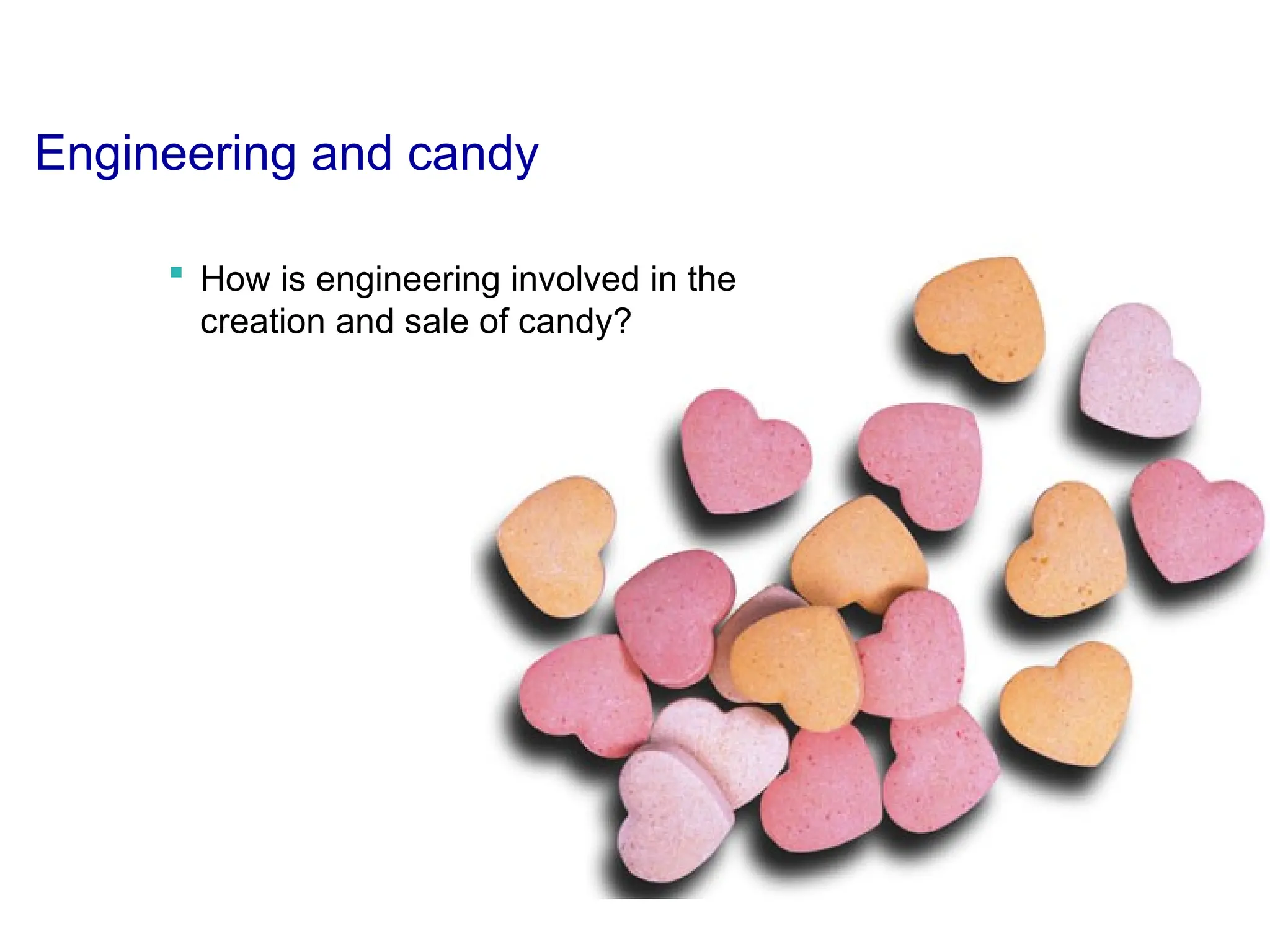
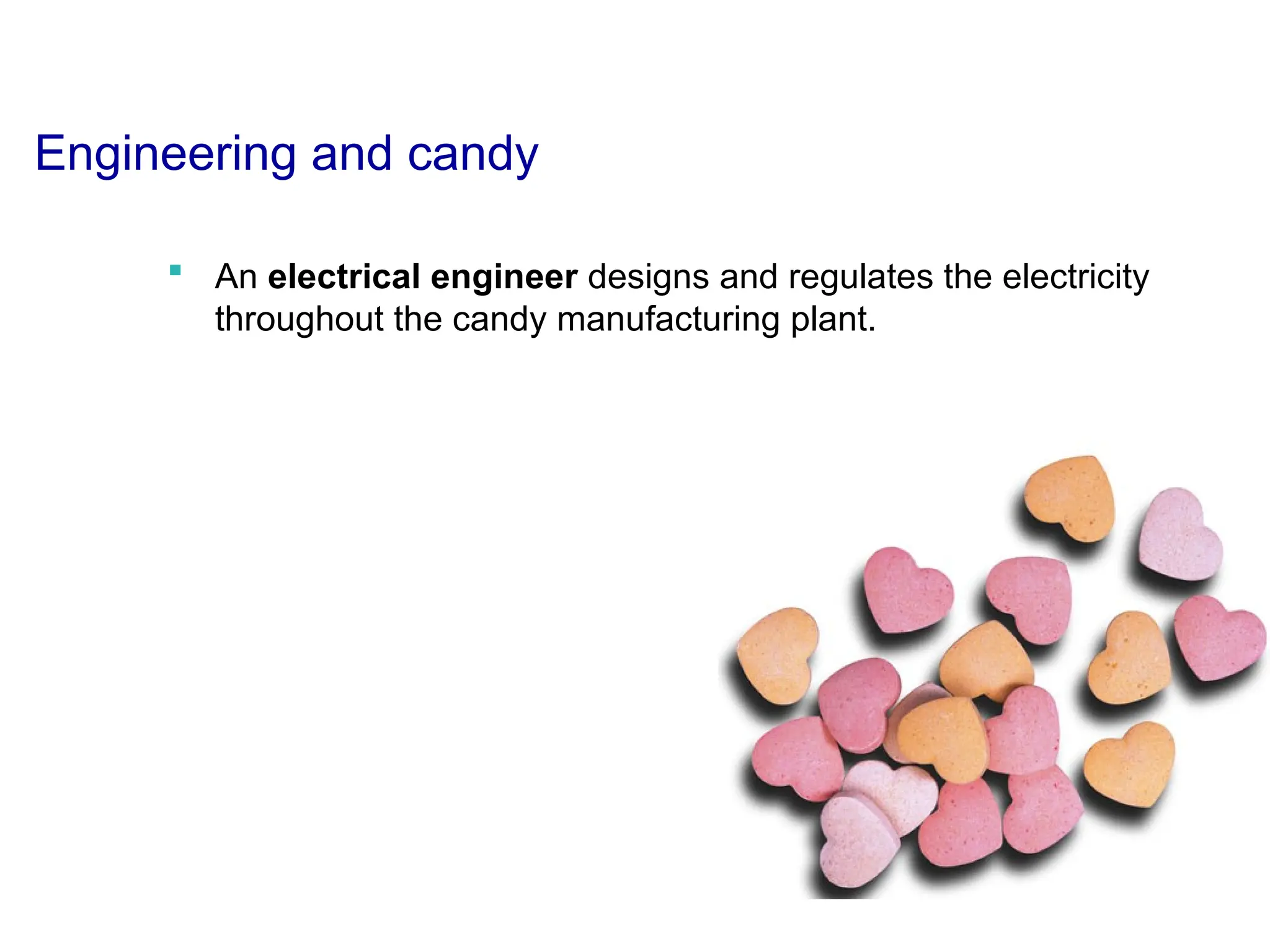
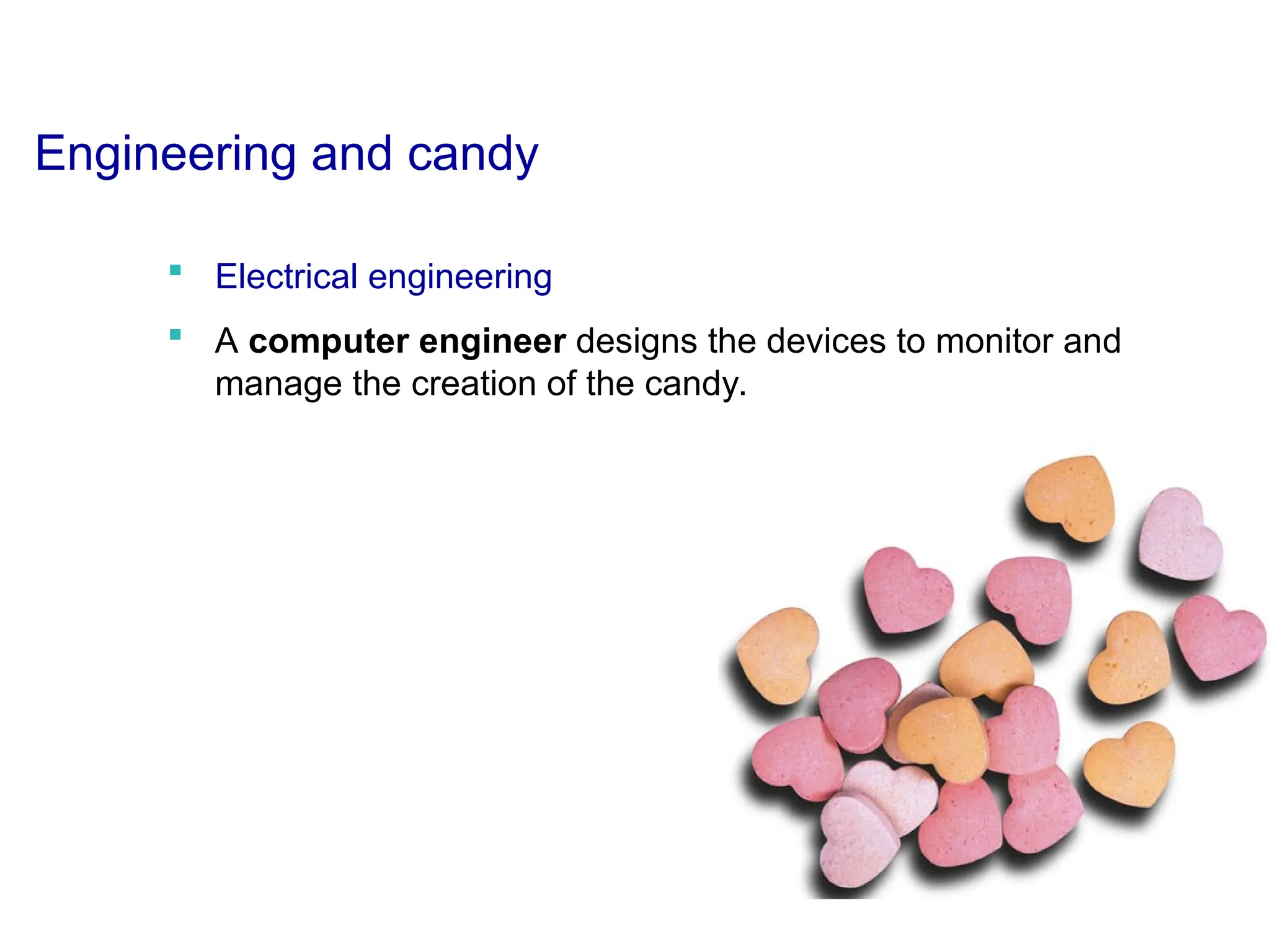
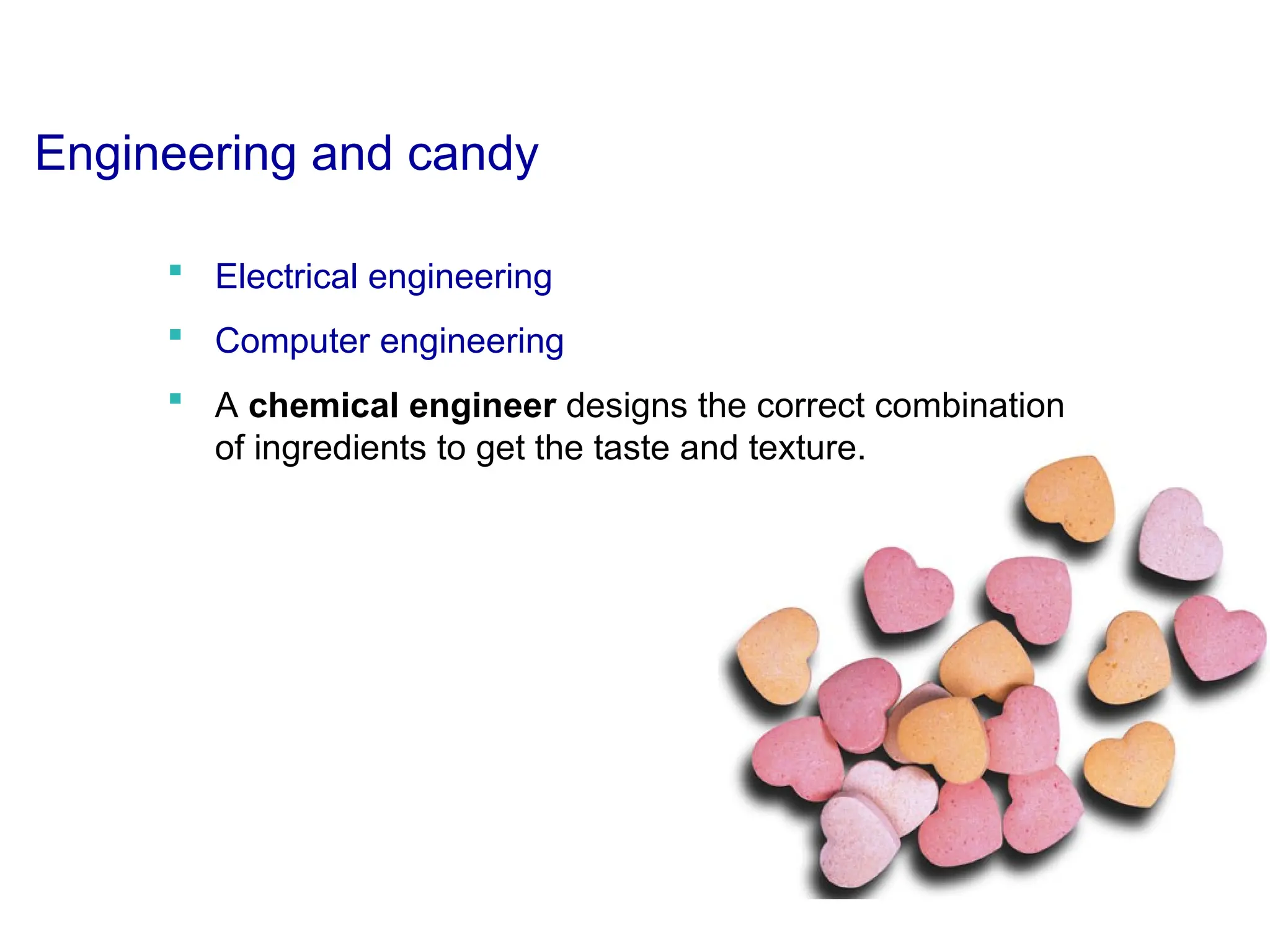
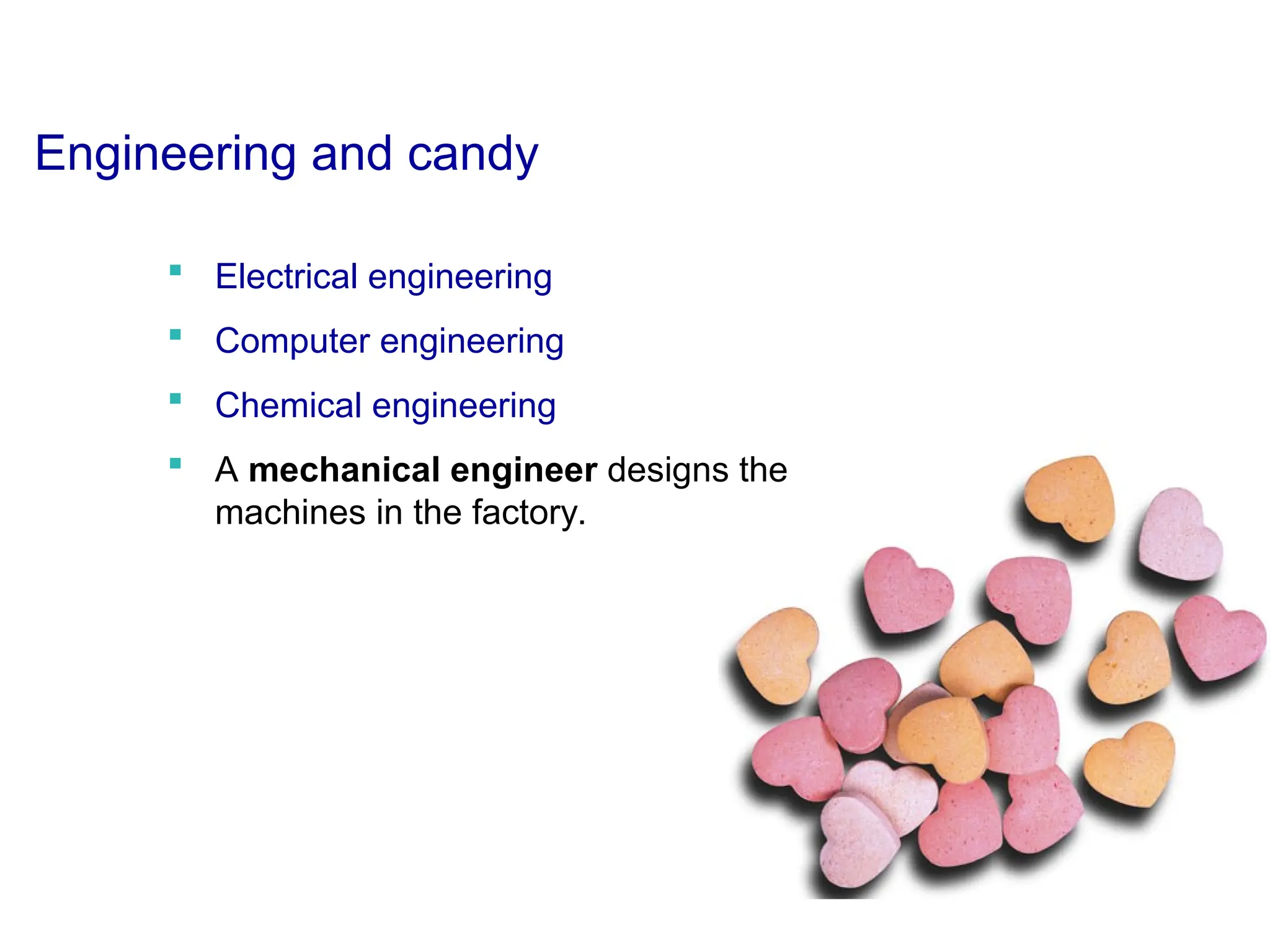
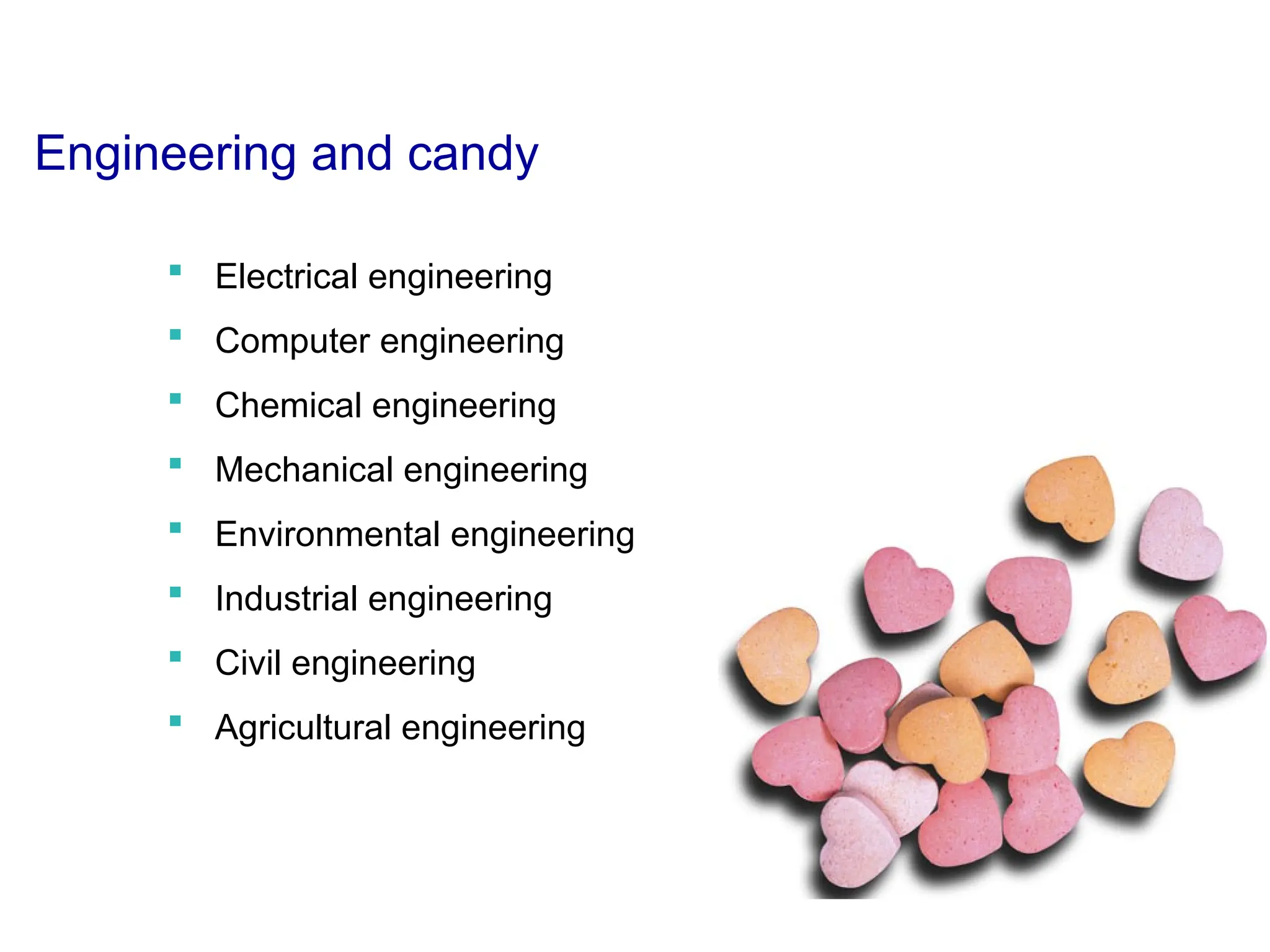
Engineering and candy
 How is engineering involved in the
creation and sale of candy?
Engineering and candy
 An electrical engineer designs and regulates the electricity
throughout the candy manufacturing plant.
Engineering and candy
 Electrical engineering
 A computer engineer designs the devices to monitor and
manage the creation of the candy.
Engineering and candy
 Electrical engineering
 Computer engineering
 A chemical engineer designs the correct combination
of ingredients to get the taste and texture.
Engineering and candy
 Electrical engineering
 Computer engineering
 Chemical engineering
 A mechanical engineer designs the
machines in the factory.
Engineering and candy
 Electrical engineering
 Computer engineering
 Chemical engineering
 Mechanical engineering
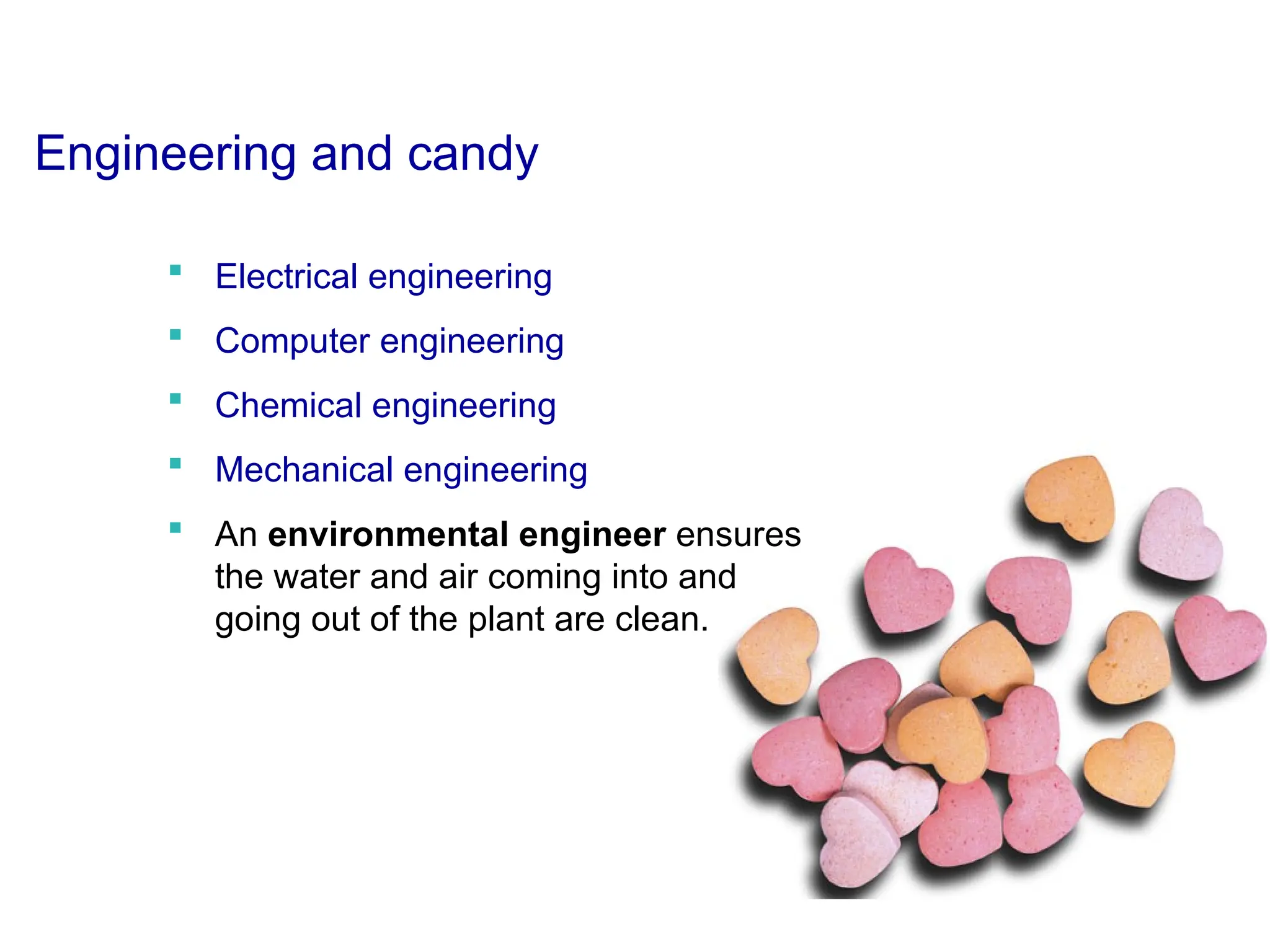
 An environmental engineer ensures
the water and air coming into and
going out of the plant are clean.
Engineering and candy
 Electrical engineering
 Computer engineering
 Chemical engineering
 Mechanical engineering
 Environmental engineering
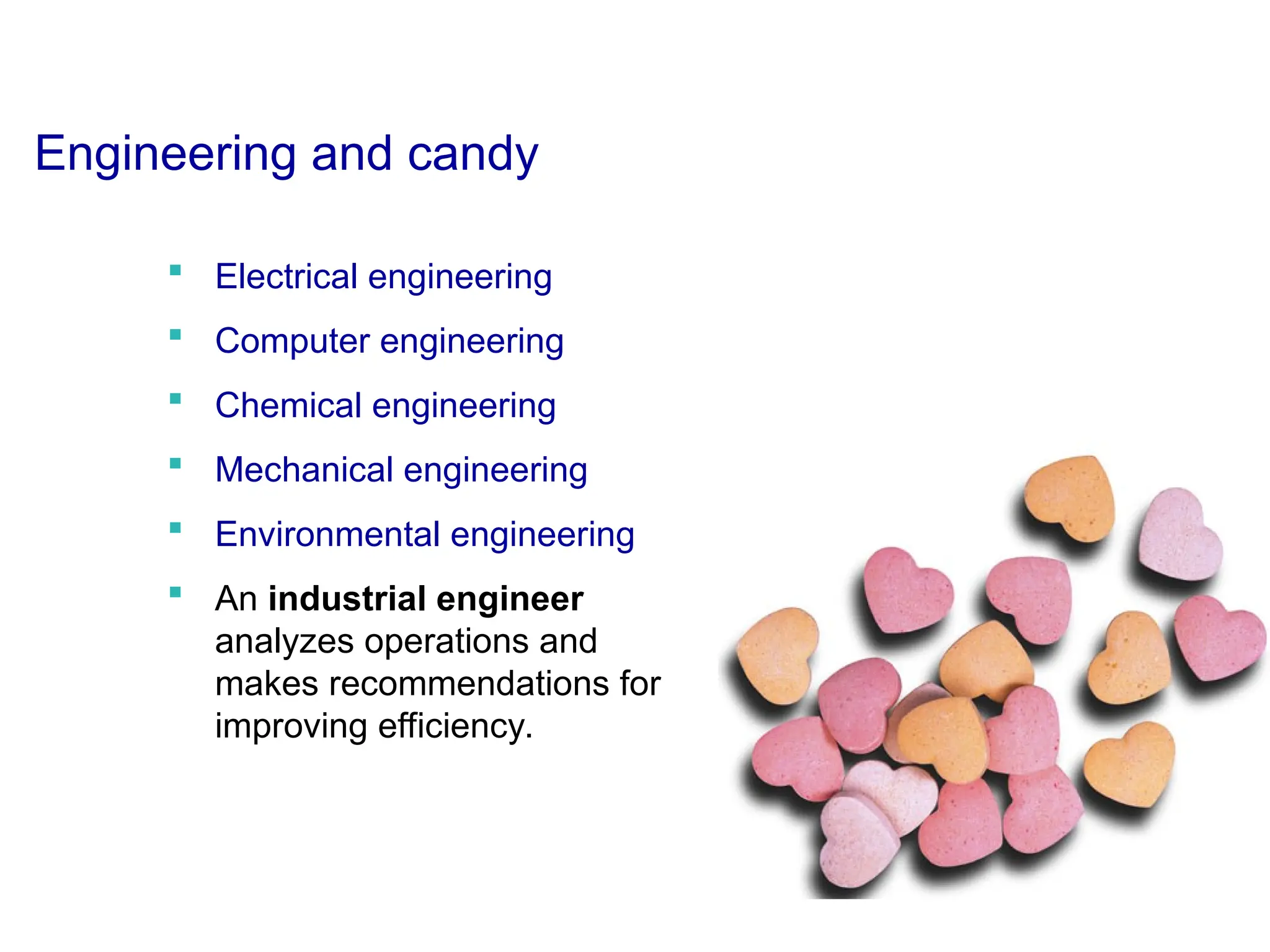
 An industrial engineer
analyzes operations and
makes recommendations for
improving efficiency.
Engineering and candy
 Electrical engineering
 Computer engineering
 Chemical engineering
 Mechanical engineering
 Environmental engineering
 Industrial engineering
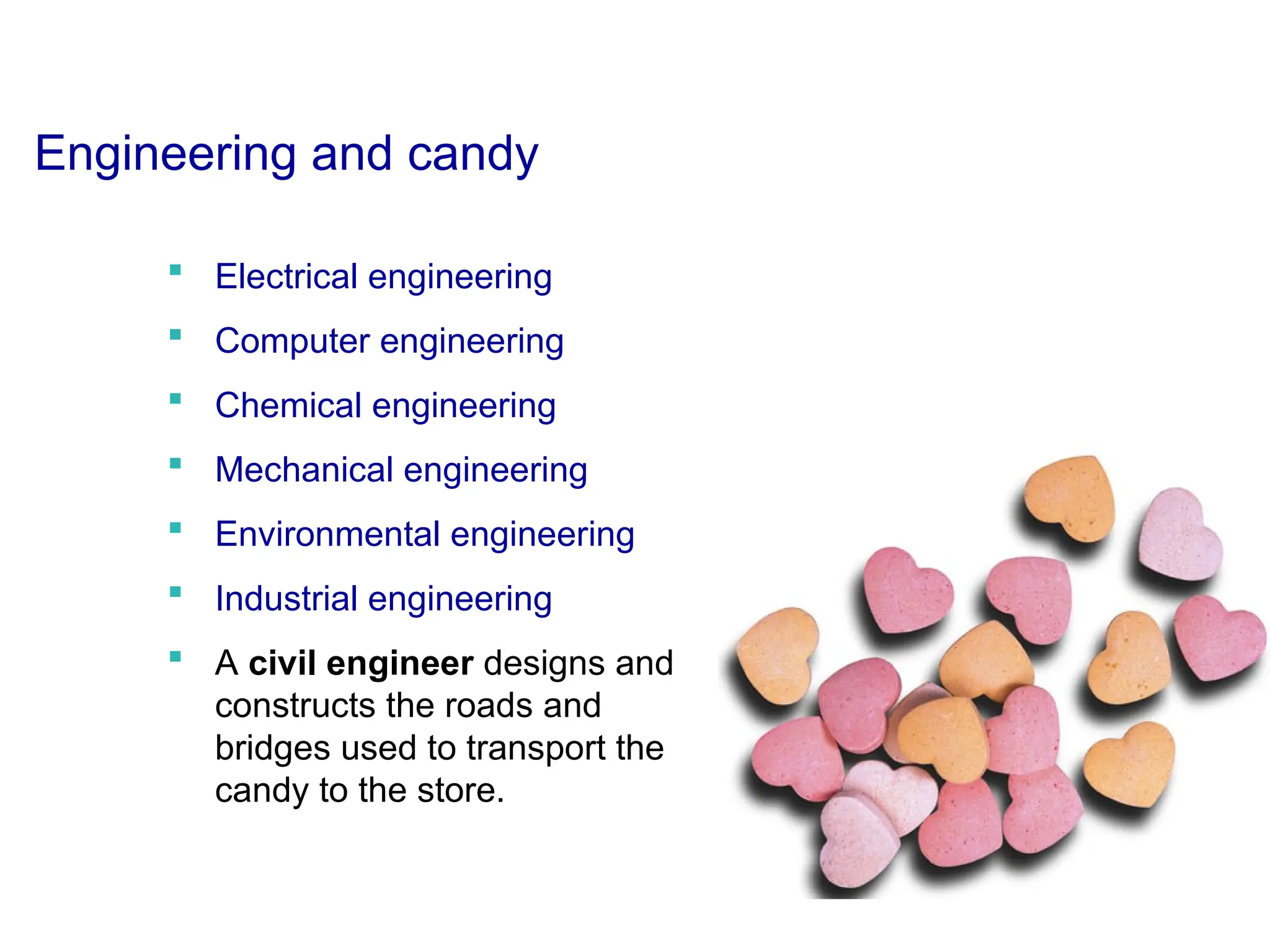
 A civil engineer designs and
constructs the roads and
bridges used to transport the
candy to the store.
Engineering and candy
 Electrical engineering
 Computer engineering
 Chemical engineering
 Mechanical engineering
 Environmental engineering
 Industrial engineering
 Civil engineering
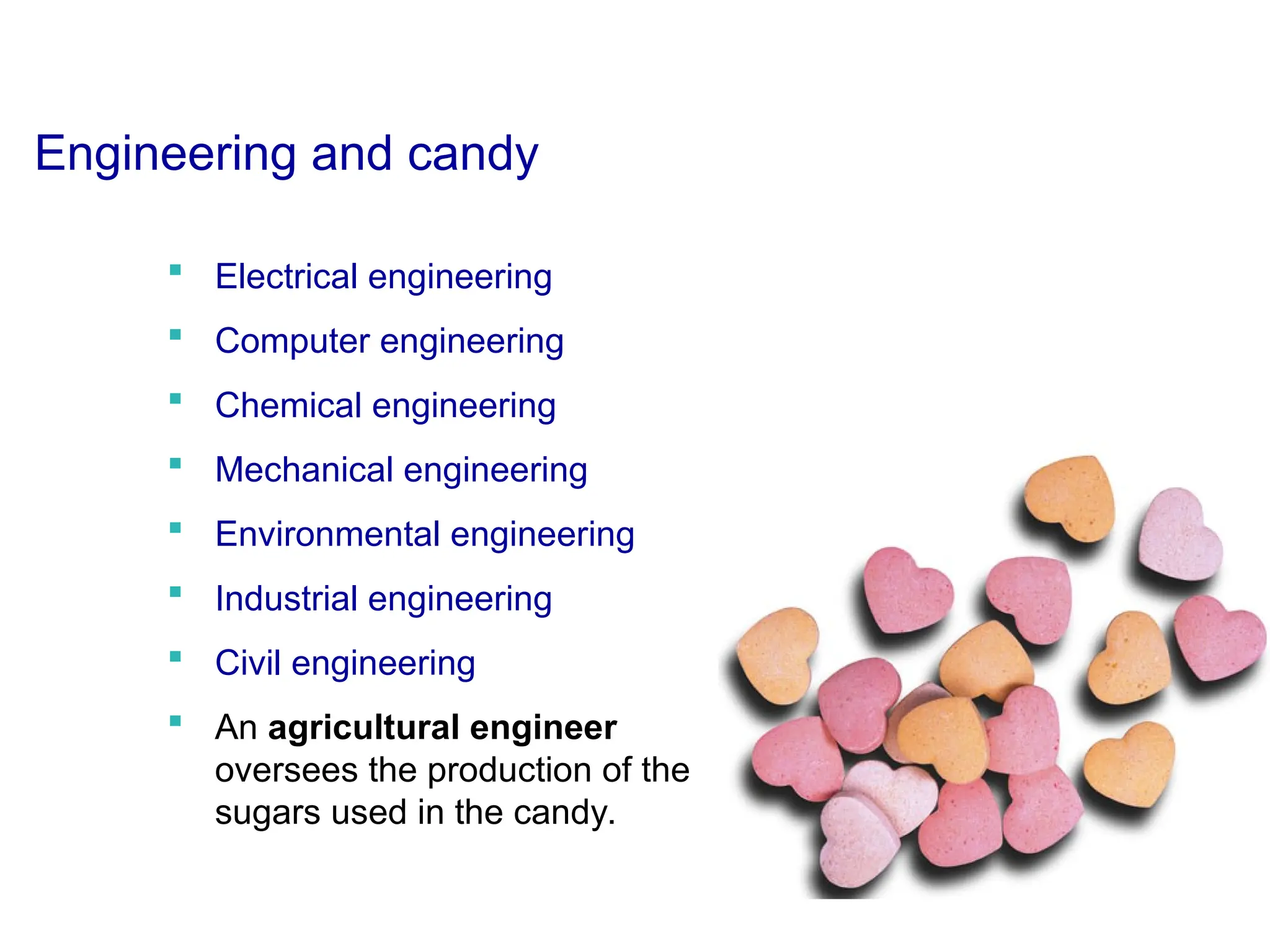
 An agricultural engineer
oversees the production of the
sugars used in the candy.
Engineering and candy
 Electrical engineering
 Computer engineering
 Chemical engineering
 Mechanical engineering
 Environmental engineering
 Industrial engineering
 Civil engineering
 Agricultural engineering
Variety of engineering degrees
 Besides those discussed in
making/selling candy:
– Aerospace engineer
– Ceramic engineer
– Materials engineer
– Nuclear engineer
– Software engineer
– Biomedical engineer
Why should I become
an engineer?
 Invent new things that help
people
– Computers and computer
games
– Cures for diseases
– Ways to protect the
environment
– New sources of energy
– New forms of entertainment

Use the latest technology

Improve the world around you
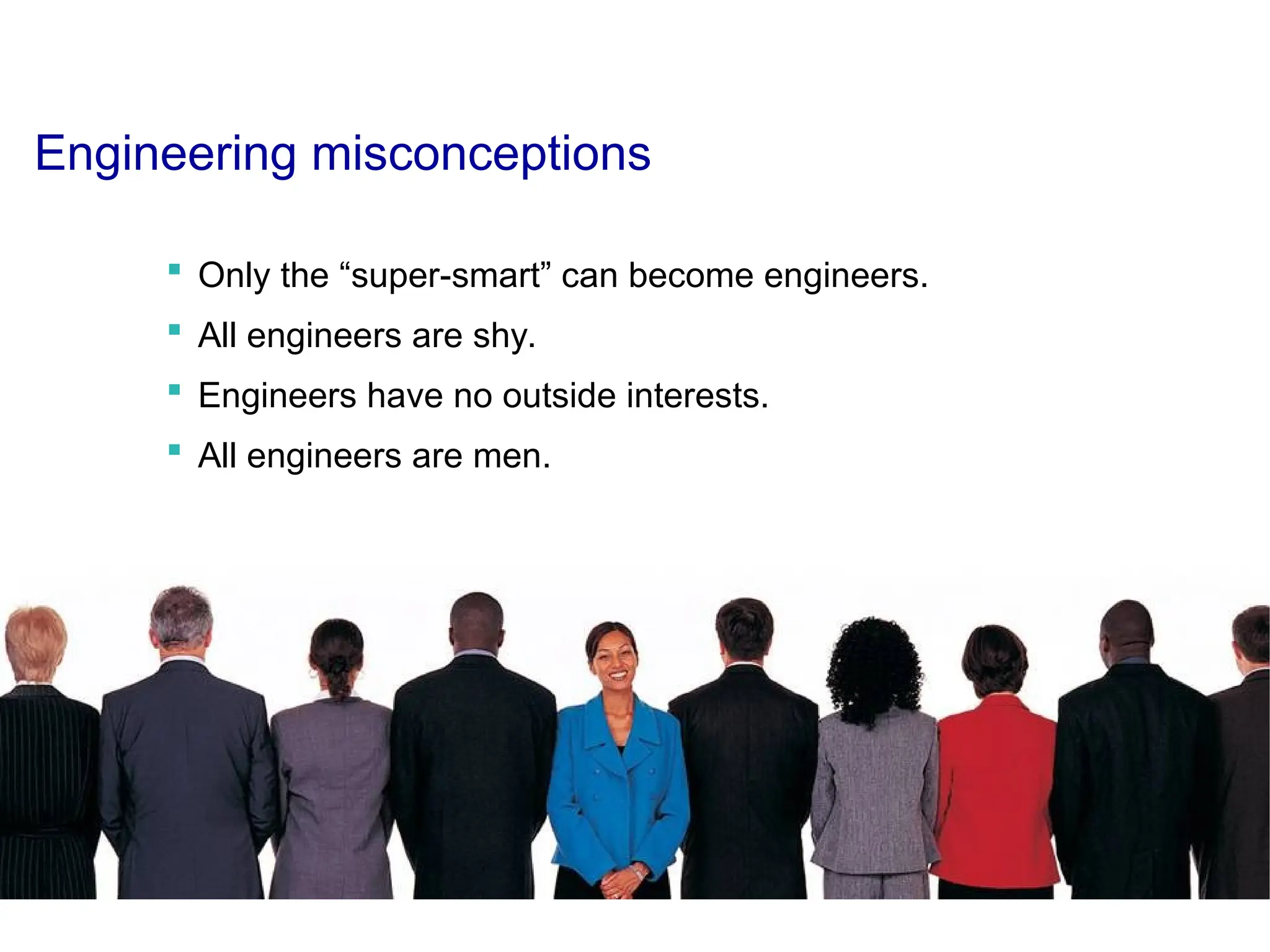
Engineering misconceptions
 Only the “super-smart” can become engineers.
 All engineers are shy.
 Engineers have no outside interests.
 All engineers are men.
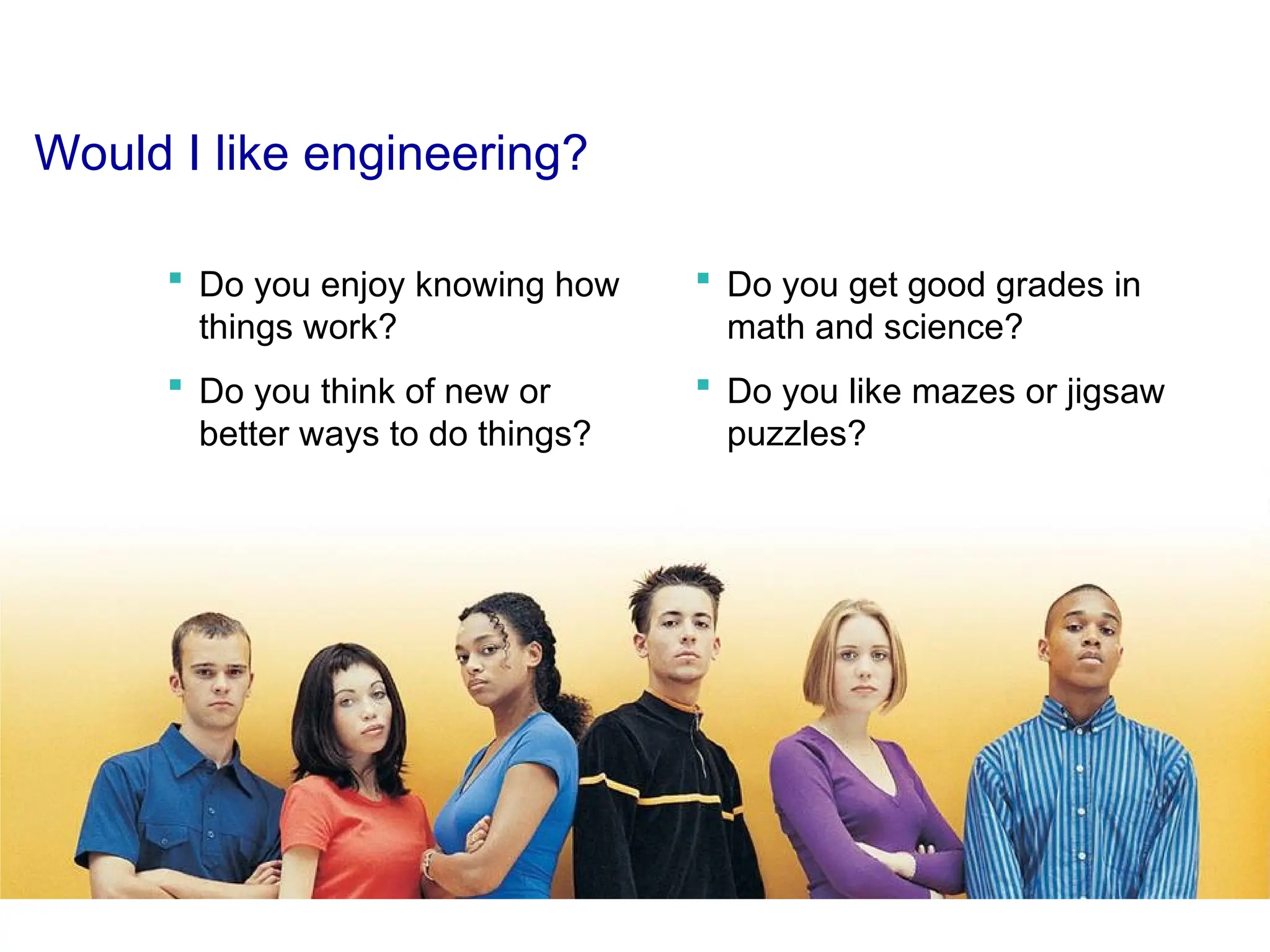
Would I like engineering?
 Do you enjoy knowing how
things work?
 Do you think of new or
better ways to do things?
 Do you get good grades in
math and science?
 Do you like mazes or jigsaw
puzzles?
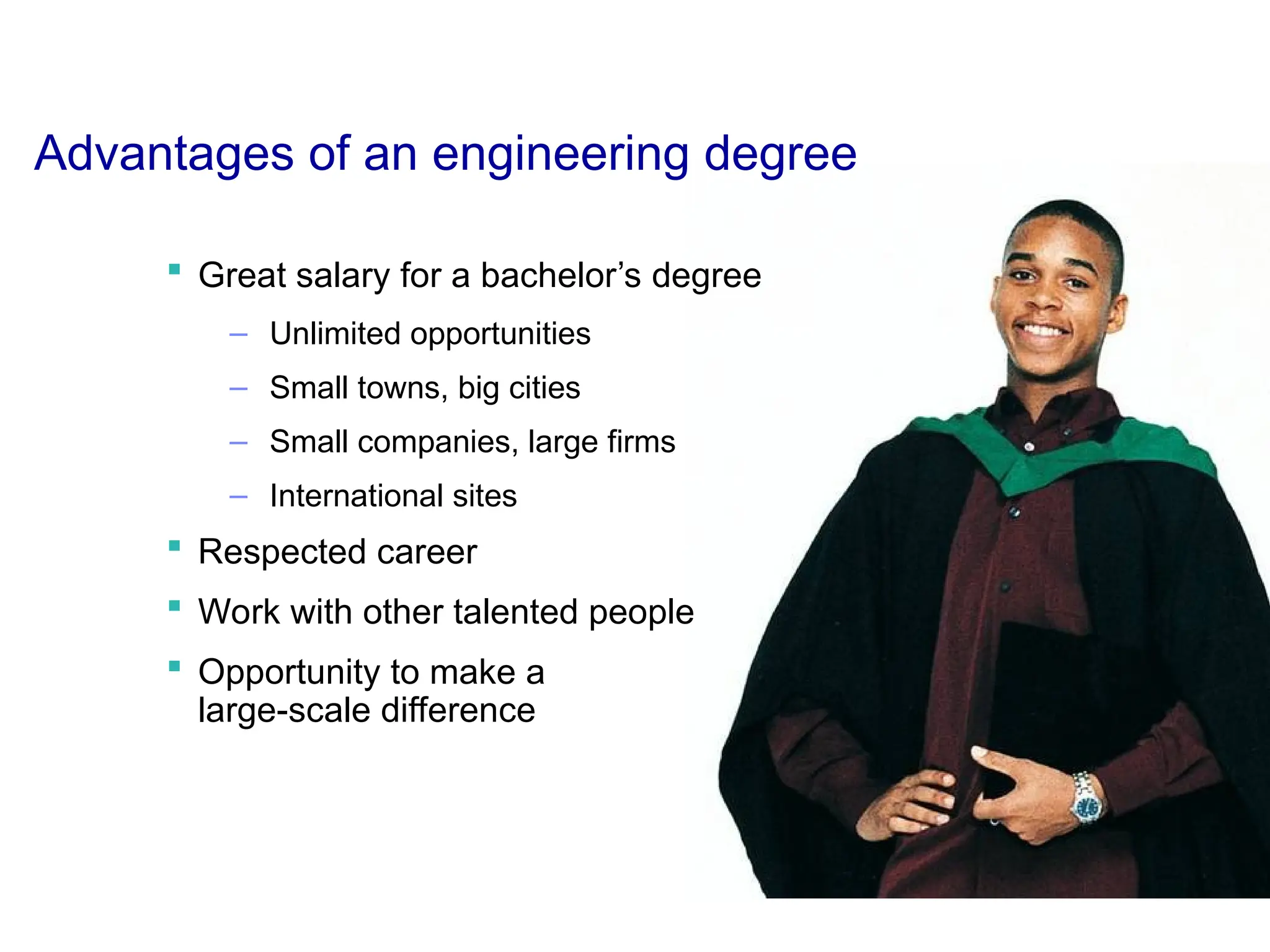
Advantages of an engineering degree
 Great salary for a bachelor’s degree
– Unlimited opportunities
– Small towns, big cities
– Small companies, large firms
– International sites
 Respected career
 Work with other talented people
 Opportunity to make a
large-scale difference
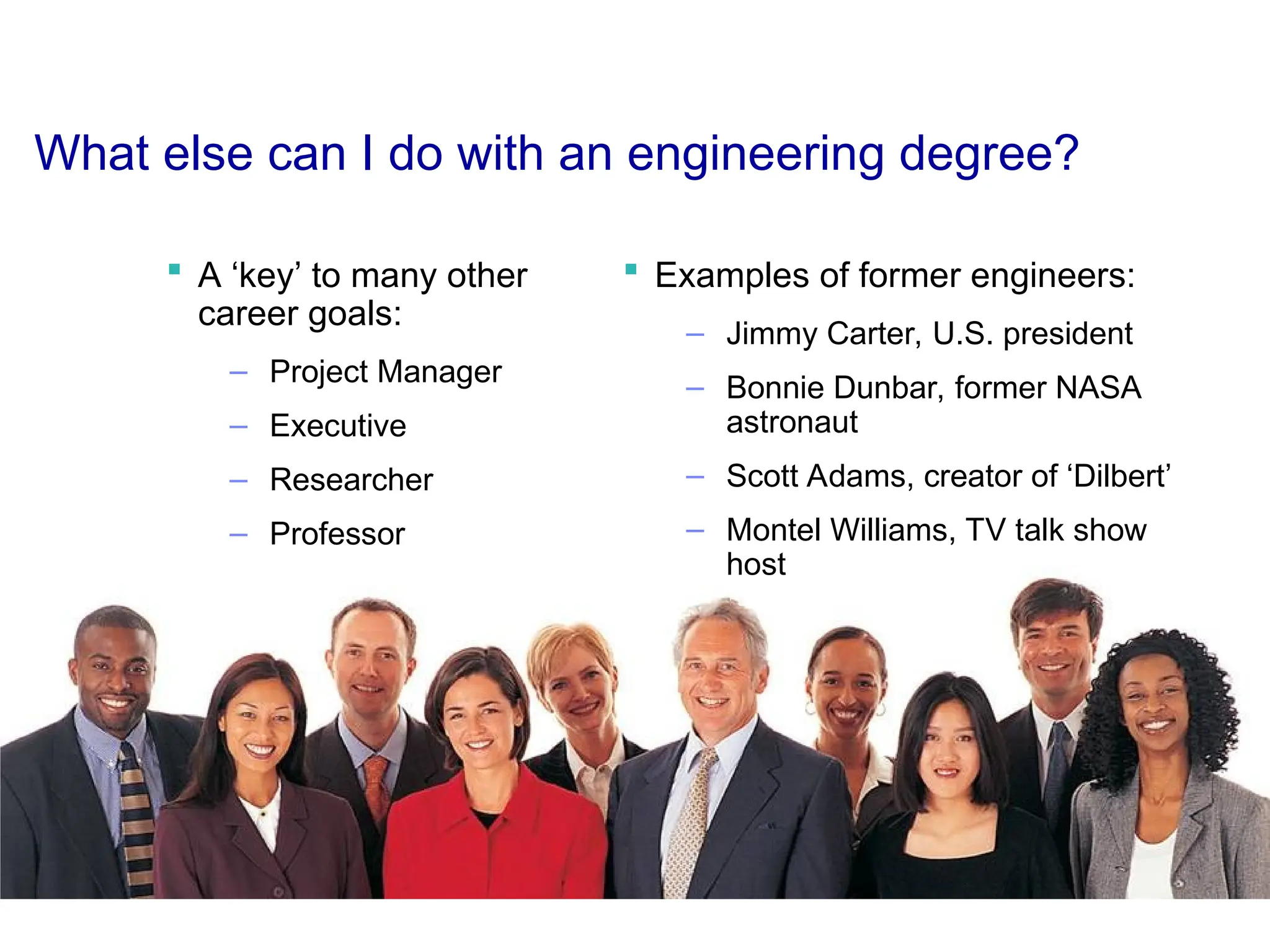
What else can I do with an engineering degree?
 A ‘key’ to many other
career goals:
– Project Manager
– Executive
– Researcher
– Professor
 Examples of former engineers:
– Jimmy Carter, U.S. president
– Bonnie Dunbar, former NASA
astronaut
– Scott Adams, creator of ‘Dilbert’
– Montel Williams, TV talk show
host
What do you need to do to become an engineer?
 Take math & science classes now
– Algebra, geometry, trigonometry,
calculus
– Chemistry, biology, physics
 Begin planning for college
– Take SATs or ACTs
– Talk to your guidance counselor
Why math and science?
 Math & science train you to draw
conclusions based on systematically
gathered facts.
 Math trains you to think logically and
recognize conclusions.
 Science trains you to develop
explanations based on observations.
How can you learn more about engineering?
 Spend time at work with an engineer.
 Talk with college students.
 Participate in a science fair.
Internet resources
 American Society for Engineering Education
www.asee.org/precollege
 National Engineers Week
www.eweek.org
 Explore Science
www.explorescience.com
 Engineer Girl
www.engineergirl.com
 Global engineering sites
www.iei.ie/Steps/house
http://smartmoves.questacon.edu.au
http://www.eweek.org/site/Engineers/50ways.shtml
The challenge is yours
 Ask questions!
 Keep a great attitude!
 Work hard in school!
Questions and answers
 Anyone already thinking
about being an Engineer?
 I so, which type of
Engineering?
 Any questions?
Tips to build a career after completion of degree

Tips to build a career after completion of degree

  • 1.
    Exploring Careers in Engineering SteveSnelling Industrial Engineer Boeing – Everett Stephen.r.snelling@boeing.com (425) 342-4121
  • 2.
    Engineering: solving problems withmath & science  How many of you know someone who is an engineer?  What does an engineer do?
  • 3.
    What is engineering? Engineeringis the application of math and science to create something of value from our natural resources.
  • 4.
    Engineering and candy How is engineering involved in the creation and sale of candy?
  • 5.
    Engineering and candy An electrical engineer designs and regulates the electricity throughout the candy manufacturing plant.
  • 6.
    Engineering and candy Electrical engineering  A computer engineer designs the devices to monitor and manage the creation of the candy.
  • 7.
    Engineering and candy Electrical engineering  Computer engineering  A chemical engineer designs the correct combination of ingredients to get the taste and texture.
  • 8.
    Engineering and candy Electrical engineering  Computer engineering  Chemical engineering  A mechanical engineer designs the machines in the factory.
  • 9.
    Engineering and candy Electrical engineering  Computer engineering  Chemical engineering  Mechanical engineering  An environmental engineer ensures the water and air coming into and going out of the plant are clean.
  • 10.
    Engineering and candy Electrical engineering  Computer engineering  Chemical engineering  Mechanical engineering  Environmental engineering  An industrial engineer analyzes operations and makes recommendations for improving efficiency.
  • 11.
    Engineering and candy Electrical engineering  Computer engineering  Chemical engineering  Mechanical engineering  Environmental engineering  Industrial engineering  A civil engineer designs and constructs the roads and bridges used to transport the candy to the store.
  • 12.
    Engineering and candy Electrical engineering  Computer engineering  Chemical engineering  Mechanical engineering  Environmental engineering  Industrial engineering  Civil engineering  An agricultural engineer oversees the production of the sugars used in the candy.
  • 13.
    Engineering and candy Electrical engineering  Computer engineering  Chemical engineering  Mechanical engineering  Environmental engineering  Industrial engineering  Civil engineering  Agricultural engineering
  • 14.
    Variety of engineeringdegrees  Besides those discussed in making/selling candy: – Aerospace engineer – Ceramic engineer – Materials engineer – Nuclear engineer – Software engineer – Biomedical engineer
  • 15.
    Why should Ibecome an engineer?  Invent new things that help people – Computers and computer games – Cures for diseases – Ways to protect the environment – New sources of energy – New forms of entertainment  Use the latest technology  Improve the world around you
  • 16.
    Engineering misconceptions  Onlythe “super-smart” can become engineers.  All engineers are shy.  Engineers have no outside interests.  All engineers are men.
  • 17.
    Would I likeengineering?  Do you enjoy knowing how things work?  Do you think of new or better ways to do things?  Do you get good grades in math and science?  Do you like mazes or jigsaw puzzles?
  • 18.
    Advantages of anengineering degree  Great salary for a bachelor’s degree – Unlimited opportunities – Small towns, big cities – Small companies, large firms – International sites  Respected career  Work with other talented people  Opportunity to make a large-scale difference
  • 19.
    What else canI do with an engineering degree?  A ‘key’ to many other career goals: – Project Manager – Executive – Researcher – Professor  Examples of former engineers: – Jimmy Carter, U.S. president – Bonnie Dunbar, former NASA astronaut – Scott Adams, creator of ‘Dilbert’ – Montel Williams, TV talk show host
  • 20.
    What do youneed to do to become an engineer?  Take math & science classes now – Algebra, geometry, trigonometry, calculus – Chemistry, biology, physics  Begin planning for college – Take SATs or ACTs – Talk to your guidance counselor
  • 21.
    Why math andscience?  Math & science train you to draw conclusions based on systematically gathered facts.  Math trains you to think logically and recognize conclusions.  Science trains you to develop explanations based on observations.
  • 22.
    How can youlearn more about engineering?  Spend time at work with an engineer.  Talk with college students.  Participate in a science fair.
  • 23.
    Internet resources  AmericanSociety for Engineering Education www.asee.org/precollege  National Engineers Week www.eweek.org  Explore Science www.explorescience.com  Engineer Girl www.engineergirl.com  Global engineering sites www.iei.ie/Steps/house http://smartmoves.questacon.edu.au http://www.eweek.org/site/Engineers/50ways.shtml
  • 24.
    The challenge isyours  Ask questions!  Keep a great attitude!  Work hard in school!
  • 25.
    Questions and answers Anyone already thinking about being an Engineer?  I so, which type of Engineering?  Any questions?

Editor's Notes

  • #1 This presentation has been prepared for engineers to present to students aged 14-18 throughout the United States. The goal is to excite students about engineering. This is accomplished by allowing students to understand what engineering means and how it affects them. Time for full presentation: 15-60 minutes 15-30 minutes without a project, depending on the amount of discussion. 45-60 minutes with a project, depending on the amount of discussion. Show and tell: If possible, bring a tangible (nonproprietary) item to the presentation that can help students better understand what your company does. Examples include: a model of an end product, a design drawing, a prototype, a photo, etc. Optional Internet activities: Depending on the available Internet connectivity and projection system, you may also want to examine the following sites with the students. These sites offer great interactive activities highlighting the necessity for good engineering practices. http://www.pbs.org/wgbh/buildingbig/index.html http://www.baddesigns.com Presentation tips: See notes section of the closing slide. Preparing the presentation: In PowerPoint, open “view>master>title master” and type your name and date of the presentation where indicated. Also insert your personal info on slide 2. How to hide slides: Once you decide which project you want to do with the students, you can “hide” the other project descriptions. To do this: In PowerPoint, open Slide Sorter view (“view>slide sorter”) Highlight all the slides you want to hide From the ‘Slide Show” pull-down menu, select “Hide Slide.” The page numbers under the hidden slides should change. (Run the slide show to confirm all is OK.) Tips for the presenter Greet the students Interact with the students Keep the language simple Avoid lecturing Use gender-neutral language Prepare and demonstrate activities Focus: Exciting students about engineering Examine the Notes View of the presentation
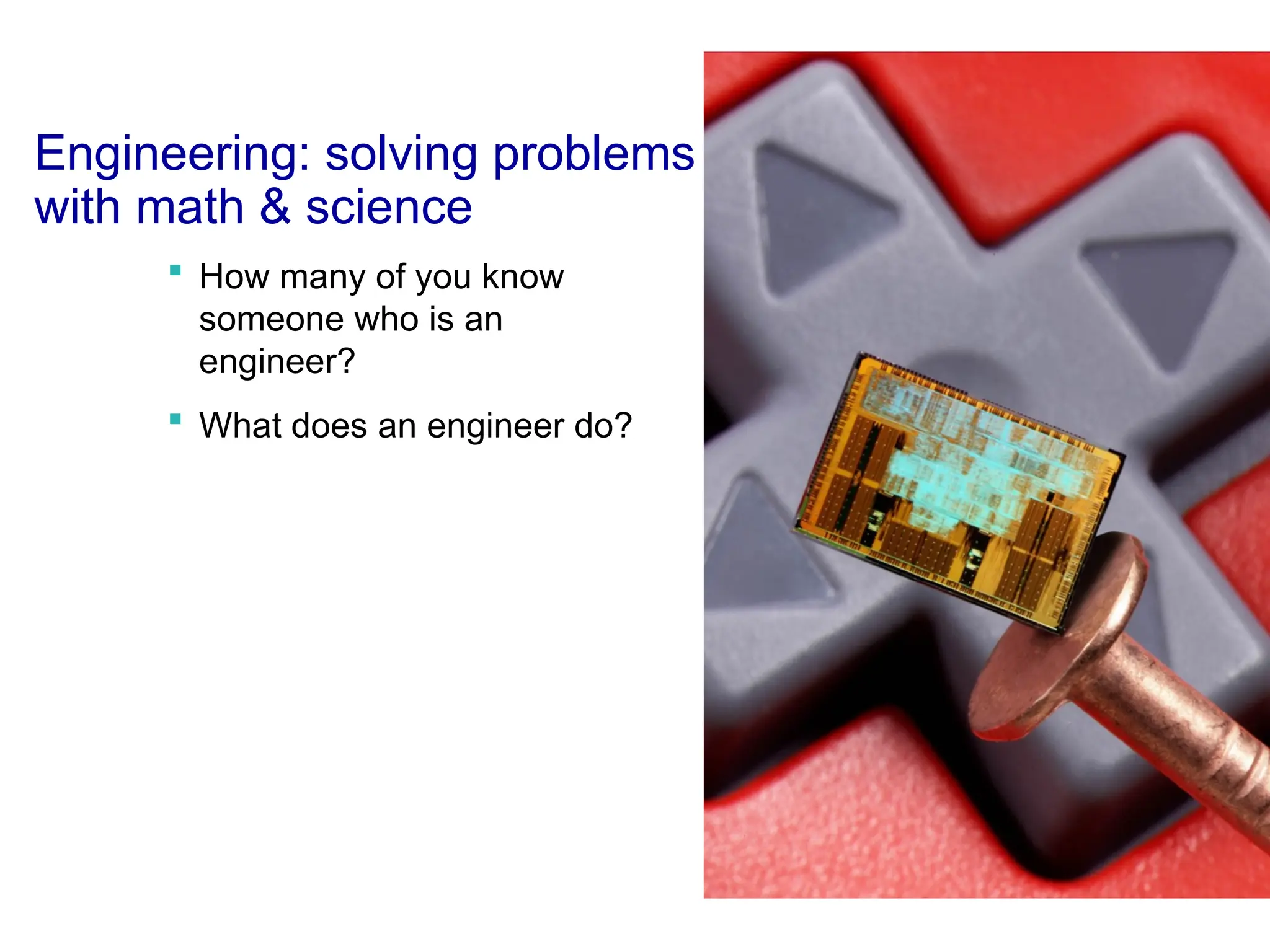
  • #2 Time: 5-10 minutes Asking questions: Have students raise their hands. Have them share their information with the group. When appropriate, ask them to expand on their answer. Maybe they have a parent or a relative that is an engineer. Maybe they know what type of engineering. To set up the next slide – ask them to think about “What does an engineer do?” – and let them share some of their answers. Ask them if they recognize the objects in the picture? (a control pad for a video game, computer chip and a nail for scale).
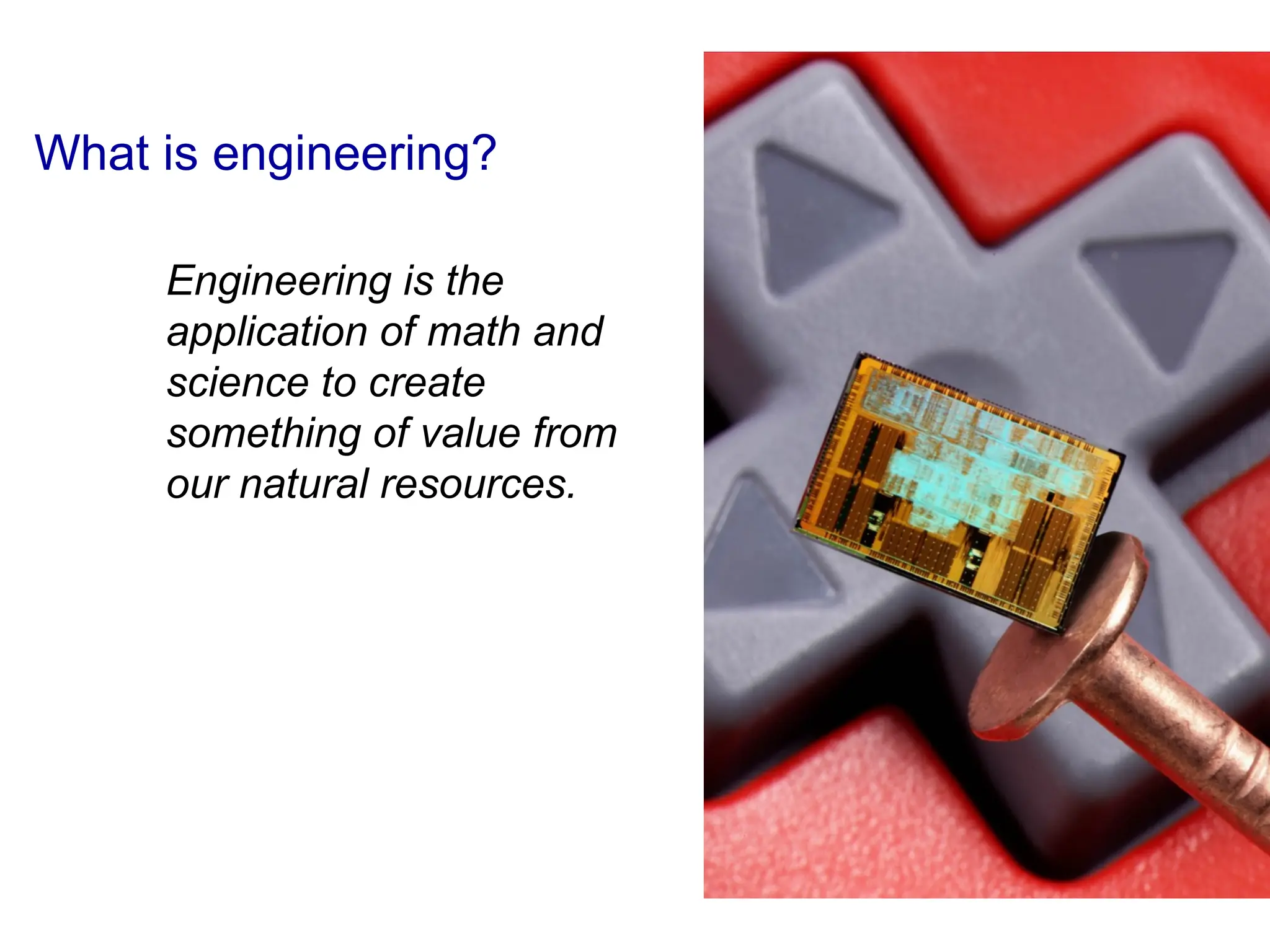
  • #3 Time: 3-5 minutes Tie in comments the students shared in the last slide. Optional questions about the photo: Do you recognize what is behind the computer chip in the photograph? It is part of a control pad for a video game. Do you know why there is a picture of a video game control pad and a computer chip? A company makes the processor chip that goes inside the GameCube.
  • #4 Time: 3-5 minutes Allow students time to brainstorm how engineering is involved in the creation and sale of a candy bar. The students may have additional ideas not listed in the following slides: Electrical engineer Computer engineer Chemical engineer Mechanical engineer Environmental engineer Industrial engineer Civil engineer Agricultural engineer Optional: You may consider sharing candy with the students at the start or end of the engineering and candy slides (but check with the teacher first – to make sure this would be allowed). Another option is to present candies toward the end of the presentation and refresh students’ memories about all of the types of engineering you discussed.
  • #5 Time: 1 minute Mention any additional types of engineering students had listed.
  • #6 Time: 1 minute Mention any additional types of engineering students had listed.
  • #7 Time: 1 minute Mention any additional types of engineering students had listed.
  • #8 Time: 1 minute Mention any additional types of engineering students had listed.
  • #9 Time: 1 minute Mention any additional types of engineering students had listed.
  • #10 Time: 1 minute Mention any additional types of engineering students had listed.
  • #11 Time: 1 minute Mention any additional types of engineering students had listed.
  • #12 Time: 1 minute Mention any additional types of engineering students had listed.
  • #13 Time: 1 minute Mention any additional types of engineering students had listed.
  • #14 Time: 3-5 minutes Other Engineering areas: You may want to give brief examples of what these other engineering disciplines do (types of industries or products they would be associated with, etc.). Let them know this is not an exhaustive list, there are more than 30 different types of engineering degrees.
  • #15 Time: 1-3 minutes Invent New Things that Help People: Add additional items, as appropriate. The goals are: students see engineering as focusing on a variety of projects students see how engineering benefits society
  • #16 Time: 2-3 minutes Super-smart – You don’t have to be “super smart” to become an engineer. It is important that you work hard and persevere with your classes. Shy – Many “social” people become engineers. As engineers increasingly have to work together on projects, good communication skills are essential. Outside interests – Engineers are actively involved in the community and have many other external interests. All engineers are men – Each year, a higher percentage of women enter the science and engineering fields. According to the National Center for Educational Statistics, in 2000, women received 50.4 percent of all science and engineering degrees. This is quite an increase from 1980 when women received only 37.2 percent of the science and engineering degrees. Specifically in the field of engineering, the percentage of women receiving bachelor degrees had doubled from 10.1% in 1980 to 20.5% in 2000.
  • #17 Time: 2-3 minutes How things work – Engineers enjoy learning how things work. Wanting to know “how it works” is essential to creating new designs. New & better ways – Engineers are constantly looking for new or better ways to do things. They question whether the way things are currently operating are the most efficient. Math & science – Math and science are the foundation for many engineering topics. Mazes & jigsaw puzzles – Doing mazes & jigsaw puzzles requires analytic problem solving. These are skills needed by engineers.
  • #18 Time: 3-5 minutes Salary: In order to get the most current information, please check the Occupational Outlook Handbook online at http://www.bls.gov/oco/. This site features national data about salary averages and predicted growth potential.
  • #19 Time: 3-5 minutes Engineering is a “key”: You may want to share personal examples of people who received an engineering degree and how they leveraged that for another career goal. Students should not ask “Do I want to do this for the rest of my life?” Instead, they should ask “Do I like the opportunities that working in engineering open for me?” Famous Engineers: Additional examples of famous engineers can be found at: http://www.asee.org/precollege/famous.cfm Try to ensure that examples provided are representative of the students. Students benefit from role models or examples they can relate with.
  • #20 Time: 2-3 minutes Classes: Math classes are vital for all types of engineering. Stress with students that it is a good idea to take math and science in high school, regardless of their career goals. By taking math and science now, they leave their options open to all career possibilities. College: You need to receive your bachelor’s degree to become an engineer. Start planning now for college.
  • #21 Time: 1-2 minutes
  • #22 Time: 1-2 minutes Spend time with an engineer: Share any “shadowing” or “mentoring” opportunities that may exist in your organization. Talk with college students: Learn about engineering classes from those who are in college. Participate in a science fair: A science fair allows you to develop your problem-solving skills.
  • #23 Time: 1 minute It is recommended that you leave a copy of this slide with the teacher.
  • #24 Challenge the Students: Each of these questions allow you to make some summary comments about preparing for an engineering school or an engineering career. Avoid lecturing – but you can share your observations or personal experience.
  • #25 Get some student feedback & answer any questions This is a good place to get individual students’ interests shared, that may lead to a better question & answer session for the entire class.