CONVENTIONS OF A
THRILLER
Within the Thriller genre, sound, mise - en - scene, camera
angles and editing are vitally important so that a successful
thriller can be created.
Thriller is a genre of literature, film, and television programming
that uses suspense, tension, and excitement as its main elements.
Thrillers heavily stimulate the viewer's moods, giving them a high
level of anticipation, ultra-heightened expectation, uncertainty,
surprise, anxiety and terror.
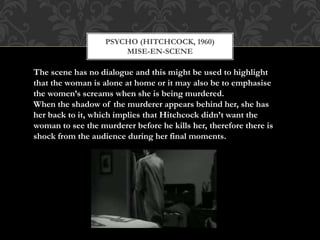
PSYCHO (HITCHCOCK, 1960)
MISE-EN-SCENE
The scene has no dialogue and this might be used to highlight
that the woman is alone at home or it may also be to emphasise
the women’s screams when she is being murdered.
When the shadow of the murderer appears behind her, she has
her back to it, which implies that Hitchcock didn’t want the
woman to see the murderer before he kills her, therefore there is
shock from the audience during her final moments.
CAMERA ANGLES
The camera is placed on the woman herself to depict her
emotions of being attacked which were fear and anger.
There's an eye level shot of the murderer attacking the
woman in the shower and this emphasizes the fact that the
audience are forced to be the woman’s place and feels like
the murderer is attacking you.
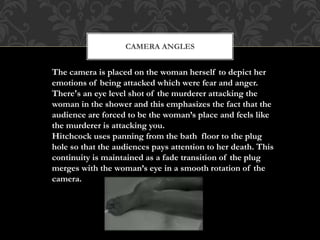
Hitchcock uses panning from the bath floor to the plug
hole so that the audiences pays attention to her death. This
continuity is maintained as a fade transition of the plug
merges with the woman’s eye in a smooth rotation of the
camera.
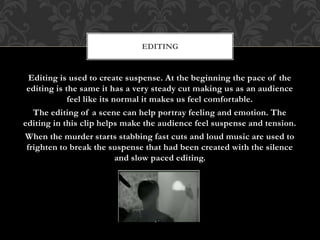
Editing is used to create suspense. At the beginning the pace of the
editing is the same it has a very steady cut making us as an audience
feel like its normal it makes us feel comfortable.
The editing of a scene can help portray feeling and emotion. The
editing in this clip helps make the audience feel suspense and tension.
When the murder starts stabbing fast cuts and loud music are used to
frighten to break the suspense that had been created with the silence
and slow paced editing.
EDITING
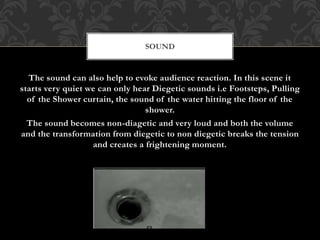
The sound can also help to evoke audience reaction. In this scene it
starts very quiet we can only hear Diegetic sounds i.e Footsteps, Pulling
of the Shower curtain, the sound of the water hitting the floor of the
shower.
The sound becomes non-diagetic and very loud and both the volume
and the transformation from diegetic to non diegetic breaks the tension
and creates a frightening moment.
SOUND
The opening of the sixth sense starts off with the titles and credits
where we nothing a couple minutes in which it only shows a light bulb
in the shot. This suggests what type of genre it is for example it could
be horror or a thriller because of the mise-en-scene as we can see a
yellow light bulb with a dark background conveying fear and enigma.
The couple are both wearing formal clothing to suggest the importance
of the award that the man has gained. The lighting in the opening scene
is essential to convey particular emotions. For example, the lighting
used when the couple are celebrating is brighter and calm, as this
matches the mood of the characters. However, following this scene, the
lighting becomes darker as the mood intensifies as suspense is built.
THE SIXTH SENSE
(SHYAMALAN, 1999) MISE – EN - SCENE
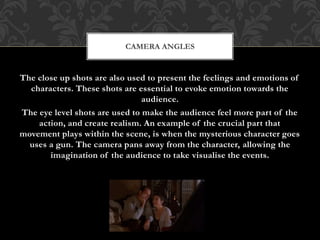
The close up shots are also used to present the feelings and emotions of
characters. These shots are essential to evoke emotion towards the
audience.
The eye level shots are used to make the audience feel more part of the
action, and create realism. An example of the crucial part that
movement plays within the scene, is when the mysterious character goes
uses a gun. The camera pans away from the character, allowing the
imagination of the audience to take visualise the events.
CAMERA ANGLES
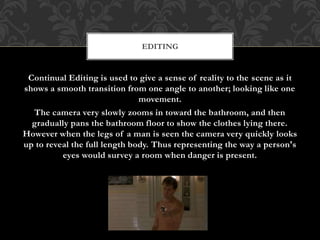
Continual Editing is used to give a sense of reality to the scene as it
shows a smooth transition from one angle to another; looking like one
movement.
The camera very slowly zooms in toward the bathroom, and then
gradually pans the bathroom floor to show the clothes lying there.
However when the legs of a man is seen the camera very quickly looks
up to reveal the full length body. Thus representing the way a person's
eyes would survey a room when danger is present.
EDITING
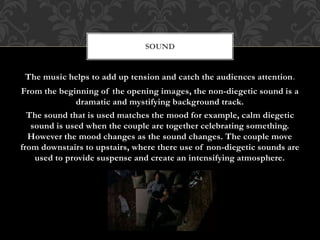
The music helps to add up tension and catch the audiences attention.
From the beginning of the opening images, the non-diegetic sound is a
dramatic and mystifying background track.
The sound that is used matches the mood for example, calm diegetic
sound is used when the couple are together celebrating something.
However the mood changes as the sound changes. The couple move
from downstairs to upstairs, where there use of non-diegetic sounds are
used to provide suspense and create an intensifying atmosphere.
SOUND

Thriller conventions

  • 1.
  • 2.
    Within the Thrillergenre, sound, mise - en - scene, camera angles and editing are vitally important so that a successful thriller can be created. Thriller is a genre of literature, film, and television programming that uses suspense, tension, and excitement as its main elements. Thrillers heavily stimulate the viewer's moods, giving them a high level of anticipation, ultra-heightened expectation, uncertainty, surprise, anxiety and terror.
  • 3.
    PSYCHO (HITCHCOCK, 1960) MISE-EN-SCENE Thescene has no dialogue and this might be used to highlight that the woman is alone at home or it may also be to emphasise the women’s screams when she is being murdered. When the shadow of the murderer appears behind her, she has her back to it, which implies that Hitchcock didn’t want the woman to see the murderer before he kills her, therefore there is shock from the audience during her final moments.
  • 4.
    CAMERA ANGLES The camerais placed on the woman herself to depict her emotions of being attacked which were fear and anger. There's an eye level shot of the murderer attacking the woman in the shower and this emphasizes the fact that the audience are forced to be the woman’s place and feels like the murderer is attacking you. Hitchcock uses panning from the bath floor to the plug hole so that the audiences pays attention to her death. This continuity is maintained as a fade transition of the plug merges with the woman’s eye in a smooth rotation of the camera.
  • 5.
    Editing is usedto create suspense. At the beginning the pace of the editing is the same it has a very steady cut making us as an audience feel like its normal it makes us feel comfortable. The editing of a scene can help portray feeling and emotion. The editing in this clip helps make the audience feel suspense and tension. When the murder starts stabbing fast cuts and loud music are used to frighten to break the suspense that had been created with the silence and slow paced editing. EDITING
  • 6.
    The sound canalso help to evoke audience reaction. In this scene it starts very quiet we can only hear Diegetic sounds i.e Footsteps, Pulling of the Shower curtain, the sound of the water hitting the floor of the shower. The sound becomes non-diagetic and very loud and both the volume and the transformation from diegetic to non diegetic breaks the tension and creates a frightening moment. SOUND
  • 7.
    The opening ofthe sixth sense starts off with the titles and credits where we nothing a couple minutes in which it only shows a light bulb in the shot. This suggests what type of genre it is for example it could be horror or a thriller because of the mise-en-scene as we can see a yellow light bulb with a dark background conveying fear and enigma. The couple are both wearing formal clothing to suggest the importance of the award that the man has gained. The lighting in the opening scene is essential to convey particular emotions. For example, the lighting used when the couple are celebrating is brighter and calm, as this matches the mood of the characters. However, following this scene, the lighting becomes darker as the mood intensifies as suspense is built. THE SIXTH SENSE (SHYAMALAN, 1999) MISE – EN - SCENE
  • 8.
    The close upshots are also used to present the feelings and emotions of characters. These shots are essential to evoke emotion towards the audience. The eye level shots are used to make the audience feel more part of the action, and create realism. An example of the crucial part that movement plays within the scene, is when the mysterious character goes uses a gun. The camera pans away from the character, allowing the imagination of the audience to take visualise the events. CAMERA ANGLES
  • 9.
    Continual Editing isused to give a sense of reality to the scene as it shows a smooth transition from one angle to another; looking like one movement. The camera very slowly zooms in toward the bathroom, and then gradually pans the bathroom floor to show the clothes lying there. However when the legs of a man is seen the camera very quickly looks up to reveal the full length body. Thus representing the way a person's eyes would survey a room when danger is present. EDITING
  • 10.
    The music helpsto add up tension and catch the audiences attention. From the beginning of the opening images, the non-diegetic sound is a dramatic and mystifying background track. The sound that is used matches the mood for example, calm diegetic sound is used when the couple are together celebrating something. However the mood changes as the sound changes. The couple move from downstairs to upstairs, where there use of non-diegetic sounds are used to provide suspense and create an intensifying atmosphere. SOUND