Thomistic Principles And Bioethics Jason T Eberl Eberl Jason T
Thomistic Principles And Bioethics Jason T Eberl Eberl Jason T
Thomistic Principles And Bioethics Jason T Eberl Eberl Jason T
Thomistic Principles And Bioethics Jason T Eberl Eberl Jason T
Thomistic Principles And Bioethics Jason T Eberl Eberl Jason T
1.
Thomistic Principles AndBioethics Jason T Eberl
Eberl Jason T download
https://ebookbell.com/product/thomistic-principles-and-bioethics-
jason-t-eberl-eberl-jason-t-22380940
Explore and download more ebooks at ebookbell.com
2.
Here are somerecommended products that we believe you will be
interested in. You can click the link to download.
Acting On Principles A Thomistic Perspective In Making Moral Decisions
Zagar Op
https://ebookbell.com/product/acting-on-principles-a-thomistic-
perspective-in-making-moral-decisions-zagar-op-57191300
Thomistic Existentialism And Cosmological Reasoning John F X Knasas
https://ebookbell.com/product/thomistic-existentialism-and-
cosmological-reasoning-john-f-x-knasas-47542430
Thomistic Evolution A Catholic Approach To Understanding Evolution In
The Light Of Faith Nicanor Pier Giorgio Austriaco
https://ebookbell.com/product/thomistic-evolution-a-catholic-approach-
to-understanding-evolution-in-the-light-of-faith-nicanor-pier-giorgio-
austriaco-6782978
The Thomistic Response To The Nouvelle Theologie Concerning The Truth
Of Dogma And The Nature Of Theology Jon Kirwan Editor And Translator
Matthew K Minerd Editor And Translator
https://ebookbell.com/product/the-thomistic-response-to-the-nouvelle-
theologie-concerning-the-truth-of-dogma-and-the-nature-of-theology-
jon-kirwan-editor-and-translator-matthew-k-minerd-editor-and-
translator-50088682
3.
Being And PredicationThomistic Interpretations Ralph M Mcinerny
https://ebookbell.com/product/being-and-predication-thomistic-
interpretations-ralph-m-mcinerny-49844328
Towards A Formalization Of Thomistic Theodicy Formalized Attempts To
Set Formal Logical Bases To State First Elements Of Relations
Considered In The Philosophy And History Of Religions New Edward
Nieznanski
https://ebookbell.com/product/towards-a-formalization-of-thomistic-
theodicy-formalized-attempts-to-set-formal-logical-bases-to-state-
first-elements-of-relations-considered-in-the-philosophy-and-history-
of-religions-new-edward-nieznanski-52165830
Reality A Synthesis Of Thomistic Thought Rginald Garrigoulagrange
https://ebookbell.com/product/reality-a-synthesis-of-thomistic-
thought-rginald-garrigoulagrange-23703598
Wisdoms Apprentice Thomistic Essays In Honor Of Lawrence Dewan Op
Peter A Kwasniewski Lawrence Dewan
https://ebookbell.com/product/wisdoms-apprentice-thomistic-essays-in-
honor-of-lawrence-dewan-op-peter-a-kwasniewski-lawrence-dewan-7030056
The Incarnate Lord A Thomistic Study In Christology Hardcover Thomas
Joseph White
https://ebookbell.com/product/the-incarnate-lord-a-thomistic-study-in-
christology-hardcover-thomas-joseph-white-7434612
6.
ThomasAquinas is oneof the foremost thinkers inWestern philosophy and Christian
scholarship, recognized as a significant voice in both theological discussions and
secular philosophical debates. Alongside a revival of interest in Thomism in
philosophy,scholars have realized its relevance when addressing certain contemporary
issues in bioethics.This book offers a rigorous interpretation of Aquinas’s metaphysical
and ethical thought, and highlights their significance to questions in bioethics.
JasonT. Eberl applies Aquinas’s views on the seminal topics of human nature and
morality to key questions in bioethics at the margins of human life – questions
which are currently contested in academia, politics, and the media, such as:
● When does a human person’s life begin? How should we define and clinically
determine a person’s death?
● Is abortion ever morally permissible? How should we resolve the conflict
between the potential benefits of embryonic stem cell research and the lives
of human embryos?
● Does cloning involve a misuse of human ingenuity and technology?
● What forms of treatment are appropriate for irreversibly comatose patients?
How should we care for patients who experience unbearable suffering as they
approach the end of life?
● What ethical mandates and concerns underlie the practice of organ donation?
Thomistic Principles and Bioethics presents a significant philosophical viewpoint
which should motivate further dialogue amongst religious and secular arenas of
inquiry concerning such complex issues of both individual and public concern. It
will be illuminating reading for scholars, postgraduate and research students of
philosophy, metaphysics, ethics, bioethics, and moral theology.
Jason T. Eberl is Assistant Professor of Philosophy at Indiana University-Purdue
University Indianapolis (IUPUI). He is an affiliate faculty member of the Indiana
University Center for Bioethics, and co-director of IUPUI’s Master of Arts in
philosophy program. He has published articles in the journals: Bioethics, Journal of
Medicine and Philosophy, The National Catholic Bioethics Quarterly, and Review of
Metaphysics.
Thomistic Principles
and Bioethics
7.
Routledge Annals ofBioethics
Series Editors:
Mark J. Cherry
St Edwards University, USA
Ana Smith Iltis
Saint Louis University, USA
Bioethics has become a truly international phenomenon.SecularWestern bioethics
in particular lays claim to a universal account of proper moral deportment, including
the foundations of law and public policy, as well as the moral authority for national
and international institutions to guarantee uniformity of practice, secure basic
human rights, and promote social justice.
Through foundational philosophical, religious, and cultural perspectives, clinical
case studies, and legal analysis, the books in this series document, review, and explore
emerging bioethical viewpoints as well as the state of the art of this global endeavor.
Volumes will critically appreciate diverse legal, moral, cultural, and religious
viewpoints representing the various regions of the world, from mainland China and
Hong Kong,Taiwan,Japan,India and East Asia more generally,to Europe,the Middle
East, Australia and New Zealand, to South America and North America. Moral
perspectives range from Orthodox Christianity, Roman Catholicism, and contem-
porary Protestant Christianity,to Orthodox,Conservative and Reformed Judaism,to
Islam, Buddhism, Confucianism, Hinduism, and so forth, to secular liberalism.
The Annals of Bioethics compasses monographs and edited volumes on moral
theory, normative health care practice, case studies, and public policy as well as
volumes documenting and assessing legal,religious,and cultural responses to specific
aspects of the fast-paced developments in health care and medical technology.
1 Research Ethics
Edited by Ana Smith Iltis
2 Thomistic Principles and Bioethics
Jason T. Eberl
Previous titles to appear in the Routledge Annals of Bioethics include:
Regional Perspectives in Bioethics
Edited by Mark J. Cherry and John F
. Peppin
Religious Perspectives on Bioethics
Edited by Mark J. Cherry,Ana Iltis, and John F
. Peppin
To my parentsRobert (1936–2001) and
Betty – “Bear” and “Tiny”
12.
Contents
Acknowledgments ix
List ofAquinas’s works and abbreviations xi
Introduction 1
1 Aquinas’s account of human nature and natural
law theory 4
Introduction 4
Aquinas’s account of human nature 4
Aquinas’s natural law theory 9
Aquinas and the principle of double effect 17
Conclusion 21
2 The beginning of a human person’s life 23
Introduction 23
Aquinas’s account of human embryogenesis 24
Recent interpretations 26
Conclusion 42
3 The end of a human person’s life 43
Introduction 43
Aquinas’s account of human death 43
Recent interpretations 45
Conclusion 60
4 Issues at the beginning of human life: abortion,
embryonic stem cell research, and cloning 62
Introduction 62
Abortion and abortifacient contraceptives 62
13.
Human embryonic stemcell research 65
Therapeutic and reproductive human cloning 78
Conclusion 93
5 Issues at the end of human life: PVS patients,
euthanasia, and organ donation 95
Introduction 95
Metaphysical and moral status of PVS patients 95
Euthanasia 98
Organ donation 116
Conclusion 126
Notes 128
Bibliography 137
Index 151
viii Contents
14.
Acknowledgments
A number ofcolleagues have contributed to this volume’s development at various
stages and in myriad ways. I began working on Aquinas’s metaphysical account
of human nature as a graduate student at Arizona State University, under
Prof. Michael White, and then at Saint Louis University, under Prof. Eleonore
Stump. Their careful attention to detail and generous giving of their time in
reviewing my work were invaluable. Prof.White first helped me to see the con-
nection between historical and contemporary analytic approaches to philosophical
issues. Prof. Stump assisted me greatly in developing this connection in my
research, and continues to be a mentor to me in the truest and most complete sense
of the word. My interest in applying Aquinas’s thought to issues in bioethics was
inspired by Fr John Kavanaugh, S.J., who has also mentored me through graduate
studies and beyond, and has been a continual source of wisdom and learning.
My initial work on this volume as part of my doctoral dissertation owes much to
each of them, as well as to Fr Theodore Vitali, C.P., whose zealous regard for the
success of his students is quite evident and infectious.
Research for this volume began while I participated in an exchange program at
the Johann Wolfgang Goethe Universität in Frankfurt am Main, Germany. I am
grateful to the Philosophisch-Theologische Hochschule Sankt Georgen for their
hospitality, to Prof. Matthias Lutz-Bachmann for his guidance and an invitation to
deliver a presentation to his graduate colloquium, and to Prof. Jan Aertsen,
Prof. Ludger Honnefelder, Andreas Niederberger, and Stephanie Vesper for their
helpful discussions.
I completed drafts of Chapters 2 and 3 while visiting the Center for Philosophy
of Religion at the University of Notre Dame. I wish to thank the fellows and
faculty of the Center and the Philosophy Department, particularly Profs Kelly
Clark, Fred Crosson,Thomas Flint, Jaegwon Kim, Brian Leftow, Hugh McCann,
Alvin Plantinga, Michael Rea, David Solomon, and Peter van Inwagen.
Research for Chapters 4 and 5, and completion of this volume, has been
accomplished at Indiana University-Purdue University Indianapolis. I greatly
appreciate my colleagues’ vital contributions, particularly Prof. Michael Burke’s
detailed reading and commentary on the entire manuscript, Prof. John Tilley’s
careful reading of Chapter 5 and late-night discussions of ethics, and Prof. Eric
Meslin’s professional guidance and support from the Indiana University Center for
List of Aquinas’sworks and
abbreviations
Abbreviations for Aquinas’s works
CDP Collationes in decem praecepta
CT Compendium theologiae
DAM De aeternitate mundi
DEE De ente et essentia
DME De mixtione elementorum
DUI De unitate intellectus contra Averroistas
In BDT Expositio super librum Boethii De trinitate
In I Cor Commentarium super Epistolam Primam ad Corinthios
In DA Sententia libri De anima
In DGC Sententia super libros De generatione et corruptione
In Job Expositio super Job
In M Sententia super Metaphyisicam
In NE Sententia libri Ethicorum
In Ph Sententia super Physicam
In Rom Commentarium super Epistolam ad Romanos
In Sent Scriptum super libros Sententiarum
In II Thes Reportatio super Epistolam Secundam ad Thessalonicenses
QDA Quaestio disputata de anima
QDM Quaestiones disputatae de malo
QDP Quaestiones disputatae de potentia
QDSC Quaestio disputata de spiritualibus creaturis
QDV Quaestiones disputatae de veritate
SCG Summa contra gentiles
ST Summa theologiae
Latin texts of Aquinas’s works
Nearly all of Aquinas’s works cited in this volume can be found in the Leonine critical
edition published by theVatican:
Commissio Leonina (ed.) (1882–) S.Thomae Aquinatis Doctoris Angelici Opera Omnia, Rome:
Vatican Polyglot Press.
17.
The following areeditions of Aquinas’s works cited in this volume that have not yet
appeared in the Leonine critical edition:
Cai, R. (ed.) (1953) Super Epistolas S. Pauli lectura, 2 vols,Turin: Marietti.
Cathala, R. and Spiazzi, R. (eds) (1950) In duodecim libros metaphysicorum Aristotelis expositio,
Turin: Marietti.
Mandonnet, P. and Moos, M. (eds) (1929–47) Scriptum super sententiis magistri Petri Lombardi,
4 vols, Paris: Lethielleux.
Spiazzi, R. (ed.) (1949) De spiritualibus creaturis, in Quaestiones disputatae, vol. 2, Turin:
Marietti.
—— (1949) Quaestiones disputatae de potentia dei, in Quaestiones disputatae, vol. 2, Turin:
Marietti.
English translations of Aquinas’s works
While I have preferred my own translations in this volume, unless otherwise indicated,
I found consulting the following English translations of Aquinas’s works helpful:
Bobik, J. (trans.) (1965) Aquinas on Being and Essence. Notre Dame: University of Notre
Dame Press.
English Dominican Fathers (transs) (1952) On the Power of God, 3 vols, Westminster:
Newman Press.
—— (1981) The Summa Theologica of St. Thomas Aquinas, 5 vols, Westminster: Christian
Classics.
Foster, K. and Humphries, S. (transs) (1994) Commentary on Aristotle’s De Anima, Notre
Dame: Dumb Ox Books.
Macierowski, E. (trans.) (1998) Thomas Aquinas’s Earliest Treatment of the Divine Essence:
Scriptum Super Libros Sententiarum, Book I, Distinction 8, Binghamton: Center for Medieval
and Renaissance Studies and Institute for Global Cultural Studies.
McInerny, R. (trans.) (1993) Aquinas Against the Averroists,West Lafayette: Purdue University
Press.
Maurer, A. (trans.) (1968) On Being and Essence, 2nd ed, Toronto: Pontifical Institute of
Mediaeval Studies.
Mulligan, R., McGlynn, J., and Schmidt, R. (transs) (1952–4) The Disputed Questions on
Truth, 3 vols, Chicago, IL: Henry Regnery.
Pasnau, R. (trans.) (1999) A Commentary on Aristotle’s De Anima, New Haven, CT: Yale
University Press.
Pegis, A., Anderson, J., Bourke,V., and O’Neil, C. (transs) (1975) Summa Contra Gentiles,
5 vols, Notre Dame: University of Notre Dame Press.
Robb, J. (trans.) (1984) Questions on the Soul, Milwaukee,WI: Marquette University Press.
Rowan, J. (trans.) (1995) Commentary on Aristotle’s Metaphysics, Notre Dame: Dumb
Ox Books.
xii List of Aquinas’s works and abbreviations
18.
This volume presentsan application of the philosophical views of the medieval
philosopher and theologian Thomas Aquinas to contemporary issues in bioethics.
Though Aquinas lived and wrote in the thirteenth century, scholars continue to
find merit and relevance in his ideas. Several distinct movements of “Thomism”
throughout the twentieth century bear witness to Aquinas’s enduring influence in
both philosophy and theology. For Aquinas, these disciplines are not in fundamental
conflict with one another, as some scholars in both Aquinas’s time and even today
contend. Aquinas was open to the results of pure rational inquiry and did not
perceive such inquiry to be a threat to his Christian faith.
Due to Aquinas’s trust in human beings’ rational capacity, it is appropriate, for
certain purposes, to set aside Aquinas’s theological views and concentrate solely on
his philosophy. I do so in this volume in order to introduce the Thomistic
perspective into the realm of secular bioethics. Bioethics, of course, has a strong
historical foundation in what is called“moral theology,”as Albert Jonsen recognizes
in his history of the discipline (Jonsen, 1998). Nevertheless, contemporary
bioethicists and others involved in public policy debate often dismiss those views
which are founded upon a set of theological tenets; not because such views are
necessarily mistaken or incoherent, but due to the fact that their appeal is limited
to those who hold certain “faith” beliefs. It is difficult to either affirm or argue
against such views unless one shares the religious beliefs upon which they are
based.The most one can do, unless the religious beliefs in question are rationally
incoherent, is simply to assert that one does not share the relevant beliefs and thus
cannot accept any argument based on them.This generally precludes theologically
based views from having a significant voice in secular bioethics;or,if they are given
such a voice, it is not without criticism. Geneticist Richard Lewontin and
bioethicist Ronald Green both criticize President Clinton’s National Bioethics
Advisory Commission for hearing testimony from representatives of various religious
traditions on the controversial subject of cloning. Green quotes Lewontin as saying:
By giving a separate and identifiable voice to explicitly religious views the
commission has legitimated religious conviction as a front on which the issues
of sex, reproduction, the definition of the family, and the status of fertilized
eggs and fetuses are to be fought.
(Green, 2001, p. 116)
Introduction
19.
Green himself contends,“Specific religious or moral beliefs not grounded in
publicly defensible values cannot be allowed to dominate this process” (Green,
2001, p. 169) – the process being one of “objective assessment and peer review”
to determine public policy.While Green is correct that religious views should not
“dominate” the process of determining public policy, the question remains
whether such views can offer a “legitimate” voice in public policy debate.
Philosophical views, on the other hand, require only a shared capacity for reason
among those who would debate them; which, of course, does not mean that
everyone will agree with the philosophical premises that form the basis of various
arguments and conclusions. But such premises can be subjected to rational scrutiny
and thereby demonstrated to be more-or-less true, or more-or-less reasonable;
theological premises cannot be subjected to such scrutiny if they are ultimately
based on faith.Therefore, in order to introduce Aquinas’s views into contemporary
bioethical debates, his theologically based positions and arguments must be set
aside despite being a key component of his overall thought. In saying this, I am by
no means asserting that Aquinas’s theological views are not worthy of discussion.
In fact, a great deal of significant scholarship attests to the value of Aquinas’s
theological insights to Roman Catholic and other Christian philosophers,
theologians, and bioethicists.
CertainThomistic scholars,who have offered contributions to bioethical debates,
have associated Aquinas’s views with the magisterial teachings of the Roman
Catholic Church (McCormick, 1991;Vacek, 1992;Ashley and Moraczewski, 2001;
Haldane and Lee,2003a).This is quite understandable because Aquinas was a Roman
Catholic priest – a friar in the Dominican Order to be precise – and the Catholic
Church has long taught the value of Aquinas’s thought as a primary foundation for
its teachings (Leo XIII, 1879; John Paul II, 1998). Nor is it fallacious for scholars to
associate Aquinas’s views with Roman Catholic teachings as there is sure to be a
great deal of agreement. Nevertheless, it is not given that everything Aquinas wrote
is reflected in what the Church teaches today, and Aquinas himself recognized that
there is a difference between what can be rationally demonstrated and what can be
known by faith alone. For example, Aquinas argued, in agreement with his
intellectual ancestor,Aristotle,that it is not rationally demonstrable that the universe
had a beginning “in time.” In other words, it may be the case that the universe is
without a temporal beginning or end – as some contemporary physicists and
cosmologists argue as well (Hawking, 1996, ch. 8). Aquinas, however, also argued
that it is not rationally demonstrable that the universe did not have a beginning in
time. He thus concluded that what Christians believe regarding the origin of the
universe – that it was created at the beginning of time by God – is rationally
consistent even if it is not rationally demonstrable (DAM; Torrell, 1996, p. 114).
Despite this conclusion in favor of Christian belief, the bishop of Paris, Stephen
Tempier, condemned this argument and several of Aquinas’s other “heterodox”
arguments on December 10, 1270 (Torrell, 1996, p. 185).1
Hence,Aquinas was able to distinguish when one of the Church’s teachings or
his own religious beliefs was knowable as a matter of faith alone, and when it was
rationally demonstrable and thus arguable to those outside of the Christian faith.
2 Introduction
20.
It is solelythe rationally demonstrable aspects of Aquinas’s thought that I will
concern myself with in this volume. My goal is to present an arguable Thomistic
perspective to contemporary bioethicists – both religious and secular. In doing so,
I do not make it my task here to argue for the conclusion that Aquinas’s views are
superior to the alternatives; although I endeavor to point out important contrasts
between his views and certain contemporary positions on various issues.
What I do argue for in this volume are particular interpretations of Aquinas with
respect to the bioethical issues that will be discussed.Thomistic scholars, as will be
seen, differ in their interpretations and applications of Aquinas’s philosophy to
issues of the day; an obvious reason for this being that many such issues are not
even touched upon in Aquinas’s writings. Aquinas, for example, clearly could not
have even imagined the issues of embryonic stem cell research, cloning, withdrawal
of artificial life support, or organ donation. He did, however, write about the
inherent value of human life, the individual nature of human persons, the complex
nature of human intentionality, and the moral imperative to be charitable; each of
which, respectively, bears on the ethical evaluation of these issues.
Therefore, it is possible to identify certain relevant principles – that is, general
philosophical conclusions – that Aquinas espouses and which are applicable to
various bioethical issues. Such principles are both metaphysical and moral in
nature. As will be elucidated in the following chapters, certain principles are
fundamental to Aquinas’s account of human nature and moral action and are thus
quite general, such as, “Human beings are composite entities constituted by a
rational soul informing a material human body”;“The morality of human action
is judged with respect to what fulfills humanity’s proper natural inclinations”;
“Human life has a fundamental intrinsic, but not absolute, value”;“Some actions
may be morally permissible even if they result in a negative consequence.” Other
principles are more specific metaphysical and ethical conclusions derived from
these general principles, such as,“A human being comes into existence when there
exists a body with an active potentiality for rational thought”;“A human being’s
death occurs when their2
body is no longer an integrated living organism”;“Not
every means that prolongs a human being’s biological existence must be utilized.”
My intention is not to present definitive conclusions to the difficult bioethical
issues that will be discussed, but to offer an interpretation of one significant
philosopher’s viewpoint for the purpose of engaging bioethical debate in the
secular arena.The particular issues that I address in Chapters 4 and 5 relate to the
margins of human life: abortion and the use of abortifacient contraceptives,
embryonic stem cell research, cloning, care of patients in a persistent vegetative
state, euthanasia, and organ donation. Before treating these issues, I offer a
metaphysical analysis in Chapters 2 and 3 of when a human being’s life begins and
ends. First, though, I elucidate Aquinas’s metaphysical view of human nature, his
systematic moral philosophy, and his account of intentional action.
Introduction 3
21.
Introduction
The past centuryhas witnessed a revival of interest in the thought of Thomas
Aquinas across various schools in philosophy. In the latter half of the twentieth
century,Aquinas’s metaphysics,ethical theory,and philosophy of religion have been
introduced into contemporary debates in analytic philosophy. Concurrently,
scholars have utilized Thomism as a basis for addressing certain issues in bioethics.
Some, for example, have appealed to Aquinas’s metaphysical account of human
nature and human embryogenesis to argue for distinct points at which a develop-
ing human embryo may be considered to have a rational soul, and thus to be a
person (Donceel, 1970;Ashley, 1976; Ford, 1988; Grisez, 1989; McCormick, 1991;
Heaney, 1992; Eberl, 2000a). Others have appealed toThomistic natural law theory
to evaluate issues such as abortion and euthanasia (Grisez and Boyle, 1979;
Gómez-Lobo, 2002; Eberl, 2003).
In this chapter, I will outline the fundamental principles of Aquinas’s
thought regarding the metaphysical nature of human persons and the natural law
which governs human moral behavior. These principles are well-known to
Thomistic scholars and have served as a foundation for the Roman Catholic
Church’s approach to addressing various issues in bioethics. Nevertheless, to the
wider community, Thomistic philosophical principles are generally either
unknown or misunderstood. I thus endeavor, in the chapters that follow, to
address certain bioethical issues using the Thomistic philosophical principles
elucidated here.
Aquinas’s account of human nature1
Aquinas’s metaphysical account of human nature includes,though it is not limited to,
three interrelated theses: a human person is a substance composed of an immaterial
soul informing a material body; a human person is not identical to an immaterial,
spiritual substance; and “animality” is fundamental to human nature. I will further
elucidate each of these theses.
According to Aquinas, a human being is a person. He adopts the definition of
personhood developed by Boethius:“An individual substance of a rational nature”
1 Aquinas’s account of human
nature and natural law theory
the Mountains, andhover over the Coast Region generally, literally
deluging Western Oregon and Washington, at certain seasons of the
year, with rains and fogs. The year before, at Fort Vancouver, they
had had one hundred and twenty consecutive days of rain, in one
year, without counting the intervening showers; and they said, it
wasn't "much of a year for rain" either! Another year, they didn't see
the sun there for eighty days together, without reckoning the
occasional fogs. No wonder the Oregonians are called "Web-Feet."
They do say, the children there are all born web-footed, like ducks
and geese, so as to paddle about, and thus get along well in that
amphibious region. Perhaps this is rather strong, even for
Darwinism; but I can safely vouch for Oregon's all-sufficing rains and
fogs, whatever their effects on the species.
Our fellow-passengers down the Columbia were chiefly returning
miners, going below to winter and recruit; but rough as they were
and merry at times, they were, as a rule, self-respecting and orderly.
Our Fenian friends, who had raced with us down Powder River and
Grande Ronde Valleys and across the Blue Mountains, turned up
here again—"Shanks," "Fatty," and all—and subsequently embarked
on the same steamer with us at Portland for San Francisco. A few
Chinamen also were on board; but they behaved civilly, and were
treated kindly.
24.
CHAPTER XVI.
FORT VANCOUVERTO SAN FRANCISCO.
Fort Vancouver is an old Government Post, established in 1849,
when Washington Territory was still a part of Oregon, and all the
great region there was yet a wilderness. The village of Vancouver, a
parasite on its outskirts, had grown up gradually; but had long since
been distanced by Portland, across the Columbia in Oregon. A fine
plateau, with a bold shore, made the Post everything desirable; but
back of the post-grounds, the unbroken forest was still everywhere
around it. It was now Headquarters of the Department of the
Columbia, and the base for all military operations in that section.
Here troops and supplies were gathered, for all the posts up the
Columbia and its tributaries; though Portland, rather, seemed to be
the natural brain of all that region. So, too, it controlled and supplied
the forts at the mouth of the Columbia and the posts on Puget
Sound; and, indeed, was of prime importance to the Government in
many ways.
Gen. Steele, in command of the Department, was an old Regular
officer, who during the war commanded first in Missouri, afterwards
around Vicksburg, then in Arkansas, and always with ability. He is
now no more (dying in 1868), but some things he related in
speaking of the war seem worth preserving. He said, Gen. Sherman
was undoubtedly a great soldier; but he owed much to the rough
schooling of his first campaigns, and improved from year to year. He
said, Sherman in '62 was "scary" about Price's movements in
Missouri and cited as an instance, that he once ordered the depot at
Rolla broken up and the troops withdrawn, for fear Price would
"gobble up" everybody and everything. He (Steele) then a Colonel,
but in command at Rolla, appealed to Gen. Halleck, and was allowed
25.
to remain; andsubsequently Sherman, with his customary
frankness, admitted his mistake. So, he said, Sherman in '63, when
campaigning around Vicksburg, had little confidence in Grant's
famous movement to the rear, via Grand Gulf and the Big Black,
though the results were so magnificent. He said Sherman was
somewhere up the Yazoo, with Porter and the gun-boats, and from
there wrote him (Steele), in command of the Corps during
Sherman's absence, that the proposed movement was perilous, and
would probably fail, ruining them all; but, "nevertheless," he added,
right loyally, "We must support Grant cordially and thoroughly, dear
Steele, whatever happens." Subsequently, after they had landed at
Grand Gulf—repulsed Pemberton and hurled him back on Vicksburg
—cleaned Joe Johnston out of Jackson and chased him out of the
country—and were crossing the Big Black in triumph, the movement
now apparently a sure thing, Sherman and he were lying down to
rest a little, at a house near the bridge, while the troops were filing
over. Presently, an orderly announced Gen. Grant and staff riding by,
when Sherman instantly sprang up, and rushing out of the house
bareheaded seized Grant by the hand, and shaking it very warmly
exclaimed, "I congratulate you, General, with all my heart, on the
success of your movement. And, by heaven, sir, the movement is
yours, too; for nobody else would endorse it!" He added, he never
heard of Sherman's "protesting" against the movement, as reported
afterwards in the newspapers, and didn't believe he ever had—"was
too soldierly, by far, for that"—but he (Steele), knew all the facts at
the time, and the above was about the Truth of History.
Poor Steele! He was a true Army bachelor, fond of horses and dogs,
and a connoisseur in both. He was besides a man of fine
intelligence, and after dinner told a camp-story capitally. I remember
several he told, with great gusto, while we shared his cosy quarters
at Vancouver; but have not space for them here. Afterwards, we met
him again in San Francisco, on leave of absence, the beloved of all
army circles, and the favorite of society. May he rest in peace!
26.
But to returnto Fort Vancouver. We spent several days there very
pleasantly, getting the bearings of things from there as a centre, and
were loath to leave its hospitable quarters. It was now the first week
in December; but the grapes were still hanging on the vines at Maj.
N.'s quarters, and all about the post the grass was springing fresh
and green, as in April in the East. We had fog or rain, or both
together, about every day; no heavy down-pours, however, but
gentle drizzles, as if the Oregon-Washington sky was only a great
sieve, with perpetual water on 'tother side. They said, this was their
usual weather from fall to spring, and then they had a delightful
summer; though sometimes occasional snow-storms, sweeping
down from the Mountains in January or February, gave them a taste
of winter. Such snows, however, were light, and never lasted long. It
seems, the Gulf Stream of the Pacific, sweeping up from the tropics,
bears the isothermal lines so far north on this coast, that here at
Fort Vancouver in the latitude of Montreal, they have the climate of
the Carolinas in winter, with little of their excessive heats in summer.
Walla-Walla, in latitude 46°, boasts the range of Washington, D. C. in
39°; and San Francisco, on the line of New York, claims the climate
of Savannah. One evening while there, after a day of weary rain, the
clouds suddenly broke away, and just at sunset we caught another
noble view of Mount Hood again. A thin, veil-like cloud enrobed his
feet, extending much of the way up; but above, his heaven-kissing
head rose right regally, and his snowy crown became transfigured
through all the changes—from pink to purple, and into night—as the
day faded out. He looked still loftier and grander, than we had yet
seen him, as if piercing the very sky, and was really superb. Aye,
superbus. Haughty, imperial, supremely proud—which is about what
the Romans meant, if I mistake not.
A ride of six miles down the Columbia, on the little steamer Fanny
Troup, and then twelve miles up the Willamette, landed us at
Portland, Oregon, the metropolis of all that region. The distance
from Fort Vancouver, as the crow flies, is only about six miles, but by
water it is fully eighteen, as above stated. Here we found a thrifty
busy town, of eight or ten thousand people, with all the eastern
27.
evidences of substantialwealth and prosperity. Much of the town
was well built, and the rest was rapidly changing for the better. Long
rows of noble warehouses lined the wharves, many of the stores
were large and even elegant, and off in the suburbs handsome
residences were already springing up, notwithstanding the
abounding stumps nearly everywhere. The town seemed
unfortunately located, the river-plateau was so narrow there; but
just across the Willamette was East Portland, a growing suburb, with
room plenty and to spare. A ferry-boat, plying constantly, connected
the two places, and made them substantially one. Portland already
boasted water, gas, and Nicholson pavements; and had more of a
solid air and tone, than any city we had seen since leaving the
Missouri. The rich black soil, on which she stands, makes her streets
in the rainy season, as then, sloughs or quagmires, unless
macadamised or Nicholsoned; but she was at work on these, and
they promised soon to be in good condition. Several daily papers,
two weekly religious ones, and a fine Mercantile Library, all spoke
well for her intelligence and culture, while her Public School
buildings and her Court-House would have been creditable
anywhere. The New England element was noticeable in many of her
citizens, and Sunday came here once a week, as regularly as in
Boston or Bangor. The Methodists and Presbyterians both
worshipped in goodly edifices, and the attendance at each the
Sunday we were there was large and respectable.
Being the first city of importance north of San Francisco, and the
brain of our northwest coast, Portland was full of energy and vigor,
and believed thoroughly in her future. The great Oregon Steam
Navigation Company had their headquarters here, and poured into
her lap all the rich trade of the Columbia and its far-reaching
tributaries, that tap Idaho, Montana, and even British America itself.
So, also, the coastwise steamers, from San Francisco up, all made
Portland their terminus, and added largely to her commerce. Back of
her lay the valley of the Willamette, and the rich heart of Oregon;
and her wharves, indeed, were the gateways to thousands of miles
of territory and trade, in all directions. Nearer to the Sandwich
28.
Islands and China,by several hundred miles, than California, she
had already opened a brisk trade with both, and boasted that she
could sell sugars, teas, silks, rice, etc., cheaper than San Francisco.
Victoria, the British city up on Puget Sound, had once been a
dangerous rival; but Portland had managed to beat her out of sight,
and claimed now she would keep her beaten. It was Yankee Doodle
against John Bull; and, of course, in such a contest, Victoria went to
the wall!
It seemed singular, however, that the chief city of the northwest
coast should be located there—a hundred miles from the sea, and
even then twelve miles up the little Willamette. Your first thought is,
Portland has no right to be at all, where she now is. But, it appears,
she originally got a start, from absorbing and controlling the large
trade of the Willamette, and when the Columbia was opened up to
navigation rapidly grew into importance, by her heavy dealings in
flour, wool, cattle, lumber, etc. The discovery of mines in Idaho and
Montana greatly invigorated her, and now she had got so much
ahead, and so much capital and brains were concentrated here, that
it seemed hard for any new place to compete with her successfully.
[14] Moreover, we were told, there are no good locations for a town
along the Columbia from the ocean up to the Willamette, nor on the
Willamette up to Portland. Along the Columbia, from the ocean up,
wooded hills and bluffs come quite down to the water, and the whole
back country, as a rule, is still a wilderness of pines and firs; while
the Willamette up to Portland, they said, was apt to overflow its
banks in high water. Hence, Portland seemed secure in her
supremacy, at least for years to come, though no doubt at no distant
day a great city will rise on Puget Sound, that will dominate all that
coast, up to Sitka and down to San Francisco. From want of time, we
failed to reach the Posts on Puget's Sound; but all accounts agreed,
that—land-locked by Vancouver's and San Juan islands—we there
have one of the largest and most magnificent harbors in the world.
With the Northern Pacific Railroad linking it to Duluth and the great
lakes, commerce will yet seek its great advantages; and the Boston,
if not the New York, of the Pacific will yet flourish where now are
29.
only the wildsof Washington. The Sound already abounded in saw-
mills, and the ship-timber and lumber of Washington we
subsequently found famed in San Francisco, and throughout
California. She was then putting lumber down in San Francisco,
cheaper than the Californians could bring it from their own foot-hills,
and her magnificent forests of fir and pine promised yet to be a rare
blessing to all the Pacific Coast.
The Portlanders, of course, were energetic, go-ahead men, from all
parts of the North, with a good sprinkling from the South. Outside of
Portland, however, the Oregonians appeared to be largely from
Missouri, and to have retained many of their old Missouri and so-
called "conservative" ideas still. All through our Territories, indeed,
Missouri seemed to have been fruitful of emigrants. Kentucky,
Indiana, Illinois, were everywhere well represented; but Missouri led,
especially in Idaho and Oregon. This fact struck us repeatedly, and
was well accounted for by friend Meacham's remark (top of the Blue
Mountains), "the left wing of Price's army is still encamped in this
region." The tone of society, in too many places, seemed to be of
the Nasby order, if not worse. No doubt hundreds of deserters and
draft-sneaks, from both armies, had made their way into those
distant regions; and then, besides, the influence of our old officials,
both civil and military, had long been pro-slavery, and this still
lingered among communities, whom the war had not touched, and
among whom school-houses and churches were still far too few. Of
course, we met some right noble and devoted Union men
everywhere, especially in Colorado; but elsewhere, and as a rule,
they did not strike us as numerous, nor as very potential. In saying
this, I hope I am not doing the Territories injustice; but this is how
their average public opinion impressed a passing traveller, and other
tourists we met en route remarked the same thing.
Here at Portland, John Chinaman turned up again, and seemed to be
behaving thoroughly well. At Boisè, we found these heathen paying
their stage-fare, and riding down to the Columbia, while many
Caucasians were walking, and here at Portland they appeared alike
30.
thrifty and prosperous.Their advent here had been comparatively
recent, and there was still much prejudice against them, especially
among the lower classes; but they were steadily winning their way
to public favor by their sobriety, their intelligence and thrift, and
good conduct generally. Washing and ironing, and household service
generally, seemed to be their chief occupations, and nearly
everybody gave them credit for industry and integrity. Mr. Arrigoni,
the proprietor of our hotel (and he was one of the rare men, who
know how to "keep a hotel"), spoke highly of their capacity and
honesty, and said he wanted no better servants anywhere. One of
them, not over twenty-one, had a contract to do the washing and
ironing for the Arrigoni House, at a hundred dollars per month, and
was executing it with marked fidelity. He certainly did his work well,
judging by what we saw of the hotel linen. In walking about the
town, we occasionally came upon their signs, over the door of some
humble dwelling, as for example, "Ling & Ching, Laundry;" "Hop
Kee, washing and ironing;" "Ching Wing, shoemaker;" "Chow Pooch,
doctor;" etc. As far as we could see, they appeared to be intent only
on minding their own business, and as a class were doing more
hearty honest work by far, than most of their bigoted defamers. We
could not refrain from wishing them well, they were so sober,
industrious, and orderly; for, after all, are not these the first qualities
of good citizenship the world over?
We left Portland, Dec. 11th, on the good steamer Oriflamme, for San
Francisco. For a wonder, it was a calm clear day, with the bracing air
of our Octobers in the east, and as we glided out of the Willamette
into the noble Columbia, we had a last superb view of Mts.
Jefferson, Hood, Adams and St. Helens all at the same time.
Sometimes Rainier also is visible from here, but ordinarily only Hood
and St. Helens appear. We thought this the finest view of these
splendid snow-peaks that we had had yet, and it seemed strange no
artist had yet attempted to group them all in one grand landscape,
from the mouth of the Willamette as a stand-point. Or, if he could
not get them all in, he might at least combine Hood and St. Helens.
The breadth and scope, the grandeur and sublimity of such a
31.
picture, with theColumbia in the foreground, and the great range of
the Cascade Mountains in the perspective, would make a painting,
that would live forever. We watched them all, with the naked eye
and through the glass, until we were far down the Columbia, and to
the last, Hood was the same
"Dread ambassador from earth to heaven!"
How he soared and towered, beyond and above everything, as if
communing with the Almighty! Lofty as were the rest, they seemed
small by his majestic side. St. Helens, however, though not so
imperial, was perhaps more simply and chastely beautiful. An
unbroken forest of fir, deep green verging into black, girt her feet,
while above she "swelled vast to heaven," a perfect snow sphere
rather than cone, whose celestial whiteness dazzled the eye. She
looked like a virgin's or a nun's white breast, unsullied by sin, and
standing sharply out against the glorious azure of that December
sky, seemed indeed a perfect emblem of purity and beauty. Farther
down the river, we detected a light smoke or vapor, drifting dreamily
away from her summit, and Capt. Conner of the Oriflamme said this
was not unusual, though St. Helens was not rated as a volcano. He
thought it steam or vapor, caused by internal heat melting the snow,
rather than smoke; but the effect was about the same.
We reached the mouth of the Columbia, the same evening; but
Capt. Conner thought it risky to venture over the bar, until morning.
The next morning early, we lifted anchor, and steamed down to
Astoria—a higgledy-piggledy village, of only four or five hundred
inhabitants still, though begun long before prosperous Portland. Her
anchorage seemed fair; but ashore the land abounded in a congeries
of wooded bluffs and ridges, that evidently made a town or farms
there difficult, if not impossible. A short street or two of straggling
houses, propped along the hillsides, was about all there was of
Astoria; and yet she was a port of entry, with a custom-house and
full corps of officials, while Portland with all her enterprise and
commerce was not, and could not get to be. What her custom-
32.
officials would haveto do, were it not for the business of Portland, it
seemed pretty hard to say. A venture of John Jacob Astor's a half
century before, as a trading post with the Indians, she had never
become of much importance, because lacking a good back country;
and it appeared, had no future now, because wanting a good town-
site. This was unfortunate perhaps for Oregon, and the whole
Columbia region; but over it Portland rejoiced, and continued to wax
fat.
Of course, it had begun to rain again, and by the time we had
passed the ordeal of the custom-house at Astoria, the weather had
thickened up into a drizzly fog, that caused Capt. C. much anxiety—
especially, when he observed the barometer steadily going down.
The bar of the Columbia, always bad, is peculiarly rough in winter,
and only the voyage before the Oriflamme had to lay to here, nearly
a week, unable to venture out. Her provisions became exhausted,
and she had to "clean out" Astoria, and all the farm-houses up and
down the river for miles, before she finally got away. Our company
of four hundred passengers had no fancy for an experience of this
sort, and "dirty" as the weather promised to be, Capt. C. at last
decided to try the bar, even if we had to return, hoping to find better
skies when fairly afloat in blue water. Our engines once in motion,
we soon ran down past Forts Stevens and Cape Disappointment, at
the mouth of the Columbia, on the Oregon and Washington sides
respectively, with the black throats of their heavy cannon gaping
threateningly at us. Both forts seem necessary there, as they
completely command the mouth of the Columbia, and so hold the
key to all that region. But life in them must be an almost
uninterrupted series of rains and fogs, with the surf forever
thundering at your feet, and one can but pity the officers and men
really exiled there. Gathered about the flag-staff or lounging along
the ramparts, they gazed wistfully at us as we steamed past; and
already in the distance we could see the white-caps, racing in over
the dreaded bar. Heading for the north channel, we put all steam on,
and once out of the jaws of the Columbia were soon fairly a-dancing
on the bar. The wind and tide both strong, were both dead ahead,
33.
which made ourexit about as bad, as could well be. The sea went
hissing by, or broke into huge white-caps all about us. The engines
creaked and groaned, and at times seemed to stand still, as if
exhausted with the struggle. The good ship Oriflamme pitched and
tossed, battling with the waves like a practiced pugilist, yet ever
advanced, though sometimes apparently drifting shoreward. At one
period, indeed, Capt. C. feared we would have to about ship and run
for the Columbia—we progressed so slowly; but something of a lull
in the wind just then helped us on, and at last we saw by the
receding head-lands, that we were fairly over the bar and out into
the broad Pacific. We congratulated ourselves in thus getting
speedily to sea; but our tussle on the bar had been too much for the
majority of our passengers, and soon our bulwarks were thronged
with scores "casting up their accounts" with Father Neptune. Sea-
sickness, that deathliest of all human ailments, had set in, and our
"rough and tumble" with the waves had been so sharp, that many
began to suffer from it, who declared they had never been attacked
before. A notable New Yorker, a brawny son of Æsculapius at that,
bravely protested, that sea-sickness was "Only a matter of the
imagination. Anyone can overcome it. It only requires a vigorous
exercise of the will." But, unfortunately for his theory, soon
afterwards he himself became the sickest person on board, not
excepting the ladies. My own experience ended with a qualm or two;
but the majority of our passengers suffered very much, for several
days. Our steamer really had accommodations for only about one
hundred passengers; but some four hundred had crowded aboard of
her at Portland, mostly miners eager to get "below" to winter, and
those who had no state-rooms now "roughed it" pitiably. They lay
around loose—on deck, in the cabin, in the gang-way, everywhere—
the most disconsolate-looking fellows I ever saw, outside of a
yellow-fever hospital. The few ladies aboard were even sicker; but
these all had state-rooms, and kept them mostly for the voyage.
The weather continued raw and the sea rough, most of the way
down the coast, and our voyage of eight hundred miles from
Portland to San Francisco, as a whole, could hardly be called
34.
agreeable. We hadfog, and rain, and head-winds all the way down,
and with the exception of a day or two, it was really cold and
uncomfortable. The steam-heating apparatus of the vessel was out
of order, and the only place for us all to warm was at a register in
the Social Hall—a narrow little cabin on deck, that would not
accommodate over thirty persons at the farthest. There was a similar
place for the ladies, but they usually filled this themselves. Groups
huddled here all day, smoking and talking, and when the weather
permitted also swarmed about the smoke-stacks. And then, besides,
as already stated, our ship was badly overcrowded. Of our 400
passengers, less than a quarter had state-rooms, and the rest were
left to shift for themselves. After the sea-sickness began to abate,
we filled two or three tables every meal; and when bed-time came,
mattrasses thronged the cabin from end to end. How it was down in
the steerage, where the miners and Chinamen mostly congregated,
one need not care to imagine. Fortunately great-coats and blankets
abounded, or many would have suffered much. We found many
choice spirits aboard, and in spite of wind and weather enjoyed
ourselves, after all, very fairly. When it did not rain too hard, we
walked the deck and talked for hours; and when everything else
failed, we always found something of interest in the gulls that
followed us by hundreds, and the great frigate-birds with their
outstretched pinions, and the ever-rolling boundless sea. Our table-
fare was always profuse and generally excellent, especially the
Oregon apples and pears they gave us for dessert; and had it not
been for our broken heating apparatus, no doubt we would have got
along very satisfactorily after all, all things considered.
We arrived off the Golden Gate, late at night, Dec. 14th, only four
days out from Portland; but the sea was still so rough, that we
feared to venture in. Next morning, however, when the mist broke
away a little, we up steam and headed again for San Francisco. We
had a tough time getting in, nearly as bad as getting out of the
Columbia. We had to combat a strong wind dead-ahead, and to
wrestle with a heavy sea. But, nevertheless, our good ship held on
her course bravely; and at last, weathering Point Reyes, and
35.
rounding Fort Point,we steamed up past frowning Alcatraz, and with
booming cannon dropped anchor at the Company's wharf. The storm
we had encountered was reported as one of the worst known on the
coast for years, and we were glad once more to touch terra firma,
and strike hands with a live civilization. In a half hour we were
ashore and at the Occidental, a hostelry worthy of San Francisco or
any other city.
And so, we had reached California at last. All hail, the Golden Gate!
And 'Frisco, plucky, vain young metropolis, hail! Bragging, boasting,
giddy as you are, there is much excuse for you. Surely, with your
marvellous growth, and far-reaching schemes, you have a right to
call yourself the New York of the Pacific Coast, if that contents you.
36.
CHAPTER XVII.
SAN FRANCISCO.
Geographydemonstrates the matchless position of San Francisco, as
metropolis of the Pacific coast, and assures her supremacy perhaps
forever. The Golden Gate, a strait six miles long by one wide, with an
average depth of twenty-four fathoms—seven fathoms at the
shallowest point—is her pathway to the Pacific. At her feet stretches
her sheltered and peerless bay, fifty miles long by five wide, with
Oakland as her Brooklyn just across it. Beyond, the Sacramento and
the San Joaquin empty their floods, the drainage of the Sierra
Nevadas, and afford channels for trade with much of the interior. Her
system of bays—San Pablo, Suisun, and San Francisco proper—
contain a superficial area of four hundred square miles, of which it is
estimated, eight feet in depth pour in and out of the Golden Gate
every twenty-four hours. On all that coast, for thousands of miles,
she seems to be the only really great harbor; and then, besides, all
enterprise and commerce have so centred here, that hereafter it will
be difficult, if not impossible, to wrest supremacy from her. Until we
reached Salt-Lake, New York everywhere ruled the country, and all
business ideas turned that way; but from there on, the influence of
Gotham ceased, and everything tended to "'Frisco," as many lovingly
called her. This was her general name, indeed, for short, all over the
Pacific coast; though the Nevadans spoke of her, as "the Bay" still.
The city itself stands on a peninsula of shifting dunes or sand-hills,
at the mouth of the harbor, much the same as if New York were built
at Sandy Hook. It was a great mistake, that its founders did not
locate it at Benicia, or Vallejo, or somewhere up that way, where it
would have been out of the draft of the Golden Gate, had better
wharfage, and been more easily defended. But, it seems, when the
gold fever first broke out, in 1849, the early vessels all came
37.
consigned to YerbaBuena, as the little hamlet was then called; and
as their charter-parties would not allow them to ascend the Bay
farther, their cargoes were deposited on the nearest shore, and
hence came San Francisco. It took a year or more then to hear from
New York or London, and before further advices were received, so
great was the rush of immigrants, the town was born and the city
named. Benicia tried to change things afterwards; but 'Frisco had
got the start, and kept it, in spite of her false location. Her military
defences are Fort Point at the mouth of the Golden Gate, Fort San
Josè farther up the harbor, and Alcatraz on an island square in the
entrance, which with other works yet to be constructed would cross-
fire and command all the approaches by water, thus rendering the
city fairly impregnable.
From the first, she seems to have had a fight with the sand-hills, and
she was still pluckily maintaining it. She had cut many of them
down, and hurled them into the sea, to give her a better frontage.
Her "made" land already extended out several blocks, and the work
was still going on. With a great penchant for right-angles, as if
Philadelphia was her model city, she was pushing her streets straight
out, in all directions, no matter what obstacles intervened. One
would have thought, that with an eye to economy, as well as the
picturesque, she would have flanked some of her sand-hills by
leading her streets around them; but no! she marched straight at
and over them, with marvellous audacity and courage, like the Old
Guard at Waterloo, or the Boys in Blue at Chattanooga. Some were
inaccessible to carriages; still she pushed straight on, and left the
inhabitants to clamber up to their eyrie-like residences, as best they
could. Many of these hills were still shifting sand, and in places lofty
fences had been erected as a protection against sand-drifts; just as
our railroads East sometimes build fences, as a protection against
snow-drifts. The sand seemed of the lightest and loosest character,
and when the breeze rose filled the atmosphere at all exposed
points. And yet, when properly irrigated, it really seemed to produce
about everything abundantly. While inspecting one of the harbor
forts, I saw a naked drift on one side of a sand-fence, and on the
38.
other a flower-gardenof the most exquisite character, while just
beyond was a vegetable and fruit-garden, that would have
astonished people East. A little water had worked the miracle, and
this a faithful wind-mill continued to pump up, from time to time as
needed. Towards the south, the sand-hills seemed less of an
obstruction, and thither the city was now drifting very rapidly. Real-
estate there was constantly on the rise, and houses were springing
up as if by magic in a night. The city-front, heretofore much
confined, was now extending southward accordingly. It was about
decided to build a sea-wall of solid granite, all along the front, two
miles or more in length, at a cost of from two to three millions of
dollars. This expenditure seemed large; but, it was maintained, was
not too great for the vast and growing commerce of the city.
But a few years before, it was a common thing for ships to go East
empty or in ballast, for want of a return cargo; but in 1867 San
Francisco shipped grain alone to the amount of thirteen millions of
dollars, and of manufactures about as much more. Here are some
other statistics that are worth one's considering. In 1849, then called
Yerba Buena, she numbered perhaps 1,000 souls, all told; in 1869,
nearly 200,000. In 1868, 59,000 passengers arrived by sea, and only
25,000 departed, leaving a net gain of 34,000. The vessels which
entered the bay that year, numbered 3,300, and measured over
1,000,000 tons. She exported 4,000,000 sacks of wheat that year,
and half a million barrels of flour. Her total exports of all kinds were
estimated at not less than $70,000,000, and her imports about the
same. Her sales of real-estate aggregated $27,000,000, and of
mining and other stocks $115,000,000, on which she paid over
$5,000,000 of dividends. The cash value of her real and personal
property was estimated at $200,000,000. She sent away six tons of
gold, and forty tons of silver every month, and in all since 1849 had
poured into the coffers of the world not less than $1,030,000,000.
[15] Her net-work of far-reaching and gigantic enterprises already
embraced the whole Pacific Coast, northward to Alaska and
southward to Panama, while beyond she stretched out her invisible
arms to Japan and China, and shook hands with the Orient.
39.
One cloudless morning,after days of dismal drizzle, an enthusiastic
Forty-Niner took me up Telegraph Hill, and bade me "view the
landscape o'er!" I remembered when a school-boy reading Dana's
"Two Years before the Mast," in which he speaks so contemptuously
of Yerba Buena, and its Mexican Rip Van Winkles. What a change
here since then! Off to the west rolled the blue Pacific, sea and sky
meeting everywhere. Then came Fort Point, with its formidable
batteries, commanding the Golden Gate; and then the old Presidio,
with the stars and stripes waving over it. Farther inland were the
stunted live-oaks and gleaming marbles of Lone Mountain Cemetery,
with the Broderick Monument rising over all. Then came the live,
busy, bustling, pushing city, with its quarter of a million of
inhabitants nearly, soon to be a million, its wharves thronged with
the ships of all nations, but with harbor-room to spare sufficient to
float the navies of the world. Beyond, lay Oakland, loveliest of
suburbs, smiling in verdure and beauty, with Mount Diabolo towering
in the distance—his snow-crowned summit flashing in the sunlight.
The Sacramento and Stockton boats, from the heart of California
were already in. Past the Golden Gate, and up the noble bay, with
boom of welcoming cannon, came the Hong Kong steamer fresh
from Japan. The Panama steamer, with her fires banked and flag
flying, was just ready to cast off. While off to the south, a long train
of cars, from down the bay and San Josè, came thundering in. A
hundred church spires pierced the sky; the smoke from numberless
mills and factories, machine-shops and foundries, drifted over the
harbor; the horse-car bells tinkled on every side—the last proofs of
American progress—and all around us were the din and boom of
Yankee energy, and thrift, and go-ahead-ative-ness, in place of the
old Rip Van Winkleism. I don't wonder, that all good Pacific Coasters
believe in San Francisco, and expect to go there when they die! Her
hotels, her school-houses, her churches, her Bank of California, her
Wells-Fargo Express, her Mission Woollen Mills, her lines of ocean
steam-ships, and a hundred other things, all suggest great wealth
and brains; and yet they are only the first fruits of nobler fortune yet
to come. She is what Carlyle might call an undeniable fact, a
substantial verity; and, in spite of her "heavy job of work," moves
40.
onward to empirewith giant strides. She contained already fully a
third of the population of the whole state of California, and was
"lifting herself up like a young lion" in all enterprises—at all times
and everywhere—on the Pacific slope.
Her faulty location, however, gives her a climate, that can scarcely
be called inviting, notwithstanding all that Californians claim for their
climate generally. It is true, the range of the thermometer there
indicates but a moderate variation of temperature, with neither snow
nor frost, usually. But her continual rains in winter, and cold winds
and fogs in summer, must be very trying to average nerves and
lungs. We found it raining on our arrival there in December, with the
hills surrounding the bay already turning green; and it continued to
rain and drizzle right along, pretty much all the time, until we
departed for Arizona in February. Sometimes it would break away for
an hour or two, and the sun would come out resplendently, as if
meaning to shine forever; and then, suddenly, it would cloud over,
and begin to drizzle and rain again, as if the whole heavens were
only a gigantic sieve. Really, it did rain there sometimes the easiest
of any place I ever saw—not excepting Fort Vancouver. Going out to
drive, or on business, we got caught thus several times, and learned
the wisdom of carrying stout umbrellas, or else wearing bang-up
hats and water-proof coats, like true Californians. Once, for a
fortnight nearly, it rained in torrents, with but little intermission, and
then the whole interior became flooded—bridges were washed away,
roads submerged, etc. In the midst of this, one night, we had a
sharp passage of thunder and lightning—a phenomenon of rare
occurrence on that coast—followed by a slight earthquake, and then
it rained harder than ever. But at last, the winter rains came to an
end, as all things must, and then we had indeed some superb
weather, worthy of Italy or Paradise. Californians vowed their winter
had been an unusual one; that their January was usually good, and
their February very fine; but, of course, things must be reported as
we found them. As a rule, nobody seemed to mind the perpetual
drizzle, so to speak; but with slouched hats and light overcoats, or
infrequent umbrellas, everybody tramped the streets, as business or
41.
pleasure called, andthe general health of the city continued good.
The few fair days we had in January and early February were as soft
and balmy, as our May or June, and all 'Frisco made the most of
them. The ladies literally swarmed along Montgomery street,
resplendent in silks and jewelry, and all the drives about the city—
especially the favorite one to the Cliff-House and sea-lions—were
thronged with coaches and buggies. Meanwhile, the islands in the
harbor and the surrounding hills and country, so dead and barren
but a few weeks before, had now become superbly green, and the
whole bay and city lay embosomed in emerald.
We left there the middle of February for Arizona, and did not get
back until late in May. Then, when we returned we found the rains
long gone, the vegetation fast turning to yellow—grain ripening in
the fields—strawberries and peas on the table—and the summer
winds and fogs in full vogue. At sunrise, it would be hot, even sultry,
and you would see persons dressed in white linen. By nine or ten a.
m., the wind would rise—a raw damp wind, sometimes with fog,
sweeping in from the Pacific—and in the evening, you would see
ladies going to the Opera with full winter furs on. How long this
lasted, I cannot say; but this was the weather we experienced, as a
rule, late in May and early in June. Heavy great-coats, doubtless, are
never necessary there. And so, on the other hand, thin clothing is
seldom wanted. Many indeed said, they wore the same clothing all
seasons of the year, and seldom found it uncomfortable either way.
The truth seemed to be, that for hardy persons the climate was
excellent—the air bracing and stimulating—but invalids were better
off in the interior. Consumptives could not stand the winds and fogs
at all; and it was a mooted question, as to whether the large
percentage of suicides just then, was not due in part to climatic
influences. The really healthy, however, appeared plump and rosy,
and the growing children promised well for the future. Had 'Frisco
been built at Benicia, or about there, she would have escaped much
of her climatic misery. Even across the bay, at Oakland, they have a
much smoother climate. But she would "squat" on a sandspit, at the
mouth of the Golden Gate, where there is a perpetual suck of wind
42.
and fog—from theocean, into the bay, and up the valley of the
Sacramento—and now must make the most of her situation.
Montgomery Street is the Broadway or Chestnut Street of San
Francisco, and California her Wall Street. Her hotels, shops, and
banking-houses are chiefly here, and many of them are very
handsome edifices. The Occidental, Cosmopolitan, and Lick-House
hotels, the new Mercantile Library, and Bank of California, are stately
structures, that would do credit to any city. Their height, four and
five stories, seemed a little reckless, considering the liability of the
Coast to earthquakes; but the people made light of this,
notwithstanding some of their best buildings showed ominous cracks
"from turret to foundation stone." So long as they stood, everything
was believed secure; and commerce surged and roared along the
streets, as in New York and London. Brick, well strengthened by
iron, seemed to be the chief building material in the business parts
of the city, though stone was coming into use, obtained from an
excellent quarry on Angel Island. The Bank of California had been
constructed of this, and was much admired by everybody. The
private residences, however, seemed chiefly frame, and were seldom
more than two and a half stories high. Doubtless more heed is given
to earthquakes here, though your true Californian would be slow to
acknowledge this. Nevertheless, deep down in his heart—at "bed-
rock," as he would say—his household gods are esteemed of more
importance, than his commercial commodities. In the suburbs,
Mansard roofs were fast coming into vogue, and everywhere there
was a general breaking out of Bay-Window. Brown seemed to be the
favorite color, doubtless to offset the summer sand-storms, and the
general prevalence of bay-windows may also be due partly to these.
Convenience and comfort—often elegance and luxury—appeared
everywhere, and to an extent that was surprising, for a city so young
and raw. Shade-trees were still rare, because only the native scrubby
live-oaks, with deep penetrating roots, can survive the long and dry
summers there. But shrubbery and flowers, prompted by plentiful
irrigation, appeared on every side, and the air was always redolent
of perfume. The most unpretending homes had their gems of flower-
43.
gardens, with evergreens,fuchsias, geraniums, pansies, and the
variety and richness of their roses were a perpetual delight. A rill of
water, with trickling side streams, made the barren sand-hills laugh
with verdure and beauty, and gaunt wind-mills in every back-yard
kept up the supply. The wind-mill California rises to the dignity of an
institution, and is a godsend to the whole coast. In winter, of course,
they are not needed. But throughout the long and rainless summer,
when vegetation withers up and blows away, the steady sea-breeze
keeps the wind-mills going, and these pump up water for a thousand
irrigating purposes. The vegetable gardens about the city, and
California farmers generally, all patronize them, more or less, and
thus grow fruits and vegetables of exquisite character, and almost
every variety, the year round. The markets and fruit-stands of San
Francisco, groaning with apples, pears, peaches, plums,
pomegranates, oranges, grapes, strawberries, etc., have already
become world-renowned, and the Pacific Railroad now places them
at our very doors.
Montgomery street repeats Broadway in all but its vista, but with
something more perhaps of energy and dash. The representative
New Yorker always has a trace of conservatism somewhere; but your
true Californian laughs at precedent, and is embodied go-ahead-
ativeness. In costume, he is careless, not to say reckless, insisting
on comfort at all hazards, and running greatly to pockets. Stove-pipe
hats are an abomination to him, and tight trowsers nowhere; but
beneath his slouch-hat are a keen eye and nose, and his powers of
locomotion are something prodigious. Cleaner-cut, more wide-
awake, and energetic faces are nowhere to be seen. Few aged men
appear, but most average from twenty-five to forty years. Resolute,
alert, jaunty, bankrupt perhaps to-day, but to-morrow picking their
flints and trying it again, such men mean business in all they
undertake, and carry enterprise and empire in the palms of their
hands. The proportion of ladies on Montgomery street, however,
usually seemed small, and the quality inferior to that of the sterner
sex. Given to jewelry and loud colors, and still louder manners, there
was a fastness about them, that jarred upon one's Eastern sense,
44.
though some noblespecimens of womanhood now and then
appeared. Doubtless, the hotel and apartment-life of so many San
Franciscans had something to do with this, as it is fatal to the more
modest and domestic virtues; but it must be doubted, whether this
will account for it entirely. Evidently, California is still "short" of
women, at least of the worthier kind, and until she completes her
supply will continue to over-estimate and spoil what she has. At
least, this is the impression her Montgomery street dames make
upon a stranger, and unfortunately there is much elsewhere to
confirm it.
Respect for the Sabbath seemed to be a growing virtue, but there
was still room for much improvement. Many of the stores and shops
on Montgomery and Kearney streets were open on Sunday, the
same as other days; and it seemed to be the favorite day for pic-nics
and excursions, to Oakland and San Mateo. Processions, with bands
of music, were not infrequent, and at Hayes' Park in the Southern
suburbs the whole Teuton element seemed to concentrate on that
day, for a general saturnalia. On the other hand, there was a goodly
array of well-filled churches, and their pastors preached with much
fervency and power. The Jewish Synagogue is a magnificent
structure, one of the finest in America, and deserves more than a
passing notice. It is on Sutter street, in a fine location overlooking
the city, and cost nearly half a million of dollars. The gilding and
decoration generally inside, viewed from the organ-loft, are superb.
But few of the large choir were Jews, and scarcely any could read
the old Hebrew songs and chants in the original; so these were
printed in English, as the Hebrew sounds, and thus they maintained
the ancient custom of singing and chanting only in Hebrew! Their
music, nevertheless, was grand and inspiring, and it would be well,
for our Gentile churches, to emulate it. This was called the
Progressive Synagogue. The congregation had recently shortened
the ancient service from three hours to an hour and a half, by
leaving out some of the long prayers—"vain repetitions," it is
presumed—and the consequence was, a split in this most
conservative of churches. The good old conservative brethren, of
45.
course, could notstand the abbreviation. They were fully persuaded,
they could never get to Paradise, with only an hour and a half's
service. So, they seceded, and set up for themselves. Very
prosperous and wealthy are the Jews of San Francisco; and, indeed,
all over the Pacific Coast, our Hebrew friends enjoy a degree of
respectability, that few attain East. They number in their ranks many
of the leading bankers, merchants, lawyers, etc., of San Francisco;
and more than one of them sits upon the Bench, gracing his seat.
Poor Thomas Starr King's church is a model in its way, and the
congregation that assembles there one of the most cultivated and
refined on the Pacific Coast. Their pastor, Dr. Stebbins, though not
equal to his great predecessor, in some respects, is a man of marked
thought and eloquence; and, by his broad Christian charity, was
doing a noble work in San Francisco. So, Dr. Stone, formerly of
Boston, was preaching to large audiences, and declaring "the whole
counsel of God," without fear or favor. His church is plain but large
and commodious, and was always thronged with attentive
worshippers. Dr. Wadsworth, lately of Philadelphia, was not
attracting the attention he did East; but his church was usually well-
filled, and he was exerting an influence and power for good much
needed. The Methodists, our modern ecclesiastical sharp-shooters,
did not seem as live and aggressive, as they usually do elsewhere;
but we were told they were a great and growing power on the
Coast, for all that, and everybody bade them God speed. The
Episcopalians, as a rule, I regret to say, appeared to make but little
impression, and were perhaps unfortunate in their chief official. The
Catholics, embracing most of the old Spanish population and much
of the foreign element, were vigorous and aggressive, and made no
concealment of the fact, that they were aiming at supremacy. In this
cosmopolitan city, the Chinese, too, have their Temples, or Josh-
Houses; but they were much neglected, and John Chinaman, indeed,
religiously considered, seemed well on the road to philosophic
indifference.
During the past decade, however, things on the whole had greatly
improved, morally and religiously, as the population had become
46.
more fixed andsettled; and all were hoping for a still greater
improvement, with the completion of the Railroad, and the
resumption of old family ties East. The drinking-saloons were being
more carefully regulated. The gambling-hells, no longer permitted
openly, were being more and more driven into obscurity and secrecy.
Law and order were more rigidly enforced. The vigilance committees
of former years still exerted their beneficent example. The Alta,
Bulletin, and Times, then the three great papers of the city and
Coast, all noble journals, were all open and pronounced in behalf of
good morals and wholesome government; and it is not too much to
say, that the prospect for the future was certainly very gratifying, not
to say cheering. "Forty-Niners," (Bret Harte's Argonauts) and other
early comers, declared themselves amazed, that they were getting
on, as well as they did. "Yes," said one of the best of them, a man of
great shrewdness and ability, "I grant, we Californians have been
pretty rough customers, and have not as many religious people
among us yet, as we ought to have; but then, what we have are
iron-clad, you bet!" I suspect that is about so. A man, who is really
religious in California, will likely be so anywhere. The severity of his
temptations, if he resist them, will make him invulnerable; and all
the "fiery darts of the wicked one," elsewhere, will fall harmless at
his feet. Faithful Monitors are they, battling for Jesus; and in the
end, we know, will come off more than conquerors. With all our
hearts, let us bid them God speed!
47.
CHAPTER XVIII.
SAN FRANCISCO(continued).
Here in San Francisco, our National greenbacks were no longer a
legal tender, but everything was on a coin basis. Just as in New York,
you sell gold and buy greenbacks, if you want a convenient medium
of exchange, so here we had to sell greenbacks and buy gold. A
dime was the smallest coin, and "two bits" (twenty-five cents) the
usual gratuity. A newspaper cost a dime, or two for twenty-five cents
—the change never being returned. Fruits and vegetables were
cheap, but dry-goods, groceries, clothing, books, etc., about the
same in gold, as East in greenbacks. The general cost of living,
therefore, seemed to be about the same as in New York, plus the
premium on gold. California and the Pacific slope generally had
refused to adopt the National currency, and it was still a mooted
question whether they had lost or gained by this. At first, they
thought it a great gain to be rid of our paper dollars; but public
opinion had changed greatly, and many were getting to think they
had made a huge mistake, in not originally acquiescing in the
national necessity. The prosperity of the East during the war, and the
pending sluggishness of trade on the Coast (still continuing), were
much commented on, as connected with this question of Coin vs.
Greenbacks; but it was thought too late to remedy the matter now.
This hostility to our Greenbacks did not seem to arise from a want of
patriotism, so much as from a difference of opinion, as to the
necessity or propriety of their using a paper currency, when they had
all the gold and silver they wanted, and were exporting a surplus by
every steamer. If there was a speck of Secession there at first,
California afterwards behaved very nobly, especially when she came
with her bullion by the many thousands to the rescue of the Sanitary
Commission; and Starr King's memory was still treasured
48.
everywhere, as thatof a martyr for the Union. The oncoming Pacific
Railroad was constantly spoken of, as a new "bond of union," to link
the Coast to the Atlantic States as with "hooks of steel;" and,
evidently, nothing (unless it may be the Chinese Question) can
disturb the repose of the Republic there, for long years to come. The
people almost universally spoke lovingly and tenderly of the East, as
their old "home," and thousands were awaiting the completion of the
Railroad to go thither once again.
Their great passion, however, just then, was for territorial
aggrandizement. Mr. Seward had just announced his purchase of
Alaska, and of course, everybody was delighted, as they would have
been if he had bought the North Pole, or even the tip end of it. Next
they wanted British Columbia and the Sandwich Islands, and hoped
before long also to possess Mexico and down to the Isthmus. The
Sitka Ice Company, which for some years had supplied San Francisco
and the Coast with their only good ice, was proof positive, that there
was cold weather sometimes in Alaska; nevertheless, they claimed,
the Sage of Auburn had certainly shown himself to be a great
statesman, by going into this Real Estate business, however
hyperborean the climate. It was soon alleged to be a region of fair
fields and dimpled meadows, of luscious fruits and smiling flowers,
of magnificent forests and inexhaustible mines, as well as of
icebergs and walrusses; and straightway a steamer cleared for Sitka,
with a full complement of passengers, expecting to locate a "city"
there and sell "corner lots," start a Mining Company and "water"
stock, or initiate some other California enterprise.
Christmas and New Year in San Francisco were observed very
generally, and with even more spirit than in the East. The shops and
stores had been groaning with gifts and good things for some time,
and on Christmas Eve the whole city seems to pour itself into
Montgomery street. Early in the evening, there was a scattering
tooting of trumpets, chiefly by boys; but along toward midnight, a
great procession of men and boys drifted together, and traversing
Montgomery, Kearney, and adjacent streets, made the night hideous
49.
with every kindof horn, from a dime trumpet to a trombone. New
Year was ushered in much the same way, though not quite so
elaborately. On both of these winter holidays there happened to be
superb weather, much like what we have East in May, with the sky
clear, and the air crisp, and the whole city—with his wife and child—
seemed to be abroad. The good old Knickerbocker custom of New
Year calls was apparently everywhere accepted, and thoroughly
enjoyed. Every kind of vehicle was in demand, and "stag" parties of
four or five gentlemen—out calling on their lady friends—were
constantly met, walking hilariously along, or driving like mad. Quite a
number of army officers happened to be in San Francisco just then,
and their uniforms of blue and brass made many a parlor gay. Of
names known east, there were Generals Halleck, McDowell, Allen,
Steele, Irvin Gregg, French, King, Fry, etc., and these with their
brother officers were everywhere heartily welcomed. Indeed, army
officers are nowhere more esteemed or better treated, than on the
Pacific Coast, and all are usually delighted with their tour of duty
there. In former years, many of them married magnificent ranches—
encumbered, however, with native señoritas—and here and there we
afterwards met them, living like grand seignors on their broad and
baronial acres. Ranches leagues in extent, and maintaining
thousands of cattle and sheep, are still common in California, and
some of the best of these belong to ex-army officers. Their owners,
however, do but little in the way of pure farming, and are always
ready to give a quarter section or so to any stray emigrant, who will
settle down and cultivate it—especially to old comrades.
The great feature of San Francisco, of course, is her peerless bay.
Yet noble as it is for purposes of commerce, it avails little for
pleasure excursions; and 'Frisco, indeed, might be better off in this
respect. A trip to Oakland is sometimes quite enjoyable, and the ride
by railroad down the peninsula, skirting the bay, to San Josè, is
always a delight. But the bay itself is fickle and morose in winter,
and in summer must be raw and gusty. The suck of wind, from the
Pacific into the interior, through the Golden Gate, as through a
funnel, always keeps the bay more or less in a turmoil; and during
50.
the time wewere there, it seemed quite neglected, except for
business purposes. One day, in the middle of January, however, we
had duties that took us to Alcatraz and Angel Island, and essayed
the trip thither in a little sloop. On leaving the Occidental, the sky
was overcast, and we had the usual drizzle of that winter; but before
we reached Meigg's Wharf, it had thickened into a pouring rain, and
as we crossed to Alcatraz squalls were churning the outer bay into
foam in all directions. After an hour or two there, on that rocky
fortress, the key of San Francisco, with the wind and rain dashing
fitfully about us, we took advantage of a temporary lull to re-embark
for Angel Island. We had hardly got off, however, before squall after
squall came charging down upon us; and as we beat up the little
strait between Angel Island and Socelito, the sloop careening and
the waves breaking over us, it seemed at times as if we were in a
fair way of going to the bottom. Just as we rounded the rocky point
of the Island, before reaching the landing, a squall of unusual force
struck us athwart the bows, wave after wave leaped aboard, and for
awhile our gallant little craft quivered in the blast like a spent race-
horse, as she struggled onward. An abrupt lee shore was on one
side, the squall howling on the other; but we faced it out, and in a
lull, that soon followed, shot by the landing (it being too rough to
halt there), and weathering the next point dropped anchor in a little
cove behind it, just in time to escape another squall even fiercer
than the former. Had we been off either point, or out in the bay,
when this last one struck us, no doubt we would have gone ashore
or to Davy Jones' locker; and altogether, as our Captain said, it was
a "nasty, dirty day," even for San Francisco. Returning, we had skies
less treacherous and a smoother run; but were glad to reach the
grateful welcome and spacious halls of the Occidental, best of
hotels, again. It may be, that the bay was a little ruder that day,
than usual; but it bears a bad name for sudden gusts and squalls,
and San Franciscans give it a wide berth generally. Sometimes, in
summer, it is afflicted by calms as well as squalls; we heard some
amusing stories of parties becalmed there until late at night, unable
to reach either shore; so that, altogether, however useful otherwise,
51.
it can hardlybe regarded as adding much per se to the pleasures of
a life in 'Frisco.
As an offset to this, however, all orthodox San Franciscans, swear by
the Cliff-House and the sea-lions. To "go to the Cliff," is the right
thing to do in San Francisco, and not to go to the Cliff-House is not
to see or know California. In the summer, people drive there in the
early morning, to breakfast and return before the sea-breeze rises,
and then hundreds of gay equipages throng the well-kept road. Even
in winter, at the right hour, you are always sure to meet many
driving out or in. Of course, we went to the "Cliff"—wouldn't have
missed going there for anything. Past Lone Mountain Cemetery, that
picturesque city of the dead, the fine graveled road strikes straight
through the sand-hills, for five or six miles, to the Pacific; and when
you reach the overhanging bluff, on which the hotel perches like an
eagle's nest, you have a grand view of the Golden Gate and the far-
stretching sea beyond. On the very verge of the horizon hang the
Farallones, pointing the way to Japan and China, and the white sails
of vessels beating in or out the harbor dot the ocean far and near.
Just in front of the hotel are several groups of high shelving rocks,
among which the ocean moans and dashes ceaselessly, and here the
seals or "sea-lions," as 'Frisco lovingly calls them, have a favorite
rendezvous and home. The day we were there, there appeared to be
a hundred or more of them, large and small, swimming about the
rocks or clambering over them, while pelicans and gulls kept them
company. Some were small, not larger than a half-grown sturgeon,
while others again were huge unwieldy monsters, not unlike legless
oxen, weighing perhaps a thousand pounds or more. "Ben Butler"
was an immense, overgrown creature, as selfish and saucy,
apparently, as he could well be; and another, called "Gen. Grant,"
was not much better. They kicked and cuffed the rest overboard
quite indiscriminately, though now and then they were compelled to
take a plunge themselves. Many contented themselves with merely
gamboling around the water's edge; but others had somehow
managed slimily to roll and climb forty or fifty feet up the rocks, and
there lay sunning themselves in supreme felicity, like veteran
52.
politicians snug inoffice. Sometimes two or three would get to
wrangling about the same position, as if one part of the rocks were
softer than another, and then they would bark and howl at each
other, and presently essay to fight in the most clumsy and ludicrous
way. "Ben Butler," or "Gen. Grant," would usually settle the
squabble, by a harsh bark, or by flopping the malcontents
overboard, and then would resume his nap with becoming
satisfaction. Uncouth, and yet half-human in their way, with a cry
that sometimes startled you like a distant wail, we watched their
movements from the piazza of the hotel with much interest, and
must congratulate 'Frisco on having such a first-class "sensation."
May her "sea-lions" long remain to her as a "lion" of the first water,
and their numbers and renown never grow less! In former years,
they were much shot at and annoyed, by thoughtless visitors. But
subsequently the State took them under her protection, and now it
was a penal offence to injure or disturb them. This is right, and
California should be complimented, for thus trying to preserve and
perpetuate this interesting colony of her original settlers.
Returning, we had a superb drive down the beach, with the surf
thundering at our wheels; and thence, by a winding road over and
through the hills, reached the city again. It was a glorious day in
February, after a fortnight of perpetual drizzle—a June day for
beauty, but toned by an October breeze—the sun flashing overhead
like a shield of gold; the road, over and between the hills, gave us
from time to time exquisite glimpses of the sea or bay and city;
every sense seemed keyed to a new life and power of enjoyment;
and the memory of that "drive to the Cliff," is something wonderfully
clear and charming still. It would be surprising, if Californians did not
brag considerably about it. They are not famed for modesty, and
would be heathens, if they kept silence.
Californians are proverbial for their ups and downs, and we heard
much of their varying fortunes. You will scarcely meet a leading
citizen, who has not been down to "hard-pan" once or twice in his
career, and everybody seems to enjoy telling about it. In former
53.
years, many hadbeen rich in "feet" or "corner-lots," who yet had not
enough "dust" to buy a "square-meal;" and men with Great
Expectations, but small cash in hand, were still not infrequent. I ran
foul of an old school-mate one day, who arrived in California
originally as captain of an ox-team, which he had driven across the
Plains. But now he was deep in mining-stocks, and twenty-vara lots,
and was rated as a millionaire. I met another who for years lost all
he invested in "feet." But luckily, at last, he went into Savage and
Yellow Jacket, and now he owned handsome blocks on Montgomery
and California streets, and lived like a prince at the Occidental.
Another still, named O., an eccentric genius, came out to California
early, and his uncle (already there) secured him a place in a dry-
goods house. In a few months, the house failed, and O. fell back on
his uncle's hands again. Then he was given a place in a silk-house,
but in a short time this also failed. A fatality seemed to accompany
the poor fellow. Wherever he went, the houses either failed, closed
up, or burned out; and thus, time after time, he came back to his
uncle, like a bad penny. Once he was reduced so low, he went to
driving a dray, glad to get even that; and again, turned chiffonier,
and eked out a precarious living by collecting the old bones, scraps
of tin, sheet-iron, etc., that lay scattered about the suburbs. Finally,
he wisely concluded he had "touched bottom," and that California
was no place for him. So, his kind-hearted uncle bought him a ticket
home by the "Golden City," and supposed when he bade him good-
bye on her gang-way, that that would be the last he would see of O.
in California. But a week or so afterwards, early one Sunday
morning, he was roused up by some one rapping lustily at the door,
and opening it lo! there was his hopeful nephew again—"large as life
and twice as natural!" It seems, the ill-fated steamer, when two or
three hundred miles down the Coast, had caught fire and been
beached, with the loss of many lives; but O., strange to say, had
escaped scot-free, and now was on hand again. He now tried two or
three more situations, thinking his "luck" perhaps had turned, but
failed in all of them or they soon failed; and finally set out for the
East again, but this time across the Plains, driving a "bull-team." He
got safely back to New York, and taking hold of his father's business
54.
Welcome to ourwebsite – the perfect destination for book lovers and
knowledge seekers. We believe that every book holds a new world,
offering opportunities for learning, discovery, and personal growth.
That’s why we are dedicated to bringing you a diverse collection of
books, ranging from classic literature and specialized publications to
self-development guides and children's books.
More than just a book-buying platform, we strive to be a bridge
connecting you with timeless cultural and intellectual values. With an
elegant, user-friendly interface and a smart search system, you can
quickly find the books that best suit your interests. Additionally,
our special promotions and home delivery services help you save time
and fully enjoy the joy of reading.
Join us on a journey of knowledge exploration, passion nurturing, and
personal growth every day!
ebookbell.com









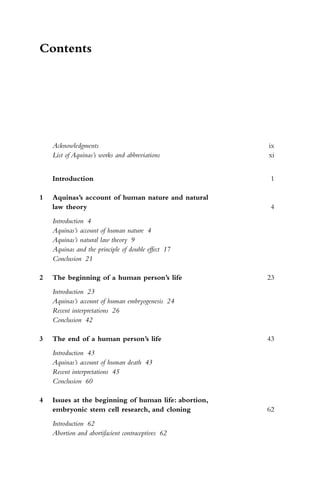
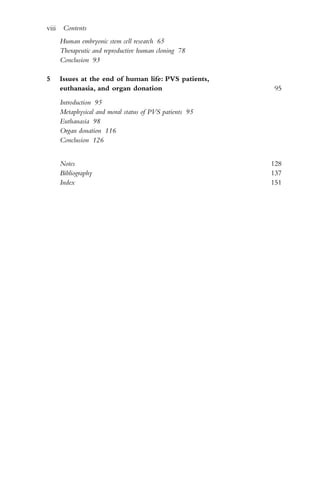

![Islands and China, by several hundred miles, than California, she
had already opened a brisk trade with both, and boasted that she
could sell sugars, teas, silks, rice, etc., cheaper than San Francisco.
Victoria, the British city up on Puget Sound, had once been a
dangerous rival; but Portland had managed to beat her out of sight,
and claimed now she would keep her beaten. It was Yankee Doodle
against John Bull; and, of course, in such a contest, Victoria went to
the wall!
It seemed singular, however, that the chief city of the northwest
coast should be located there—a hundred miles from the sea, and
even then twelve miles up the little Willamette. Your first thought is,
Portland has no right to be at all, where she now is. But, it appears,
she originally got a start, from absorbing and controlling the large
trade of the Willamette, and when the Columbia was opened up to
navigation rapidly grew into importance, by her heavy dealings in
flour, wool, cattle, lumber, etc. The discovery of mines in Idaho and
Montana greatly invigorated her, and now she had got so much
ahead, and so much capital and brains were concentrated here, that
it seemed hard for any new place to compete with her successfully.
[14] Moreover, we were told, there are no good locations for a town
along the Columbia from the ocean up to the Willamette, nor on the
Willamette up to Portland. Along the Columbia, from the ocean up,
wooded hills and bluffs come quite down to the water, and the whole
back country, as a rule, is still a wilderness of pines and firs; while
the Willamette up to Portland, they said, was apt to overflow its
banks in high water. Hence, Portland seemed secure in her
supremacy, at least for years to come, though no doubt at no distant
day a great city will rise on Puget Sound, that will dominate all that
coast, up to Sitka and down to San Francisco. From want of time, we
failed to reach the Posts on Puget's Sound; but all accounts agreed,
that—land-locked by Vancouver's and San Juan islands—we there
have one of the largest and most magnificent harbors in the world.
With the Northern Pacific Railroad linking it to Duluth and the great
lakes, commerce will yet seek its great advantages; and the Boston,
if not the New York, of the Pacific will yet flourish where now are](https://image.slidesharecdn.com/11190470-250607013453-c25edcf2/85/Thomistic-Principles-And-Bioethics-Jason-T-Eberl-Eberl-Jason-T-28-320.jpg)
![other a flower-garden of the most exquisite character, while just
beyond was a vegetable and fruit-garden, that would have
astonished people East. A little water had worked the miracle, and
this a faithful wind-mill continued to pump up, from time to time as
needed. Towards the south, the sand-hills seemed less of an
obstruction, and thither the city was now drifting very rapidly. Real-
estate there was constantly on the rise, and houses were springing
up as if by magic in a night. The city-front, heretofore much
confined, was now extending southward accordingly. It was about
decided to build a sea-wall of solid granite, all along the front, two
miles or more in length, at a cost of from two to three millions of
dollars. This expenditure seemed large; but, it was maintained, was
not too great for the vast and growing commerce of the city.
But a few years before, it was a common thing for ships to go East
empty or in ballast, for want of a return cargo; but in 1867 San
Francisco shipped grain alone to the amount of thirteen millions of
dollars, and of manufactures about as much more. Here are some
other statistics that are worth one's considering. In 1849, then called
Yerba Buena, she numbered perhaps 1,000 souls, all told; in 1869,
nearly 200,000. In 1868, 59,000 passengers arrived by sea, and only
25,000 departed, leaving a net gain of 34,000. The vessels which
entered the bay that year, numbered 3,300, and measured over
1,000,000 tons. She exported 4,000,000 sacks of wheat that year,
and half a million barrels of flour. Her total exports of all kinds were
estimated at not less than $70,000,000, and her imports about the
same. Her sales of real-estate aggregated $27,000,000, and of
mining and other stocks $115,000,000, on which she paid over
$5,000,000 of dividends. The cash value of her real and personal
property was estimated at $200,000,000. She sent away six tons of
gold, and forty tons of silver every month, and in all since 1849 had
poured into the coffers of the world not less than $1,030,000,000.
[15] Her net-work of far-reaching and gigantic enterprises already
embraced the whole Pacific Coast, northward to Alaska and
southward to Panama, while beyond she stretched out her invisible
arms to Japan and China, and shook hands with the Orient.](https://image.slidesharecdn.com/11190470-250607013453-c25edcf2/85/Thomistic-Principles-And-Bioethics-Jason-T-Eberl-Eberl-Jason-T-38-320.jpg)