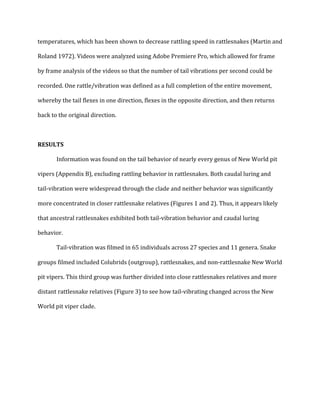
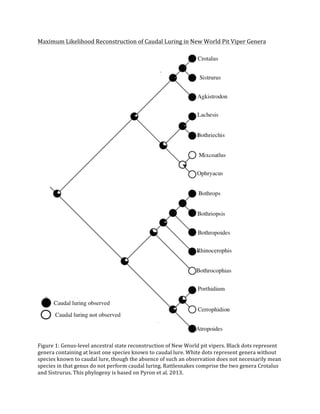
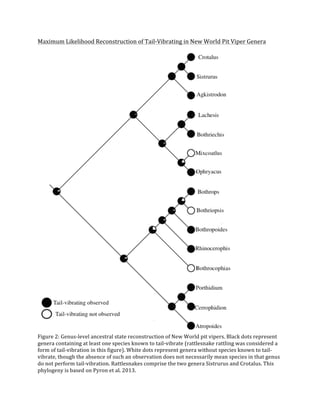
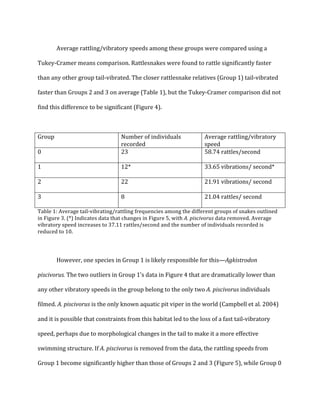
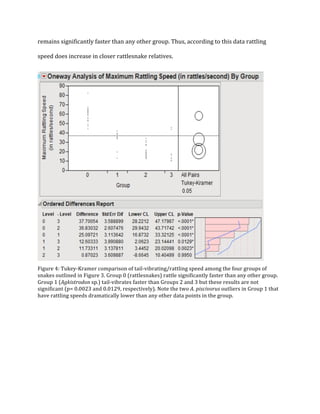
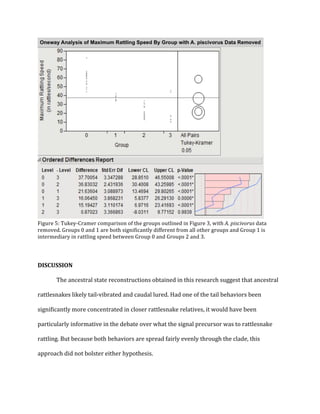
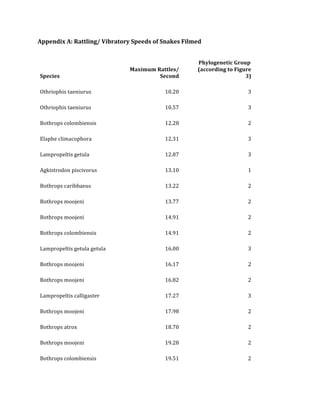
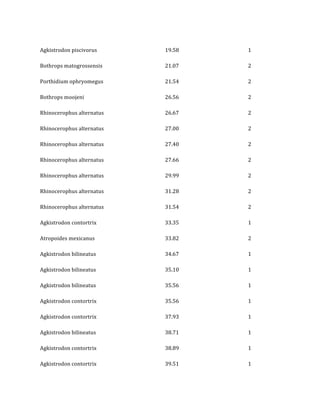
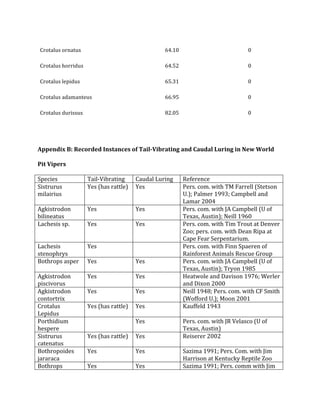
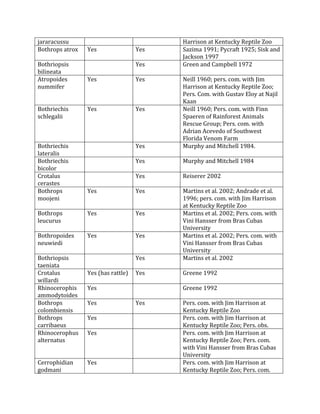
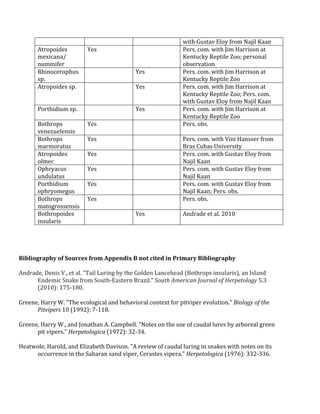
This honors thesis examines the evolutionary origins of the rattlesnake rattle through a phylogenetic analysis of tail behaviors in pit vipers. The author mapped observations of tail-vibrating and caudal luring across the New World pit viper phylogeny. Neither behavior was concentrated in close rattlesnake relatives, suggesting ancestral rattlesnakes performed both. High-speed video analysis found that maximum tail-vibration rates did not consistently change in closer rattlesnake relatives, providing little support for one behavior predominating over the other along the rattlesnake lineage. The results do not strongly support either hypothesized precursor signal.