The Lady in the Looking-Glass: A Reflection
Paragraph 1:
- Comparison between three things (mirror- you being robbed - confessing a crime)
Paragraph 2:
- ‘House was empty’ —> empty of people and happiness
- Gold cabinets —> luxurious
- Nocturnal creatures —> dark, evil —> all the night creatures appear and he is watching
and analysing
- Second paragraph: chaos inside the house, moving all the time, chaos, turmoil, mess
- mind = house
- the chaos inside the house
Paragraph 3:
- shows the chaos in her mind
- outside —> still
- In outside —> you can see life
- Reflected on the mirror —> death (inside herself)
Paragraph 4:
- Steam of consciousness (words that flow, thoughts that flow, flow of speech)
- Inside her mind and her house there is chaos —> technique is chaotic
-
Circular story
3rd person limited narrator (he could never penetrate the character’s mind)
In the end Isabella becomes “the narrative voice”.
-Opposite coexistence-
● Caos inside / perfect outside
● The sun / the clouds
● Death / life
Triggering event:​​ “people should not leave looking-glasses hanging in their rooms any
more than they should leave open cheque books or letters confessing some hideous crime”.
Isabella Tyson: dead person trapped in a living body
Conflict:​​ “nothing stayed the same for two seconds together”.
Rising action:​​ all the description about Isabella
Climatic moment:​​ when she is in front of the mirror and she discovers herself (she realises
that she is empty) Epiphanic moment
Falling action:​​ what we discover about her
Resolution:​​ “people should not leave looking-glasses hanging in their rooms any more than
they should leave open cheque books or letters confessing some hideous crime”.
Narrator: one/people
Isabella➡ any woman in the 19thC
(No say at all)
⬇
Just a product /
Of society / Framed by society
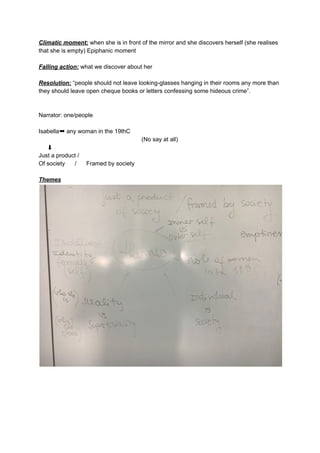
Themes
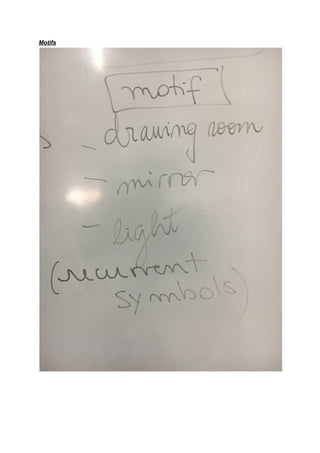
Motifs

Theladyinthelookingglass

  • 1.
    The Lady inthe Looking-Glass: A Reflection Paragraph 1: - Comparison between three things (mirror- you being robbed - confessing a crime) Paragraph 2: - ‘House was empty’ —> empty of people and happiness - Gold cabinets —> luxurious - Nocturnal creatures —> dark, evil —> all the night creatures appear and he is watching and analysing - Second paragraph: chaos inside the house, moving all the time, chaos, turmoil, mess - mind = house - the chaos inside the house Paragraph 3: - shows the chaos in her mind - outside —> still - In outside —> you can see life - Reflected on the mirror —> death (inside herself) Paragraph 4: - Steam of consciousness (words that flow, thoughts that flow, flow of speech) - Inside her mind and her house there is chaos —> technique is chaotic - Circular story 3rd person limited narrator (he could never penetrate the character’s mind) In the end Isabella becomes “the narrative voice”. -Opposite coexistence- ● Caos inside / perfect outside ● The sun / the clouds ● Death / life Triggering event:​​ “people should not leave looking-glasses hanging in their rooms any more than they should leave open cheque books or letters confessing some hideous crime”. Isabella Tyson: dead person trapped in a living body Conflict:​​ “nothing stayed the same for two seconds together”. Rising action:​​ all the description about Isabella
  • 2.
    Climatic moment:​​ whenshe is in front of the mirror and she discovers herself (she realises that she is empty) Epiphanic moment Falling action:​​ what we discover about her Resolution:​​ “people should not leave looking-glasses hanging in their rooms any more than they should leave open cheque books or letters confessing some hideous crime”. Narrator: one/people Isabella➡ any woman in the 19thC (No say at all) ⬇ Just a product / Of society / Framed by society Themes
  • 3.