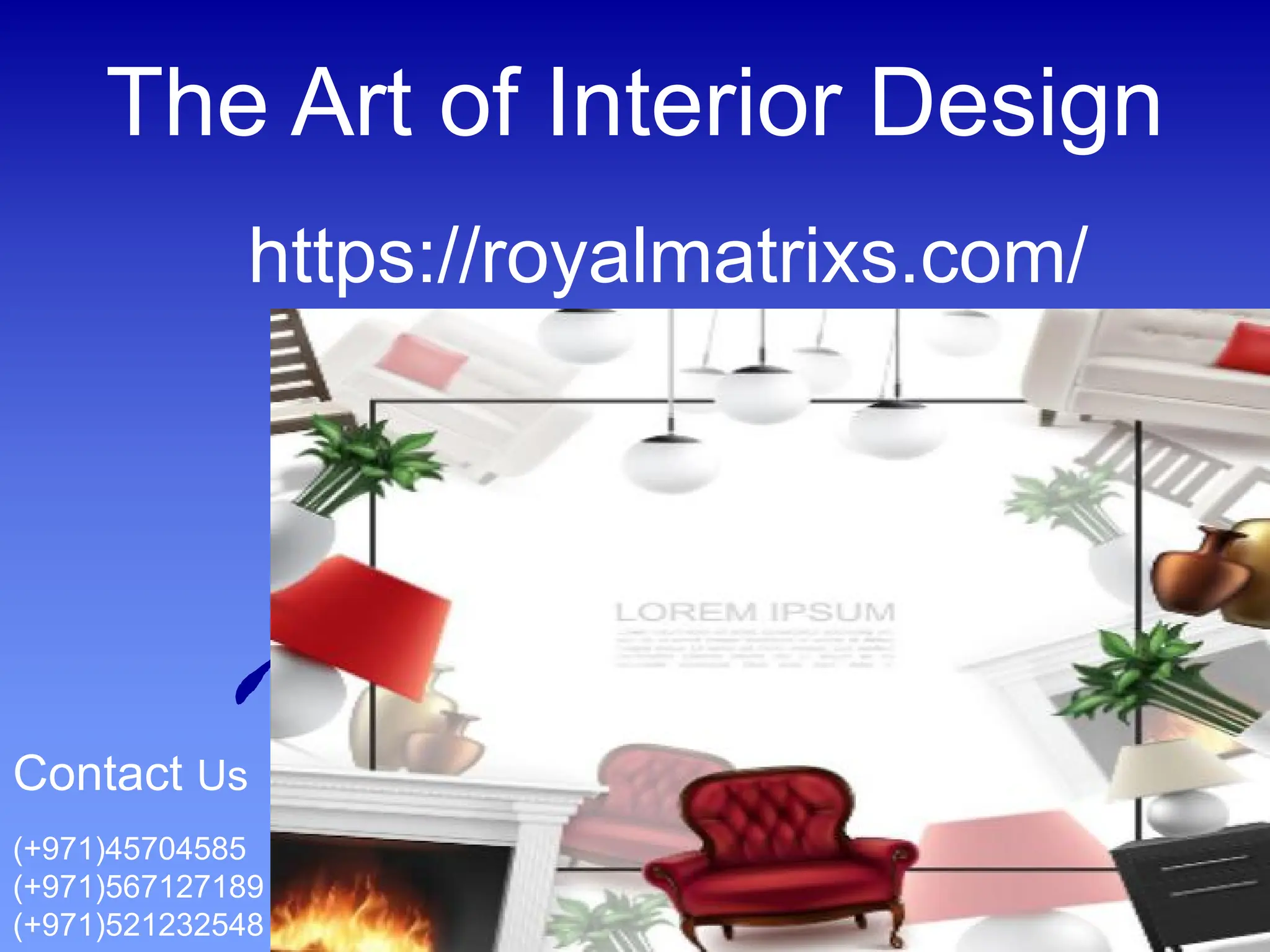
Interior design aims at attaining an interior that is not only good-looking, but also functional and feels good, warm, and comfortable. Every furniture, color and corner serves its purpose.
The Art ofInterior Design
https://royalmatrixs.com/
(+971)45704585
(+971)567127189
(+971)521232548
Contact Us
2.
Introduction
• Interior designis both artistic and
functional. It transforms empty spaces into
comfortable and visually appealing areas
that reflect personality and purpose.
3.
Understanding the Purposeof a Space
• Knowing how a space will be used is key.
Whether it's for work, cooking, or relaxing,
each function requires different design
elements to be successful.
4.
Common Interior DesignChallenges
• Clashing colors, poor lighting, and limited
storage are common issues. Identifying
these early helps in creating effective
solutions.
5.
The Importance ofGood Space
Planning
• Effective space planning ensures comfort
and flow. Even small rooms can feel
spacious with the right layout.
6.
Color Psychology inInterior Design
• Colors affect mood and energy.
Understanding color psychology helps
create balanced and functional
environments.
7.
Lighting: The MostUnderrated Element
• Good lighting transforms a room. Natural
and layered lighting enhances mood,
visibility, and highlights features.
8.
Furniture Selection andPlacement
• Furniture must match the room size,
purpose, and style. Placement affects
comfort and flow.
9.
Mixing Style withFunctionality
• A beautiful room must still be usable.
Combining aesthetics with practicality
solves both style and function issues.
10.
Budgeting and CostManagement
• Smart budgeting prevents overspending.
Prioritize essentials and use affordable
alternatives to maintain style.
11.
Choosing the RightMaterials
• Durable, climate-suitable materials
enhance design longevity. The right
materials save time and effort over time.
12.
Incorporating Personal Style
•Design should reflect personal taste.
Personalization through colors and items
turns a house into a home.
13.
Maximizing Small Spaces
•Use vertical storage, mirrors, and foldable
furniture to make small areas feel larger
and more functional.
14.
Storage Solutions WithoutSacrificing
Style
• Integrate stylish storage like built-ins or
baskets. Effective storage keeps the room
neat without ruining the look.
15.
The Role ofTextures and Patterns
• Mixing textures and patterns adds depth.
Balance is essential to avoid
overwhelming the space.
16.
Eco-Friendly and SustainableDesign
• Use recycled materials and energy-saving
features. Sustainability adds long-term
value and responsibility.
17.
Keeping Up WithTrends (Without
Overdoing It)
• Use trends sparingly on changeable items.
Pair trendy accents with timeless base
designs for longevity.
18.
Hiring a Professionalvs. DIY
• Professionals bring experience, but DIY
can work with guidance. Choose based on
scope and skills.
19.
Importance of MoodBoards and
Visualization
• Mood boards and 3D models help avoid
design mistakes and ensure harmony
before execution.
20.
Cultural and RegionalInfluences in
Design
• Respecting local culture and climate
enhances relevance. Adapt global trends
to regional tastes.
21.
Final Touches: Accessoriesand Decor
• Decor items like rugs and art complete the
design story. Choose meaningful pieces to
avoid clutter.
22.
Conclusion
• Interior designsolves real-life challenges
while adding beauty. It balances style,
comfort, and function to improve our living
and workspaces.