The Technology Trap Capital Labor And Power In The Age Of Automation Frey
The Technology Trap Capital Labor And Power In The Age Of Automation Frey
The Technology Trap Capital Labor And Power In The Age Of Automation Frey
The Technology Trap Capital Labor And Power In The Age Of Automation Frey
The Technology Trap Capital Labor And Power In The Age Of Automation Frey
1.
The Technology TrapCapital Labor And Power In
The Age Of Automation Frey download
https://ebookbell.com/product/the-technology-trap-capital-labor-
and-power-in-the-age-of-automation-frey-21969718
Explore and download more ebooks at ebookbell.com
2.
Here are somerecommended products that we believe you will be
interested in. You can click the link to download.
The Technology Trap Capital Labor And Power In The Age Of Automation
Carl Benedikt Frey
https://ebookbell.com/product/the-technology-trap-capital-labor-and-
power-in-the-age-of-automation-carl-benedikt-frey-51956544
The Technology Trap Capital Labor And Power In The Age Of Automation
Carl Benedikt Frey
https://ebookbell.com/product/the-technology-trap-capital-labor-and-
power-in-the-age-of-automation-carl-benedikt-frey-34756638
The Technology Trap Where Human Error And Malevolence Meet Powerful
Technologies Lloyd J Dumas
https://ebookbell.com/product/the-technology-trap-where-human-error-
and-malevolence-meet-powerful-technologies-lloyd-j-dumas-2024340
Anthology Of Noonomy Fourth Technological Revolution And Its Economic
Social And Humanitarian Consequences Technology And Socioeconomic
Progress Traps And Opportunities For The Future Sergey Bodrunov Editor
https://ebookbell.com/product/anthology-of-noonomy-fourth-
technological-revolution-and-its-economic-social-and-humanitarian-
consequences-technology-and-socioeconomic-progress-traps-and-
opportunities-for-the-future-sergey-bodrunov-editor-46180570
3.
Advances In GeospatialTechnology In Mining And Earth Sciences
Selected Papers Of The 2nd International Conference On Geospatial
Technologies And Earth Resources 2022 Long Quoc Nguyen
https://ebookbell.com/product/advances-in-geospatial-technology-in-
mining-and-earth-sciences-selected-papers-of-the-2nd-international-
conference-on-geospatial-technologies-and-earth-resources-2022-long-
quoc-nguyen-49176004
The Technology Of Joy The 101 Best Apps Gadgets Tools And Supplements
For Feeling More Delight In Your Life Jonathan Robinson
https://ebookbell.com/product/the-technology-of-joy-the-101-best-apps-
gadgets-tools-and-supplements-for-feeling-more-delight-in-your-life-
jonathan-robinson-46845632
The Technology Of Discovery Radioisotope Thermoelectric Generators And
Thermoelectric Technologies For Space Exploration David Frederich
Woerner
https://ebookbell.com/product/the-technology-of-discovery-
radioisotope-thermoelectric-generators-and-thermoelectric-
technologies-for-space-exploration-david-frederich-woerner-49141750
The Technology Of Largescale Zinc Production In Chongqing In Ming And
Qing China Wenli Zhou
https://ebookbell.com/product/the-technology-of-largescale-zinc-
production-in-chongqing-in-ming-and-qing-china-wenli-zhou-49988792
The Technology Of Policing Crime Mapping Information Technology And
The Rationality Of Crime Control Peter K Manning
https://ebookbell.com/product/the-technology-of-policing-crime-
mapping-information-technology-and-the-rationality-of-crime-control-
peter-k-manning-51757238
Contents
Preface ix
Introduction 1
PartI. The Great Stagnation 29
1 A Brief History of Preindustrial Progress 33
2 Preindustrial Prosperity 60
3 Why Mechanization Failed 72
Part II. The Great Divergence 93
4 The Factory Arrives 97
5 The Industrial Revolution and Its Discontents 112
Part III. The Great Leveling 141
6 From Mass Production to Mass Flourishing 147
7 The Return of the Machinery Question 174
8 The Triumph of the Middle Class 189
13.
viii Contents
Part IV.The Great Reversal 223
9 The Descent of the Middle Class 227
10 Forging Ahead, Drifting Apart 249
11 The Politics of Polarization 264
Part V. The Future 297
12 Artificial Intelligence 301
13 The Road to Riches 342
Acknowledgments 367
Appendix 369
Notes 373
Bibliography 425
Index 453
14.
Preface
Future historians maywon
der why we failed to learn from the past.
Historically, when large swaths of the population have found their liveli-
hoods threatened by machines, technological pro
gress has brought
fierce opposition. We are now living through another episode of labor-
replacing progress, and resistance is seemingly looming. According to a
2017 Pew Research Center survey, 85
percent of Americans now
favor
policies to restrict the rise of robots.1
And Andrew Yang has just an-
nounced his bid for the White House in 2020 on a campaign to protect
jobs from automation.2
The under
lying concern
is not hard to under-
stand. Aided by advances in artificial intelligence (AI), robotics, ma-
chine vision, sensor technology, and so on, computers have become
capable of performing a wide range of tasks that could be done only by
humans a few years ago. Top-down programming is no longer required
for automation to happen. In the age of AI, computers can learn them-
selves. What used to be distant moon shoots in computing are now
reality.
In September 2013, my Oxford friend and colleague Michael
Osborne and I published a research paper estimating the potential im-
pacts of advances in AI on jobs. We found 47 percent of American jobs
to be at high risk of automation as a consequence.3
A few months later,
I was invited to speak at a conference in Geneva. I was in good company,
with one former prime minister, one chancellor, and a
couple of
labor
ministers. After my talk, a well-known economist in the audience—let’s
call him Bill—
approached me and dismissively remarked, “Is this not
just like the Industrial Revolution in
England? . . .
Didn’t machines
ix
15.
x Pr eface
displacejobs then as well?” Bill was right, of course, but it was only on
my way back to the airport that I realized how right he actually was in
suggesting that things are no dif
ferent this time around. Some jobs will
dis
appear, but
people
will find new
things to do, as they always have,
and therefore
there is nothing to worry about. Unfortunately, that is
only half the story.
The long-
term economic benefits of the Industrial Revolution, to
which Bill alluded, are uncontested. Before 1750, per capita income in
the world doubled
every 6,000 years; since then, it has doubled
every
50 years.4
But the industrialization process itself was a dif
ferent matter.
While economic historians are still debating whether the pains inflicted
on the workforce by the Industrial Revolution
were worth it, for
later
generationstheysurelywere.Yetmanycontemporarylaborers,whosaw
their livelihoods vanish as their skills became obsolete, would just as
surely have been better off had the industrial world never arrived. As the
mechanized factory displaced the domestic system, traditional middle-
income jobs dried up, the labor share of income fell, profits surged, and
income disparities skyrocketed. Sound familiar? Indeed, so far our age
of automation largely mirrors the early days of industrialization in eco-
nomic terms. It took over half a
century
until average
people saw the
benefits of the Industrial Revolution trickle down. And unsurprisingly,
as many citizens experienced a reversal of fortunes, the consequence
was cascading opposition to machines. The Luddites, as they
were
called, raged against mechanization, and they did everything they could
to resist it. If this is “just” another Industrial Revolution, alarm bells
should be ringing.
The idea underpinning this book is straightforward: attitudes toward
technological progress are shaped by how people’s incomes are affected
by it. Economists think about progress in terms of enabling and replac-
ing technologies.5
The telescope, whose invention allowed astrono-
mers to gaze at the moons of Jupiter,
did not displace laborers in large
numbers—instead,itenabledustoperformnewandpreviouslyunimag-
inable tasks. This contrasts with the arrival of the power loom, which
replaced hand-
loom weavers performing existing tasks and therefore
prompted opposition as weavers found their incomes threatened. Thus,
16.
Pr eface xi
itstands to reason that when technologies take the form of capital that
replaces workers, they are more likely to be resisted. The spread of every
technology is a decision, and if some
people stand to lose their jobs as
a consequence, adoption
will not be frictionless. Pro
gress
is not inevi-
table and for some it is not even desirable. Though it is often taken as a
given,
there is no fundamental reason why technological ingenuity
should always be allowed to thrive. The historical record, as we shall see,
shows that technology’s acceptance depends on whether those affected
byitstandtogainfromit.Episodesofjob-replacingtechnologicalchange
have regularly brought social unrest and, at times, a backlash against
technology itself. In this regard, the age of automation, which took off
with the computer revolution in the 1980s, resembles the Industrial
Revolution, when the mechanized factory replaced middle-income ar-
tisans in large numbers. Now, as then, middle-
income jobs have been
taken over by machines, forcing many people into lower-paying jobs or
causing them to drop out of the workforce altogether.
To capture attitudes toward technology over the centuries, this book
brings together much of the technical economics literature with histori-
cal accounts of technological change and popular commentary. Though
it concerns the future, it is not a prediction of it. Prophets may be able to
foretell the future; economists cannot. The objective here is to provide
perspective, and perspective we get from history. As Winston Churchill
once quipped, “The longer you can look back, the farther you can look
forward.”6
Thus, before looking forward, we shall begin by looking back.
The Industrial Revolution was a defining moment, but few
people
graspeditsenormousconsequencesatthetime.Wearenowinthemidst
of another technological revolution, but fortunately this time around,
we can learn from previous episodes. Bill dismissed our study as Lud-
dite. And indeed, parallels are often drawn between the Industrial Revo-
lution and now to suggest that the Luddites were wrong in trying to halt
the spread of the mechanized factory. Artisan craftsmen, whose feelings
were stronger than their judgment, rebelled against the very machinery
that came to deliver unprecedented wealth for the commoner, or so the
story goes. This story is an accurate description of the long run, but in
the long run we are all dead. Three generations of working Englishmen
17.
xii Pr eface
weremade worse off as technological creativity was allowed to thrive.
And
those who lost out
did not live to see the day of the
great enrich-
ment. The Luddites were right, but later generations can still be grateful
that they
did not have it their way. History is made in the short run
becausethedecisionswemaketodayshapethelongrun.HadtheLuddites
been successful in bringing progress to a halt, the Industrial Revolution
would probably have happened somewhere else. And if not, economic
life would most likely still look similar to the way it did in 1700.
This brings us to the second theme of this book:
whether replacing
technologies will be blocked depends on who stands to gain from them
and the societal distribution of po
liti
cal power. During the Industrial
Revolution, the Luddites and other groups did what they could to stop
the spread of labor-replacing technologies, but they were unsuccessful,
as they lacked political clout. In fact, as we shall see, one of the reasons
why the Industrial Revolution first happened in Britain is that for the
firsttime,politicalpowerwaswiththosewhostoodtogainfrommecha-
nization. The hegemony of landed wealth was challenged by the mobile
fortunes of merchants, who came to form a new industrial class with
growing political influence.7
The mechanized factory was deemed criti-
cal to Britain’s competitive position in trade and thus to merchants’
fortunes, which its government would do nothing to jeopardize. But for
most of history, the politics of progress were such that the ruling classes
had
little to gain and much to lose from the introduction of labor-
replacingtechnology.Theyrightlyfearedthatangryworkersmightrebel
against the government. In the seventeenth
century, for example, the
craft guilds had become a force of growing po
liti
cal power in Eu
rope,
and they vehemently resisted technologies that threatened their liveli-
hoods.Andfearingsocialunrest,Europeangovernmentstypicallysided
with the guilds. Consequently, economic incentives to invest in labor-
saving technology were few. And because mechanization would put the
incomes of parts of the population at risk, prompting social unrest and
possibly a challenge to the po
liti
cal status quo, the ruling classes did
their best to restrict it.
One reason economic growth was stagnant for millennia is that
the world was caught in a technology trap, in which labor-
replacing
18.
Pr eface xiii
technologywas consistently and vigorously resisted for fear of its desta-
bilizing force. Could countries in the industrial West experience a re-
turn of the technology trap in the twenty-
first
century? While it may
seem unlikely, it certainly looks more likely than it did when I began
writing this book four years ago. Proposals to tax robots in order to slow
down the pace of automation now feature in the public debate on both
sides of the Atlantic. And unlike the situation in the days of the Indus-
trial Revolution, workers in the developed world
today have more po
liti
cal power than the Luddites did. In Amer
i
ca, where Andrew Yang
is already tapping into growing anxiety about automation, an over-
whelming majority now
favor policies to restrict it. The disruptive
force of technology, Yang fears, could cause another wave of Luddite
uprisings: “All you need is self-
driving cars to destabilize society. . . .
[W]e’re
going to have a million truck
drivers out of work who are
94
percent male, with an average level of education of high school or
one year of college. That one innovation
will be enough to create riots
in the street. And we’re about to do the same thing to retail workers, call
center workers, fast-
food workers, insurance companies, accounting
firms.”8
The point is not fatalism or pessimism. And it is surely not that we
would be better off slowing down the pace of pro
gress or restricting
automation. The Industrial Revolution was the beginning of an unpre
cedented transformation that benefited everyone over the long run. AI
systems have the potential to do the same, but the future of AI depends
on how we manage the short run. If we seek to understand the chal-
lenges ahead rather than glossing over them in the belief that in the long
run everyone will come out ahead, we will be in a much better position
to shape the outcome. Yang may be extremely unlikely to be elected
president, but as the observant Rana Foorohar writes, automation is
likely to become a major topic in the 2020 election.9
As there has been
a populist backlash against globalization, we should be concerned that
populists might easily and effectively tap into growing anxiety about
automation as well, unless we address it. Fortunately, for all the parallels
between the age of automation and the days of the Industrial Revolu-
tion, whichIshallpushshamelesslythroughoutthisbook,therearealso
19.
xiv Pr eface
manydifferences. But our fascination with our own day and age, and
our preoccupation with both the promise and peril of new technology,
often leads us to think that we are experiencing something entirely new.
Seen through the lens of the long rec
ord of
human history, however,
this seems unlikely to be true.
20.
1
Introduction
Progress would bewonderful—if only it would stop.
—robert musil
When looms weave by themselves, man’s slavery will end.
—aristotle
Had it not been for the deeds of six hundred lamplighters, the streets of
New York City at night in 1900 would have been lit by nothing but the
moon. Equipped with torches and ladders, they were the force ensuring
that pedestrians could see more than a burning cigar a block off when
they left their homes. But on the night of April 24, 1907, most of the
twenty-five thousand gas lights in the streets of Manhattan
were never
lit. The lamplighters, who would normally start carry
ing the torch of
civilization around 6:50 p.m., left the lights out and went on strike. No
vio
lence was reported. But as it grew darker, New Yorkers poured in
complaints to the gas companies and the local police. Policemen
were
sent in to light up the neighborhoods, yet without ladders this proved
a difficult task. Many officers
were too obese to climb the lampposts.
And they got little help from the public. In Harlem, crowds of boys in
ven
ted a new sport: whenever an officer was successful in firing up a
lamp, they would climb the post, turn out the light, and run. On Park
Avenue one youngster was arrested after having put a light out after an
21.
2 Introduction
officer gotit burning. Few lamps burned for long. Even by 9:00 p.m., the
only bright public spots
were a few transverse roads in Central Park,
which had been equipped with electric streetlights.1
Citizens who took up work as lamplighters that year
were unlucky.
Oil and gas lamps had always required personal attention, but with the
mysterious force of electricity, the touch of the lamplighter was no lon-
ger a skill that had any value. Electric streetlights brought light and nos-
talgia. Many citizens still felt that a young man must turn lights on at
dusk and off at dawn. In New York City, lamplighters had become a
neighborhood institution alongside the police and the postman. Their
profession had existed since the first streetlights
were inaugurated in
London in 1414, but it was about to become a distant memory. As the
New York Times noted in 1924, “The lamplighting business in the
great
metropolis has been victim of too much progress.”2
To be sure, the first
electric streetlights in New York City had already been installed in the
late nineteenth century, but they had hardly made lamplighters redun-
dant. Each lamp was equipped with its own switch, which had to be
turned on manually. Early electrification just made the job easier,
as lamplighters no longer had to carry long torches to ignite the lamps.
Still, the men who used to light the gas lamps were not the beneficiaries
of pro
gress. The mastery of light had once allowed a working man
to support his
family. Now, turning on the lights had become a task
so simple that it could be done by young boys on their way home from
school. And as so often in history, simplification was merely a step
toward automation. As electric streetlights were increasingly regulated
from substations, the jobs of lamplighters were cut in large numbers. By
1927, electricity had a monopoly on illumination in New York City, and
the last two gas lamplighters left their craft, ending the story of their
profession and that of the Lamplighters Union.3
Thomas Edison’s invention of the light bulb surely made the world
better and brighter. In his laboratory in Menlo Park, oil lamps and can-
dles still polluted the air on the day of his breakthrough. As William
Nordhaus, winner of the Nobel Prize in Economics in 2018, has shown,
the price of light fell dramatically thereafter, as electricity spread to Chi-
cago’s Acad
emy of
Music, London’s House of Commons, Milan’s La
22.
Introduction 3
Scala, andthe trading floor of the New York Stock Exchange.4
For the
purpose of streetlighting, even the New York lamplighters, some of
whomwereforcedintoearlyretirement,willinglyadmittedthatthenew
system was more expeditious. One lamplighter could at best attend
to some fifty lamps per night. Now, several thousand lamps could be
switched on by one substation employee in seconds. Yet nothing could
be more natural than resisting a threat to one’s livelihood. For most citi-
zens, their skills are their capital, and it is from that
human capital that
they derive their subsistence. Thus, despite all the virtues of the new
system, it is not surprising that electric light wasn’t welcomed by every
one everywhere. When the municipality of Verviers in Belgium an-
nounced the switch to electricity, for example, lamplighters took to the
streets in fear of losing their jobs. To banish the tyranny of darkness,
the local government enrolled another team of lamplighters, but they
were soon attacked by the strikers—
who threatened to keep breaking
lamps till doomsday. Intervention by local police ended with angry
lamplighters raiding police headquarters. The Belgian government had
to call in the army to resolve the situation.5
Some surely paid the price for pro
gress. But over the course of the
twentieth
century, the vast majority of citizens in the West have ac-
cepted technology as the engine of their fortunes. They have recognized
that it improved working conditions by eliminating the most hazardous
and servile jobs. They realized that their wages depended on the use of
mechanical power. And they benefited from the continuous flow of new
goods and services that became available to them. Revolutionary tech-
nologies like automobiles, refrigerators, radios, and telephones—to
name just a few—
were all unavailable to Eu
ro
pean monarchs in the
Renaissance, but by 1950 they were common features of Western life. In
1900, the average
house
wife could still only dream of living like the
upper classes, who had servants to do the most tedious household tasks
for them. In the following de
cades
every home suddenly got equal ac-
cess to the electric servant. Washing machines, electric irons, and a host
of other electric appliances took over hours of drudgery in the home. In
short, the capitalist achievement, as the great economist Joseph Schum-
peter observed,
did not consist of providing “more silk stockings for
23.
4 Introduction
queens butin bringing them within the reach of factory girls in return
for steadily decreasing amounts of effort.”6
It is easy to oversimplify history. However, if there is one predomi-
nant
factor under
lying economic and social change over the past two
centuries, it is surely the advancement of technology. Without techno-
logical change, “capital accumulation would amount to piling wooden
plows on top of wooden plows,” to borrow Evsey Domar’s phrase.7
Economists estimate that over 80 percent of the income differences be-
tween rich and poor countries can be explained by differential rates of
technology adoption.8
And relying on income alone hugely understates
the transformation that has taken place. It is quite extraordinary to
think that in the world my great-
grandmother was born into,
people
could not travel faster than
horses or trains could carry them. The only
escape from darkness during night was the candle and the oil lamp. Jobs
were physically demanding. Few
women did paid work. The home was
the woman’s workplace, where meals were prepared on an open hearth,
and trees had to be chopped down for fuel to cook with and keep the
house warm. And buckets of
water had to be carried indoors from a
streamorwell.Unsurprisingly,peoplefeltmuchenthusiasmforprogress,
nottosayeuphoria.A1915articlepublishedinLiteraryDigestconfidently
predicted that with electrification, it “will become next to impossible to
contract disease germs or get hurt in the city, and country folk will go to
towntorestandgetwell.”9
Edisonhimselfwasconvincedthatelectricity
wouldhelpusovercomethegreatesthurdletofurtherprogress:ourneed
to sleep. Technology was the new religion of the
people.
There was the
sense that there was no problem that technology could not solve.
In hindsight, and in the light of the gains brought by technology, it is
astounding to think that economists of the early nineteenth century like
Thomas Malthus and David Ricardo
did not believe that technology
could improve the human lot. The technological virtuosity of the nine-
teenth and early twentieth centuries took some time to trickle down to
the economics profession. But in the 1950s, Robert Solow, who would
go on to win the Nobel Prize in Economics in 1987, found that virtually
all economic advance over the twentieth
century had been thanks to
technology. And
others documented that
those gains had been widely
24.
Introduction 5
shared.SimonKuznetsfoundthatAmericahadbecomemoreequaland
advanced histheory of cap
i
tal
ist development in which in
equality au-
tomatically decreases along the industrialization path. Nicholas Kaldor
observed that
labor had consistently reaped about two-
thirds of the
gainsofgrowth.AndSolowdevelopedatheoreticalframeworkinwhich
pro
gress delivered equal benefits for
every social group around that
time. Seen through the lens of today, such optimism might seem absurd.
But the economist of the 1950s had much to be optimistic about.
What do the jobs of a few lamplighters
matter if society as a
whole
can become both richer and more equal simply by letting technological
creativity thrive? Many displaced lamplighters probably even found less
hazardous and better-paying jobs. And even if some lost out to technol-
ogy, it seems right that society willingly accepted progress for the many
at the expense of the few. But would we feel that way if the victims of
pro
gress had been more plentiful? What if the majority of replaced
workers were forced to move into jobs that paid less well? After all, the
“special
century” was not just special in that it excelled in economic
growth.10
Just as impor
tant was the fact that almost every
one gained
from pro
gress. While
there
were clearly labor-
replacing technologies,
most
were of the enabling sort. Overall, technology served to make
workers more productive and their skills more valuable, allowing them
to earn better wages. And even those who lost their jobs to the force of
mechanization had a greater abundance of less physically demanding
and better-
paying jobs to choose from as a consequence. In the age of
artificial intelligence (AI), as this book will argue, such optimism about
technology can no longer be taken for granted. Nor has it been the his-
torical norm. Economists of the golden age were right to be optimistic
about the time in which they lived. Their
mistake was in thinking that
what they witnessed would continue in
definitely.
There is no iron law
that postulates that technology must benefit the many at the expense of
the few. And quite naturally, when large swaths of the populace are left
behind by technological change, they are likely to resist it.
25.
6 Introduction
The priceof progress has varied greatly throughout history. Simplifica-
tions of
human advancement like figure 1, which are often used to il-
lustrate the great leap forward, miss all the action. The point is not that
the figure is incorrect. It rightly shows that per capita growth in gross
domestic product (GDP) was stagnant for millennia and took off in an
extraordinary fashion around 1800. Thus, tracking pro
gress purely in
terms of average incomes leads one to conclusions like this one: “Mod-
ern
humans first emerged about 100,000 years ago. For the next
99,800 years or so, nothing happened. . . . Then—just a couple of hun-
dred years ago—
people started getting richer. And richer and richer
still. Per capita income, at least in the West, began to grow at the unpre
cedented rate of about three quarters of a percent per year. A couple of
decades later, the same thing was happening around the world. Then it
got even better.”11
This standard narrative is unfortunate. Because of it, we often forget
that during the extraordinary upward trend in growth that began in
eighteenth-
century
England, millions of
people
were adjusting to
change. And some had more cheerful stories than
others.
There
were
even those who would have been better off had mechanization not been
allowed to progress. Figure 1 leads us to think that everyone living today
must be better off than the previous generation, just as the generation
born in 1800 must have seen staggering improvements in their living
standards relative to those of their grandparents. Figure 1 also suggests
that we
were not very inventive before the eigh
teenth
century. Other
wise, why would growth have been so slow? Yet a closer examination of
pre
industrial times reveals some pathbreaking inventions and ideas.
And if we zoom into dif
ferent episodes of progress, as this book will, we
find that people fared very differently in the winds of change.
The “takeoff” depicted infigure 1began with the arrival of the mecha-
nized factory. Italy could take some credit for its inception. Drawings of
thesilk-throwingmachinesthatledtothefirstfactoriescamefromPied-
mont through an episode of industrial espionage for which Thomas
Lombe received a knighthood from the British government. But
England was first to exploit machinery on a mass scale. Indeed, while
the Industrial Revolution had its origins in silk production, its true
26.
Introduction 7
beginningswereinthecottonindustry.AsthehistorianEricHobsbawm
famouslyremarked,“WhoeversaysIndustrialRevolutionsayscotton.”12
After themechanization of cotton production, change begat change as
a self-
reinforcing cascade of pro
gress created the modern world. As
technology progressed in the early days of industrialization, however,
living standards for many regressed. Our vocabulary bears witness to
the changes that signify the century after 1750. Words like “factory,” “rail-
road,” “steam engine,” and “industry” first emerged then. But so did
“working class,” “communism,” “strike,” “Luddite,” and “pauperism.”
What began with the arrival of the first factories ended not only with
the construction of the railroads, but also with the publication of the
Communist Manifesto. Just as the Industrial Revolution was responsible
for many revolutionary technologies, so it was responsible for many
political revolutionaries along the way.13
500
2,000
3,500
5,000
6,500
8,000
World
GDP
per
capita
(1990
Int$)
0 500 1000 1500 2000
Year
figure 1: World Gross Domestic Product per Capita, 1–2008
Source: J. Bolt, R. Inklaar, H. de Jong, and J. L. Van Zanden, 2018, “Rebasing ‘Maddison’: New
Income Comparisons and the Shape of Long-Run Economic Development,” Maddison Project
Working Paper 10, Maddison Project Database, version 2018.
27.
8 Introduction
The pointis not to downplay the significance of the British Industrial
Revolution. It is rightly regarded as the main event in
human history
because it eventually allowed humanity to escape the life that Thomas
Hobbes described as “nasty, brutish, and short.”14
Eventually was none-
theless a long time. The “Great Escape,” as the economist Angus Deaton
has called it, didn’t immediately turn the cottage of the commoner into
a Garden of Eden.15
During the early days of industrialization, the lives
of many commoners got nastier, more brutish, and shorter. Material
standards and living conditions for the masses in Britain failed to
improve before 1840. The poet William Blake’s phrase “dark, satanic
mills” capturesthelongworkinghoursinthefactoriesandthehazardous
conditionsthatembodiedtheindustrializationprocess.16
Inmajorindus-
trialcitieslikeManchesterandGlasgow,lifeexpectancyatbirthwassome
staggering ten years shorter than the national average. The wages that
workers took home in industrial cities hardly compensated for the dirty
and unhealthy conditions in which
people lived and worked. Although
output expanded, the gains from growth
didn’t find their way into the
pockets of ordinary people. Real wages were stagnant or even falling for
some. The only
thing workers saw expanding was the number of hours
spent in the “dark, satanic mills.” The gains of pro
gress overwhelmingly
went to industrialists, who saw their rate of profit double. Consequently,
the average amount of food consumed in Britain during the Industrial
Revolution
did not increase
until the 1840s. The share of
house
holds
with a surplus for nonessentials declined among low-wage agricultural
laborersandfactoryworkersoverthefirsthalfofthenineteenthcentury.
And poor nutrition meant that
people grew shorter by the generation.
These were the glorious decades in which modern growth began.17
The cause of the living standards crisis in Britain was the downfall
of the domestic system of production, which was gradually displaced
by the mechanized factory. Artisan craftsmen
were highly skilled and
earned decent wages. But with the rise of the factory, one artisan
after
another saw his income vanish. And while new jobs were created in the
factories, spinning machines
were specifically designed for
children,
who could do the job for a fraction of the cost of adults and thus became
a growing share of the workforce. They were the robots of the Industrial
28.
Introduction 9
Revolution. Besidesworking for very little, they did not have any bargain-
ing power and were easy to control.18
As the old artisanal skills were made obsolete by advances in mecha-
nization, adult male workers lost out: the share of children workers rap-
idly expanded, reaching about half of the workforce employed in textiles
duringthe1830s.Thesocialcostsinflictedupontheworkforce—including
vanishingincomes,deterioratinghealthandnutrition,forcedoccupational
and geo
graphi
cal migration, and in some cases unemployment—
were
not negligible. Not to mention the suffering of children. In an interview,
Robert Blincoe, a former child laborer, stated that he would rather have
his children deported to Australia than let them experience life working
in the factories.19
But from a purely economic point of view, adult arti-
sans were without question the prime victims of industrialization. And
there were many of them. As one leading scholar of the Industrial Revo-
lution, David Landes, writes, “If mechanization opened new vistas of
comfort and prosperity for all men, it also destroyed the livelihood of
some and left
others to vegetate in the backwaters of the stream of
progress. . . . The victims of the Industrial Revolution numbered in the
hundreds of thousands or even millions.”20
Historians have puzzled over why ordinary En
glish
people would
voluntarily agree to take part in an industrialization pro
cess that
reduced their living standards. The
simple answer is that they
didn’t.
British governments at times clashed with workmen raging against the
machine. But their efforts
were unsuccessful, as British governments
took an increasingly stern view of anything that might diminish
England’s competitive position in trade. All the Luddites achieved dur-
ing the risings of 1811–16 is prompting the government to deploy an even
larger army against them: the twelve thousand troops sent to resolve the
machinery riots amounted to more
people than the army Wellington
took into the Peninsular War against Napoleon in 1808.
As we shall see, before the late nineteenth century, resistance to tech-
nologies that threatened workers’ skills was the rule rather than the
exception.WhilemuchcommentarytendstofocusontheLudditeriots,
they
were just part of a long wave of riots that swept across Eu
rope and
China. And the history of opposition to labor-
replacing technologies
29.
10 Introduction
goes backmuch further. Vespasian, the emperor of Rome in 69–79, re-
fused to adopt machinery for transporting columns to the Capitoline
Hill due to employment concerns. And in 1589, Elizabeth I famously
refused to grant William Lee a patent for his stocking-
frame knitting
machine, fearing unemployment as a result of the technological ad-
vance. The gig mill, which saved considerable amounts of
labor, had
been prohibited in Britain in 1551. And elsewhere in Europe opposition
was just as fierce. Many European cities banned automatic looms in the
seventeenth century. Why? Where they were adopted (for example, in
the city of Leiden), riots followed. The ruling classes feared that angry
workers like
those in Leiden would start to rebel against the govern-
ment. And this concern was by no means just Eu
ro
pean. One reason
whyChinawassolatetoindustrialize,economichistorianshaveargued,
is that re
sis
tance to technologies that threatened workers’ skills per-
sisted up
until the closing de
cades of the nineteenth
century, when
imported sewing machines
were destroyed by native workers. In fact,
the British government was the first to side with the pioneers of indus-
try rather than rebelling workers, providing one explanation for why
Britain was the first country to industrialize.21
Back in 2012, Bill Gates took note of what has been called the paradox
of our age: “Innovation is faster than ever before . . . yet Americans are
more pessimistic about the future.”22
Indeed, according to the Pew Re-
search Center, just over a third of Americans still believe that their
children
will be better off financially than they
were.23
If the past few
de
cades are any guide to the
future, some
people surely have much to
be pessimistic about. Only half of Americans born in 1980 are econom
ically better off than their parents, compared to 90percent of those born
in 1940.24
Despite this fact, slogans like “the greatest country on earth”
continuedtobethenorminpresidentialelectioncampaigns.Itwasonly
in 2016 that the Republican presidential candidate won with the slogan
“Make Amer
i
ca
Great Again.” At last a candidate spoke the truth—or
30.
Introduction 11
so itmust have felt in
those parts of the country where opportunities
had long since faded.
As the Industrial Revolution illustrates, the Gates paradox is not
really a paradox. Like in the early days of industrialization, workers
today are no longer reaping the gains of pro
gress. Worse, many have
been left
behind in the backwaters of pro
gress. In the same way that
opportunity dried up for middle-
income artisans as a consequence of
the industrialization pro
cess, the age of automation has meant dimin-
ishing opportunities for the American
middle class. Like the victims
of the early factories, many Americans have adjusted to the computer-
ization of work by unwillingly shifting into lower-
paying jobs or have
failed to adjust and dropped out of the workforce completely. And simi-
lar to the victims of the factories, the losers to automation have primar-
ily been men in the prime of life. Up until the 1980s, manufacturing jobs
allowed ordinary working men to attain a middle-class lifestyle without
going to college. As employment opportunities in manufacturing re-
ceded, a path of upward mobility was closed to many citizens.25
What’s more, the adverse consequences of automation have so far
primarily been a local phenomenon. Focusing too closely on national
statistics disregards the fact that if you put one hand in the freezer and
the other on the stove, you should feel quite comfortable on average.
The same was true of the Industrial Revolution. While the local cloth
industry in Northamptonshire was left in ruins, factories
were almost
unheard of in 1800 in the pastoral areas of southern England, where Jane
Austen resided. This time around, the social and economic fabric has
been torn apart in old manufacturing cities, where automation has
deprived middle-
aged men of opportunity. Communities that have
seen manufacturing jobs vanish, due either to automation or globaliza-
tion, have endured per
sis
tent increases in joblessness. They have also
seen public services deteriorate, greater increases in property crime and
violent crime, and worse health outcomes. They have seen mortality
rates increase due to suicide and alcohol-related liver disease. They have
seen marriage rates collapse, leaving more
children in single-
parent
house
holds, with dismal
future prospects. Rates of social mobility are
31.
12 Introduction
significantly lowerin places where middle-class jobs have evaporated.26
And where jobs have dis
appeared,
people have become more likely to
vote for populist candidates. Indeed, studies have shown that both in
Amer
i
ca and in Eu
rope, the appeal of pop
u
lism has been greater where
jobshavebecomemoreexposedtoautomation.27
Justlikethedaysofthe
Industrial Revolution, the losers to technology are demanding change.
We should have seen it coming. In 1965, when the first electronic
computers entered offices, Eric Hoffer warned in the New York Times
that “a skilled population deprived of its sense and usefulness would be
the ideal setup for an American Hitler.”28
Perhaps somewhat ironically,
Hitler and his government
were well aware of the disruptive force of
labor-replacing technology. His appointment as chancellor of Germany
on January 30, 1933, heralded the return of preindustrial policies, which
sought to restrict the use of machinery. In Danzig, where the Nazi Party
won over 50 percent of the votes that year, such efforts became a major
priority. To deal with the issue of technological unemployment, the
Senate decreed that machinery would not be installed in factories with-
out special permission of the government. Failure to comply would lead
to heavy penalties or even being forced to shut down by the govern-
ment.29
In August 1933, Alfred von Hodenberg, leader of the Nazi Labor
Front,madeclearthatmachineswouldnotbeallowedtothreatenworkers’
jobs in the
future. “Never again,” he reassured the public, “must the
worker be replaced by a machine.”30
Technology at Work
Our path to riches is best understood in terms of the adoption of a
steady flow of labor-saving technologies over the centuries. As the econ-
omist Paul Krugman once quipped, “depressions, runaway inflation, or
civil war can make a country poor, but only productivity can make it
rich.”31
Productivity growth happens when technology allows us to pro-
duce more with less. If the adoption of machines makes
labor produc-
tivity grow by 2.5 percent per year, output per person will double every
twenty-eight years. The notion that the product of an hour of work can
double in just about half of a working lifetime is surely sufficient
32.
Introduction 13
justification forthe disruptive force of technology, which has shrunk
that timescale visibly. But while productivity is a prerequisite for grow-
ing incomes for the commoner, it is not a guarantee of such growth.
And, if machines replace workers in existing functions, some
people
may be left worse off as technology progresses. Despite this fact, text-
bookeconomicstreatstechnologicalprogressasaParetoimprovement:
in other words, the assumption is that when machines take workers’
jobs, new and better-
paying jobs become available for every
one at the
same time. As evidenced by the historical rec
ord, such models are ut-
terly irrelevant for understanding episodes when technological progress
is
labor replacing.
These technologies have brought higher material
standards but also worker dislocation.
The extent to which labor-saving technologies will cause dislocation
dependsonwhethertheyareenablingorreplacing.Replacingtechnolo-
gies render jobs and skills redundant. Enabling technologies, in con-
trast, make
people more productive in existing tasks or create entirely
new jobs for them. Thus, the term “labor saving” has two closely associ-
ated but not identical meanings, and the difference between the two has
impor
tant implications for
labor.32
As the economist Harry Jerome
noted in 1934, if the 1929 tonnage of iron and steel were produced with
the technology available in 1890, a million and a quarter workers would
have been needed instead of four hundred thousand. Does this mean
thateighthundredthousandmenhadlosttheirjobsby1929?Surelynot.
At the onset of the Great Depression, employment in steel had grown.33
Better technology reduced the number of workers required to produce
agivenamountofsteel,butthesteadilygrowingdemandforsteelmeant
that the number of jobs in the industry grew, too. Clearly, the nature of
steel production changed as the industry mechanized, but
there was
prob
ably
little job displacement. Unlike replacing technologies, which
take over the tasks previously done by labor, augmenting technologies
increase the units of a worker’s output without any displacement occur-
ring, unless demand for a given product or service becomes saturated.34
There are many examples of enabling technologies. Computer-
aided
designsoftwarehasmadearchitects,engineers,andotherskilledprofes-
sionals more productive by helping rather than replacing them.
33.
14 Introduction
Statistical computerprograms like Stata and Matlab have made statisti-
cians and social scientists better analysts without reducing the demand
for them. And office machines like the typewriter created clerical jobs
that did not previously exist.
To see how outcomes differ for labor when a technology is labor re-
placing, consider the arrival of the elevator. Without elevators,
there
would be no skyscrapers and no elevator operators. When the first eleva-
torsarrived,moreelevatorsmeantmorejobsforpeoplewithagoodsense
of timing, capable of stopping the elevator when it was aligned with the
floor. Things changed when a replacing technology emerged: the auto-
matic elevator, which got rid of the human operator. All of the sudden,
the job of elevator operator disappeared, even though we now use eleva-
torsmorethanever.Thedemandforelevatorshasevidentlynotbecome
saturated, just as we still demand many manufactured goods. But in a
world where the jobs of machine operators have been taken over by
robots, having more automobiles leave the factories does not inevitably
mean more jobs for machine operators. Thus, it stands to reason that
the effects of replacing technologies on jobs and wages will be very dif
fer
ent from
those of enabling technologies. Yet
until recently, econo-
mists
did not make such distinctions. Since the pioneering work of
Jan Tinbergen—
the first winner of the Nobel Prize in Economics—
economists have tended to conceptualize technological pro
gress in a
purely augmenting way. According to the augmenting view of progress,
new technologies
will help some workers more than
others but
will
never replace labor, meaning that workers cannot see their wages fall as
technology progresses. This was a reasonable approximation of eco-
nomic real
ity for much of the twentieth
century. Indeed, most eco-
nomic theory reflects the patterns of the par
tic
u
lar times economists
observe around them. The work of Tinbergen, which was published in
1974, before the age of computerization, was no exception. For much of
the twentieth
century, wages
rose at all levels. What makes economic
analy
sis hard is that
there are few models that apply to
every time and
place.
The fact that wages have been falling for large groups in the American
labor market for more than three decades has prompted economists to
34.
Introduction 15
think differentlyabout technological change. Pathbreaking work by
the economists Daron Acemoglu and Pascual Restrepo provides a help-
ful formal model for understanding periods of falling wages, as well as
times when wages are growing for every
one, by conceptualizing tech-
nological progress as either enabling or labor replacing. This book looks
atthehistoricalrecordthroughthelensoftheirtheoreticalframework.35
The notion of machines being capable of taking over
human work is
important, because it means that technology can reduce wages and em-
ployment
unless it is counterbalanced by other economic forces. Even
though growing productivity still raises total income—
offsetting the
displacement effect in part, as more spending in the economy creates
other jobs elsewhere—it does not fully counterbalance the negative ef-
fects of technological displacement. In Acemoglu and Restrepo’s frame-
work, the creation of new tasks is essential to raise the demand for labor,
workers’ wages, and the share of national income going to labor rather
than
owners of capital. How workers fare, in other words, in large part
depends on the race between task replacement and new task creation,
and how easily workers can transition into emerging jobs.
Historically, as we
shall see, the extent to which technology is
labor
replacing or enabling has varied greatly, leading to very dif
fer
ent out-
comes for average
people. When new technologies replace workers in
existing tasks, those workers’ skills become obsolete. Even when tech-
nologies are replacing for some but augmenting for
others, workers
might suffer hardships. In recent years, the creation of new jobs for ro-
botics engineers has provided little relief to those who lost their jobs to
industrial robots on the assembly lines. The arrival of the power loom, in
similar fashion, replaced the jobs of hand-loom weavers, while creating
new jobs for power-
loom weavers. But while hand-
loom weavers’ in-
comes diminished almost immediately, it took decades for the wages of
power-loom weavers to rise, as they had to acquire new skills and a new
labor market had to develop for those skills.36
Because replacing tech-
nological progress often comes with what Schumpeter called a “peren-
nial gale of creative destruction,” there are always winners and losers.37
The overwhelming focus of popu
lar commentary on unanswerable
questions like whether there will be enough jobs in 2050 is unfortunate.
35.
16 Introduction
In fact,it misses the point. Even if new jobs emerge as old ones are lost
to automation, that might be little reassurance for the person who loses
his or her job. Modernist writers didn’t fail to take note of the automa-
tion dilemma. In Ulysses, for example, James Joyce’s hero Leopold
Bloom points out that “a pointsman’s back straightened itself upright
suddenly against a tramway standard by Mr. Bloom’s window. Couldn’t
they invent something automatic so that the wheel itself much handier?
Well but that fellow would lose his job then? Well but then another fel-
low would get a job making the new invention?”38
A new job was created for someone to make the new invention. But
the someone was “another fellow”: making the invention required a
dif
ferent breed of worker. Both the Industrial Revolution and the com-
puter revolution primarily created jobs for another fellow, whose skills
could not have been more dif
ferent from those of the displaced worker.
The first episode of industrialization is best described by the wit of the
economic historian Gavin Wright, who reckoned that “in the limit we
could devise an economy in which technology is designed by geniuses
and operated by idiots.”39
Early factory machines, it is true, were simple
enough to be operated by young boys. And as a result, middle-income
artisan craftsmen
were replaced by
children working for a fraction of
their wages in the factories. The difference this time around is obviously
that children are no longer needed to operate the machines. Computer-
controlled machines can run on their own. Yet computerization has also
given rise to new tasks, requiring an entirely dif
fer
ent set of skills like
those of audiovisual specialists, software engineers, database adminis-
trators, and so on. Thus, we seem to have devised an economy designed
by geniuses to be operated by other geniuses. Some jobs have become
automated, but computers have also led to greater demand for workers
with highly developed cognitive skills. Indeed, a common misconcep-
tion is that automation is an extension of mechanization. Automation
has replaced precisely the semiskilled machine-tending jobs that mech-
anization created, which once supportedalargeandstablemiddleclass.
Broadly speaking,
those fortunate enough to have gone to college have
thrived in the age of computers. But as middle-
income jobs have dried
up, many semiskilled workers have struggled to find decent job. During
36.
Introduction 17
the IndustrialRevolution as well as the more recent revolution in com-
puting,middle-agedmeninmiddle-incomejobswerethevictimsofpro
gress, because their skills were unsuitable for the new jobs that emerged.
When technological change is labor replacing, how workers fare de-
pends on their other job options. In Henrik Ibsen’s play The Pillars of
Society, written in 1877, parallels are drawn between the economic con-
sequences of the Industrial Revolution and
those of Johannes Guten-
berg’s printing press. One of the characters, Konsul Bernick, assumes
that the fates of artisan craftsmen in the nineteenth century were similar
to
those of copyists when the printing press arrived, suggesting that
“when printing was discovered, many copyists had to starve.” The ship-
yard foreman Aune bluntly replies, “Would you have admired the art so
much,Consul,ifyouhadbeenacopyist?”40
ThoughIbsen’squestionwas
meant as a rhetorical one, copyists rarely opposed printing technology.
As we
shall see in chapter 1, unlike weavers—
who suffered hardships
from the mechanization of industry—copyists and scribes
were more
likelytobenefitfromGutenberg’sinvention.Manyofthemdidnotmake
a living producing manuscripts. To them, the movable printing press
didn’t mean any loss of income. And those who copied books for a liv-
ing
either specialized in shorter texts that
were uneco
nom
ical to pro-
duce with printing technology or became
binders and designers of
books. Thus, while weavers and other craftsmen, who faced worsening
job options, smashed textile machines all over Europe in the eighteenth
and nineteenth centuries, copyists rarely resisted the printing press in
the late 1400s. Of course, the art of printing
was not
adopted with the
same enthusiasm everywhere. Fearing that a literate population would
undermine his leadership, Sultan Bayezid II issued an edict banning
printing in Arabic in the Ottoman Empire in 1485, with dismal long-
lasting consequences for literacy and economic growth in the region.41
But in the light of the hostility to replacing technologies that was so
widespread in Eu
rope before the twentieth
century, episodes of
labor
unrest accompanying the adoption of the printing press were few.
Thecaseoftheprintingpressillustratesabroaderpoint:whenpeople
have good alternative job options, they are less likely to rebel against
machines. Job displacement is never painless, but if people have reason
37.
18 Introduction
to believethat they will eventually come out ahead, they are more likely
to accept the endless churn in the
labor market. As we
shall see, the
explosivegrowthofmiddle-classjobsinthemass-productionindustries
ofthetwentiethcenturywasonekeyreasonmechanizationwasallowed
to progress uninterrupted: an abundance of manufacturing jobs was the
best unemployment insurance
people could get. In this period, a wave
of enabling technologies and soaring productivity growth allowed
working-
class
people to climb the economic ladder. Automobiles
and electricity spawned new gigantic industries, and with more capital
tied up in machinery, firms began to raise wages to keep workers from
leavingforbetterjobselsewhere.Peopleatthetopandthebottomofthe
income distribution saw their standard of living improve enormously,
and, consequently, middle-
class
people accepted the reshufflings in the
labor market with the expectation that they would benefit too.
Another reason
people may not oppose technologies that threaten
their jobs is obviously that almost everyone will benefit in their capac-
ity as consumers. Even
those who worked on Ford’s and General Mo-
tors’s assembly lines have to some extent benefited from the cheapening
of automobiles as robots have taken their jobs. Yet machines only
cheapen goods and ser
vices
after they have been introduced, so that if
a technology is
labor replacing, consumer benefits
will arise only
after
displacement has already occurred. More impor
tant, the individual
costs from displacement, in terms of distress and lost income,
will be
much greater than any consumer benefits
unless
those workers have
decent outside job options. The cheapening of textiles, for example, did
not provide sufficient relief to the Luddites, who rioted against the in-
troduction of machinery despite the consumer benefits brought by
mechanization. The point is surely not that replacing technologies will
be bad for people over the long run. The very opposite is true. But that
alone
does not provide much relief for
those who see their jobs dis
appear, unless they can expect to find new work of equal pay.
Most economists
will acknowledge that technological pro
gress can
cause some adjustment problems in the short run. What is rarely noted
is that the short run can be a lifetime. And ultimately, the long run de-
pends on policy choices made in the short run. The mere existence of
38.
Introduction 19
better machinesis not sufficient for long run growth. As Daron Acemo-
glu and the political scientist James Robinson point out in Why Nations
Fail, economic and technological development will move forward only
“ifnotblockedbytheeconomicloserswhoanticipatethattheireconomic
privileges will be lost and by the political losers who fear that their politi
cal power
will be eroded.”42
Workers alone might strug
gle to block new
technologies effectively. But the ruling elites slowed labor-replacing pro
gress for millennia.43
Po
liti
cal incumbents, for the most part, had
little
interest in the destabilizing process of creative destruction, as groups of
economicloserscouldchallengethepoliticalstatusquo.Astheeminent
economic historian Joel Mokyr has argued in separate accounts:
Anychangeintechnologyleadsalmostinevitablytoanimprovement
in the welfare of some and a deterioration in that of
others. To be
sure, it is possible to think of changes in production technology that
are Pareto superior, but in practice such occurrences are extremely
rare. Unless all individuals accept the verdict of the market outcome,
the decision
whether to adopt an innovation is likely to be resisted
by losers through non-market mechanism and political activism.44
Britain’s edge during the Industrial Revolution did not lie in the ab-
senceofresistanceagainsttechnologicalchange,butinitsgovernment’s
consistently and vigorously siding with the “party” for innovation. . . .
Re
sis
tance to technological pro
gress in France appears to have been
more successful than in Britain, and perhaps this difference offers an-
other explanation why Britain’s Industrial Revolution was first.45
AsIwillargueinasimilarvein,theearlydecisionof Britishgovernments
to consistently squash any resistance to mechanization helps explain
whyBritainwasthefirsttoindustrialize.Thisdecision,asweshallsee,was
much the result of a shift in political power. As the discovery of the New
World gave rise to international trade and commerce, the power of
landed wealth was challenged by a new class of “chimney aristocrats,”
who stood to gain from mechanization.46
And more broadly, cascading
competition among nation-states made it harder to align technological
conservatismwiththepoliticalstatusquo.Theoutsidethreatofpolitical
replacement became greater than the threat of rebelling workmen from
39.
20 Introduction
below. Evenwhen workers managed to solve the so-
called collective
action prob
lem and take to the streets in protest, their case was hope-
less. They
did not stand a chance against the British army. Many Lud-
dites ended up being imprisoned and then sent to Australia.
The Reform Acts of 1832 and 1867 were surely important events, but
they did not turn Britain into a liberal democracy. Property rights were
regarded as most impor
tant, and civil rights and po
liti
cal rights
were
still lagging behind. Few people had access to education, and property
ownership remained a requirement for voting—meaning that most or-
dinarypeoplewerepoliticallydisenfranchised.HadBritainbeenaliberal
democracy, the case of the Luddites would surely have been much less
hopeless. As Wassily Leontief, winner of the Nobel Prize in Economics,
oncejoked,“IfhorsescouldhavejoinedtheDemocraticpartyandvoted,
whathappenedonfarmsmighthavebeendif
ferent.”47
Horsesmighthave
used their po
liti
cal rights to bring the spread of the tractor to a halt. In
similar fashion, if the Luddites had had their way, the Industrial Revolu-
tion
would not have happened in Britain. Of course,
there is no way of
knowing exactly what would have happened; all we know is that many
citizens tried to bring progress to halt by every means they had.
The Plan of the Book
In the age of AI, as we shall see, technological progress has become in-
creasingly
labor replacing. Thus, to understand the
future of pro
gress,
we must understand its political economy. The notion that technology
can leave groups in the labor market worse off for the rest of their work-
ing lives is quite sufficient to justify their resistance to automation. And
for governments seeking to avoid social unrest, it is also quite sufficient
to justify restricting some technologies. For these reasons, the long run
cannot be disconnected from the short run. Our long-
run trajectories
can be interrupted and changed by short run events, with dismal con-
sequences for our long-term prosperity.
We all know that
human history has proceeded very differently in
dif
ferent parts of the world. Economists and economic historians have
devoted considerable attention to the question of why some places have
40.
Introduction 21
grown richwhile
others have remained poor. This book
is not quite as
ambitious. It examines why
people have fared differently in the places
of the world where the frontiers of technology have been allowed to
progress throughout the centuries. The relationship between new tech-
nologyandthewealthofhumanshasneverbeentidyandlinear.History
never quite repeats itself. But as Mark Twain noted, sometimes it surely
rhymes.AsIwrite,middle-incomejobsaredisappearing,andrealwages
are stagnating, just like in the classic period of industrialization. Of
course, the computer technologies of the twenty-first century could not
be more dif
fer
ent from the machines that made modern industry. But
many of their economic and social effects now look exceedingly similar.
The Industrial Revolution has made us infinitely wealthier and better
off over the long run. AI, similarly, has the potential to make us much
wealthier, but just as in the Industrial Revolution, there is concern that
it is leaving large swaths of citizens behind, possibly causing a backlash
against technology itself. Many observers of current affairs have pointed
out that the recent populist re
nais
sance cannot be explained without
reference to the losers of globalization. But technology has been just as
important in driving down the wages of the middle class. And we have
seen nothing yet. As AI becomes more pervasive, so
will automation
and its effects.
Economic historians have long debated why the technology boom
of the 1760s in Britain took so long to produce higher standards of liv-
ing, and economists are now engaged in a strikingly similar debate
about why staggering advances in automation so far have failed to show
results in the pockets of average people. This book is an attempt to con-
nect two large bodies of scholarly research to put the Gates paradox in
historical perspective. It tracks the expanding frontiers of technology
from the invention of agriculture to the rise of AI, tracing the fates of
humans as technology has progressed. I should warn the reader that this
is not a balanced account. A book of this scope must be selective and
carefully prioritize what it discusses. The history of technology is the
subject of an extensive literature that I cannot do justice to here. Rather,
byreviewingsomeofthemostimportanttechnologicaladvances,Ishall
try to convince the reader that the price of pro
gress paid by the
41.
22 Introduction
workforce hasvaried greatly in history, depending on the nature of tech-
nological change, and has increased in the twenty-first century—which
explains many of the discontents people now face.
The reader should also be aware that because the Industrial Revolu-
tion happened in Britain and technological leadership has remained
firmly in Western hands since then (though it remains to be seen for
how long that will be the case), this book is a Western-biased account.
The West caught up with more advanced Islamic and Oriental civiliza-
tions only in the fifteenth century. But to paint the contrast of the West
before and after the Industrial Revolution, I shall primarily focus on the
Western experience. I should also say that most of the history in this
book concerns Britain and later America. The simple reason is that the
Industrial Revolution first happened in Britain. Amer
i
ca took over
world technological leadership during the so-
called Second Industrial
Revolution,andI shallprimarilyfocusontheU.S.experiencethereafter.
As the economic historian Alexander Gershenkron noted, catch-up
growth, which rests on adopting existing technologies in
ven
ted else-
where, is fundamentally dif
ferent from growth that rests on expanding
the frontiers of technology into the unknown, and this book focuses
on the latter. Some readers may also find it disappointing that many
majortechnologicalbreakthroughsarenotevenmentioned.Totakejust
one example, the rise of modern medicine has arguably been the great-
est boon to humanity but is shamelessly left out
here. Technological
developments in recent years, including advances in AI, mobile robot-
ics, machine vision, 3-D printing, and the Internet of things, are all labor
saving. The purpose of this book is to shed light on pre
sent times and
challenges facing the workforce
today, and for this reason labor-
saving
technology will receive the bulk of the attention.
It must also be emphasized that though the focus in the later chapters
is much on the American experience, technology is not a soloist but
part of an ensemble. It interacts with institutions and other forces in
society and the economy, which explains why the rise of economic in
equality has been less dramatic in other industrial nations over the past
three de
cades. Yet stagnant wages, disappearing middle-
income jobs,
and a falling
labor share of income are common features of Western
42.
Introduction 23
countries, andthey are all related to trends in technology. While
there
can be no doubt that numerous forces have shaped the income distribu-
tion, my focus
here is on the long run rather than cyclical
matters, and
it is about the 99
percent rather than the top 1
percent. And over the
grand sweep of history, average people’s incomes have come to depend
on technology more than any other factor.
The main challenge this book faces, however, is probably to convince
the reader that we can learn from the past. Economists and economic
historians alike tend to treat this idea with skepticism. As one anony-
mous reviewer of this manuscript put it:
Economists are the obvious “History deniers.” They are reluctant to
accept that economists could learn anything from the past even as
analysed by economic historians. The humbling experience of failing
to predict (indeed perhaps unwittingly helping to create) the 2008
financial crisis produced an uncharacteristic expression of interest in
economic history as economists sought insight into events that
other
wise seemed unpredictable and disturbing. But the interest
(and the humility) was temporary and superficial. However, eco-
nomic historians too are reluctant to claim present-day insight from
their studies of the past; it claims too much for their
humble disci-
pline. So, both of the disciplines that Frey addresses
will be uneasy
with his central proposition. Behind this issue is the bigger one of the
communication difficulties between these two disciplines. Both have
similar technical toolboxes but economics has honed its contents to
a fine edge and is hostile to other approaches whereas history’s con-
tents are sometimes not on the technological frontier and have to be
used in the context of a narrative. Any author wanting to make the
point that we can learn from history to these two dif
ferent audiences
faces serious challenges.
In the remainder of this book I shall nonetheless try to convince the
reader that history is more than one damn fact after another. There are
broad patterns that we can learn from. When technological progress is
labor replacing, history tells us, hostility and social upheaval is more
likely to follow. When pro
gress is of the enabling sort, in contrast, and
43.
24 Introduction
the gainsfrom growth are more widely shared, there tends to be greater
ac
cep
tance of new technologies. The chapters that follow divide eco-
nomic history into four episodes. Part 1, titled “The
Great Stagnation,”
consists of three chapters that concern pre
industrial technologies and
their effects on
people’s standard of living. Chapter 1 gives a succinct
summary of advances in technology from the invention of agriculture
some 10,000 years ago up
until the dawn of the Industrial Revolution.
Itshowsthatmanysignificanttechnologiesemergedbeforetheeighteenth
century, but they failed to improve material conditions for ordinary
people. Chapter 2 demonstrates that though living standards had im-
proved before the Industrial Revolution, growth was predominantly
based on trade. The Schumpeterian growth of our modern age, based
on labor-
saving technology, creative destruction in employment, and
the acquisition of new skills, was not the engine of economic progress.
Chapter 3 seekstoexplainwhythiswasthecase.Aswe shallsee,innova-
tion also flourished at times before the Industrial Revolution, but it
rarely served to replace workers—
and when it did, it was vehemently
opposed or even blocked. A powerful explanation for why the technolo-
gies of the Industrial Revolution did not arrive earlier is the widespread
oppositiontomachinesthatthreatenedcitizens’livelihoods.Thelanded
classes, whose members controlled the levers of po
liti
cal power,
had little to gain and much to lose from replacing technologies, as work-
ers might rebel against the government in fear of losing their jobs.
Thesecondpart,called“TheGreatDivergence,”providesawhirlwind
tour of the Industrial Revolution in Britain. It shows that preindustrial
monarchs
were right to fear the disruptive force of machinery. As the
mechanized factory displaced the domestic system, working
people
raged against the machine. Chapter 4 zooms in on the technologies that
made the Industrial Revolution, showing that nearly all of them served
to replace workers. Chapter 5 shows that the result was the hollowing
out of middle-
income artisan jobs, causing a
great divergence within
Britain—which explains why industrialization brought so much con-
flict. But the ruling classes now had more to gain from allowing mecha-
nization to pro
gress, and effectively enforced the first machine age on
44.
Introduction 25
the populace.Workers’ resistance ended only when people began to see
their wages rise in the closing decades of the Industrial Revolution.
Part 3, titled “The
Great Leveling,” shifts the focus to the American
experience. With the Second Industrial Revolution, America took over
technological leadership from Britain and the world. The purpose of
this part is to examine why the twentieth century did not see the same
hostility to mechanization, even as the frontiers of technology were ad-
vanced at an accelerating pace. Chapter 6 sketches the technological
changes that accompanied the Second Industrial Revolution. It exam-
ines the enormous shifts that took place in the labor market as factories
electrified, households mechanized, and people left the countryside for
massproductionindustriesinthecity.Weallknowthatthesetransitions
weren’tpainless. Chapter7showshowmachineryanxietyreturnedtem-
porarily, as parts of the workforce strug
gled to adjust as some occupa-
tionsvanished.Buteventhoughconcernsaboutnewtechnologiestaking
people’s jobs
were widespread at times, few
people seriously believed
that restricting the use of machines was a good idea. Why? America per-
haps had the most violent labor history of the industrial world, but after
the 1870s, workers rarely, if ever, targeted machines when vio
lence
erupted.Chapter8isdevotedtothequestionofwhylabordidn’toppose
machinesinthewayitdidinthenineteenthcentury.Iharbornoillusions
that I have succeeded in providing a full answer to that question, but
technology is certainly part of the story. A flow of enabling technologies
pulled
people into new and better-
paying jobs in the smokestack cities
of the Second Industrial Revolution. As
labor began to see technology
as working in its self-
interest, the rational response became to seek to
minimize the adjustment costs imposed on the workforce rather than
retarding technological progress. Labor de facto accepted a laissez-faire
regime with regard to mechanization but insisted on establishing a wel-
fare and educational system to help
people adjust while making indi-
vidual costs for
those who lost their jobs more narrowly constrained.
This became the social contract of the twentieth century.
Part 4, called “The
Great Reversal,” concerns the era of computers.
Chapter 9 shows that the age of automation
was not a continuation of
45.
26 Introduction
twentieth-
century mechanization.On the contrary, it was a complete
reversalofit.Thefirstthree-quartersofthetwentiethcenturyhasrightly
been regarded as producing “the greatest levelling of all time.”48
It was
a period of egalitarian capitalism when workers’ wages rose at all ranks,
to the point where Karl Marx’s proletariat could join the
middle class.
In the 1970s, the American middle class had become a diverse blend of
blue-and white-collar citizens. Many of these workers tended machines
of some kind, in offices and factories. As we shall see, robots and other
computer-
controlled machines cut out precisely the middle-
income
factory and office jobs that mechanization created. Chapter 10 shifts
the focus from the aggregate to the communities that have seen jobs
dis
appear. Despite the promise of digital technology to flatten the
world, it has done the opposite. Since the dawn of the computer revolu-
tion, new jobs have overwhelmingly been clustered in cities with skilled
populations, while automation has replaced jobs in old manufacturing
power
houses, amplifying the polarization of the American social fabric
along geographic lines. And as Amer
i
ca has become increasingly polar-
ized along economic lines, it has also become more politically polarized.
Chapter 11 turns to the question of why citizens who have seen their
wages fall have not demanded more compensation, as the median voter
theorem would predict. If the middle class declines and inequality rises,
we would expect workers to vote for more redistributive policies. One
reason that they
haven’t, I
shall argue, is that they have lost po
liti
cal
influence. Growing socioeconomic segregation has made
people who
havesufferedhardshipsincreasinglydetachedfromtherestofAmerican
society.Meanwhile,thewould-beworkingclass,whosememberswould
have flocked into the factories during the postwar boom years, has be-
come increasingly detached from both
labor
unions and mainstream
po
liti
cal parties. The growing populist appeal, it seems, in large part
reflects diminishing opportunities for the losers to globalization and
automation and the lack of a po
liti
cal response to address their con-
cerns. Globalization has already become a populist target. Looking for-
ward, however, more and more workers are becoming shielded from the
force of globalization, as a growing percentage of the workforce is em-
ployed in nontradable sectors of the economy. But they are not shielded
46.
Introduction 27
from automation.If current economic trends persist for several years
more or even de
cades, as they did during the Industrial Revolution,
there is nothing that shields automation from becoming a target, as glo-
balization already has.
Part 5 is titled “The
Future,” although it
does not attempt to predict
what
will happen. As discussed above, much depends on the race be-
tween replacing and enabling technologies, but obviously the next three
decades must not mirror the past three. The idea here is not that we can
simply extrapolate from current trends, which is what economists usu-
ally do. Nor is my ambition to predict
future technological break-
throughs. The best I can do is examine the prototypical technologies
coming out of the labs
today that have not yet found widespread use.
Take, for example, the employment prospects of laundresses, which
peaked around 1910—the year when Alva J. Fisher took out a patent for
the first electric washing machine, called Thor (figure 2). If economists
0
500
1,000
1,500
2,000
2,500
3,000
3,500
4,000
4,500
5,000
Laundresses
employed
in
private
households
(hundreds)
1850 1870 1890 1910 1930 1950 1970 1990
Year
figure 2: Number of Laundresses in Private Households in the U.S., 1850–1990
Source: M. Sobek, 2006, “Detailed Occupations—All Persons: 1850–1990 [Part 2]. Table
Ba1396-1439,” in Historical Statistics of the United States, Earliest Times to the Present:
Millennial Edition, ed. S. B. Carter et al. (New York: Cambridge University Press).
47.
28 Introduction
had extrapolatedfrom the recent past in 1910, they would have inferred
that there would be jobs in abundance for people doing laundry in the
coming decades. By looking to trends in technology, in contrast (which
is what chapter 12
will do), one might have concluded that the electric
washing machine would replace laundresses in this task.
After reviewing many recent technological developments, including
in machine learning, machine vision, sensors, vari
ous subfields of AI,
andmobilerobotics,myconclusionisthatwhilethesetechnologieswill
spawn new tasks for labor, they are predominantly replacing technolo-
gies and
will continue to worsen the employment prospects for the al-
ready shattered middle class. Thus, assuming that the positive attitudes
toward technological progress of the twentieth century will continue to
hold, regardless of how working people fare from automation, is an ex-
ceedingly strong assumption. As we shall see, people are already turning
more pessimistic about the future and even about automation. A major-
ity of Americans would vote for policies to restrict it, and populists may
well tap in to growing automation anxiety. How events play out
will
likely depend on policy choices. To that end, chapter 13 concludes by
sketching some strategies and pathways to help people adjust.
48.
Part I
The GreatStagnation
No craftsman shall think up or devise any new invention, or
make use of such a thing, but rather each man shall, out of
citizenly and brotherly love, follow his nearest and his
neighbour, and practise his craft without harming another’s.
—
king sigismund i of poland
Inequality was pervasive in the agrarian economies that
dominated the world in 1800. The riches of a few dwarfed the
pinched allocations of the masses. Jane Austen may have written
about refined conversations over tea served in china cups. But
for the majority of the English as late as 1813 conditions were no
better than for their naked ancestors of the African savannah.
The Darcys were few, the poor plentiful.
—gregory clark, a farewell to alms
The wealth of
humans is best understood as the cumulative effect of
technologies that allow us to produce more with fewer
people. Yet be-
fore the Industrial Revolution, living standards were less dependent on
thespreadoftechnologiesthatsubstitutedmechanicalpowerforhuman
muscle. This is not to suggest that technological pro
gress commenced
in the eigh
teenth
century. Disparities in the adoption of technology
across socie
ties reveal substantial technological pro
gress during the
49.
30 Part I
pre
industrialera. No single event illustrates this better than when the
Dutch explorer Abel Tasman discovered Tasmania in 1642, ending
the longest isolation of a population recorded in history. Elsewhere in
the world, the diffusion of technologies had significantly altered human
development. In Tasmania, by contrast,
people still lacked agriculture,
metal, pottery, fire-making equipment, and even mounted stone tools.1
Based on what we know from recorded history, the lack of techno-
logical creativity was not the key obstacle to economic growth. The
windmill,
horse technology, the printing press, telescope, barometer,
and mechanical clock—to name just a few—
were all in
ven
ted before
the eighteenth century. The reason that we tend to attribute the begin-
ning of meaningful technological change to the Industrial Revolution
is that then, for the first time,
there was pro
gress that eventually trans-
lated into significantly higher average incomes. Hence, even though the
historical record is one of uneven technological progress, 99 percent of
human history can with some exaggeration be regarded as a great stag-
nation in economic terms. The first part of this book seeks to explain
why. By reviewing the key technological advances in the West—where
the Industrial Revolution first took place—and their respective applica-
tions in production, the objective is to shed some light on why techno-
logical progress in the preindustrial world failed to achieve anything like
the comfort and prosperity that followed the technological achieve-
ments of the eighteenthcentury.Theexplanationsintheliteratureareof
courseplentiful.OnepopulartheoryisthatbeforetheIndustrialRevolu-
tion the world was caught in a Malthusian trap, where greater prosperity
simply translated into larger populations, leading to no real gains in per
capitaincome.TheMalthusianviewisnotirrelevant,butlivingstandards
in Britain had already improved between 1500 and 1800, albeit slowly.
Therealconundrumisthatmostofthewaveofgadgetsthatweassociate
with the Industrial Revolution could have been developed and put into
widespread uselongbeforetheeighteenthcentury,yettheywerenot.Be-
sides the steam engine, the eighteenth century didn’t witness any break-
throughs that would have “puzzled Archimedes.”2
The pre
industrial history of technology illustrates an impor
tant
point: re
sis
tance to worker-
replacing technologies has been the norm
50.
The Gr eatStagnation 31
rather than the exception. Innovation flourished before the eighteenth
century, but it rarely took the form of capital that replaced labor—and
when it did, fierce opposition typically followed. This should not be
taken to imply technological backwardness. However, it does help ex-
plain why the job-
replacing technologies of the Industrial Revolution
did not arrive earlier.
52.
33
Though pre
industrial socie
ties
were clearly less productive than
later
ones, technological creativity has existed in some form throughout
human history. The majority of our most basic technologies, such as
fire-makingequipment,toolsforhuntingandfishing,thedomestication
of animals, agriculture, irrigation, pottery and glazing, the wheel, and
spinning and weaving techniques
were in
ven
ted before any historical
rec
ord was made. The most transformative of
these inventions was ag-
riculture,
because it allowed the first civilizations to emerge. As Ber-
trand Russell explains: “Civilized man is distinguished from the savage
by prudence, or, to use the slightly wider term, forethought. He is willing
to endure pre
sent pains for the sake of
future pleasures. . . .
This habit
began to be important with the rise of agriculture.”1
Before the Neolithic revolution, which began about 10,000 years ago,
hunter-gathererswerepreoccupiedwithfinding food.Huntingrequired
no planning but did involve sharing what was caught, as
there was no
technology for storing meat or other foods that had been foraged for—
which meant that instant consumption was the only option. Therefore,
there
were no property rights in the modern sense and no need for
them. Like chimpanzees, hunter-gatherers would inhabit and often fight
over a territory, but
because no one was able to accumulate any mean-
ingful surplus,
there
were no assets to establish owner
ship over. The
development of agriculture—
the growing of crops and the cultivation
of animals—
changed that and allowed food to be stored in granaries
andintheformoflivestockforthefirsttime.Thisinturnenabledpeople
1
A Brief History
of Preindustrial Progress
53.
34 ch apter1
to accumulate significant food surpluses, which led to the development
of the concept of owner
ship and new forms of social organ
ization for
the protection of property rights.
Like hunter-
gatherers, early Neolithic communities consisted of
family members, but instead of foraging for plants and hunting wild
animals, every
one worked in farming. Technological efforts
were
therefore mainly directed toward agricultural needs, and the tools and
skills needed for farming
were very dif
fer
ent from
those of hunter-
gatherers. Farmers needed axes to clear the land of trees, digging sticks
and stone-
bladed hoes to cultivate the soil, and sickles with sharp edges
forharvesting.Bydefinition,thetoolsoftheNeolithiceraweremadeout
ofstone.Althoughthesetoolsweresimple,themegalithsandstonemon-
uments that remain from that time reveal that
people
were capable of
building impressive structures even before the first major civilizations
emerged. But
because
people devoted most of their time to cultivating
thelandtoproducethefoodtheyneeded,constructiontookmanyyears.
A large food surplus was required to feed full-time construction workers
before large-scale hydraulic engineering projects and the construction of
cities became feasible. In due course, improvements in agricultural pro-
ductivity allowed for the production of more food and the expansion of
cities—inwhichthejobsofartisans,smelters,smiths,andothersbecame
full-timeoccupations—whereincreasinglyskilledworkersspecializedin
thedevelopmentofbettertechnologiesthatallowedagriculturalproduc-
tivity to increase further.2
This meant that larger populations could be
supported, permitting additional specialization that gave rise to more
technologically sophisticated civilizations.
The first
great civilizations to appear
were the Minoan civilization,
which was destroyed by a volcano eruption on Crete, and the civiliza-
tions of Mesopotamia and Egypt. In
these socie
ties the bulk of the
population
were still farmers, who grew an abundance of beans,
wheat, lentils, barley, onions, and so on. They also raised cows, pigs,
sheep, donkeys, and goats. And most importantly, they produced a
food surplus that enabled people to engage in activities other than farm-
ing. Some
people
were construction workers, artisans, merchants, or
warriors.Othersworkedasservantstotherulingclasses,whosemembers
54.
Pr eindustr ial Progr ess 35
were the political, religious, and military leaders. With a growing share
of the population outside the agricultural sector, inventive contrivances
were no longer confined to agriculture. For the modern world, the most
important enabling technology inherited from ancient civilizations is
writing, which still allows us to store and transmit information across
timeandspace.Amongothersignificantinventionswasthepotter’swheel,
which first appeared in Mesopotamia during the fifth millennium. Al-
though wheeled carts and wagons, drawn by oxen, became increasingly
common in Mesopotamia around 3000 b.c., their wheels were made of
heavy planks, which
could not be used in rocky terrain and often sank
into soft soil. The wheel’s impact on productivity at this time was there-
fore negligible. Long after the invention of the wheel, caravans of don-
keys were still used for the transportation of goods.3
In terms of labor-
saving technology, the most impor
tant achieve-
ments of ancient civilizations
were prob
ably in the discovery and ex-
ploitation of metals. Copper was first to be exploited, and there were a
number of innovations in the techniques used to harden it, by adding
tin to make bronze (thus initiating the Bronze Age, which lasted from
around 4000 to 1500 b.c.) or zinc to make brass. Gold and other soft
metals
were discovered and became the basis for currencies. And iron
eventually emerged (thus starting the Iron Age, from around 1500 to
500 b.c.) and was soon widely adopted, as ancient smiths found it to be
a much stronger and harder metal. These developments, in turn, led to
a range of other technological advances. Tools previously made of wood
or stone could now be made with more durable but also malleable
metal. And entirely new tools could be made—
such as saws, scythes,
picks,andshovels—thatwouldhavebeenunthinkablewithoutadvances
in metallurgy.4
Though
there
were no machines to relieve workers of
their burdens, even the simplest tools could save a considerable amount
of labor: “A man with a spade will do as much work as twenty men who
only have their nails to scratch the ground with.”5
All the same, while
these tools clearly helped
people, advances in metallurgy also led to
some undesired disruptions. Warriors with steel weapons
were able to
conquer civilizations whose weapons
were made of stone and wood.
The old civilizations of Eurasia had lasted for millennia, in part because
The Project GutenbergeBook of Storia delle
repubbliche italiane dei secoli di mezzo, v. 15
(of 16)
60.
This ebook isfor the use of anyone anywhere in the United States
and most other parts of the world at no cost and with almost no
restrictions whatsoever. You may copy it, give it away or re-use it
under the terms of the Project Gutenberg License included with this
ebook or online at www.gutenberg.org. If you are not located in the
United States, you will have to check the laws of the country where
you are located before using this eBook.
Title: Storia delle repubbliche italiane dei secoli di mezzo, v. 15 (of
16)
Author: J.-C.-L. Simonde de Sismondi
Release date: December 5, 2013 [eBook #44364]
Most recently updated: October 23, 2024
Language: Italian
Credits: Produced by Claudio Paganelli, Carlo Traverso, Barbara
Magni and the Online Distributed Proofreading Team at
http://www.pgdp.net (This file was produced from images
generously made available by The Internet Archive)
*** START OF THE PROJECT GUTENBERG EBOOK STORIA DELLE
REPUBBLICHE ITALIANE DEI SECOLI DI MEZZO, V. 15 (OF 16) ***
62.
S T OR I A
DELLE
REPUBBLICHE ITALIANE
DEI
S E C O L I D I M E Z Z O
DI
J. C. L. SIMONDO SISMONDI
delle Accademie italiana, di Wilna, di Cagliari,
dei Georgofili, di Ginevra ec.
Traduzione dal francese.
TOMO XV.
S T OR I A
DELLE
REPUBBLICHE ITALIANE
CAPITOLO CXIV.
Elezione e papato d'Adriano VI; sconfitta de' Francesi
alla Bicocca; convenzione di Cremona, in forza della
quale sgombrano l'Italia; i Veneziani si staccano dalla
Francia; ingresso di Bonnivet in Lombardia; morte di
Adriano VI.
1521 = 1523.
La guerra riaccesa in Italia dalla inconsiderata ambizione di Leon X
doveva, a seconda de' suoi risultamenti, decidere se gl'Italiani
rimarrebbero una nazione indipendente, o se caderebbero sotto il
giogo di quegli stranieri ch'essi chiamavano barbari. Non trattavasi al
presente della divisione di alcune province tra potentati che
potevansi risguardare come compatriotti, ma della intera nazione e
della sua medesima esistenza. Nè i più grandi interessi della patria
loro trattavansi oramai tra gl'Italiani; chè tutte le potenze d'Europa si
occupavano della futura sua sorte; e le cagioni degli avvenimenti che
cambiavano i destini dell'Italia dovevano cercarsi in lontani paesi.
66.
Poichè potenze cosìformidabili quali erano le monarchie di Francia,
di Spagna, di Germania, d'Inghilterra erano entrate in campo, le
piccole sovranità d'Italia sentirono la comparativa loro debolezza, la
quale era smisuratamente cresciuta a cagione delle ruinose guerre
che da oltre venticinque anni desolavano questa infelice contrada.
Avevano tali guerre consumate tutte le sue ricchezze, e distrutti i
mezzi di riproduzione in un paese in addietro il più fertile, in allora il
più sgraziato dell'Europa: onde Venezia, Firenze, Siena e Lucca che
conservavano tuttavia il nome di repubbliche; i duchi di Milano, di
Savoja, di Ferrara, ed i marchesi di Mantova e di Monferrato che si
chiamavano ancora sovrani, aspettavano tremanti che la loro sorte
fosse decisa dalla politica, dai trattati, o dalle armi degli
oltremontani.
Soltanto la sede pontificia si era innalzata in tempo del decadimento
degli altri stati italiani. Le conquiste di Alessandro VI, di Giulio II e di
Leon X avevano assoggettate ai pontefici province effettivamente
indipendenti, sebbene di nome riconoscessero la supremazia della
santa sede. Quando in appresso si trovarono aggiunte allo stato
della Chiesa Parma, Piacenza, Modena e Reggio; quando in pari
tempo il capo di questa Chiesa signoreggiava come assoluto padrone
la repubblica fiorentina, i suoi stati sorpassarono di lunga mano in
estensione, in popolazione ed in ricchezze quelli de' più potenti
principi che l'Italia avesse veduto innalzarsi dal principio del medio
ævo. I re di Napoli, i duchi di Milano, o la repubblica di Venezia, non
avevano mai disposto di tante forze, principalmente quando si
pongano in conto le grandissime entrate, che la camera apostolica
sapeva ritrarre dalla superstizione de' popoli degli altri stati della
Cristianità.
Se Leon X alla profonda dissimulazione che lo faceva risguardare
come un grande politico non avesse associata la prodigalità di
principe nuovo e la inconsideratezza di un uomo dedito ai piaceri,
avrebbe facilmente potuto mantenere l'equilibrio tra le due potenze
che si contendevano l'Europa; avrebbe fatta rispettare non solo la
neutralità de' proprj stati, ma ancora di quegli altri che
volontariamente si fossero posti sotto la sua protezione; e tutti i
67.
popoli d'Italia sisarebbero procacciato a gara questo vantaggio. I
diversi avvenimenti d'una lunga contesa che doveva durare quanto il
regno di Carlo V, gli avrebbero somministrate molte opportunità per
rialzare l'indipendenza nazionale: egli non avrebbe avuto bisogno per
essere veramente grande, che del sincero desiderio di voler il bene
de' suoi compatriotti, inspirando loro fiducia nella sua buona fede.
Ma Leon X per una giovanile ambizione, che non appoggiavasi a
verun piano ben ragionato, e non era sostenuta da veruna idea che
portasse l'impronto della vera grandezza, cooperò all'annientamento
della libertà italiana, mentre lo scandaloso traffico delle indulgenze,
cui si appigliò per supplire alle smoderate spese, scosse il trono
pontificio, e staccò metà del Cristianesimo dall'ubbidienza fin allora
renduta a' suoi predecessori.
In tempo del suo regno e precisamente nel 1517, avea in Germania
cominciato la riforma colle prediche di Lutero. Ma sebbene questo
coraggioso novatore fosse di già passato dall'attacco contro le
indulgenze a dubitare dell'autorità del papa, a sovvertire tutta la
disciplina ecclesiastica, e finalmente alle controversie intorno al
medesimo domma, non aveva per anco tentato verun cambiamento
nella esteriore forma del culto; i suoi settatori non formavano una
nuova Chiesa, e non potevasi ancora fondatamente giudicare intorno
alla estensione del pericolo che minacciava da questo canto la corte
di Roma. Vero è che universale era il fermento di tutta la Germania.
Presso i popoli settentrionali la religione associavasi agli affetti del
cuore; si univa intimamente a tutto l'uomo; veniva esaminata dalla
sua ragione, riscaldata dal suo amore, ed ammessa per norma delle
sue azioni. Diversamente disposta rispetto alle idee religiose era la
nazione italiana, la quale dopo avere ammesso l'intero sistema dei
dommi della Chiesa, li riguardava come non soggetti ad ulteriore
disamina, e mostrava il suo rispetto per la fede col non prendersene
verun pensiero. Gli uomini di perduti costumi, siccome i più
costumati, i più filosofi, come i più superstiziosi, non muovevano mai
dubbj intorno al complesso delle dottrine della Chiesa; ma d'altra
parte pochissima cura si prendevano delle cose della fede, che non
eccitava verun affetto nel loro cuore, e niente influiva sulle azioni
68.
della loro vita.La religione segregata affatto dal raziocinio, dalla
sensibilità, dalla morale, dalla condotta, altro omai non era che
un'abitudine dello spirito, che ordinava certe pratiche, e proscriveva
certi pensieri.
In fatti la riforma eccitò in Italia alquanto di maraviglia e
d'inquietudine, ma niuna curiosità. Erano gl'Italiani accostumati a
resistere al papa, a fargli la guerra, a sprezzare le sue scomuniche;
sapevasi da molto tempo, che corrottissimi erano i costumi della sua
corte, perfida la politica, e che le più odiose passioni potevano
celarsi sotto il manto della religione. Il rimanente del clero non
godeva in Italia le immunità e le ricchezze del clero della Germania:
pure si era veduto commettere infami azioni; e perchè queste più
non erano cagione di scandalo, l'accusa diretta contro di lui più non
eccitava la sorpresa della novità. Coloro che volevano riformare la
disciplina passavano per entusiasti, che si adiravano contro il corso
ordinario delle cose del mondo; coloro, che attaccavano la dottrina,
passavano per insensati che sconvolgevano i fondamenti delle
opinioni; imperciocchè quelle basi medesime che il pregiudizio ha
stabilite, e che sottrae ad ogni esame, non sembrano agli uomini
meno solide di quelle fondate dalla ragione. Mentre che nuove
dottrine fermentavano in tutta l'Europa, verun Italiano non muoveva
dubbj intorno a ciò che gli era stato dato a credere, e passò ancora
lungo tempo prima che qualche opinione luterana valicasse le Alpi.
Lo stesso Leon X morì prima d'essersi formato una giusta idea del
pericolo ond'era minacciata la Chiesa romana per la sollevazione
degli spiriti in Germania; ma la morte lo sottrasse altresì a difficoltà,
di cui avrebbe assai più presto sentito il peso; ed erano quelle stesse
che si era procacciate colle sue inconsiderate prodigalità. Non solo
egli aveva dissipato il ragguardevole tesoro adunato da Giulio II, ed
impegnate tutte le gioje e tutti gli effetti preziosi di san Pietro; ma
aveva inoltre contratto un grosso debito, e venduti tanti nuovi
impieghi che i soli loro salarj avevano accresciute di quaranta mila
ducati le annue spese delle Chiesa[1].
69.
Leon X sarebbesitrovato in grandissime difficoltà, dovendo
continuare, senza avere danaro, la guerra da lui cominciata in
Lombardia; ma i luogotenenti che lasciava morendo in sua vece,
trovaronsi in una situazione ancora più difficile che la sua. I cardinali
di Sion e de' Medici che avevano fin allora sostenuto il peso degli
affari, si affrettarono di abbandonare l'armata, per passare a Roma
onde assistere al conclave. Carlo V trovavasi abbastanza occupato
dalla guerra che gli facevano i Francesi ne' Paesi Bassi; la Castiglia si
era ribellata, ed i regni di Valenza e di Majorica erano desolati dalla
guerra mossa ai nobili dalle comunità, talchè tutte le forze della
Spagna venivano consumate da queste intestine discordie. La piccola
armata che l'imperatore teneva in Lombardia non era pagata;
essendosi fin allora fatta la guerra coi soli tesori della Chiesa; ed
essendo questi mancati tutt'ad un tratto, Prospero Colonna ed il
marchese di Pescara furono costretti di licenziare tutti i Tedeschi e
tutti gli Svizzeri che tenevano al loro soldo, ad eccezione di mille
cinquecento uomini. Nello stesso tempo gli ausiliari fiorentini che
non erano chiamati in questa guerra da un immediato interesse, e
che ignoravano perfino se sarebbero o no gli alleati del futuro
pontefice, tornarono in Toscana[2].
Se dal canto suo il signore di Lautrec non fosse stato abbandonato a
cagione della scandalosa negligenza di Francesco I, che d'altro non
prendevasi pensiero che de' suoi piaceri e delle sue galanterie, e che
non gli mandava danaro per pagare le truppe, avrebbe potuto
facilmente ricuperare Milano e tutte le piazze che aveva perdute.
Aveva ancora guarnigione ne' castelli di Milano, di Novara, di Trezzo
e di Pizzighettone; comandava in Cremona, in Genova, in
Alessandria, in Arona, ed in tutto il Lago Maggiore; ma senza danaro
non poteva adunare fanteria. Poco conto poteva fare de' suoi uomini
d'armi scoraggiati; e quando tentò di sorprendere la città di Parma,
ove comandava lo storico Guicciardini, fu respinto dalle sole
compagnie della milizia[3].
Intanto scoppiavano in ogni parte degli stati della Chiesa
ammutinamenti o rivoluzioni. I piccoli principi, che Leon X aveva
spogliati della loro sovranità, invocavano l'ajuto de' loro partigiani
70.
per riavere lostato de' loro padri. Il duca di Urbino erasi collegato
coi due fratelli Baglioni, ed avevano, a spese comuni, adunati in
Ferrara dugento uomini d'armi, trecento cavaleggieri e tre mila fanti.
Con questa piccola armata attraversarono senz'ostacolo la Romagna.
Il duca d'Urbino fu ricevuto con entusiasmo dagli antichi suoi sudditi,
e ricuperò senza sguainare la spada il ducato d'Urbino, mentre che il
contado di Montefeltro, da Leon X ceduto ai Fiorentini, fu difeso dalle
loro guarnigioni. Orazio e Malatesta, figliuoli di Giampaolo Baglioni, si
presentarono ancor essi alle porte di Perugia. Vitello Vitelli, che ne
aveva il comando, fece una breve resistenza; perciocchè essendo
stato leggiermente ferito in un piede, colse avidamente questo
pretesto per farsi portare a Città di Castello sua patria, siccome colui
che copertamente desiderava che i feudatarj della Chiesa
ricuperassero l'antica indipendenza. Subito dopo la di lui partenza
Siena capitolò, ed aprì le porte ai figli di Baglioni il 5 gennajo del
1522. In pari tempo Sigismondo di Varano scacciava da Camerino
Giammaria della stessa famiglia, cui Leone X aveva dato il titolo di
duca di quel piccolo stato, e vi si stabiliva in sua vece[4].
Gli emigrati di Todi vennero ricondotti in quella città a mano armata
da Camillo Orsini. Il duca d'Urbino dopo di essersi occupato pochi
giorni a ristabilire la propria autorità ne' suoi stati, volle altresì
riporre in Siena i figli di Pandolfo Petrucci; ma fu respinto dall'attività
in particolare de' Fiorentini, affezionati al cardinale de' Medici[5]. Nè
forse questi non avrebbero schivata una rivoluzione nella loro patria
se all'istante della morte di Leon X non avessero ordinato l'arresto
nel palazzo pubblico a tutti i cittadini più conosciuti pel loro
attaccamento alla libertà[6]. Sigismondo Malatesta, figliuolo di
Pandolfo, venne introdotto in Rimini dagli antichi partigiani di sua
famiglia, e per poco tempo ricuperò una sovranità, di cui suo padre
era stato privato vent'anni prima da Cesare Borgia[7]. Finalmente
quello che più aveva sofferto dalla nimicizia, quello che più d'ogni
altro doveva temere le ultime prosperità di Leone, Alfonso, duca di
Ferrara, si affrettò di ricuperare tutto quanto aveva perduto. Era
costui colpevole agli occhi del papa per avere pochi mesi prima
impedita la conquista di Parma con un'ardita diversione. Perciò dopo
71.
i primi feliciavvenimenti dell'armata di Prospero Colonna, una
seconda armata pontificia era venuta ad attaccare Finale e san
Felice, ed aveva in appresso occupato il Bondeno e saccheggiato;
mentre che dalla banda della Romagna, gli agenti della Chiesa
s'impadronivano di Lugo, di Bagnacavallo, di Cento e della Pieve;
mentre i Fiorentini acquistavano la Garfagnana, e Francesco
Guicciardini entrava nel Frignano colle truppe modenesi. Alfonso,
minacciato d'assedio nella sua stessa capitale, apparecchiavasi a
vendere a carissimo prezzo la propria vita quand'ebbe la notizia della
morte di Leone. Nell'entusiasmo della sua gioja fece coniare una
moneta d'argento, nella quale vedevasi un pastore che strappava
dalla bocca d'un leone un agnello, con questa leggenda presa dal
libro dei re: de ore leonis. Egli in pochi giorni ricuperò il Bondeno,
Finale, san Felice, il Frignano, la Garfagnana, Lugo, Bagnacavallo, e
soltanto fu perdente sotto al Bondeno valorosamente difeso dai
Bolognesi[8].
Frattanto i cardinali, moltiplicati dalle promozioni di Leon X, erano
entrati in conclave il 16 di novembre. Sapevasi essere divisi tra il
partito imperiale ed il partito francese. L'ultimo avrebbe voluto
portare sul trono pontificio il cardinale di Volterra, fratello di Piero
Soderini, il quale era stato perpetuo gonfaloniere; e questi era il
rivale più temuto da Giulio de' Medici, che rimasto alla testa delle
creature di suo cugino poteva disporre di sedici suffragi, cioè più di
un terzo e meno della metà; perciocchè questa volta il conclave
conteneva quaranta cardinali; e Giulio senz'essere abbastanza forte
per farsi nominare, lo era bastantemente per l'esclusione d'ogni
altro[9].
Il cardinale de' Medici aveva sperato di essere secondato da tutto il
partito imperiale. Era stato il principale ed il più esperto ministro di
suo cugino Leon X; anzi quello che lo aveva persuaso a fare alleanza
coll'imperatore; i successi della guerra di Lombardia venivano in gran
parte attribuiti ai suoi consiglj ed alla sua abilità; ed egli solo poteva
aggiugnere alla potenza della Chiesa quella della repubblica
fiorentina di cui era capo. Ma Giulio aveva nel sacro collegio e nel
partito dell'impero un rivale, come lui militare prima di essere
72.
prelato, giovane comelui, e non meno di lui ambizioso; questi era
Pompeo Colonna, il quale piuttosto che favorire il Medici parve
apparecchiato a darsi al partito francese. Di già costui rappresentava
ai suoi colleghi la vergogna di portare un bastardo sulla santa sede;
poichè Giuliano, fratello del magnifico, non era mai stato marito
d'Antonia del Cittadino, dalla quale era nato Giulio il 26 maggio del
1478. Ricordava le crudeltà commesse da Leon X dopo scoperta la
supposta congiura di Petrucci, e faceva sentire il pericolo di
perpetuare la dignità pontificia nella stessa famiglia[10].
Mentre i cardinali andavano opponendo l'intrigo all'intrigo, ogni
mattina, come è l'usanza dei conclavi, procedevano ai voti intorno a
qualche nuovo soggetto che loro si proponeva. Uno di loro, il giorno
9 di febbrajo, nominò il cardinale Adriano Florent, vescovo di
Tortosa, Fiammingo, il quale era stato precettore di Carlo V, e che
l'imperatore aveva ultimamente nominato governatore di Castiglia.
Adriano nato in Utrecht il 7 maggio del 1458 da padre fabbricatore di
tappeti o di birra, non era mai venuto in Italia, e non sapeva la
lingua italiana, non conosceva verun cardinale, aveva mostrato poco
ingegno nell'amministrazione affidatagli dal suo illustre alunno, e
pareva esservi così poca apparenza per la sua elezione, che tutto lo
squadrone del Medici (così veniva chiamato il suo partito) senza
volerlo gli diede il suo voto. Il cardinale di san Sisto prese da ciò
motivo per encomiarlo lungamente, e perchè i cardinali desideravano
d'uscire di prigione, gli diedero i loro suffragi quasi senza riflettere, e
lo nominarono così inconsideratamente, che non potendo in
appresso giustificare innanzi a sè medesimi o agli altri la loro
imprudenza, l'attribuirono a subita inspirazione dello Spirito
Santo[11].
Non fu che in sul declinare d'agosto che il nuovo pontefice, il quale
prese il nome d'Adriano VI, arrivò in Italia per prendere possesso
della tiara. Ne' primi nove mesi dell'anno la Chiesa fu amministrata a
nome del sacro collegio de' cardinali da una signoria somigliante
assai a quella delle antiche repubbliche toscane. Tiravansi a sorte
ogni mese tre priori tra i membri del sacro collegio, i quali formavano
il governo. Ma questi prelati mal d'accordo fra di loro, ed ogni mese
73.
mutando sistema, nonerano in istato di difendere il potere papale.
Ad altro non pensarono che a guadagnare tempo ed a mantenere
un'apparente pace, pel quale oggetto conchiusero un armistizio col
duca d'Urbino, che pose fine alle rivoluzioni dell'Umbria[12].
Il cardinale de' Medici, umiliato dalla esclusione dal pontificato, e
credendosi tradito dal partito imperiale, tornò per mare a Firenze,
ove temeva di trovare compromessa la sua autorità; fece il suo
ingresso il 21 di gennajo del 1522, portando il corrotto di suo cugino,
e cogli indizj in fronte della tristezza e del sospetto[13]. In fatti i
repubblicani di Firenze credevano giunto l'istante di ricuperare la
libertà della loro patria; il signore di Lescuns loro prometteva
l'appoggio del re di Francia; le sue truppe dovevano entrare in
Toscana per la via della riviera di Genova, nello stesso tempo che
Renzo di Ceri vi giugnerebbe dalla banda di Siena. Il duca d'Urbino
ed i Baglioni favorivano caldamente un progetto che doveva
vendicarli dei Medici. In Firenze queste pratiche erano dirette da
Giambattista Soderini, nipote del cardinale di Volterra, e del
gonfaloniere perpetuo. Ingrossava il suo partito la società de' poeti e
de' filosofi, che diede tanta celebrità agli Orti Rucellai, nei quali si
adunava. Vi si contavano Luigi Alamanni, Zanobio Buondelmonti,
Cosimo Rucellai, Alessandro de' Pazzi, Francesco e Jacopo Diaceto, e
per ultimo Niccolò Macchiavelli che loro dedicò i suoi Discorsi sopra
Tito Livio, e la sua arte della guerra. Educati ne' medesimi principj
desideravano tutti la libertà di Firenze, ma non avevano verun odio
personale contro il cardinale de' Medici, anzi accordavano che di
tutta la sua famiglia era quello che si era più dolcemente e
cittadinescamente comportato nella sua amministrazione, onde
preferivano di ricuperare i loro diritti con un compromesso piuttosto
che di strapparglieli colla forza[14].
Il cardinale de' Medici che conosceva la propria debolezza, e la
necessità di accarezzare i suoi avversarj, convenne che il supremo
potere male s'accordava colle sue funzioni ecclesiastiche, e colla
carriera che gli era aperta alla corte di Roma, dando voce d'essere
apparecchiato a rinunciarlo. I giovani patrizj degli Orti Rucellai
74.
diedero facilmente fedealle speranze che loro dava il cardinale, ed
invece d'agire contro di lui, si ristrinsero a meditare intorno alla
migliore costituzione da darsi alla repubblica all'atto che si
rinnoverebbe; fu questo l'argomento di tre opere politiche del
Macchiavelli, di Zanobio Buondelmonti, e di Alessandro de' Pazzi,
tutte dedicate al cardinale de' Medici[15].
Frattanto il signore de Lescuns, troppo occupato in Lombardia, e
lasciato dal re di Francia senza danaro, aveva abbandonato il
progetto d'entrare in Toscana per lo stato di Genova. Renzo di Ceri si
era ostinato nell'assedio del piccolo castello di Turrita nello stato di
Siena, e non passò mai oltre. Il partito francese, ch'era quello della
libertà, andava declinando in tutta l'Italia, onde il cardinale de'
Medici credette giunto il momento favorevole di trarre d'inganno
coloro che avevano potuto lusingarsi ch'egli renderebbe alla sua
patria la libertà. Fu arrestato un corriere francese mandato a Renzo
di Ceri, dal quale il cardinale si procurò con un sacrilegio la
manifestazione del suo segreto, mandandogli in prigione invece del
confessore da lui domandato, una spia della polizia vestita da prete.
E per tal modo venne in cognizione della corrispondenza di Giacomo
di Diaceto con Renzo di Ceri. Giacomo, posto in prigione il 22 di
maggio, e minacciato di tortura, confessò quello che ancora non si
sapeva, d'avere voluto assassinare il cardinale perchè avesse
ingannato i repubblicani con fallaci speranze. L'interrogatorio del
prevenuto essendo stato differito di ventiquattr'ore, i di lui amici,
Luigi Alamanni il poeta, e Zanobio Buondelmonti ebbero il tempo di
salvarsi; ma un altro Luigi Alamanni subì l'ultimo supplicio con
Jacopo di Diaceto il giorno 7 di luglio. I figli di Paolo Antonio Soderini
dovettero fuggire, ed i loro beni furono sequestrati; mentre il loro
zio, Pietro Soderini, ch'era stato gonfaloniere perpetuo, moriva in
Roma il 14 di giugno, lasciando eterno desiderio di sè presso tutte le
persone dabbene[16].
Le rivoluzioni degli stati della Chiesa e della Toscana erano opera
degl'Italiani, ma l'influenza loro era limitatissima; per lo contrario
quelle della Lombardia erano opera degli oltremontani, e da queste
dipendevano non solo la futura sorte dell'Italia, ma ancora quella
75.
dell'Europa. Francesco Icolla sua inconsiderata prodigalità aveva
lasciato che si perdesse nel precedente anno lo stato di Milano,
mentre il suo cancelliere Duprat aveva con nuove imposizioni, con
intollerabili estorsioni e colla vendita de' beni della corona, raccolto
assai più danaro che non sarebbe abbisognato per mantenere la più
formidabile armata. Francesco tutt'inteso a' suoi amoreggiamenti ed
alle feste che dava alle sue amiche, dissipava il danaro strappato a'
suoi popoli, o lasciava che sua madre ne disponesse,
compromettendo l'onore nazionale colle sconfitte delle sue armate, e
col mancare a tutte le convenzioni fatte co' suoi alleati. Vantavasi
d'essere il primo re di Francia, che si fosse liberato dalla tutela de'
suoi familiari, perchè disponeva solo, ed a voglia sua di tutti gli
scrigni de' suoi sudditi, mentre che prima di lui le domestiche spese
de' suoi predecessori erano a carico de' beni della corona, ch'essi
non si facevano lecito d'impegnare, concorrendo liberamente alle
spese della guerra i tre ordini dello stato. Ma il vescovo di Beucaire
non dubitò di dire che Francesco cambiò la libertà francese in una
miserabile schiavitù; e le sciagure provocate sul di lui regno
mostrano abbastanza che colla libertà de' suoi sudditi sagrificò pure
la personale sua gloria ai suoi capriccj[17].
La gloria nazionale era stata pure sagrificata in altra maniera da lui e
da' suoi predecessori all'ingrandimento della sua autorità o di quella
de' gentiluomini. Era stato severamente vietato l'uso delle armi al
terzo stato, onde tenerlo in una assoluta dipendenza dai suoi
padroni: erasi con ciò renduto vile ed incapace di servire nelle
armate, di modo che era cosa maravigliosa il vedere una delle più
valorose nazioni dell'Europa ridotta a non avere fanteria nazionale. I
suoi re erano forzati di ricorrere agli Svizzeri per tutte le loro guerre,
perchè, ad eccezione degli uomini d'armi tutti presi tra la nobiltà, la
Francia non aveva soldati. La Svizzera, che non contava l'ottava
parte della popolazione della Francia, le somministrava i suoi
battaglioni; ma per ottenerli, bisognava che i Francesi si ponessero
in balìa della venalità, dell'orgoglio, dell'incostanza di que' montanari,
renduti arroganti dal vedersi accarezzati da tutti i sovrani. Francesco
I, che di fresco aveva perduto Milano per la loro mala fede, fu ridotto
76.
a mercanteggiare separatamentecon ogni cantone, e profondere
doni tra i loro magistrati, a promettere pensioni agli uomini che
avevano fra loro maggiore riputazione, e ad inghiottire senza
lagnarsene la loro arroganza. A questo prezzo Renato, bastardo di
Savoja, gran maestro di Francia, e Galeazzo di Sanseverino, grande
scudiere, persuasero nella primavera del 1522 circa due mila Svizzeri
a passare il san Bernardo ed il san Gottardo per iscendere in
Italia[18].
Dal canto suo il Lautrec adunò la cavalleria francese dispersa nella
pianura lombarda; la riunì presso Cremona all'armata veneziana
comandata da Andrea Gritti e da Teodoro Trivulzio; poi andò ad
unirsi agli Svizzeri, ed il primo giorno di marzo passò l'Adda per
venire ad accamparsi con tutta la sua armata due sole miglia lontano
da Milano[19].
Prospero Colonna difendeva questa città con Alfonso d'Avalos,
marchese di Pescara. Il cancelliere del ducato, Girolamo Moroni, vi
teneva la rappresentanza del suo signore, che per anco non aveva
potuto fare il suo ingresso nella capitale. Esortava i Milanesi a
conservare la loro indipendenza; loro mostrava i pericoli delle
vendette de' Francesi; e per aggiugnere inoltre un sentimento
religioso all'amore della patria, aveva persuaso un eloquente monaco
dell'ordine di sant'Agostino, Andrea Barbato, a riscaldare lo zelo de'
Milanesi con una serie di sermoni contro i barbari[20]. Con tale
pratica ottenne il Moroni dai suoi compatriotti volontarie
contribuzioni abbastanza copiose per assoldare dieci mila Tedeschi.
Girolamo Adorno, e Giorgio Frundsberg ne condussero cinque mila
con tanta rapidità a traverso alla Valtellina ed al Bergamasco, che
entrarono in Milano prima che arrivassero i Francesi; gli altri vi
furono condotti alquanto più tardi dallo stesso Francesco Sforza[21].
Dall'altra parte l'armata francese aveva ancor essa ricevuto un
inaspettato rinforzo, essendo stata raggiunta da Giovanni de' Medici,
che le condusse a Cassano tre mila pedoni e dugento cavalli. Queste
truppe avevano bandiere nere in segno di corrotto per la morte di
papa Leon X, ond'ebbero poi il nome di Bande Nere; nome che in
77.
appresso esse rendetterofamoso rivendicando la gloria della fanteria
italiana. Queste Bande avevano fino a tale epoca combattuto
nell'armata della lega; ma trovandosi Giovanni de' Medici in libertà
per la morte di Leon X, le aveva condotte ai servigj della Francia, che
gli aveva offerte migliori condizioni[22]. Circa lo stesso tempo, un
colpo di colombrina, che alcuni pretesero essere stato diretto dallo
stesso Prospero Colonna, uccise Marcantonio Colonna, suo nipote,
che serviva nell'armata francese, e Camillo, figliuolo del maresciallo
Gian Giacopo Trivulzio. Il cadavere del primo fu mandato in Milano
allo zio, che fu estremamente afflitto per avere veduto cadere tra le
file nemiche un nipote che grandemente amava[23].
Prospero Colonna ed il Pescara avevano approfittato della lentezza
de' Francesi per riparare tutte le fortificazioni di Milano, e per
circondare il castello con una circonvallazione, che non permettesse
a Lautrec di soccorrere la guarnigione assediata. Questi, prevenuto
ne' suoi progetti, non aveva avuto che il debole compenso della
presa di Novara; in appresso aveva attaccato Pavia, difesa dal
marchese di Mantova; ma fu forzato ad abbandonarne l'assedio,
vedendo avvicinarsi coll'armata imperiale Prospero Colonna.
Finalmente erasi diretto per la via di Landriano alla volta di Monza,
onde accostarsi ad Arona, ove sapeva trovarsi il danaro mandatogli
dalla Francia per pagare le sue truppe[24].
Sapevano gli Svizzeri che il danaro destinato pel loro soldo era stato
condotto ad Arona, sul lago Maggiore, e che Anchise Visconti, che
occupava Busto con un corpo di truppe milanesi, impediva al
convoglio di venire fino all'armata. Perciò facevano calde istanze al
Lautrec di forzare il passo fino al lago Maggiore onde far loro avere il
danaro, mentre Andrea Gritti, generale de' Veneziani, protestava dal
canto suo che non si allontanerebbe cotanto dai confini della sua
repubblica, e che, se gli Svizzeri prendevano la strada del lago
Maggiore, egli prenderebbe quella di Verona[25]. Desiderava il
Lautrec di calmare l'impazienza degli Svizzeri: ma l'armata imperiale
soffriva ancora più che la sua per mancamento di danaro e di
vittovaglie; e di già intere compagnie di disertori avevano
78.
abbandonate le insegnedel Colonna per porsi sotto quelle di
Lautrec; onde questi sperava, tenendo la campagna ancora qualche
tempo, di disperdere l'armata nemica[26].
Ma gli Svizzeri, entrando in campagna, si erano ripromessi più rapidi
successi, ed il saccheggio delle più ricche città della Lombardia. Di
più terre da loro attaccate, la sola città di Novara era venuta in loro
potere, ed era stata da loro barbaramente saccheggiata. Avevano
sofferto assai sotto Pavia, ove continue piogge avevano impedita la
condotta delle vittovaglie. Mostravansi annojati d'una guerra di
posizioni e di marcie, ed accostumati come erano a far tutto cedere
ai loro capriccj, si adunarono intorno alla tenda di Lautrec per
domandare con altissime grida o la battaglia o il loro congedo[27].
Il Lautrec e tutti i generali francesi impiegarono inutilmente il loro
credito presso gli Svizzeri, per persuaderli a confidare ne' loro capi,
ad approfittare dei patimenti del nemico, ad aspettare se non altro
pochissimi giorni, ne' quali il generale francese, con un nuovo
movimento, forzerebbe Prospero Colonna a mutare posizione: tutto
fu inutile, e gli Svizzeri risposero a tutti i ragionamenti degli ufficiali
dell'armata con una sola voce: domani, o il congedo, o la
battaglia[28].
Lautrec, prima di cedere, incaricò Crequì, signore di Pontdormì, di
andare a riconoscere il nemico con quattrocento uomini d'armi e sei
mila Svizzeri. Prospero Colonna si era accampato alla Bicocca, casa
di campagna di un signore milanese, lontana tre in quattro miglia da
Milano. Una strada, più bassa de' fondi laterali, gli teneva luogo di
fossa; ed egli ne aveva coperti gli orli con artiglieria e con
archibugeri; a destra ed a manca il suo campo era chiuso da due
canali d'acqua corrente destinata all'irrigazione; ed a non molta
distanza dietro al campo uno de' canali era attraversato da un ponte
di pietra. Crequì, dopo avere esaminata questa posizione, riferì al
generale francese che riuscirebbe difficilissimo il forzarla; onde il
consiglio di guerra tentò nuovamente di persuadere gli Svizzeri a
rinunciare ad una battaglia che doveva avere un'infelice riuscita.
Risposero questi, che attaccherebbero di fronte la linea del nemico e
79.
che colle loropicche e colle alabarde s'impadronirebbero di quelle
batterie credute tanto formidabili. Dichiararono in pari tempo che
domani si metterebbero in cammino per tornare nei loro paese ove
non fossero condotti alla battaglia. Il solo Pietro Navarro propose di
far morire i più sediziosi e di ridurre così gli altri all'ubbidienza; ma
gli altri generali e lo stesso Lautrec, che conoscevano gli Svizzeri, e
che si sentivano assolutamente tra le loro mani, preferirono la
dubbiosa sorte d'una battaglia alla certezza d'una sconfitta,
necessaria conseguenza della partenza di tutta la loro fanteria; e
sebbene vivamente sentissero l'imprudenza che stavano per
commettere, nondimeno ordinarono alle loro truppe di
apparecchiarsi per combattere nel susseguente giorno[29].
In fatti il Lautrec sortì da Monza la mattina del 29 aprile, giorno di
Quasimodo, e marciò alla volta della Bicocca. A seconda della loro
domanda aveva incaricati otto mila Svizzeri del principale attacco
sulla fronte del nemico; Montmorencì col conte di Montforte, i signori
di Miolans, di Granville, d'Auchì, di Launai e molti altri marciavano a
piedi alla loro testa. Giovanni de' Medici aveva avuto ordine di celare
il loro avanzamento, tenendo occupato il nemico colle evoluzioni
della sua cavalleria e della sua fanteria leggiere. Lescuns, maresciallo
di Foix, con trecento lance ed una parte dell'infanteria doveva girare
intorno alla sinistra dell'armata imperiale, passare il ponte di pietra
ch'era stato riconosciuto, e piombare alle spalle di Prospero Colonna,
ove stava di guardia Francesco Sforza colle milizie milanesi uscite di
città, per prender parte nella battaglia; il Lautrec col restante della
cavalleria e della fanteria francese doveva piegare a destra; e per
penetrare nel campo nemico aveva fatto prendere ai suoi soldati la
croce rossa, che portavano gl'Imperiali, invece della bianca che
portavano i Francesi; poichè non si costumavano ancora gli uniformi.
L'armata veneziana formava la retroguardia e non era chiamata a
prendere immediatamente parte nella battaglia[30].
I varj corpi dell'armata francese, non avendo un eguale spazio da
percorrere, non potevano giugnere alla rispettiva posizione nello
stesso tempo: onde il Montmorencì, giunto a poca distanza
dagl'imperiali, ordinò agli Svizzeri di trattenersi per dare tempo al
80.
Welcome to ourwebsite – the perfect destination for book lovers and
knowledge seekers. We believe that every book holds a new world,
offering opportunities for learning, discovery, and personal growth.
That’s why we are dedicated to bringing you a diverse collection of
books, ranging from classic literature and specialized publications to
self-development guides and children's books.
More than just a book-buying platform, we strive to be a bridge
connecting you with timeless cultural and intellectual values. With an
elegant, user-friendly interface and a smart search system, you can
quickly find the books that best suit your interests. Additionally,
our special promotions and home delivery services help you save time
and fully enjoy the joy of reading.
Join us on a journey of knowledge exploration, passion nurturing, and
personal growth every day!
ebookbell.com



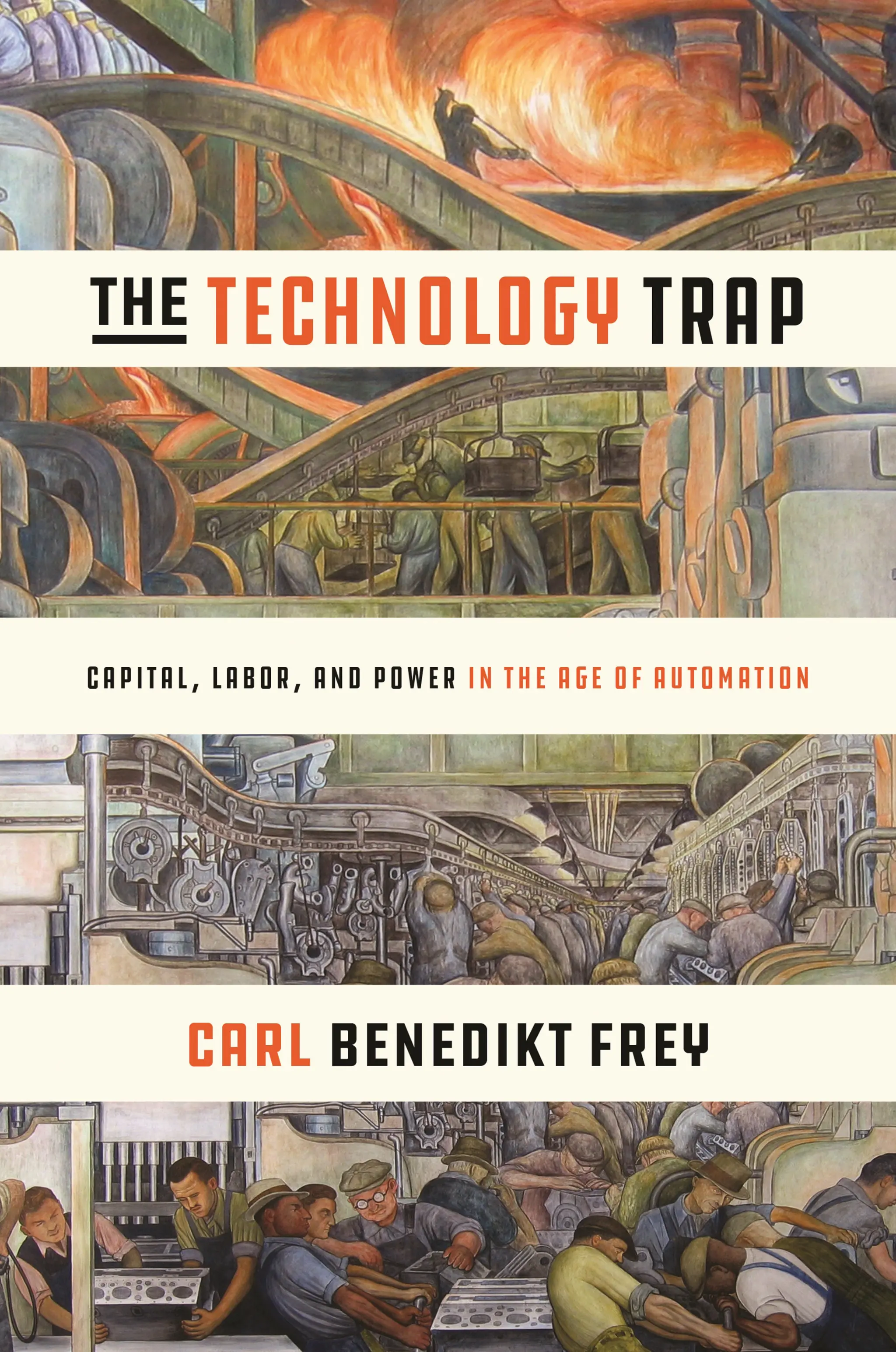




![Pr eface xiii
technology was consistently and vigorously resisted for fear of its desta-
bilizing force. Could countries in the industrial West experience a re-
turn of the technology trap in the twenty-
first
century? While it may
seem unlikely, it certainly looks more likely than it did when I began
writing this book four years ago. Proposals to tax robots in order to slow
down the pace of automation now feature in the public debate on both
sides of the Atlantic. And unlike the situation in the days of the Indus-
trial Revolution, workers in the developed world
today have more po
liti
cal power than the Luddites did. In Amer
i
ca, where Andrew Yang
is already tapping into growing anxiety about automation, an over-
whelming majority now
favor policies to restrict it. The disruptive
force of technology, Yang fears, could cause another wave of Luddite
uprisings: “All you need is self-
driving cars to destabilize society. . . .
[W]e’re
going to have a million truck
drivers out of work who are
94
percent male, with an average level of education of high school or
one year of college. That one innovation
will be enough to create riots
in the street. And we’re about to do the same thing to retail workers, call
center workers, fast-
food workers, insurance companies, accounting
firms.”8
The point is not fatalism or pessimism. And it is surely not that we
would be better off slowing down the pace of pro
gress or restricting
automation. The Industrial Revolution was the beginning of an unpre
cedented transformation that benefited everyone over the long run. AI
systems have the potential to do the same, but the future of AI depends
on how we manage the short run. If we seek to understand the chal-
lenges ahead rather than glossing over them in the belief that in the long
run everyone will come out ahead, we will be in a much better position
to shape the outcome. Yang may be extremely unlikely to be elected
president, but as the observant Rana Foorohar writes, automation is
likely to become a major topic in the 2020 election.9
As there has been
a populist backlash against globalization, we should be concerned that
populists might easily and effectively tap into growing anxiety about
automation as well, unless we address it. Fortunately, for all the parallels
between the age of automation and the days of the Industrial Revolu-
tion, whichIshallpushshamelesslythroughoutthisbook,therearealso](https://image.slidesharecdn.com/10984859-250516103511-4abc38c5/75/The-Technology-Trap-Capital-Labor-And-Power-In-The-Age-Of-Automation-Frey-18-2048.jpg)

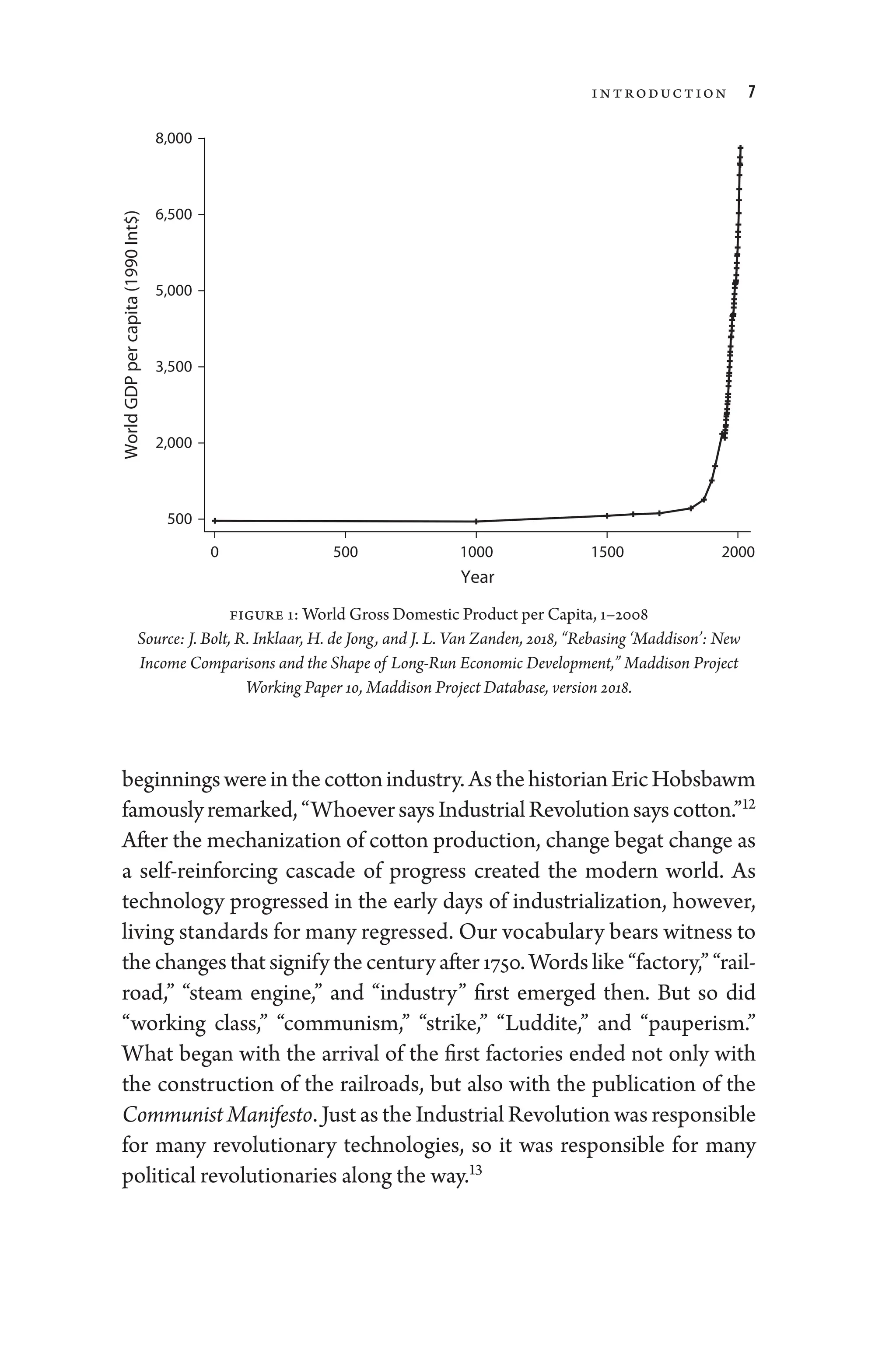

![Introduction 27
from automation. If current economic trends persist for several years
more or even de
cades, as they did during the Industrial Revolution,
there is nothing that shields automation from becoming a target, as glo-
balization already has.
Part 5 is titled “The
Future,” although it
does not attempt to predict
what
will happen. As discussed above, much depends on the race be-
tween replacing and enabling technologies, but obviously the next three
decades must not mirror the past three. The idea here is not that we can
simply extrapolate from current trends, which is what economists usu-
ally do. Nor is my ambition to predict
future technological break-
throughs. The best I can do is examine the prototypical technologies
coming out of the labs
today that have not yet found widespread use.
Take, for example, the employment prospects of laundresses, which
peaked around 1910—the year when Alva J. Fisher took out a patent for
the first electric washing machine, called Thor (figure 2). If economists
0
500
1,000
1,500
2,000
2,500
3,000
3,500
4,000
4,500
5,000
Laundresses
employed
in
private
households
(hundreds)
1850 1870 1890 1910 1930 1950 1970 1990
Year
figure 2: Number of Laundresses in Private Households in the U.S., 1850–1990
Source: M. Sobek, 2006, “Detailed Occupations—All Persons: 1850–1990 [Part 2]. Table
Ba1396-1439,” in Historical Statistics of the United States, Earliest Times to the Present:
Millennial Edition, ed. S. B. Carter et al. (New York: Cambridge University Press).](https://image.slidesharecdn.com/10984859-250516103511-4abc38c5/75/The-Technology-Trap-Capital-Labor-And-Power-In-The-Age-Of-Automation-Frey-46-2048.jpg)







![This ebook is for the use of anyone anywhere in the United States
and most other parts of the world at no cost and with almost no
restrictions whatsoever. You may copy it, give it away or re-use it
under the terms of the Project Gutenberg License included with this
ebook or online at www.gutenberg.org. If you are not located in the
United States, you will have to check the laws of the country where
you are located before using this eBook.
Title: Storia delle repubbliche italiane dei secoli di mezzo, v. 15 (of
16)
Author: J.-C.-L. Simonde de Sismondi
Release date: December 5, 2013 [eBook #44364]
Most recently updated: October 23, 2024
Language: Italian
Credits: Produced by Claudio Paganelli, Carlo Traverso, Barbara
Magni and the Online Distributed Proofreading Team at
http://www.pgdp.net (This file was produced from images
generously made available by The Internet Archive)
*** START OF THE PROJECT GUTENBERG EBOOK STORIA DELLE
REPUBBLICHE ITALIANE DEI SECOLI DI MEZZO, V. 15 (OF 16) ***](https://image.slidesharecdn.com/10984859-250516103511-4abc38c5/75/The-Technology-Trap-Capital-Labor-And-Power-In-The-Age-Of-Automation-Frey-60-2048.jpg)



![della loro vita. La religione segregata affatto dal raziocinio, dalla
sensibilità, dalla morale, dalla condotta, altro omai non era che
un'abitudine dello spirito, che ordinava certe pratiche, e proscriveva
certi pensieri.
In fatti la riforma eccitò in Italia alquanto di maraviglia e
d'inquietudine, ma niuna curiosità. Erano gl'Italiani accostumati a
resistere al papa, a fargli la guerra, a sprezzare le sue scomuniche;
sapevasi da molto tempo, che corrottissimi erano i costumi della sua
corte, perfida la politica, e che le più odiose passioni potevano
celarsi sotto il manto della religione. Il rimanente del clero non
godeva in Italia le immunità e le ricchezze del clero della Germania:
pure si era veduto commettere infami azioni; e perchè queste più
non erano cagione di scandalo, l'accusa diretta contro di lui più non
eccitava la sorpresa della novità. Coloro che volevano riformare la
disciplina passavano per entusiasti, che si adiravano contro il corso
ordinario delle cose del mondo; coloro, che attaccavano la dottrina,
passavano per insensati che sconvolgevano i fondamenti delle
opinioni; imperciocchè quelle basi medesime che il pregiudizio ha
stabilite, e che sottrae ad ogni esame, non sembrano agli uomini
meno solide di quelle fondate dalla ragione. Mentre che nuove
dottrine fermentavano in tutta l'Europa, verun Italiano non muoveva
dubbj intorno a ciò che gli era stato dato a credere, e passò ancora
lungo tempo prima che qualche opinione luterana valicasse le Alpi.
Lo stesso Leon X morì prima d'essersi formato una giusta idea del
pericolo ond'era minacciata la Chiesa romana per la sollevazione
degli spiriti in Germania; ma la morte lo sottrasse altresì a difficoltà,
di cui avrebbe assai più presto sentito il peso; ed erano quelle stesse
che si era procacciate colle sue inconsiderate prodigalità. Non solo
egli aveva dissipato il ragguardevole tesoro adunato da Giulio II, ed
impegnate tutte le gioje e tutti gli effetti preziosi di san Pietro; ma
aveva inoltre contratto un grosso debito, e venduti tanti nuovi
impieghi che i soli loro salarj avevano accresciute di quaranta mila
ducati le annue spese delle Chiesa[1].](https://image.slidesharecdn.com/10984859-250516103511-4abc38c5/75/The-Technology-Trap-Capital-Labor-And-Power-In-The-Age-Of-Automation-Frey-68-2048.jpg)
![Leon X sarebbesi trovato in grandissime difficoltà, dovendo
continuare, senza avere danaro, la guerra da lui cominciata in
Lombardia; ma i luogotenenti che lasciava morendo in sua vece,
trovaronsi in una situazione ancora più difficile che la sua. I cardinali
di Sion e de' Medici che avevano fin allora sostenuto il peso degli
affari, si affrettarono di abbandonare l'armata, per passare a Roma
onde assistere al conclave. Carlo V trovavasi abbastanza occupato
dalla guerra che gli facevano i Francesi ne' Paesi Bassi; la Castiglia si
era ribellata, ed i regni di Valenza e di Majorica erano desolati dalla
guerra mossa ai nobili dalle comunità, talchè tutte le forze della
Spagna venivano consumate da queste intestine discordie. La piccola
armata che l'imperatore teneva in Lombardia non era pagata;
essendosi fin allora fatta la guerra coi soli tesori della Chiesa; ed
essendo questi mancati tutt'ad un tratto, Prospero Colonna ed il
marchese di Pescara furono costretti di licenziare tutti i Tedeschi e
tutti gli Svizzeri che tenevano al loro soldo, ad eccezione di mille
cinquecento uomini. Nello stesso tempo gli ausiliari fiorentini che
non erano chiamati in questa guerra da un immediato interesse, e
che ignoravano perfino se sarebbero o no gli alleati del futuro
pontefice, tornarono in Toscana[2].
Se dal canto suo il signore di Lautrec non fosse stato abbandonato a
cagione della scandalosa negligenza di Francesco I, che d'altro non
prendevasi pensiero che de' suoi piaceri e delle sue galanterie, e che
non gli mandava danaro per pagare le truppe, avrebbe potuto
facilmente ricuperare Milano e tutte le piazze che aveva perdute.
Aveva ancora guarnigione ne' castelli di Milano, di Novara, di Trezzo
e di Pizzighettone; comandava in Cremona, in Genova, in
Alessandria, in Arona, ed in tutto il Lago Maggiore; ma senza danaro
non poteva adunare fanteria. Poco conto poteva fare de' suoi uomini
d'armi scoraggiati; e quando tentò di sorprendere la città di Parma,
ove comandava lo storico Guicciardini, fu respinto dalle sole
compagnie della milizia[3].
Intanto scoppiavano in ogni parte degli stati della Chiesa
ammutinamenti o rivoluzioni. I piccoli principi, che Leon X aveva
spogliati della loro sovranità, invocavano l'ajuto de' loro partigiani](https://image.slidesharecdn.com/10984859-250516103511-4abc38c5/75/The-Technology-Trap-Capital-Labor-And-Power-In-The-Age-Of-Automation-Frey-69-2048.jpg)
![per riavere lo stato de' loro padri. Il duca di Urbino erasi collegato
coi due fratelli Baglioni, ed avevano, a spese comuni, adunati in
Ferrara dugento uomini d'armi, trecento cavaleggieri e tre mila fanti.
Con questa piccola armata attraversarono senz'ostacolo la Romagna.
Il duca d'Urbino fu ricevuto con entusiasmo dagli antichi suoi sudditi,
e ricuperò senza sguainare la spada il ducato d'Urbino, mentre che il
contado di Montefeltro, da Leon X ceduto ai Fiorentini, fu difeso dalle
loro guarnigioni. Orazio e Malatesta, figliuoli di Giampaolo Baglioni, si
presentarono ancor essi alle porte di Perugia. Vitello Vitelli, che ne
aveva il comando, fece una breve resistenza; perciocchè essendo
stato leggiermente ferito in un piede, colse avidamente questo
pretesto per farsi portare a Città di Castello sua patria, siccome colui
che copertamente desiderava che i feudatarj della Chiesa
ricuperassero l'antica indipendenza. Subito dopo la di lui partenza
Siena capitolò, ed aprì le porte ai figli di Baglioni il 5 gennajo del
1522. In pari tempo Sigismondo di Varano scacciava da Camerino
Giammaria della stessa famiglia, cui Leone X aveva dato il titolo di
duca di quel piccolo stato, e vi si stabiliva in sua vece[4].
Gli emigrati di Todi vennero ricondotti in quella città a mano armata
da Camillo Orsini. Il duca d'Urbino dopo di essersi occupato pochi
giorni a ristabilire la propria autorità ne' suoi stati, volle altresì
riporre in Siena i figli di Pandolfo Petrucci; ma fu respinto dall'attività
in particolare de' Fiorentini, affezionati al cardinale de' Medici[5]. Nè
forse questi non avrebbero schivata una rivoluzione nella loro patria
se all'istante della morte di Leon X non avessero ordinato l'arresto
nel palazzo pubblico a tutti i cittadini più conosciuti pel loro
attaccamento alla libertà[6]. Sigismondo Malatesta, figliuolo di
Pandolfo, venne introdotto in Rimini dagli antichi partigiani di sua
famiglia, e per poco tempo ricuperò una sovranità, di cui suo padre
era stato privato vent'anni prima da Cesare Borgia[7]. Finalmente
quello che più aveva sofferto dalla nimicizia, quello che più d'ogni
altro doveva temere le ultime prosperità di Leone, Alfonso, duca di
Ferrara, si affrettò di ricuperare tutto quanto aveva perduto. Era
costui colpevole agli occhi del papa per avere pochi mesi prima
impedita la conquista di Parma con un'ardita diversione. Perciò dopo](https://image.slidesharecdn.com/10984859-250516103511-4abc38c5/75/The-Technology-Trap-Capital-Labor-And-Power-In-The-Age-Of-Automation-Frey-70-2048.jpg)
![i primi felici avvenimenti dell'armata di Prospero Colonna, una
seconda armata pontificia era venuta ad attaccare Finale e san
Felice, ed aveva in appresso occupato il Bondeno e saccheggiato;
mentre che dalla banda della Romagna, gli agenti della Chiesa
s'impadronivano di Lugo, di Bagnacavallo, di Cento e della Pieve;
mentre i Fiorentini acquistavano la Garfagnana, e Francesco
Guicciardini entrava nel Frignano colle truppe modenesi. Alfonso,
minacciato d'assedio nella sua stessa capitale, apparecchiavasi a
vendere a carissimo prezzo la propria vita quand'ebbe la notizia della
morte di Leone. Nell'entusiasmo della sua gioja fece coniare una
moneta d'argento, nella quale vedevasi un pastore che strappava
dalla bocca d'un leone un agnello, con questa leggenda presa dal
libro dei re: de ore leonis. Egli in pochi giorni ricuperò il Bondeno,
Finale, san Felice, il Frignano, la Garfagnana, Lugo, Bagnacavallo, e
soltanto fu perdente sotto al Bondeno valorosamente difeso dai
Bolognesi[8].
Frattanto i cardinali, moltiplicati dalle promozioni di Leon X, erano
entrati in conclave il 16 di novembre. Sapevasi essere divisi tra il
partito imperiale ed il partito francese. L'ultimo avrebbe voluto
portare sul trono pontificio il cardinale di Volterra, fratello di Piero
Soderini, il quale era stato perpetuo gonfaloniere; e questi era il
rivale più temuto da Giulio de' Medici, che rimasto alla testa delle
creature di suo cugino poteva disporre di sedici suffragi, cioè più di
un terzo e meno della metà; perciocchè questa volta il conclave
conteneva quaranta cardinali; e Giulio senz'essere abbastanza forte
per farsi nominare, lo era bastantemente per l'esclusione d'ogni
altro[9].
Il cardinale de' Medici aveva sperato di essere secondato da tutto il
partito imperiale. Era stato il principale ed il più esperto ministro di
suo cugino Leon X; anzi quello che lo aveva persuaso a fare alleanza
coll'imperatore; i successi della guerra di Lombardia venivano in gran
parte attribuiti ai suoi consiglj ed alla sua abilità; ed egli solo poteva
aggiugnere alla potenza della Chiesa quella della repubblica
fiorentina di cui era capo. Ma Giulio aveva nel sacro collegio e nel
partito dell'impero un rivale, come lui militare prima di essere](https://image.slidesharecdn.com/10984859-250516103511-4abc38c5/75/The-Technology-Trap-Capital-Labor-And-Power-In-The-Age-Of-Automation-Frey-71-2048.jpg)
![prelato, giovane come lui, e non meno di lui ambizioso; questi era
Pompeo Colonna, il quale piuttosto che favorire il Medici parve
apparecchiato a darsi al partito francese. Di già costui rappresentava
ai suoi colleghi la vergogna di portare un bastardo sulla santa sede;
poichè Giuliano, fratello del magnifico, non era mai stato marito
d'Antonia del Cittadino, dalla quale era nato Giulio il 26 maggio del
1478. Ricordava le crudeltà commesse da Leon X dopo scoperta la
supposta congiura di Petrucci, e faceva sentire il pericolo di
perpetuare la dignità pontificia nella stessa famiglia[10].
Mentre i cardinali andavano opponendo l'intrigo all'intrigo, ogni
mattina, come è l'usanza dei conclavi, procedevano ai voti intorno a
qualche nuovo soggetto che loro si proponeva. Uno di loro, il giorno
9 di febbrajo, nominò il cardinale Adriano Florent, vescovo di
Tortosa, Fiammingo, il quale era stato precettore di Carlo V, e che
l'imperatore aveva ultimamente nominato governatore di Castiglia.
Adriano nato in Utrecht il 7 maggio del 1458 da padre fabbricatore di
tappeti o di birra, non era mai venuto in Italia, e non sapeva la
lingua italiana, non conosceva verun cardinale, aveva mostrato poco
ingegno nell'amministrazione affidatagli dal suo illustre alunno, e
pareva esservi così poca apparenza per la sua elezione, che tutto lo
squadrone del Medici (così veniva chiamato il suo partito) senza
volerlo gli diede il suo voto. Il cardinale di san Sisto prese da ciò
motivo per encomiarlo lungamente, e perchè i cardinali desideravano
d'uscire di prigione, gli diedero i loro suffragi quasi senza riflettere, e
lo nominarono così inconsideratamente, che non potendo in
appresso giustificare innanzi a sè medesimi o agli altri la loro
imprudenza, l'attribuirono a subita inspirazione dello Spirito
Santo[11].
Non fu che in sul declinare d'agosto che il nuovo pontefice, il quale
prese il nome d'Adriano VI, arrivò in Italia per prendere possesso
della tiara. Ne' primi nove mesi dell'anno la Chiesa fu amministrata a
nome del sacro collegio de' cardinali da una signoria somigliante
assai a quella delle antiche repubbliche toscane. Tiravansi a sorte
ogni mese tre priori tra i membri del sacro collegio, i quali formavano
il governo. Ma questi prelati mal d'accordo fra di loro, ed ogni mese](https://image.slidesharecdn.com/10984859-250516103511-4abc38c5/75/The-Technology-Trap-Capital-Labor-And-Power-In-The-Age-Of-Automation-Frey-72-2048.jpg)
![mutando sistema, non erano in istato di difendere il potere papale.
Ad altro non pensarono che a guadagnare tempo ed a mantenere
un'apparente pace, pel quale oggetto conchiusero un armistizio col
duca d'Urbino, che pose fine alle rivoluzioni dell'Umbria[12].
Il cardinale de' Medici, umiliato dalla esclusione dal pontificato, e
credendosi tradito dal partito imperiale, tornò per mare a Firenze,
ove temeva di trovare compromessa la sua autorità; fece il suo
ingresso il 21 di gennajo del 1522, portando il corrotto di suo cugino,
e cogli indizj in fronte della tristezza e del sospetto[13]. In fatti i
repubblicani di Firenze credevano giunto l'istante di ricuperare la
libertà della loro patria; il signore di Lescuns loro prometteva
l'appoggio del re di Francia; le sue truppe dovevano entrare in
Toscana per la via della riviera di Genova, nello stesso tempo che
Renzo di Ceri vi giugnerebbe dalla banda di Siena. Il duca d'Urbino
ed i Baglioni favorivano caldamente un progetto che doveva
vendicarli dei Medici. In Firenze queste pratiche erano dirette da
Giambattista Soderini, nipote del cardinale di Volterra, e del
gonfaloniere perpetuo. Ingrossava il suo partito la società de' poeti e
de' filosofi, che diede tanta celebrità agli Orti Rucellai, nei quali si
adunava. Vi si contavano Luigi Alamanni, Zanobio Buondelmonti,
Cosimo Rucellai, Alessandro de' Pazzi, Francesco e Jacopo Diaceto, e
per ultimo Niccolò Macchiavelli che loro dedicò i suoi Discorsi sopra
Tito Livio, e la sua arte della guerra. Educati ne' medesimi principj
desideravano tutti la libertà di Firenze, ma non avevano verun odio
personale contro il cardinale de' Medici, anzi accordavano che di
tutta la sua famiglia era quello che si era più dolcemente e
cittadinescamente comportato nella sua amministrazione, onde
preferivano di ricuperare i loro diritti con un compromesso piuttosto
che di strapparglieli colla forza[14].
Il cardinale de' Medici che conosceva la propria debolezza, e la
necessità di accarezzare i suoi avversarj, convenne che il supremo
potere male s'accordava colle sue funzioni ecclesiastiche, e colla
carriera che gli era aperta alla corte di Roma, dando voce d'essere
apparecchiato a rinunciarlo. I giovani patrizj degli Orti Rucellai](https://image.slidesharecdn.com/10984859-250516103511-4abc38c5/75/The-Technology-Trap-Capital-Labor-And-Power-In-The-Age-Of-Automation-Frey-73-2048.jpg)
![diedero facilmente fede alle speranze che loro dava il cardinale, ed
invece d'agire contro di lui, si ristrinsero a meditare intorno alla
migliore costituzione da darsi alla repubblica all'atto che si
rinnoverebbe; fu questo l'argomento di tre opere politiche del
Macchiavelli, di Zanobio Buondelmonti, e di Alessandro de' Pazzi,
tutte dedicate al cardinale de' Medici[15].
Frattanto il signore de Lescuns, troppo occupato in Lombardia, e
lasciato dal re di Francia senza danaro, aveva abbandonato il
progetto d'entrare in Toscana per lo stato di Genova. Renzo di Ceri si
era ostinato nell'assedio del piccolo castello di Turrita nello stato di
Siena, e non passò mai oltre. Il partito francese, ch'era quello della
libertà, andava declinando in tutta l'Italia, onde il cardinale de'
Medici credette giunto il momento favorevole di trarre d'inganno
coloro che avevano potuto lusingarsi ch'egli renderebbe alla sua
patria la libertà. Fu arrestato un corriere francese mandato a Renzo
di Ceri, dal quale il cardinale si procurò con un sacrilegio la
manifestazione del suo segreto, mandandogli in prigione invece del
confessore da lui domandato, una spia della polizia vestita da prete.
E per tal modo venne in cognizione della corrispondenza di Giacomo
di Diaceto con Renzo di Ceri. Giacomo, posto in prigione il 22 di
maggio, e minacciato di tortura, confessò quello che ancora non si
sapeva, d'avere voluto assassinare il cardinale perchè avesse
ingannato i repubblicani con fallaci speranze. L'interrogatorio del
prevenuto essendo stato differito di ventiquattr'ore, i di lui amici,
Luigi Alamanni il poeta, e Zanobio Buondelmonti ebbero il tempo di
salvarsi; ma un altro Luigi Alamanni subì l'ultimo supplicio con
Jacopo di Diaceto il giorno 7 di luglio. I figli di Paolo Antonio Soderini
dovettero fuggire, ed i loro beni furono sequestrati; mentre il loro
zio, Pietro Soderini, ch'era stato gonfaloniere perpetuo, moriva in
Roma il 14 di giugno, lasciando eterno desiderio di sè presso tutte le
persone dabbene[16].
Le rivoluzioni degli stati della Chiesa e della Toscana erano opera
degl'Italiani, ma l'influenza loro era limitatissima; per lo contrario
quelle della Lombardia erano opera degli oltremontani, e da queste
dipendevano non solo la futura sorte dell'Italia, ma ancora quella](https://image.slidesharecdn.com/10984859-250516103511-4abc38c5/75/The-Technology-Trap-Capital-Labor-And-Power-In-The-Age-Of-Automation-Frey-74-2048.jpg)
![dell'Europa. Francesco I colla sua inconsiderata prodigalità aveva
lasciato che si perdesse nel precedente anno lo stato di Milano,
mentre il suo cancelliere Duprat aveva con nuove imposizioni, con
intollerabili estorsioni e colla vendita de' beni della corona, raccolto
assai più danaro che non sarebbe abbisognato per mantenere la più
formidabile armata. Francesco tutt'inteso a' suoi amoreggiamenti ed
alle feste che dava alle sue amiche, dissipava il danaro strappato a'
suoi popoli, o lasciava che sua madre ne disponesse,
compromettendo l'onore nazionale colle sconfitte delle sue armate, e
col mancare a tutte le convenzioni fatte co' suoi alleati. Vantavasi
d'essere il primo re di Francia, che si fosse liberato dalla tutela de'
suoi familiari, perchè disponeva solo, ed a voglia sua di tutti gli
scrigni de' suoi sudditi, mentre che prima di lui le domestiche spese
de' suoi predecessori erano a carico de' beni della corona, ch'essi
non si facevano lecito d'impegnare, concorrendo liberamente alle
spese della guerra i tre ordini dello stato. Ma il vescovo di Beucaire
non dubitò di dire che Francesco cambiò la libertà francese in una
miserabile schiavitù; e le sciagure provocate sul di lui regno
mostrano abbastanza che colla libertà de' suoi sudditi sagrificò pure
la personale sua gloria ai suoi capriccj[17].
La gloria nazionale era stata pure sagrificata in altra maniera da lui e
da' suoi predecessori all'ingrandimento della sua autorità o di quella
de' gentiluomini. Era stato severamente vietato l'uso delle armi al
terzo stato, onde tenerlo in una assoluta dipendenza dai suoi
padroni: erasi con ciò renduto vile ed incapace di servire nelle
armate, di modo che era cosa maravigliosa il vedere una delle più
valorose nazioni dell'Europa ridotta a non avere fanteria nazionale. I
suoi re erano forzati di ricorrere agli Svizzeri per tutte le loro guerre,
perchè, ad eccezione degli uomini d'armi tutti presi tra la nobiltà, la
Francia non aveva soldati. La Svizzera, che non contava l'ottava
parte della popolazione della Francia, le somministrava i suoi
battaglioni; ma per ottenerli, bisognava che i Francesi si ponessero
in balìa della venalità, dell'orgoglio, dell'incostanza di que' montanari,
renduti arroganti dal vedersi accarezzati da tutti i sovrani. Francesco
I, che di fresco aveva perduto Milano per la loro mala fede, fu ridotto](https://image.slidesharecdn.com/10984859-250516103511-4abc38c5/75/The-Technology-Trap-Capital-Labor-And-Power-In-The-Age-Of-Automation-Frey-75-2048.jpg)
![a mercanteggiare separatamente con ogni cantone, e profondere
doni tra i loro magistrati, a promettere pensioni agli uomini che
avevano fra loro maggiore riputazione, e ad inghiottire senza
lagnarsene la loro arroganza. A questo prezzo Renato, bastardo di
Savoja, gran maestro di Francia, e Galeazzo di Sanseverino, grande
scudiere, persuasero nella primavera del 1522 circa due mila Svizzeri
a passare il san Bernardo ed il san Gottardo per iscendere in
Italia[18].
Dal canto suo il Lautrec adunò la cavalleria francese dispersa nella
pianura lombarda; la riunì presso Cremona all'armata veneziana
comandata da Andrea Gritti e da Teodoro Trivulzio; poi andò ad
unirsi agli Svizzeri, ed il primo giorno di marzo passò l'Adda per
venire ad accamparsi con tutta la sua armata due sole miglia lontano
da Milano[19].
Prospero Colonna difendeva questa città con Alfonso d'Avalos,
marchese di Pescara. Il cancelliere del ducato, Girolamo Moroni, vi
teneva la rappresentanza del suo signore, che per anco non aveva
potuto fare il suo ingresso nella capitale. Esortava i Milanesi a
conservare la loro indipendenza; loro mostrava i pericoli delle
vendette de' Francesi; e per aggiugnere inoltre un sentimento
religioso all'amore della patria, aveva persuaso un eloquente monaco
dell'ordine di sant'Agostino, Andrea Barbato, a riscaldare lo zelo de'
Milanesi con una serie di sermoni contro i barbari[20]. Con tale
pratica ottenne il Moroni dai suoi compatriotti volontarie
contribuzioni abbastanza copiose per assoldare dieci mila Tedeschi.
Girolamo Adorno, e Giorgio Frundsberg ne condussero cinque mila
con tanta rapidità a traverso alla Valtellina ed al Bergamasco, che
entrarono in Milano prima che arrivassero i Francesi; gli altri vi
furono condotti alquanto più tardi dallo stesso Francesco Sforza[21].
Dall'altra parte l'armata francese aveva ancor essa ricevuto un
inaspettato rinforzo, essendo stata raggiunta da Giovanni de' Medici,
che le condusse a Cassano tre mila pedoni e dugento cavalli. Queste
truppe avevano bandiere nere in segno di corrotto per la morte di
papa Leon X, ond'ebbero poi il nome di Bande Nere; nome che in](https://image.slidesharecdn.com/10984859-250516103511-4abc38c5/75/The-Technology-Trap-Capital-Labor-And-Power-In-The-Age-Of-Automation-Frey-76-2048.jpg)
![appresso esse rendettero famoso rivendicando la gloria della fanteria
italiana. Queste Bande avevano fino a tale epoca combattuto
nell'armata della lega; ma trovandosi Giovanni de' Medici in libertà
per la morte di Leon X, le aveva condotte ai servigj della Francia, che
gli aveva offerte migliori condizioni[22]. Circa lo stesso tempo, un
colpo di colombrina, che alcuni pretesero essere stato diretto dallo
stesso Prospero Colonna, uccise Marcantonio Colonna, suo nipote,
che serviva nell'armata francese, e Camillo, figliuolo del maresciallo
Gian Giacopo Trivulzio. Il cadavere del primo fu mandato in Milano
allo zio, che fu estremamente afflitto per avere veduto cadere tra le
file nemiche un nipote che grandemente amava[23].
Prospero Colonna ed il Pescara avevano approfittato della lentezza
de' Francesi per riparare tutte le fortificazioni di Milano, e per
circondare il castello con una circonvallazione, che non permettesse
a Lautrec di soccorrere la guarnigione assediata. Questi, prevenuto
ne' suoi progetti, non aveva avuto che il debole compenso della
presa di Novara; in appresso aveva attaccato Pavia, difesa dal
marchese di Mantova; ma fu forzato ad abbandonarne l'assedio,
vedendo avvicinarsi coll'armata imperiale Prospero Colonna.
Finalmente erasi diretto per la via di Landriano alla volta di Monza,
onde accostarsi ad Arona, ove sapeva trovarsi il danaro mandatogli
dalla Francia per pagare le sue truppe[24].
Sapevano gli Svizzeri che il danaro destinato pel loro soldo era stato
condotto ad Arona, sul lago Maggiore, e che Anchise Visconti, che
occupava Busto con un corpo di truppe milanesi, impediva al
convoglio di venire fino all'armata. Perciò facevano calde istanze al
Lautrec di forzare il passo fino al lago Maggiore onde far loro avere il
danaro, mentre Andrea Gritti, generale de' Veneziani, protestava dal
canto suo che non si allontanerebbe cotanto dai confini della sua
repubblica, e che, se gli Svizzeri prendevano la strada del lago
Maggiore, egli prenderebbe quella di Verona[25]. Desiderava il
Lautrec di calmare l'impazienza degli Svizzeri: ma l'armata imperiale
soffriva ancora più che la sua per mancamento di danaro e di
vittovaglie; e di già intere compagnie di disertori avevano](https://image.slidesharecdn.com/10984859-250516103511-4abc38c5/75/The-Technology-Trap-Capital-Labor-And-Power-In-The-Age-Of-Automation-Frey-77-2048.jpg)
![abbandonate le insegne del Colonna per porsi sotto quelle di
Lautrec; onde questi sperava, tenendo la campagna ancora qualche
tempo, di disperdere l'armata nemica[26].
Ma gli Svizzeri, entrando in campagna, si erano ripromessi più rapidi
successi, ed il saccheggio delle più ricche città della Lombardia. Di
più terre da loro attaccate, la sola città di Novara era venuta in loro
potere, ed era stata da loro barbaramente saccheggiata. Avevano
sofferto assai sotto Pavia, ove continue piogge avevano impedita la
condotta delle vittovaglie. Mostravansi annojati d'una guerra di
posizioni e di marcie, ed accostumati come erano a far tutto cedere
ai loro capriccj, si adunarono intorno alla tenda di Lautrec per
domandare con altissime grida o la battaglia o il loro congedo[27].
Il Lautrec e tutti i generali francesi impiegarono inutilmente il loro
credito presso gli Svizzeri, per persuaderli a confidare ne' loro capi,
ad approfittare dei patimenti del nemico, ad aspettare se non altro
pochissimi giorni, ne' quali il generale francese, con un nuovo
movimento, forzerebbe Prospero Colonna a mutare posizione: tutto
fu inutile, e gli Svizzeri risposero a tutti i ragionamenti degli ufficiali
dell'armata con una sola voce: domani, o il congedo, o la
battaglia[28].
Lautrec, prima di cedere, incaricò Crequì, signore di Pontdormì, di
andare a riconoscere il nemico con quattrocento uomini d'armi e sei
mila Svizzeri. Prospero Colonna si era accampato alla Bicocca, casa
di campagna di un signore milanese, lontana tre in quattro miglia da
Milano. Una strada, più bassa de' fondi laterali, gli teneva luogo di
fossa; ed egli ne aveva coperti gli orli con artiglieria e con
archibugeri; a destra ed a manca il suo campo era chiuso da due
canali d'acqua corrente destinata all'irrigazione; ed a non molta
distanza dietro al campo uno de' canali era attraversato da un ponte
di pietra. Crequì, dopo avere esaminata questa posizione, riferì al
generale francese che riuscirebbe difficilissimo il forzarla; onde il
consiglio di guerra tentò nuovamente di persuadere gli Svizzeri a
rinunciare ad una battaglia che doveva avere un'infelice riuscita.
Risposero questi, che attaccherebbero di fronte la linea del nemico e](https://image.slidesharecdn.com/10984859-250516103511-4abc38c5/75/The-Technology-Trap-Capital-Labor-And-Power-In-The-Age-Of-Automation-Frey-78-2048.jpg)
![che colle loro picche e colle alabarde s'impadronirebbero di quelle
batterie credute tanto formidabili. Dichiararono in pari tempo che
domani si metterebbero in cammino per tornare nei loro paese ove
non fossero condotti alla battaglia. Il solo Pietro Navarro propose di
far morire i più sediziosi e di ridurre così gli altri all'ubbidienza; ma
gli altri generali e lo stesso Lautrec, che conoscevano gli Svizzeri, e
che si sentivano assolutamente tra le loro mani, preferirono la
dubbiosa sorte d'una battaglia alla certezza d'una sconfitta,
necessaria conseguenza della partenza di tutta la loro fanteria; e
sebbene vivamente sentissero l'imprudenza che stavano per
commettere, nondimeno ordinarono alle loro truppe di
apparecchiarsi per combattere nel susseguente giorno[29].
In fatti il Lautrec sortì da Monza la mattina del 29 aprile, giorno di
Quasimodo, e marciò alla volta della Bicocca. A seconda della loro
domanda aveva incaricati otto mila Svizzeri del principale attacco
sulla fronte del nemico; Montmorencì col conte di Montforte, i signori
di Miolans, di Granville, d'Auchì, di Launai e molti altri marciavano a
piedi alla loro testa. Giovanni de' Medici aveva avuto ordine di celare
il loro avanzamento, tenendo occupato il nemico colle evoluzioni
della sua cavalleria e della sua fanteria leggiere. Lescuns, maresciallo
di Foix, con trecento lance ed una parte dell'infanteria doveva girare
intorno alla sinistra dell'armata imperiale, passare il ponte di pietra
ch'era stato riconosciuto, e piombare alle spalle di Prospero Colonna,
ove stava di guardia Francesco Sforza colle milizie milanesi uscite di
città, per prender parte nella battaglia; il Lautrec col restante della
cavalleria e della fanteria francese doveva piegare a destra; e per
penetrare nel campo nemico aveva fatto prendere ai suoi soldati la
croce rossa, che portavano gl'Imperiali, invece della bianca che
portavano i Francesi; poichè non si costumavano ancora gli uniformi.
L'armata veneziana formava la retroguardia e non era chiamata a
prendere immediatamente parte nella battaglia[30].
I varj corpi dell'armata francese, non avendo un eguale spazio da
percorrere, non potevano giugnere alla rispettiva posizione nello
stesso tempo: onde il Montmorencì, giunto a poca distanza
dagl'imperiali, ordinò agli Svizzeri di trattenersi per dare tempo al](https://image.slidesharecdn.com/10984859-250516103511-4abc38c5/75/The-Technology-Trap-Capital-Labor-And-Power-In-The-Age-Of-Automation-Frey-79-2048.jpg)