kk
LET’S SEE SOMETHING BEFORE
READ
Major H.P.S. Ahluwalia was a member of the first
successful Indian expedition to Mount Everest in 1965.
How did he feel when he stood on the highest point in
the world? Let us hear his story in his words —
climbing the summit and, then, the more difficult task
of climbing the summit within
4.
KEYWORDS
surged: arose suddenlyand intensely
panorama: view of a wide area
jubilant: very happy because of success
tinge: trace/shade
exhaustion: fatigue; tiredness
exhilarating: very exciting
communion: state or feeling of close relationship
defied: frustrated; resisted
mystical: spiritual
firm in: make yourself firm
belays:fixes a rope
ascent:climb
make your obeisance: show your obedience or submission
ordeals: Painful experiences
resolutely: with determination or firmness
5.
Now lets go
intosummary of the story
INSTRUCTIONS:
IF YOU READ THE LESSON ONLY YOU CAN
UNDERSTAND THE SUMMARY
6.
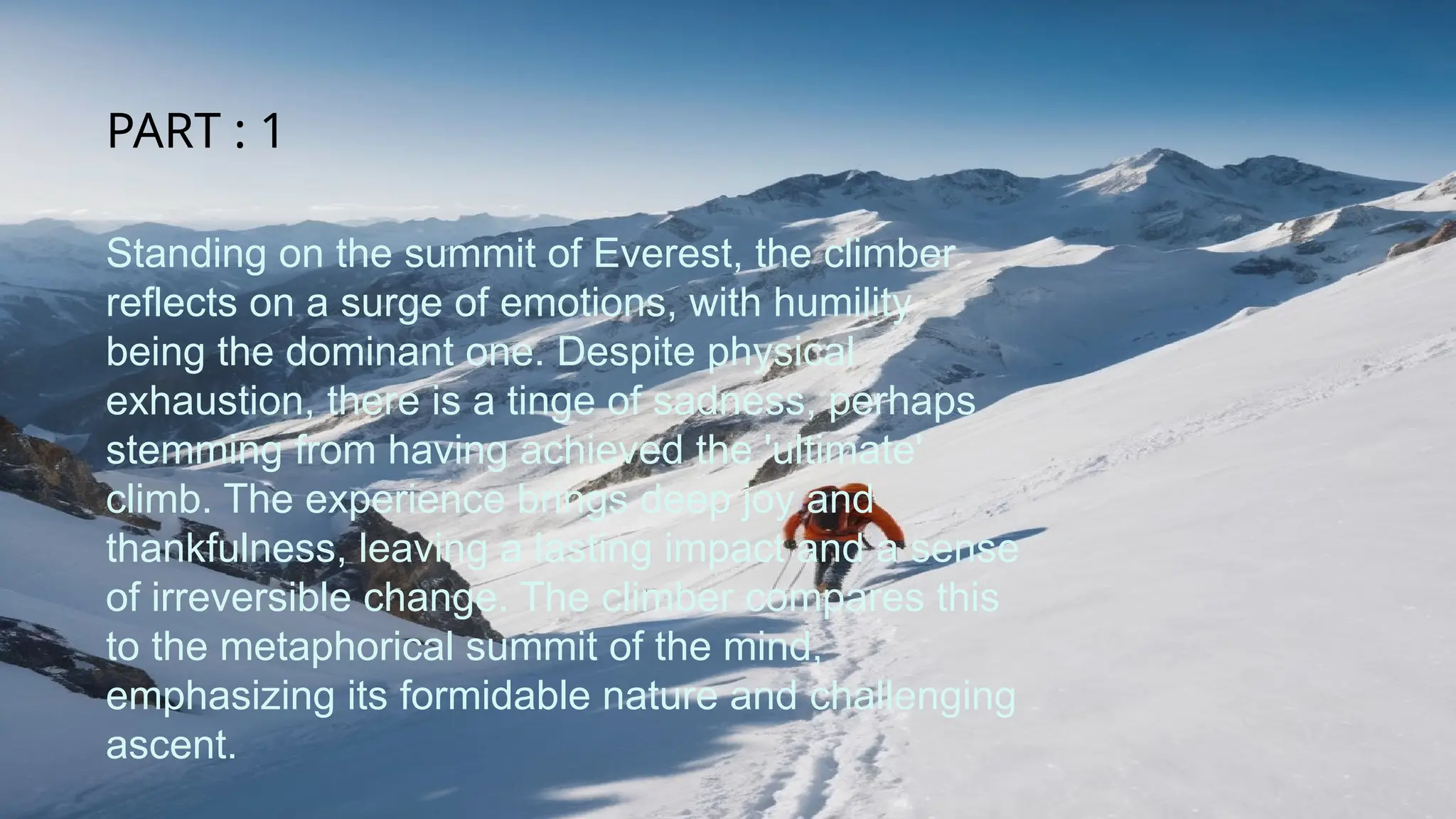
Standing on thesummit of Everest, the climber
reflects on a surge of emotions, with humility
being the dominant one. Despite physical
exhaustion, there is a tinge of sadness, perhaps
stemming from having achieved the 'ultimate'
climb. The experience brings deep joy and
thankfulness, leaving a lasting impact and a sense
of irreversible change. The climber compares this
to the metaphorical summit of the mind,
emphasizing its formidable nature and challenging
ascent.
PART : 1
7.
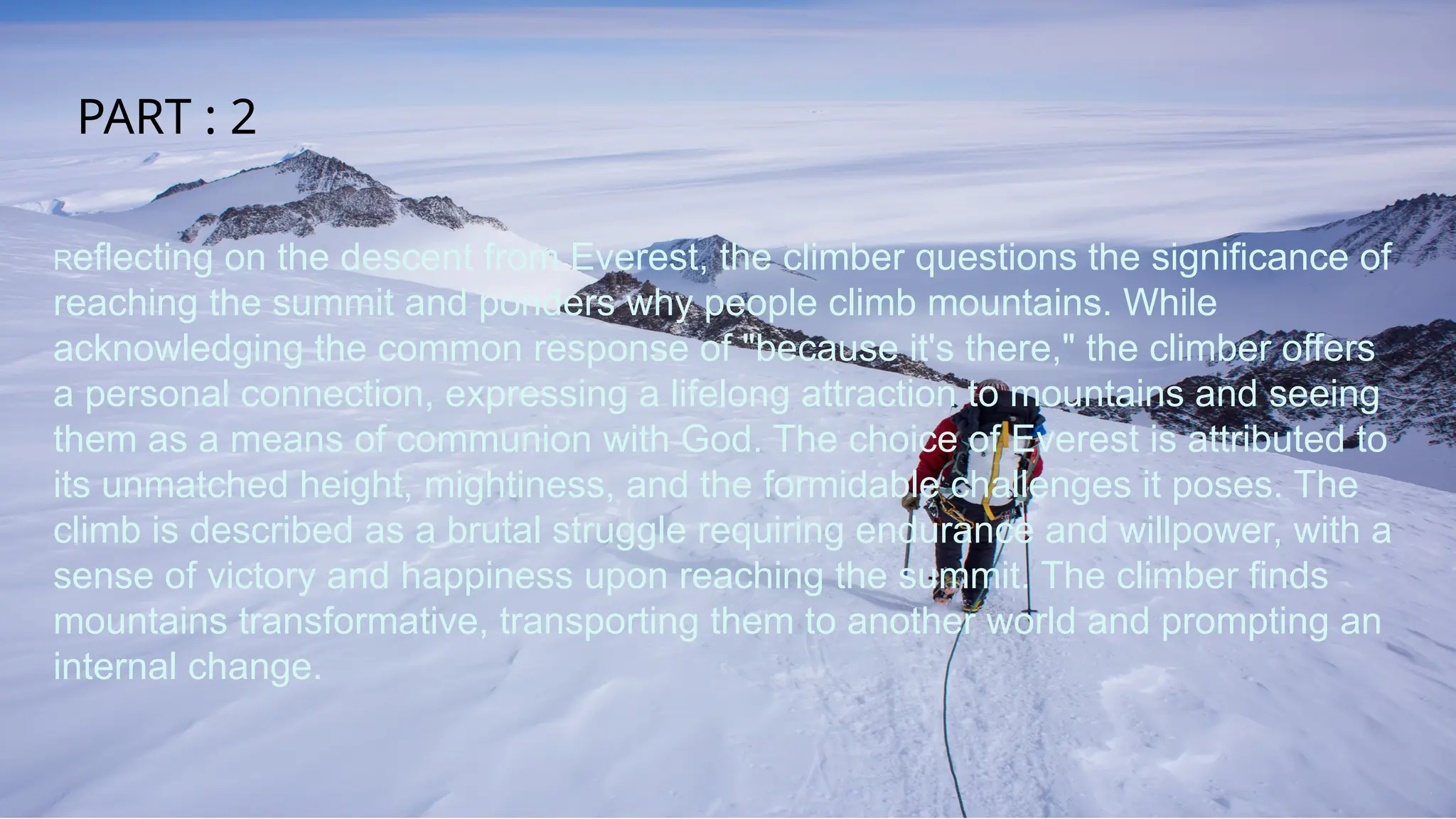
Reflecting on thedescent from Everest, the climber questions the significance of
reaching the summit and ponders why people climb mountains. While
acknowledging the common response of "because it's there," the climber offers
a personal connection, expressing a lifelong attraction to mountains and seeing
them as a means of communion with God. The choice of Everest is attributed to
its unmatched height, mightiness, and the formidable challenges it poses. The
climb is described as a brutal struggle requiring endurance and willpower, with a
sense of victory and happiness upon reaching the summit. The climber finds
mountains transformative, transporting them to another world and prompting an
internal change.
PART : 2
8.
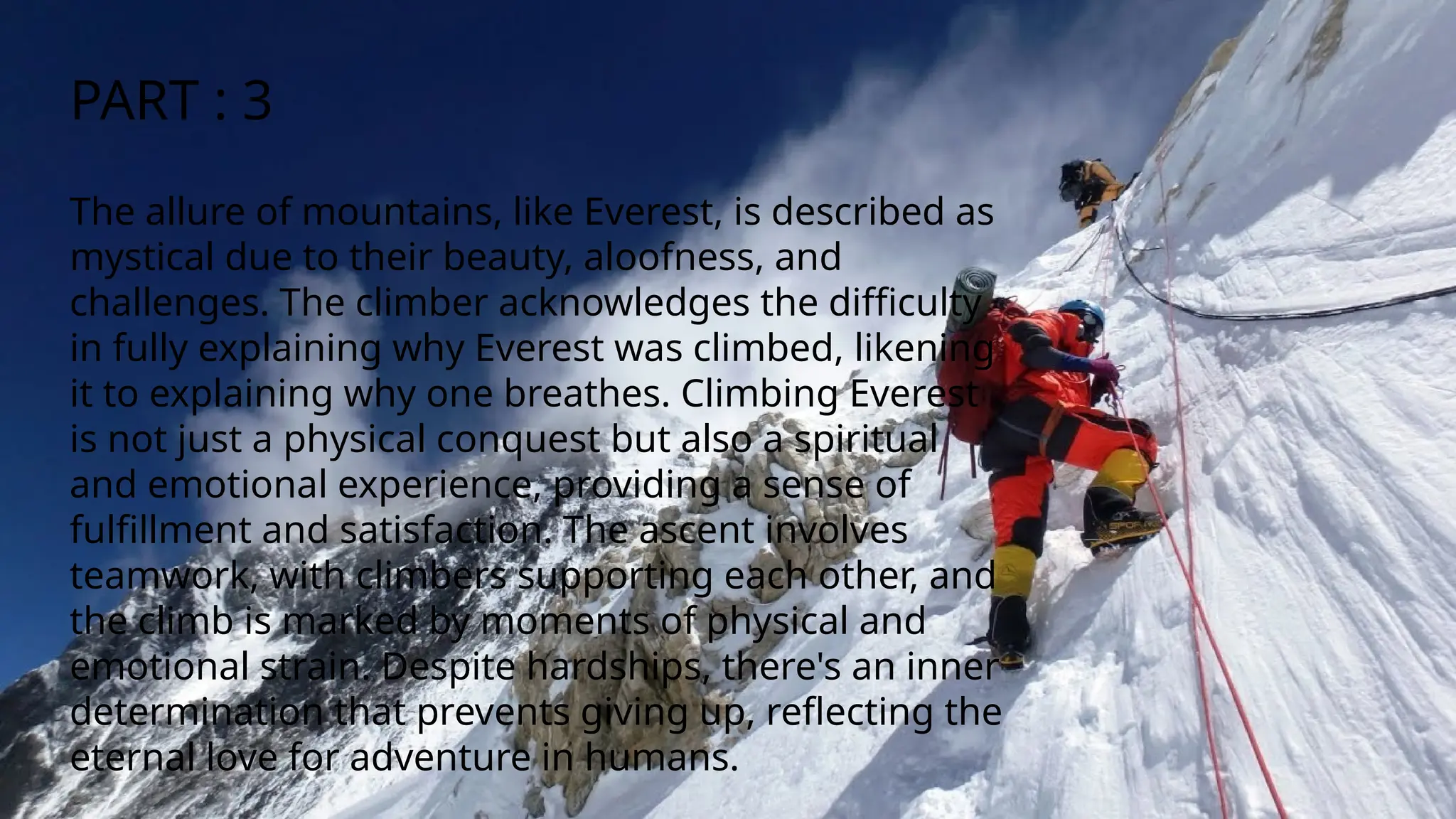
The allure ofmountains, like Everest, is described as
mystical due to their beauty, aloofness, and
challenges. The climber acknowledges the difficulty
in fully explaining why Everest was climbed, likening
it to explaining why one breathes. Climbing Everest
is not just a physical conquest but also a spiritual
and emotional experience, providing a sense of
fulfillment and satisfaction. The ascent involves
teamwork, with climbers supporting each other, and
the climb is marked by moments of physical and
emotional strain. Despite hardships, there's an inner
determination that prevents giving up, reflecting the
eternal love for adventure in humans.
PART : 3
9.
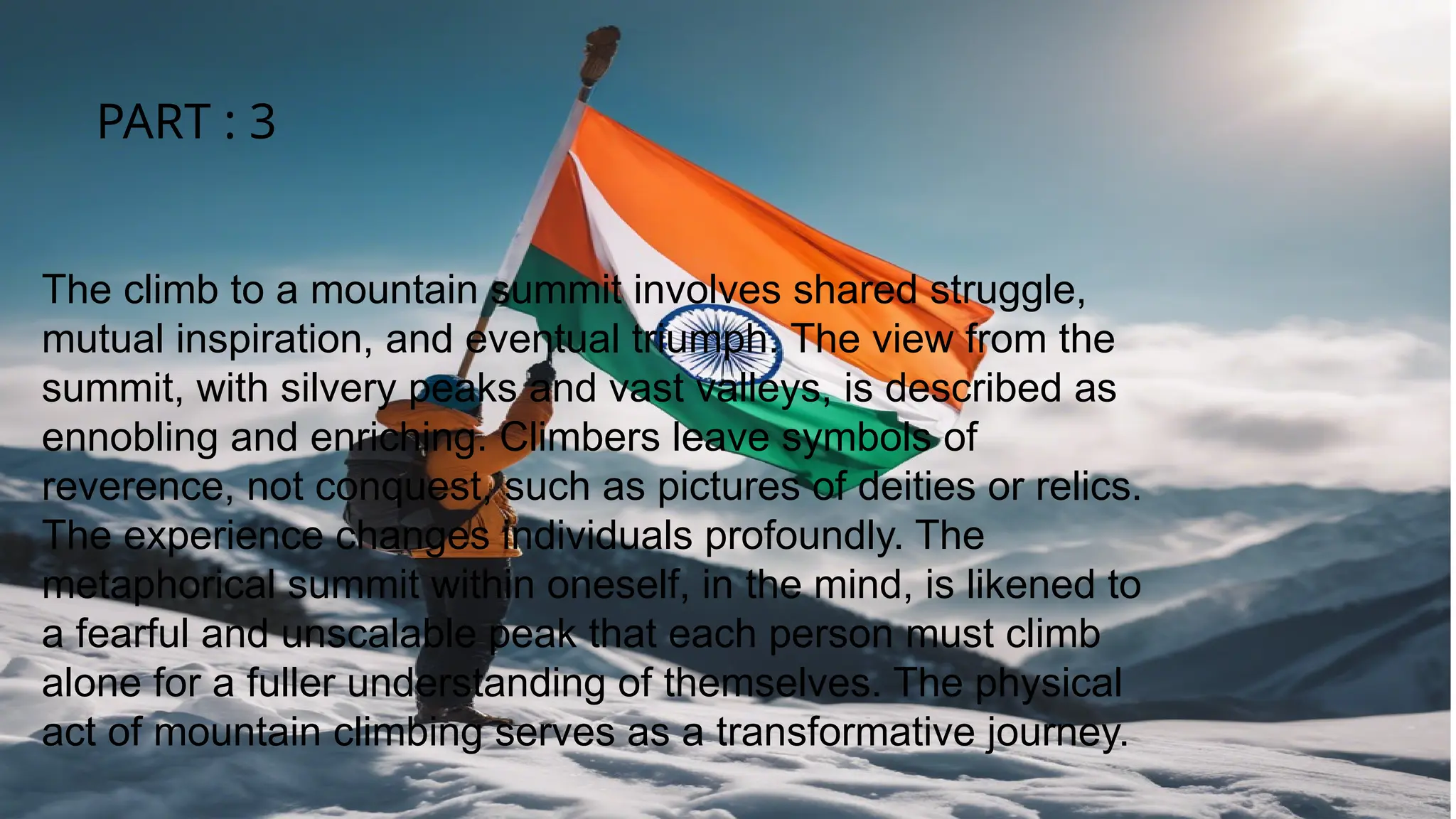
The climb toa mountain summit involves shared struggle,
mutual inspiration, and eventual triumph. The view from the
summit, with silvery peaks and vast valleys, is described as
ennobling and enriching. Climbers leave symbols of
reverence, not conquest, such as pictures of deities or relics.
The experience changes individuals profoundly. The
metaphorical summit within oneself, in the mind, is likened to
a fearful and unscalable peak that each person must climb
alone for a fuller understanding of themselves. The physical
act of mountain climbing serves as a transformative journey.
PART : 3
10.
Climbing a physicalmountain is likened to ascending
the emotional and spiritual peaks within oneself. The
transformative effects of both journeys are
comparable, offering profound lessons about the
world and self-discovery. The speaker, drawing
inspiration from Everest, believes that facing life's
challenges is made easier with the resilience gained
from such experiences. The conquest of internal
summits is deemed equally valuable, if not higher,
than conquering Everest.
FINAL PART