
The Robustness and Evolvability of
Transcription Factor Binding Sites
Presented by,
Sandeep Satapathy
BS-MS, 4th Year (10079)
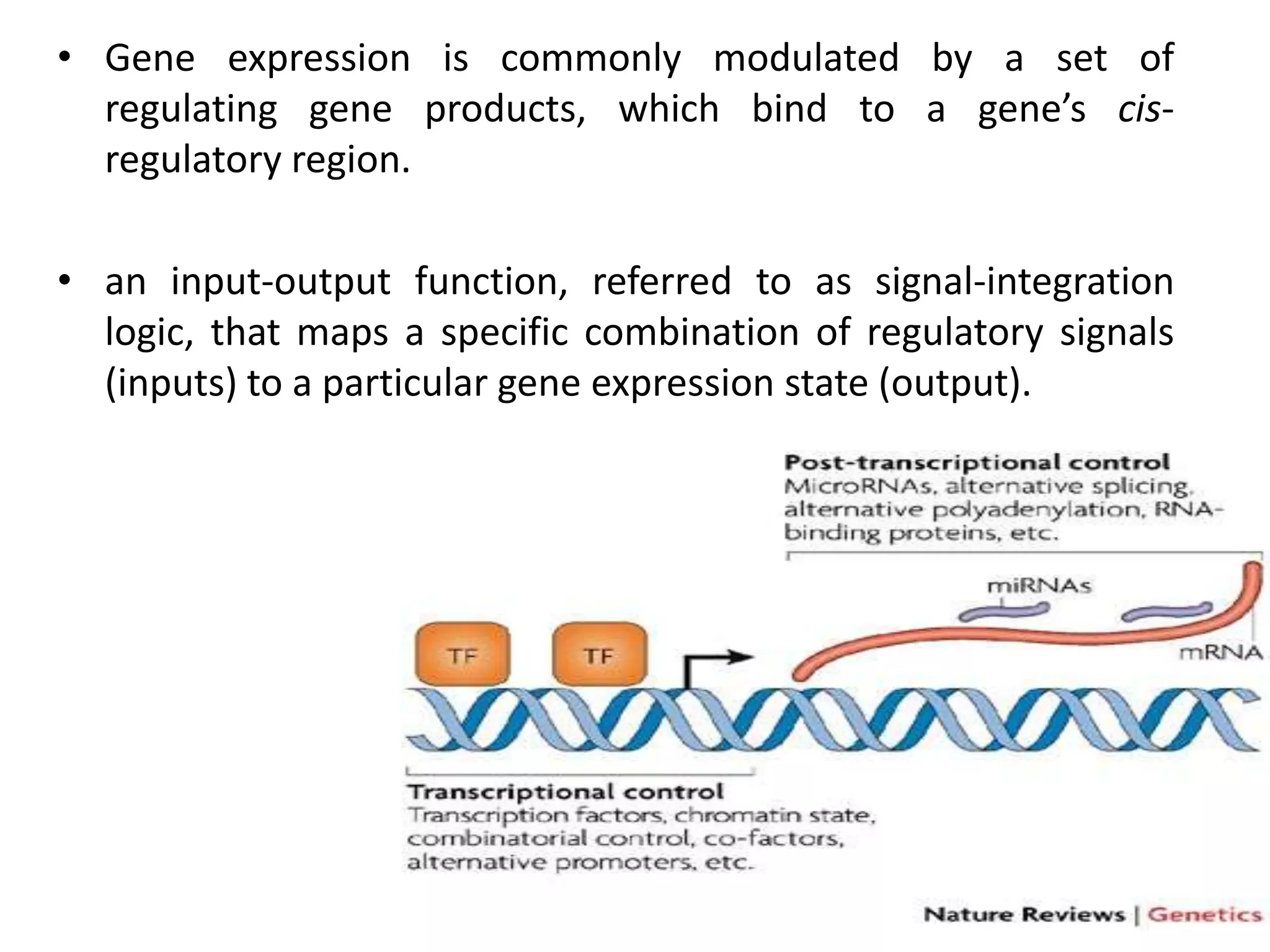
• Gene expression is commonly modulated by a set of
regulating gene products, which bind to a gene’s cis-
regulatory region.
• an input-output function, referred to as signal-integration
logic, that maps a specific combination of regulatory signals
(inputs) to a particular gene expression state (output).
• It is not known how this degeneracy
contributes to the mutational robustness of TF
binding sites, nor to their evolvability, which is
defined as the ability to bind different TFs
after mutation.
• "If a system is robust, it will persist in the face of
mutations. But if you actually want to be able to
evolve, you need to be able to vary in response to
mutations.
• Living things need robust genes; otherwise, any mutation
could spell death.
• At the same time, a species needs to exploit mutations
to evolve, adapt, and survive in a changing world.
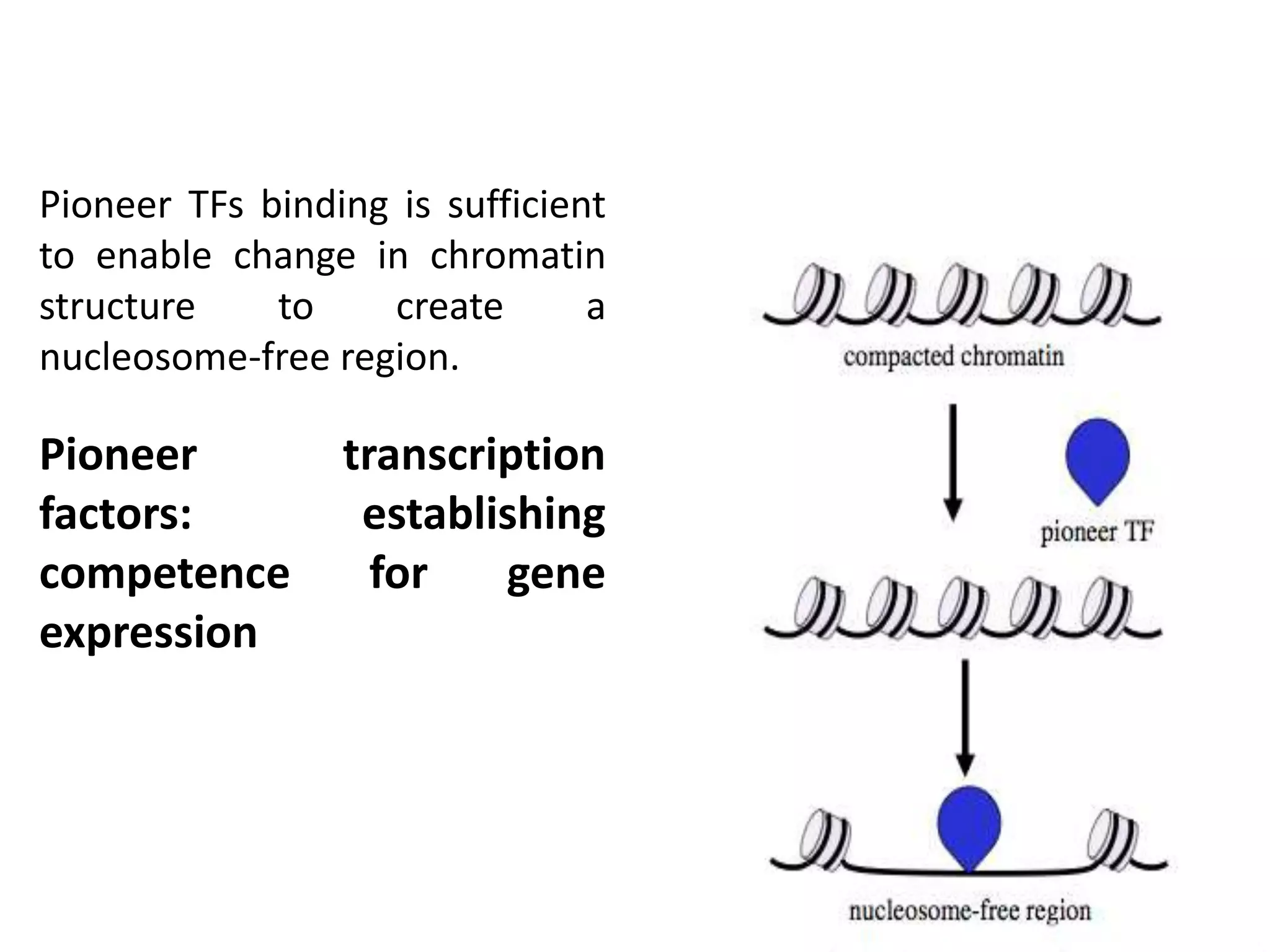
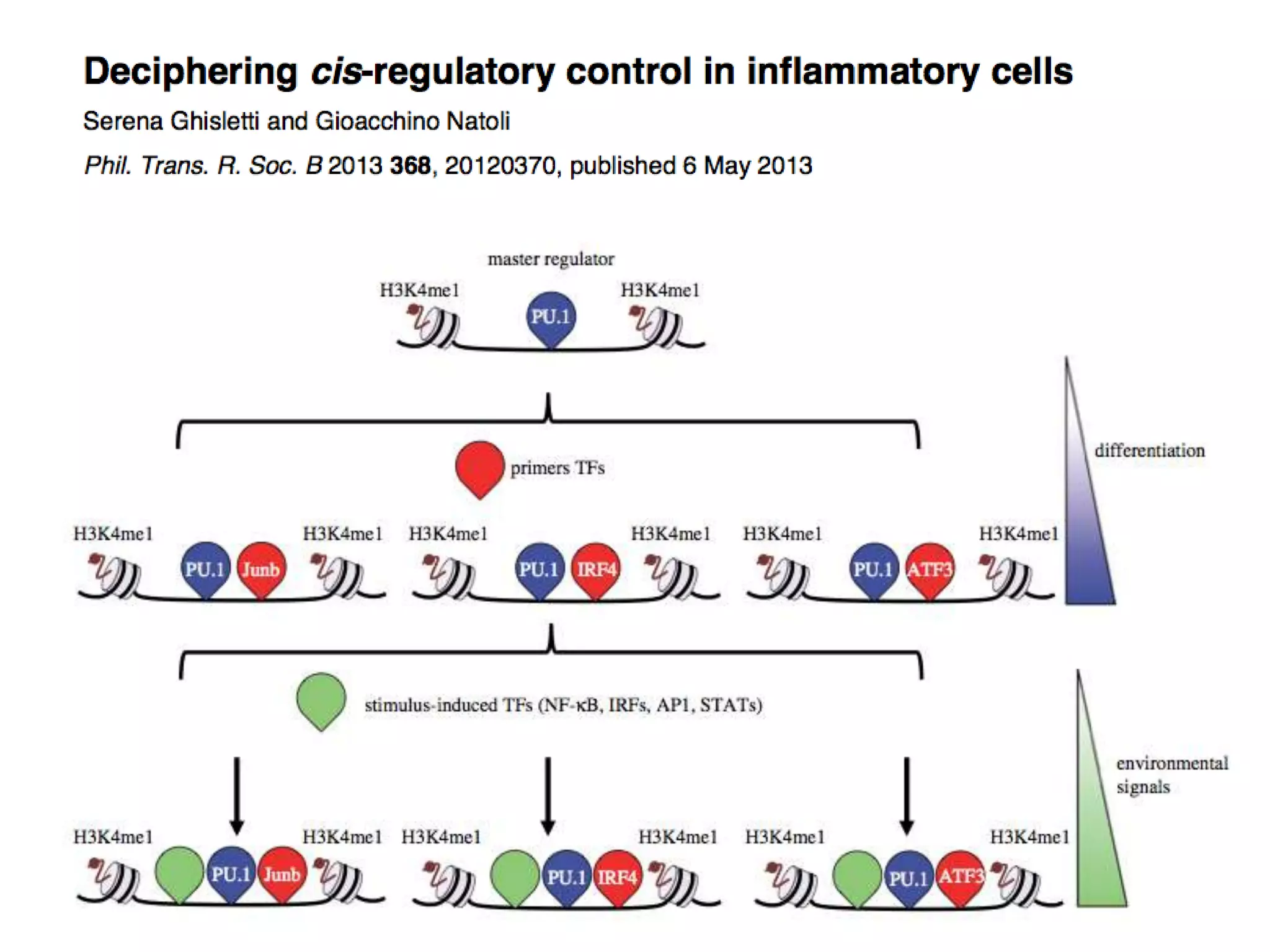
Pioneer TFs binding is sufficient
to enable change in chromatin
structure to create a
nucleosome-free region.
Pioneer transcription
factors: establishing
competence for gene
expression
TF Binding Sites
• Transcription factor binding sites are typically
between 6 and 10 nucleotides long.
• TF binding sites can be degenerate, with some
TFs binding hundreds of different
sequences, whereas others bind merely
dozens.
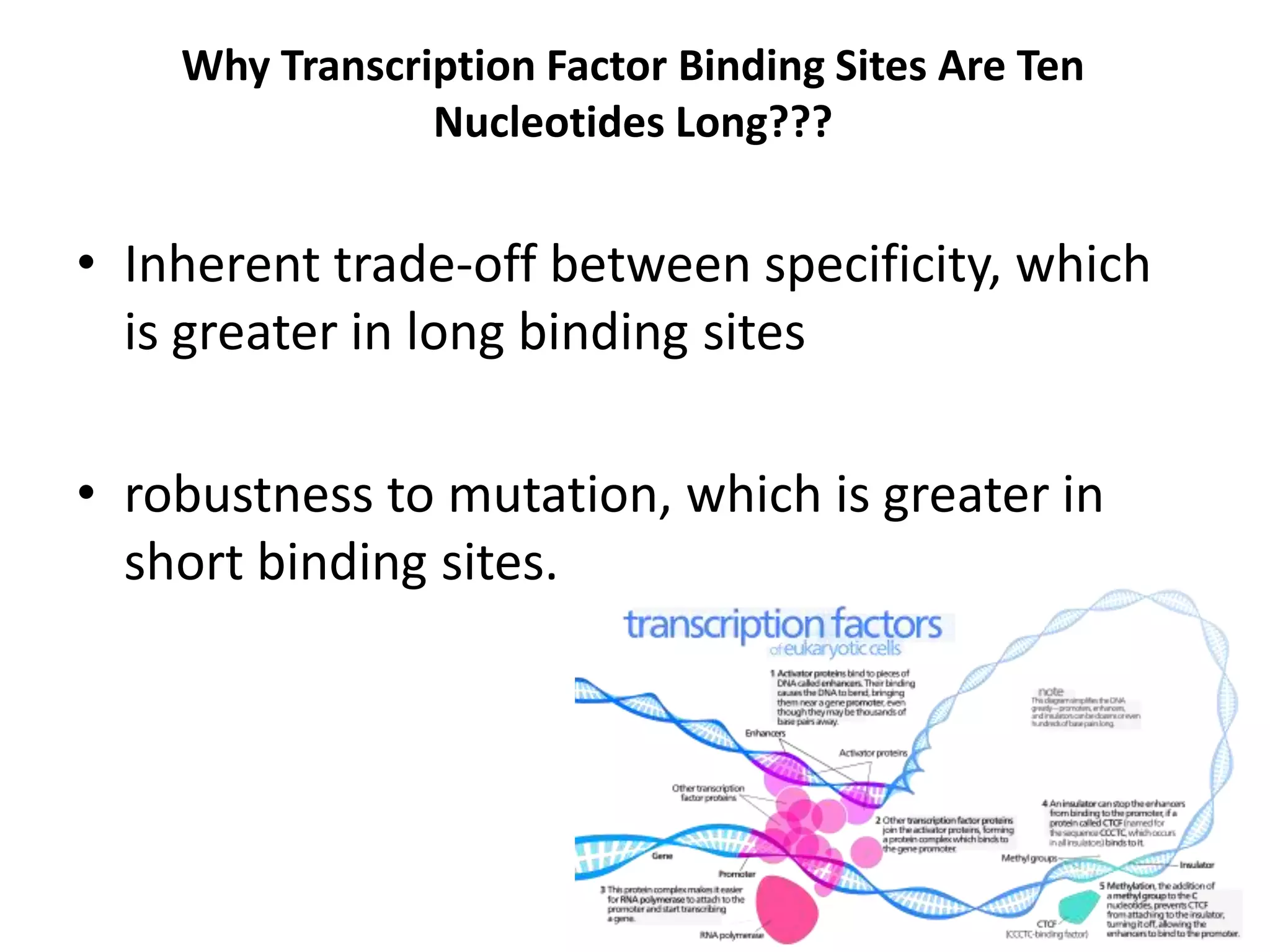
Why Transcription Factor Binding Sites Are Ten
Nucleotides Long???
• Inherent trade-off between specificity, which
is greater in long binding sites
• robustness to mutation, which is greater in
short binding sites.
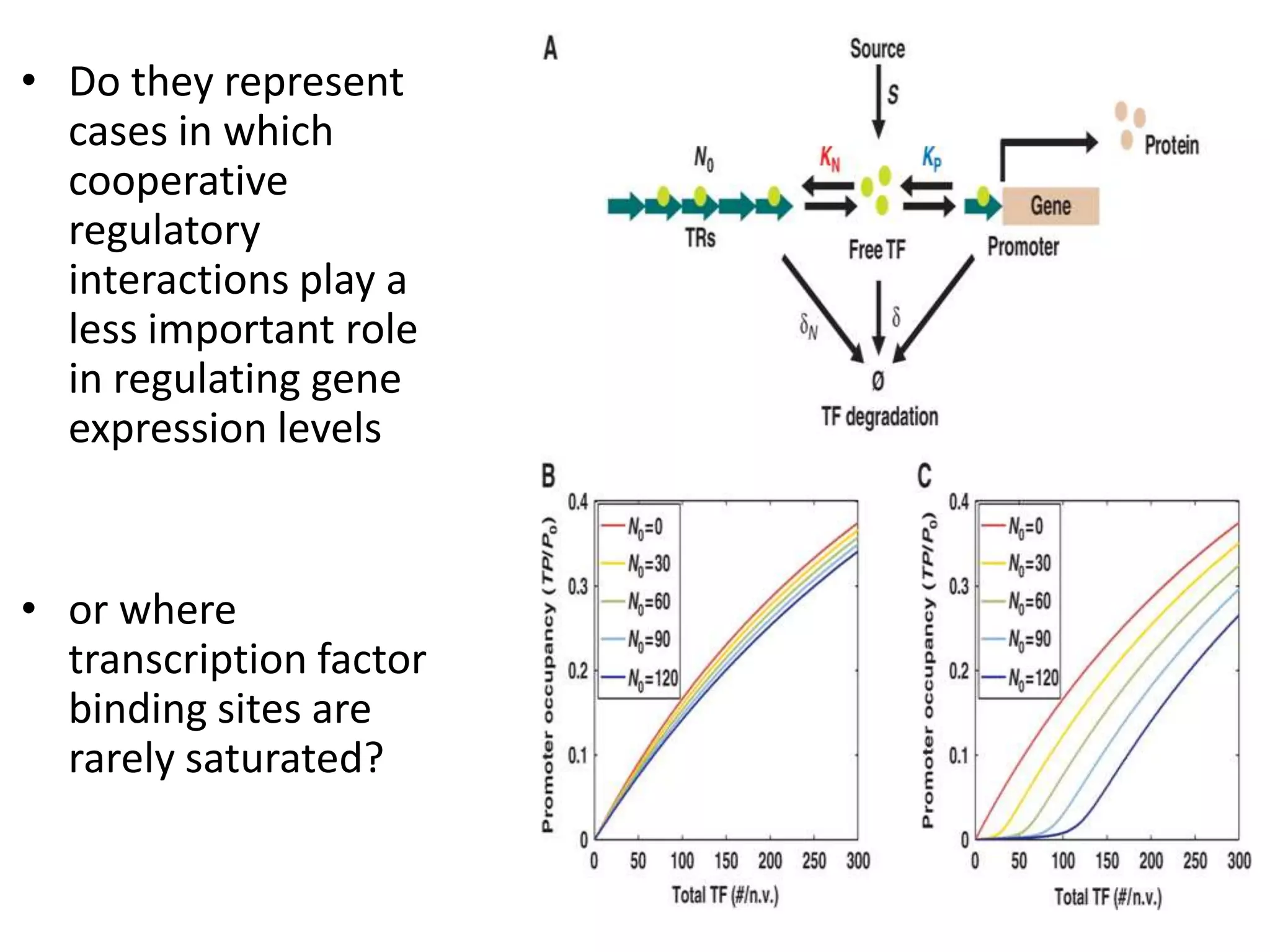
• Do they represent
cases in which
cooperative
regulatory
interactions play a
less important role
in regulating gene
expression levels
• or where
transcription factor
binding sites are
rarely saturated?
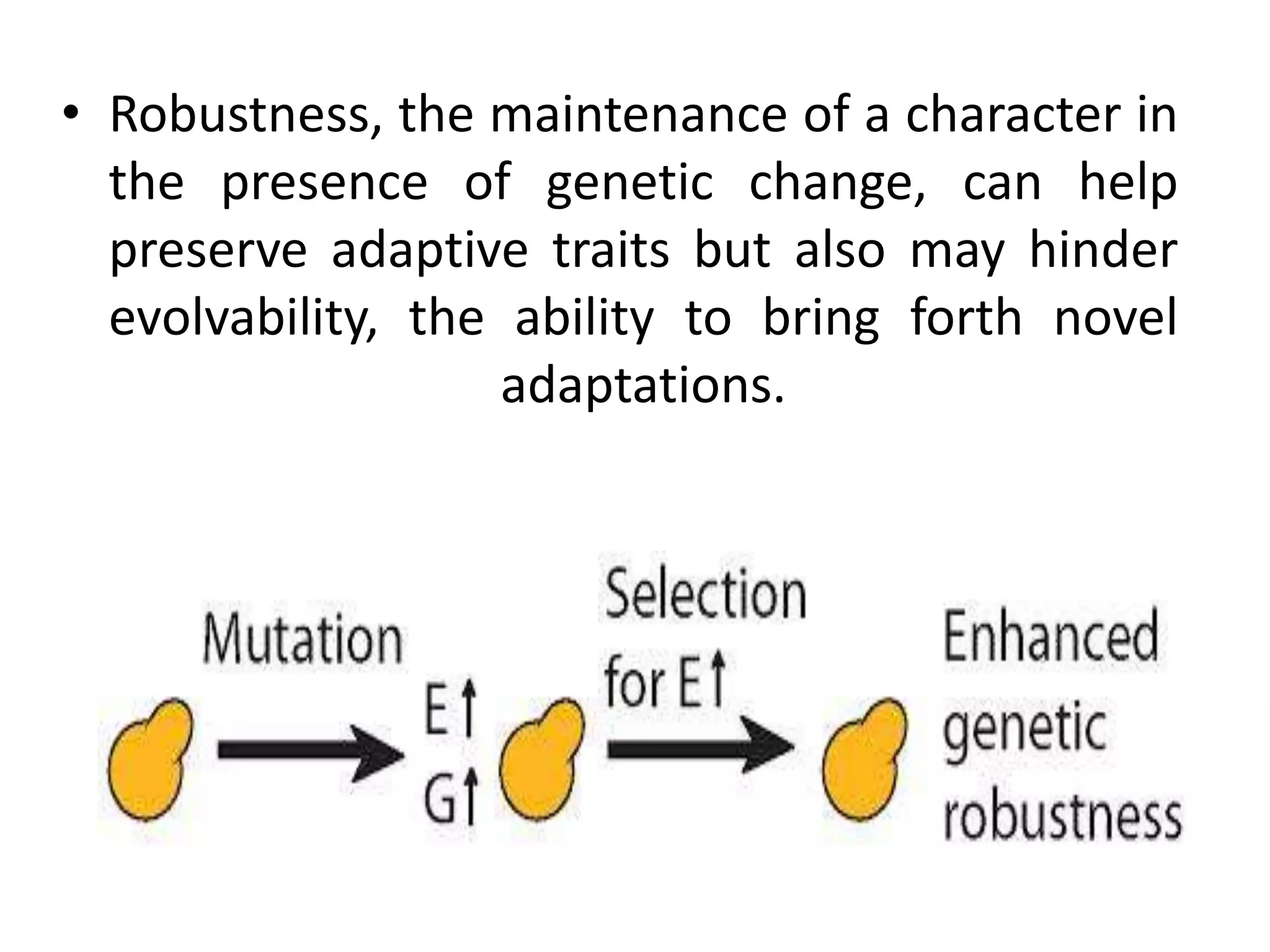
• Robustness, the maintenance of a character in
the presence of genetic change, can help
preserve adaptive traits but also may hinder
evolvability, the ability to bring forth novel
adaptations.
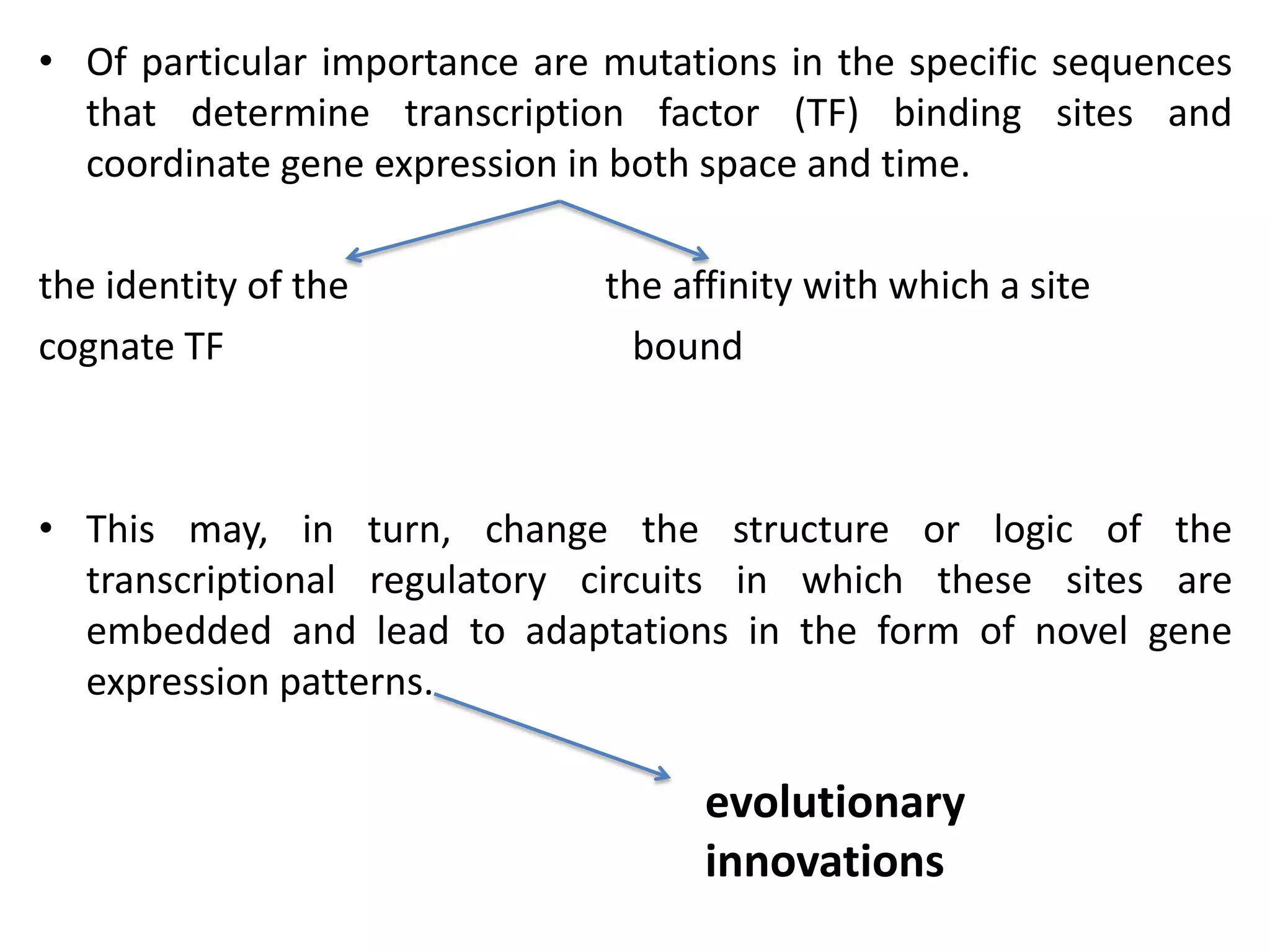
• Of particular importance are mutations in the specific sequences
that determine transcription factor (TF) binding sites and
coordinate gene expression in both space and time.
the identity of the the affinity with which a site
cognate TF bound
• This may, in turn, change the structure or logic of the
transcriptional regulatory circuits in which these sites are
embedded and lead to adaptations in the form of novel gene
expression patterns.
evolutionary
innovations
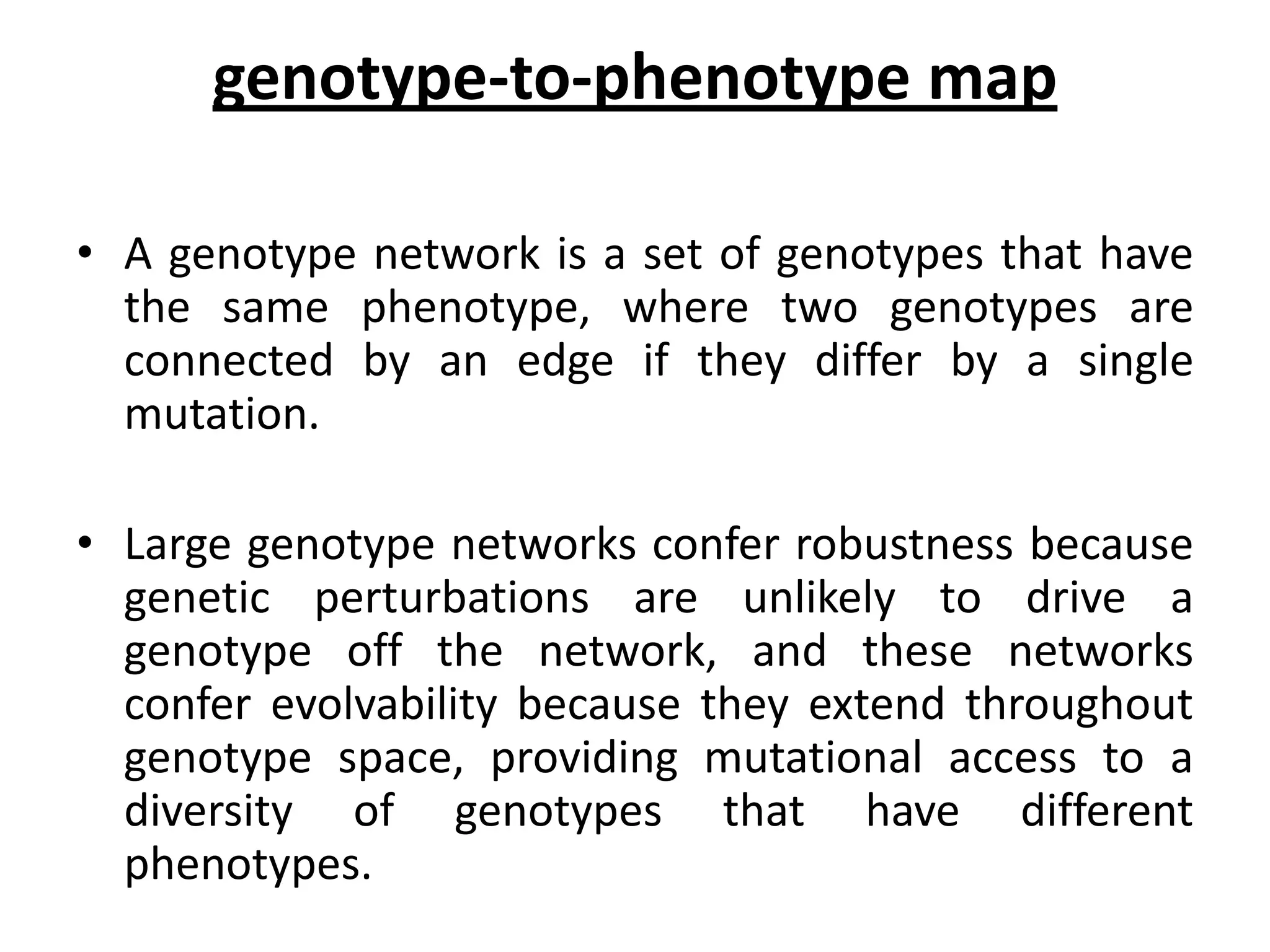
genotype-to-phenotype map
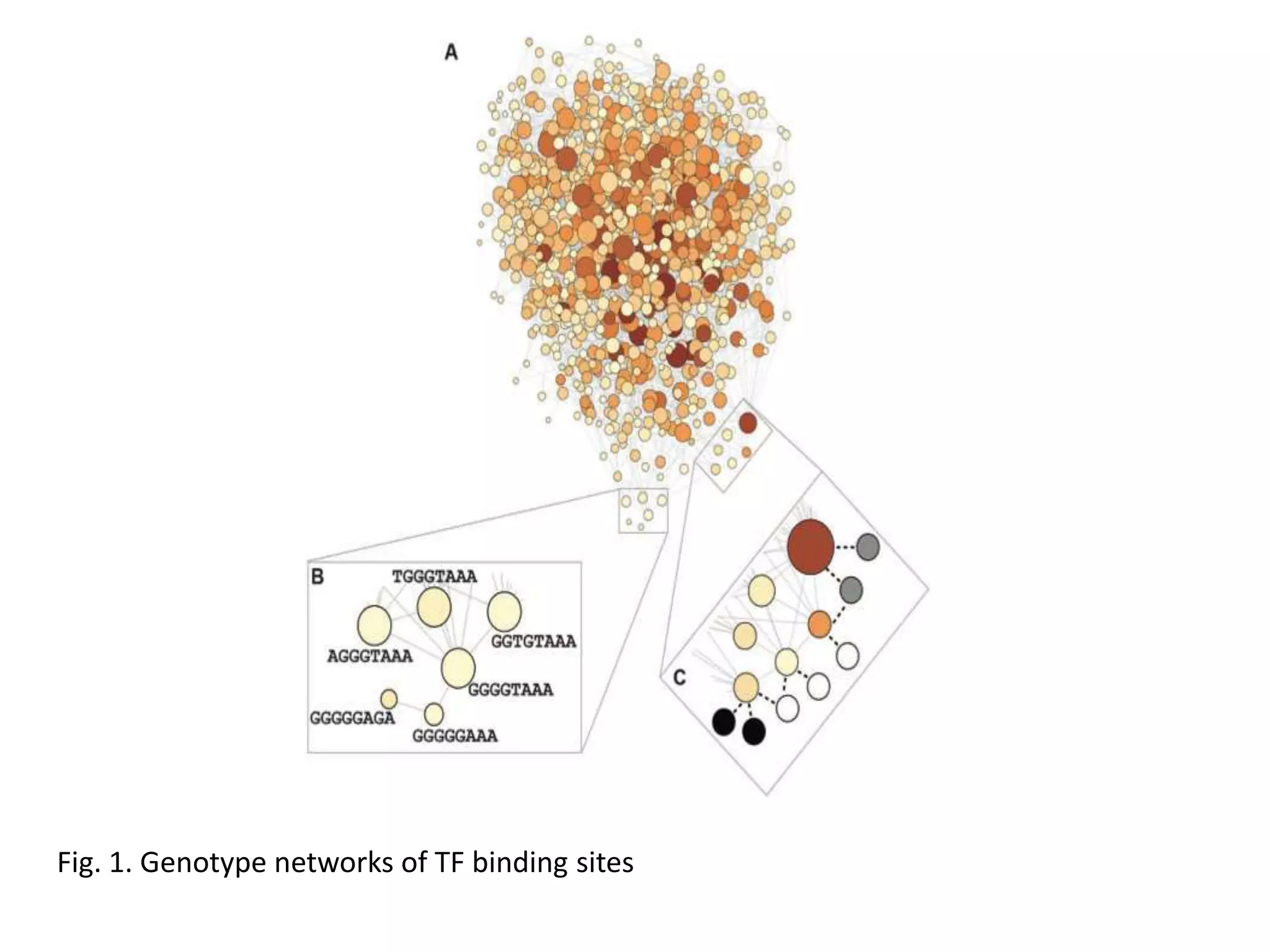
• A genotype network is a set of genotypes that have
the same phenotype, where two genotypes are
connected by an edge if they differ by a single
mutation.
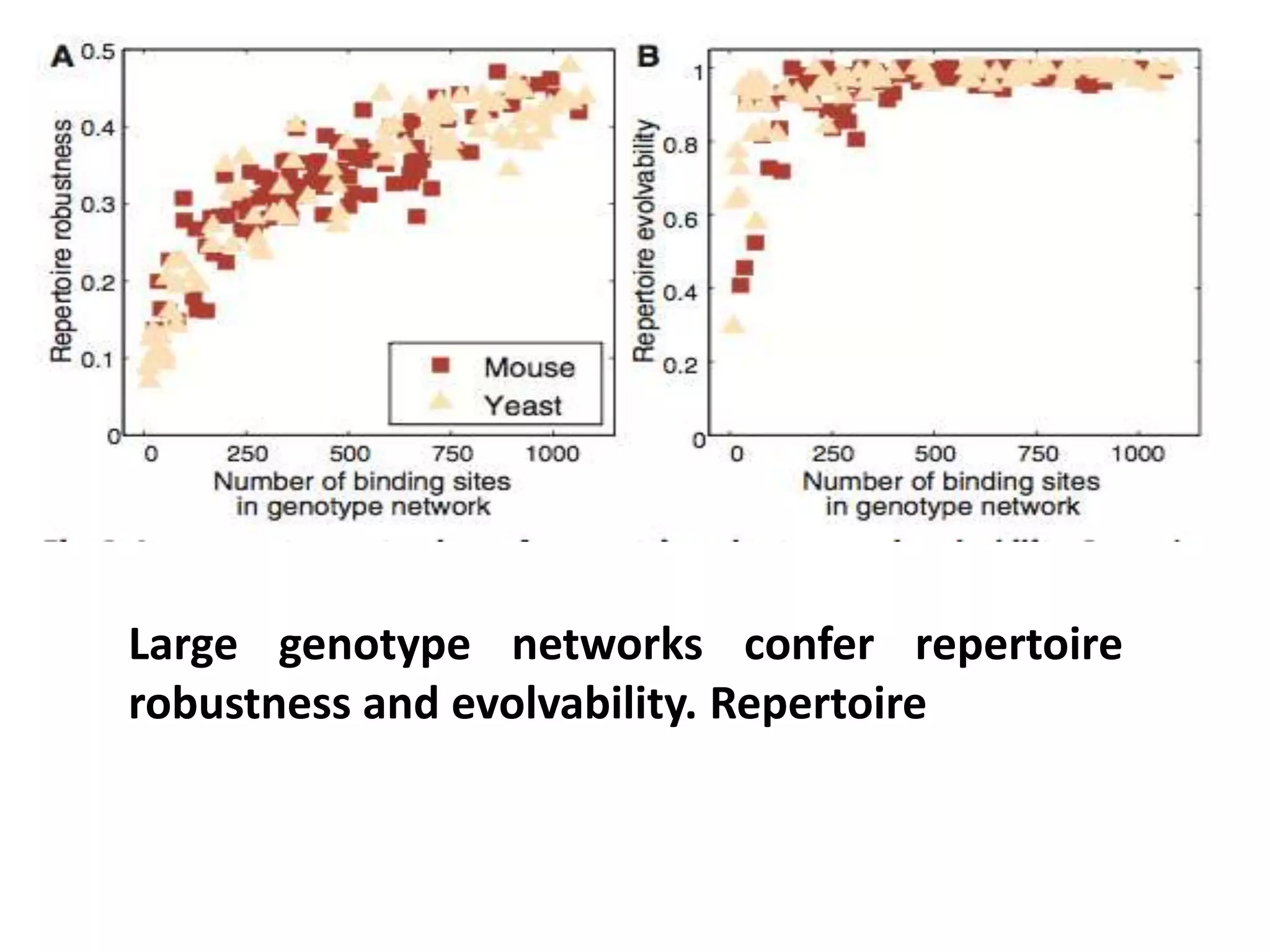
• Large genotype networks confer robustness because
genetic perturbations are unlikely to drive a
genotype off the network, and these networks
confer evolvability because they extend throughout
genotype space, providing mutational access to a
diversity of genotypes that have different
phenotypes.
Fig. 1. Genotype networks of TF binding sites
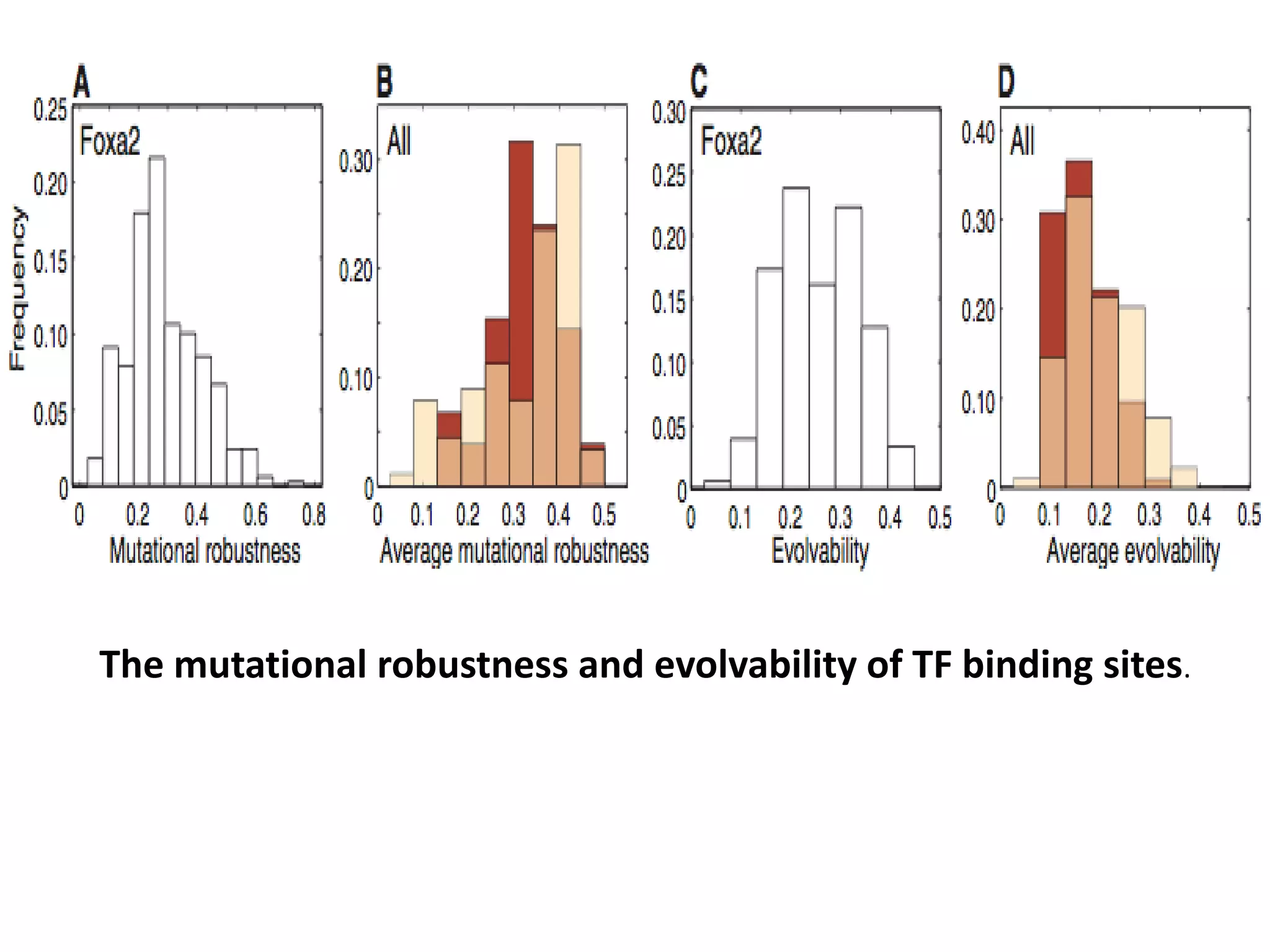
The mutational robustness and evolvability of TF binding sites.
Large genotype networks confer repertoire
robustness and evolvability. Repertoire
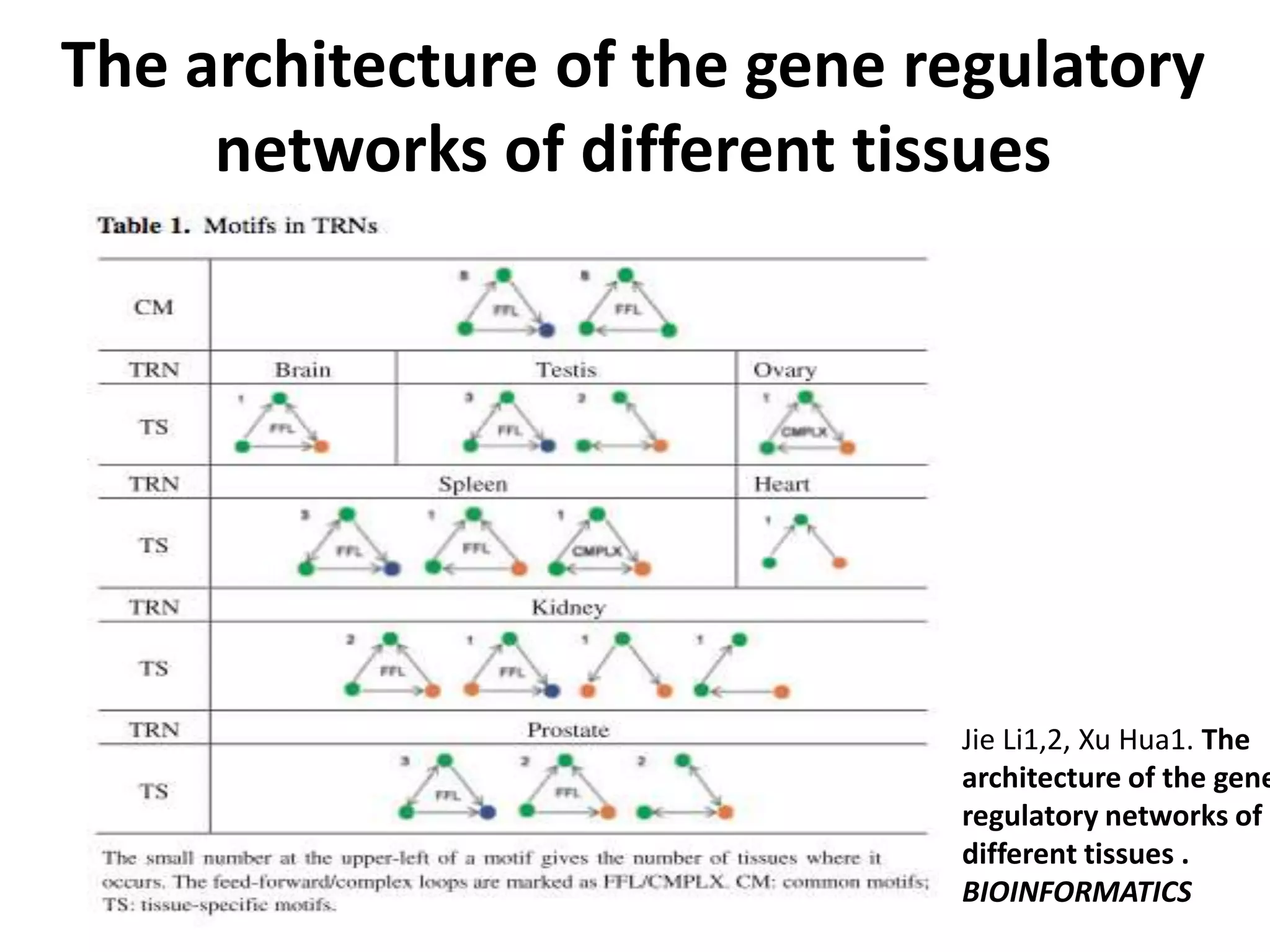
The architecture of the gene regulatory
networks of different tissues
Jie Li1,2, Xu Hua1. The
architecture of the gene
regulatory networks of
different tissues .
BIOINFORMATICS
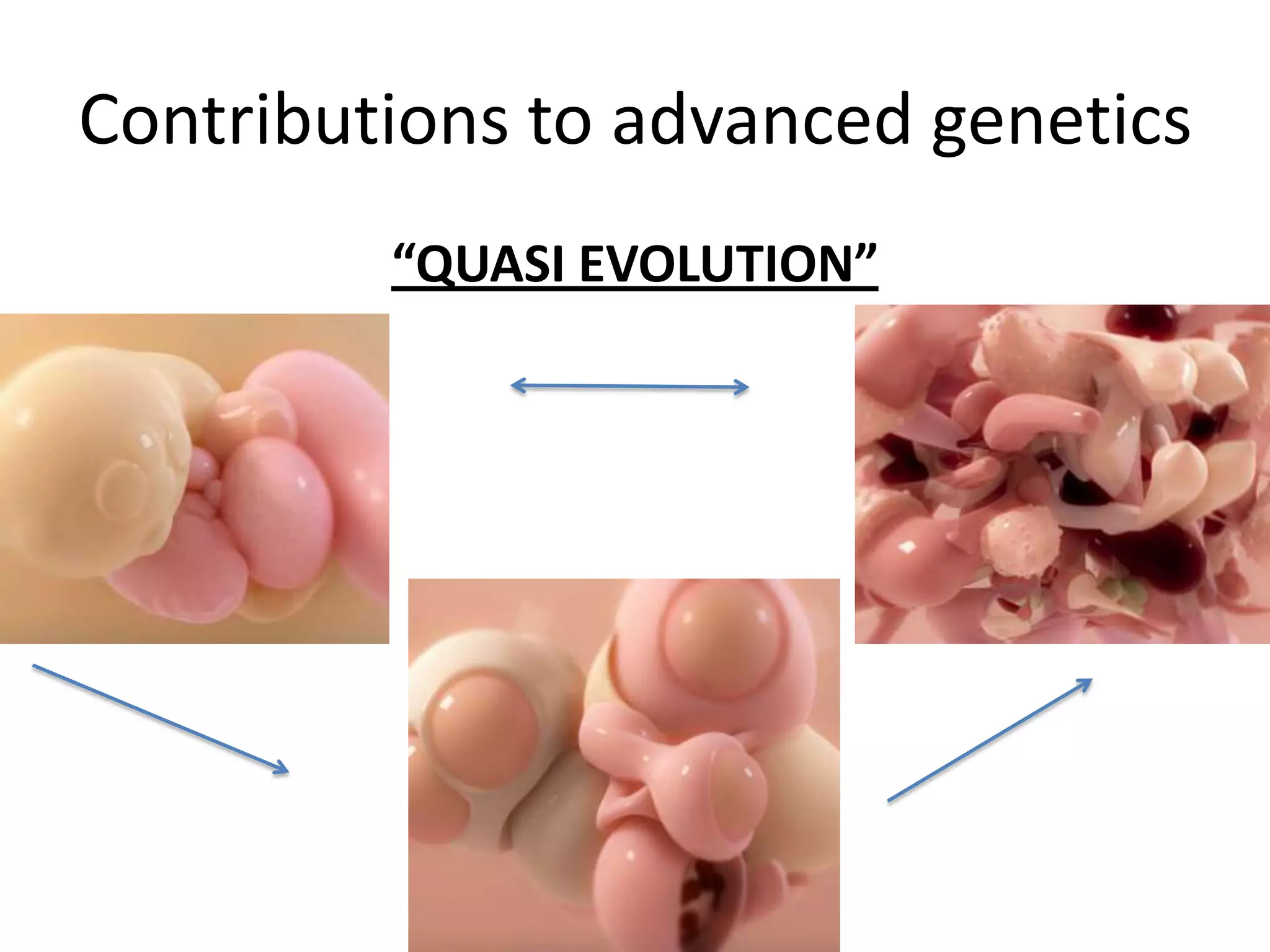
Contributions to advanced genetics
“QUASI EVOLUTION”
Conclusion
• The mutational robustness of TF binding sites can be
fine-tuned via mutation.
• number of point mutations with a regulatory effect can
vary greatly among sites, and with comparative studies
of binding site turnover in closely related species.
• Analysis of TF binding repertoires indicate that
decreased TF specificity yields large connected
genotype networks that confer robustness and
evolvability to the binding sites they harbor.

The Robustness and Evolvability of Transcription Factor Binding Sites

  • 1.
    The Robustness andEvolvability of Transcription Factor Binding Sites Presented by, Sandeep Satapathy BS-MS, 4th Year (10079)
  • 2.
    • Gene expressionis commonly modulated by a set of regulating gene products, which bind to a gene’s cis- regulatory region. • an input-output function, referred to as signal-integration logic, that maps a specific combination of regulatory signals (inputs) to a particular gene expression state (output).
  • 3.
    • It isnot known how this degeneracy contributes to the mutational robustness of TF binding sites, nor to their evolvability, which is defined as the ability to bind different TFs after mutation.
  • 4.
    • "If asystem is robust, it will persist in the face of mutations. But if you actually want to be able to evolve, you need to be able to vary in response to mutations. • Living things need robust genes; otherwise, any mutation could spell death. • At the same time, a species needs to exploit mutations to evolve, adapt, and survive in a changing world.
  • 5.
    Pioneer TFs bindingis sufficient to enable change in chromatin structure to create a nucleosome-free region. Pioneer transcription factors: establishing competence for gene expression
  • 6.
    TF Binding Sites •Transcription factor binding sites are typically between 6 and 10 nucleotides long. • TF binding sites can be degenerate, with some TFs binding hundreds of different sequences, whereas others bind merely dozens.
  • 7.
    Why Transcription FactorBinding Sites Are Ten Nucleotides Long??? • Inherent trade-off between specificity, which is greater in long binding sites • robustness to mutation, which is greater in short binding sites.
  • 8.
    • Do theyrepresent cases in which cooperative regulatory interactions play a less important role in regulating gene expression levels • or where transcription factor binding sites are rarely saturated?
  • 9.
    • Robustness, themaintenance of a character in the presence of genetic change, can help preserve adaptive traits but also may hinder evolvability, the ability to bring forth novel adaptations.
  • 10.
    • Of particularimportance are mutations in the specific sequences that determine transcription factor (TF) binding sites and coordinate gene expression in both space and time. the identity of the the affinity with which a site cognate TF bound • This may, in turn, change the structure or logic of the transcriptional regulatory circuits in which these sites are embedded and lead to adaptations in the form of novel gene expression patterns. evolutionary innovations
  • 11.
    genotype-to-phenotype map • Agenotype network is a set of genotypes that have the same phenotype, where two genotypes are connected by an edge if they differ by a single mutation. • Large genotype networks confer robustness because genetic perturbations are unlikely to drive a genotype off the network, and these networks confer evolvability because they extend throughout genotype space, providing mutational access to a diversity of genotypes that have different phenotypes.
  • 12.
    Fig. 1. Genotypenetworks of TF binding sites
  • 13.
    The mutational robustnessand evolvability of TF binding sites.
  • 14.
    Large genotype networksconfer repertoire robustness and evolvability. Repertoire
  • 15.
    The architecture ofthe gene regulatory networks of different tissues Jie Li1,2, Xu Hua1. The architecture of the gene regulatory networks of different tissues . BIOINFORMATICS
  • 17.
    Contributions to advancedgenetics “QUASI EVOLUTION”
  • 18.
    Conclusion • The mutationalrobustness of TF binding sites can be fine-tuned via mutation. • number of point mutations with a regulatory effect can vary greatly among sites, and with comparative studies of binding site turnover in closely related species. • Analysis of TF binding repertoires indicate that decreased TF specificity yields large connected genotype networks that confer robustness and evolvability to the binding sites they harbor.