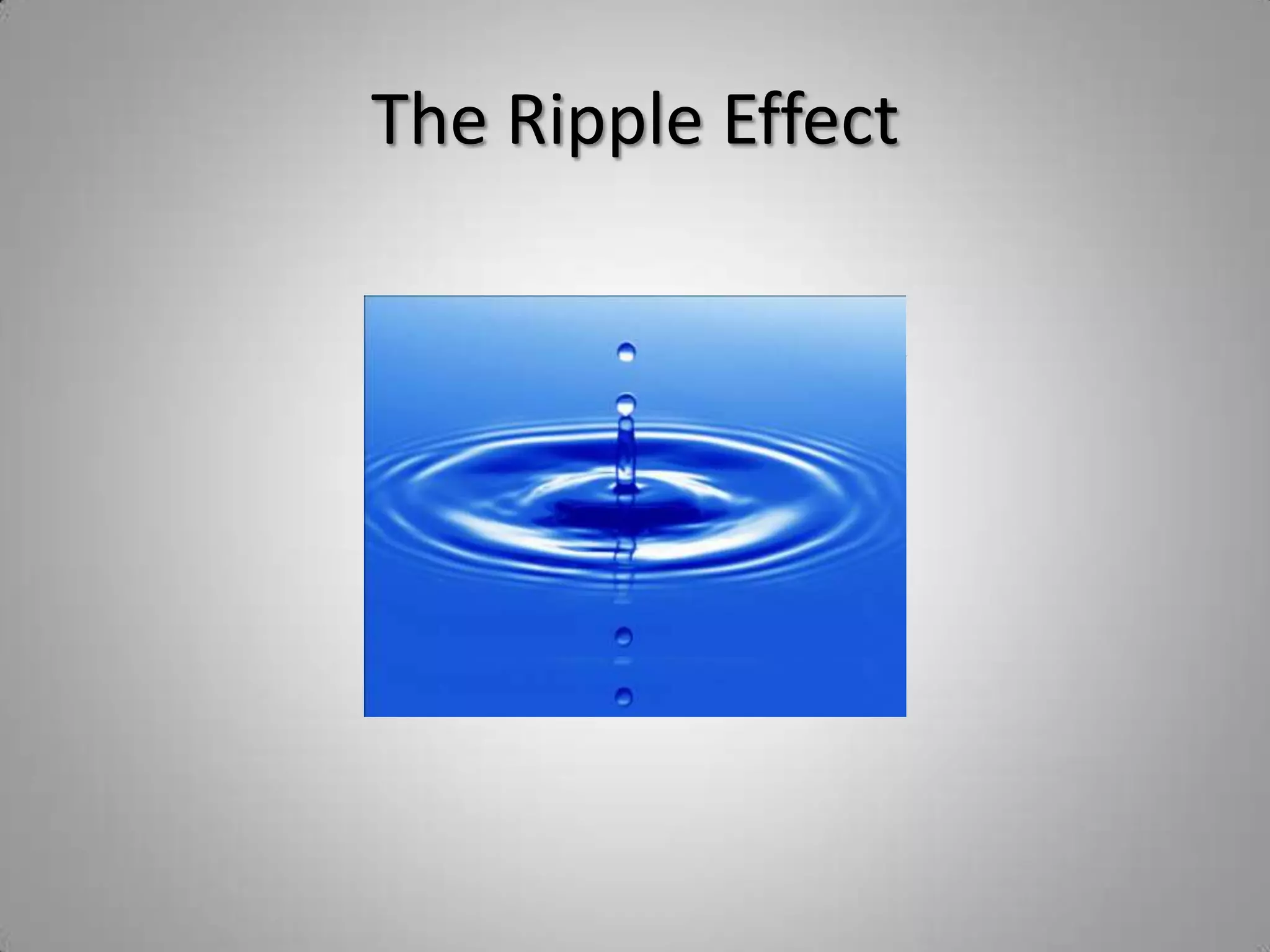
The Ripple Effect
Performance Objectives
• The learner will be able to define the Ripple
  Effect.
• Identify the importance of understanding the
  Ripple Effect.
• The learner will understand how the Ripple Effect
  is present in everyday actions or inactions.

• Why we act is not the question, what happens
  after we act is thought we seek today.
Definition
• Ripple Effect – The direct aftermath caused by
  one solitary action or inaction.

• “A small change at one point in a complex
  system can have large effects elsewhere.”
  – Albert Einstein
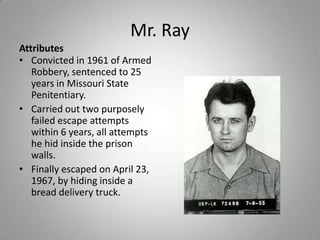
Mr. Ray
Attributes
• Convicted in 1961 of Armed
   Robbery, sentenced to 25
   years in Missouri State
   Penitentiary.
• Carried out two purposely
   failed escape attempts
   within 6 years, all attempts
   he hid inside the prison
   walls.
• Finally escaped on April 23,
   1967, by hiding inside a
   bread delivery truck.
James Earl Ray - Continued
Ripple effect #1                   Ripple Effect #2
• Due to previous escape           • On April 4, 1968, James Earl
  attempts being within the           Ray assassinated Martin
  prison walls, Prison Officials      Luther King Jr.
  searched all 48 acres of the
  prison grounds for several
  days before declaring James
  Earl Ray an escapee.
What does TDCJ use the Ripple Effect
                for?
• The creation and adaptation of new policies and
  procedures.

• Evaluation of a critical incident, for the purpose of
  locating key components in the cause of the incident.

• Learning tools. 

• “Those who don’t know history are destined to repeat
  it.” – Sir Edmund Burke
Positive Features of the Ripple Effect.
• Your action can cause another to act in a more
  positive and professional manner.

• Colin Powell said, “Perpetual optimism is a
  force multiplier. The ripple effect of a leader’s
  enthusiasm and optimism is awesome”

• (Newly assigned Officers)
Summary
• The Ripple Effect is aftermath of an action or
  inaction.

• The Ripple Effect is utilized for evaluation and
  learning.

• The Ripple Effect can be evident in everyday
  actions, which cause a reaction.

• Questions?

The ripple effect

  • 1.
  • 2.
    Performance Objectives • Thelearner will be able to define the Ripple Effect. • Identify the importance of understanding the Ripple Effect. • The learner will understand how the Ripple Effect is present in everyday actions or inactions. • Why we act is not the question, what happens after we act is thought we seek today.
  • 3.
    Definition • Ripple Effect– The direct aftermath caused by one solitary action or inaction. • “A small change at one point in a complex system can have large effects elsewhere.” – Albert Einstein
  • 4.
    Mr. Ray Attributes • Convictedin 1961 of Armed Robbery, sentenced to 25 years in Missouri State Penitentiary. • Carried out two purposely failed escape attempts within 6 years, all attempts he hid inside the prison walls. • Finally escaped on April 23, 1967, by hiding inside a bread delivery truck.
  • 5.
    James Earl Ray- Continued Ripple effect #1 Ripple Effect #2 • Due to previous escape • On April 4, 1968, James Earl attempts being within the Ray assassinated Martin prison walls, Prison Officials Luther King Jr. searched all 48 acres of the prison grounds for several days before declaring James Earl Ray an escapee.
  • 6.
    What does TDCJuse the Ripple Effect for? • The creation and adaptation of new policies and procedures. • Evaluation of a critical incident, for the purpose of locating key components in the cause of the incident. • Learning tools.  • “Those who don’t know history are destined to repeat it.” – Sir Edmund Burke
  • 7.
    Positive Features ofthe Ripple Effect. • Your action can cause another to act in a more positive and professional manner. • Colin Powell said, “Perpetual optimism is a force multiplier. The ripple effect of a leader’s enthusiasm and optimism is awesome” • (Newly assigned Officers)
  • 8.
    Summary • The RippleEffect is aftermath of an action or inaction. • The Ripple Effect is utilized for evaluation and learning. • The Ripple Effect can be evident in everyday actions, which cause a reaction. • Questions?