Bhargav Dangar
Roll No. 20
Media Law
 The Law of contempt requires the balancing of two vital but often
competing democratic values.
 The right to free speech &
 The necessity to preserve public confidence in judicial system.
 The right of criticism is a vital ingredient of any democratic system
& is an integral part of the
article 19 (1) (a) of the constitution.
 The Judiciary, like any other institution does
not enjoy immunity from criticism.
 The right to criticise judgments has been
recognised and reiterated on a number of
occasions.
 On one side is the democratic right to free speech, expression &
criticism; on other is the necessity to shield the judicial system
from indignity.
 The serious allegations made against in individual judge would
undermine public confidence in the system.
 Till recently, neither truth nor good faith were defenses against
the law of contempt in India.
 In this case the Supreme Court held that the criticism of any judicial
act must always be dignified and that motives must never be
attributed.
 The Judgments of court are public documents & can be commented
upon analysed & criticised, but in a dignified manner.
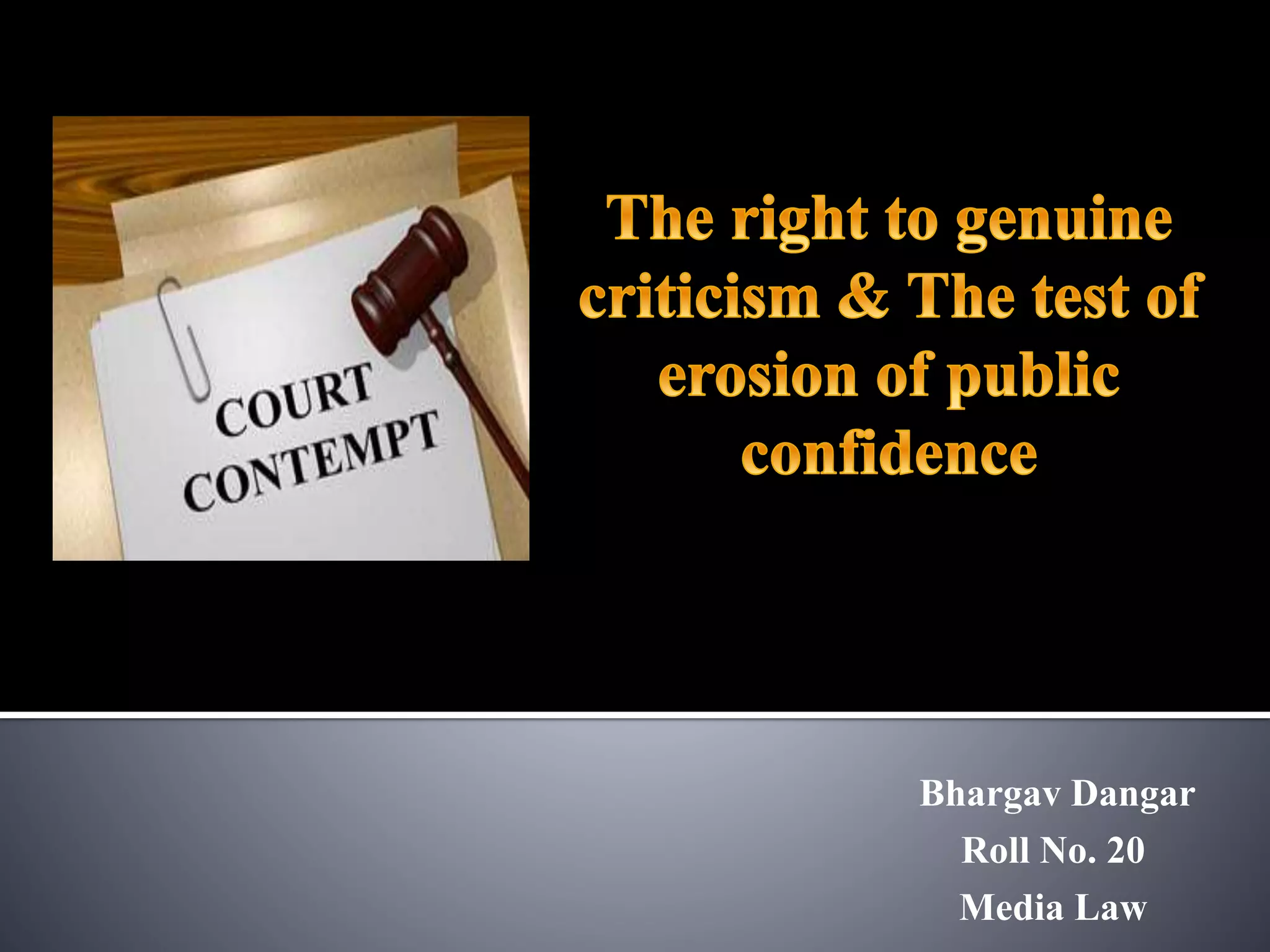
The Right to genuine criticism & The test of erosion of public confidence

The Right to genuine criticism & The test of erosion of public confidence

  • 1.
  • 2.
     The Lawof contempt requires the balancing of two vital but often competing democratic values.  The right to free speech &  The necessity to preserve public confidence in judicial system.  The right of criticism is a vital ingredient of any democratic system & is an integral part of the article 19 (1) (a) of the constitution.
  • 3.
     The Judiciary,like any other institution does not enjoy immunity from criticism.  The right to criticise judgments has been recognised and reiterated on a number of occasions.
  • 4.
     On oneside is the democratic right to free speech, expression & criticism; on other is the necessity to shield the judicial system from indignity.  The serious allegations made against in individual judge would undermine public confidence in the system.  Till recently, neither truth nor good faith were defenses against the law of contempt in India.
  • 5.
     In thiscase the Supreme Court held that the criticism of any judicial act must always be dignified and that motives must never be attributed.  The Judgments of court are public documents & can be commented upon analysed & criticised, but in a dignified manner.