The Process of
Metabolism!!
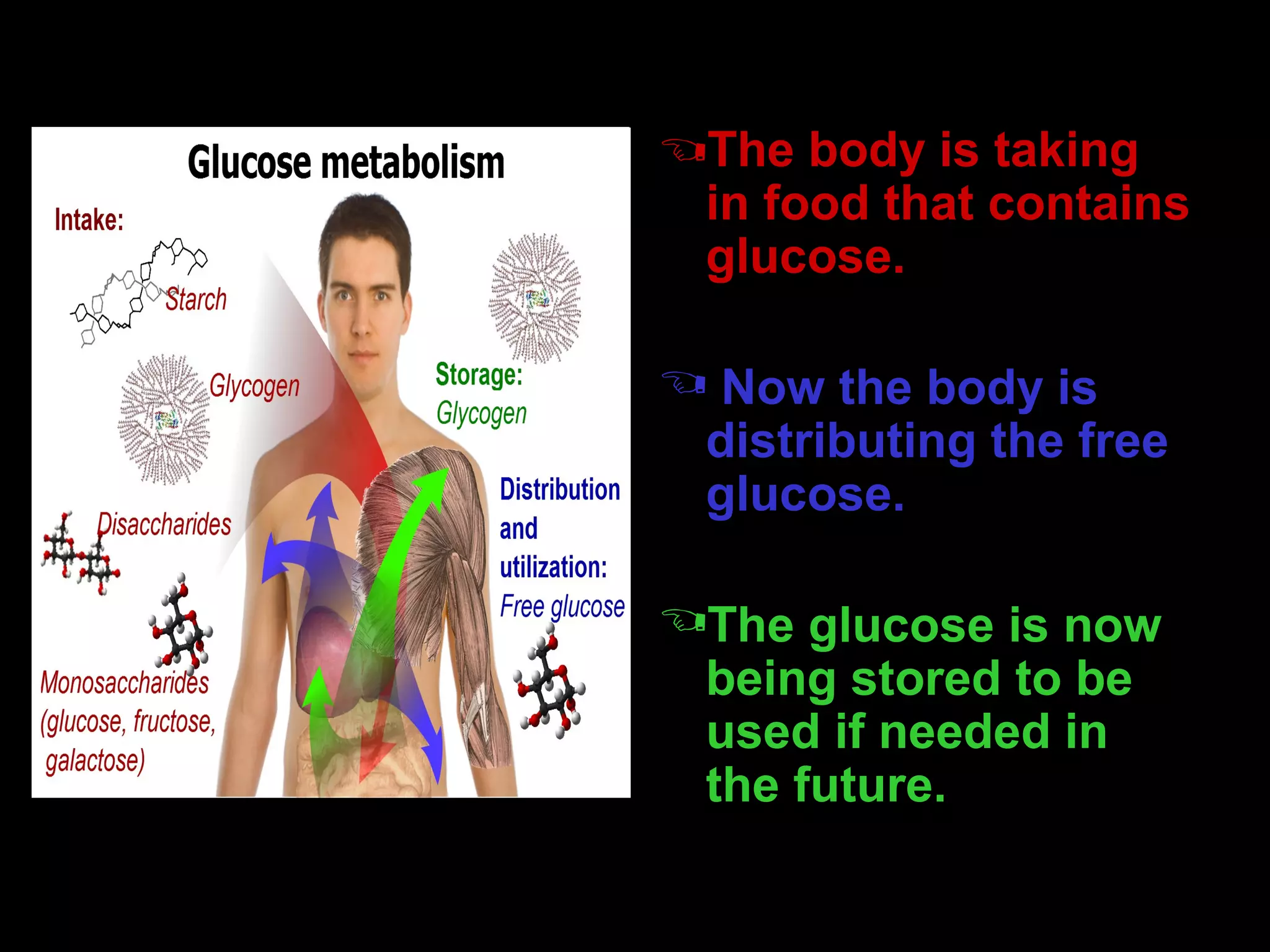
The body is taking
in food that contains
glucose.
 Now the body is
distributing the free
glucose.
The glucose is now
being stored to be
used if needed in
the future.
Step 1: Plants and Photosynthesis
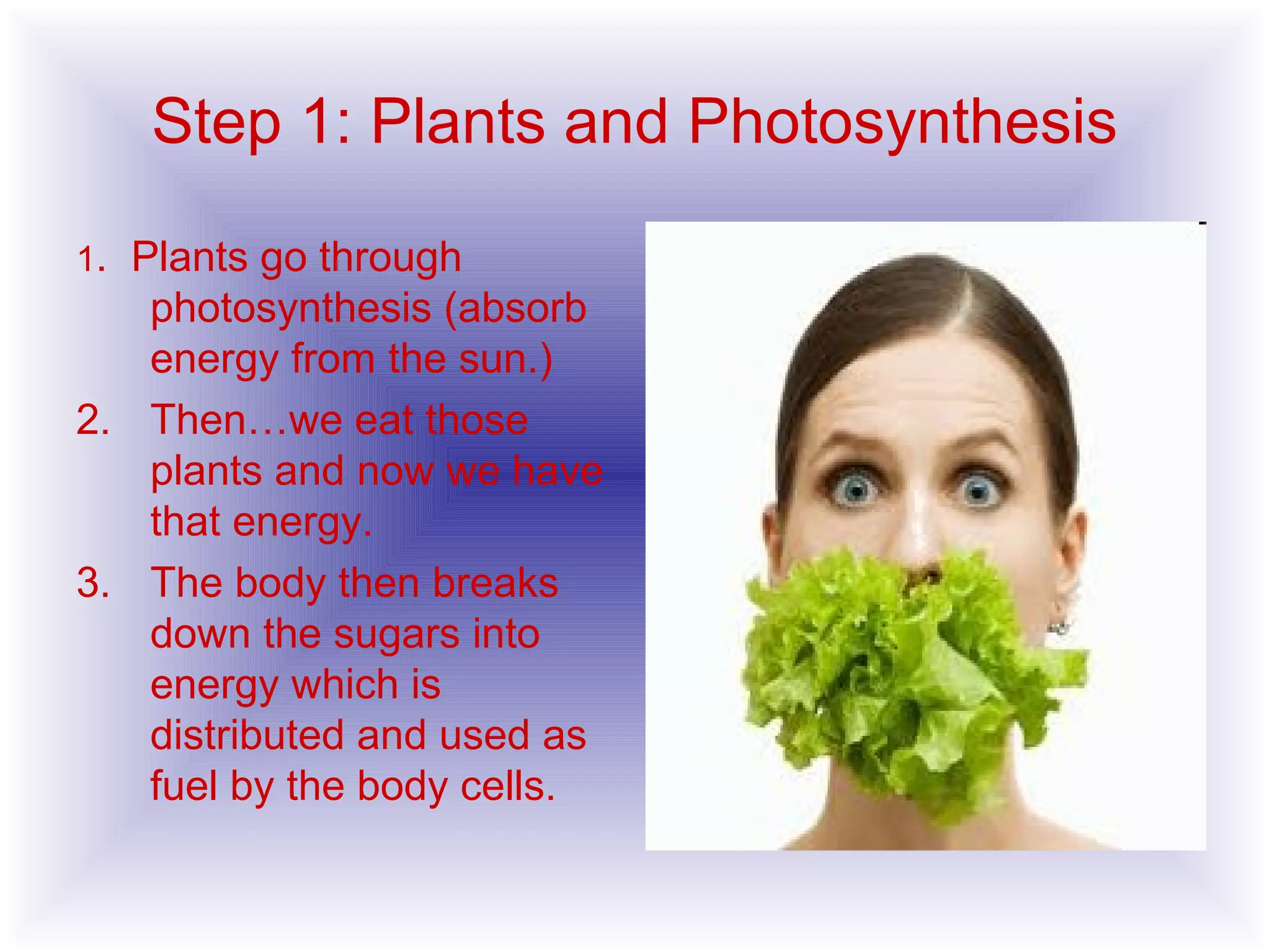
1. Plants go through
photosynthesis (absorb
energy from the sun.)
2. Then…we eat those
plants and now we have
that energy.
3. The body then breaks
down the sugars into
energy which is
distributed and used as
fuel by the body cells.
Step 2: Distribution
After food is eaten enzymes in the digestive
system break proteins down into amino
acids, fats are broken into fatty acids,
and carbohydrates into simple sugars.
Step 3: Storage
Now the body goes through Anabolism and
Catabolism which decides whether the
energy is stored for future use or used to
fuel the body.
Anabolic N Catabolic
Anabolic:
“Constructive Metabolism”
• Supports growth of new
cells
• Maintains body tissus
• Stores energy for future
use.
small molecules are turned
into LARGE ones.
Catabolic:
“Destructive Metabolism”
• Produces energy for all
cell activity.
• Large molecules are
broken down to
Release EnergyRelease Energy.
• Provides fuel for anabolismProvides fuel for anabolism
• Heats the bodyHeats the body
• Allows body to move andAllows body to move and
muscle contraction.muscle contraction.
• Releases waste products
LARGE molecules are
broken to small ones.
Control of Metabolism
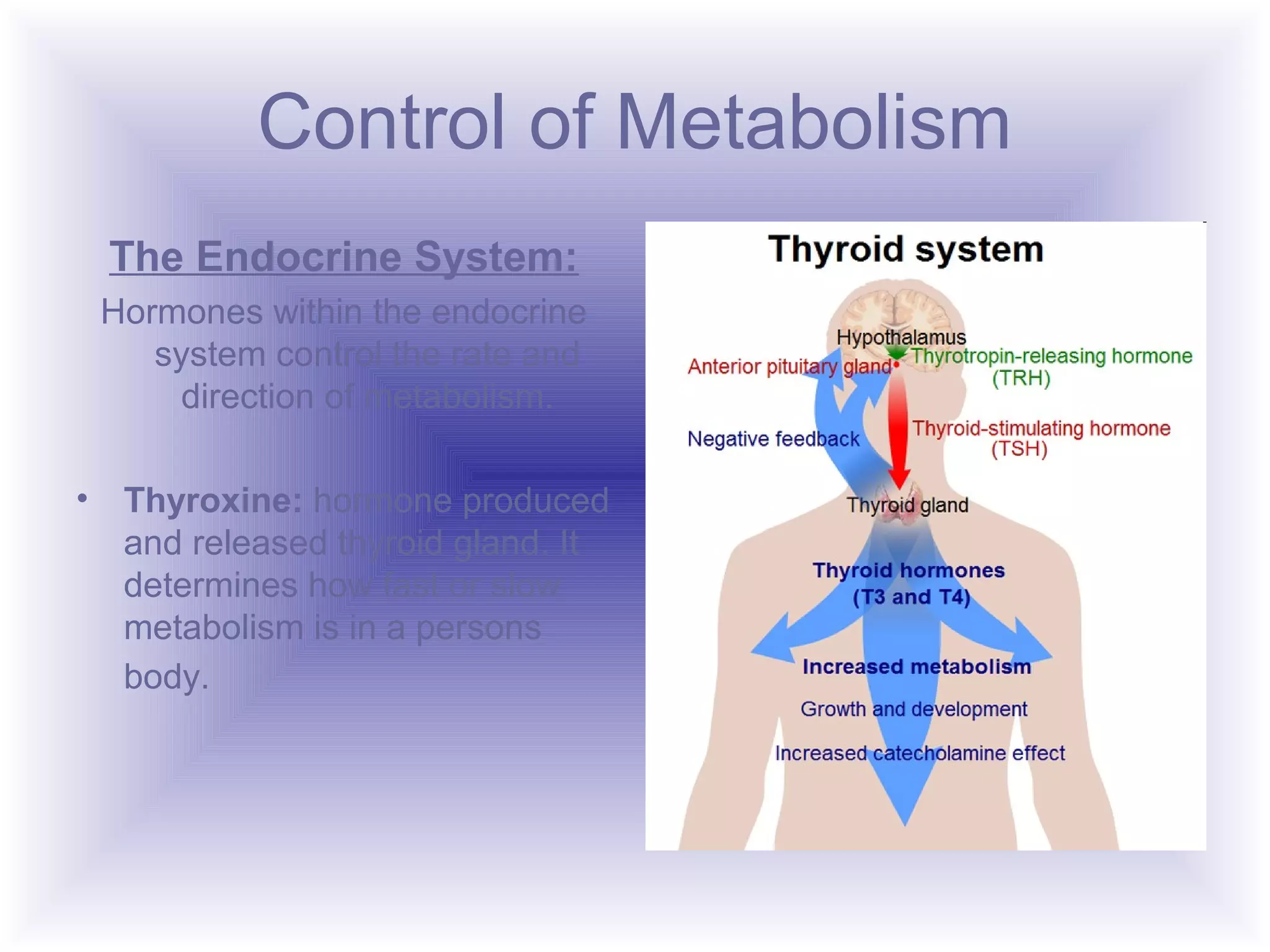
The Endocrine System:
Hormones within the endocrine
system control the rate and
direction of metabolism.
• Thyroxine: hormone produced
and released thyroid gland. It
determines how fast or slow
metabolism is in a persons
body.
Control of Metabolism
The Endocrine System:
Hormones within the endocrine
system control the rate and
direction of metabolism.
• Thyroxine: hormone produced
and released thyroid gland. It
determines how fast or slow
metabolism is in a persons
body.

The process of metabolism!!

  • 1.
  • 3.
    The body istaking in food that contains glucose.  Now the body is distributing the free glucose. The glucose is now being stored to be used if needed in the future.
  • 4.
    Step 1: Plantsand Photosynthesis 1. Plants go through photosynthesis (absorb energy from the sun.) 2. Then…we eat those plants and now we have that energy. 3. The body then breaks down the sugars into energy which is distributed and used as fuel by the body cells.
  • 5.
    Step 2: Distribution Afterfood is eaten enzymes in the digestive system break proteins down into amino acids, fats are broken into fatty acids, and carbohydrates into simple sugars.
  • 6.
    Step 3: Storage Nowthe body goes through Anabolism and Catabolism which decides whether the energy is stored for future use or used to fuel the body.
  • 7.
    Anabolic N Catabolic Anabolic: “ConstructiveMetabolism” • Supports growth of new cells • Maintains body tissus • Stores energy for future use. small molecules are turned into LARGE ones.
  • 8.
    Catabolic: “Destructive Metabolism” • Producesenergy for all cell activity. • Large molecules are broken down to Release EnergyRelease Energy. • Provides fuel for anabolismProvides fuel for anabolism • Heats the bodyHeats the body • Allows body to move andAllows body to move and muscle contraction.muscle contraction. • Releases waste products LARGE molecules are broken to small ones.
  • 9.
    Control of Metabolism TheEndocrine System: Hormones within the endocrine system control the rate and direction of metabolism. • Thyroxine: hormone produced and released thyroid gland. It determines how fast or slow metabolism is in a persons body.
  • 10.
    Control of Metabolism TheEndocrine System: Hormones within the endocrine system control the rate and direction of metabolism. • Thyroxine: hormone produced and released thyroid gland. It determines how fast or slow metabolism is in a persons body.