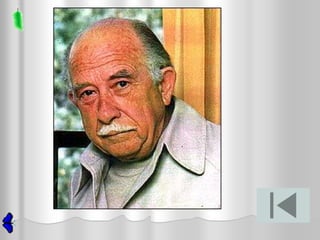
The Making of a Scientist


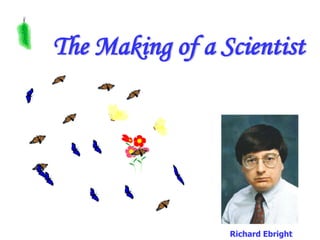
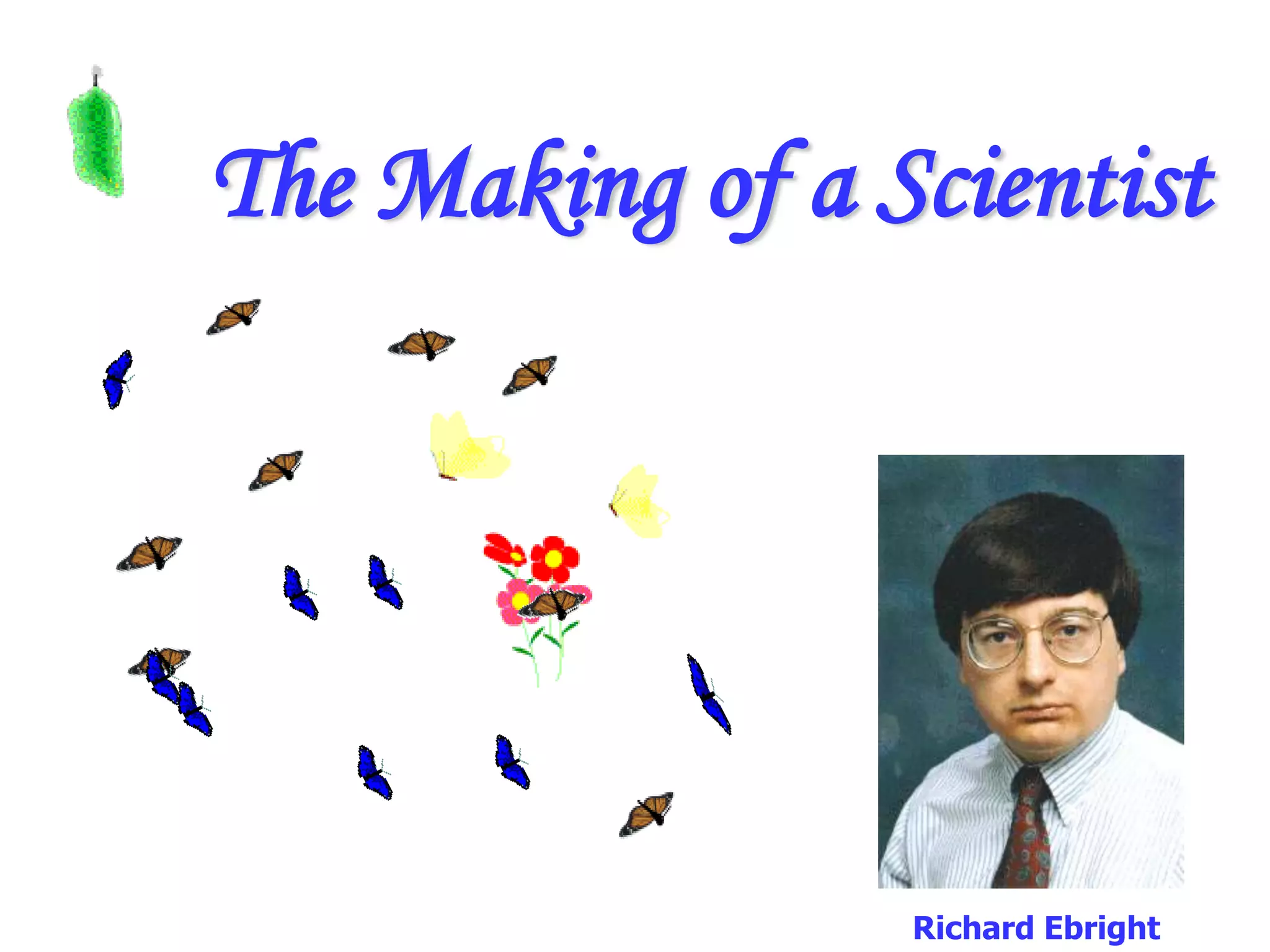
                 Richard Ebright
The Making of a Scientist
This is the story of a young and bright scientist
named Richard H. Ebright.
He grew up north of Reading, Pennsylvania.
At the age of 24 he excited the scientific world
with his theory of cells.
As a child he collected rocks fossils and coins.
The role of his mother
 A great driving force in making of him as a
  scientist
 Always encouraged him & developed his
  interest in learning
 Took him on trips
 Bought him telescope, microscopes, cameras,
  mounting materials etc.
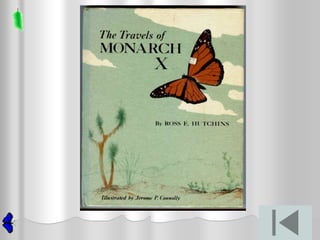
 Got him the book ‘The Travels of Monarch X’
  which opened a new world for him
The role of his
            mother
He was her –
 (i) whole life after his father’s death,
 (ii) only companion
She would find work for him that will
 make him learn new things, if does not
 have any some day.
He liked it and wanted to learn too.
Early Childhood Talent
By the time he was in second
 grade , he had collected all the
 twenty five species of the
 butterflies found around his
 home town in six weeks.
The Travels of Monarch
                       X
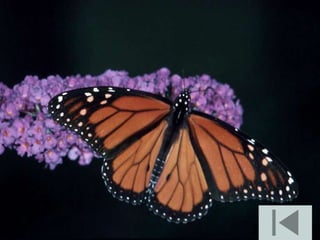
 The book is about how butterflies migrate to
  Central America.
 It was written by Dr. Frederick Urquhart of
  the University of Toronto, Canada.
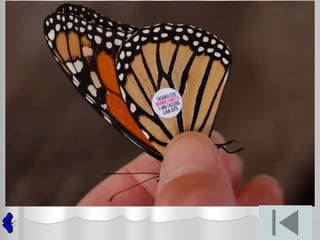
 Readers were invited to help study butterfly
  migration.
 He also asked readers to tag them for research.
 This book opened a world of science to this
  young collector.
The Travels of Monarch
                    X to catch so many of
 But it was impossible
  them in six weeks.
 So he started raising a flock of butterflies
  in the basement of his house.
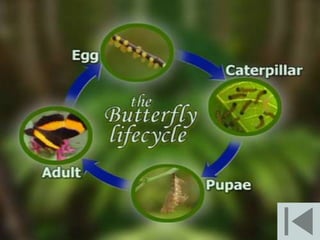
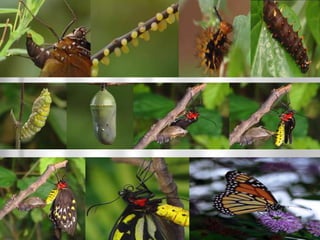
 He would catch a female monarch, take her
  eggs and raise them. (Life Cycle)
 But as he didn’t get much feedback he
  started losing interest in it.
Experience in the
        Science Fair he
When he was in the seventh grade,
 participated in a science fair and lost.
Here he gets a hint of what real science
 is. He learns that science is not a neat
 display of something but doing real
 experiments.
He had just shown slides of frog tissues.
Further Achievements
 He wrote to Dr. Urquhart for ideas and got
  many suggestions for experiments.
 He kept on working on them throughout his
  high school which led him to many prize projects
  on national & international levels.
 In eighth class he found out the cause of a viral
  disease that killed all monarch caterpillars. He
  raised them in presence of beetles.
Why viceroy butterflies copy monarchs
 They are the food of birds.
 Viceroys taste good whereas monarchs do not
  taste good for birds.
 The viceroys look like monarchs because they
  want to trick the birds and save themselves.
 This project was placed first in the zoology
  division.
His theory on the life of cells
 He tried to find out the purpose of the   twelve
  tiny gold spots on a monarch pupa.
 Earlier it was assumed that they were just
  ornamental.
 But later Ebright , along with his fellow
  students, showed that the spots were producing
  a hormone necessary for their full development.
 It gave him entry in the International Science
  & Engineering Fair
Further Achievements
 In his senior year, he grew cells from a
  monarch’s wings in a culture and showed
  that the cells would divide and develop
  into normal butterfly wing scales only if
  they were fed the hormones from the gold
  spots.
 This project won him the first place for
  zoology at the international fair.
X-ray photos of chemical structure of a hormone
 He studied the photos of the chemical
  structure of a hormone in the X-ray.
 This photo solved his doubt on DNA.
 He determined that the DNA is the substance
  in the nucleus that controls heredity.
 So DNA was established to be the blueprint
  for life.
The Making of a Scientist
 Richard Ebright became a scientist because he
  had a driving curiosity along with a bright
  mind.
 He started his journey from collecting the
  butterflies.
 This led him to discover the theory of life cells.
 He was not just interested in science.
 He took interest in other activities too.
The Making of a Scientist
 There art many qualities that go into making of
  a scientist.
 He was curious, dedicative and hardworking.
 He was competitive but not in a bad sense.
 He had a will to win.
 He was intelligent and worked for the right
  reasons.
 He didn’t run after prizes.
The making of a scientist

The making of a scientist

  • 1.
    The Making ofa Scientist Richard Ebright
  • 2.
    The Making ofa Scientist This is the story of a young and bright scientist named Richard H. Ebright. He grew up north of Reading, Pennsylvania. At the age of 24 he excited the scientific world with his theory of cells. As a child he collected rocks fossils and coins.
  • 3.
    The role ofhis mother  A great driving force in making of him as a scientist  Always encouraged him & developed his interest in learning  Took him on trips  Bought him telescope, microscopes, cameras, mounting materials etc.  Got him the book ‘The Travels of Monarch X’ which opened a new world for him
  • 4.
    The role ofhis mother He was her – (i) whole life after his father’s death, (ii) only companion She would find work for him that will make him learn new things, if does not have any some day. He liked it and wanted to learn too.
  • 5.
    Early Childhood Talent Bythe time he was in second grade , he had collected all the twenty five species of the butterflies found around his home town in six weeks.
  • 6.
    The Travels ofMonarch X  The book is about how butterflies migrate to Central America.  It was written by Dr. Frederick Urquhart of the University of Toronto, Canada.  Readers were invited to help study butterfly migration.  He also asked readers to tag them for research.  This book opened a world of science to this young collector.
  • 7.
    The Travels ofMonarch X to catch so many of  But it was impossible them in six weeks.  So he started raising a flock of butterflies in the basement of his house.  He would catch a female monarch, take her eggs and raise them. (Life Cycle)  But as he didn’t get much feedback he started losing interest in it.
  • 8.
    Experience in the Science Fair he When he was in the seventh grade, participated in a science fair and lost. Here he gets a hint of what real science is. He learns that science is not a neat display of something but doing real experiments. He had just shown slides of frog tissues.
  • 9.
    Further Achievements  Hewrote to Dr. Urquhart for ideas and got many suggestions for experiments.  He kept on working on them throughout his high school which led him to many prize projects on national & international levels.  In eighth class he found out the cause of a viral disease that killed all monarch caterpillars. He raised them in presence of beetles.
  • 10.
    Why viceroy butterfliescopy monarchs  They are the food of birds.  Viceroys taste good whereas monarchs do not taste good for birds.  The viceroys look like monarchs because they want to trick the birds and save themselves.  This project was placed first in the zoology division.
  • 11.
    His theory onthe life of cells  He tried to find out the purpose of the twelve tiny gold spots on a monarch pupa.  Earlier it was assumed that they were just ornamental.  But later Ebright , along with his fellow students, showed that the spots were producing a hormone necessary for their full development.  It gave him entry in the International Science & Engineering Fair
  • 12.
    Further Achievements  Inhis senior year, he grew cells from a monarch’s wings in a culture and showed that the cells would divide and develop into normal butterfly wing scales only if they were fed the hormones from the gold spots.  This project won him the first place for zoology at the international fair.
  • 13.
    X-ray photos ofchemical structure of a hormone  He studied the photos of the chemical structure of a hormone in the X-ray.  This photo solved his doubt on DNA.  He determined that the DNA is the substance in the nucleus that controls heredity.  So DNA was established to be the blueprint for life.
  • 14.
    The Making ofa Scientist  Richard Ebright became a scientist because he had a driving curiosity along with a bright mind.  He started his journey from collecting the butterflies.  This led him to discover the theory of life cells.  He was not just interested in science.  He took interest in other activities too.
  • 15.
    The Making ofa Scientist  There art many qualities that go into making of a scientist.  He was curious, dedicative and hardworking.  He was competitive but not in a bad sense.  He had a will to win.  He was intelligent and worked for the right reasons.  He didn’t run after prizes.