In the fast-paced digital era, where smartphones have become an indispensable
part of our lives, mobile app development has emerged as a crucial aspect of
technology innovation. Whether it's for business, entertainment, education, or
daily utilities, mobile applications play a significant role in enhancing user
experiences and driving technological advancements. Among the myriad of
platforms and frameworks available, PhoneGap, Android, and iPhone app
development stand out as the frontrunners in this ever-evolving landscape.
PhoneGap App Development: Bridging Platforms with Ease
PhoneGap, now known as Apache Cordova, has revolutionized mobile app
development by providing a platform-agnostic approach. Developed by Adobe,
PhoneGap allows developers to create applications using standard web
technologies like HTML5, CSS, and JavaScript, thereby eliminating the need for
platform-specific coding.
One of the key advantages of PhoneGap is its ability to bridge the gap between
different platforms. Developers can write code once and deploy it across
multiple platforms, including iOS, Android, Windows Phone, and more. This not
only reduces development time but also ensures a consistent user experience
across various devices.
Moreover, PhoneGap offers access to native device features through plugins,
allowing developers to incorporate functionalities such as camera, geolocation,
and accelerometer seamlessly into their applications. This versatility makes
PhoneGap a preferred choice for developers aiming for cross-platform
compatibility without compromising on performance.
The Evolution of Mobile App Development:
Trends and Technologies
Android App Development: Empowering the World's Largest Mobile
Platform
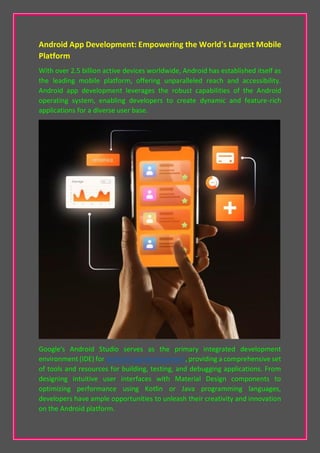
With over 2.5 billion active devices worldwide, Android has established itself as
the leading mobile platform, offering unparalleled reach and accessibility.
Android app development leverages the robust capabilities of the Android
operating system, enabling developers to create dynamic and feature-rich
applications for a diverse user base.
Google's Android Studio serves as the primary integrated development
environment (IDE) for Android app development, providing a comprehensive set
of tools and resources for building, testing, and debugging applications. From
designing intuitive user interfaces with Material Design components to
optimizing performance using Kotlin or Java programming languages,
developers have ample opportunities to unleash their creativity and innovation
on the Android platform.
Furthermore, Android offers extensive support for integrating with other Google
services, including Maps, Firebase, and Google Pay, enabling developers to
create seamless and interconnected experiences for users. With the flexibility to
deploy applications through the Google Play Store or third-party distribution
channels, Android app development empowers developers to reach global
audiences and capitalize on the vast opportunities offered by the Android
ecosystem.
iPhone App Development: Crafting Exquisite Experiences for iOS
Users
Apple's iOS ecosystem, renowned for its premium user experience and stringent
quality standards, presents a lucrative market for iPhone app development.
Leveraging the power of Xcode and Swift programming language, developers
can create elegant and immersive applications tailored specifically for iOS
devices, including iPhones, iPads, and iPod Touch.
iPhone app development emphasizes design excellence, with a focus on intuitive
interfaces, smooth animations, and seamless interactions. Apple's Human
Interface Guidelines provide comprehensive design principles and best practices
to ensure that applications adhere to the highest standards of usability and
aesthetics, thereby delighting users and fostering engagement.
Moreover, iOS offers a range of exclusive features and functionalities, such as
Siri integration, Touch ID authentication, and ARKit for augmented reality
experiences, enabling developers to push the boundaries of innovation and
creativity. With the App Store serving as a curated marketplace for distributing
applications to millions of iOS users worldwide, iPhone app development
presents immense opportunities for developers to showcase their talent and
monetize their creations.
Conclusion: Embracing Innovation in Mobile App Development
As the mobile app landscape continues to evolve, developers must stay abreast
of emerging trends and technologies to create compelling and impactful
experiences for users. Whether it's leveraging cross-platform frameworks like
PhoneGap for seamless deployment, harnessing the capabilities of Android to
reach a diverse audience, or crafting exquisite experiences for iOS users, mobile
app development offers endless possibilities for innovation and growth.
By embracing the power of technology and harnessing the creativity of
developers worldwide, the future of mobile app development holds immense
promise in shaping the digital landscape and enriching the lives of users across
the globe. As we navigate the complexities of the digital age, let us continue to
push the boundaries of possibility and usher in a new era of mobile innovation.

The Evolution of Mobile App Development- Trends and Technologies.pdf

  • 1.
    In the fast-paceddigital era, where smartphones have become an indispensable part of our lives, mobile app development has emerged as a crucial aspect of technology innovation. Whether it's for business, entertainment, education, or daily utilities, mobile applications play a significant role in enhancing user experiences and driving technological advancements. Among the myriad of platforms and frameworks available, PhoneGap, Android, and iPhone app development stand out as the frontrunners in this ever-evolving landscape. PhoneGap App Development: Bridging Platforms with Ease PhoneGap, now known as Apache Cordova, has revolutionized mobile app development by providing a platform-agnostic approach. Developed by Adobe, PhoneGap allows developers to create applications using standard web technologies like HTML5, CSS, and JavaScript, thereby eliminating the need for platform-specific coding. One of the key advantages of PhoneGap is its ability to bridge the gap between different platforms. Developers can write code once and deploy it across multiple platforms, including iOS, Android, Windows Phone, and more. This not only reduces development time but also ensures a consistent user experience across various devices. Moreover, PhoneGap offers access to native device features through plugins, allowing developers to incorporate functionalities such as camera, geolocation, and accelerometer seamlessly into their applications. This versatility makes PhoneGap a preferred choice for developers aiming for cross-platform compatibility without compromising on performance. The Evolution of Mobile App Development: Trends and Technologies
  • 2.
    Android App Development:Empowering the World's Largest Mobile Platform With over 2.5 billion active devices worldwide, Android has established itself as the leading mobile platform, offering unparalleled reach and accessibility. Android app development leverages the robust capabilities of the Android operating system, enabling developers to create dynamic and feature-rich applications for a diverse user base. Google's Android Studio serves as the primary integrated development environment (IDE) for Android app development, providing a comprehensive set of tools and resources for building, testing, and debugging applications. From designing intuitive user interfaces with Material Design components to optimizing performance using Kotlin or Java programming languages, developers have ample opportunities to unleash their creativity and innovation on the Android platform.
  • 3.
    Furthermore, Android offersextensive support for integrating with other Google services, including Maps, Firebase, and Google Pay, enabling developers to create seamless and interconnected experiences for users. With the flexibility to deploy applications through the Google Play Store or third-party distribution channels, Android app development empowers developers to reach global audiences and capitalize on the vast opportunities offered by the Android ecosystem. iPhone App Development: Crafting Exquisite Experiences for iOS Users Apple's iOS ecosystem, renowned for its premium user experience and stringent quality standards, presents a lucrative market for iPhone app development. Leveraging the power of Xcode and Swift programming language, developers can create elegant and immersive applications tailored specifically for iOS devices, including iPhones, iPads, and iPod Touch. iPhone app development emphasizes design excellence, with a focus on intuitive interfaces, smooth animations, and seamless interactions. Apple's Human Interface Guidelines provide comprehensive design principles and best practices to ensure that applications adhere to the highest standards of usability and aesthetics, thereby delighting users and fostering engagement. Moreover, iOS offers a range of exclusive features and functionalities, such as Siri integration, Touch ID authentication, and ARKit for augmented reality experiences, enabling developers to push the boundaries of innovation and creativity. With the App Store serving as a curated marketplace for distributing applications to millions of iOS users worldwide, iPhone app development presents immense opportunities for developers to showcase their talent and monetize their creations.
  • 4.
    Conclusion: Embracing Innovationin Mobile App Development As the mobile app landscape continues to evolve, developers must stay abreast of emerging trends and technologies to create compelling and impactful experiences for users. Whether it's leveraging cross-platform frameworks like PhoneGap for seamless deployment, harnessing the capabilities of Android to reach a diverse audience, or crafting exquisite experiences for iOS users, mobile app development offers endless possibilities for innovation and growth. By embracing the power of technology and harnessing the creativity of developers worldwide, the future of mobile app development holds immense promise in shaping the digital landscape and enriching the lives of users across the globe. As we navigate the complexities of the digital age, let us continue to push the boundaries of possibility and usher in a new era of mobile innovation.