The Evolution of Data Engineering Emerging Trends and Scalable Architecture Design.pptx
1.
THE EVOLUTION OFDATA
ENGINEERING: EMERGING TRENDS AND
SCALABLE ARCHITECTURE DESIGN
Optimizing Performance, Scalability,
and Agility in Data-Driven Systems
2.
• Data engineeringhas become a critical discipline as data-driven systems
grow in scale and complexity. It has evolved from simple ETL pipelines to
sophisticated, real-time, distributed systems. This transition reflects the
increasing demand for efficient designs that optimize performance,
scalability, and agility, meeting the needs of modern architectures in an
ever-growing data landscape.Let’s delve deeper into the key trends and
scalable design patterns shaping the future of data engineering.
Introductio
n
Why Data Engineering Matters:
3.
EVOLUTION OF DATAENGINEERING
Stages of Development:
Early days: Monolithic ETL pipelines for batch processing.
Cloud Era: Adoption of distributed systems and data lakes.
Present: Focus on real-time analytics, microservices, and hybrid
architectures.
4.
EMERGING TRENDS IN
DATAENGINEERING
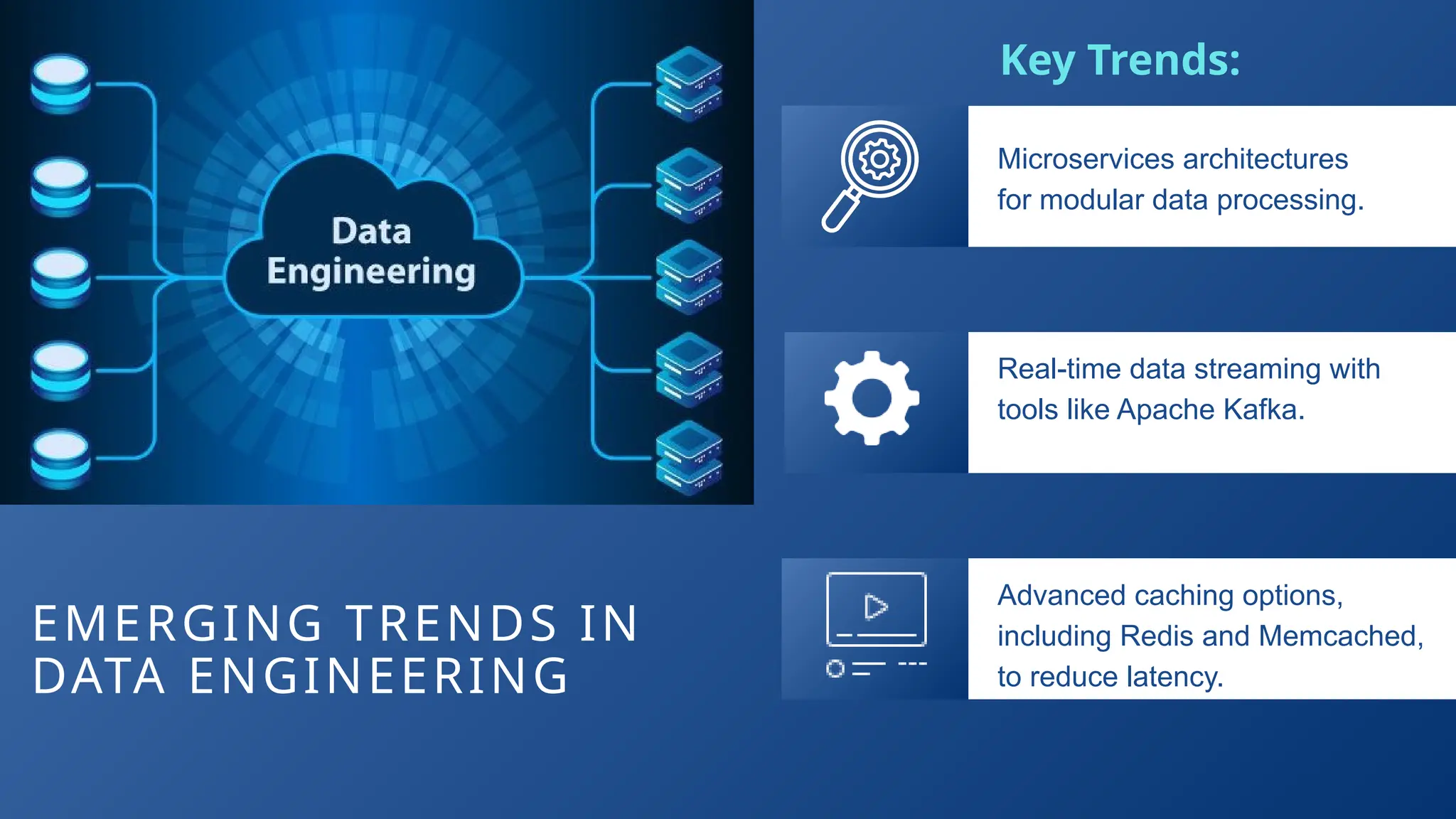
Microservices architectures
for modular data processing.
Real-time data streaming with
tools like Apache Kafka.
Advanced caching options,
including Redis and Memcached,
to reduce latency.
Key Trends:
5.
SCALABLE ARCHITECTURE DESIGN
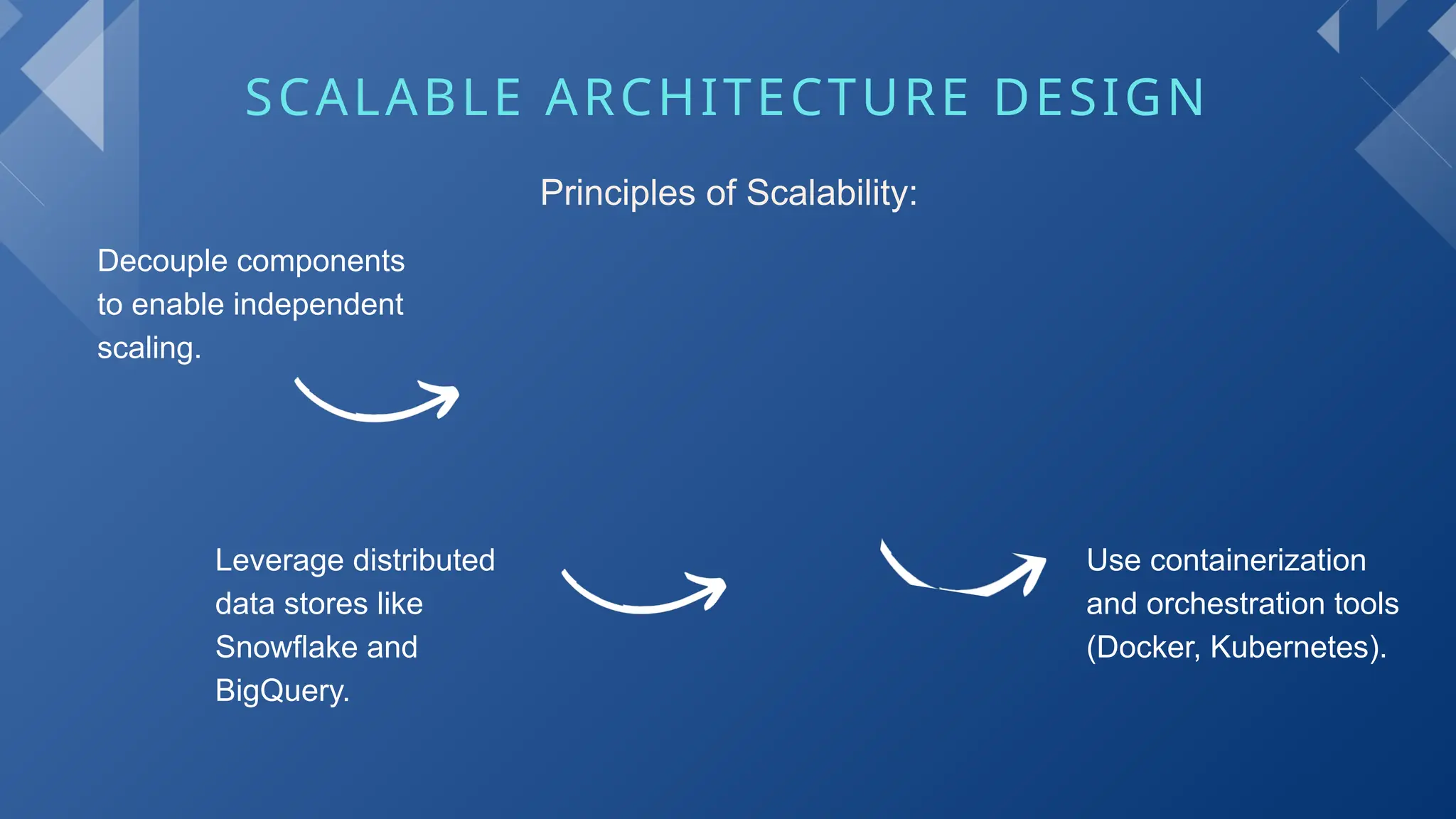
Usecontainerization
and orchestration tools
(Docker, Kubernetes).
Leverage distributed
data stores like
Snowflake and
BigQuery.
Decouple components
to enable independent
scaling.
Principles of Scalability:
6.
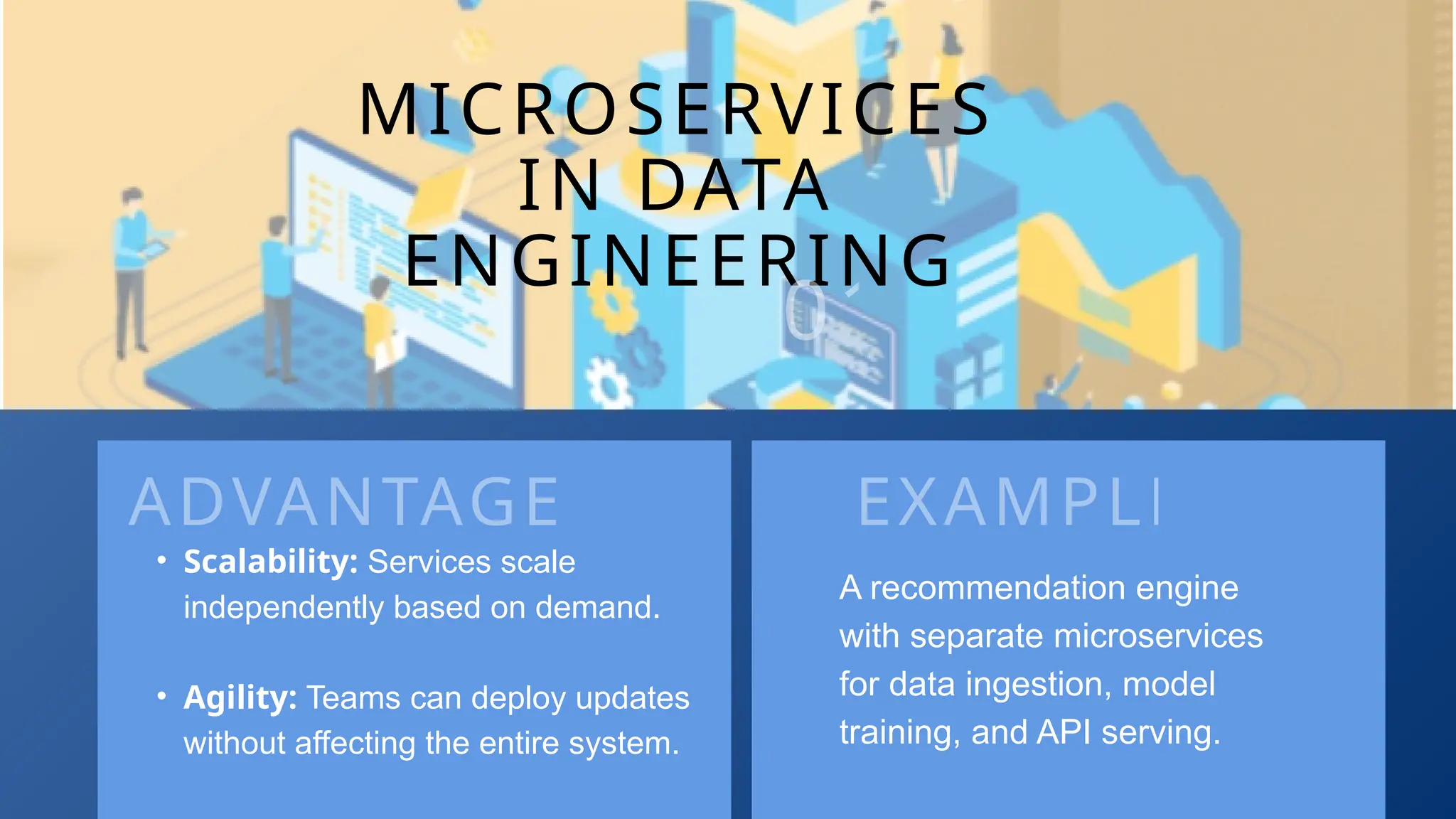
MICROSERVICES
IN DATA
ENGINEERING
ADVANTAGES:
• Scalability:Services scale
independently based on demand.
• Agility: Teams can deploy updates
without affecting the entire system.
01
EXAMPLE:
A recommendation engine
with separate microservices
for data ingestion, model
training, and API serving.
7.
ADVANCED CACHING OPTIONS
Benefits:
•Reduce load on primary databases.
• Enable faster query responses for
frequently accessed data.
Example:
• Redis used for session caching in
e-commerce platforms to deliver
personalized user experiences.
8.
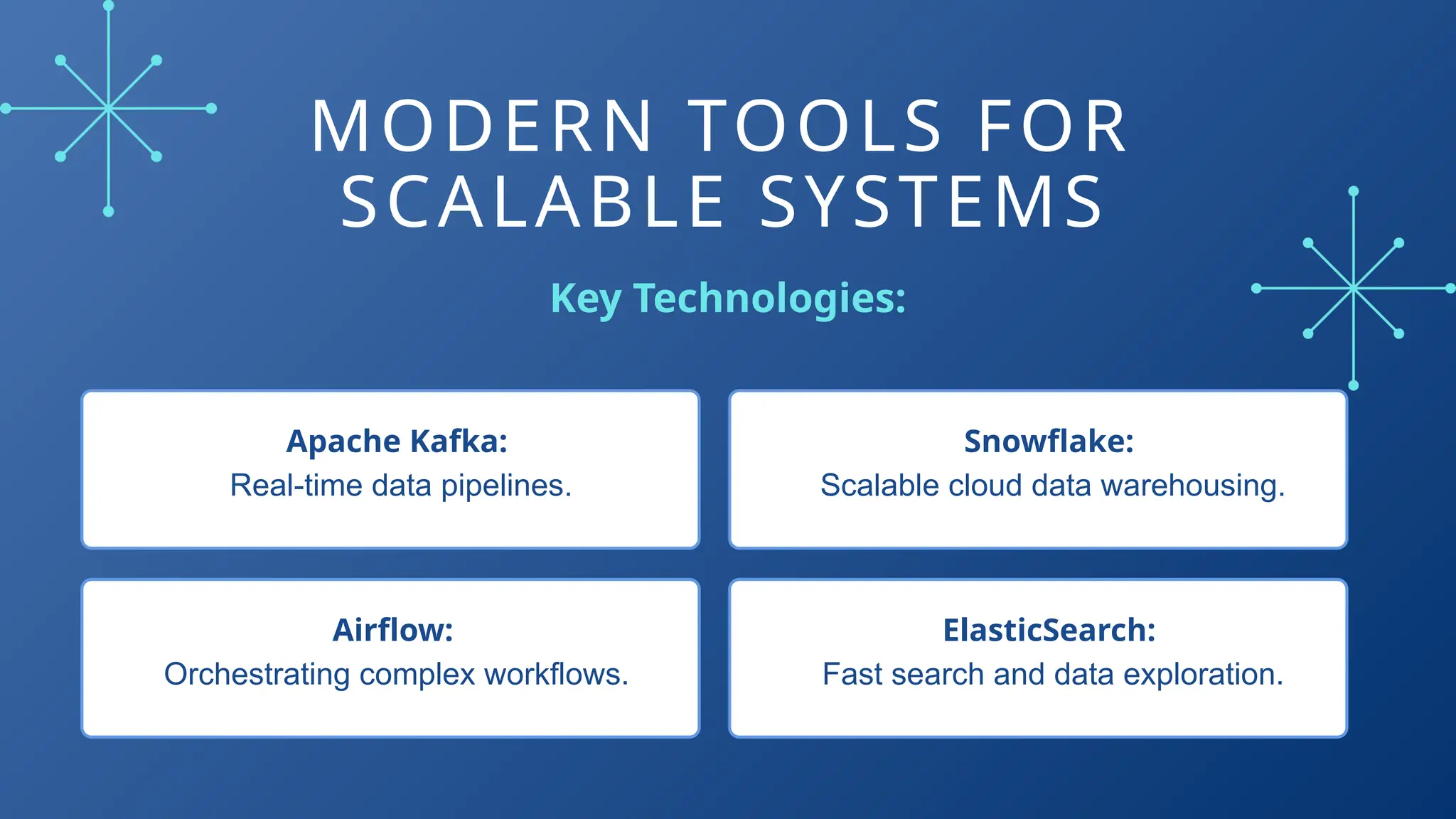
MODERN TOOLS FOR
SCALABLESYSTEMS
Apache Kafka:
Real-time data pipelines.
Airflow:
Orchestrating complex workflows.
Snowflake:
Scalable cloud data warehousing.
ElasticSearch:
Fast search and data exploration.
Key Technologies:
9.
CHALLENGES AND
BEST PRACTICES
CHALLENGES:
BEST
PRACTICES:
•Managing data
consistency across
distributed systems.
• Ensuring cost-
efficiency as
systems scale.
⚬ Automate infrastructure
scaling with cloud-native
tools.
⚬ Design for failure by
implementing robust
monitoring and alerts.
10.
Scalable data engineeringarchitectures form the
backbone of modern, data-driven organizations,
enabling them to handle ever-growing datasets
efficiently.
By leveraging modular approaches like
microservices and incorporating advanced caching
techniques, these architectures ensure systems
remain performant and resilient.
These patterns are essential for supporting larger,
complex systems while optimizing resource usage
and maintaining agility.
CONCLUSION AND KEY
TAKEAWAYS