LearnMusicTheory.net High-Yield MusicTheory, Vol. 1: Music Theory Fundamentals
60
Section 5.1
T E X T U R E I N M U S I C
Harmonic analysis is the analysis of chords in musical context.
Understanding texture makes harmonic analysis much easier. Texture is
the way harmonies, melodies, rhythms, and timbres (=sound qualities
such as different instrument sounds) relate to create the overall effect of a
piece of music. The four common texture types are monophonic,
polyphonic, homophonic, and heterophonic.
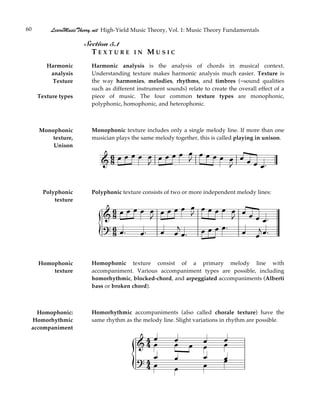
Monophonic texture includes only a single melody line. If more than one
musician plays the same melody together, this is called playing in unison.
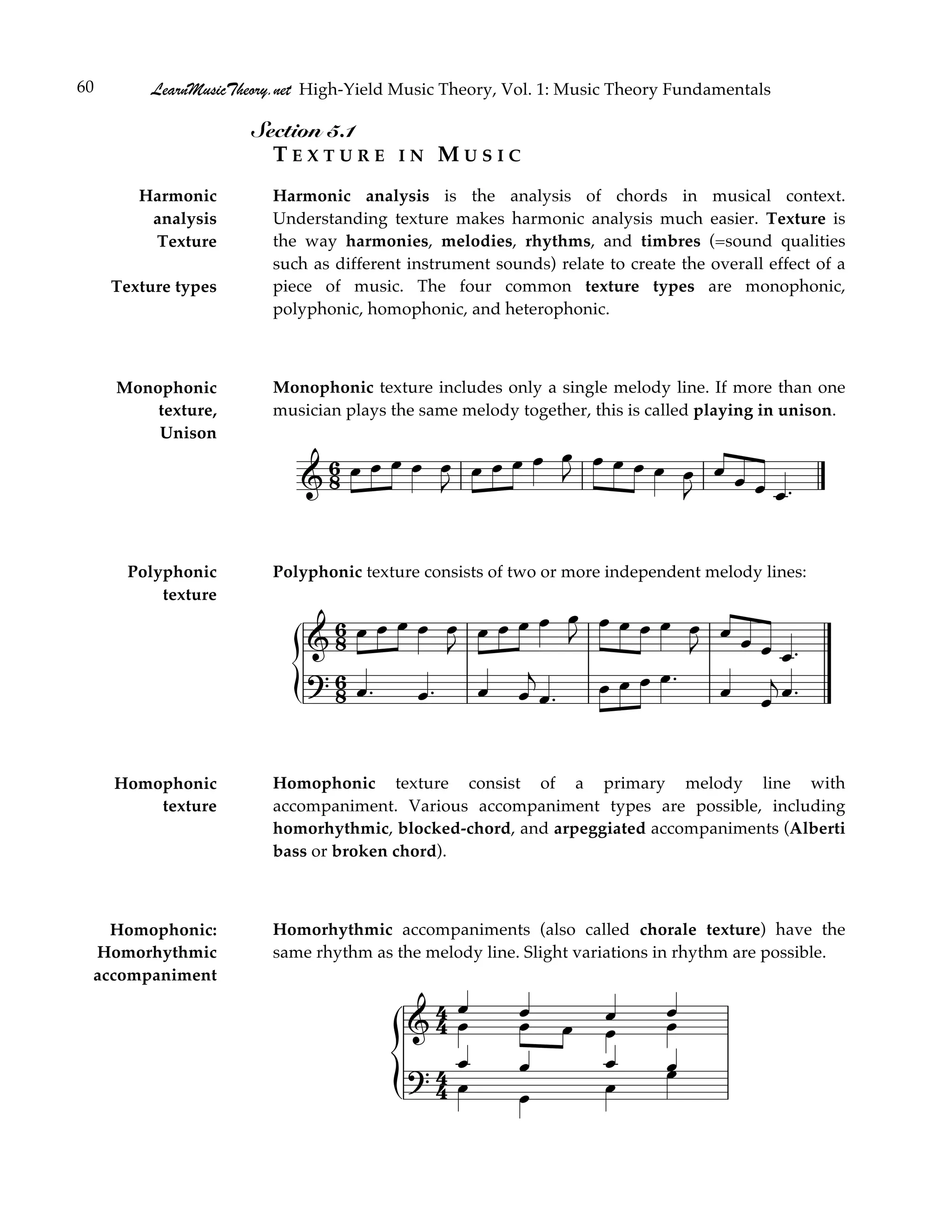
Polyphonic texture consists of two or more independent melody lines:
Homophonic texture consist of a primary melody line with
accompaniment. Various accompaniment types are possible, including
homorhythmic, blocked-chord, and arpeggiated accompaniments (Alberti
bass or broken chord).
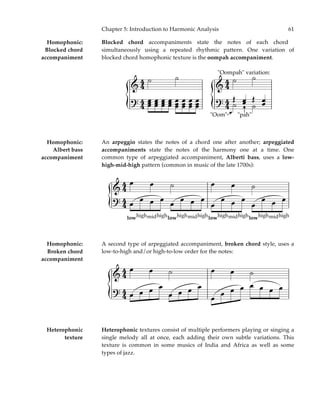
Homorhythmic accompaniments (also called chorale texture) have the
same rhythm as the melody line. Slight variations in rhythm are possible.
6
8
& œ œ œ œ œ
J
œ œ œ œ œ
J œ œ œ œ œ
J
œ œ œ œ™
6
8
6
8
&
?
œ œ œ œ œ
J œ œ œ œ œ
J œ œ œ œ œ
J œ œ œ œ™
œ™ œ™ œ œ
j
œ™ œ œ œ œ™
œ œ
j Ϫ
4
4
4
4
&
?
œ
œ
œ œ
œ œ œ
œ
œ
œ
œ
œ
œ
œ
œ œ
œ
Harmonic
analysis
Texture
Texture types
Monophonic
texture,
Unison
Polyphonic
texture
Homophonic
texture
Homophonic:
Homorhythmic
accompaniment
2.
Chapter 5: Introductionto Harmonic Analysis 61
Blocked chord accompaniments state the notes of each chord
simultaneously using a repeated rhythmic pattern. One variation of
blocked chord homophonic texture is the oompah accompaniment.
An arpeggio states the notes of a chord one after another; arpeggiated
accompaniments state the notes of the harmony one at a time. One
common type of arpeggiated accompaniment, Alberti bass, uses a low-
high-mid-high pattern (common in music of the late 1700s):
A second type of arpeggiated accompaniment, broken chord style, uses a
low-to-high and/or high-to-low order for the notes:
Heterophonic textures consist of multiple performers playing or singing a
single melody all at once, each adding their own subtle variations. This
texture is common in some musics of India and Africa as well as some
types of jazz.
4
4
4
4
4
4
4
4
&
"Oompah" variation:
&
?
"Oom"
?
"pah"
˙ ˙ ˙ ˙
œ
œ
œ
œ
œ
œ
œ
œ
œ
œ
œ
œ ˙
œ
œ
œ
œ
œ
œ
œ
œ
œ
œ
œ
œ
Œ œ
œ Œ̇ œ
œ
4
4
4
4
&
?
lowhighmidhighlowhighmidhighlowhighmidhighlowhighmidhigh
œ œ ˙ œ œ ˙
œ
œ œ œ
œ
œ œ œ
œ
œ œ œ
œ
œ œ œ
4
4
4
4
&
?
œ œ ˙ œ œ ˙
œ œ œ œ
œ œ œ œ
œ
œ œ œ œ œ œ œ
Homophonic:
Blocked chord
accompaniment
Homophonic:
Albert bass
accompaniment
Homophonic:
Broken chord
accompaniment
Heterophonic
texture