Test Bank for Making a Difference with Nursing
Research: Young download
https://testbankmall.com/product/test-bank-for-making-a-
difference-with-nursing-research-young/
Find test banks or solution manuals at testbankmall.com today!
We have selected some products that you may be interested in
Click the link to download now or visit testbankmall.com
for more options!.
University Physics with Modern Physics 14th Edition Young
Test Bank
https://testbankmall.com/product/university-physics-with-modern-
physics-14th-edition-young-test-bank/
University Physics with Modern Physics 14th Edition Young
Solutions Manual
https://testbankmall.com/product/university-physics-with-modern-
physics-14th-edition-young-solutions-manual/
Test Bank for Reading, Understanding, and Applying Nursing
Research, 5th Edition, James A. Fain,
https://testbankmall.com/product/test-bank-for-reading-understanding-
and-applying-nursing-research-5th-edition-james-a-fain/
Test bank Drug Therapy 4th Edition Aschenbrenner
https://testbankmall.com/product/test-bank-drug-therapy-4th-edition-
aschenbrenner/
Solution Manual for Introductory Statistics 9th by Mann
https://testbankmall.com/product/solution-manual-for-introductory-
statistics-9th-by-mann/
Test Bank for Human Heredity: Principles and Issues 11th
Edition Cummings
https://testbankmall.com/product/test-bank-for-human-heredity-
principles-and-issues-11th-edition-cummings/
Test Bank for Contemporary Strategy Analysis: Text and
Cases Edition, 9th Edition
https://testbankmall.com/product/test-bank-for-contemporary-strategy-
analysis-text-and-cases-edition-9th-edition/
Test Bank for The Science of Psychology: An Appreciative
View, 5th Edition, Laura King
https://testbankmall.com/product/test-bank-for-the-science-of-
psychology-an-appreciative-view-5th-edition-laura-king/
Electric Circuits 10th Edition Nilsson Solutions Manual
https://testbankmall.com/product/electric-circuits-10th-edition-
nilsson-solutions-manual/
Test Bank for Research Methods for Business Students, 5th
Edition, Mark NK Saunders, ISBN-10: 0273716867, ISBN-13:
9780273716860
https://testbankmall.com/product/test-bank-for-research-methods-for-
business-students-5th-edition-mark-nk-saunders-
isbn-10-0273716867-isbn-13-9780273716860/
Langford, Making a Difference with Nursing Research, 1/E Test Bank
Copyright 2012 by Pearson Education, Inc.
The nurse asks another colleague for suggestions to help with a patient problem. What is a disadvantage to using
this mechanism to acquire knowledge?
1. The practice may not have been verified as effective.
2. The information may not have been systematically tested.
3. It is inefficient and unsystematic.
4. Experiences are subjective.
Correct Answer: 2
Rationale 1: The problem with traditional practices as an approach to acquire knowledge is that a practice can be
traditional without having been verified as effective. (See page 4)
Rationale 2: A downside to using authority to acquire knowledge is that the information provided by authorities
may not have been systematically tested. (See page 4)
Rationale 3: Trial and error is inefficient and unsystematic and can only be shared with a limited number of
people. (See page 4)
Rationale 4: In personal experience as a mechanism to acquire knowledge, experiences may be subjective and
based upon personal values and perceptions. It is difficult to pass on information based on this mechanism to
others who have not had similar experiences. (See page 4)
Global Rationale:
Cognitive Level: Analyzing
Client Need:
Client Need Sub:
Nursing/Integrated Concepts:
Learning Outcome: 1
Question 3
Type: MCMA
While working through a specific patient problem, the nurse acquires information about the problem from a
variety of sources. Which sources do nurses use to acquire information?
Standard Text: Select all that apply.
1. Smart phone applications
2. Personal experience
3. Deductive reasoning
4. Trial and error
Langford, Making a Difference with Nursing Research, 1/E Test Bank
Copyright 2012 by Pearson Education, Inc.
5. The internet
Correct Answer: 2,3,4
Rationale 1: Smart phone applications are not an identified source for acquiring knowledge to guide clinical
practice. (See page 4)
Rationale 2: Personal experience is a method that nurses use to acquire information. (See page 4)
Rationale 3: Deductive reasoning is a method that nurses use to acquire information. (See page 4)
Rationale 4: Trial and error is a method that nurses use to acquire information. (See page 4)
Rationale 5: The internet is not an identified as source for acquiring knowledge to guide clinical practice. (See
page 4)
Global Rationale:
Cognitive Level: Applying
Client Need:
Client Need Sub:
Nursing/Integrated Concepts:
Learning Outcome: 1
Question 4
Type: MCSA
The nurse is focusing on the process when conducting nursing research. What is the nurse doing at this time?
1. Verifying a belief
2. Carrying out research in a precise and organized manner
3. Following a planned series of steps to gather and analyze information
4. Testing practice theories by applying them to a specific clinical problem
Correct Answer: 3
Rationale 1: Verifying a belief would be done when confirming research. (See page 5)
Rationale 2: Carrying out research in a precise and organized manner would be done when following a
systematic approach to the research. (See page 5)
Rationale 3: The process of research is a planned series of steps used for gathering and analyzing information.
(See page 5)
Rationale 4: Testing practice theories by applying them to a specific clinical problem is done when deductive
reasoning is used. (See page 5)
Langford, Making a Difference with Nursing Research, 1/E Test Bank
Copyright 2012 by Pearson Education, Inc.
Global Rationale:
Cognitive Level: Applying
Client Need:
Client Need Sub:
Nursing/Integrated Concepts:
Learning Outcome: 2
Question 5
Type: MCSA
The nurse is planning a research study to contribute to professional practice. What is one specific purpose of this
type of research study?
1. Create standardized care plans.
2. Reduce the number of care maps.
3. Add credibility to improve outcomes.
4. Eliminate trial and error in care.
Correct Answer: 3
Rationale 1: Nursing research is not used specifically to create standardized care plans. (See page 6)
Rationale 2: Nursing research is not used specifically to reduce the number of care maps. (See page 6)
Rationale 3: Nursing research is a systematic process that helps nurses discover answers and resolve problems
that are important to clinical practice, administration, or education. Demonstrating research-based practices that
improve outcomes is one area that nursing research contributes to professional practice. (See page 6)
Rationale 4: Nursing research is not used specifically to eliminate the process of trial and error to acquire
knowledge. (See page 6)
Global Rationale:
Cognitive Level: Analyzing
Client Need:
Client Need Sub:
Nursing/Integrated Concepts:
Learning Outcome: 2
Question 6
Type: MCSA
The nurse is studying previous research conducted about a patient care issue that was studied in the 1940s. Which
resource would be beneficial for the nurse to access?
Langford, Making a Difference with Nursing Research, 1/E Test Bank
Copyright 2012 by Pearson Education, Inc.
1. Research in Nursing and Health journal
2. Directions for Nursing Research: Toward the Twenty-first Century
3. The American Nurses Association publications
4. Nursing Studies Index
Correct Answer: 4
Rationale 1: Research in Nursing and Health is a journal of current nursing research. (See page 10)
Rationale 2: Directions for Nursing Research: Toward the Twenty-first Century is a document that identifies
research priorities. (See page 10)
Rationale 3: The American Nurses Association publications identify nurse sensitive indicators. (See page 10)
Rationale 4: The Nursing Studies Index was published in 1963 and is the first organized listing of nursing
research literature. This index compiled nursing research from 1900 through 1959. (See page 10)
Global Rationale:
Cognitive Level: Applying
Client Need:
Client Need Sub:
Nursing/Integrated Concepts:
Learning Outcome: 3
Question 7
Type: MCSA
The nurse is participating in a state planning committee that is focusing on the redesign of health care in the state.
Which resource would the nurse access to prepare for the work of this committee?
1. National Institute of Nursing Research
2. Online Journal of Knowledge Synthesis
3. The Future of Nursing
4. To Err is Human
Correct Answer: 3
Rationale 1: The National Institute of Nursing Research is a federal agency for nursing research. (See page 11)
Rationale 2: The Online Journal of Knowledge Synthesis is a digital journal begun by Sigma Theta Tau. (See
page 11)
Langford, Making a Difference with Nursing Research, 1/E Test Bank
Copyright 2012 by Pearson Education, Inc.
Rationale 3: The report from the Robert Wood Johnson Foundation entitled The Future of Nursing: Leading
Change, Advancing Health indicates that nurses should foster inter-professional collaboration by serving as full
partners in health care redesign. (See page 11)
Rationale 4: To Err is Human is a report from the Institute of Medicine and focuses on the establishment of
leadership, research, tools, and protocols to improve patient safety. (See page 11)
Global Rationale:
Cognitive Level: Applying
Client Need:
Client Need Sub:
Nursing/Integrated Concepts:
Learning Outcome: 3
Question 8
Type: MCSA
The nurse with a baccalaureate degree would participate in which nursing research activity?
1. Identify problems for research.
2. Implement practice-based guidelines.
3. Use research findings for clinical care.
4. Judge the relevance of outcomes for clinical practice.
Correct Answer: 1
Rationale 1: The nurse with a baccalaureate degree is expected to identify clinical problems for research. (See
page 14)
Rationale 2: The nurse with an associate degree would use research findings for clinical care. (See page 14)
Rationale 3: The nurse with a master's degree would implement practice-based guidelines. (See page 14)
Rationale 4: The nurse with a master's degree would judge the relevance of outcomes for clinical practice. (See
page 14)
Global Rationale:
Cognitive Level: Applying
Client Need:
Client Need Sub:
Nursing/Integrated Concepts:
Learning Outcome: 4
Question 9
Langford, Making a Difference with Nursing Research, 1/E Test Bank
Copyright 2012 by Pearson Education, Inc.
Type: MCMA
The nurse with a doctorate degree is planning a research study. Which activities will this nurse conduct?
Standard Text: Select all that apply.
1. Acquire funding.
2. Develop programs for research.
3. Identify significant research problems.
4. Develop and implement practice-based guidelines.
5.
Correct Answer: 1,2,3,4
Rationale 1: Acquiring funding is an expectation for doctorally prepared nurses. (See page 15)
Rationale 2: Developing programs for research is an expectation for doctorally prepared nurses. (See page 15)
Rationale 3: Identifying significant research problems is an expectation for doctorally prepared nurses. (See page
15)
Rationale 4: Reviewing theories about nursing research conduct is an expectation for doctorally prepared nurses.
(See page 15)
Rationale 5:
Global Rationale:
Cognitive Level: Applying
Client Need:
Client Need Sub:
Nursing/Integrated Concepts:
Learning Outcome: 4
Question 10
Type: MCSA
The nurse is implementing an evidence-based guideline when planning the care of a patient with a stage 4
pressure ulcer. What is this nurse doing?
1. Writing orders for medications to apply to the wound
2. Applying research findings to clinical practice
3. Acquiring funding for a research study
Langford, Making a Difference with Nursing Research, 1/E Test Bank
Copyright 2012 by Pearson Education, Inc.
4. Designing a research study
Correct Answer: 2
Rationale 1: Writing orders for medications to apply to the wound is not an action when implementing an
evidence-based guideline. (See page 16)
Rationale 2: Evidence-based practice means applying research findings to clinical practice. (See page 16)
Rationale 3: Acquiring funding for a research study is not an action when implementing an evidence-based
guideline. (See page 16)
Rationale 4: Designing a research study is not an action when implementing an evidence-based guideline. (See
page 16)
Global Rationale:
Cognitive Level: Applying
Client Need:
Client Need Sub:
Nursing/Integrated Concepts:
Learning Outcome: 5
Question 11
Type: MCSA
The nurse is determining information that would be included in an evidence-based guideline. Which activity is not
a part of this process?
1. Appraise evidence.
2. Search and collect evidence.
3. Implement the best evidence.
4. Read an article and implement the ideas.
Correct Answer: 4
Rationale 1: The evidence-based practice process includes appraising evidence. (See page 17)
Rationale 2: The evidence-based practice process includes searching and collecting evidence. (See page 17)
Rationale 3: The evidence-based practice process includes implementing the best evidence prior to including it
into practice. (See page 17)
Rationale 4: Evidence-based practice is more than reading some articles and implementing ideas. (See page 17)
Global Rationale:
Langford, Making a Difference with Nursing Research, 1/E Test Bank
Copyright 2012 by Pearson Education, Inc.
Cognitive Level: Analyzing
Client Need:
Client Need Sub:
Nursing/Integrated Concepts:
Learning Outcome: 5
Question 12
Type: MCSA
The nurse is reviewing Healthy People 2020 and determines which as being a research goal?
1. Reduce errors.
2. Improve end of life care.
3. Manage chronic illnesses.
4. Enhance innovation in practice.
Correct Answer: 1
Rationale 1: Within the Healthy People 2020 document, specific targets for achievement in health outcomes are
designated. Safe models of health care that reduce errors continue to be a priority. (See page 18)
Rationale 2: Improving end of life care is a research priority from the National Institute of Nursing Research.
(See page 18)
Rationale 3: Managing chronic illnesses are research priorities from the National Institute of Nursing Research.
(See page 18)
Rationale 4: Enhancing innovation in practice is a research priority from the National Institute of Nursing
Research. (See page 18)
Global Rationale:
Cognitive Level: Analyzing
Client Need:
Client Need Sub:
Nursing/Integrated Concepts:
Learning Outcome: 6
Question 13
Type: MCSA
The nurse is reviewing research conducted to improve patient care in 2011. Which would have been a topic that
was studied at that time?
Langford, Making a Difference with Nursing Research, 1/E Test Bank
Copyright 2012 by Pearson Education, Inc.
1. Reduce errors in patient care.
2. Reduce the nursing shortage.
3. Develop the next generation of nurse scientists.
4. Enhance research at the associate degree level.
Correct Answer: 3
Rationale 1: Reducing errors in patient care is a Healthy People 2020 research goal. (See page 17)
Rationale 2: Reducing the nursing shortage is not an identified nursing research goal. (See page 17)
Rationale 3: Developing the next generation of nurse scientists was on the list of priorities from the National
Institute of Nursing Research in 2011. (See page 17)
Rationale 4: Enhancing research at the associate degree level is not an identified nursing research goal. (See page
17)
Global Rationale:
Cognitive Level: Analyzing
Client Need:
Client Need Sub:
Nursing/Integrated Concepts:
Learning Outcome: 6
Question 14
Type: MCSA
The nurse is reviewing educational programs to enroll in a doctoral program. How does this action facilitate
nursing research?
1. Ensures funding for health care organizations
2. Helps meet the demand for more nurse researchers
3. Supports the adoption of evidence-based practice
4. Reduces the need for translational research
Correct Answer: 2
Rationale 1: Enrolling in a doctoral program will not ensure funding for health care organizations. (See page 18)
Rationale 2: One facilitator for nursing research is an improvement in the education of nurses. This is needed to
meet the future demands for nurse researchers. (See page 18)
Langford, Making a Difference with Nursing Research, 1/E Test Bank
Copyright 2012 by Pearson Education, Inc.
Rationale 3: Enrolling in a doctoral program will not support the adoption of evidence-based practice. (See page
18)
Rationale 4: Translational research is a new initiative in the health care research world that focuses on moving
research to practice. It has nothing to do with being a facilitator of nursing research. (See page 18)
Global Rationale:
Cognitive Level: Analyzing
Client Need:
Client Need Sub:
Nursing/Integrated Concepts:
Learning Outcome: 7
Question 15
Type: MCSA
A master's-prepared nurse is meeting resistance about planning a research study in the organization. Which is an
organizational barrier to nursing research?
1. Knowledge gap about evidence-based practice
2. Resistance to inductive reasoning
3. Negative attitude about research
4. Limited access to resources
Correct Answer: 4
Rationale 1: A knowledge gap about evidence-based practice is a barrier within nursing research and evidence-
based practice. (See page 18)
Rationale 2: Resistance to inductive reasoning is not an identified barrier to nursing research. (See page 18)
Rationale 3: A negative attitude about research is a barrier within nursing research and evidence-based practice.
(See page 18)
Rationale 4: One organizational barrier to nursing research is limited access to resources. (See page 18)
Global Rationale:
Cognitive Level: Understanding
Client Need:
Client Need Sub:
Nursing/Integrated Concepts:
Learning Outcome: 7
Random documents with unrelated
content Scribd suggests to you:
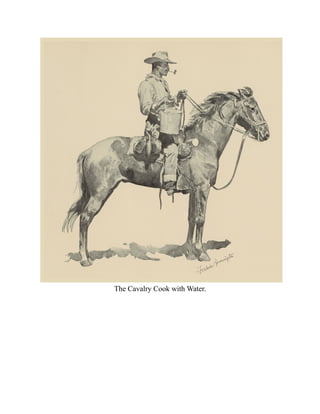
The Cavalry Cook with Water.
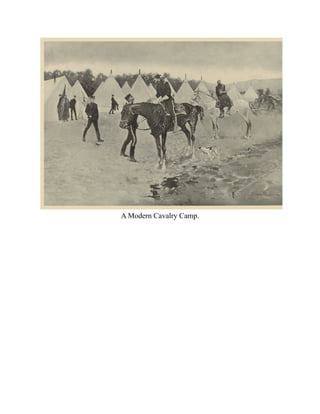
A Modern Cavalry Camp.
Fox Terriers Fighting a Badger.
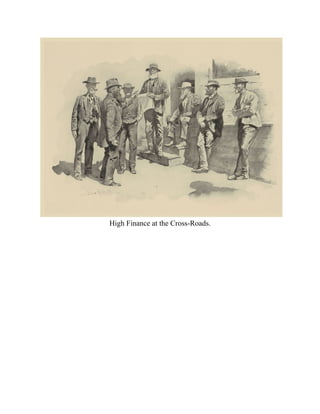
High Finance at the Cross-Roads.
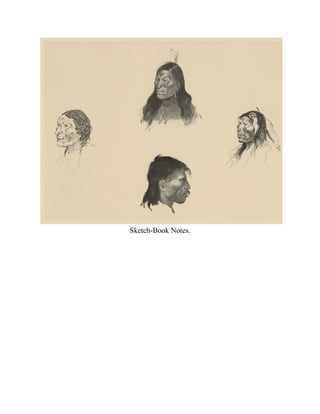
Sketch-Book Notes.
The Indian Soldier.
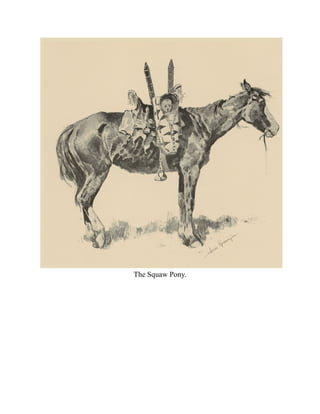
The Squaw Pony.
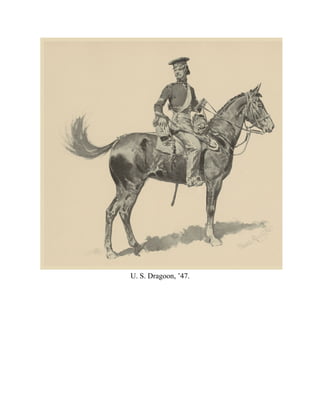
U. S. Dragoon, ’47.
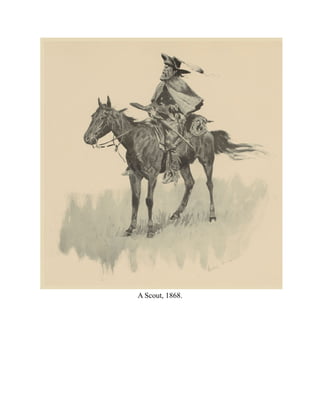
A Scout, 1868.
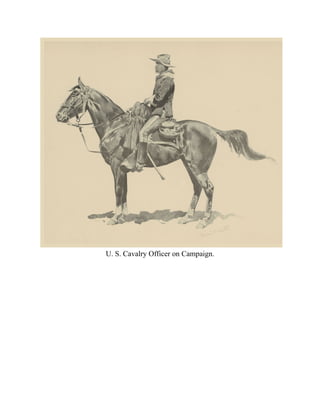
U. S. Cavalry Officer on Campaign.
A Reservation Indian.
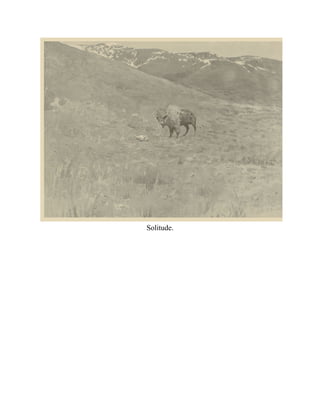
Solitude.
The Twilight of the Indian.
*** END OF THE PROJECT GUTENBERG EBOOK DRAWINGS ***
Updated editions will replace the previous one—the old editions will
be renamed.
Creating the works from print editions not protected by U.S.
copyright law means that no one owns a United States copyright in
these works, so the Foundation (and you!) can copy and distribute it
in the United States without permission and without paying
copyright royalties. Special rules, set forth in the General Terms of
Use part of this license, apply to copying and distributing Project
Gutenberg™ electronic works to protect the PROJECT GUTENBERG™
concept and trademark. Project Gutenberg is a registered trademark,
and may not be used if you charge for an eBook, except by following
the terms of the trademark license, including paying royalties for use
of the Project Gutenberg trademark. If you do not charge anything
for copies of this eBook, complying with the trademark license is
very easy. You may use this eBook for nearly any purpose such as
creation of derivative works, reports, performances and research.
Project Gutenberg eBooks may be modified and printed and given
away—you may do practically ANYTHING in the United States with
eBooks not protected by U.S. copyright law. Redistribution is subject
to the trademark license, especially commercial redistribution.
START: FULL LICENSE
THE FULL PROJECT GUTENBERG LICENSE
PLEASE READ THIS BEFORE YOU DISTRIBUTE OR USE THIS WORK
To protect the Project Gutenberg™ mission of promoting the free
distribution of electronic works, by using or distributing this work (or
any other work associated in any way with the phrase “Project
Gutenberg”), you agree to comply with all the terms of the Full
Project Gutenberg™ License available with this file or online at
www.gutenberg.org/license.
Section 1. General Terms of Use and
Redistributing Project Gutenberg™
electronic works
1.A. By reading or using any part of this Project Gutenberg™
electronic work, you indicate that you have read, understand, agree
to and accept all the terms of this license and intellectual property
(trademark/copyright) agreement. If you do not agree to abide by all
the terms of this agreement, you must cease using and return or
destroy all copies of Project Gutenberg™ electronic works in your
possession. If you paid a fee for obtaining a copy of or access to a
Project Gutenberg™ electronic work and you do not agree to be
bound by the terms of this agreement, you may obtain a refund
from the person or entity to whom you paid the fee as set forth in
paragraph 1.E.8.
1.B. “Project Gutenberg” is a registered trademark. It may only be
used on or associated in any way with an electronic work by people
who agree to be bound by the terms of this agreement. There are a
few things that you can do with most Project Gutenberg™ electronic
works even without complying with the full terms of this agreement.
See paragraph 1.C below. There are a lot of things you can do with
Project Gutenberg™ electronic works if you follow the terms of this
agreement and help preserve free future access to Project
Gutenberg™ electronic works. See paragraph 1.E below.
1.C. The Project Gutenberg Literary Archive Foundation (“the
Foundation” or PGLAF), owns a compilation copyright in the
collection of Project Gutenberg™ electronic works. Nearly all the
individual works in the collection are in the public domain in the
United States. If an individual work is unprotected by copyright law
in the United States and you are located in the United States, we do
not claim a right to prevent you from copying, distributing,
performing, displaying or creating derivative works based on the
work as long as all references to Project Gutenberg are removed. Of
course, we hope that you will support the Project Gutenberg™
mission of promoting free access to electronic works by freely
sharing Project Gutenberg™ works in compliance with the terms of
this agreement for keeping the Project Gutenberg™ name associated
with the work. You can easily comply with the terms of this
agreement by keeping this work in the same format with its attached
full Project Gutenberg™ License when you share it without charge
with others.
1.D. The copyright laws of the place where you are located also
govern what you can do with this work. Copyright laws in most
countries are in a constant state of change. If you are outside the
United States, check the laws of your country in addition to the
terms of this agreement before downloading, copying, displaying,
performing, distributing or creating derivative works based on this
work or any other Project Gutenberg™ work. The Foundation makes
no representations concerning the copyright status of any work in
any country other than the United States.
1.E. Unless you have removed all references to Project Gutenberg:
1.E.1. The following sentence, with active links to, or other
immediate access to, the full Project Gutenberg™ License must
appear prominently whenever any copy of a Project Gutenberg™
work (any work on which the phrase “Project Gutenberg” appears,
or with which the phrase “Project Gutenberg” is associated) is
accessed, displayed, performed, viewed, copied or distributed:
This eBook is for the use of anyone anywhere in the United
States and most other parts of the world at no cost and with
almost no restrictions whatsoever. You may copy it, give it away
or re-use it under the terms of the Project Gutenberg License
included with this eBook or online at www.gutenberg.org. If you
are not located in the United States, you will have to check the
laws of the country where you are located before using this
eBook.
1.E.2. If an individual Project Gutenberg™ electronic work is derived
from texts not protected by U.S. copyright law (does not contain a
notice indicating that it is posted with permission of the copyright
holder), the work can be copied and distributed to anyone in the
United States without paying any fees or charges. If you are
redistributing or providing access to a work with the phrase “Project
Gutenberg” associated with or appearing on the work, you must
comply either with the requirements of paragraphs 1.E.1 through
1.E.7 or obtain permission for the use of the work and the Project
Gutenberg™ trademark as set forth in paragraphs 1.E.8 or 1.E.9.
1.E.3. If an individual Project Gutenberg™ electronic work is posted
with the permission of the copyright holder, your use and distribution
must comply with both paragraphs 1.E.1 through 1.E.7 and any
additional terms imposed by the copyright holder. Additional terms
will be linked to the Project Gutenberg™ License for all works posted
with the permission of the copyright holder found at the beginning
of this work.
1.E.4. Do not unlink or detach or remove the full Project
Gutenberg™ License terms from this work, or any files containing a
part of this work or any other work associated with Project
Gutenberg™.
1.E.5. Do not copy, display, perform, distribute or redistribute this
electronic work, or any part of this electronic work, without
prominently displaying the sentence set forth in paragraph 1.E.1
with active links or immediate access to the full terms of the Project
Gutenberg™ License.
1.E.6. You may convert to and distribute this work in any binary,
compressed, marked up, nonproprietary or proprietary form,
including any word processing or hypertext form. However, if you
provide access to or distribute copies of a Project Gutenberg™ work
in a format other than “Plain Vanilla ASCII” or other format used in
the official version posted on the official Project Gutenberg™ website
(www.gutenberg.org), you must, at no additional cost, fee or
expense to the user, provide a copy, a means of exporting a copy, or
a means of obtaining a copy upon request, of the work in its original
“Plain Vanilla ASCII” or other form. Any alternate format must
include the full Project Gutenberg™ License as specified in
paragraph 1.E.1.
1.E.7. Do not charge a fee for access to, viewing, displaying,
performing, copying or distributing any Project Gutenberg™ works
unless you comply with paragraph 1.E.8 or 1.E.9.
1.E.8. You may charge a reasonable fee for copies of or providing
access to or distributing Project Gutenberg™ electronic works
provided that:
• You pay a royalty fee of 20% of the gross profits you derive
from the use of Project Gutenberg™ works calculated using the
method you already use to calculate your applicable taxes. The
fee is owed to the owner of the Project Gutenberg™ trademark,
but he has agreed to donate royalties under this paragraph to
the Project Gutenberg Literary Archive Foundation. Royalty
payments must be paid within 60 days following each date on
which you prepare (or are legally required to prepare) your
periodic tax returns. Royalty payments should be clearly marked
as such and sent to the Project Gutenberg Literary Archive
Foundation at the address specified in Section 4, “Information
about donations to the Project Gutenberg Literary Archive
Foundation.”
• You provide a full refund of any money paid by a user who
notifies you in writing (or by e-mail) within 30 days of receipt
that s/he does not agree to the terms of the full Project
Gutenberg™ License. You must require such a user to return or
destroy all copies of the works possessed in a physical medium
and discontinue all use of and all access to other copies of
Project Gutenberg™ works.
• You provide, in accordance with paragraph 1.F.3, a full refund of
any money paid for a work or a replacement copy, if a defect in
the electronic work is discovered and reported to you within 90
days of receipt of the work.
• You comply with all other terms of this agreement for free
distribution of Project Gutenberg™ works.
1.E.9. If you wish to charge a fee or distribute a Project Gutenberg™
electronic work or group of works on different terms than are set
forth in this agreement, you must obtain permission in writing from
the Project Gutenberg Literary Archive Foundation, the manager of
the Project Gutenberg™ trademark. Contact the Foundation as set
forth in Section 3 below.
1.F.
1.F.1. Project Gutenberg volunteers and employees expend
considerable effort to identify, do copyright research on, transcribe
and proofread works not protected by U.S. copyright law in creating
the Project Gutenberg™ collection. Despite these efforts, Project
Gutenberg™ electronic works, and the medium on which they may
be stored, may contain “Defects,” such as, but not limited to,
incomplete, inaccurate or corrupt data, transcription errors, a
copyright or other intellectual property infringement, a defective or
damaged disk or other medium, a computer virus, or computer
codes that damage or cannot be read by your equipment.
1.F.2. LIMITED WARRANTY, DISCLAIMER OF DAMAGES - Except for
the “Right of Replacement or Refund” described in paragraph 1.F.3,
the Project Gutenberg Literary Archive Foundation, the owner of the
Project Gutenberg™ trademark, and any other party distributing a
Project Gutenberg™ electronic work under this agreement, disclaim
all liability to you for damages, costs and expenses, including legal
fees. YOU AGREE THAT YOU HAVE NO REMEDIES FOR
NEGLIGENCE, STRICT LIABILITY, BREACH OF WARRANTY OR
BREACH OF CONTRACT EXCEPT THOSE PROVIDED IN PARAGRAPH
1.F.3. YOU AGREE THAT THE FOUNDATION, THE TRADEMARK
OWNER, AND ANY DISTRIBUTOR UNDER THIS AGREEMENT WILL
NOT BE LIABLE TO YOU FOR ACTUAL, DIRECT, INDIRECT,
CONSEQUENTIAL, PUNITIVE OR INCIDENTAL DAMAGES EVEN IF
YOU GIVE NOTICE OF THE POSSIBILITY OF SUCH DAMAGE.
1.F.3. LIMITED RIGHT OF REPLACEMENT OR REFUND - If you
discover a defect in this electronic work within 90 days of receiving
it, you can receive a refund of the money (if any) you paid for it by
sending a written explanation to the person you received the work
from. If you received the work on a physical medium, you must
return the medium with your written explanation. The person or
entity that provided you with the defective work may elect to provide
a replacement copy in lieu of a refund. If you received the work
electronically, the person or entity providing it to you may choose to
give you a second opportunity to receive the work electronically in
lieu of a refund. If the second copy is also defective, you may
demand a refund in writing without further opportunities to fix the
problem.
1.F.4. Except for the limited right of replacement or refund set forth
in paragraph 1.F.3, this work is provided to you ‘AS-IS’, WITH NO
OTHER WARRANTIES OF ANY KIND, EXPRESS OR IMPLIED,
Welcome to our website – the perfect destination for book lovers and
knowledge seekers. We believe that every book holds a new world,
offering opportunities for learning, discovery, and personal growth.
That’s why we are dedicated to bringing you a diverse collection of
books, ranging from classic literature and specialized publications to
self-development guides and children's books.
More than just a book-buying platform, we strive to be a bridge
connecting you with timeless cultural and intellectual values. With an
elegant, user-friendly interface and a smart search system, you can
quickly find the books that best suit your interests. Additionally,
our special promotions and home delivery services help you save time
and fully enjoy the joy of reading.
Join us on a journey of knowledge exploration, passion nurturing, and
personal growth every day!
testbankmall.com

Test Bank for Making a Difference with Nursing Research: Young

  • 1.
    Test Bank forMaking a Difference with Nursing Research: Young download https://testbankmall.com/product/test-bank-for-making-a- difference-with-nursing-research-young/ Find test banks or solution manuals at testbankmall.com today!
  • 2.
    We have selectedsome products that you may be interested in Click the link to download now or visit testbankmall.com for more options!. University Physics with Modern Physics 14th Edition Young Test Bank https://testbankmall.com/product/university-physics-with-modern- physics-14th-edition-young-test-bank/ University Physics with Modern Physics 14th Edition Young Solutions Manual https://testbankmall.com/product/university-physics-with-modern- physics-14th-edition-young-solutions-manual/ Test Bank for Reading, Understanding, and Applying Nursing Research, 5th Edition, James A. Fain, https://testbankmall.com/product/test-bank-for-reading-understanding- and-applying-nursing-research-5th-edition-james-a-fain/ Test bank Drug Therapy 4th Edition Aschenbrenner https://testbankmall.com/product/test-bank-drug-therapy-4th-edition- aschenbrenner/
  • 3.
    Solution Manual forIntroductory Statistics 9th by Mann https://testbankmall.com/product/solution-manual-for-introductory- statistics-9th-by-mann/ Test Bank for Human Heredity: Principles and Issues 11th Edition Cummings https://testbankmall.com/product/test-bank-for-human-heredity- principles-and-issues-11th-edition-cummings/ Test Bank for Contemporary Strategy Analysis: Text and Cases Edition, 9th Edition https://testbankmall.com/product/test-bank-for-contemporary-strategy- analysis-text-and-cases-edition-9th-edition/ Test Bank for The Science of Psychology: An Appreciative View, 5th Edition, Laura King https://testbankmall.com/product/test-bank-for-the-science-of- psychology-an-appreciative-view-5th-edition-laura-king/ Electric Circuits 10th Edition Nilsson Solutions Manual https://testbankmall.com/product/electric-circuits-10th-edition- nilsson-solutions-manual/
  • 4.
    Test Bank forResearch Methods for Business Students, 5th Edition, Mark NK Saunders, ISBN-10: 0273716867, ISBN-13: 9780273716860 https://testbankmall.com/product/test-bank-for-research-methods-for- business-students-5th-edition-mark-nk-saunders- isbn-10-0273716867-isbn-13-9780273716860/
  • 5.
    Langford, Making aDifference with Nursing Research, 1/E Test Bank Copyright 2012 by Pearson Education, Inc. The nurse asks another colleague for suggestions to help with a patient problem. What is a disadvantage to using this mechanism to acquire knowledge? 1. The practice may not have been verified as effective. 2. The information may not have been systematically tested. 3. It is inefficient and unsystematic. 4. Experiences are subjective. Correct Answer: 2 Rationale 1: The problem with traditional practices as an approach to acquire knowledge is that a practice can be traditional without having been verified as effective. (See page 4) Rationale 2: A downside to using authority to acquire knowledge is that the information provided by authorities may not have been systematically tested. (See page 4) Rationale 3: Trial and error is inefficient and unsystematic and can only be shared with a limited number of people. (See page 4) Rationale 4: In personal experience as a mechanism to acquire knowledge, experiences may be subjective and based upon personal values and perceptions. It is difficult to pass on information based on this mechanism to others who have not had similar experiences. (See page 4) Global Rationale: Cognitive Level: Analyzing Client Need: Client Need Sub: Nursing/Integrated Concepts: Learning Outcome: 1 Question 3 Type: MCMA While working through a specific patient problem, the nurse acquires information about the problem from a variety of sources. Which sources do nurses use to acquire information? Standard Text: Select all that apply. 1. Smart phone applications 2. Personal experience 3. Deductive reasoning 4. Trial and error

  • 6.
    Langford, Making aDifference with Nursing Research, 1/E Test Bank Copyright 2012 by Pearson Education, Inc. 5. The internet Correct Answer: 2,3,4 Rationale 1: Smart phone applications are not an identified source for acquiring knowledge to guide clinical practice. (See page 4) Rationale 2: Personal experience is a method that nurses use to acquire information. (See page 4) Rationale 3: Deductive reasoning is a method that nurses use to acquire information. (See page 4) Rationale 4: Trial and error is a method that nurses use to acquire information. (See page 4) Rationale 5: The internet is not an identified as source for acquiring knowledge to guide clinical practice. (See page 4) Global Rationale: Cognitive Level: Applying Client Need: Client Need Sub: Nursing/Integrated Concepts: Learning Outcome: 1 Question 4 Type: MCSA The nurse is focusing on the process when conducting nursing research. What is the nurse doing at this time? 1. Verifying a belief 2. Carrying out research in a precise and organized manner 3. Following a planned series of steps to gather and analyze information 4. Testing practice theories by applying them to a specific clinical problem Correct Answer: 3 Rationale 1: Verifying a belief would be done when confirming research. (See page 5) Rationale 2: Carrying out research in a precise and organized manner would be done when following a systematic approach to the research. (See page 5) Rationale 3: The process of research is a planned series of steps used for gathering and analyzing information. (See page 5) Rationale 4: Testing practice theories by applying them to a specific clinical problem is done when deductive reasoning is used. (See page 5)
  • 7.
    Langford, Making aDifference with Nursing Research, 1/E Test Bank Copyright 2012 by Pearson Education, Inc. Global Rationale: Cognitive Level: Applying Client Need: Client Need Sub: Nursing/Integrated Concepts: Learning Outcome: 2 Question 5 Type: MCSA The nurse is planning a research study to contribute to professional practice. What is one specific purpose of this type of research study? 1. Create standardized care plans. 2. Reduce the number of care maps. 3. Add credibility to improve outcomes. 4. Eliminate trial and error in care. Correct Answer: 3 Rationale 1: Nursing research is not used specifically to create standardized care plans. (See page 6) Rationale 2: Nursing research is not used specifically to reduce the number of care maps. (See page 6) Rationale 3: Nursing research is a systematic process that helps nurses discover answers and resolve problems that are important to clinical practice, administration, or education. Demonstrating research-based practices that improve outcomes is one area that nursing research contributes to professional practice. (See page 6) Rationale 4: Nursing research is not used specifically to eliminate the process of trial and error to acquire knowledge. (See page 6) Global Rationale: Cognitive Level: Analyzing Client Need: Client Need Sub: Nursing/Integrated Concepts: Learning Outcome: 2 Question 6 Type: MCSA The nurse is studying previous research conducted about a patient care issue that was studied in the 1940s. Which resource would be beneficial for the nurse to access?
  • 8.
    Langford, Making aDifference with Nursing Research, 1/E Test Bank Copyright 2012 by Pearson Education, Inc. 1. Research in Nursing and Health journal 2. Directions for Nursing Research: Toward the Twenty-first Century 3. The American Nurses Association publications 4. Nursing Studies Index Correct Answer: 4 Rationale 1: Research in Nursing and Health is a journal of current nursing research. (See page 10) Rationale 2: Directions for Nursing Research: Toward the Twenty-first Century is a document that identifies research priorities. (See page 10) Rationale 3: The American Nurses Association publications identify nurse sensitive indicators. (See page 10) Rationale 4: The Nursing Studies Index was published in 1963 and is the first organized listing of nursing research literature. This index compiled nursing research from 1900 through 1959. (See page 10) Global Rationale: Cognitive Level: Applying Client Need: Client Need Sub: Nursing/Integrated Concepts: Learning Outcome: 3 Question 7 Type: MCSA The nurse is participating in a state planning committee that is focusing on the redesign of health care in the state. Which resource would the nurse access to prepare for the work of this committee? 1. National Institute of Nursing Research 2. Online Journal of Knowledge Synthesis 3. The Future of Nursing 4. To Err is Human Correct Answer: 3 Rationale 1: The National Institute of Nursing Research is a federal agency for nursing research. (See page 11) Rationale 2: The Online Journal of Knowledge Synthesis is a digital journal begun by Sigma Theta Tau. (See page 11)
  • 9.
    Langford, Making aDifference with Nursing Research, 1/E Test Bank Copyright 2012 by Pearson Education, Inc. Rationale 3: The report from the Robert Wood Johnson Foundation entitled The Future of Nursing: Leading Change, Advancing Health indicates that nurses should foster inter-professional collaboration by serving as full partners in health care redesign. (See page 11) Rationale 4: To Err is Human is a report from the Institute of Medicine and focuses on the establishment of leadership, research, tools, and protocols to improve patient safety. (See page 11) Global Rationale: Cognitive Level: Applying Client Need: Client Need Sub: Nursing/Integrated Concepts: Learning Outcome: 3 Question 8 Type: MCSA The nurse with a baccalaureate degree would participate in which nursing research activity? 1. Identify problems for research. 2. Implement practice-based guidelines. 3. Use research findings for clinical care. 4. Judge the relevance of outcomes for clinical practice. Correct Answer: 1 Rationale 1: The nurse with a baccalaureate degree is expected to identify clinical problems for research. (See page 14) Rationale 2: The nurse with an associate degree would use research findings for clinical care. (See page 14) Rationale 3: The nurse with a master's degree would implement practice-based guidelines. (See page 14) Rationale 4: The nurse with a master's degree would judge the relevance of outcomes for clinical practice. (See page 14) Global Rationale: Cognitive Level: Applying Client Need: Client Need Sub: Nursing/Integrated Concepts: Learning Outcome: 4 Question 9
  • 10.
    Langford, Making aDifference with Nursing Research, 1/E Test Bank Copyright 2012 by Pearson Education, Inc. Type: MCMA The nurse with a doctorate degree is planning a research study. Which activities will this nurse conduct? Standard Text: Select all that apply. 1. Acquire funding. 2. Develop programs for research. 3. Identify significant research problems. 4. Develop and implement practice-based guidelines. 5. Correct Answer: 1,2,3,4 Rationale 1: Acquiring funding is an expectation for doctorally prepared nurses. (See page 15) Rationale 2: Developing programs for research is an expectation for doctorally prepared nurses. (See page 15) Rationale 3: Identifying significant research problems is an expectation for doctorally prepared nurses. (See page 15) Rationale 4: Reviewing theories about nursing research conduct is an expectation for doctorally prepared nurses. (See page 15) Rationale 5: Global Rationale: Cognitive Level: Applying Client Need: Client Need Sub: Nursing/Integrated Concepts: Learning Outcome: 4 Question 10 Type: MCSA The nurse is implementing an evidence-based guideline when planning the care of a patient with a stage 4 pressure ulcer. What is this nurse doing? 1. Writing orders for medications to apply to the wound 2. Applying research findings to clinical practice 3. Acquiring funding for a research study
  • 11.
    Langford, Making aDifference with Nursing Research, 1/E Test Bank Copyright 2012 by Pearson Education, Inc. 4. Designing a research study Correct Answer: 2 Rationale 1: Writing orders for medications to apply to the wound is not an action when implementing an evidence-based guideline. (See page 16) Rationale 2: Evidence-based practice means applying research findings to clinical practice. (See page 16) Rationale 3: Acquiring funding for a research study is not an action when implementing an evidence-based guideline. (See page 16) Rationale 4: Designing a research study is not an action when implementing an evidence-based guideline. (See page 16) Global Rationale: Cognitive Level: Applying Client Need: Client Need Sub: Nursing/Integrated Concepts: Learning Outcome: 5 Question 11 Type: MCSA The nurse is determining information that would be included in an evidence-based guideline. Which activity is not a part of this process? 1. Appraise evidence. 2. Search and collect evidence. 3. Implement the best evidence. 4. Read an article and implement the ideas. Correct Answer: 4 Rationale 1: The evidence-based practice process includes appraising evidence. (See page 17) Rationale 2: The evidence-based practice process includes searching and collecting evidence. (See page 17) Rationale 3: The evidence-based practice process includes implementing the best evidence prior to including it into practice. (See page 17) Rationale 4: Evidence-based practice is more than reading some articles and implementing ideas. (See page 17) Global Rationale:
  • 12.
    Langford, Making aDifference with Nursing Research, 1/E Test Bank Copyright 2012 by Pearson Education, Inc. Cognitive Level: Analyzing Client Need: Client Need Sub: Nursing/Integrated Concepts: Learning Outcome: 5 Question 12 Type: MCSA The nurse is reviewing Healthy People 2020 and determines which as being a research goal? 1. Reduce errors. 2. Improve end of life care. 3. Manage chronic illnesses. 4. Enhance innovation in practice. Correct Answer: 1 Rationale 1: Within the Healthy People 2020 document, specific targets for achievement in health outcomes are designated. Safe models of health care that reduce errors continue to be a priority. (See page 18) Rationale 2: Improving end of life care is a research priority from the National Institute of Nursing Research. (See page 18) Rationale 3: Managing chronic illnesses are research priorities from the National Institute of Nursing Research. (See page 18) Rationale 4: Enhancing innovation in practice is a research priority from the National Institute of Nursing Research. (See page 18) Global Rationale: Cognitive Level: Analyzing Client Need: Client Need Sub: Nursing/Integrated Concepts: Learning Outcome: 6 Question 13 Type: MCSA The nurse is reviewing research conducted to improve patient care in 2011. Which would have been a topic that was studied at that time?
  • 13.
    Langford, Making aDifference with Nursing Research, 1/E Test Bank Copyright 2012 by Pearson Education, Inc. 1. Reduce errors in patient care. 2. Reduce the nursing shortage. 3. Develop the next generation of nurse scientists. 4. Enhance research at the associate degree level. Correct Answer: 3 Rationale 1: Reducing errors in patient care is a Healthy People 2020 research goal. (See page 17) Rationale 2: Reducing the nursing shortage is not an identified nursing research goal. (See page 17) Rationale 3: Developing the next generation of nurse scientists was on the list of priorities from the National Institute of Nursing Research in 2011. (See page 17) Rationale 4: Enhancing research at the associate degree level is not an identified nursing research goal. (See page 17) Global Rationale: Cognitive Level: Analyzing Client Need: Client Need Sub: Nursing/Integrated Concepts: Learning Outcome: 6 Question 14 Type: MCSA The nurse is reviewing educational programs to enroll in a doctoral program. How does this action facilitate nursing research? 1. Ensures funding for health care organizations 2. Helps meet the demand for more nurse researchers 3. Supports the adoption of evidence-based practice 4. Reduces the need for translational research Correct Answer: 2 Rationale 1: Enrolling in a doctoral program will not ensure funding for health care organizations. (See page 18) Rationale 2: One facilitator for nursing research is an improvement in the education of nurses. This is needed to meet the future demands for nurse researchers. (See page 18)
  • 14.
    Langford, Making aDifference with Nursing Research, 1/E Test Bank Copyright 2012 by Pearson Education, Inc. Rationale 3: Enrolling in a doctoral program will not support the adoption of evidence-based practice. (See page 18) Rationale 4: Translational research is a new initiative in the health care research world that focuses on moving research to practice. It has nothing to do with being a facilitator of nursing research. (See page 18) Global Rationale: Cognitive Level: Analyzing Client Need: Client Need Sub: Nursing/Integrated Concepts: Learning Outcome: 7 Question 15 Type: MCSA A master's-prepared nurse is meeting resistance about planning a research study in the organization. Which is an organizational barrier to nursing research? 1. Knowledge gap about evidence-based practice 2. Resistance to inductive reasoning 3. Negative attitude about research 4. Limited access to resources Correct Answer: 4 Rationale 1: A knowledge gap about evidence-based practice is a barrier within nursing research and evidence- based practice. (See page 18) Rationale 2: Resistance to inductive reasoning is not an identified barrier to nursing research. (See page 18) Rationale 3: A negative attitude about research is a barrier within nursing research and evidence-based practice. (See page 18) Rationale 4: One organizational barrier to nursing research is limited access to resources. (See page 18) Global Rationale: Cognitive Level: Understanding Client Need: Client Need Sub: Nursing/Integrated Concepts: Learning Outcome: 7
  • 15.
    Random documents withunrelated content Scribd suggests to you:
  • 16.
    The Cavalry Cookwith Water.
  • 17.
  • 18.
  • 19.
    High Finance atthe Cross-Roads.
  • 20.
  • 21.
  • 22.
  • 23.
  • 24.
  • 25.
    U. S. CavalryOfficer on Campaign.
  • 26.
  • 27.
  • 28.
    The Twilight ofthe Indian.
  • 29.
    *** END OFTHE PROJECT GUTENBERG EBOOK DRAWINGS *** Updated editions will replace the previous one—the old editions will be renamed. Creating the works from print editions not protected by U.S. copyright law means that no one owns a United States copyright in these works, so the Foundation (and you!) can copy and distribute it in the United States without permission and without paying copyright royalties. Special rules, set forth in the General Terms of Use part of this license, apply to copying and distributing Project Gutenberg™ electronic works to protect the PROJECT GUTENBERG™ concept and trademark. Project Gutenberg is a registered trademark, and may not be used if you charge for an eBook, except by following the terms of the trademark license, including paying royalties for use of the Project Gutenberg trademark. If you do not charge anything for copies of this eBook, complying with the trademark license is very easy. You may use this eBook for nearly any purpose such as creation of derivative works, reports, performances and research. Project Gutenberg eBooks may be modified and printed and given away—you may do practically ANYTHING in the United States with eBooks not protected by U.S. copyright law. Redistribution is subject to the trademark license, especially commercial redistribution. START: FULL LICENSE
  • 30.
    THE FULL PROJECTGUTENBERG LICENSE
  • 31.
    PLEASE READ THISBEFORE YOU DISTRIBUTE OR USE THIS WORK To protect the Project Gutenberg™ mission of promoting the free distribution of electronic works, by using or distributing this work (or any other work associated in any way with the phrase “Project Gutenberg”), you agree to comply with all the terms of the Full Project Gutenberg™ License available with this file or online at www.gutenberg.org/license. Section 1. General Terms of Use and Redistributing Project Gutenberg™ electronic works 1.A. By reading or using any part of this Project Gutenberg™ electronic work, you indicate that you have read, understand, agree to and accept all the terms of this license and intellectual property (trademark/copyright) agreement. If you do not agree to abide by all the terms of this agreement, you must cease using and return or destroy all copies of Project Gutenberg™ electronic works in your possession. If you paid a fee for obtaining a copy of or access to a Project Gutenberg™ electronic work and you do not agree to be bound by the terms of this agreement, you may obtain a refund from the person or entity to whom you paid the fee as set forth in paragraph 1.E.8. 1.B. “Project Gutenberg” is a registered trademark. It may only be used on or associated in any way with an electronic work by people who agree to be bound by the terms of this agreement. There are a few things that you can do with most Project Gutenberg™ electronic works even without complying with the full terms of this agreement. See paragraph 1.C below. There are a lot of things you can do with Project Gutenberg™ electronic works if you follow the terms of this agreement and help preserve free future access to Project Gutenberg™ electronic works. See paragraph 1.E below.
  • 32.
    1.C. The ProjectGutenberg Literary Archive Foundation (“the Foundation” or PGLAF), owns a compilation copyright in the collection of Project Gutenberg™ electronic works. Nearly all the individual works in the collection are in the public domain in the United States. If an individual work is unprotected by copyright law in the United States and you are located in the United States, we do not claim a right to prevent you from copying, distributing, performing, displaying or creating derivative works based on the work as long as all references to Project Gutenberg are removed. Of course, we hope that you will support the Project Gutenberg™ mission of promoting free access to electronic works by freely sharing Project Gutenberg™ works in compliance with the terms of this agreement for keeping the Project Gutenberg™ name associated with the work. You can easily comply with the terms of this agreement by keeping this work in the same format with its attached full Project Gutenberg™ License when you share it without charge with others. 1.D. The copyright laws of the place where you are located also govern what you can do with this work. Copyright laws in most countries are in a constant state of change. If you are outside the United States, check the laws of your country in addition to the terms of this agreement before downloading, copying, displaying, performing, distributing or creating derivative works based on this work or any other Project Gutenberg™ work. The Foundation makes no representations concerning the copyright status of any work in any country other than the United States. 1.E. Unless you have removed all references to Project Gutenberg: 1.E.1. The following sentence, with active links to, or other immediate access to, the full Project Gutenberg™ License must appear prominently whenever any copy of a Project Gutenberg™ work (any work on which the phrase “Project Gutenberg” appears, or with which the phrase “Project Gutenberg” is associated) is accessed, displayed, performed, viewed, copied or distributed:
  • 33.
    This eBook isfor the use of anyone anywhere in the United States and most other parts of the world at no cost and with almost no restrictions whatsoever. You may copy it, give it away or re-use it under the terms of the Project Gutenberg License included with this eBook or online at www.gutenberg.org. If you are not located in the United States, you will have to check the laws of the country where you are located before using this eBook. 1.E.2. If an individual Project Gutenberg™ electronic work is derived from texts not protected by U.S. copyright law (does not contain a notice indicating that it is posted with permission of the copyright holder), the work can be copied and distributed to anyone in the United States without paying any fees or charges. If you are redistributing or providing access to a work with the phrase “Project Gutenberg” associated with or appearing on the work, you must comply either with the requirements of paragraphs 1.E.1 through 1.E.7 or obtain permission for the use of the work and the Project Gutenberg™ trademark as set forth in paragraphs 1.E.8 or 1.E.9. 1.E.3. If an individual Project Gutenberg™ electronic work is posted with the permission of the copyright holder, your use and distribution must comply with both paragraphs 1.E.1 through 1.E.7 and any additional terms imposed by the copyright holder. Additional terms will be linked to the Project Gutenberg™ License for all works posted with the permission of the copyright holder found at the beginning of this work. 1.E.4. Do not unlink or detach or remove the full Project Gutenberg™ License terms from this work, or any files containing a part of this work or any other work associated with Project Gutenberg™. 1.E.5. Do not copy, display, perform, distribute or redistribute this electronic work, or any part of this electronic work, without prominently displaying the sentence set forth in paragraph 1.E.1
  • 34.
    with active linksor immediate access to the full terms of the Project Gutenberg™ License. 1.E.6. You may convert to and distribute this work in any binary, compressed, marked up, nonproprietary or proprietary form, including any word processing or hypertext form. However, if you provide access to or distribute copies of a Project Gutenberg™ work in a format other than “Plain Vanilla ASCII” or other format used in the official version posted on the official Project Gutenberg™ website (www.gutenberg.org), you must, at no additional cost, fee or expense to the user, provide a copy, a means of exporting a copy, or a means of obtaining a copy upon request, of the work in its original “Plain Vanilla ASCII” or other form. Any alternate format must include the full Project Gutenberg™ License as specified in paragraph 1.E.1. 1.E.7. Do not charge a fee for access to, viewing, displaying, performing, copying or distributing any Project Gutenberg™ works unless you comply with paragraph 1.E.8 or 1.E.9. 1.E.8. You may charge a reasonable fee for copies of or providing access to or distributing Project Gutenberg™ electronic works provided that: • You pay a royalty fee of 20% of the gross profits you derive from the use of Project Gutenberg™ works calculated using the method you already use to calculate your applicable taxes. The fee is owed to the owner of the Project Gutenberg™ trademark, but he has agreed to donate royalties under this paragraph to the Project Gutenberg Literary Archive Foundation. Royalty payments must be paid within 60 days following each date on which you prepare (or are legally required to prepare) your periodic tax returns. Royalty payments should be clearly marked as such and sent to the Project Gutenberg Literary Archive Foundation at the address specified in Section 4, “Information
  • 35.
    about donations tothe Project Gutenberg Literary Archive Foundation.” • You provide a full refund of any money paid by a user who notifies you in writing (or by e-mail) within 30 days of receipt that s/he does not agree to the terms of the full Project Gutenberg™ License. You must require such a user to return or destroy all copies of the works possessed in a physical medium and discontinue all use of and all access to other copies of Project Gutenberg™ works. • You provide, in accordance with paragraph 1.F.3, a full refund of any money paid for a work or a replacement copy, if a defect in the electronic work is discovered and reported to you within 90 days of receipt of the work. • You comply with all other terms of this agreement for free distribution of Project Gutenberg™ works. 1.E.9. If you wish to charge a fee or distribute a Project Gutenberg™ electronic work or group of works on different terms than are set forth in this agreement, you must obtain permission in writing from the Project Gutenberg Literary Archive Foundation, the manager of the Project Gutenberg™ trademark. Contact the Foundation as set forth in Section 3 below. 1.F. 1.F.1. Project Gutenberg volunteers and employees expend considerable effort to identify, do copyright research on, transcribe and proofread works not protected by U.S. copyright law in creating the Project Gutenberg™ collection. Despite these efforts, Project Gutenberg™ electronic works, and the medium on which they may be stored, may contain “Defects,” such as, but not limited to, incomplete, inaccurate or corrupt data, transcription errors, a copyright or other intellectual property infringement, a defective or
  • 36.
    damaged disk orother medium, a computer virus, or computer codes that damage or cannot be read by your equipment. 1.F.2. LIMITED WARRANTY, DISCLAIMER OF DAMAGES - Except for the “Right of Replacement or Refund” described in paragraph 1.F.3, the Project Gutenberg Literary Archive Foundation, the owner of the Project Gutenberg™ trademark, and any other party distributing a Project Gutenberg™ electronic work under this agreement, disclaim all liability to you for damages, costs and expenses, including legal fees. YOU AGREE THAT YOU HAVE NO REMEDIES FOR NEGLIGENCE, STRICT LIABILITY, BREACH OF WARRANTY OR BREACH OF CONTRACT EXCEPT THOSE PROVIDED IN PARAGRAPH 1.F.3. YOU AGREE THAT THE FOUNDATION, THE TRADEMARK OWNER, AND ANY DISTRIBUTOR UNDER THIS AGREEMENT WILL NOT BE LIABLE TO YOU FOR ACTUAL, DIRECT, INDIRECT, CONSEQUENTIAL, PUNITIVE OR INCIDENTAL DAMAGES EVEN IF YOU GIVE NOTICE OF THE POSSIBILITY OF SUCH DAMAGE. 1.F.3. LIMITED RIGHT OF REPLACEMENT OR REFUND - If you discover a defect in this electronic work within 90 days of receiving it, you can receive a refund of the money (if any) you paid for it by sending a written explanation to the person you received the work from. If you received the work on a physical medium, you must return the medium with your written explanation. The person or entity that provided you with the defective work may elect to provide a replacement copy in lieu of a refund. If you received the work electronically, the person or entity providing it to you may choose to give you a second opportunity to receive the work electronically in lieu of a refund. If the second copy is also defective, you may demand a refund in writing without further opportunities to fix the problem. 1.F.4. Except for the limited right of replacement or refund set forth in paragraph 1.F.3, this work is provided to you ‘AS-IS’, WITH NO OTHER WARRANTIES OF ANY KIND, EXPRESS OR IMPLIED,
  • 37.
    Welcome to ourwebsite – the perfect destination for book lovers and knowledge seekers. We believe that every book holds a new world, offering opportunities for learning, discovery, and personal growth. That’s why we are dedicated to bringing you a diverse collection of books, ranging from classic literature and specialized publications to self-development guides and children's books. More than just a book-buying platform, we strive to be a bridge connecting you with timeless cultural and intellectual values. With an elegant, user-friendly interface and a smart search system, you can quickly find the books that best suit your interests. Additionally, our special promotions and home delivery services help you save time and fully enjoy the joy of reading. Join us on a journey of knowledge exploration, passion nurturing, and personal growth every day! testbankmall.com