Terrorist infiltration through
conflict migration
Jon Nakapalau, CHSO, CPO
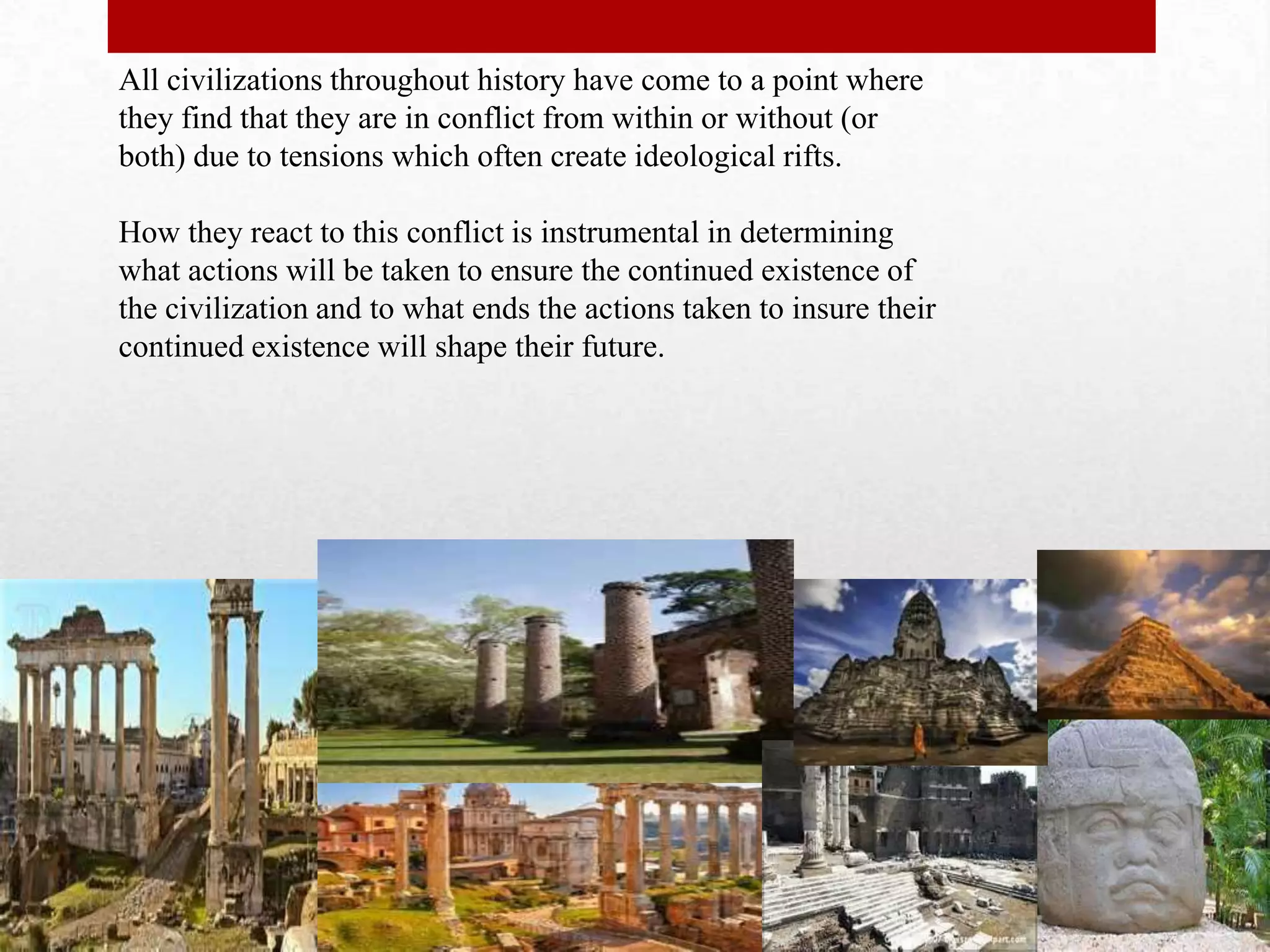
All civilizations throughout history have come to a point where
they find that they are in conflict from within or without (or
both) due to tensions which often create ideological rifts.

How they react to this conflict is instrumental in determining
what actions will be taken to ensure the continued existence of
the civilization and to what ends the actions taken to insure their
continued existence will shape their future.
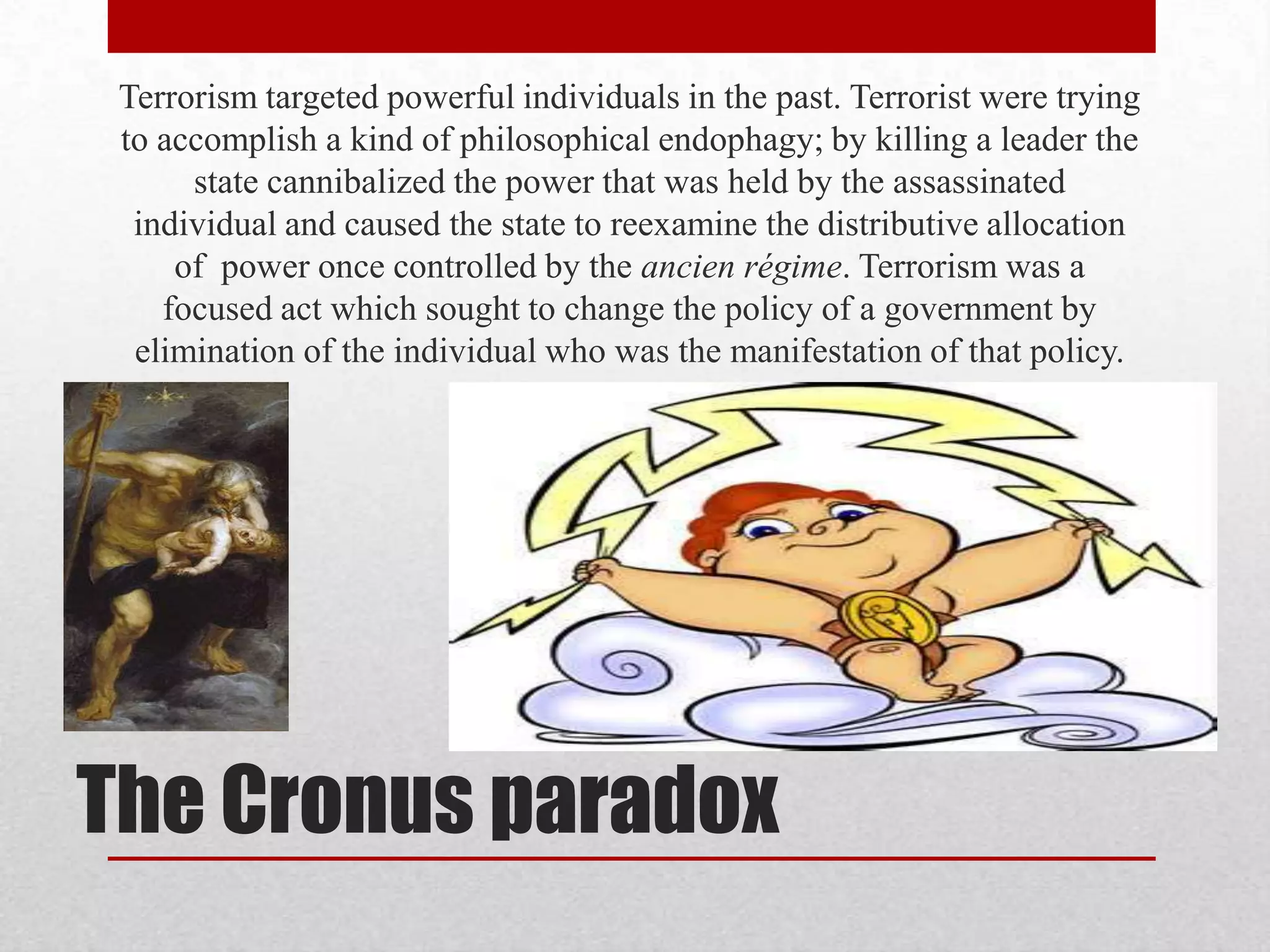
Terrorism targeted powerful individuals in the past. Terrorist were trying
 to accomplish a kind of philosophical endophagy; by killing a leader the
      state cannibalized the power that was held by the assassinated
  individual and caused the state to reexamine the distributive allocation
     of power once controlled by the ancien régime. Terrorism was a
    focused act which sought to change the policy of a government by
  elimination of the individual who was the manifestation of that policy.


The Cronus paradox
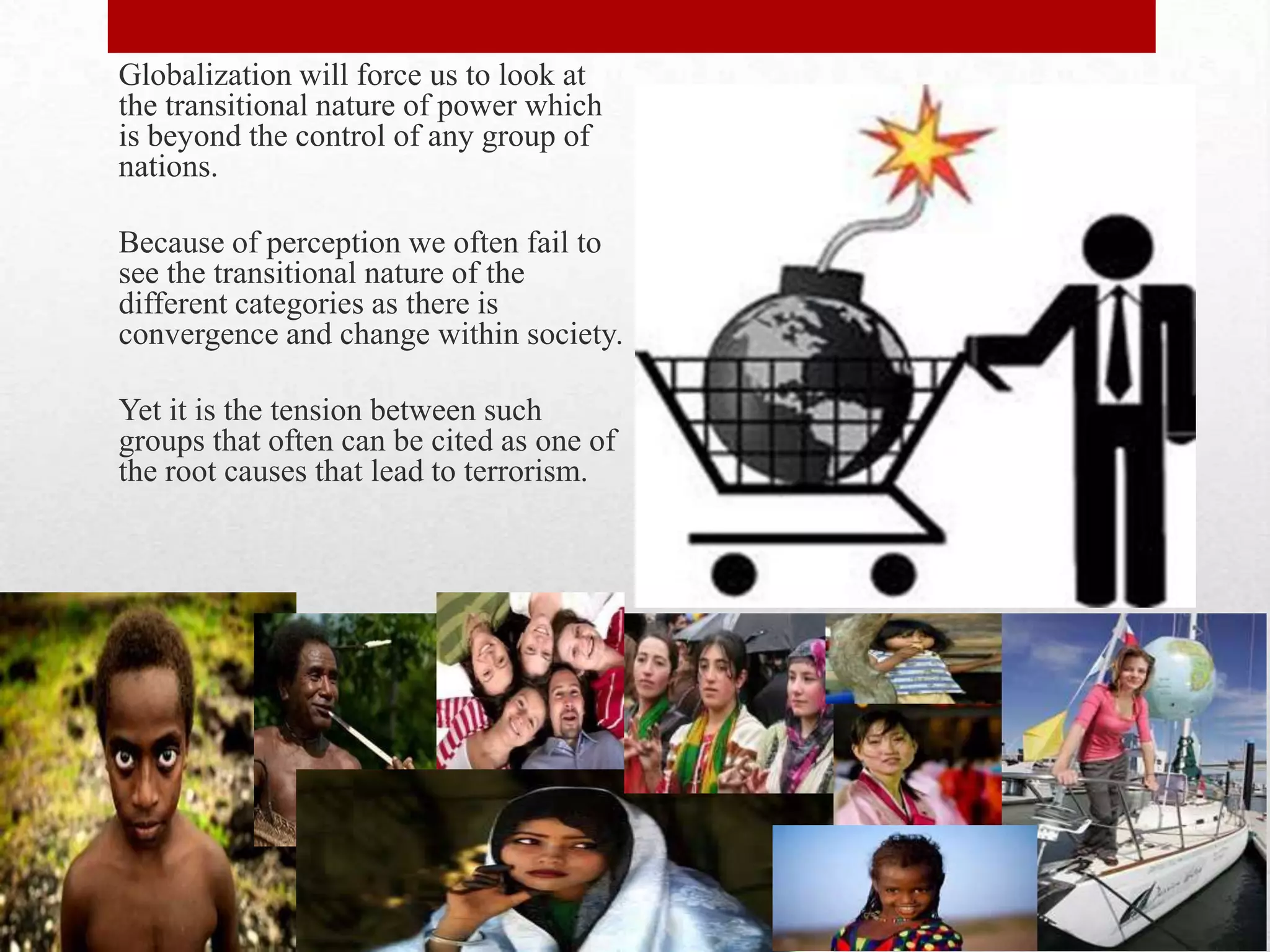
Globalization will force us to look at
the transitional nature of power which
is beyond the control of any group of
nations.

Because of perception we often fail to
see the transitional nature of the
different categories as there is
convergence and change within society.

Yet it is the tension between such
groups that often can be cited as one of
the root causes that lead to terrorism.
The central question becomes one in which normative acts fit into a
   hegemonistic picture of what we define as democracy. Can there be a
democratic definition of what democracy is or is the definition defined by (and
                              only by) the West?

This question will continue to be asked as new countries lend their definitional
 perspective to their aspirations. Only time will tell if we all agree on a given
 definition or if we will need to redefine the contextual nature of democracy.
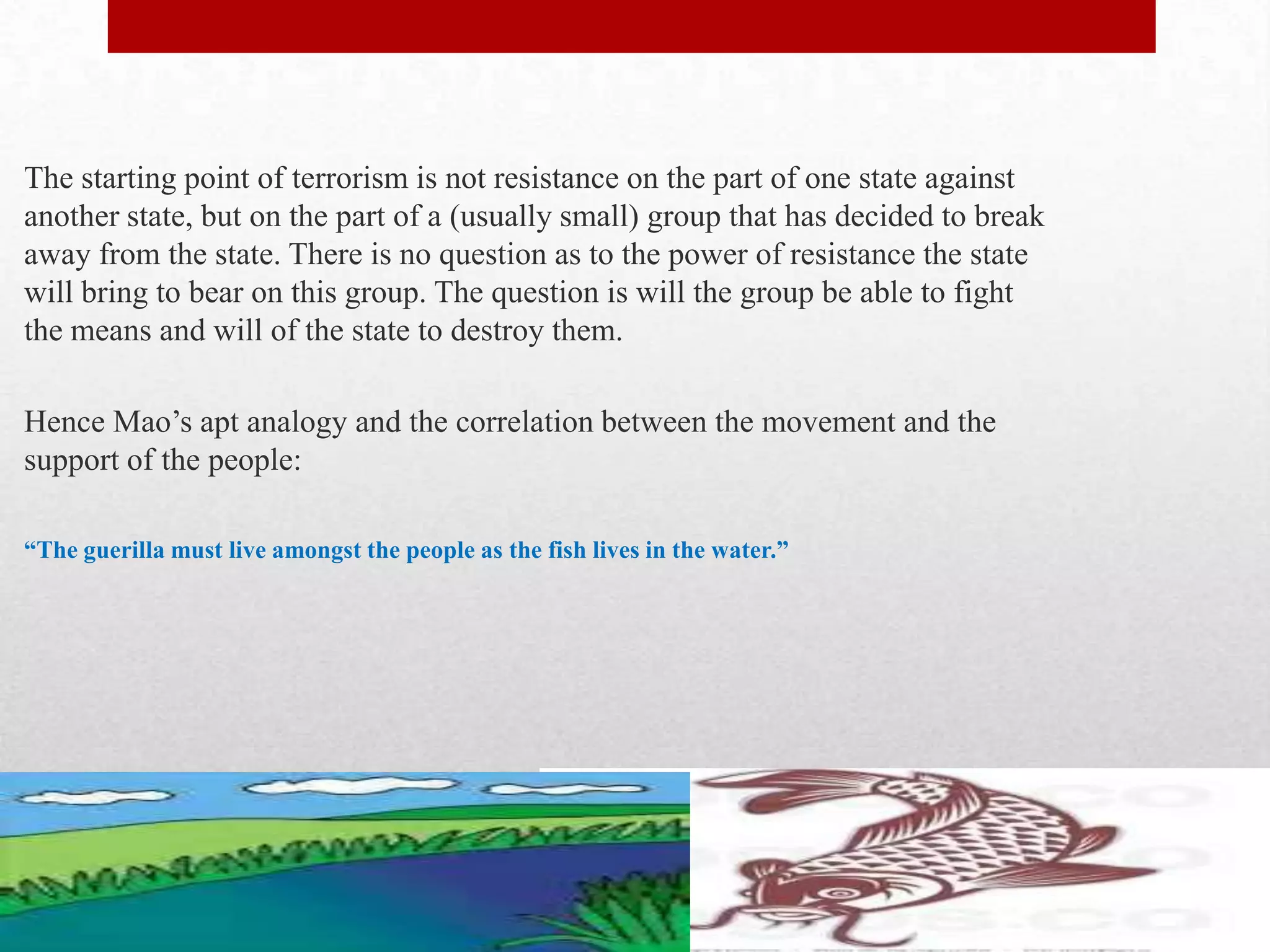
The paradox that the US will continue to have to address around the world is
how do you project strength and justice at the same time? How does the US
 address philosopher Thomas Pogge’s observation when he points out that
   there is a difference between causing poverty and failing to reduce it.

  There is a further distinction to be made when you fail to reduce poverty
   because the government you are working with does not feel the moral
                               obligation to do so.
The starting point of terrorism is not resistance on the part of one state against
another state, but on the part of a (usually small) group that has decided to break
away from the state. There is no question as to the power of resistance the state
will bring to bear on this group. The question is will the group be able to fight
the means and will of the state to destroy them.

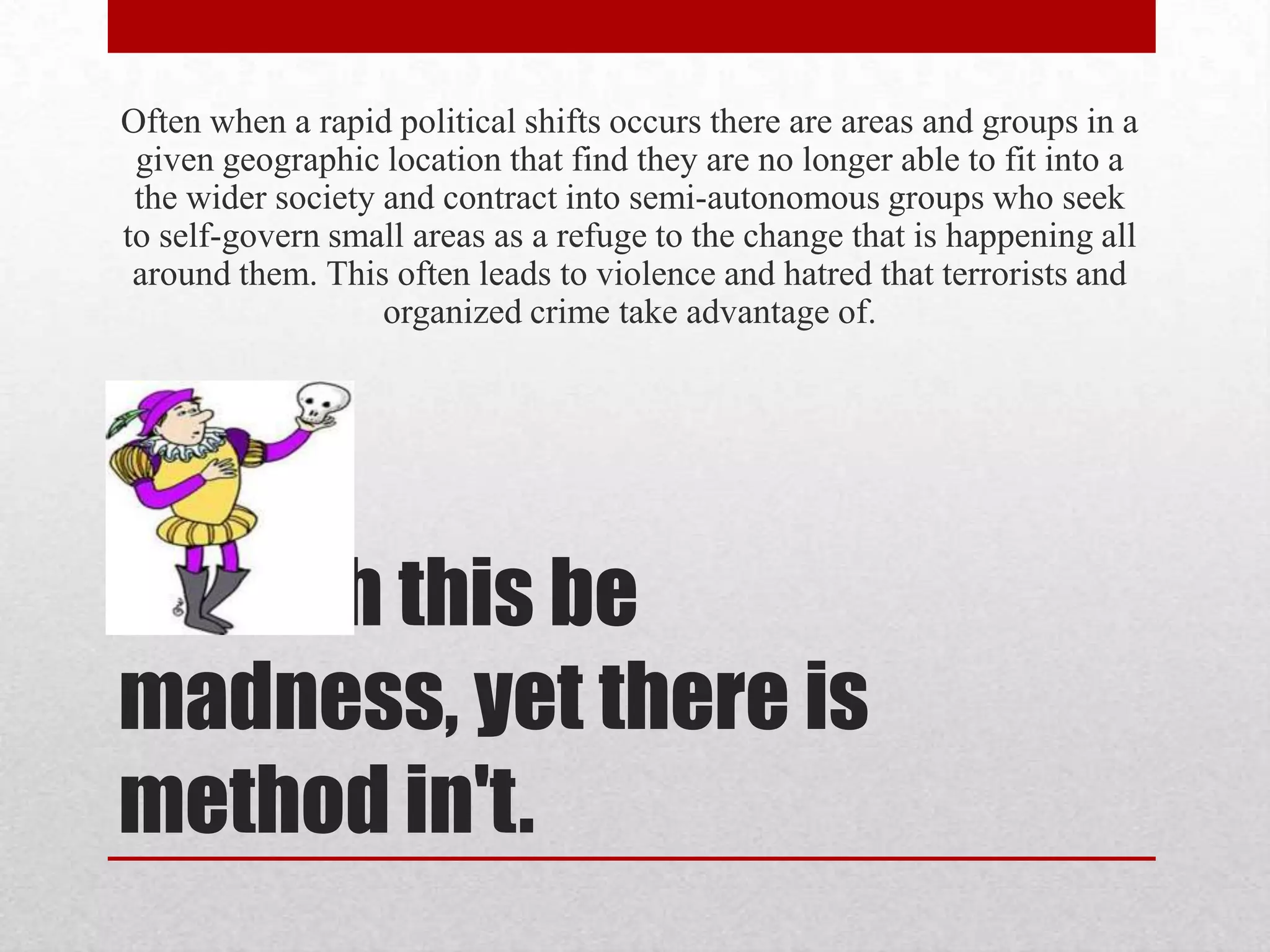
Hence Mao’s apt analogy and the correlation between the movement and the
support of the people:

“The guerilla must live amongst the people as the fish lives in the water.”
Terrorists/narco-guerrillas now use many tactics
[transitional nature] to confuse the delineation
between freedom fighter, soldier and political
insurgent which increasingly becomes blurred;
actors hiding behind a curtain were they can
change costumes quickly.

Once behind this curtain the terrorists/narco-
guerrillas understands that there will be another
act in which to play another part.
Often when a rapid political shifts occurs there are areas and groups in a
 given geographic location that find they are no longer able to fit into a
 the wider society and contract into semi-autonomous groups who seek
to self-govern small areas as a refuge to the change that is happening all
 around them. This often leads to violence and hatred that terrorists and
                   organized crime take advantage of.


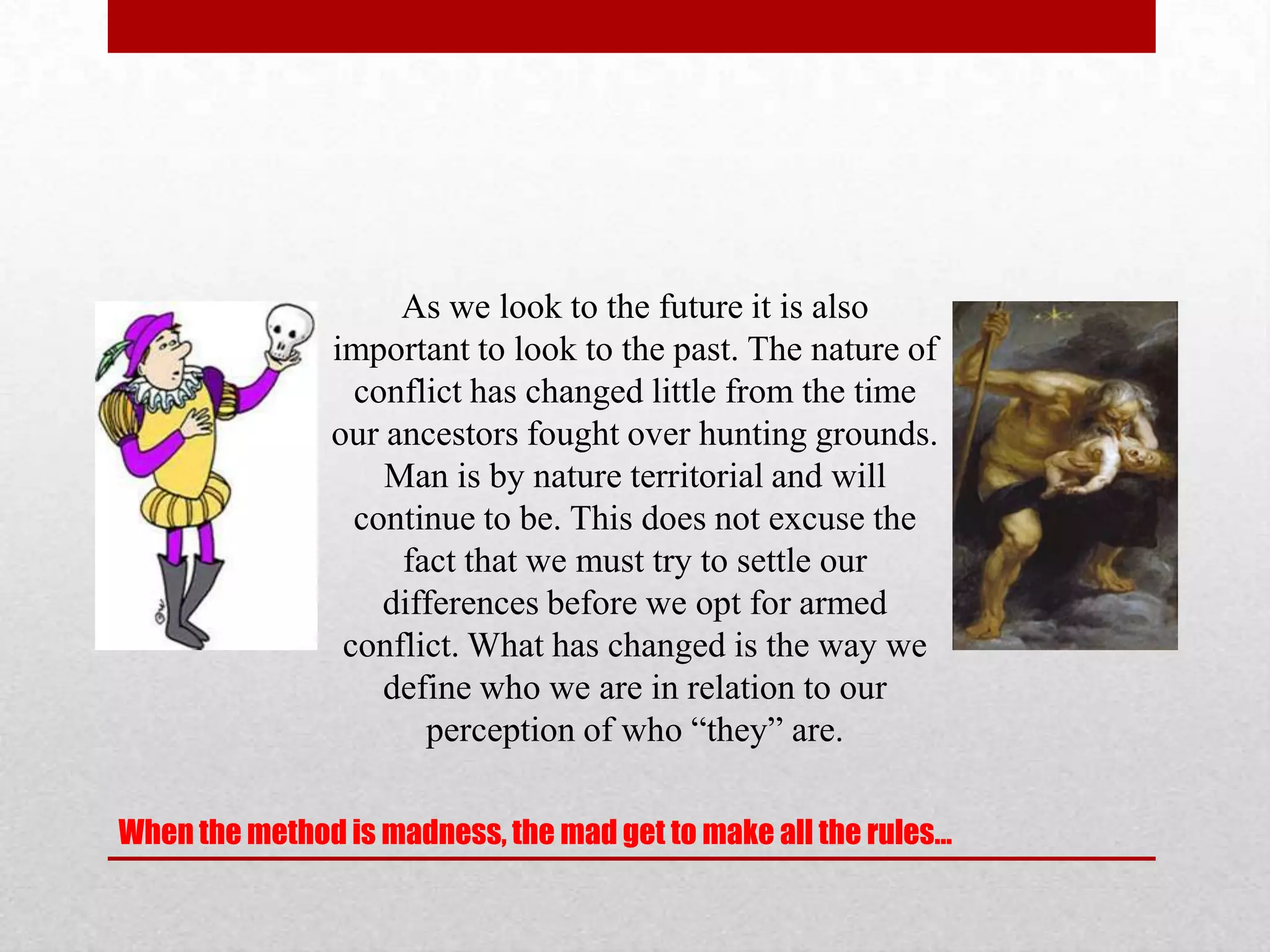
Though this be
madness, yet there is
method in't.
As we look to the future it is also
               important to look to the past. The nature of
                 conflict has changed little from the time
               our ancestors fought over hunting grounds.
                   Man is by nature territorial and will
                 continue to be. This does not excuse the
                    fact that we must try to settle our
                   differences before we opt for armed
                conflict. What has changed is the way we
                   define who we are in relation to our
                      perception of who “they” are.

When the method is madness, the mad get to make all the rules…

Terrorist infiltration through conflict migration

  • 1.
    Terrorist infiltration through conflictmigration Jon Nakapalau, CHSO, CPO
  • 2.
    All civilizations throughouthistory have come to a point where they find that they are in conflict from within or without (or both) due to tensions which often create ideological rifts. How they react to this conflict is instrumental in determining what actions will be taken to ensure the continued existence of the civilization and to what ends the actions taken to insure their continued existence will shape their future.
  • 3.
    Terrorism targeted powerfulindividuals in the past. Terrorist were trying to accomplish a kind of philosophical endophagy; by killing a leader the state cannibalized the power that was held by the assassinated individual and caused the state to reexamine the distributive allocation of power once controlled by the ancien régime. Terrorism was a focused act which sought to change the policy of a government by elimination of the individual who was the manifestation of that policy. The Cronus paradox
  • 4.
    Globalization will forceus to look at the transitional nature of power which is beyond the control of any group of nations. Because of perception we often fail to see the transitional nature of the different categories as there is convergence and change within society. Yet it is the tension between such groups that often can be cited as one of the root causes that lead to terrorism.
  • 5.
    The central questionbecomes one in which normative acts fit into a hegemonistic picture of what we define as democracy. Can there be a democratic definition of what democracy is or is the definition defined by (and only by) the West? This question will continue to be asked as new countries lend their definitional perspective to their aspirations. Only time will tell if we all agree on a given definition or if we will need to redefine the contextual nature of democracy.
  • 6.
    The paradox thatthe US will continue to have to address around the world is how do you project strength and justice at the same time? How does the US address philosopher Thomas Pogge’s observation when he points out that there is a difference between causing poverty and failing to reduce it. There is a further distinction to be made when you fail to reduce poverty because the government you are working with does not feel the moral obligation to do so.
  • 7.
    The starting pointof terrorism is not resistance on the part of one state against another state, but on the part of a (usually small) group that has decided to break away from the state. There is no question as to the power of resistance the state will bring to bear on this group. The question is will the group be able to fight the means and will of the state to destroy them. Hence Mao’s apt analogy and the correlation between the movement and the support of the people: “The guerilla must live amongst the people as the fish lives in the water.”
  • 8.
    Terrorists/narco-guerrillas now usemany tactics [transitional nature] to confuse the delineation between freedom fighter, soldier and political insurgent which increasingly becomes blurred; actors hiding behind a curtain were they can change costumes quickly. Once behind this curtain the terrorists/narco- guerrillas understands that there will be another act in which to play another part.
  • 9.
    Often when arapid political shifts occurs there are areas and groups in a given geographic location that find they are no longer able to fit into a the wider society and contract into semi-autonomous groups who seek to self-govern small areas as a refuge to the change that is happening all around them. This often leads to violence and hatred that terrorists and organized crime take advantage of. Though this be madness, yet there is method in't.
  • 10.
    As we lookto the future it is also important to look to the past. The nature of conflict has changed little from the time our ancestors fought over hunting grounds. Man is by nature territorial and will continue to be. This does not excuse the fact that we must try to settle our differences before we opt for armed conflict. What has changed is the way we define who we are in relation to our perception of who “they” are. When the method is madness, the mad get to make all the rules…