 What is telepathy ?
 Categories
 Applications
 How its works?
 Conclusion
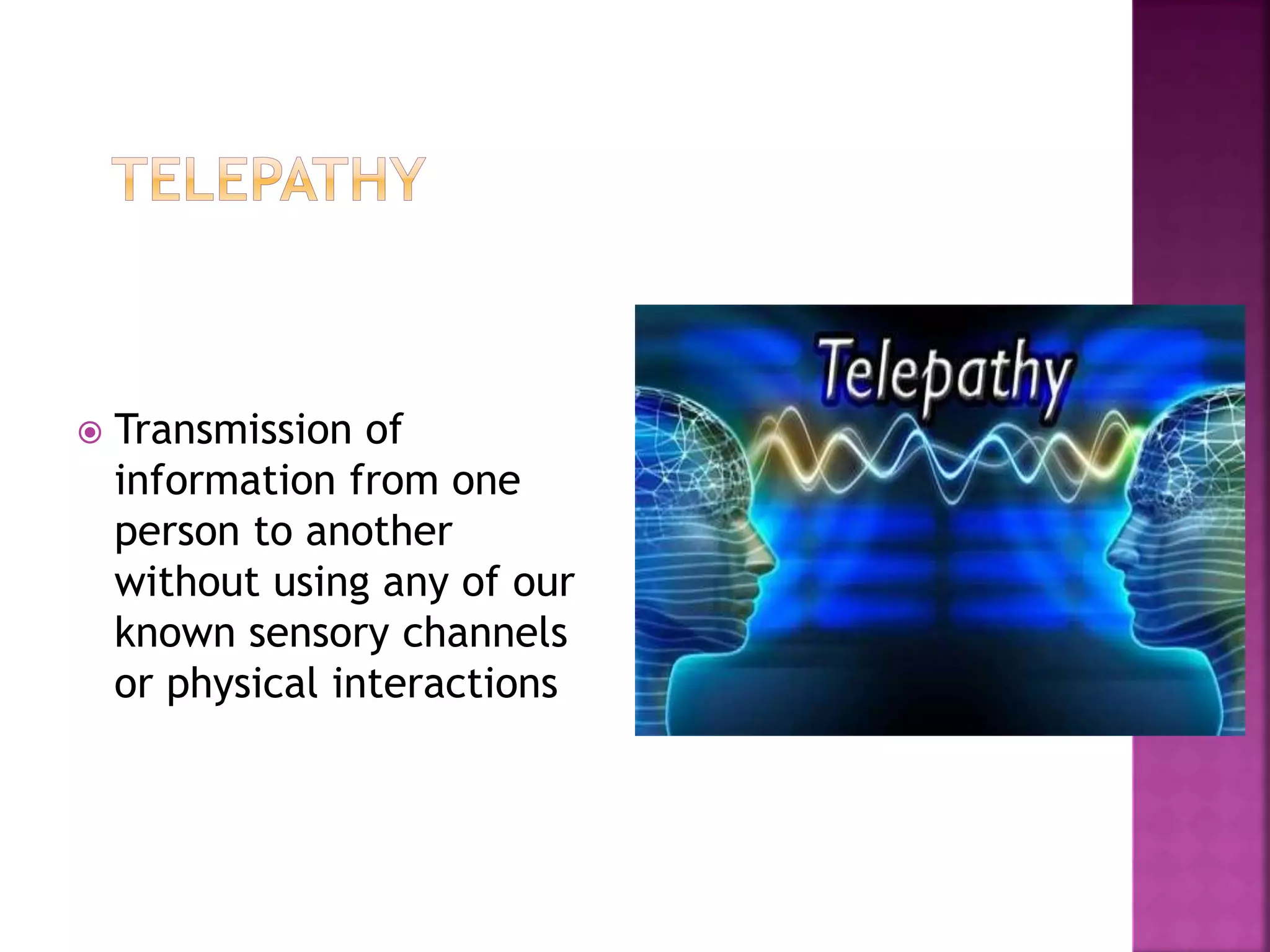
 Transmission of
information from one
person to another
without using any of our
known sensory channels
or physical interactions
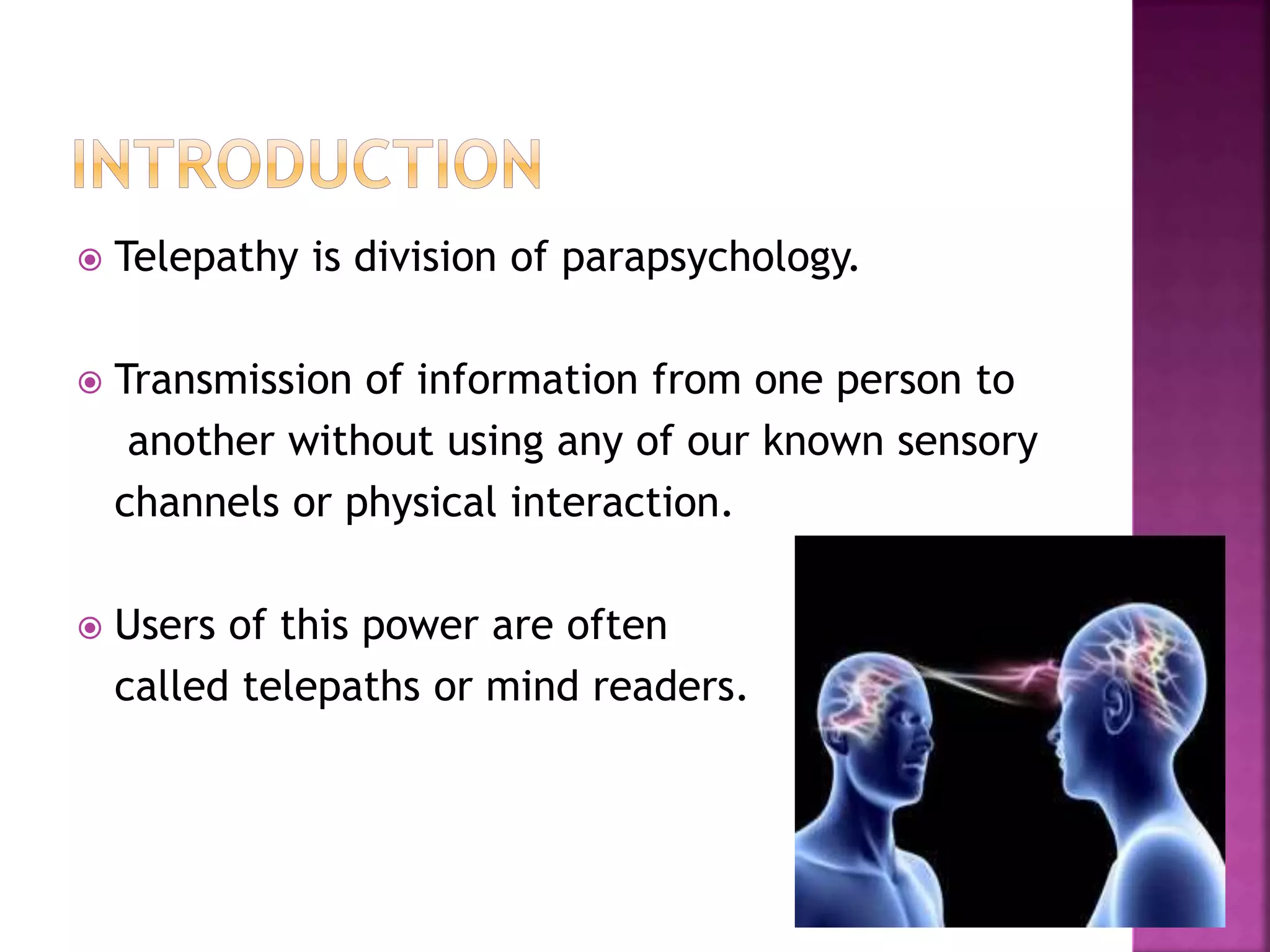
 Telepathy is division of parapsychology.
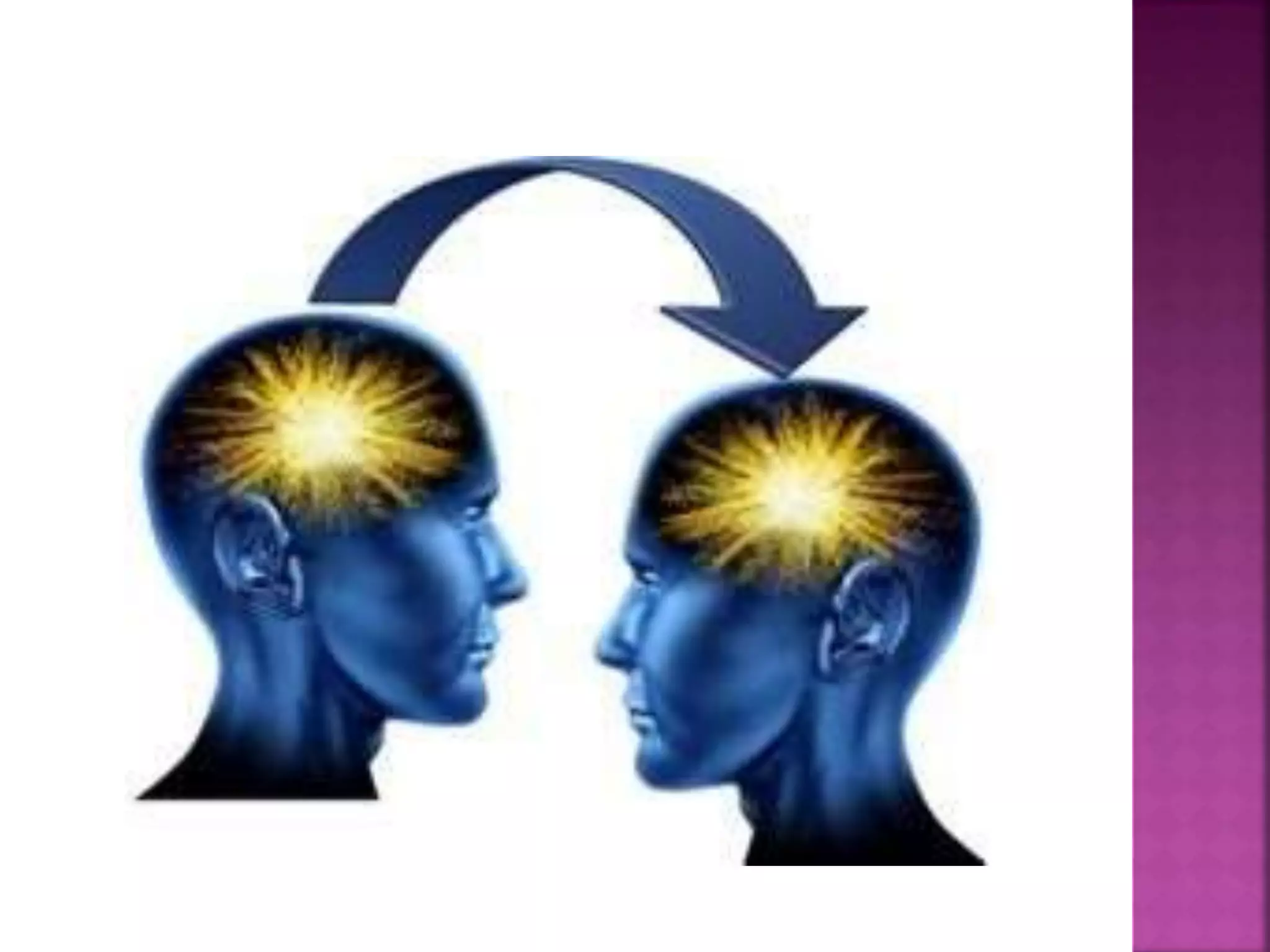
 Transmission of information from one person to
another without using any of our known sensory
channels or physical interaction.
 Users of this power are often
called telepaths or mind readers.
 The word telepathy has been derived from
the words ‘tele’ means distance and ‘pathy’
means feeling . So telepathy actually means
getting feeling through a distance to
ellaborate , telepathy is a comunication
between two minds , separated over a
distance without the use of five known
senses
Telepathy falls into two categories;
 Telepathic communication:
It is the ability to transmit information
from mind to another.
 Telepathic perception:
It is the ability to receive information
from another mind.
 Mind reading
 Psychic communication
 Telempathy
 Telepathic speaking
 Mind reading:
The ability to read/sense the thoughts of
others.
 Psychic communication:
The ability to open secret conversations
and relay covert information.
 Telempathy:
The ability to communicate through
emotions.
 Telepathic speaking:
The ability to speak telepathically.
 You must have to relaxed from mind.
 There are minimum two people needed.
 Using EEG and TMS methods the whole
process is done.
 EEG stands for
Electroencephalography
 It is the recording of electrical activity along
the scalp.
 It measures voltage fluctuations resulting
from ionic current flows within the neurons
of the brain.
 TMS stands for transcranial magnetic
stimulation.
 It is non- invasive method of simulating
neuron in the brain.
 It is commonly used to treat depression.
Still, telepathy communication that works like
a sort of futuristic walkie-talkie will involve
major advances in sensing emitting and
receiving technologies and perhaps even a
slight retraining of the human brain.
Telepathy slideshare

Telepathy slideshare

  • 4.
     What istelepathy ?  Categories  Applications  How its works?  Conclusion
  • 5.
     Transmission of informationfrom one person to another without using any of our known sensory channels or physical interactions
  • 6.
     Telepathy isdivision of parapsychology.  Transmission of information from one person to another without using any of our known sensory channels or physical interaction.  Users of this power are often called telepaths or mind readers.
  • 7.
     The wordtelepathy has been derived from the words ‘tele’ means distance and ‘pathy’ means feeling . So telepathy actually means getting feeling through a distance to ellaborate , telepathy is a comunication between two minds , separated over a distance without the use of five known senses
  • 8.
    Telepathy falls intotwo categories;  Telepathic communication: It is the ability to transmit information from mind to another.  Telepathic perception: It is the ability to receive information from another mind.
  • 10.
     Mind reading Psychic communication  Telempathy  Telepathic speaking
  • 11.
     Mind reading: Theability to read/sense the thoughts of others.  Psychic communication: The ability to open secret conversations and relay covert information.
  • 12.
     Telempathy: The abilityto communicate through emotions.  Telepathic speaking: The ability to speak telepathically.
  • 14.
     You musthave to relaxed from mind.  There are minimum two people needed.  Using EEG and TMS methods the whole process is done.
  • 15.
     EEG standsfor Electroencephalography  It is the recording of electrical activity along the scalp.  It measures voltage fluctuations resulting from ionic current flows within the neurons of the brain.
  • 16.
     TMS standsfor transcranial magnetic stimulation.  It is non- invasive method of simulating neuron in the brain.  It is commonly used to treat depression.
  • 17.
    Still, telepathy communicationthat works like a sort of futuristic walkie-talkie will involve major advances in sensing emitting and receiving technologies and perhaps even a slight retraining of the human brain.