Customer Retention
Using Data Science to address Customer Churn
We will cover the following in today's session
▪ Overview of the churn in a telecom scenario
▪ Why Data Sciences?
▪ Data Science approach to build a robust churn strategy
▪ Methodology of building a churn model
▪ Outcomes and deliverables
Agenda
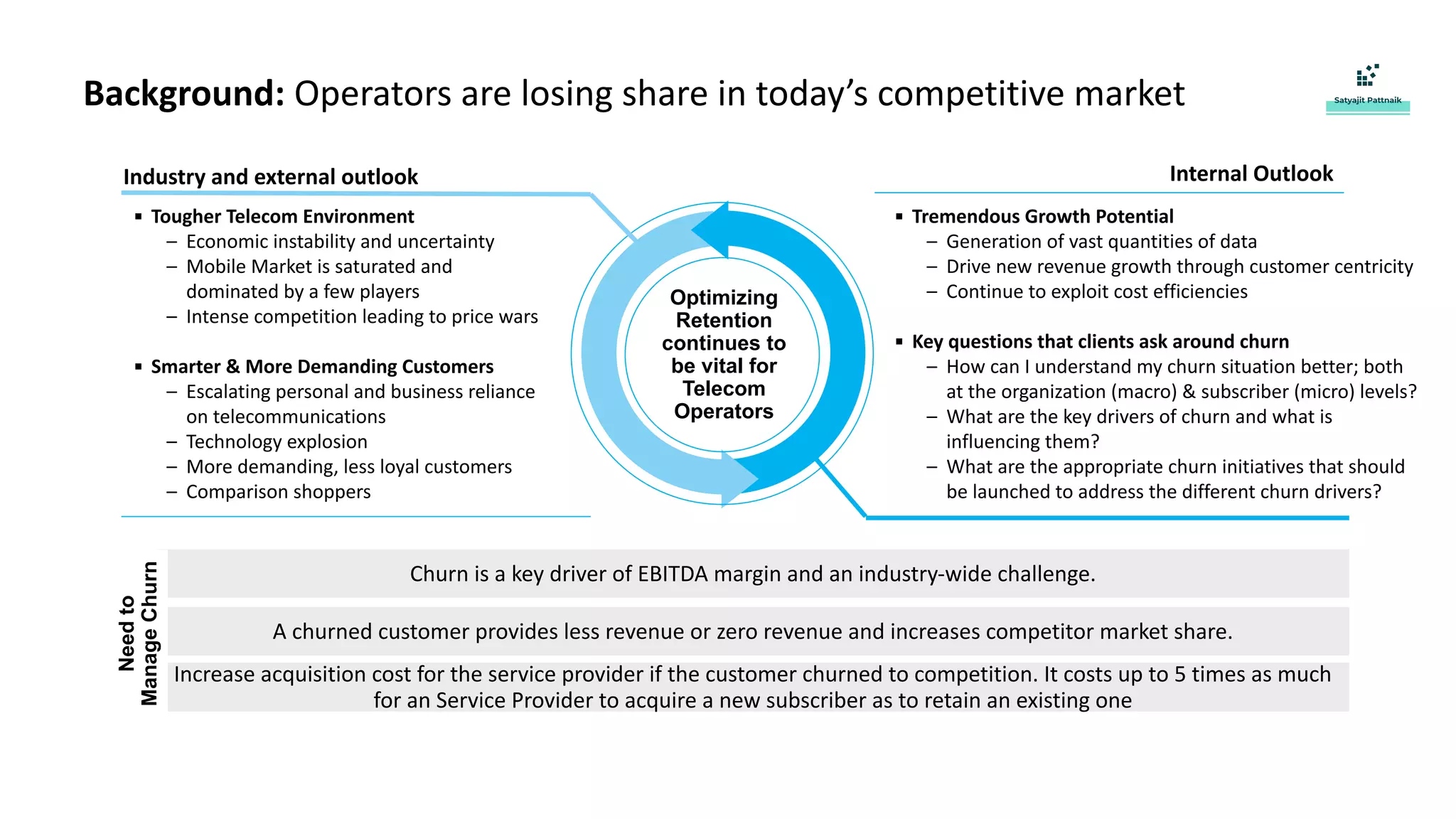
Background: Operators are losing share in today’s competitive market
Optimizing
Retention
continues to
be vital for
Telecom
Operators
Churn is a key driver of EBITDA margin and an industry-wide challenge.
A churned customer provides less revenue or zero revenue and increases competitor market share.
Increase acquisition cost for the service provider if the customer churned to competition. It costs up to 5 times as much
for an Service Provider to acquire a new subscriber as to retain an existing one
Need
to
Manage
Churn
Industry and external outlook Internal Outlook
▪ Tougher Telecom Environment
– Economic instability and uncertainty
– Mobile Market is saturated and
dominated by a few players
– Intense competition leading to price wars
▪ Smarter & More Demanding Customers
– Escalating personal and business reliance
on telecommunications
– Technology explosion
– More demanding, less loyal customers
– Comparison shoppers
▪ Tremendous Growth Potential
– Generation of vast quantities of data
– Drive new revenue growth through customer centricity
– Continue to exploit cost efficiencies
▪ Key questions that clients ask around churn
– How can I understand my churn situation better; both
at the organization (macro) & subscriber (micro) levels?
– What are the key drivers of churn and what is
influencing them?
– What are the appropriate churn initiatives that should
be launched to address the different churn drivers?
Leads to Subscriber churn
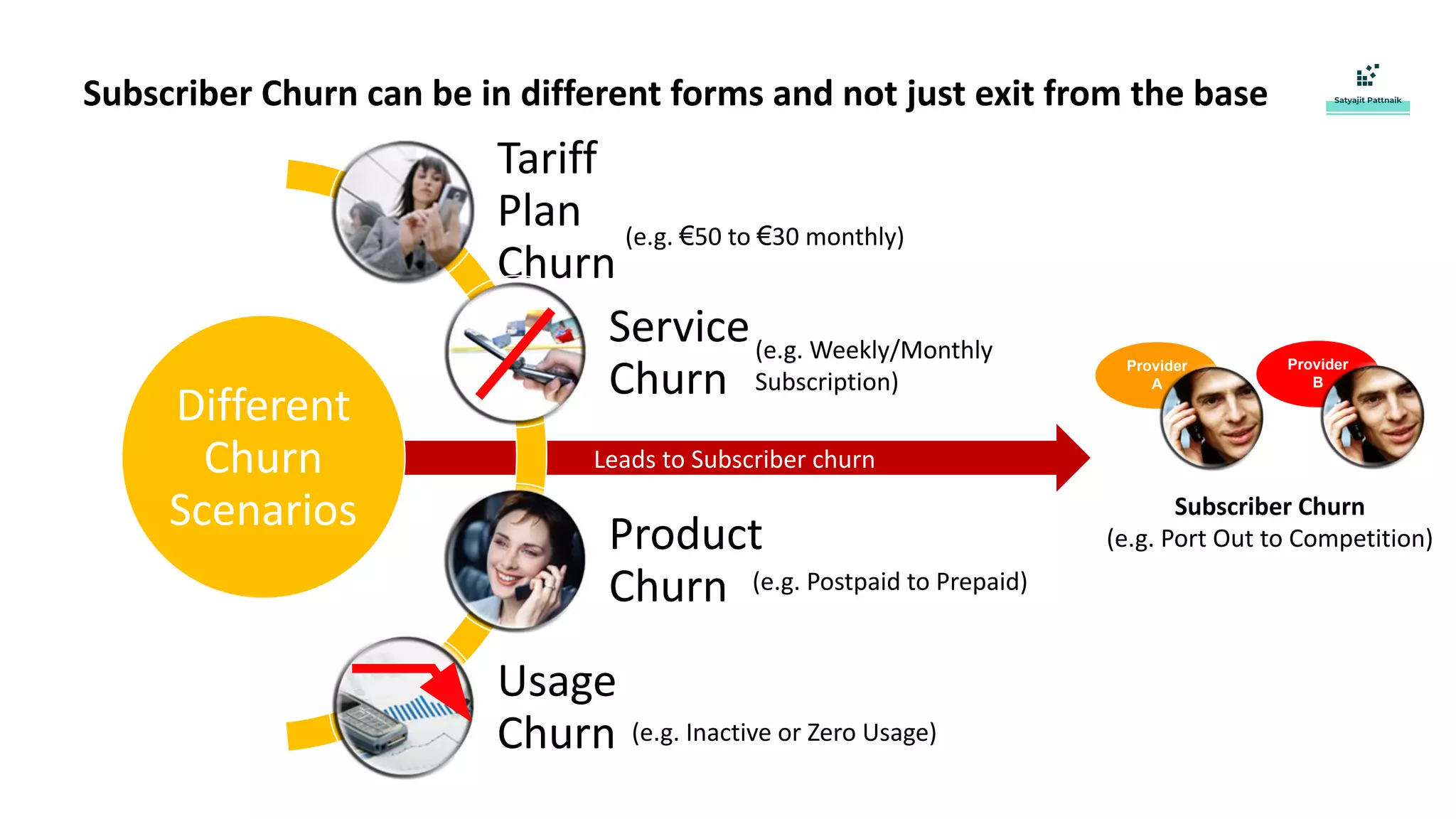
Subscriber Churn can be in different forms and not just exit from the base
Different
Churn
Scenarios
Tariff
Plan
Churn
Service
Churn
Product
Churn
Usage
Churn
(e.g. €50 to €30 monthly)
(e.g. Weekly/Monthly
Subscription)
(e.g. Postpaid to Prepaid)
(e.g. Inactive or Zero Usage)
Provider
A
Provider
B
Subscriber Churn
(e.g. Port Out to Competition)
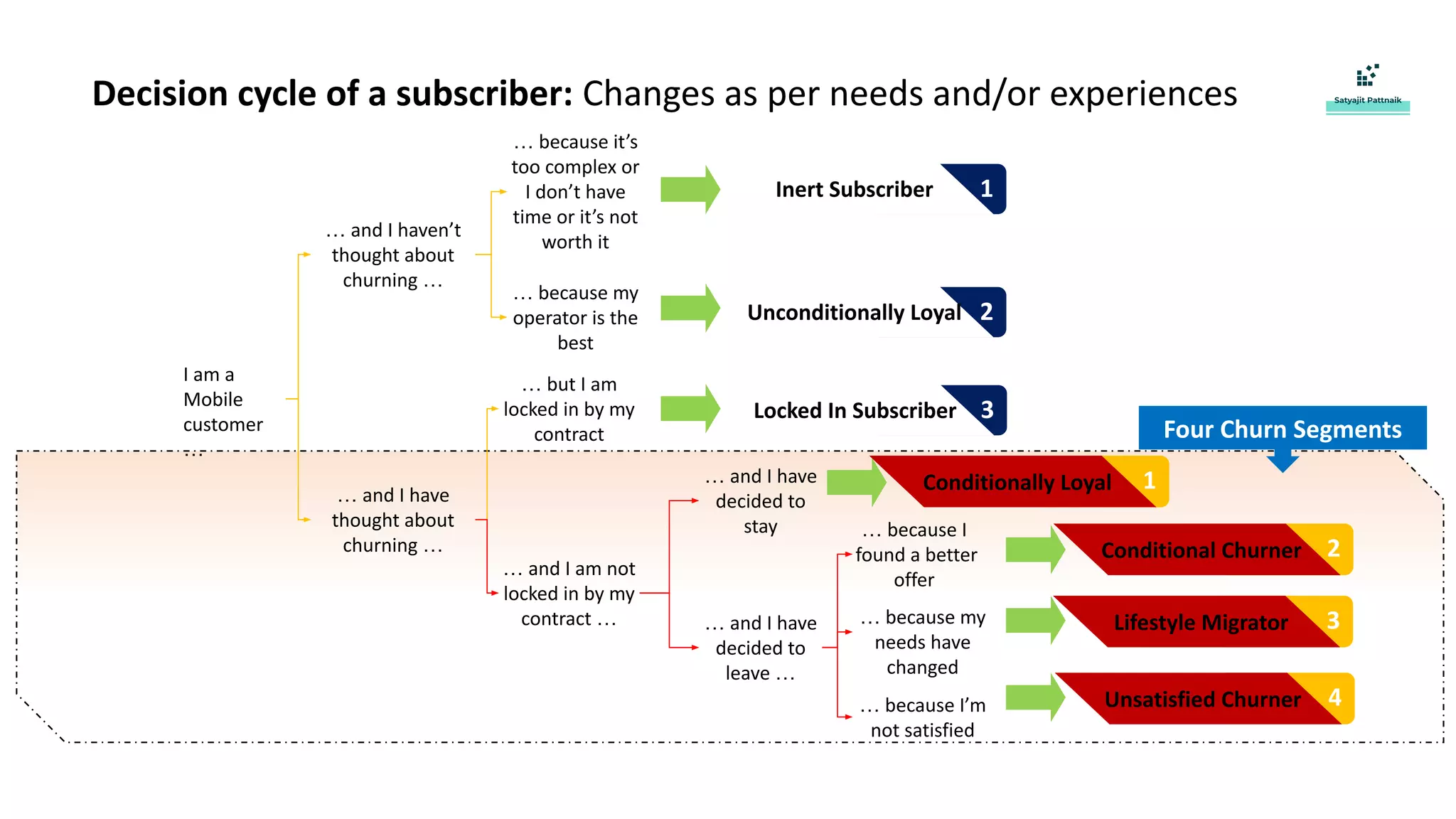
Decision cycle of a subscriber: Changes as per needs and/or experiences
I am a
Mobile
customer
…
… but I am
locked in by my
contract
… and I am not
locked in by my
contract …
… and I haven’t
thought about
churning …
… and I have
thought about
churning …
… and I have
decided to
stay
… and I have
decided to
leave …
… because it’s
too complex or
I don’t have
time or it’s not
worth it
… because my
operator is the
best
… because I
found a better
offer
… because my
needs have
changed
… because I’m
not satisfied
3
Locked In Subscriber
2
Unconditionally Loyal
1
Inert Subscriber
1
Conditionally Loyal
4
Unsatisfied Churner
3
Lifestyle Migrator
2
Conditional Churner
Four Churn Segments
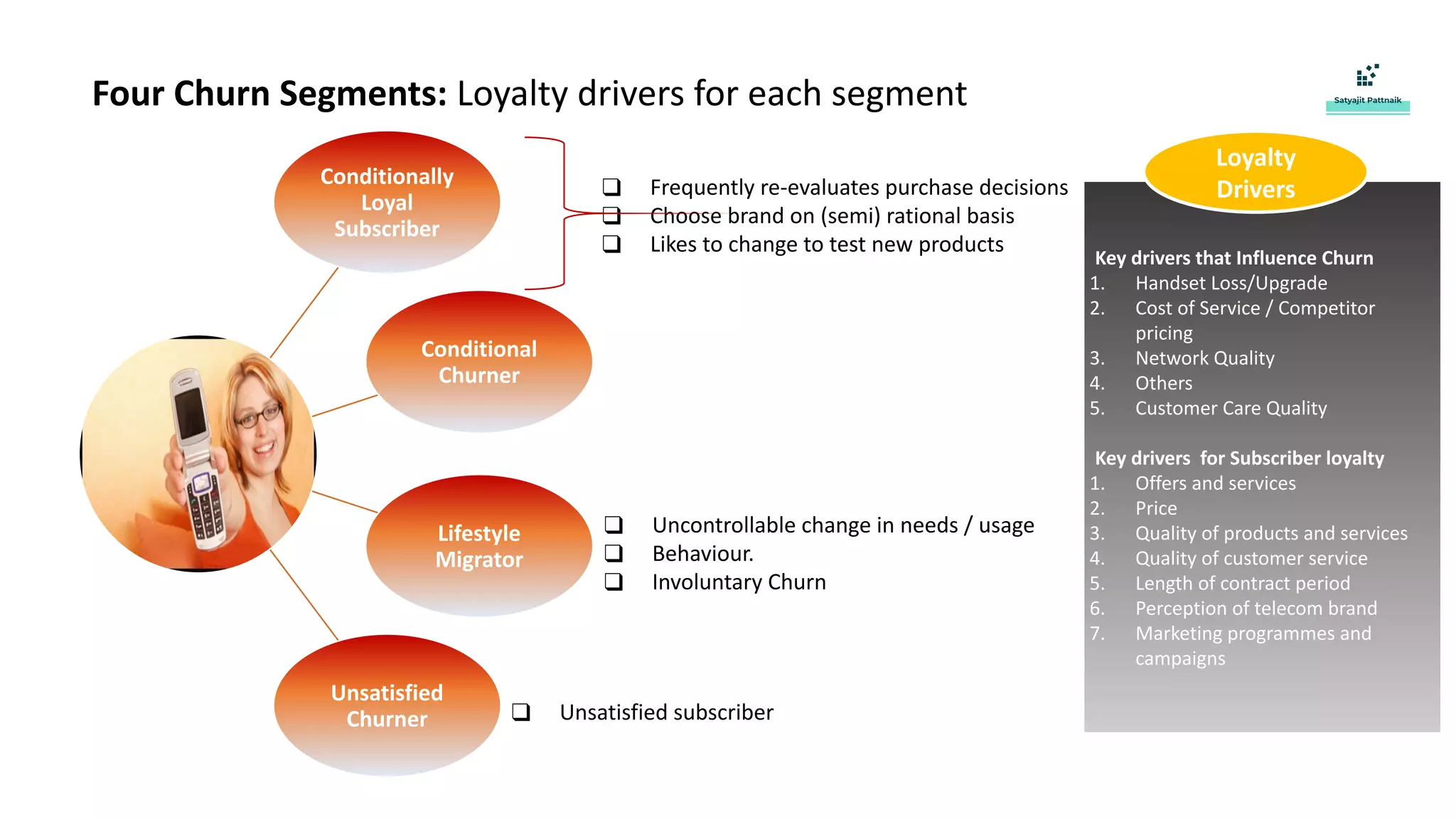
Four Churn Segments: Loyalty drivers for each segment
Conditionally
Loyal
Subscriber
Conditional
Churner
Lifestyle
Migrator
Unsatisfied
Churner
❑ Frequently re-evaluates purchase decisions
❑ Choose brand on (semi) rational basis
❑ Likes to change to test new products
❑ Uncontrollable change in needs / usage
❑ Behaviour.
❑ Involuntary Churn
❑ Unsatisfied subscriber
Key drivers that Influence Churn
1. Handset Loss/Upgrade
2. Cost of Service / Competitor
pricing
3. Network Quality
4. Others
5. Customer Care Quality
Key drivers for Subscriber loyalty
1. Offers and services
2. Price
3. Quality of products and services
4. Quality of customer service
5. Length of contract period
6. Perception of telecom brand
7. Marketing programmes and
campaigns
Loyalty
Drivers
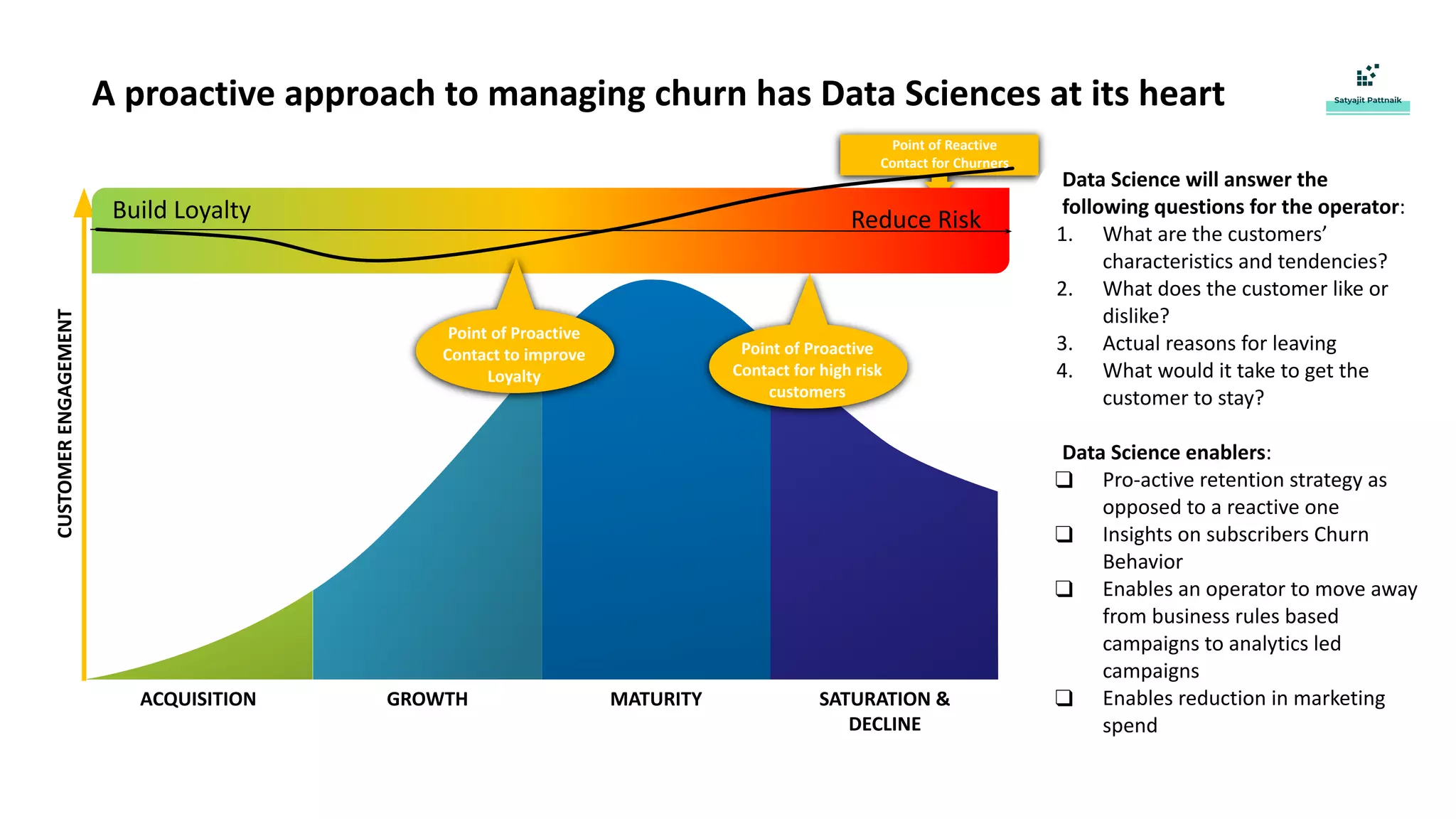
A proactive approach to managing churn has Data Sciences at its heart
ACQUISITION GROWTH MATURITY SATURATION &
DECLINE
CUSTOMER
ENGAGEMENT
Build Loyalty Reduce Risk
Point of Proactive
Contact for high risk
customers
Data Science will answer the
following questions for the operator:
1. What are the customers’
characteristics and tendencies?
2. What does the customer like or
dislike?
3. Actual reasons for leaving
4. What would it take to get the
customer to stay?
Data Science enablers:
❑ Pro-active retention strategy as
opposed to a reactive one
❑ Insights on subscribers Churn
Behavior
❑ Enables an operator to move away
from business rules based
campaigns to analytics led
campaigns
❑ Enables reduction in marketing
spend
Point of Reactive
Contact for Churners
Point of Proactive
Contact to improve
Loyalty
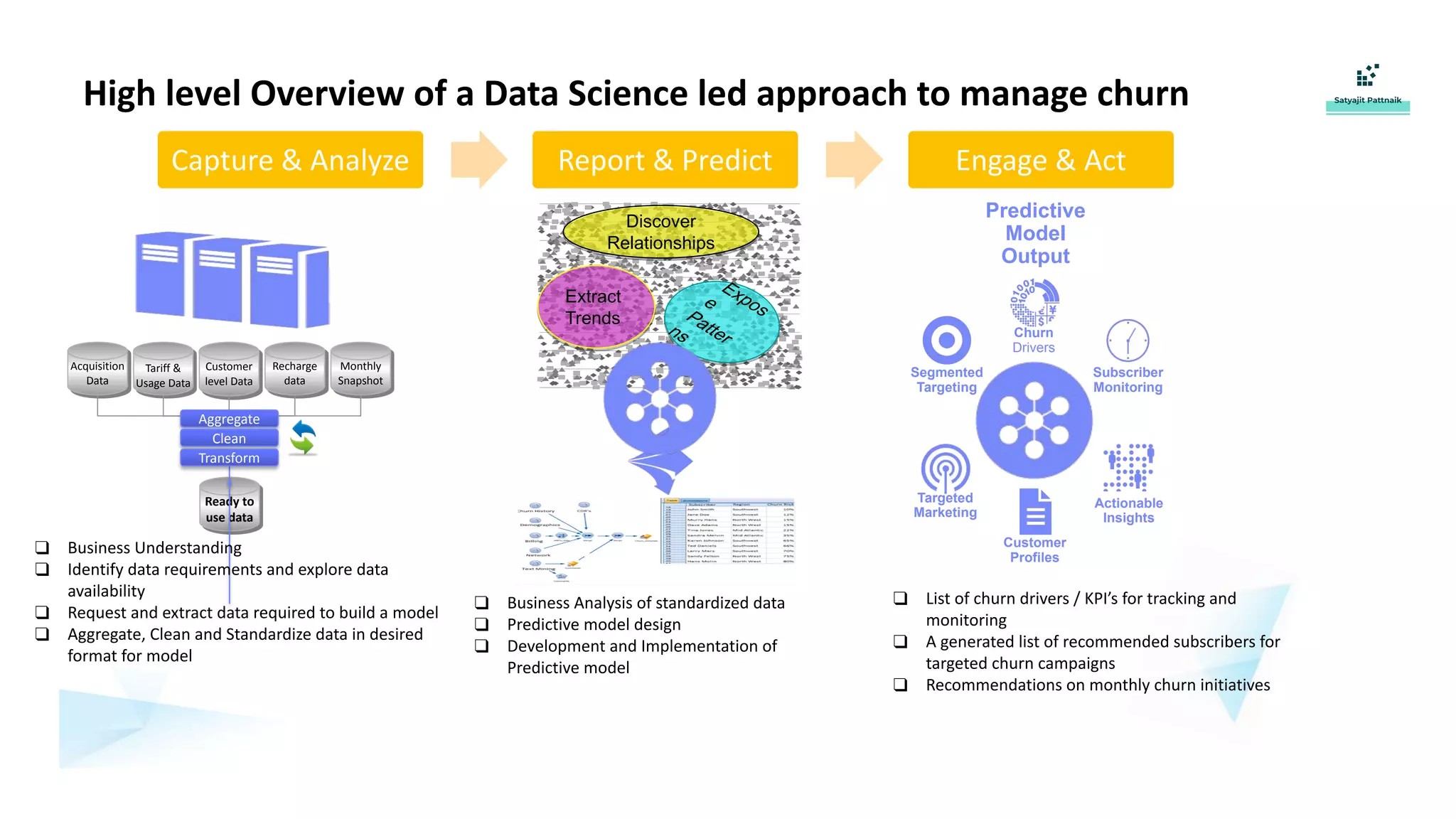
High level Overview of a Data Science led approach to manage churn
Extract
Trends
Discover
Relationships
Expos
e
Patter
ns
Capture & Analyze Report & Predict Engage & Act
Tariff &
Usage Data
Recharge
data
Acquisition
Data
Customer
level Data
Monthly
Snapshot
Ready to
use data
Aggregate
Clean
Transform
❑ Business Understanding
❑ Identify data requirements and explore data
availability
❑ Request and extract data required to build a model
❑ Aggregate, Clean and Standardize data in desired
format for model
❑ Business Analysis of standardized data
❑ Predictive model design
❑ Development and Implementation of
Predictive model
❑ List of churn drivers / KPI’s for tracking and
monitoring
❑ A generated list of recommended subscribers for
targeted churn campaigns
❑ Recommendations on monthly churn initiatives
Predictive
Model
Output
Churn
Drivers
Targeted
Marketing
Segmented
Targeting
Subscriber
Monitoring
Actionable
Insights
Customer
Profiles

Telecom Retention - Business Understanding.pdf

  • 1.
    Customer Retention Using DataScience to address Customer Churn
  • 2.
    We will coverthe following in today's session ▪ Overview of the churn in a telecom scenario ▪ Why Data Sciences? ▪ Data Science approach to build a robust churn strategy ▪ Methodology of building a churn model ▪ Outcomes and deliverables Agenda
  • 3.
    Background: Operators arelosing share in today’s competitive market Optimizing Retention continues to be vital for Telecom Operators Churn is a key driver of EBITDA margin and an industry-wide challenge. A churned customer provides less revenue or zero revenue and increases competitor market share. Increase acquisition cost for the service provider if the customer churned to competition. It costs up to 5 times as much for an Service Provider to acquire a new subscriber as to retain an existing one Need to Manage Churn Industry and external outlook Internal Outlook ▪ Tougher Telecom Environment – Economic instability and uncertainty – Mobile Market is saturated and dominated by a few players – Intense competition leading to price wars ▪ Smarter & More Demanding Customers – Escalating personal and business reliance on telecommunications – Technology explosion – More demanding, less loyal customers – Comparison shoppers ▪ Tremendous Growth Potential – Generation of vast quantities of data – Drive new revenue growth through customer centricity – Continue to exploit cost efficiencies ▪ Key questions that clients ask around churn – How can I understand my churn situation better; both at the organization (macro) & subscriber (micro) levels? – What are the key drivers of churn and what is influencing them? – What are the appropriate churn initiatives that should be launched to address the different churn drivers?
  • 4.
    Leads to Subscriberchurn Subscriber Churn can be in different forms and not just exit from the base Different Churn Scenarios Tariff Plan Churn Service Churn Product Churn Usage Churn (e.g. €50 to €30 monthly) (e.g. Weekly/Monthly Subscription) (e.g. Postpaid to Prepaid) (e.g. Inactive or Zero Usage) Provider A Provider B Subscriber Churn (e.g. Port Out to Competition)
  • 5.
    Decision cycle ofa subscriber: Changes as per needs and/or experiences I am a Mobile customer … … but I am locked in by my contract … and I am not locked in by my contract … … and I haven’t thought about churning … … and I have thought about churning … … and I have decided to stay … and I have decided to leave … … because it’s too complex or I don’t have time or it’s not worth it … because my operator is the best … because I found a better offer … because my needs have changed … because I’m not satisfied 3 Locked In Subscriber 2 Unconditionally Loyal 1 Inert Subscriber 1 Conditionally Loyal 4 Unsatisfied Churner 3 Lifestyle Migrator 2 Conditional Churner Four Churn Segments
  • 6.
    Four Churn Segments:Loyalty drivers for each segment Conditionally Loyal Subscriber Conditional Churner Lifestyle Migrator Unsatisfied Churner ❑ Frequently re-evaluates purchase decisions ❑ Choose brand on (semi) rational basis ❑ Likes to change to test new products ❑ Uncontrollable change in needs / usage ❑ Behaviour. ❑ Involuntary Churn ❑ Unsatisfied subscriber Key drivers that Influence Churn 1. Handset Loss/Upgrade 2. Cost of Service / Competitor pricing 3. Network Quality 4. Others 5. Customer Care Quality Key drivers for Subscriber loyalty 1. Offers and services 2. Price 3. Quality of products and services 4. Quality of customer service 5. Length of contract period 6. Perception of telecom brand 7. Marketing programmes and campaigns Loyalty Drivers
  • 7.
    A proactive approachto managing churn has Data Sciences at its heart ACQUISITION GROWTH MATURITY SATURATION & DECLINE CUSTOMER ENGAGEMENT Build Loyalty Reduce Risk Point of Proactive Contact for high risk customers Data Science will answer the following questions for the operator: 1. What are the customers’ characteristics and tendencies? 2. What does the customer like or dislike? 3. Actual reasons for leaving 4. What would it take to get the customer to stay? Data Science enablers: ❑ Pro-active retention strategy as opposed to a reactive one ❑ Insights on subscribers Churn Behavior ❑ Enables an operator to move away from business rules based campaigns to analytics led campaigns ❑ Enables reduction in marketing spend Point of Reactive Contact for Churners Point of Proactive Contact to improve Loyalty
  • 8.
    High level Overviewof a Data Science led approach to manage churn Extract Trends Discover Relationships Expos e Patter ns Capture & Analyze Report & Predict Engage & Act Tariff & Usage Data Recharge data Acquisition Data Customer level Data Monthly Snapshot Ready to use data Aggregate Clean Transform ❑ Business Understanding ❑ Identify data requirements and explore data availability ❑ Request and extract data required to build a model ❑ Aggregate, Clean and Standardize data in desired format for model ❑ Business Analysis of standardized data ❑ Predictive model design ❑ Development and Implementation of Predictive model ❑ List of churn drivers / KPI’s for tracking and monitoring ❑ A generated list of recommended subscribers for targeted churn campaigns ❑ Recommendations on monthly churn initiatives Predictive Model Output Churn Drivers Targeted Marketing Segmented Targeting Subscriber Monitoring Actionable Insights Customer Profiles