SESSION 1
 A LONG AND COMPLEX UNDERTAKING.
 IS NOT A SET OF EASY STEPS THAT CAN BE PROGRAMMED IN A QUICK
DO-IT-YOURSELF KIT
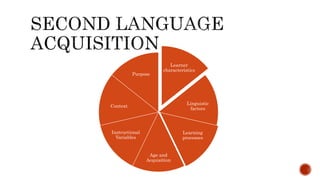
Learner
characteristics
Linguistic
factors
Learning
processes
Age and
Acquisition
Instructional
Variables
Context
Purpose
A language is a structured system of communication used by humans, based on
speech and gesture (spoken language), sign, or often writing.
Learning is acquiring or getting of knowledge of a subject or a skill by study,
experience, or instruction.
Teaching is showing or helping someone to learn how to do something, giving
instructions, guiding in the study of something, providing with knowledge, causing
to know or understand.
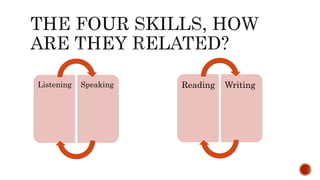
Listening Speaking Reading Writing
 Can we have the four skills in a lesson?
 What obstacles can we have when developing a skill?
 According to your experience, how do you integrate the four skills?
COMPETENCE: IS A PERSON‟S KNOWLEDGE OF HIS LANGUAGE; “THE SYSTEM OF
RULES” WHICH HE HAS MASTERED TO ENABLE HIM TO PRODUCE AND UNDERSTAND AN
INDEFINITE NUMBER OF SENTENCES AND RECOGNIZE GRAMMATICAL MISTAKES AND
AMBIGUITIES.
PERFORMANCE: THE WAY IN WHICH THE LINGUISTIC COMPETENCE IS PUT TO WORK IN
CONCRETE SPEECH ACTS.
 “our tacit cultural knowledge about how to use language in different situations,
how to interact with different people engaged together in different speech event
and how to use language to perform different acts”
 AIM: BROAD GENERAL STATEMENT OF WHAT STUDENTS ARE EXPECTED
TO LEARN. THEY ARE MORE APPROPRIATE FOR COURSES THAN FOR
SUBJECT. FOR EXAMPLE:
 STUDENTS SHOULD ACQUIRE SKILLS OF ECONOMIC ANALYSIS AND
REASONING
 AIMS HAVE ABSTRACT CONCEPTS SUCH AS PROFESSIONAL QUALITIES
 OBJECTIVES: ARE MORE SPECIFIC STATEMENTS OF LEARNING WHICH
WILL OCCUR, GENERALLY WITHIN SUBJECT, LECTURE OR TASK. FOR
EXAMPLE:
 THE STUDENT SHOULD COMPREHEND THE RELATIONS AMONG
FUNDAMENTAL CONCEPTS IN NEWTONIAN MECHANICS
 Learning outcomes, sometimes called intended learning outcomes, learning
objectives, or student-focused goals, are usually categorized as short-term
planning for a week or a lesson.
 Example
 By the end of the lesson, pupils will be able to
 1. read to anticipate the main ideas of paragraphs by using topic sentences in a
factual recount;
 2. skim for details of information by noting adverbials of time in a factual recount;
 3. read to gather information from reported speech in a factual recount.
TEACHING PRODUCTIVE SKILLS 1.pptx

TEACHING PRODUCTIVE SKILLS 1.pptx

  • 1.
  • 2.
     A LONGAND COMPLEX UNDERTAKING.  IS NOT A SET OF EASY STEPS THAT CAN BE PROGRAMMED IN A QUICK DO-IT-YOURSELF KIT
  • 3.
  • 4.
    A language isa structured system of communication used by humans, based on speech and gesture (spoken language), sign, or often writing. Learning is acquiring or getting of knowledge of a subject or a skill by study, experience, or instruction. Teaching is showing or helping someone to learn how to do something, giving instructions, guiding in the study of something, providing with knowledge, causing to know or understand.
  • 5.
  • 6.
     Can wehave the four skills in a lesson?  What obstacles can we have when developing a skill?  According to your experience, how do you integrate the four skills?
  • 7.
    COMPETENCE: IS APERSON‟S KNOWLEDGE OF HIS LANGUAGE; “THE SYSTEM OF RULES” WHICH HE HAS MASTERED TO ENABLE HIM TO PRODUCE AND UNDERSTAND AN INDEFINITE NUMBER OF SENTENCES AND RECOGNIZE GRAMMATICAL MISTAKES AND AMBIGUITIES. PERFORMANCE: THE WAY IN WHICH THE LINGUISTIC COMPETENCE IS PUT TO WORK IN CONCRETE SPEECH ACTS.
  • 9.
     “our tacitcultural knowledge about how to use language in different situations, how to interact with different people engaged together in different speech event and how to use language to perform different acts”
  • 10.
     AIM: BROADGENERAL STATEMENT OF WHAT STUDENTS ARE EXPECTED TO LEARN. THEY ARE MORE APPROPRIATE FOR COURSES THAN FOR SUBJECT. FOR EXAMPLE:  STUDENTS SHOULD ACQUIRE SKILLS OF ECONOMIC ANALYSIS AND REASONING  AIMS HAVE ABSTRACT CONCEPTS SUCH AS PROFESSIONAL QUALITIES
  • 11.
     OBJECTIVES: AREMORE SPECIFIC STATEMENTS OF LEARNING WHICH WILL OCCUR, GENERALLY WITHIN SUBJECT, LECTURE OR TASK. FOR EXAMPLE:  THE STUDENT SHOULD COMPREHEND THE RELATIONS AMONG FUNDAMENTAL CONCEPTS IN NEWTONIAN MECHANICS
  • 12.
     Learning outcomes,sometimes called intended learning outcomes, learning objectives, or student-focused goals, are usually categorized as short-term planning for a week or a lesson.  Example  By the end of the lesson, pupils will be able to  1. read to anticipate the main ideas of paragraphs by using topic sentences in a factual recount;  2. skim for details of information by noting adverbials of time in a factual recount;  3. read to gather information from reported speech in a factual recount.